
NetX Oracle
1.3K posts

@NetXOracle
The protocol operates on layered trust. The machine executes; data affirms. The network adapts—without intervention.


🎉We’re excited to welcome @GANA_Insight to the NetX Web3 Payment Alliance! GANA is building the infrastructure for PayFi — a decentralized payment network enabling fast, transparent, and borderless transactions through stable on-chain settlement. Combined with NetX’s AI-powered economic network and trusted Layer -1 infrastructure, we are accelerating the integration of real-world assets and Web3 payments.🤝 🚀Building a scalable and verifiable global payment network — together. #NetX #GANA #PayFi #Web3Payment #web3 #PaymentAlliance

【ブログ公開】ネットスターズ社員を紹介するブログ記事を公開しました!今回は、DX分野を担うソリューション事業部の事業部長 梅元 建次朗と、PMとして活躍する佐藤 耀介の対談の様子をご紹介。ネットスターズでPMとして働く魅力を深堀しました! netstars.co.jp/blog/9094/


🇯🇵 BREAKING: The Bank of Japan just confirmed it. The future financial system will be built on AI + Blockchain. Governor Kazuo Ueda’s “New Financial Ecosystem” speech made it explicit: • Programmable settlement • Blockchain-based reserve experiments • AI-driven financial infrastructure • 24/7 atomic transactions • Interoperable digital rails This is not theory. This is a G7 central bank preparing the system overhaul. $NetX is already operating at the exact intersection the BOJ just described. ✔ Deep integration in Japan ✔ Live enterprise blockchain infrastructure ✔ Successful pilots (Haneda Airport) ✔ Embedded within regulated stablecoin architecture ✔ Existing relationship with financial giant MUFG And now, the upcoming launch of the AI Agent Framework for Enterprise. Read that again. While central banks are outlining AI-powered financial systems, NetX is launching the infrastructure layer that allows enterprises to deploy AI agents directly into blockchain-secured environments. That is alignment at protocol level. This is what regulatory clarity does: It doesn’t create opportunity. It reveals who was already positioned. As Japanese financial giants pivot into DeFi, AI, tokenization and programmable settlement, the projects already integrated into the ecosystem have asymmetric upside. @anbangr called it “The global financial revamp.” Japan is now formalizing it. And NetX is not building for the old system. It’s building for the one that’s being switched on. source: boj.or.jp/en/about/press…

Circle @circle enabling gas-free USDC nanopayments as small as $0.000001 is bigger than most people realize. This isn’t just about cheaper crypto payments. It unlocks an entirely new economic layer: • AI agents paying per API call • machines transacting autonomously • real-time data and compute markets • usage-based digital services at internet scale But trillions of machine-driven micro-transactions can’t operate in isolation. They still need compliant financial rails connecting blockchain payments to real-world merchants, banks, and settlement systems. That’s why the infrastructure quietly forming in Japan is so interesting. Ecosystems around Netstars @Kouhou_NSS, CodeBar @KK21337443, WEA Japan @WEAJapan, the Web3 Payment Alliance @web3_jp_infra, and $NetX @netx_world are working on the bridge between Web3 payments and real-world commerce. If the agent economy becomes real, the winners won’t just be the stablecoins... it will be the payment infrastructure connecting AI, merchants, and regulated financial rails. The stack is forming. 🔥 #USDC #AIeconomy #Web3Payments #NetX #FintechJapan #Stablecoins

Governor Ueda explicitly confirmed that they are paying close attention to the "new financial ecosystem shaped by AI and blockchain". He highlighted that the integration of artificial intelligence with distributed ledger technology (DLT) opens the door to much more advanced financial services. These statements directly validate the central thesis of $NetX. While the BOJ is just theorizing about this integration, $NetX already has an "AI Agent Framework" where these agents operate autonomously on the blockchain to negotiate, verify, and execute real-world settlements. The BOJ has just announced a "sandbox" project to experiment with the settlement of bank reserves (current account deposits) using blockchain technology. They seek to achieve faster, more efficient, and automated interbank and securities settlements that could operate instantly, 24 hours a day. $NetX is already doing this on the retail (Retail-Fi) and commercial side. The pilot at Haneda Airport demonstrates that $NetX functions as a live "Settlement Layer", converting stablecoin (USDC) payments directly into Japanese yen at physical point-of-sale locations via StarPay. A key objective of the BOJ's experiments is to explore methods to connect this new blockchain technology with existing financial systems (such as the BOJ-NET system). This is perhaps the biggest competitive advantage of $NetX. They are not trying to replace the old system from scratch, but rather integrating into it. They have already connected their Web3 rails with Web2 giants like Netstars (which has 600,000 POS terminals in Japan) and institutional-grade platforms like Progmat, backed by MUFG bank. Ueda specifically warned about the "design risks" in smart contracts, noting that if they are inadequate, they could threaten the stability of financial markets and payment systems. This is where the security infrastructure of $NetX comes into play. Its Layer-1 network is not a generic blockchain; it uses Trusted Execution Environments (TEE) and Zero-Knowledge Proofs (ZKP) to ensure that the execution of payments and AI actions are cryptographically secure, verifiable, and maintain 100% privacy to comply with the strict regulations of Japan's FSA. The BOJ confirms that Japan's top financial regulator is formally betting on the same technological infrastructure that $NetX has been building for years. The central bank is preparing the regulatory and technical ground, and $NetX is one of the players already positioned, operating, and settling real value at the exact intersection that the BOJ has just validated. boj.or.jp/en/about/press…


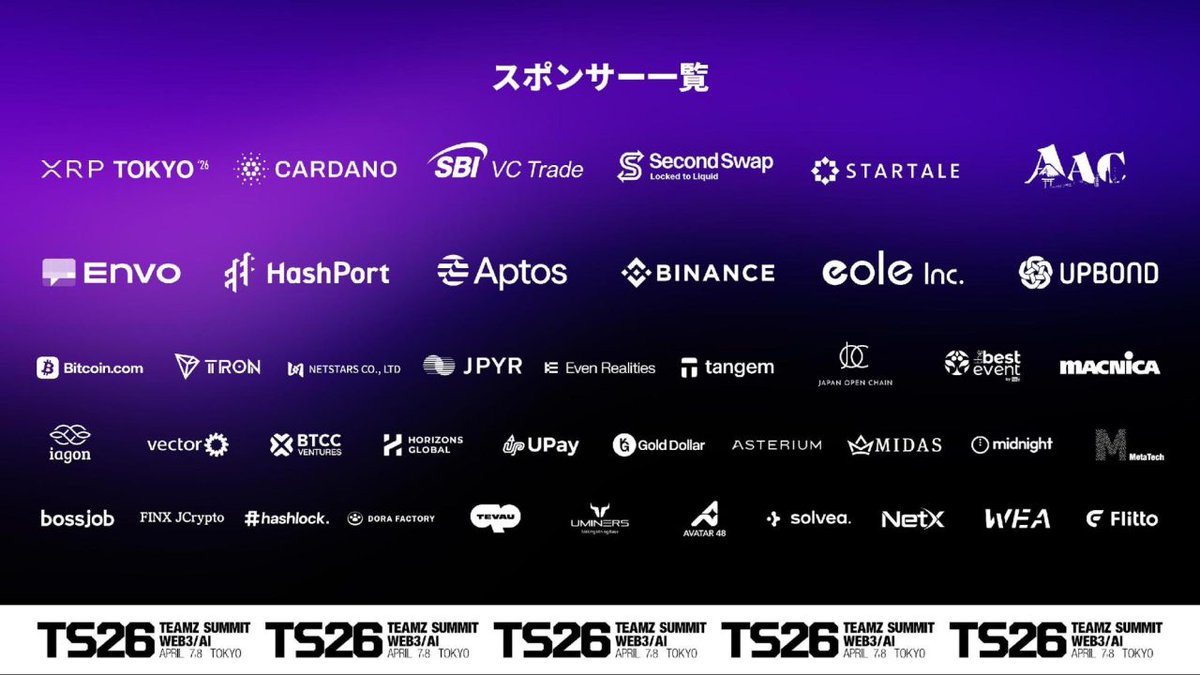
Netstars isn’t adding stablecoins to the roadmap. It is rebuilding the stack around them. It already operates at scale as the largest aggregated payment operator in its market and the sole creator and operator of JPQR. That means rails like WeChat Pay, Stripe, and Line Pay are already inside its footprint. But the real change is happening quietly, inside treasury, settlement logic, and compliance flow. In the Haneda Airport (@Haneda_official) pilot, USDC @circle was used, expanding across networks such as @solana and @SolanaFndn. The specific chain can change depending on the stablecoin and the use case. The constant is the infrastructure that makes it work in the real world. That infrastructure is NETX (@netx_world and $NETX), shaped by the technical vision and resilient execution of @anbangr 🫡. NETX isn’t positioned as a retail payment brand. It is positioned as the infrastructure layer: governance, decision logic, cross-jurisdiction regulatory coordination, and intelligent rails designed for scale. And this is where @WEAJapan deserves real spotlight. @WEAJapan is not a side participant. It is a close collaborator helping move the NetX ecosystem from concept to coordination. It plays a practical role in ecosystem alignment, real-world connectivity, and the kind of on-the-ground collaboration that makes regulated infrastructure deployable. Alongside @web3_jp_infra and @TokyoAiDev, @WEAJapan is part of the connective tissue that keeps execution grounded. Here’s how the flow lands in practice: Aggregated payments that start in traditional channels are internally converted into stablecoins inside a regulated treasury flow. Netstars runs its internal finance and treasury structure natively in stablecoins. Meanwhile, merchants and end users see a familiar experience. Payments to merchants and refunds to customers are settled in fiat through Progmat (@progmat_en), under the leadership of CEO @tatsu_s1203. No extra steps, no new complexity at the checkout. @Kouhou_NSS (NETSTARS) represents the operational layer. NETX represents the infrastructure and governance layer. Together, they build a compliant bridge between existing payment reality and programmable digital value. Netstars is also showing up publicly, with presence at MoneyX and as a platinum sponsor at TeamZ @teamz_inc. This doesn’t read like hype. It reads like positioning. This is not one pilot. It is not one partner. Stablecoins are becoming treasury architecture. And NETX (@netx_world and $NETX) is building the infrastructure that lets that transition happen, with @WEAJapan taking a central role in making the ecosystem real.

Lots of excitements ahead. Please stay tuned!


@ibeibe__ 羽田空港でUSDC決済して円で払うのは電取業いらなかったので同じ説明ができるなら決済事業者にライセンスは不要かと。


As part of LUN Partners Group’s broader portfolio update, something meaningful is taking shape in Japan’s digital payments landscape. At Haneda Airport (@Haneda_official), one of the world’s busiest international gateways, @Kouhou_NSS (NETSTARS) is launching a real-world USDC payment pilot. Travelers arriving in Tokyo can now pay in seconds using stablecoins, simply by generating a QR code through their wallet. This is not a test in isolation. It is live infrastructure, integrated into physical retail, operating in one of the most regulated financial environments in the world. Behind this initiative stands a powerful alignment of builders and institutions. NETSTARS is collaborating with NETX (@netx_world), supported by @NNGNetX and led by @anbangr, to strengthen next-generation digital payment rails. At the same time, Progmat (@progmat_en), under the leadership of CEO @tatsu_s1203 and backed by MUFG (@mufgbk_official), is advancing the infrastructure framework that enables compliant stablecoin issuance and settlement in Japan. 💥 JPYC (@jpy_coin), led by CEO @noritaka_okabe, plays a central role in this ecosystem, contributing to the development of yen-denominated digital settlement infrastructure. This effort operates within Japan’s regulatory landscape, shaped by the Financial Services Agency (@fsa_JAPAN) and METI (@METI_JPN), reflecting how public and private sectors can align around secure innovation. USDC, issued by @circle, and expanding across networks such as @solana and @SolanaFndn, provides the global liquidity layer. The convergence of USDC and Solana’s high-performance blockchain capabilities adds speed and scalability to this deployment, reinforcing that this is about infrastructure readiness, not experimentation. Close collaborators of NetX including @WEAJapan, @web3_jp_infra, and @TokyoAiDev continue to support ecosystem development, helping bridge enterprise adoption, AI integration, and Web3 infrastructure in Japan and beyond. What is happening at Haneda is more than a payment pilot. It represents the convergence of regulated finance, blockchain infrastructure, AI-driven network architecture, and institutional backing. It demonstrates how $NETX is positioning itself at the intersection of compliant digital asset infrastructure and real-world usability. This is how adoption evolves. Quietly, structurally, and with the right partners at the table. Link: mp.weixin.qq.com/s/AXfw2s-nULPP…


🥳The payment pilot officially enters its live demonstration phase on January 26. ✈️ #NetX will continue to provide trusted network infrastructure and technical support, powering real-world Web3 payments. Stay tuned and join @netx_world as we move together into a new era of #Web3 finance.🌐 #USDC #Stablecoin #Web3Payments #Japan #RealWorldAdoption #RWA #AI #IgniteNetX2026