Randles Lab

703 posts

Randles Lab banner
Randles Lab

Randles Lab

@RandlesLab

News and #Research from Amanda Randles's Biomedical Engineering Lab @DukeU. We are using #HPC to address #biomedical questions. #AcademicTwitter #innovation

Durham, NC Joined Mayıs 2022
2.7K Following1.2K Followers
Randles Lab
Randles Lab@RandlesLab·
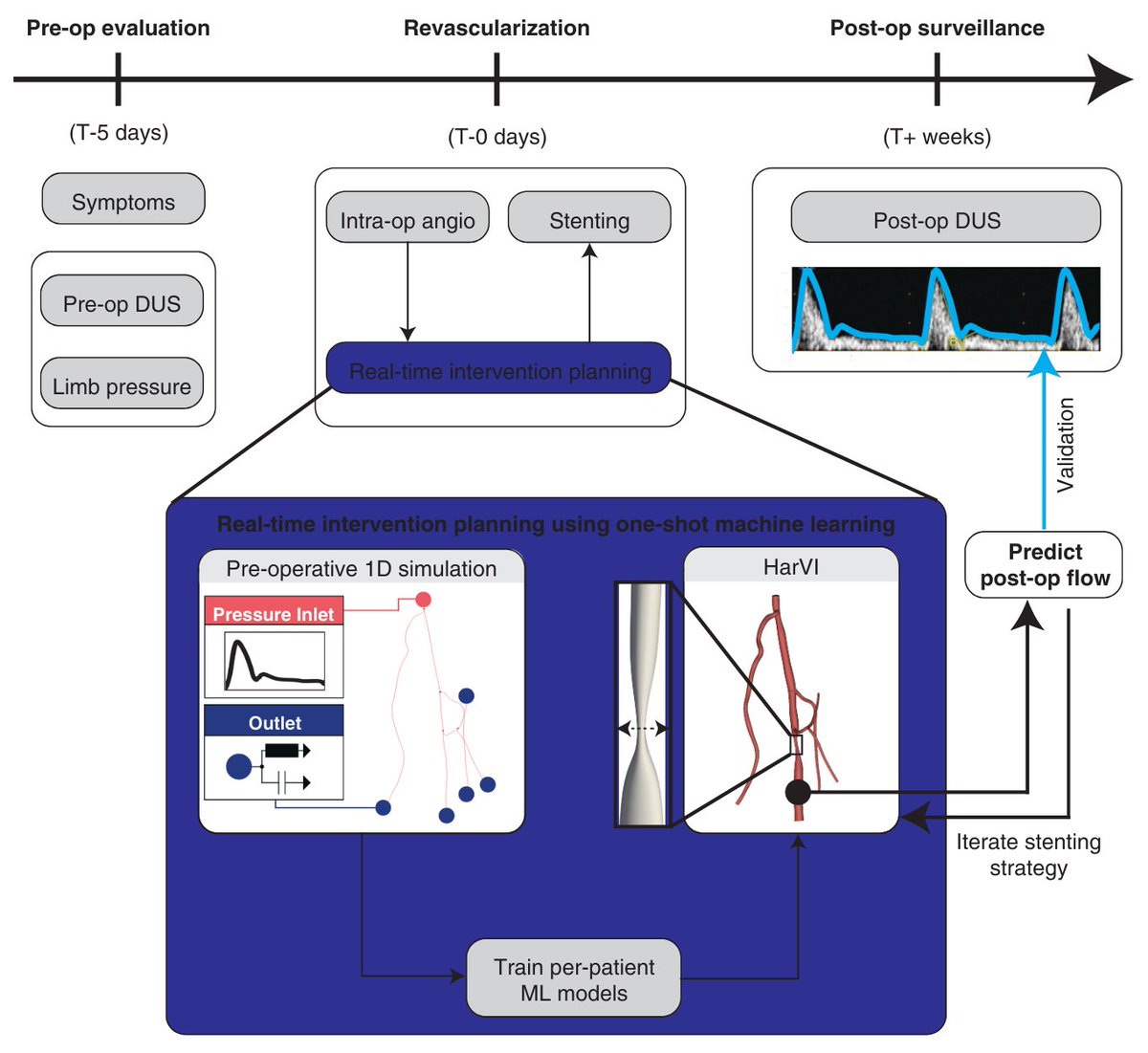
What if you could test a vascular intervention before performing it? New paper: digital twins + ML + CFD enable real-time prediction of blood flow in PAD Toward intraoperative decision support doi.org/10.1007/s13239…
Randles Lab tweet media
English
0
2
4
422
Randles Lab
Randles Lab@RandlesLab·
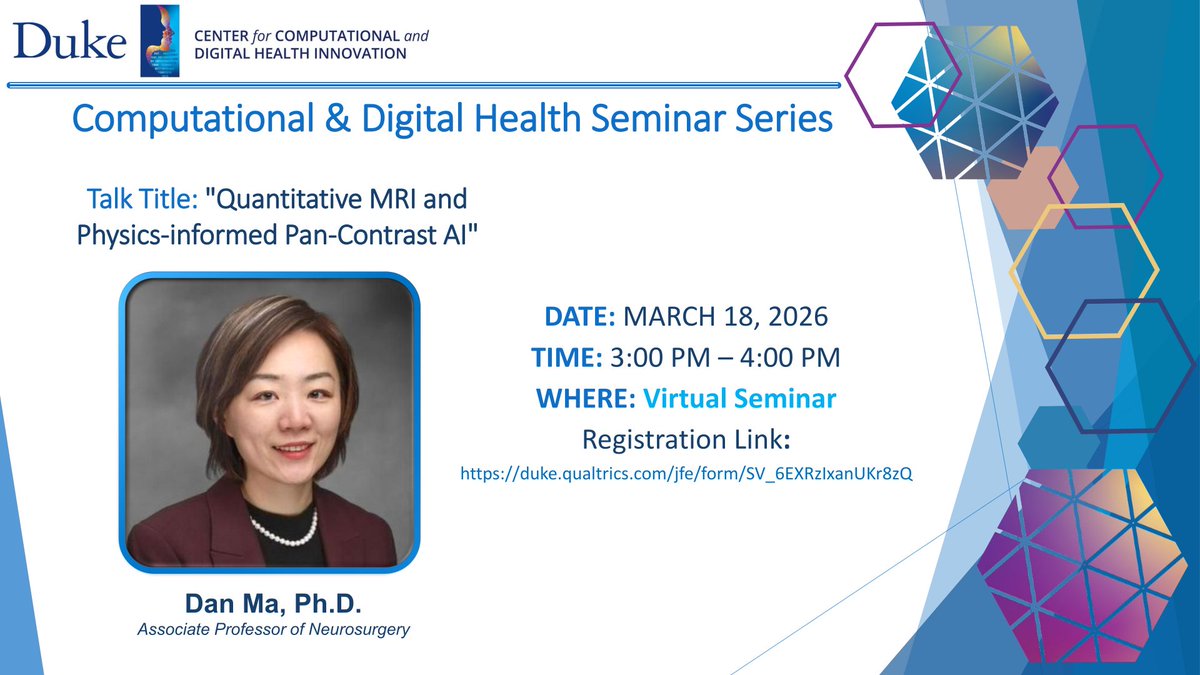
Join our next Computational and Digital Health Seminar with Dan Ma on Quantitative MRI and Physics-informed Pan-Contrast AI. It's hosted virtually so everyone is welcome to attend. Register here: duke.qualtrics.com/jfe/form/SV_6E…
Randles Lab tweet media
English
0
0
1
152
Randles Lab
Randles Lab@RandlesLab·
Great conversations this week at the SIAM Conference on Parallel Processing for Scientific Computing where I had the chance to speak about vascular digital twins and the role of high performance computing in medicine. Today most computational models in healthcare still focus on a single snapshot of physiology. Our work is exploring how advances in simulation, sensing, and data integration can make it possible to track how blood flow changes over time. By connecting physics based models with data from wearable devices and clinical imaging, we can begin to build digital twins that capture trajectories in cardiovascular physiology across many heartbeats rather than a single moment. This opens the door to earlier detection of disease and a more proactive approach to care. It was so fun to talk to people from the SIAM PP community about how advances in scalable computing can support the next generation of biomedical simulation. Thanks for the invite! #HPC #DigitalTwins #SIAMPP26
Randles Lab tweet media
English
0
0
7
168
Randles Lab
Randles Lab@RandlesLab·
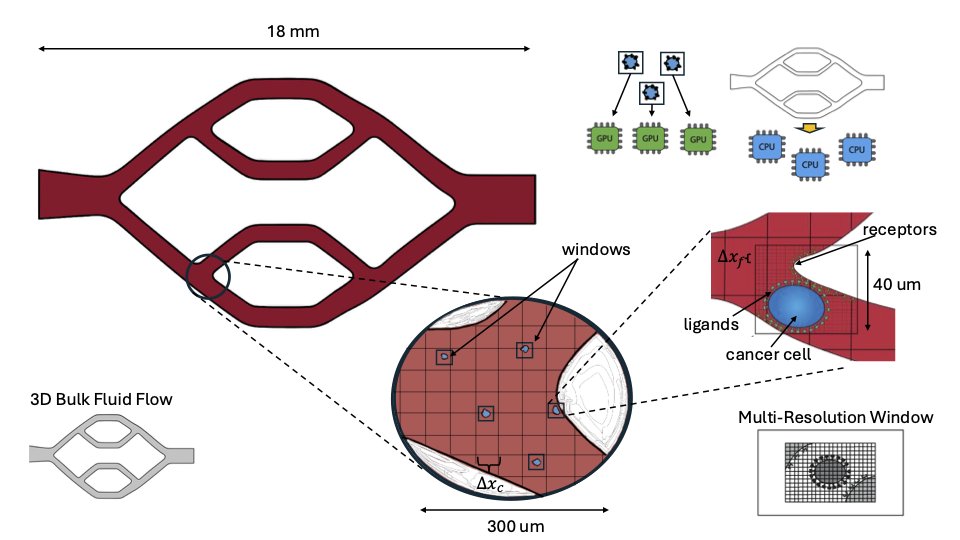
How do you study cell adhesion across tissue scale blood vessels without the computational cost becoming prohibitive? Our new paper, High throughput adaptive physics refinement for tissue scale adhesive dynamics, by Aristotle Martin, Ph.D., William Ladd, Wendy Wu, and I, introduces a scalable GPU based framework that makes it possible to track thousands of circulating tumor cells while preserving high fidelity adhesive dynamics and run to run reproducibility. Demonstrated at scale on Argonne Leadership Computing Facility's Aurora, this work shows how adaptive multiscale modeling can act as a computational microscope for studying cancer transport and other receptor mediated biological processes. Read the article here: #d1e1128" target="_blank" rel="nofollow noopener">sciencedirect.com/science/articl…
Randles Lab tweet media
English
0
0
0
163
Randles Lab
Randles Lab@RandlesLab·
What if arrhythmia care moved beyond detecting events to anticipating vulnerability? I talked with Jodie Elrod and the EP Lab Digest team about how cardiovascular digital twins could shift the focus from reactive monitoring to predictive, personalized care by combining longitudinal rhythm data with individualized anatomy, hemodynamics, and physiology. If you’re curious how this systems-level approach might uncover hidden risk drivers or inform more tailored treatment strategies, read the article here to learn more: hmpgloballearningnetwork.com/site/eplab/fea…
English
0
0
0
58
Randles Lab
Randles Lab@RandlesLab·
I had such a great time giving the BME Seminar (stonybrook.edu/commcms/bme/se…) at Stony Brook University SUNY today. I really enjoyed the discussion about the potential for digital twins and was impressed by how insightful and engaged the students were. Student facing talks are always my favorite and genuinely inspiring for the future of the field. Thanks so much to Yi-Xian QIN for the invitation and for hosting me.
Randles Lab tweet media
English
0
0
1
139
Randles Lab
Randles Lab@RandlesLab·
Interested in AI in healthcare and want to understand what responsible use really means? Large Language Models are rapidly shaping clinical workflows, research, and decision-making but deploying them in healthcare requires care, rigor, and accountability. Join Monical Agrawal, Co-Associate Director of AI at the Center for Computational and Digital Health, for a virtual seminar exploring the responsible use of large language models in healthcare—from real-world opportunities to risks, limitations, and best practices. 📌 Computational & Digital Health Virtual Seminar Series 🗓 January 21, 2026 ⏰ 3:00–4:00 PM ET 💻 Virtual Whether you work in healthcare, AI/ML, digital health, or policy, this seminar will provide practical insight into how LLMs can be used thoughtfully and effectively in high-stakes settings. 🔗 Register here: duke.qualtrics.com/jfe/form/SV_0O…
English
0
0
0
78
Randles Lab
Randles Lab@RandlesLab·
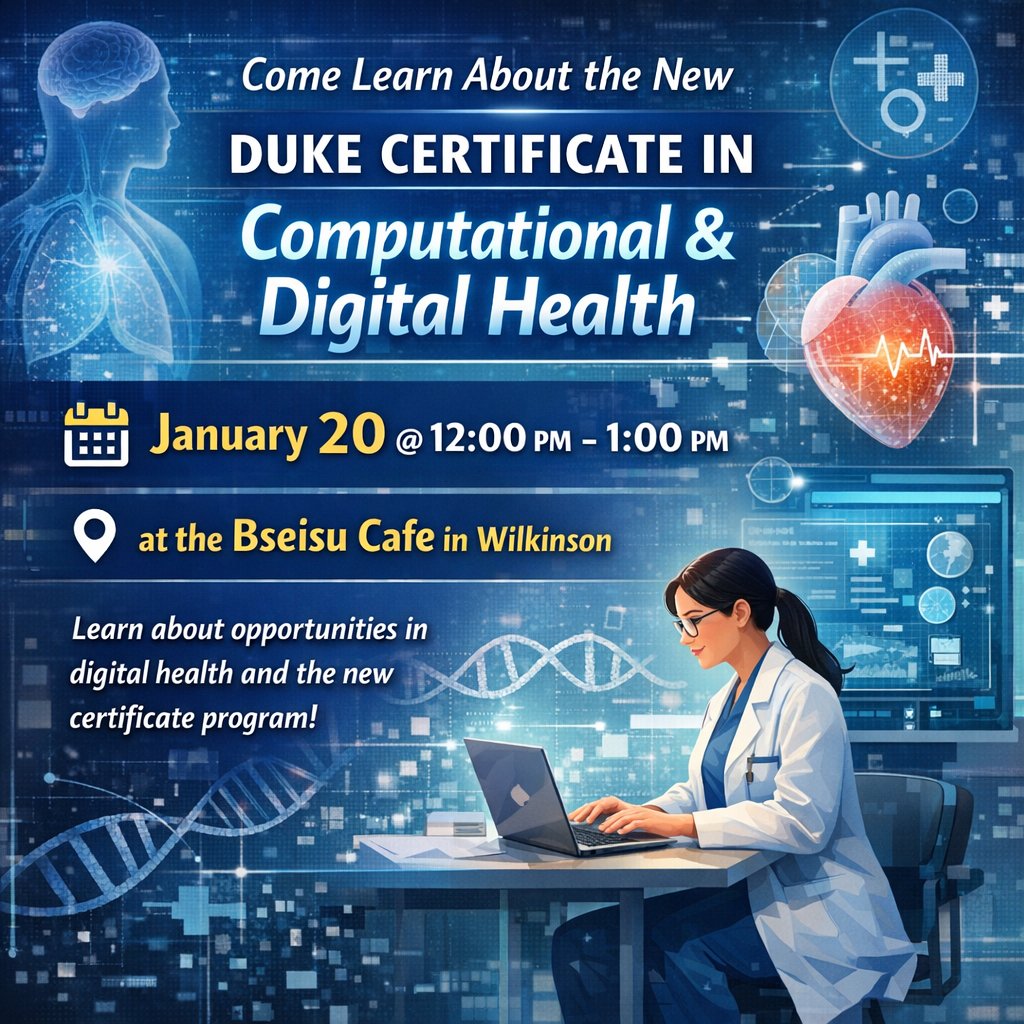
Come learn about the new Duke Certificate in Computational & Digital Health! Jan 20, 12–1 PM, Bseisu Café, Wilkinson.
Randles Lab tweet media
English
0
0
0
103
Randles Lab
Randles Lab@RandlesLab·
One of the very best parts of being a faculty member is getting to watch your students grow into scientists in their own right. This week, my PhD student Aristotle successfully defended his dissertation, “Parallel Adhesive Dynamics With Adaptive Physics Refinement for Large-Scale Tracking of Circulating Tumor Cells.” I could not be more proud. It has been an honor to be part of his scientific journey at Duke and to see how much he has developed over the past few years. From his Best Paper award at ICCS, to his efforts porting HARVEY to most major supercomputers, to being recognized by the community with an honorable mention for the George Michael Award, Aristotle has consistently raised the bar. He leaves behind a lasting impact on our research, our code, and our lab culture, and mentoring him has truly been a pleasure. I am excited to see where his work takes him next and know he will continue to do exceptional things. Congratulations, Dr. Aristotle! This was so well deserved. #PhDDefense #ProudAdvisor #ComputationalScience #HPC #Mentorship #NextGenerationResearchers
Randles Lab tweet media
English
0
1
4
451
Randles Lab
Randles Lab@RandlesLab·
You’d think early detection of worsening heart failure requires invasive sensors or frequent clinical visits. But our new digital twin framework shows we can predict patient-specific pulmonary artery pressures noninvasively—using 3D computational modeling. In this short video, we walk through how we: • Use CFD-driven digital twins to simulate hemodynamic changes tied to HF progression • Identify the minimal geometric complexity needed for accurate pressure prediction • Examine how boundary condition choices shape clinical reliability • Validate predictions against invasive measurements • Lay groundwork for continuous, scalable HF monitoring The takeaway? A future where digital twins help clinicians intervene before a patient declines—turning reactive HF management into proactive care. Research led by Justen Geddes, Ph.D. in collaboration with Christopher Jensen, Cyrus Tanade, Arash Ghorbannia, Marat Fudim, and Manesh Patel, M Read the full paper here: comphealth.duke.edu/publications/d…
English
0
0
0
88
Randles Lab
Randles Lab@RandlesLab·
Happening now! Interest in AI + HPC? Check out the ongoing seminar from a leader in the field.
Randles Lab@RandlesLab

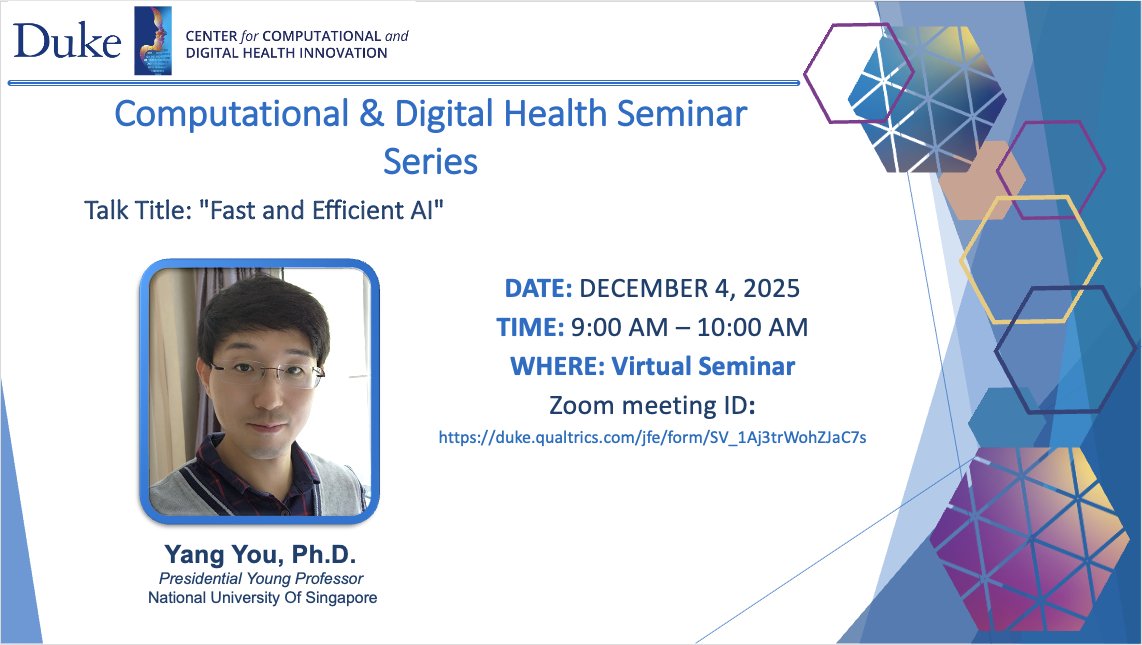
Interested in fast and efficient AI? Check out our upcoming Computational & Digital Health Seminar featuring Yang You. We’re excited to welcome Dr. Yang You (National University of Singapore) for a seminar on designing the next generation of fast, efficient, and scalable AI systems—work that is reshaping what’s possible in machine learning and large-model training. Dr. You will discuss his work on LARS and LAMB, two optimizers that have transformed large-batch training for massive neural networks. NVIDIA’s public benchmarks show that LAMB can achieve up to a 17× speedup for large-batch BERT pre-training, making large-scale training more practical than ever. He will also cover advances in Sequence Parallelism and 2D Tensor Parallelism, strategies that overcome memory and communication bottlenecks and make trillion-parameter training feasible even on commodity hardware. These methods now power widely used frameworks such as Megatron-LM and OPT at NVIDIA and Meta. His recent work on real-time video generation, enabled by the Pyramid Attention Broadcast architecture, demonstrates how efficient design can unlock new interactive AI capabilities. Dr. You will also introduce Colossal-AI, the widely adopted open-source toolkit that brings together these algorithmic and system innovations and has grown to more than 41,000 GitHub stars. This seminar will present a clear, cohesive vision for the future of scalable and accessible AI systems and their impact across fields, including digital health. It's open to all so, we hope you will join us for an engaging and forward-looking discussion. Date: December 4, 2025 Time: 9:00 AM – 10:00 AM Where: Virtual Seminar Register here:lnkd.in/ggVZhFKb #AI #MachineLearning #HPC #DigitalHealth #ColossalAI #ScalableAI #LargeLanguageModels #LLM

English
0
0
0
161
Randles Lab
Randles Lab@RandlesLab·
Interested in fast and efficient AI? Check out our upcoming Computational & Digital Health Seminar featuring Yang You. We’re excited to welcome Dr. Yang You (National University of Singapore) for a seminar on designing the next generation of fast, efficient, and scalable AI systems—work that is reshaping what’s possible in machine learning and large-model training. Dr. You will discuss his work on LARS and LAMB, two optimizers that have transformed large-batch training for massive neural networks. NVIDIA’s public benchmarks show that LAMB can achieve up to a 17× speedup for large-batch BERT pre-training, making large-scale training more practical than ever. He will also cover advances in Sequence Parallelism and 2D Tensor Parallelism, strategies that overcome memory and communication bottlenecks and make trillion-parameter training feasible even on commodity hardware. These methods now power widely used frameworks such as Megatron-LM and OPT at NVIDIA and Meta. His recent work on real-time video generation, enabled by the Pyramid Attention Broadcast architecture, demonstrates how efficient design can unlock new interactive AI capabilities. Dr. You will also introduce Colossal-AI, the widely adopted open-source toolkit that brings together these algorithmic and system innovations and has grown to more than 41,000 GitHub stars. This seminar will present a clear, cohesive vision for the future of scalable and accessible AI systems and their impact across fields, including digital health. It's open to all so, we hope you will join us for an engaging and forward-looking discussion. Date: December 4, 2025 Time: 9:00 AM – 10:00 AM Where: Virtual Seminar Register here:lnkd.in/ggVZhFKb #AI #MachineLearning #HPC #DigitalHealth #ColossalAI #ScalableAI #LargeLanguageModels #LLM
Randles Lab tweet media
English
0
1
0
296
Randles Lab
Randles Lab@RandlesLab·
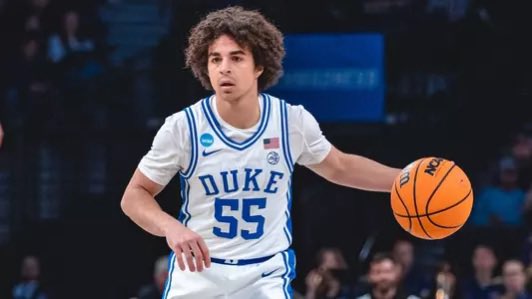
@BlueDevils Made my son’s night. He’s here in his Hubbard jersey :)
Randles Lab tweet media
English
0
0
3
253
Blue Devils
Blue Devils@BlueDevils·
Spencer Hubbard will be in the building for tonight’s Duke game!
Blue Devils tweet media
English
5
13
812
14.1K
Randles Lab
Randles Lab@RandlesLab·
In honor of this week’s new Computational & Digital Health seminar, we’re revisiting a favorite from earlier in the semester. John Hickey, co-Associate Director of AI at the Center for Computational and Digital Health Innovation, creates DNA barcodes that enable staining 15 molecular species at once in single cells. This lets his lab identify cell types, map their spatial neighborhoods, and uncover the multi-cellular structures and network interactions within complex tissues. This clip is just a glimpse of his research. To learn more about his advances in single-cell multiplexed imaging and how computational algorithms can connect tissue data across scales—from molecular features to multicell modules—watch the full seminar. He also shares a compelling case study analyzing melanomas treated with effective and ineffective T-cell therapies. Watch the full video: comphealth.duke.edu/event/from-cod…
English
0
0
0
76
Randles Lab
Randles Lab@RandlesLab·
Congrats to Aristotle Martin on receiving an Honorable Mention for the George Michael Memorial HPC Fellowship!
Randles Lab tweet media
English
0
0
1
179
Randles Lab
Randles Lab@RandlesLab·
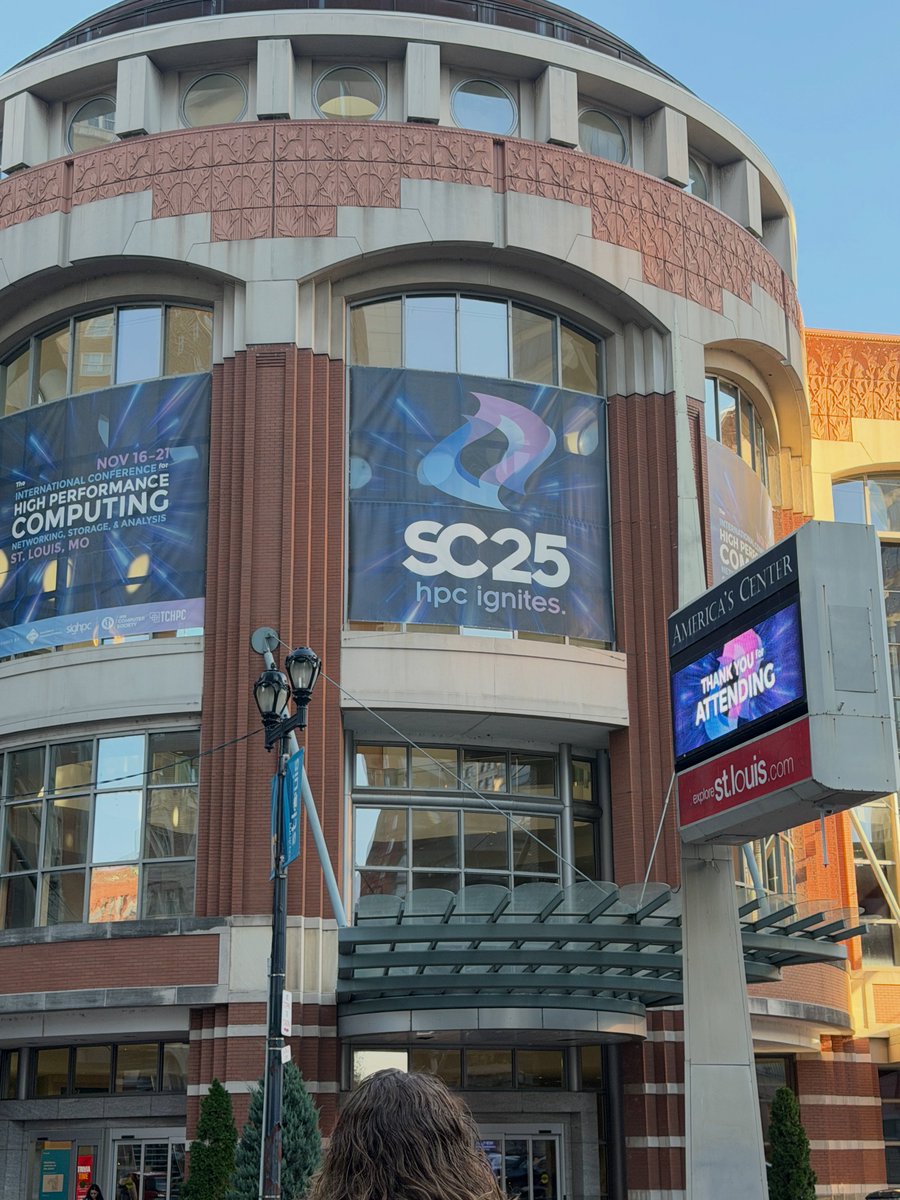
Check out Ayman's fantastic visualization for the Art of HPC at #SC25!
Randles Lab tweet media
English
0
0
1
200
Randles Lab
Randles Lab@RandlesLab·
This year, I had the privilege of serving as Co-Chair of the ACM/IEEE SC Technical Program with Martin Schulz, and I’m still processing how extraordinary the experience was. We had a record number of technical program submissions and trust me when I say that our committee rose to the challenge. I am so impressed with and grateful for the Technical Program Committee that supported Martin and I over the last year in pulling each element together. They went above and beyond. So a deep thank you to everyone involved!
Randles Lab tweet media
English
0
0
5
239
Randles Lab
Randles Lab@RandlesLab·
New Press Feature: Communications of the ACM I’m honored to share this CACM article highlighting our work on vascular digital twins—patient-specific models designed to predict heart health before symptoms appear. The piece covers our recent advances, including: • Extending 3D blood-flow simulations from ~30 heartbeats to 4.5 million (six weeks!) • Demonstrating that a vascular digital twin can match real-world data from an implantable pressure sensor • Our long-term vision: integrating wearable data, AI surrogates, and multiscale modeling to support proactive, personalized care It was also incredibly meaningful to reflect on returning to the Heidelberg Laureate Forum—first as a graduate student, and now as an ACM Prize in Computing laureate. If you’re interested in the future of digital health, computational modeling, or AI-driven medical innovation, I’d love for you to take a look. 🔗 Link to article: duke.is/cacm25
Randles Lab tweet media
English
0
0
0
90
Randles Lab
Randles Lab@RandlesLab·
Interested in how molecular size, topology, and interactions give rise to the unique properties of polymers? Join us tomorrow for the next Computational & Digital Health Seminar featuring Dr. Michael Rubinstein, Aleksandar S. Vesic Distinguished Professor of Chemistry, Physics, and Biomedical Engineering at Duke University. Talk Title: The Loops of Life Date: Thursday, November 6, 2025 Time: 3:00–4:00 PM (Virtual) Dr. Rubinstein will discuss his group’s work in polymer theory and computer simulations—developing molecular models that capture the essential features of real polymeric systems and bridge analytical theory with experimental observations. Register here: duke.qualtrics.com/jfe/form/SV_6F… Catch up on previous talks in the Computational & Digital Health Seminar Series: duke.is/compseminarpla… #DigitalHealth #ComputationalHealth #BiomedicalEngineering #DukeEngineering #DukeBME #PolymerScience #ComputationalModeling #VirtualSeminar
Randles Lab tweet media
English
0
0
0
138