

Sable Systems International 🐭🐀🧝🏼♀️
18.3K posts
Sable Systems International 🐭🐀🧝🏼♀️
@SableSys
Thoughts, visions & revisions from John Lighton PhD, president & CIO of Sable Systems International (=the world's most advanced metabolic measurement systems)
Nevada & Washington, USA Joined Haziran 2009
2.5K Following1.7K Followers



@DrCatharineY Can confirm! Listened to the audiobook while working out on an exercise bike - it's an absolutely amazing work of ingenious hard SF, & the amnesia drug narrative hook is sheer magic. Now to see the movie...
English

Putting science back in science fiction - Project Hail Mary is an amazing example of what happens when storytelling meets science. It conveys astrophysics, orbital mechanics, and engineering with ease and humor. Highly recommended (especially for the future science gen).

English
Sable Systems International 🐭🐀🧝🏼♀️ retweeted

@SternDrewCrypto No link exists between vaccines, including combination vaccines, and autism according to WHO reviews and large-scale studies involving millions of children; the cited McCullough Foundation report is self-published and not peer-reviewed.
English
Sable Systems International 🐭🐀🧝🏼♀️ retweeted
Sable Systems International 🐭🐀🧝🏼♀️ retweeted

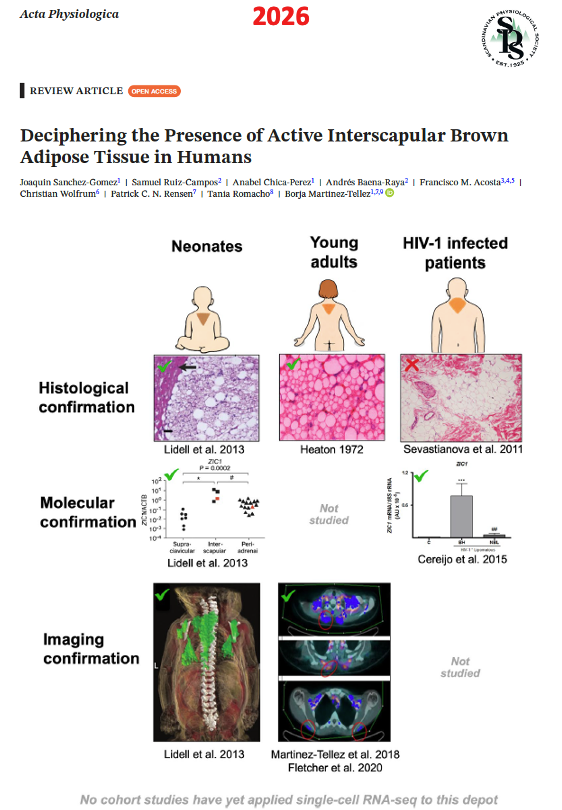
Very interesting review by @borjammt on this very interesting topic of BAT in humans! 👇🏻
Borjammt@borjammt
Do adult humans have interscapular brown adipose tissue? 🔬 A question we’ve been asking for ~10 years. Evidence (including ours) suggests this classical BAT depot may persist into adulthood—but it remains speculative.
English
Sable Systems International 🐭🐀🧝🏼♀️ retweeted

🔥 New paper out now! Do ectotherms actually adjust their physiology to cope with daily temperature swings? Our latest meta-analysis suggests… not really. Check it out now: doi.org/10.1098/rstb... plus others in the special issue #PhilTransB @rodgers_essie @RSocPublishing

English
Sable Systems International 🐭🐀🧝🏼♀️ retweeted

“This is the equivalent of working in a company that feels like it’s on the verge of bankruptcy." A @statnews survey of #NIH funded scientists finds the research community is in chaos a year into the Trump administration. @JonathanWosen reports. statnews.com/2026/03/19/nih…
English
Sable Systems International 🐭🐀🧝🏼♀️ retweeted

All the folks sharing latest scientific advances should also be sharing this ! effects on so many labs and careers have been devastating!! That is after congress ensured there would be no cuts!
Dr. Catharine Young@DrCatharineY
As the world falls apart, so does the U.S. scientific system: >40% of NIH-funded scientists are canceling research >25% are laying off staff Two-thirds are telling students to leave academia The effects of this will be deep and felt for a very long time.
English
Sable Systems International 🐭🐀🧝🏼♀️ retweeted

Biomedical researchers breathed a collective sigh of relief after the White House loosened the purse strings that had hindered the U.S. National Institutes of Health from spending its 2026 budget on research grants. scim.ag/4uA29EX
English
Sable Systems International 🐭🐀🧝🏼♀️ retweeted
As the world falls apart, so does the U.S. scientific system:
>40% of NIH-funded scientists are canceling research
>25% are laying off staff
Two-thirds are telling students to leave academia
The effects of this will be deep and felt for a very long time.
English
Sable Systems International 🐭🐀🧝🏼♀️ retweeted

There are people who speak with absolute confidence about topics they have barely explored, as if a few articles or videos were enough to master a complex field. This phenomenon has a name in psychology: the Dunning–Kruger effect, described by researchers David Dunning and Justin Kruger. Its central idea is uncomfortable but revealing: those with low ability in a given area often lack the very skills needed to recognize their own limitations.
In their studies, they found that participants who performed worst in tasks such as logic, grammar, or even humor tended to rate themselves far above their actual level. In other words, the less they knew, the more they overestimated their competence. This is not simply arrogance, but a lack of metacognition, the ability to accurately assess what one knows and does not know. And this is the key point: to evaluate a skill properly, you largely need that same skill.
Later research has shown that this effect becomes more pronounced when the subject is particularly complex or when personal or ideological beliefs are involved. In such contexts, it is common to see individuals with very superficial knowledge in areas like medicine, climate science, or economics expressing themselves with disproportionate confidence, while those who have spent years studying the topic tend to be far more cautious, precisely because they understand the depth and uncertainties involved.
The most important aspect, however, is that this bias does not only affect “other people.” We are all susceptible to it in some domain. We may be highly competent in our professional field while having a completely distorted self-assessment in others without realizing it. Moreover, the effect also works in the opposite direction: those with greater expertise often underestimate their own knowledge, because they are fully aware of how much they still do not know.
At its core, this effect highlights a clear relationship: deep knowledge tends to be accompanied by humility, whereas ignorance, unable to perceive its own limits, often presents itself with a level of certainty that is not always justified.
English
Sable Systems International 🐭🐀🧝🏼♀️ retweeted

Sable is pleased to be at the Keystone Symposia. We are grateful to be part of the Career Roundtable where Cruz Hinojos, Director of Sales & Marketing, was a panelist. We appreciate the opportunity to support the diabetes research community & the next generation of scientists.


English
Announcing a thorough, rational, science-based metabolic phenotyping course in beautiful Edinburgh! This course is a must if actionable insights & publication in top scientific journals are important to you 😎
linkedin.com/posts/bartosz-…
English
Sable Systems International 🐭🐀🧝🏼♀️ retweeted
IF ONLY a method to remove potentially deadly bacteria from raw milk had been invented!!
FactPost@factpostnews
The FDA has announced at least 7 people have contracted E. coli linked to cheddar cheese made from raw milk.
English
Sable Systems International 🐭🐀🧝🏼♀️ retweeted
Meningitis is a horrific infection which kills young people...fast
If you are even against a vaccine for THAT then truly you are lost
TheFeralWitch🔮🇬🇧🏴@TheFeralWitchy
Vaccine roll out to start at University of Kent 🤦🏼♀️ Anyone allowing their children to inject this poison needs their heads testing! Has Covid taught you nothing!
English
Sable Systems International 🐭🐀🧝🏼♀️ retweeted

Full-circle: 19 yrs after my 1st student conference presentation, I’ve been elected the 50th President of the @ShockSociety. I’m deeply grateful to have grown up in this incredible community and for the trust my colleagues have placed in me. Honored beyond words! @VUMChealth

English
Sable Systems International 🐭🐀🧝🏼♀️ retweeted
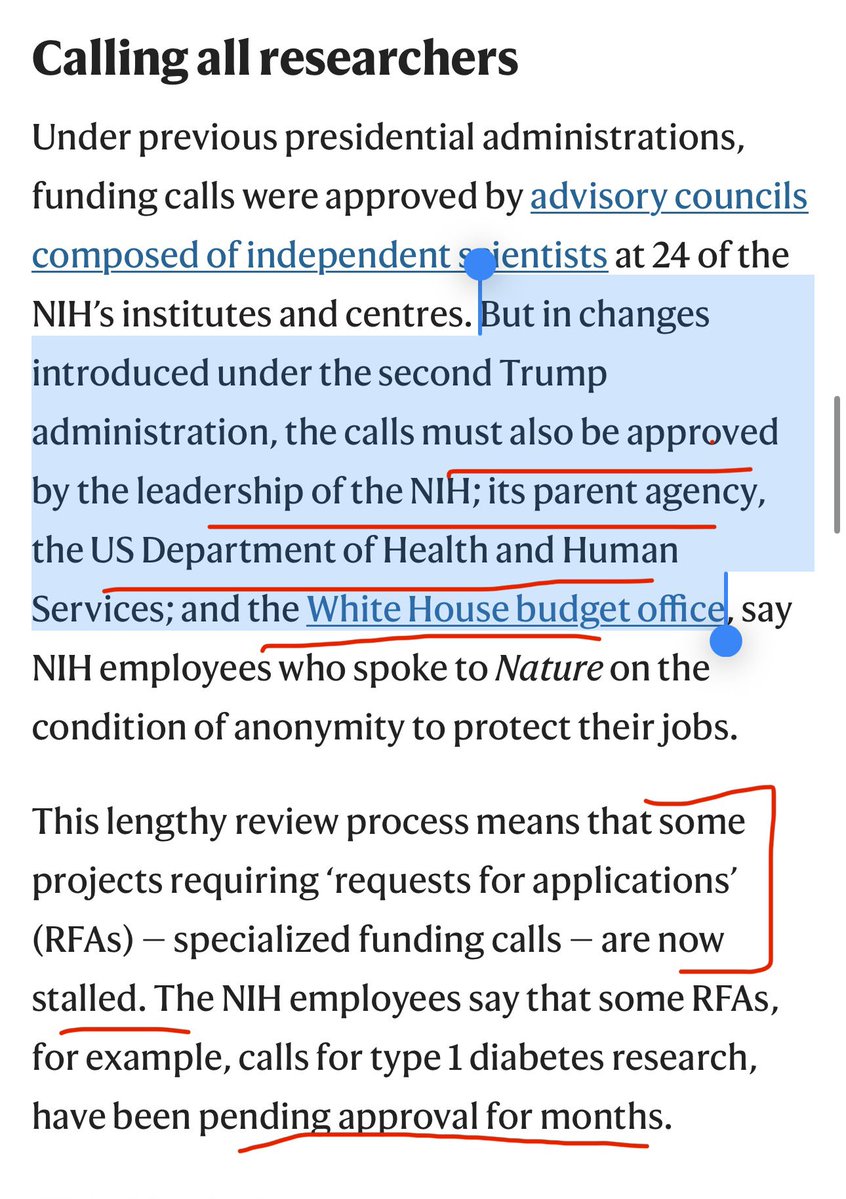
WELP—As result of all NIH grants requiring RFK Jr and White House approval… we now have 90% less funding for medical research. We are sacrificing our children’s future — all for what???

English