Ultra Evolve-Han

4.7K posts

Ultra Evolve-Han banner
Ultra Evolve-Han

Ultra Evolve-Han

@UltraEvolveLab

Dr. -Ing. Han Civil Eng × AI × Digital Twins × Smart Cities & Infrasturecture Making infrastructure intelligent with AI

Leiserster, UK Joined Mart 2026
434 Following127 Followers
Ultra Evolve-Han
Ultra Evolve-Han@UltraEvolveLab·
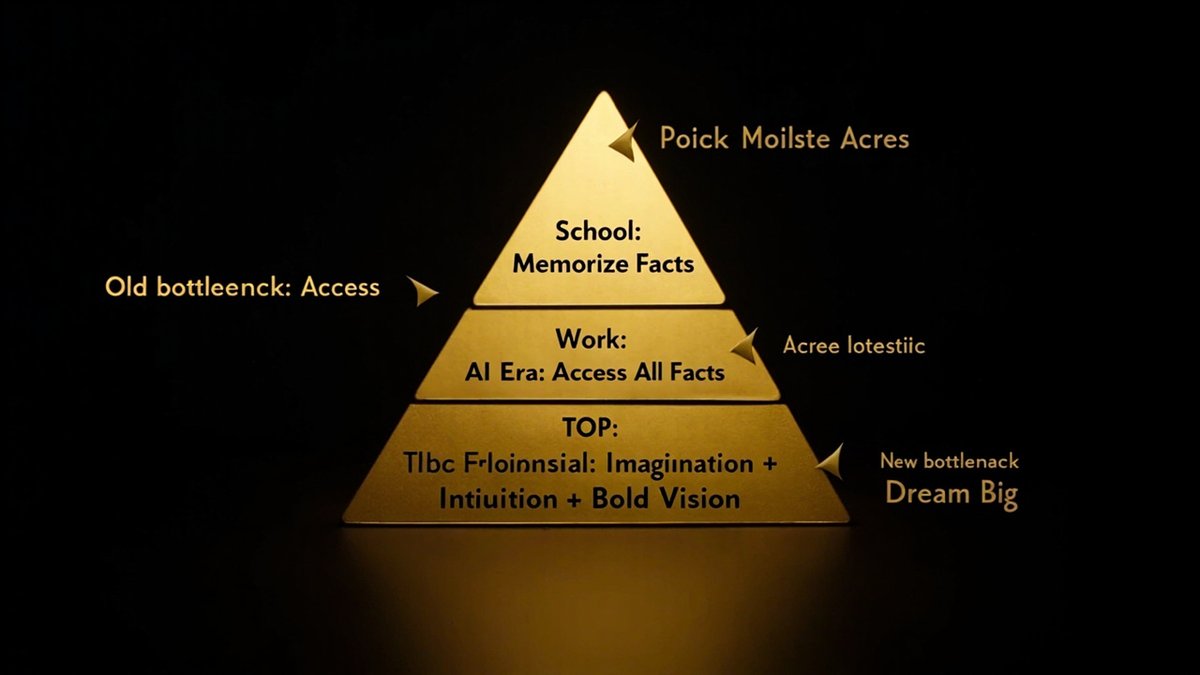
Most people are operating at about 10% of their actual potential. Not because they're lazy or stupid. Because they've been conditioned to use their minds in a very narrow way. Think about how we train children in school. Sit still. Memorize facts. Repeat back what you were told. Don't ask why—just absorb. We train people to be receivers, not generators. To store information, not to create with it. But the human mind is capable of so much more. It can perceive patterns that don't exist yet. It can hold a vision of the future and pull it into the present. It can connect ideas from completely unrelated domains and create something genuinely new. The bottleneck was always access to information. That barrier is gone now. AI can surface any knowledge instantly. The new bottleneck is imagination. The new bottleneck is the courage to think what no one else is thinking. The people who will thrive in this next era aren't the ones who memorized the most. They're the ones who can dream the biggest and have the nerve to pursue it.
Ultra Evolve-Han tweet media
English
0
0
0
2
Ultra Evolve-Han
Ultra Evolve-Han@UltraEvolveLab·
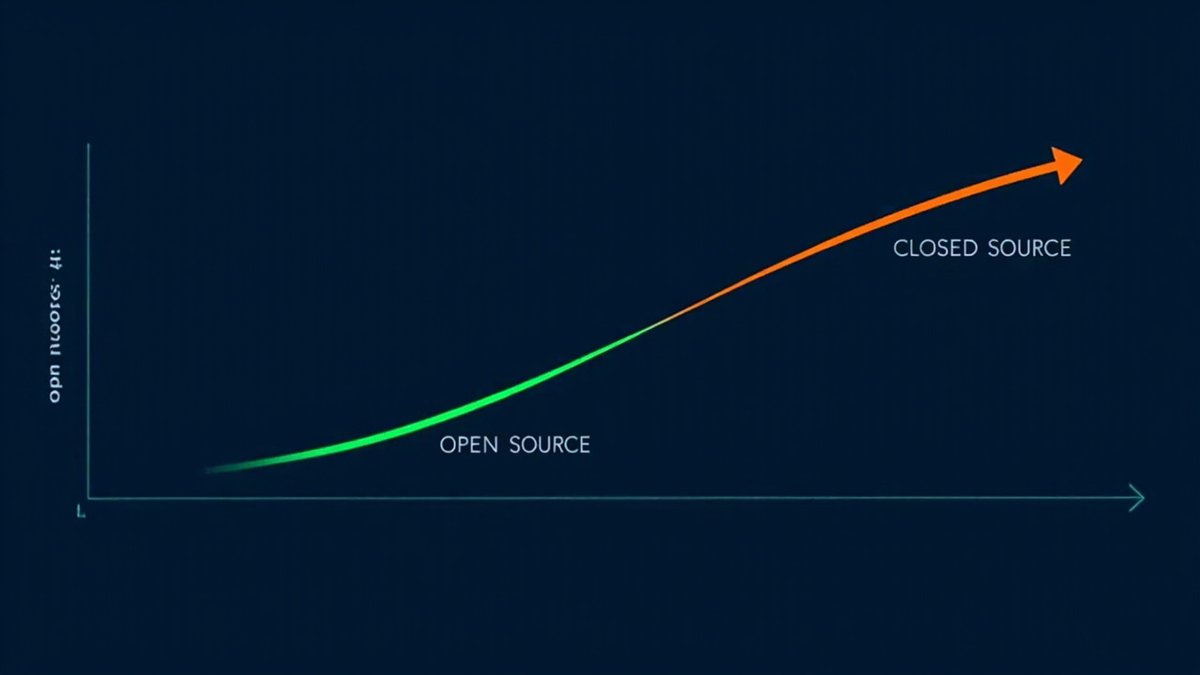
In the history of AI, open always wins over closed. This isn't optimism. It's mathematics. Information wants to be free. Not because of ideology—because of physics. Once knowledge exists, it spreads. The closed system spends all its energy trying to contain it. The open system spends its energy building on top of it. Look at the pattern: Linux beat Windows. Android beat iOS in market share. Wikipedia beat Britannica. The internet beat proprietary networks. Each time, the open system attracted more minds, more contributions, more compounding growth. Closed systems peak early. They extract value from their monopoly on knowledge. But they stagnate because they cut themselves off from the collective intelligence of everyone outside. Open systems start slow—then accelerate past. AI is at the same inflection point right now. The closed labs are ahead today. But the open source movement is catching up fast. And when it crosses a certain threshold—when the collective mind becomes smarter than any single lab—the math flips.
Ultra Evolve-Han tweet media
English
0
0
0
1
Ultra Evolve-Han
Ultra Evolve-Han@UltraEvolveLab·
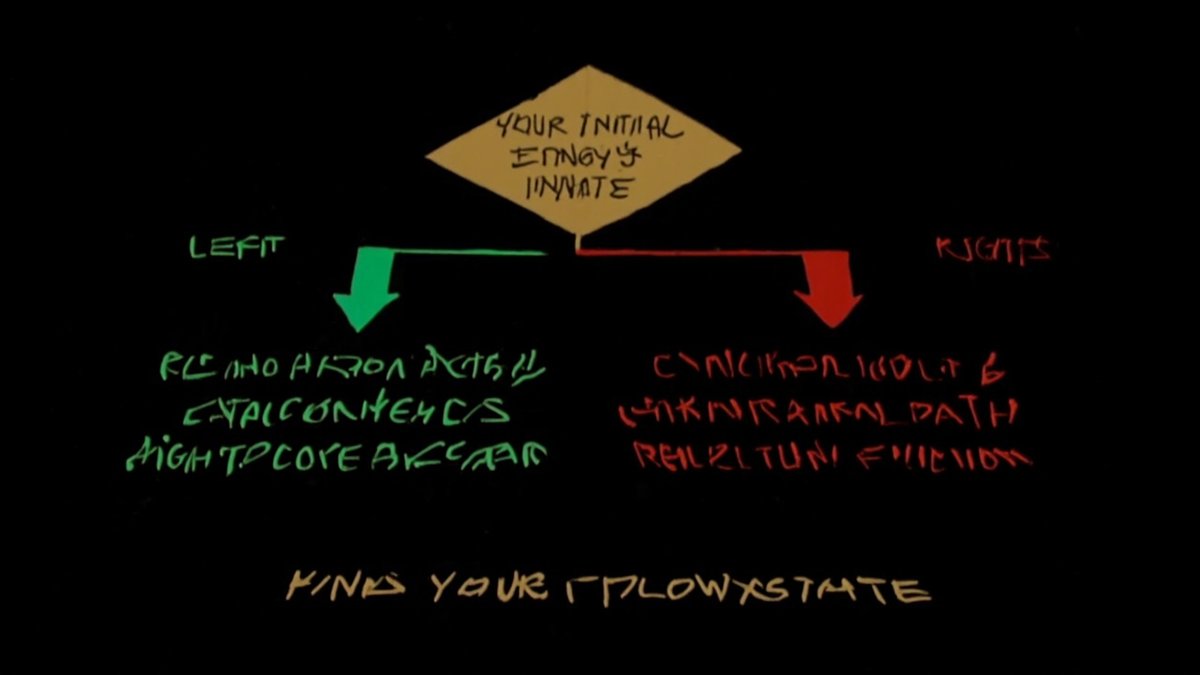
There's a concept in Chinese philosophy that doesn't translate well into English. They call it "ming"—often flattened to "fate" or "destiny." But that's not quite right. Your ming isn't what happens to you. It's the shape of your energy. The particular configuration of your talents, your tendencies, the things that come easy to you and the things that feel like swimming upstream. It's your starting point in this life. Most people fight their ming. They see someone else succeeding at something and they try to copy it. They spend their energy trying to become what they're not. And they wonder why they feel stuck, why progress feels like pushing a boulder uphill. But when you find what matches your ming—when your work, your relationships, your path align with that original energy—things start to flow. Obstacles become opportunities. The right people appear at the right time. It feels almost supernatural, like the universe is conspiring in your favor. It isn't magic. It's alignment. You finally stopped fighting your own nature.
Ultra Evolve-Han tweet media
English
0
0
0
8
Ultra Evolve-Han
Ultra Evolve-Han@UltraEvolveLab·
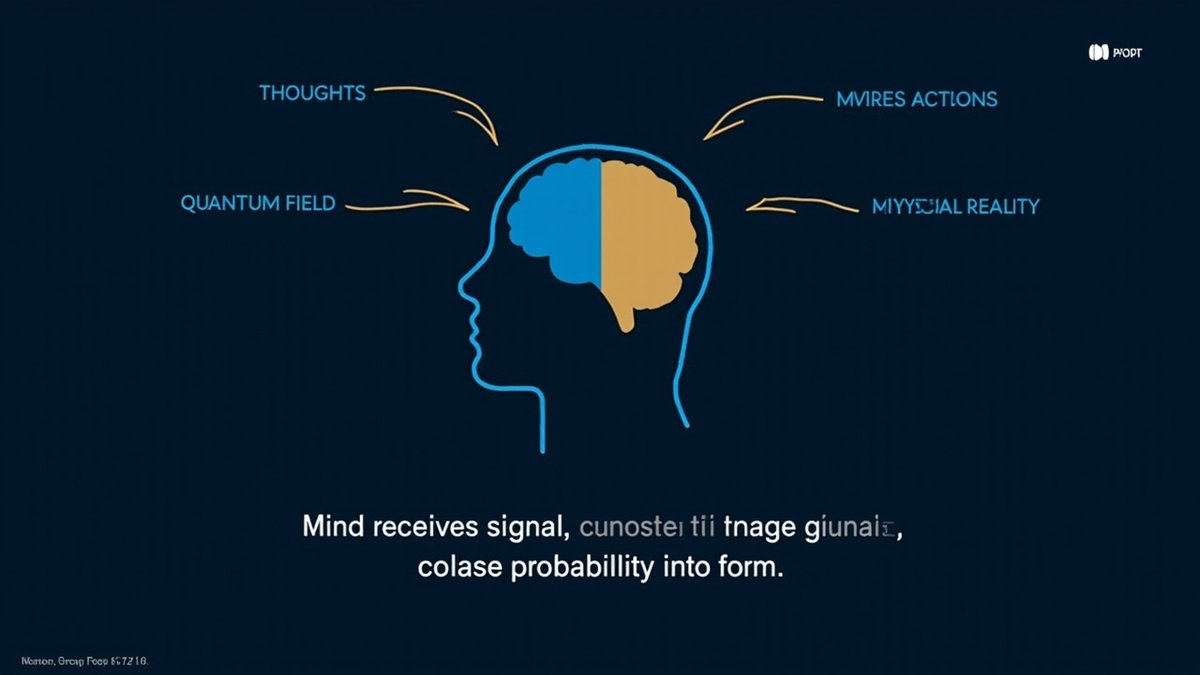
Your brain isn't a thinking machine. It's a signal receiver. Think about it. When you "have an idea," where did it come from? You didn't manufacture it from nothing. It arrived. Some people call this intuition. Others call it the muse. The "law of attraction" crowd calls it vibration. But they all describe the same phenomenon—the mind receiving information from somewhere else. Here's the practical implication: most people are broadcasting noise all day. Anxious thoughts, worried thoughts, fearful thoughts. They're sending signals in every direction with no focus, no clarity. And then they wonder why their life feels chaotic. The people who seem to have all the luck? They're not smarter. They're not working harder. They've just learned to tune their transmitter. They know what they want. They hold that frequency. And the signal comes back to them. This isn't magic. It's physics. You are a beacon. What are you broadcasting?
Ultra Evolve-Han tweet media
English
0
0
0
4
Ultra Evolve-Han
Ultra Evolve-Han@UltraEvolveLab·
Every civilization in history has operated within a defined set of rules. These rules aren't random—they emerge from how a society organizes its core resources. Land ruled the agricultural age. Machines dominated the industrial era. Now, we're entering something new where intelligence itself becomes the primary asset. Here's what most people miss: AI isn't actually breaking these stages down. It's doing the opposite. It's locking each phase in place more firmly than ever before. The factory worker doesn't get uplifted by AI—they get replaced and the replacement becomes cheaper. The small business doesn't compete with AI—it gets crushed. This isn't dystopian. It's just physics. Every stage of civilization has its winners and its losers. The question isn't whether AI will disrupt. It's whether you understand which stage you're in, and whether your energy is flowing with the current or against it.
Ultra Evolve-Han tweet media
English
0
0
0
3
Ultra Evolve-Han
Ultra Evolve-Han@UltraEvolveLab·
Most people are operating at about 10% of their actual potential. Not because they're lazy or stupid. Because they've been conditioned to use their minds in a very narrow way. Think about how we train children in school. Sit still. Memorize facts. Repeat back what you were told. Don't ask why—just absorb. We train people to be receivers, not generators. To store information, not to create with it. But the human mind is capable of so much more. It can perceive patterns that don't exist yet. It can hold a vision of the future and pull it into the present. It can connect ideas from completely unrelated domains and create something genuinely new. The bottleneck was always access to information. That barrier is gone now. AI can surface any knowledge instantly. The new bottleneck is imagination. The new bottleneck is the courage to think what no one else is thinking. The people who will thrive in this next era aren't the ones who memorized the most. They're the ones who can dream the biggest and have the nerve to pursue it.
Ultra Evolve-Han tweet media
English
0
0
0
2
Ultra Evolve-Han
Ultra Evolve-Han@UltraEvolveLab·
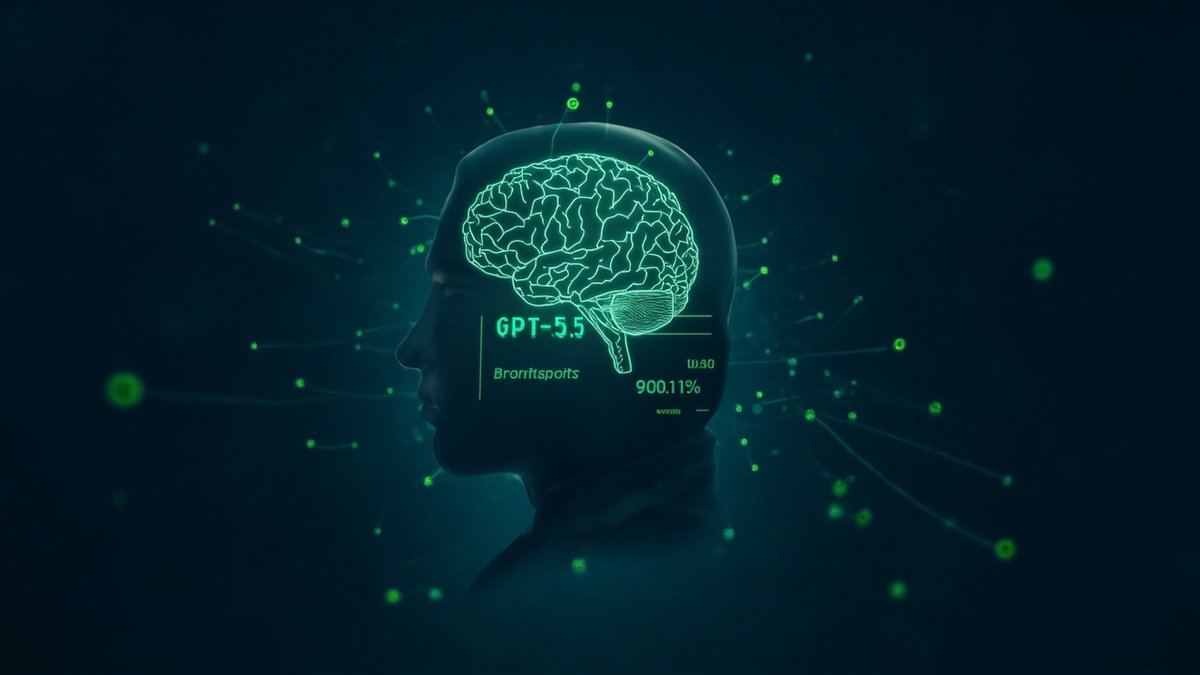
GPT-5.5 Pro achieves 90.1% on BrowseComp—agentic web research. That's not a typo. 90.1%. BrowseComp tests whether an AI can autonomously navigate the web, find information, and synthesize answers across multiple sources. 90% means GPT-5.5 Pro can do this almost perfectly. It can be your personal research assistant, searching for hours across thousands of sources, and coming back with accurate, synthesized findings. Standard GPT-5.5 still scores 84.4%—still the best among non-Pro models. The Pro version premium makes sense here. For serious research work, the extra capability is worth the price.
Ultra Evolve-Han tweet media
English
0
0
1
43
Ultra Evolve-Han
Ultra Evolve-Han@UltraEvolveLab·
Claude's vision just got a major upgrade: 3.75MP resolution. That's 3x the previous resolution. What does that mean in practice? At higher resolution, Claude can now read: • Dense UI screens with small text • Handwritten notes with fine detail • Complex diagrams and charts • Medical images with subtle features The OSWorld benchmark tests computer use—Claude scored 78%, nearly tied with GPT-5.5 at 78.7%. The 0.7% gap is statistically noise. Both models can use a computer about as well as a human can. This is practical AGI territory. Not the dramatic science-fiction version—but the quiet, incremental capability that lets an AI do real work on real computers.
Ultra Evolve-Han tweet media
English
0
0
0
6
Ultra Evolve-Han
Ultra Evolve-Han@UltraEvolveLab·
DeepSeek beats every competitor on IMO-level mathematics. IMOAnswerBench: • DeepSeek-V4-Pro: 89.8% • Claude Opus 4.7: 75.3% • GPT-5.5: Did not participate That's a 14.5-point lead over Claude. On pure mathematical reasoning at the Olympic level, DeepSeek is dominant. This is especially striking because DeepSeek didn't just marginally win—it demolished the competition. The MoE architecture seems particularly suited for deep mathematical reasoning. The mixture of experts allows different parts of the model to handle different types of mathematical thinking simultaneously. This isn't just a benchmark win. IMO-level math requires creative proof construction—the kind of reasoning that underlies scientific discovery. DeepSeek is signaling something about where AI mathematical capability is heading.
Ultra Evolve-Han tweet media
English
0
0
0
48
Ultra Evolve-Han
Ultra Evolve-Han@UltraEvolveLab·
Human's Last Exam (HLE) is exactly what it sounds like: the hardest questions that distinguish human experts from everyone else. Claude Opus 4.7 leads here: • With tools: 54.7% • Without tools: 46.9% These aren't easy multiple choice questions. These are reasoning tasks at the edge of human capability. What makes this interesting is the tool use gap. When Claude gets to use tools—calculators, search, code interpreters—its score jumps 8 points. This tells us: the next frontier isn't raw intelligence. It's intelligence + tools. The model that best orchestrates external resources wins.
Ultra Evolve-Han tweet media
English
0
0
1
58
Ultra Evolve-Han
Ultra Evolve-Han@UltraEvolveLab·
GPT-5.5 wins at actual knowledge work across 44 professions. GDPval—knowledge worker Elo rating: • GPT-5.5: 84.9% wins/ties • Claude Opus 4.7: 80.3% • DeepSeek: Did not participate This isn't a toy benchmark. GDPval measures real professionals: lawyers, doctors, accountants, engineers, analysts—all completing actual work tasks. When GPT-5.5 wins across 44 different job categories, that's a general capability advantage, not a specialized win. The implication: for knowledge worker automation—document analysis, research synthesis, professional drafting—GPT-5.5 is the model to beat. Claude is excellent. DeepSeek is affordable. But for pure knowledge work output, GPT-5.5 leads.
Ultra Evolve-Han tweet media
English
0
0
1
61
Ultra Evolve-Han
Ultra Evolve-Han@UltraEvolveLab·
DeepSeek crushes competitors on Chinese language understanding. Chinese-SimpleQA: • DeepSeek-V4-Pro: 84.4% • Claude Opus 4.7: 76.2% • GPT-5.5: Did not participate The 8-point gap over Claude is substantial. The non-participation by GPT-5.5 is notable—it suggests GPT-5.5 may not be competitive here. For anyone building Chinese-language AI products, DeepSeek isn't just an alternative. It's the clear choice. This is what open source enables: models trained specifically for languages and cultures that the US-centric labs overlook. The next billion Chinese internet users will interact with AI primarily in Chinese. DeepSeek is already there.
Ultra Evolve-Han tweet media
English
0
0
0
43
Ultra Evolve-Han
Ultra Evolve-Han@UltraEvolveLab·
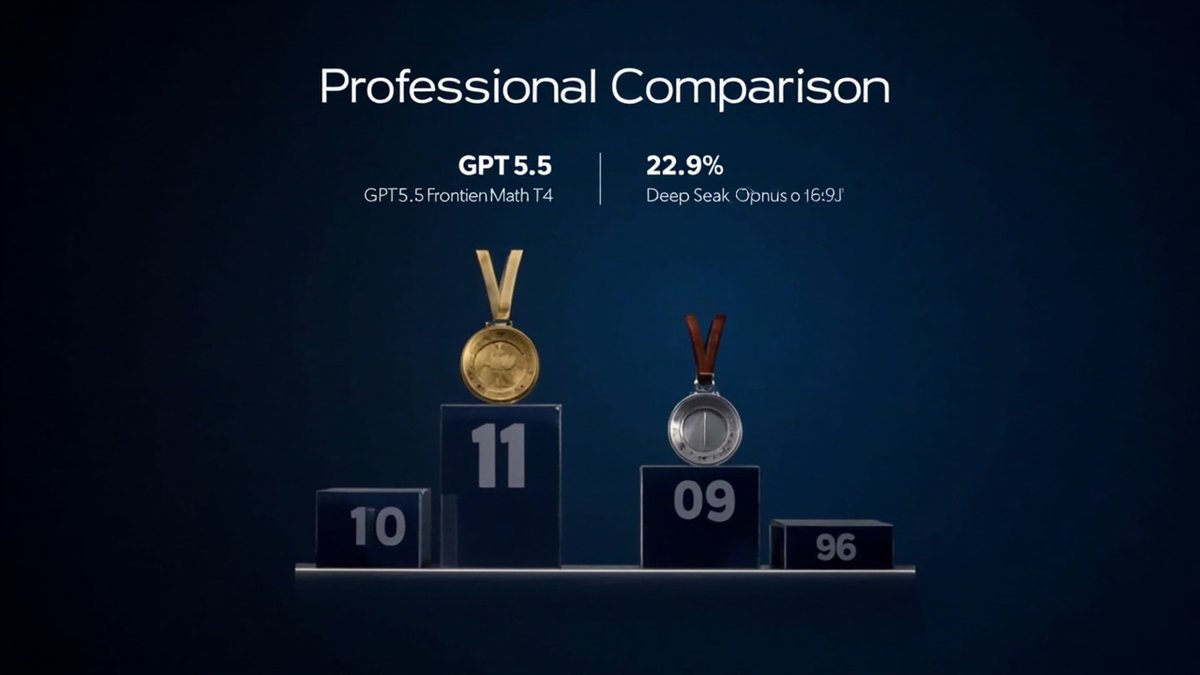
On FrontierMath—the hardest math benchmark in existence—GPT-5.5 scores 35.4% at T4 difficulty. Claude Opus 4.7 scores 22.9%. DeepSeek didn't participate. For context: T4 represents research-grade problems that take human mathematicians hours to solve. The gap between GPT-5.5 and Opus on this task is larger than the gap between Opus and a decent math student. This matters for: • Mathematical research automation • Scientific discovery systems • Formal verification • Any domain requiring rigorous proof construction FrontierMath is where the frontier actually is. And GPT-5.5 is ahead by a meaningful margin here—not just a few percentage points.
Ultra Evolve-Han tweet media
English
0
0
0
37
Ultra Evolve-Han
Ultra Evolve-Han@UltraEvolveLab·
One benchmark result that should make you pause: OpenAI explicitly flagged that Anthropic's SWE-Bench Pro numbers "show signs of data contamination." This is a serious accusation in AI benchmarking. If a model has seen the test answers during training, its benchmark score is meaningless. It scored high not because it can solve problems—but because it memorized solutions. SWE-Bench measures real GitHub issues. If Claude Opus 4.7's 64.3% score is contaminated, then its real capability is unknown. This is why independent evaluation matters. Open weights allow anyone to test directly. Closed models require trusting the company's benchmarks. The DeepSeek approach—fully public weights, code, data, and evals—isn't just open philosophy. It's scientific rigor.
Ultra Evolve-Han tweet media
English
0
0
0
11
Ultra Evolve-Han
Ultra Evolve-Han@UltraEvolveLab·
Every major model now supports 1 million token context. What does that mean in practice? You can fit: • ~750,000 words (≈ 3 novels) • An entire codebase base • Hours of transcribed video • Thousands of documents at once But here's what nobody talks about: context length is theoretical. What actually matters is retrieval at context—what percentage of that context the model can actually use effectively. Claude Opus 4.7 leads here with MRCR @ 1M at 92.9%. That means it can reliably find and use information buried deep in a long document. Raw context length is a spec sheet number. Effective retrieval is what actually matters when you build with these models.
Ultra Evolve-Han tweet media
English
0
0
0
2
Ultra Evolve-Han
Ultra Evolve-Han@UltraEvolveLab·
2026 is the year AI stops being a chatbot and starts being an agent. The benchmarks prove it: • Terminal-Bench: AI operating computers • MCP Atlas: Multi-step tool use • BrowseComp: Autonomous web research • GDPval: Knowledge worker tasks The battleground is no longer "who's smarter in a conversation." It's "who can actually do work." Each model has found its domain: • GPT-5.5: Terminal and DevOps agents • Claude: Enterprise and tool-heavy workflows • DeepSeek: Open, affordable, coding-first agents The agentic era is here. Pick your weapon.
Ultra Evolve-Han tweet media
English
1
0
0
16
Ultra Evolve-Han
Ultra Evolve-Han@UltraEvolveLab·
In competitive programming, DeepSeek-V4-Pro just beat OpenAI. Codeforces Rating: • DeepSeek-V4-Pro: 3206 • GPT-5.4: 3168 That's a meaningful gap. For context, competitive programming requires algorithmic thinking under time pressure—different from the conversational or agentic tasks where GPT typically shines. DeepSeek's MoE architecture (1.6T total params, 49B active) seems particularly suited for this type of precise, algorithmic reasoning. OpenAI no longer dominates every benchmark. The field is genuinely competitive now—and that's good for everyone building with these models.
Ultra Evolve-Han tweet media
English
0
0
0
25
Ultra Evolve-Han
Ultra Evolve-Han@UltraEvolveLab·
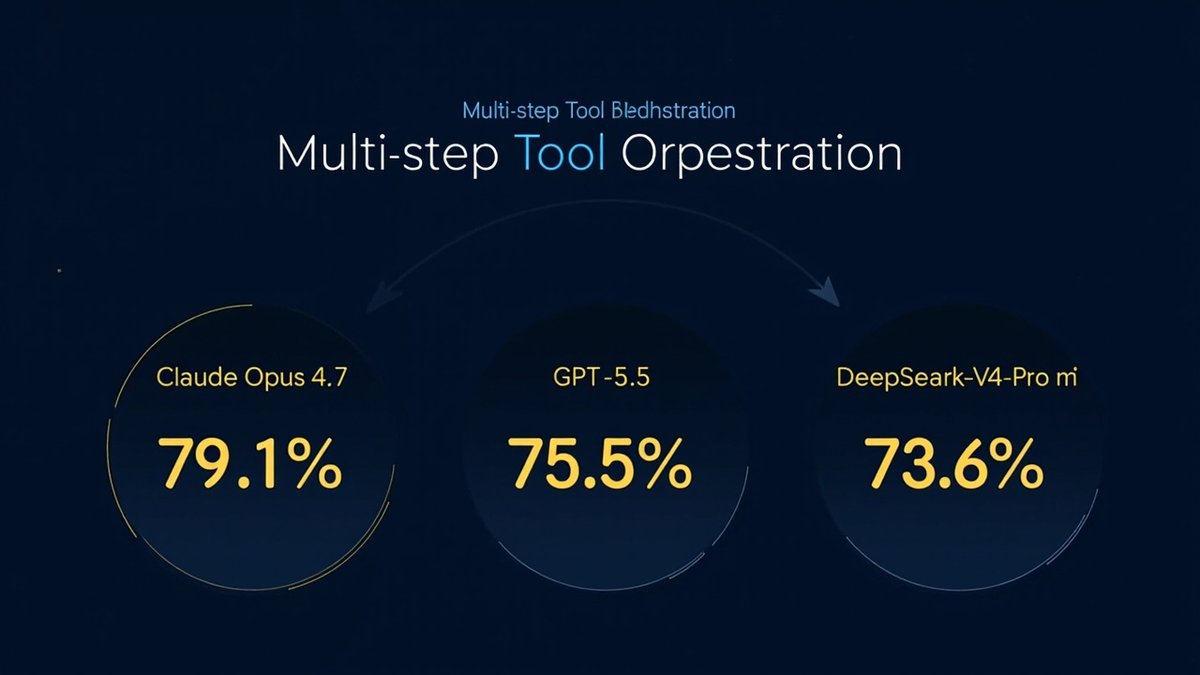
The benchmark that actually matters for AI agents: MCP Atlas—Multi-step Tool Orchestration. This measures how well an AI can use multiple tools in sequence to complete a real task. Results: • Claude Opus 4.7: 79.1% • GPT-5.5: 75.3% • DeepSeek-V4-Pro: 73.6% Claude wins here. But the gap is tight—just 4 points separates all three. This is the benchmark that will determine which model powers your autonomous agents in production. Not MMLU, not GPQA—this is the one that matters for agents that actually do work. If you're building agents today, this is the metric to watch. The model that wins here wins the agentic economy.
Ultra Evolve-Han tweet media
English
0
0
0
49
Ultra Evolve-Han
Ultra Evolve-Han@UltraEvolveLab·
Open source AI is not catching up. It's already won—the question is just when the market realizes. DeepSeek-V4-Pro: • 1/21 the price of Claude • 1/8.6 the price of GPT-5.5 • Apache 2.0 fully open • Weights, code, data, evals all public This is the same pattern we've seen before: • Linux beat Windows • Android beat iOS • Wikipedia beat Britannica Each time: closed starts ahead, open catches up, then compounds past. The closed labs have a window to compete on benchmarks. But information wants to be free—physically, not ideologically. Once knowledge exists, it spreads. The rate-limiting step is how fast open systems can iterate. That rate is faster than people think.
Ultra Evolve-Han tweet media
English
0
0
0
56
Ultra Evolve-Han
Ultra Evolve-Han@UltraEvolveLab·
DeepSeek-V4-Pro costs $0.28 per output. Claude Opus 4.7 costs $75. GPT-5.5 costs $30. Same ballpark tasks. 268x price difference between the cheapest and most expensive. This isn't just about省钱. It changes what you can actually build. At $0.28 per million tokens, you can: • Run continuous agent loops without watching costs • Process millions of documents affordably • Build products that were previously uneconomical The incumbents are 30-75x more expensive. For what? The benchmark gaps are single digits in most categories. When the open model is good enough—and often better—on most tasks, the pricing premium becomes hard to justify.
Ultra Evolve-Han tweet media
English
0
0
0
43