
Enock retweeted
Enock
38.7K posts



Kiini Macho
SHEN_KE ˚.🎀༘⋆@shen_ke2
Without saying ur age, name a tv show u grew up watching.
Indonesia
Enock retweeted

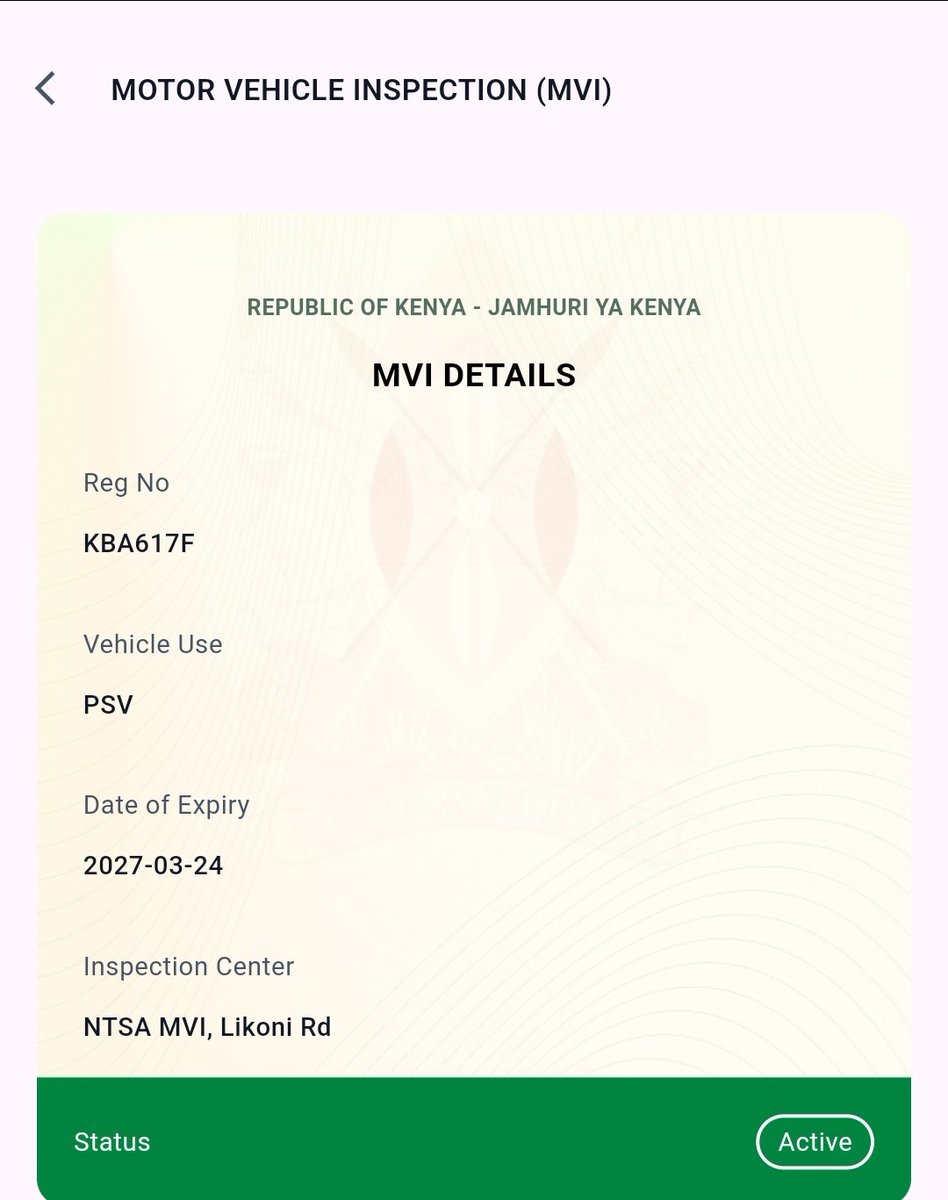
From the replies, the matatu on the right was inspected less than a month ago. Get serious @ntsa_kenya .
KIPRONO@Onorpik
NTSA wants to start inspection of private vehicles, meanwhile these are the tetanus ridden Matatus that pass their inspection tests.
English
Enock retweeted

Enock retweeted

Enock retweeted

This video is pure cinema💀the dude that stares at Ndindi after ametajwa is pure gold🤣🤣🤣
Nelson Amenya@amenya_nelson
😂😂😂😂
English
Leo nimepata link ya mix za Djs. Anyways let me not gatekeep
rhradio.com
English
Enock retweeted

Imagine sitting in a theatre in 1999 & seeing this for the first time.
English
Enock retweeted


Enock retweeted


Enock retweeted

Enock retweeted

Don't shame people for trying to make themselves better
niko kadi@nikokadiKE
Naskia ati gaitho anafanya gym lakini bado weight inaongezeka. 😂😂😂😂😂
English
Enock retweeted

Somebody just said, “At some point you’re gonna have to disappoint others to live a life that’s honest to you…”
GIF
English
Enock retweeted

he’s making the album for us respectfully u can wait a couple more months
TMZ@TMZ
Rapper Future's Baby Mama Claims He Hasn't Seen Son in Over a Year tmz.me/W4DAC8H
English
Enock retweeted

Enock retweeted

Safaricom went for the Big Bang / “Cold Turkey” Approach strategy of system rollover with the new My OneApp, and that has not gone well, with customers wailing and complaining all over the country. The same thing happened with the Government and the SHA system, and many people should have learned from that. There are many ways or strategies to roll out a new system. It is very brave to go for the direct cutover, or what is also known as the Cold Turkey Approach. The cutover strategy is very simple: the entire system goes live across the whole organization at a single point in time. The old system is immediately switched off.
I can see why organisations choose to use this approach or strategy. Chief among them is that it offers the fastest overall timeline and quickest realization of benefits. It is also simple and the cheapest to implement. Of course, Safaricom has resources, so I do not think they would go for this approach simply because it is cheap.
So why did Safaricom go for the Big Bang? I have no exact idea, but I think it could be internal pressure on the tech team. For example, if the tech team has been working on a system for a while and the launch or the implementation has been postponed several times, then the pressure to have it ready would be too high, making it hard to make a case for other rollout strategies. I know I have mentioned cost cutting and ruled it out as a reason, but there are scenarios where even the richest company in East and Central Africa would not want to spend money on a lost cause. So, this scenario is similar to the time factor mentioned above. If a system is taking too long and running way above the original budget, then again, the pressure would be too high, and the tech team would not have room to suggest a more expensive approach.
Before I come back to what other approaches Safaricom could have used, let me look at some of the problems with the Safaricom My OneApp. The following are the areas where Safaricom went wrong with their approach:
1. Forced Migration Without Notice
This, to my view, was the biggest mistake. Many users woke up to find their familiar M-PESA app replaced by a completely different interface without any prior warning or SMS notification. Well, this would have been okay if everything went smoothly, with customers seeing some new cool features. But it is a time bomb if things are not okay, as has been the case with the Safaricom new My OneApp.
The conventional way of doing it is to upload the update on the app stores and then prompt users to update their apps. From core system updates on different phones to different apps on app stores, people are given a chance to update their favourite apps when there are changes.
2. Connectivity & SIM Restrictions
The new app introduced rigid requirements that broke the experience for many users. And there are three problems under this:
Wi-Fi Issues: Many users reported that the app fails to function properly over Wi-Fi, often demanding a Safaricom data connection to authenticate. On Twitter (X), @ImbayiK noted the irony that the app uses Wi-Fi to download itself but prevents users from using the same Wi-Fi to actually use it.
"The irony that us the Safaricom mpesa app updating itself using WiFi but can't access the app using the same WiFi. Wananibore kweli"
SIM Slot Dependency: There are widespread complaints that the app only works if the Safaricom SIM is in Slot 1. For dual-SIM users, this forced a physical hardware change just to use the app.
Our beloved Diasporans: Kenyan users abroad reported being locked out because the app now requires a direct Safaricom network on the phone, making it nearly impossible to manage accounts from outside the country.
3. Data Loss
A major technical oversight was the failure to migrate saved data. Many users found that their carefully curated lists of Paybills, Till numbers, and frequent contacts vanished during the update, forcing them to manually re-enter account numbers. I saw so many people annoyed because of this.
There are others, but the above three are the most significant challenges to the users that I have seen many people complain about.
So instead of the Big Bang approach, what are the other strategies that Safaricom should have used? I think the best would be Parallel Adoption / Running. In this case, the new system runs alongside the old one for a period of time. Users operate both until the new app is validated, then the old is decommissioned. The main advantages of this approach are:
-Lowest risk: The old app acts as a safety net with easy fallback.
-Allows real-time comparison, data validation, and output checking.
-Minimal disruption for users.
-High confidence before full switchover.
The other strategy that makes more sense is the Pilot / Test Rollout. The new system is first implemented with a small, representative group before wider rollout. I guess they did that internally, but the problem with internal rollout is what could be described as an echo chamber factor. People have the same views and are subject to the same conditions.
English
Enock retweeted

Life comes at you fast doesn’t it 🫶🏽


Archie K@YesIamArchie
Its hard coping ukifika ile stage yenye your friends are making big moves na wewe life yako ni kama iko stagnant.
English
Enock retweeted
Enock retweeted

Blew my 10 year old mind when I saw this movie. Couldn’t believe a guitar case gun.
𝔰𝔢𝔩𝔢𝔠𝔱𝔬𝔯@SelectedCinema
Desperado. 1995 / Robert Rodriguez
English