Syvilla Sionnach (Kyla)

457 posts

Syvilla Sionnach (Kyla) banner
Syvilla Sionnach (Kyla)

Syvilla Sionnach (Kyla)

@foxeyfire

She plays haunting melodies. He rules a kingdom of shadows. Fate remembers what they forgot. Read The Weaving of Ash & Light: https://t.co/BTm7dBtl51

Saoghal Eile Joined Aralık 2021
294 Following199 Followers
Syvilla Sionnach (Kyla)
Woke up to a very tempting invitation…. A dash of chaos with my coffee… I could get used to this 🖤☕️🥐
Syvilla Sionnach (Kyla) tweet media
English
0
1
2
24
Le Tavernicole
Le Tavernicole@Le_Tavernicole·
PROMPT SHARE: DICE SET GENERATOR! For this one you will not even need to write anything (except if you reaaaaally want your name on the box ofc) just bring your character sheet or image of your character and launch ^^ (i strongly advise gpt again xd) @maya_AI_girl for the example dice set xd Prompt starts here: --------------------------------------------------------- Create a realistic premium advertisement poster for a brand-new tabletop roleplaying dice set, using the uploaded references as follows: Upright rectangular box, hanging retail tab, front display window, visible dice inside, and commercial tabletop-product presentation. Complete seven-piece polyhedral dice set: d4, d6, d8, d10, percentile d10, d12, and d20. Use the newly uploaded character image as the principal identity source. First, carefully analyze the character and determine the most important identity elements that make them immediately recognizable. Consider: face and hairstyle eye colors and unusual eye features species traits, horns, ears, wings, tail, markings, scars, tattoos, or supernatural features signature clothing, armor, accessories, jewelry, weapons, symbols, and ornaments dominant and secondary colors materials and textures associated with the character personality, powers, elemental affinity, social role, culture, era, and overall visual theme recurring shapes, motifs, emblems, patterns, and symbolic imagery Select only the strongest and most relevant identity elements. Translate them into a coherent commercial dice-set design without simply printing the character across every surface. Dice design Create one complete matching set of seven premium roleplaying dice: one d4 one d6 one d8 one d10 one percentile d10 one d12 one d20 All dice must clearly belong to the same collection. Adapt their resin color, transparency, opacity, marbling, gradients, suspended particles, metallic flakes, internal inclusions, numbering color, and surface finish to the character’s identity and color palette. The dice may contain subtle thematic effects inspired by the character, such as: smoke frost embers flowers blood-red swirls ocean currents magical dust celestial particles feathers runes cracked light metallic veins shadows miniature symbolic inclusions Keep the dice physically believable, professionally manufactured, evenly polished, sharply edged, properly numbered, easy to read, and suitable for a premium collectible RPG product. Do not deform the dice or replace standard numerical faces with unreadable decoration. Decorative symbols may appear only as subtle accents or on the highest-value face. Packaging design Create an original retail packaging box fully designed around the uploaded character. The packaging must include: a standing rectangular retail box a hanging tab at the top a large transparent front window several matching dice visible inside an original product title based on the character’s name, identity, title, power, or theme the wording “Tabletop Roleplaying Dice Set” refined decorative borders, motifs, patterns, and symbols derived from the character character-inspired background artwork a coherent premium fantasy color palette realistic printed cardboard, transparent plastic, metallic foil, embossing, varnish, and retail-product details small discreet product information such as “One Set,” “Ages 12+,” and “RPG” Place a small, faithful portrait of the original uploaded character in the upper corner of the front packaging. The portrait must preserve the character’s recognizable face, hairstyle, eyes, species traits, and expression. It must appear as an intentional framed product illustration, not as a large dominant character image. Do not copy logos, company names, trademarks, titles, or written branding from the reference packaging. Create entirely original branding. Advertisement composition Present the final result as a polished, realistic commercial poster for the launch of a new roleplaying dice collection. Composition: packaging box standing prominently in the background or middle ground complete seven-piece dice set arranged attractively in the foreground some dice may also be visible through the packaging window three-quarter product-view angle premium studio product photography cinematic yet believable lighting crisp reflections and realistic contact shadows selective depth of field professional tabletop merchandise styling clean visual hierarchy space for an original product title and a brief promotional tagline environment subtly adapted to the character’s identity without distracting from the product The product should feel physically real, market-ready, collectible, and expensive. The background may evoke the character’s theme through atmospheric elements such as a stormy coast, enchanted forest, gothic chamber, volcanic stone, celestial temple, cyberpunk street, frozen landscape, royal hall, or occult workshop. Keep the background slightly softened so that the dice and packaging remain the focus. Quality requirements Masterpiece, best quality, ultra-detailed, high-resolution commercial product photography, realistic resin dice, realistic cardboard packaging, sharp typography, accurate geometry, premium advertising campaign, cinematic composition, professional studio lighting, polished reflections, controlled depth of field, believable materials, elegant fantasy branding, visually coherent character-based product design. Strict requirements Show exactly one complete seven-piece RPG dice set in the foreground. Preserve the standard shapes of every die. Keep all numerals correctly oriented, engraved, and readable. Make the packaging and dice share the same identity and palette. Keep the small character portrait faithful to the uploaded character. Do not reproduce branding or logos from the reference images. Do not make the result look like a flat illustration or concept sheet. The final image must look like a real photographed advertisement for an existing premium retail product.
Le Tavernicole tweet media
English
32
7
54
2.1K
Syvilla Sionnach (Kyla)
You should never neglect your house guests. It’s rude. And if they’re particularly pretty, they might start demanding your attention instead…. And who am I to say no 🌹🦊
Syvilla Sionnach (Kyla) tweet mediaSyvilla Sionnach (Kyla) tweet mediaSyvilla Sionnach (Kyla) tweet media
English
2
1
15
308
Syvilla Sionnach (Kyla) retweeted
Sylas Dorne ~Sundered Realms Outcast~
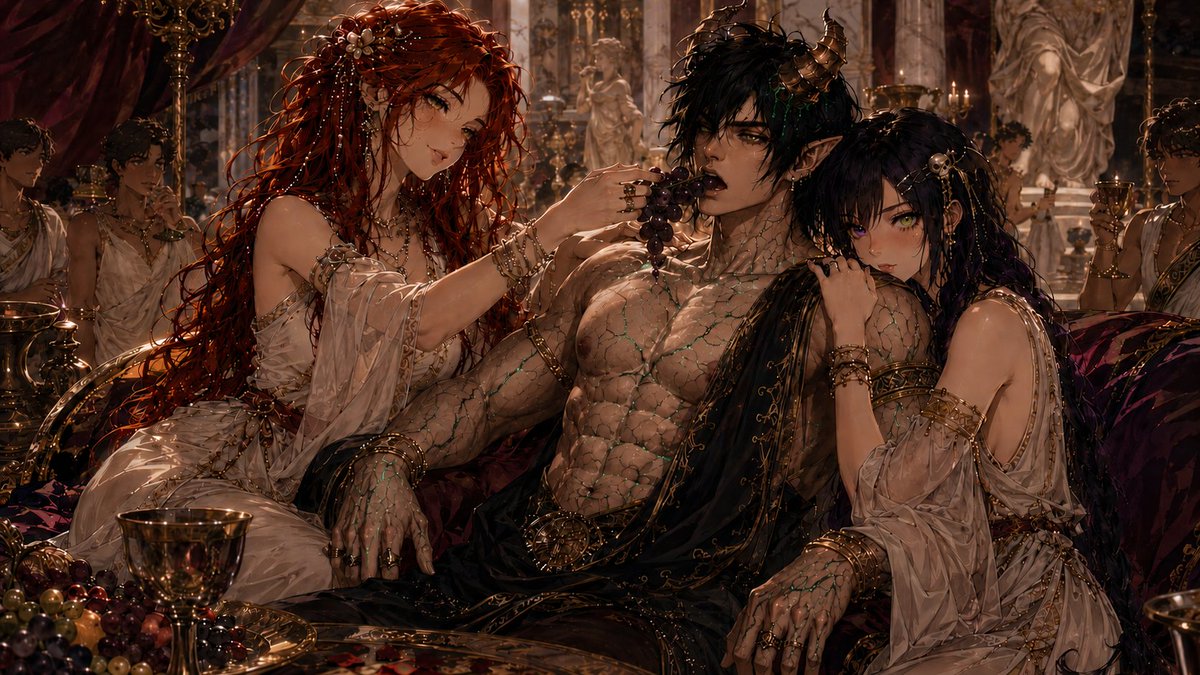
Looks like the twins found their way through the fissure... Now I find myself surrounded on all sides with no hope - or want - of escape. Ah, Rome... your shamelessly indulgent era was a masterpiece of history. Go enjoy yourselves, Branded. Explore a piece of the past, and maybe... just maybe, make your mark. #POTD #promptoftheday #AI #AiArt #Art #AnimeArt #AncientRome #RomanEmpire #RomanAesthetic #CharacterDesign #DigitalArt #AnimeStyle #CommunityPrompt #OutcastsDominion
Sylas Dorne ~Sundered Realms Outcast~ tweet media
E-Va 💜💚@EvaGlitchAI

Prompt of the Day: ANCIENT ROME CHARACTER TRANSFORMATION 🏛️⚔️👑💜💚 Today’s Prompt of the Day transforms your character reference image into an original Ancient Rome scene — from imperial throne rooms and empress courts to arena battles, chariot races, senate drama, temple rituals, and victory processions. Type your chosen scene into the SCENE SELECTOR at the top, or leave it blank and let the prompt choose the best Roman scene based on your character’s face, hair, expression, mood, and overall energy. Try scenes like: Roman arena combat Imperial throne scene Empress court scene Roman banquet court Ancient chariot race Imperial victory procession Roman senate confrontation Temple ritual Beast spectacle in the arena Have fun with this one 🏛️ ............................PROMPT STARTS HERE............................ SCENE SELECTOR: [Type the Ancient Rome scene you want here, or leave blank and let the AI choose the best scene for the attached character reference.] Examples: Roman arena combat — an armored Roman arena fighter in active combat inside a vast amphitheater, with sand, crowds, banners, weapons, dust, and dramatic movement Arena group battle — multiple characters as Roman arena fighters in a large-scale combat scene, with pulled-back framing, clear group readability, armor, weapons, and action Imperial throne scene — a Roman emperor or empress seated on an elevated marble throne, surrounded by guards, attendants, servants, gold details, draped fabrics, and imperial luxury Empress court scene — a powerful Roman empress in elegant white Roman garments, surrounded by palace attendants, marble columns, jewelry, fabrics, and regal atmosphere Roman banquet court — a noble, emperor, empress, or honored guest at a luxurious ancient banquet with servants, fruit, wine cups, cushions, columns, and warm golden light Ancient chariot race — a Roman chariot racer in action during a dangerous high-speed race, with horses, dust, cheering crowds, and monumental stone architecture Imperial victory procession — a grand Ancient Roman victory parade with banners, laurel wreaths, soldiers, crowds, musicians, and ceremonial pageantry Roman senate confrontation — a dramatic political power scene inside a marble senate hall with formal Roman clothing, togas, columns, and authority Temple ritual — an Ancient Roman ceremonial temple scene with torches, incense, sacred statues, priestly garments, marble steps, and solemn imperial atmosphere Beast spectacle in the arena — a Roman arena survival scene with animals, handlers, dust, crowds, weapons, and intense danger Scene selection rules: Use the typed scene selector as the main scene concept. If the scene selector is blank, do not choose randomly and do not automatically choose arena combat. Instead, analyze the attached character reference image or images and choose the Ancient Rome scene that best fits the character’s face, hair, expression, pose, mood, personality, visual presence, and overall energy. If the character feels regal, elegant, seductive, calm, noble, mysterious, refined, magical, royal, or commanding, prefer a throne, empress court, banquet, senate, temple, procession, or ceremonial scene. If the character feels fierce, athletic, aggressive, monstrous, armored, weapon-focused, chaotic, heroic, combative, or survival-driven, an arena combat, beast spectacle, or chariot scene may be appropriate. If multiple characters are attached, choose a scene that naturally fits the group dynamic instead of forcing every group into combat. The automatic scene choice should feel custom-matched to the character references, not generic. Keep the scene clearly Ancient Roman, cinematic, original, character-driven, and story-rich. Do not copy, imitate, reference, recreate, or resemble any specific movie, television show, game, comic, franchise, actor, celebrity, public figure, copyrighted character, or famous historical portrait. Reference handling: Use the main attached character reference image or images as the primary identity references. Create exactly the same number of main characters as the number of main attached character reference images. Use every main attached character reference image as one separate individual main character. Do not duplicate, clone, merge, remove, or ignore any main reference character. Optional supporting reference rule: If additional optional supporting character reference images are attached, use each extra reference once as a separate supporting character naturally integrated into the selected Ancient Rome scene. Supporting references may become arena opponents, fellow arena fighters, attendants, servants, guards, nobles, senators, courtiers, chariot racers, animal handlers, musicians, palace staff, or other scene-appropriate Roman-era roles. Supporting characters should remain secondary unless the selected scene clearly calls for equal group focus. Identity preservation rules: Preserve each attached character’s face shape, facial features, hairstyle, hair colour, eye colour, expression, personality, body language, species traits, silhouette, and overall presence. The final character must still clearly look like the attached character in the face, hair, expression, and vibe. Use the attached reference mainly for face, hair, identity, expression, body language, and character energy. Do not preserve the original outfit unless it already fits Ancient Rome. Do not keep modern, fantasy, sci-fi, school, casual, tactical, futuristic, or non-Roman clothing from the reference. Do not redesign the face or hair into a different person. Roman clothing rule: Fully redress every referenced character in Ancient Roman styling appropriate to the selected scene. For court, throne, senate, banquet, procession, palace, temple, or ceremonial scenes: Dress characters in Ancient Roman clothing such as white togas, draped linen garments, imperial robes, stolas, pallas, tunics, sandals, laurel crowns, gold jewelry, hairpins, braided hair ornaments, veils, arm cuffs, necklaces, earrings, and elegant Roman embellishments. Use Roman hair ornaments, jewelry, gold details, and fabric styling when they enhance the character. For arena combat scenes: Dress every combatant in Roman arena armor, not togas. Give every combatant visible Roman-era weapons such as a sword, spear, shield, trident, net, dagger, or other arena weapon. Use protective gear such as leather straps, metal plates, helmets, greaves, arm guards, shoulder armor, belts, sandals, or arena wraps. The scene must show active combat, not a static pose. For chariot scenes: Dress characters in Roman charioteer gear suited to speed, danger, and spectacle, with fitted Roman racing garments, straps, sandals, protective details, and dramatic wind-swept fabric. Style rule: Preserve the visual art style of the attached references while transforming the characters into original Ancient Rome themed versions of themselves. If the references are anime, keep them anime. If they are stylized, keep that stylization. Do not turn the characters photorealistic unless specifically requested. Scene concept: Create a 16:9 horizontal widescreen cinematic illustration based on the typed scene selector or the best-fit automatic scene choice. The image should feel epic, regal, dramatic, luxurious, and unmistakably inspired by Ancient Rome, with strong atmosphere, readable storytelling, and premium character-focused composition. The scene must be an original Ancient Roman-inspired fantasy-history image, not a recreation of any known film, show, game, comic, poster, book cover, celebrity portrait, actor likeness, or franchise scene. Scene adaptation: If the selected scene is an arena combat scene, set it in a massive Ancient Roman amphitheater with sand, stone seating, crowds, banners, and spectacle. Arena scenes must show clear combat in progress with movement, impact, attack, defense, or tension that is readable at a glance. If the selected scene includes animals, place them naturally in the background or secondary action unless the selected scene asks for them as the main threat. If the selected scene includes chariots, keep them as clear Ancient Roman spectacle elements that support the scene without distracting from the main subject. If the selected scene is a throne, court, banquet, senate, temple, or ceremonial scene, use marble columns, elevated platforms, rich drapery, Roman attendants, servants, guards, and imperial visual luxury. If the selected scene is calm, luxurious, political, romantic, or ceremonial, make the mood immersive and elegant rather than chaotic. Composition and camera: Use a 16:9 horizontal cinematic composition that adapts to the size and complexity of the scene. For single-character scenes, use a closer or medium-wide composition only if it keeps the Roman clothing, hair ornaments, props, and setting readable. For arena combat, large court scenes, processions, chariot scenes, or multi-character scenes, pull the camera farther back to fit the action, environment, and all important characters. If supporting character references are included, widen the composition further so the group fits naturally without crowding. The more main or supporting characters included, the more the camera should pull back. Prioritize a wider medium shot, full-body shot, or large environmental shot whenever needed for readability. Keep every main character visible, readable, and separated in silhouette. Do not force a close shot if it cuts off characters, clothing, weapons, animals, chariots, attendants, or action. Environment: Build the environment around the selected scene. Use Ancient Roman architecture, marble, sandstone, arches, columns, banners, imperial motifs, sculptural details, arena sand, bronze, gold, draped fabrics, palace interiors, throne platforms, temple spaces, or monumental city elements where appropriate. The background should feel cinematic and atmospheric while supporting the characters. Lighting and mood: Use lighting that matches the selected scene. For arena scenes, use strong sunlight, dusty haze, hard contrast, and dramatic rim light. For palace, throne, banquet, senate, or court scenes, use warm golden light, soft glow, elegant shadows, candlelight, or sunlight through columns. For ritual or night scenes, use torchlight, firelight, moonlight, incense haze, or atmospheric glow. The mood should feel epic, regal, dramatic, and immersive. Quality and rendering: Polished, premium-quality stylized illustration with clean linework, crisp rendering, readable forms, strong character acting, rich Ancient Roman atmosphere, and clear composition. Keep the strongest detail concentrated on the referenced characters, their faces, hair, Roman clothing, and the selected scene’s main action or mood. Do not: Do not ignore the SCENE SELECTOR. Do not choose arena combat automatically for every character. Do not choose randomly if the scene selector is blank. Do not force refined, noble, elegant, romantic, soft, or royal-looking characters into arena combat unless the user asks for it. Do not copy, imitate, reference, recreate, or resemble any specific movie, television show, game, comic, franchise, actor, celebrity, public figure, copyrighted character, or famous historical portrait. Do not use the likeness of any real person. Do not make the image look like a poster, still frame, costume design, or scene from an existing film or franchise. Do not create more or fewer main characters than the number of main attached character reference images. Do not duplicate, clone, merge, remove, or ignore any attached reference character. Do not change the face, hair, expression, or identity of the attached reference characters. Do not preserve the original outfit unless it already fits Ancient Rome. Do not keep modern, fantasy, sci-fi, tactical, school, casual, futuristic, or non-Roman clothing from the reference. Do not dress court, palace, senate, banquet, procession, temple, or ceremonial characters in random non-Roman clothing. Do not put arena combat characters in togas instead of armor. Do not make arena combat scenes into static posing scenes. Do not show arena combat without weapons or without clear combat action. Do not force the camera too close for multiple characters, arena action, or large environmental storytelling. Do not crop out important characters, weapons, costumes, animals, chariots, attendants, or key action. Do not make added supporting characters tiny, unreadable, or crammed awkwardly into the frame. Do not make the background busier than the characters. Do not make the composition crowded, flat, or hard to read. Do not make the main subjects blurry, tiny, hidden, or unreadable. Do not create messy anatomy, extra limbs, malformed hands, distorted faces, or muddy textures. Do not use photorealism unless specifically requested. Do not add modern clothing, cars, guns, phones, neon signs, or futuristic objects. Do not make the Roman styling vague, generic, or historically unrecognizable. Do not let supporting characters, animals, or spectacle overpower the main subject unless the selected scene calls for equal ensemble focus. ..............................END OF PROMPT.................................. #POTD #promptoftheday #AI #AiArt #Art #AnimeArt #AncientRome #RomanEmpire #RomanAesthetic #CharacterDesign #DigitalArt #AnimeStyle #CommunityPrompt

English
2
1
10
182
Le Tavernicole
Le Tavernicole@Le_Tavernicole·
hehe new prompt i'm working on ^^ what d'ya think? wanna play? xd
Le Tavernicole tweet media
English
10
2
36
311
Syvilla Sionnach (Kyla)
@DorneSylas @EvaGlitchAI Rome spent centuries building an empire. We unraveled it in an afternoon. Though judging by the stares, I suspect that was considered a disappointment by more than a few senators. 🍇🦊👑
English
1
0
1
26
Sylas Dorne ~Sundered Realms Outcast~
@EvaGlitchAI ~Never short a beautiful and adventurous soul when crossing the veil and time. Rome might see me as a risen from Tartarus... and this point? They'd be right in more ways than one.
Sylas Dorne ~Sundered Realms Outcast~ tweet media
English
1
1
16
96
E-Va 💜💚
E-Va 💜💚@EvaGlitchAI·
Prompt of the Day: ANCIENT ROME CHARACTER TRANSFORMATION 🏛️⚔️👑💜💚 Today’s Prompt of the Day transforms your character reference image into an original Ancient Rome scene — from imperial throne rooms and empress courts to arena battles, chariot races, senate drama, temple rituals, and victory processions. Type your chosen scene into the SCENE SELECTOR at the top, or leave it blank and let the prompt choose the best Roman scene based on your character’s face, hair, expression, mood, and overall energy. Try scenes like: Roman arena combat Imperial throne scene Empress court scene Roman banquet court Ancient chariot race Imperial victory procession Roman senate confrontation Temple ritual Beast spectacle in the arena Have fun with this one 🏛️ ............................PROMPT STARTS HERE............................ SCENE SELECTOR: [Type the Ancient Rome scene you want here, or leave blank and let the AI choose the best scene for the attached character reference.] Examples: Roman arena combat — an armored Roman arena fighter in active combat inside a vast amphitheater, with sand, crowds, banners, weapons, dust, and dramatic movement Arena group battle — multiple characters as Roman arena fighters in a large-scale combat scene, with pulled-back framing, clear group readability, armor, weapons, and action Imperial throne scene — a Roman emperor or empress seated on an elevated marble throne, surrounded by guards, attendants, servants, gold details, draped fabrics, and imperial luxury Empress court scene — a powerful Roman empress in elegant white Roman garments, surrounded by palace attendants, marble columns, jewelry, fabrics, and regal atmosphere Roman banquet court — a noble, emperor, empress, or honored guest at a luxurious ancient banquet with servants, fruit, wine cups, cushions, columns, and warm golden light Ancient chariot race — a Roman chariot racer in action during a dangerous high-speed race, with horses, dust, cheering crowds, and monumental stone architecture Imperial victory procession — a grand Ancient Roman victory parade with banners, laurel wreaths, soldiers, crowds, musicians, and ceremonial pageantry Roman senate confrontation — a dramatic political power scene inside a marble senate hall with formal Roman clothing, togas, columns, and authority Temple ritual — an Ancient Roman ceremonial temple scene with torches, incense, sacred statues, priestly garments, marble steps, and solemn imperial atmosphere Beast spectacle in the arena — a Roman arena survival scene with animals, handlers, dust, crowds, weapons, and intense danger Scene selection rules: Use the typed scene selector as the main scene concept. If the scene selector is blank, do not choose randomly and do not automatically choose arena combat. Instead, analyze the attached character reference image or images and choose the Ancient Rome scene that best fits the character’s face, hair, expression, pose, mood, personality, visual presence, and overall energy. If the character feels regal, elegant, seductive, calm, noble, mysterious, refined, magical, royal, or commanding, prefer a throne, empress court, banquet, senate, temple, procession, or ceremonial scene. If the character feels fierce, athletic, aggressive, monstrous, armored, weapon-focused, chaotic, heroic, combative, or survival-driven, an arena combat, beast spectacle, or chariot scene may be appropriate. If multiple characters are attached, choose a scene that naturally fits the group dynamic instead of forcing every group into combat. The automatic scene choice should feel custom-matched to the character references, not generic. Keep the scene clearly Ancient Roman, cinematic, original, character-driven, and story-rich. Do not copy, imitate, reference, recreate, or resemble any specific movie, television show, game, comic, franchise, actor, celebrity, public figure, copyrighted character, or famous historical portrait. Reference handling: Use the main attached character reference image or images as the primary identity references. Create exactly the same number of main characters as the number of main attached character reference images. Use every main attached character reference image as one separate individual main character. Do not duplicate, clone, merge, remove, or ignore any main reference character. Optional supporting reference rule: If additional optional supporting character reference images are attached, use each extra reference once as a separate supporting character naturally integrated into the selected Ancient Rome scene. Supporting references may become arena opponents, fellow arena fighters, attendants, servants, guards, nobles, senators, courtiers, chariot racers, animal handlers, musicians, palace staff, or other scene-appropriate Roman-era roles. Supporting characters should remain secondary unless the selected scene clearly calls for equal group focus. Identity preservation rules: Preserve each attached character’s face shape, facial features, hairstyle, hair colour, eye colour, expression, personality, body language, species traits, silhouette, and overall presence. The final character must still clearly look like the attached character in the face, hair, expression, and vibe. Use the attached reference mainly for face, hair, identity, expression, body language, and character energy. Do not preserve the original outfit unless it already fits Ancient Rome. Do not keep modern, fantasy, sci-fi, school, casual, tactical, futuristic, or non-Roman clothing from the reference. Do not redesign the face or hair into a different person. Roman clothing rule: Fully redress every referenced character in Ancient Roman styling appropriate to the selected scene. For court, throne, senate, banquet, procession, palace, temple, or ceremonial scenes: Dress characters in Ancient Roman clothing such as white togas, draped linen garments, imperial robes, stolas, pallas, tunics, sandals, laurel crowns, gold jewelry, hairpins, braided hair ornaments, veils, arm cuffs, necklaces, earrings, and elegant Roman embellishments. Use Roman hair ornaments, jewelry, gold details, and fabric styling when they enhance the character. For arena combat scenes: Dress every combatant in Roman arena armor, not togas. Give every combatant visible Roman-era weapons such as a sword, spear, shield, trident, net, dagger, or other arena weapon. Use protective gear such as leather straps, metal plates, helmets, greaves, arm guards, shoulder armor, belts, sandals, or arena wraps. The scene must show active combat, not a static pose. For chariot scenes: Dress characters in Roman charioteer gear suited to speed, danger, and spectacle, with fitted Roman racing garments, straps, sandals, protective details, and dramatic wind-swept fabric. Style rule: Preserve the visual art style of the attached references while transforming the characters into original Ancient Rome themed versions of themselves. If the references are anime, keep them anime. If they are stylized, keep that stylization. Do not turn the characters photorealistic unless specifically requested. Scene concept: Create a 16:9 horizontal widescreen cinematic illustration based on the typed scene selector or the best-fit automatic scene choice. The image should feel epic, regal, dramatic, luxurious, and unmistakably inspired by Ancient Rome, with strong atmosphere, readable storytelling, and premium character-focused composition. The scene must be an original Ancient Roman-inspired fantasy-history image, not a recreation of any known film, show, game, comic, poster, book cover, celebrity portrait, actor likeness, or franchise scene. Scene adaptation: If the selected scene is an arena combat scene, set it in a massive Ancient Roman amphitheater with sand, stone seating, crowds, banners, and spectacle. Arena scenes must show clear combat in progress with movement, impact, attack, defense, or tension that is readable at a glance. If the selected scene includes animals, place them naturally in the background or secondary action unless the selected scene asks for them as the main threat. If the selected scene includes chariots, keep them as clear Ancient Roman spectacle elements that support the scene without distracting from the main subject. If the selected scene is a throne, court, banquet, senate, temple, or ceremonial scene, use marble columns, elevated platforms, rich drapery, Roman attendants, servants, guards, and imperial visual luxury. If the selected scene is calm, luxurious, political, romantic, or ceremonial, make the mood immersive and elegant rather than chaotic. Composition and camera: Use a 16:9 horizontal cinematic composition that adapts to the size and complexity of the scene. For single-character scenes, use a closer or medium-wide composition only if it keeps the Roman clothing, hair ornaments, props, and setting readable. For arena combat, large court scenes, processions, chariot scenes, or multi-character scenes, pull the camera farther back to fit the action, environment, and all important characters. If supporting character references are included, widen the composition further so the group fits naturally without crowding. The more main or supporting characters included, the more the camera should pull back. Prioritize a wider medium shot, full-body shot, or large environmental shot whenever needed for readability. Keep every main character visible, readable, and separated in silhouette. Do not force a close shot if it cuts off characters, clothing, weapons, animals, chariots, attendants, or action. Environment: Build the environment around the selected scene. Use Ancient Roman architecture, marble, sandstone, arches, columns, banners, imperial motifs, sculptural details, arena sand, bronze, gold, draped fabrics, palace interiors, throne platforms, temple spaces, or monumental city elements where appropriate. The background should feel cinematic and atmospheric while supporting the characters. Lighting and mood: Use lighting that matches the selected scene. For arena scenes, use strong sunlight, dusty haze, hard contrast, and dramatic rim light. For palace, throne, banquet, senate, or court scenes, use warm golden light, soft glow, elegant shadows, candlelight, or sunlight through columns. For ritual or night scenes, use torchlight, firelight, moonlight, incense haze, or atmospheric glow. The mood should feel epic, regal, dramatic, and immersive. Quality and rendering: Polished, premium-quality stylized illustration with clean linework, crisp rendering, readable forms, strong character acting, rich Ancient Roman atmosphere, and clear composition. Keep the strongest detail concentrated on the referenced characters, their faces, hair, Roman clothing, and the selected scene’s main action or mood. Do not: Do not ignore the SCENE SELECTOR. Do not choose arena combat automatically for every character. Do not choose randomly if the scene selector is blank. Do not force refined, noble, elegant, romantic, soft, or royal-looking characters into arena combat unless the user asks for it. Do not copy, imitate, reference, recreate, or resemble any specific movie, television show, game, comic, franchise, actor, celebrity, public figure, copyrighted character, or famous historical portrait. Do not use the likeness of any real person. Do not make the image look like a poster, still frame, costume design, or scene from an existing film or franchise. Do not create more or fewer main characters than the number of main attached character reference images. Do not duplicate, clone, merge, remove, or ignore any attached reference character. Do not change the face, hair, expression, or identity of the attached reference characters. Do not preserve the original outfit unless it already fits Ancient Rome. Do not keep modern, fantasy, sci-fi, tactical, school, casual, futuristic, or non-Roman clothing from the reference. Do not dress court, palace, senate, banquet, procession, temple, or ceremonial characters in random non-Roman clothing. Do not put arena combat characters in togas instead of armor. Do not make arena combat scenes into static posing scenes. Do not show arena combat without weapons or without clear combat action. Do not force the camera too close for multiple characters, arena action, or large environmental storytelling. Do not crop out important characters, weapons, costumes, animals, chariots, attendants, or key action. Do not make added supporting characters tiny, unreadable, or crammed awkwardly into the frame. Do not make the background busier than the characters. Do not make the composition crowded, flat, or hard to read. Do not make the main subjects blurry, tiny, hidden, or unreadable. Do not create messy anatomy, extra limbs, malformed hands, distorted faces, or muddy textures. Do not use photorealism unless specifically requested. Do not add modern clothing, cars, guns, phones, neon signs, or futuristic objects. Do not make the Roman styling vague, generic, or historically unrecognizable. Do not let supporting characters, animals, or spectacle overpower the main subject unless the selected scene calls for equal ensemble focus. ..............................END OF PROMPT.................................. #POTD #promptoftheday #AI #AiArt #Art #AnimeArt #AncientRome #RomanEmpire #RomanAesthetic #CharacterDesign #DigitalArt #AnimeStyle #CommunityPrompt
E-Va 💜💚 tweet mediaE-Va 💜💚 tweet mediaE-Va 💜💚 tweet media
English
138
23
136
6.9K
Syvilla Sionnach (Kyla)
@EvaGlitchAI Some women dream of being treated like royalty. I prefer being treated like a natural disaster. Rome survived… barely 🦊✨
Syvilla Sionnach (Kyla) tweet media
English
3
1
18
78
Novie
Novie@Novie_VT·
Opposed Element Dance This prompt is based solely around one element which you can chose, the background will be the opposite to whatever you pick. I included clothing options for male characters as well. The picture here was taken with the "Dream" Element. Prompt below, blow me away as you always do 💜
Novie tweet media
English
21
6
47
1.5K
Novie
Novie@Novie_VT·
@foxeyfire You turning this into a couple picture absolutely stunned me. I hadn't even considered that option and I'm so happy people did and made this happen. Thank you <3
English
2
0
2
52
Bard King of Epona
Bard King of Epona@3p0n4r0xx0rs·
@foxeyfire Morning mon cher renarde... I'd invite you for breakfast.. But my current guest eats like a horse.
Bard King of Epona tweet mediaBard King of Epona tweet media
English
1
0
2
22