MR KEN
1.7K posts

MR KEN
@kenncoded
Life is what you make it, don't depend on someone else for your happiness.
Nigeria Joined Aralık 2015
110 Following70 Followers

@PO_GrassRootM This same guy that attacked Soyinka for calling the Obidient fascist, then he claimed to be Obidient and defended the movement,now he is calling the Obidient mob, this same guy supported Yahaya Bello, they should all get out and go to Tinubu, leave the Obidient alone b/4 we mob u
English

@SpencerGuard If Israel launches ballistic missiles into Iran indiscriminately as Iran does to Israel will the story still be the same or if Israel just throws bomb indiscriminately into Lebanon as Hezbollah terrorists are doing will the story still be the same, the world should be shamed .
English

To be very clear: reality is very different from the rhetoric. The IDF takes extraordinary measures to mitigate civilian harm in Lebanon. In fact, as in Gaza, it employs more civilian harm mitigation measures than any military in past or current operations.
The IDF issues evacuation warnings through multiple channels including text messages, phone calls, voicemails, flyers, radio, television, and social media. It operates dedicated civilian harm mitigation cells, tracks civilian presence through drones, cell phone data, and other ISR capabilities, and uses rigorous targeting processes that include legal reviews and proportionality assessments for any planned strikes. Legal reviews at lowest tactical level, and with the ability (which happens often as well as command decisions not to strike based on all context) to override commander decisions, unlike any other military.
In southern Lebanon, these measures are particularly effective because civilians can move away from military objectives and active combat areas.
Even in Beirut, the IDF has repeatedly provided warnings identifying specific buildings that will be struck and when. The warnings have proven so reliable that Lebanese citizens and journalists have set up cameras in advance to record the strikes. When targeting Hezbollah senior leaders, command meetings, or other military objectives in densely populated areas such as Dahiyeh (the Hezbollah controlled neighborhood of Beirut), the IDF relies on precision-guided munitions, small diameter munition (warheads with less explosives), and other low collateral damage munitions, detailed intelligence, and other methods designed to limit collateral damage while achieving the legitimate military objective.
There is also no equivalency. Israel does not intentionally target civilians. Hezbollah is a U.S.-designated terrorist organization whose strategy includes deliberately attacking civilians. Hezbollah launches rockets, missiles, and drones at civilian communities in northern Israel (daily, despite any cease fires), targeting homes, schools, businesses, and civilian infrastructure.
One side conducts legal reviews, proportionality assessments, civilian warnings, and precision strikes against military objectives. The other is a international designated terrorist group that intentionally places military assets among civilians while deliberately targeting civilians.
English

@netanyahu Iran launch missiles into civilian areas in Israel the world claps, Israel launches targeted bombings in Iran, the world complains, Hezbollah launch Missiles into Israeli with the sole aim of killing many civilians, Israel retaliates with targeted bombings,the world complains.
English


@Grosscreat14l4 @ItsJordanMosley @cppfam Are you a child abuser ? , what a fxckin question, what stops you from taking on those in govt,are you handicapped or something?
English

@ItsJordanMosley @cppfam Where’s this same energy with our government? They are doing much more than a singular lone pedo will ever do in a his lifetime
English

REGISTERED S3X OFFENDER GETS CAUGHT TRYNA MEET A 14 YEAR OLD AT A STARBUCKS CREDITS TO @cppfam
English

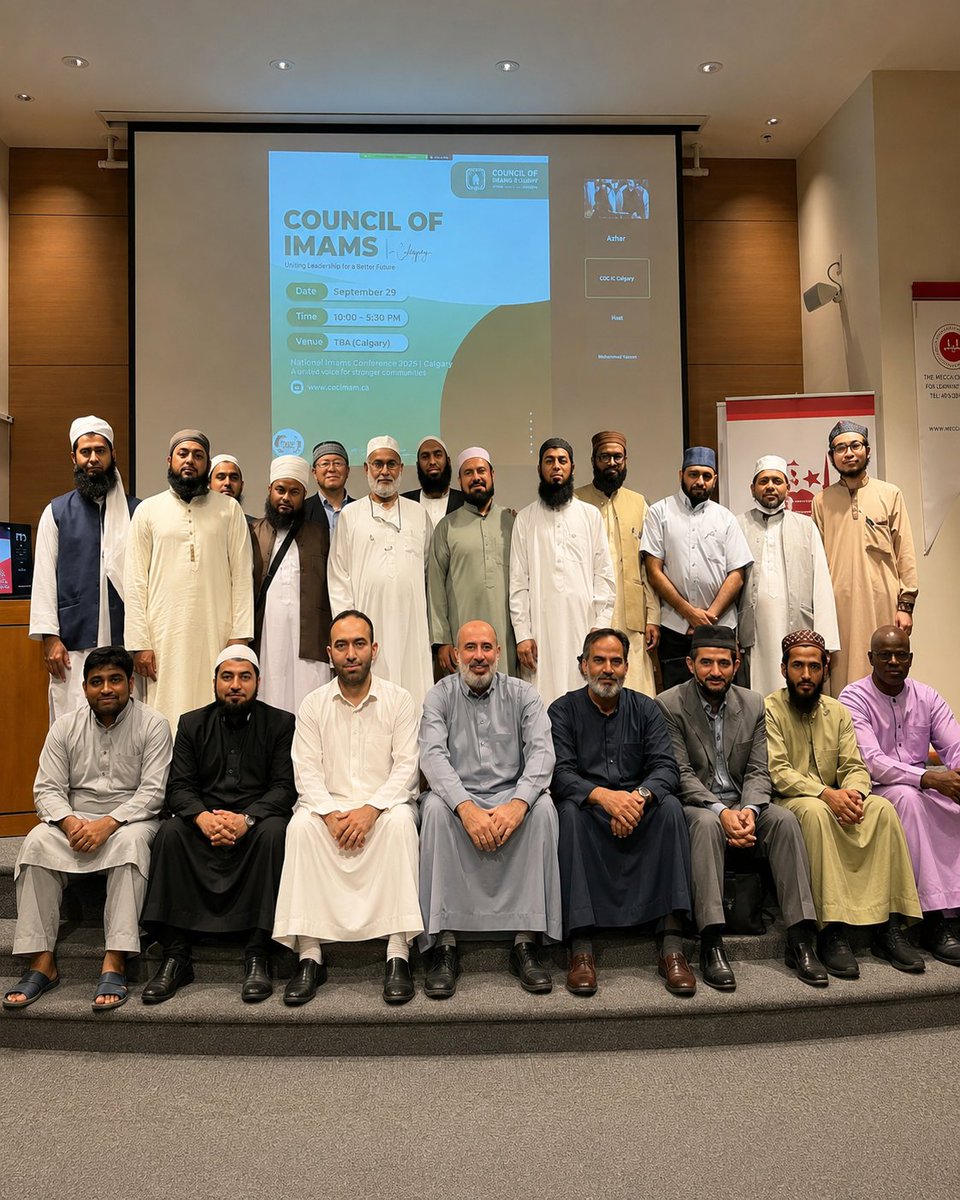
@Michaeach3 You call it Japan's Imam Council, really ?, where are the Japanese in this picture ?
English

Japan's Imam Council is asking Japanese society for "calm and fair dialogue."
🔴 France listened - now it has no-go zones.
🔴 England listened - now it has grooming gangs and sharia courts operating in its cities.
🔴 Sweden listened - now it is the rape capital of Europe.
Japan is being asked to open its doors, and the moment a civic group tried to have an honest conversation, the Imam Council refused their mail and sent it back unopened.
Japan - you are watching Europe's future play out in real time.
Do not repeat its mistakes.

English

@Uzuakoliii This nonsense trading is the main reason our cities never ever look clean, look at the level of garbage they are accumulating in those areas, how can we have clean cities with such behavior, a strong disciplinary measures must be put in place otherwise our people will rubbish it
English

@DeleFarotimi Oga dele u fina naaaa, which one be u almost look handsome 🤣🤣🤣
English

@Idris_Adam_ There is no need to put up this defence, Kwankwaso has made many leaders, if the governorship candidate decides to field his son as running mate, I see nothing wrong in that,I'm sure this idea may have emanated from the inner circle and not necessarily from Kwankwaso himself.
English

Since Kwankwaso first became governor in 1999, none of his children had been appointed into government or given a political position for many years. In fact, many people have never even seen his wife in the public political space, let alone his other children.
During the administration of Ibrahim Shekarau, his wife was very active in politics.
During the administration of Abdullahi Ganduje, his wife was also very active politically, with some people even claiming that she wielded enormous influence in Kano politics. Ganduje also supported his son’s political ambitions, leading to his emergence in elective politics.
Kwankwaso’s case has been different. From 1999 until recently, he kept his family largely away from politics. It was only in recent years that one of his sons was appointed Commissioner. Despite having several children, only one has become politically visible, while the others have remained outside the political arena.
Many of the prominent politicians in Kano today rose through opportunities provided by Kwankwaso. He identified them, entrusted them with party tickets, supported their ambitions, and campaigned for them until they became successful political figures.
For years, people have praised Kwankwaso for creating opportunities for young people. In Kano and across Northern Nigeria, many believe that no political movement has opened doors for ordinary youths and emerging leaders as much as the Kwankwasiyya movement.
Throughout the governments associated with Kwankwaso, neither his wife nor his children occupied dominant positions in government. Yet critics often raise concerns whenever a member of his family is considered for public office.
The reality is that whatever Kwankwaso does is often subjected to intense scrutiny. His supporters argue that if another politician had made a similar choice, the reaction might have been very different.
My position is simple:
I believe competence should matter more than identity. Whether someone is Kwankwaso’s son or not should not be the primary issue. The real question should be whether the person is qualified and capable of contributing to the development of Kano State.
Mustapha is a young man with a PhD and a strong academic background. Those who celebrate the inclusion of young people in politics should judge him based on his qualifications, character, competence, and ability to serve—not simply because he happens to be Kwankwaso’s son.
If he is qualified, may Allah guide and support him in serving the people. If he is not, may Allah bring forward someone more capable.

English

Yesterday federal government of Nigeria sent some delegates to visit the South African returnees in OPM free estates.
They collected all there data and visited the ones in OPM free hospital undergoing free treatment.
And they also visited one of 18 OPM free estates and collected there information were they are staying.
They were lead by the director of DSS. They did not want photographs to be taken of them.
As promised by me, I promised to feed them once a day, but because of the children we are now feeding 3 times a day.
And also promised to enroll all there children into one of the 43 OPM free school.
By the grace of GOD, they started OPM free school, both secondary and primary school today Monday 15 June 2026.
The OPM free school bus takes them to school and returns them.
Am not yet back to port harcourt.
As soon as I come back I will visit them and give them some gifts I bought for my children from EGYPT.
FULLY FUNDED THROUGH TITHES AND OFFERINGS FROM OPM CHURCH


English

@ARISEtv Everyday terrorists are forced to flee only for them to regroup and launch more daring and ferocious attacks on civilians and military targets, when they flee why can't you go after them until they are all neutralized, they flee and remain within our territory, what a mess,shame
English

BREAKING: TROOPS RESCUE WIFE OF LATE MAJ. GEN MOHAMMED RABE ABUBAKAR FROM BANDIT
Hajiya Amina Abubakar Rabe, wife of the late Maj. Gen. Mohammed Rabe Abubakar, who died in captivity after being abducted by bandits, has been rescued by security forces.
Military sources say troops made contact with the kidnappers at Tunga Village, forcing the bandits to flee. Hajiya Amina reportedly sustained a gunshot wound and has received first aid while being evacuated for further medical treatment.

English

Dear beloved sports-loving Nigerian youths,
After watching the performances of Davido, Burna Boy, and Rema at the opening of the 2026 World Cup—at a time when Nigeria, the giant of Africa, is absent—I felt a measure of consolation. This was reinforced by the fact that many Nigerians playing for clubs worldwide are representing other countries. Felix Nmecha, for instance, set a record by scoring the fastest goal at six minutes for Germany. I write to you therefore, knowing that this country belongs to you, the youth.
You are more of stakeholders in Nigeria’s future than I am. I am 64 years old; by God’s grace, much of my journey is behind me, while yours lies ahead.
It is therefore imperative that you rise to the challenge by obtaining your PVC, your most powerful tool for driving the change you desire.
In the last three years alone, over 15 million Nigerians have turned 18—enough to decide who becomes President, Governor, Senator, Member of the House, or Local Government Chairman. Indeed, enough to shape the nation’s future.
I know many of you are sceptical about politics and political parties. I understand why, but scepticism must not become surrender.
You do not need to belong to any party or wait for anyone to organise you. Organise yourselves in your streets, campuses, communities, workplaces, churches, mosques, and social groups. Mobilise, debate, demand accountability, and take part in choosing those you wish to entrust with leadership.
If you are organised and wish to hear directly from me, invite me. I will come and share my plans for you and our nation.
Do not sit on the sidelines while others decide your future.
I appeal to you to register and vote. Your vote can shape who becomes the next President of our country.
My young friends, this is your country. Take it back.
A New Nigeria is POssible. -PO

English

@SaharaReporters This man is only good at political speech,have you listened to him speak, does he sound like a soldier, he speaks more like a classroom professor than a military general, he will go down to be one of the worst defence chiefs we ever had, he doesn't inspire hope at all, shameful .
English

US-Iran, Russia-Ukraine Wars Blocking Nigeria’s Access To Weapons — Defence Minister Musa Blames Insecurity On Lack Of Ammunition | Sahara Reporters bit.ly/4a0ltmj

English

@netanyahu That's a noble task,a regime with an apocalyptic view of our world shouldn't be allowed to go nuclear,look at what they are doing with the missiles they have,if they had atomic bomb they would hv used it,they shoot missiles into Israeli cities but Israeli does targeted bombings.
English

כל עוד אני ראש ממשלת ישראל - לאיראן לא יהיה נשק גרעיני.
יש ביני לבין הנשיא טראמפ הסכמה מלאה בנושא.
כבר למעלה מ-30 שנה אני בחזית המאבק הבינלאומי נגד תכנית הגרעין של איראן.
אלמלא המאבק הזה לאיראן היו מזמן פצצות אטום להשמדת ישראל.
איראן פועלת להשמיד את מדינת היהודים, ואני מקדיש את חיי כדי למנוע מהם מלעשות זאת.
כל עוד אני ראש ממשלת ישראל, זה לא יקרה.
עברית

@TheEdenOfGarden @PeterObi Its better for u to keep quiet,U had all structures in 2023 yet u switched off the IREV to rig urself to power with the corrupt help of Yakubu, without any structure on ground Obi won the 2023 election and u know it,U and ur criminal gangs switched off the IREV to win,shame in U.
English

@PeterObi Peter Obi in 2023: “I don’t need godfathers”
Peter Obi in 2026: intense closed-door meetings with godfathers
The obidients that shouted “structure doesn’t matter” in 2023 are now watching their principal chase structures like oxygen in 2026 😂
Obi is a boy and a clown 🤡
English

Together Towards the New Nigeria That Is Possible
On this June 12, Democracy Day, I had useful meetings with my partners in the building of the New Nigeria that is Possible: our great party’s National Leader, H.E. Senator Seriake Dickson, and our party’s Vice Presidential candidate, H.E. Senator Rabiu Kwankwaso. The NDC, as a party that is barely four months old, despite the challenges, remains the party of the future, and the fruitful discussions at the meetings clearly underscore this fact.
The leaders and members of a committed political family must be willing to make sacrifices and show tolerance and accommodation, even in difficult circumstances. This shared understanding is essential for building trust, strengthening unity, and sustaining the vision we collectively hold for national transformation.
We are all committed to this goal. The NDC remains the vehicle that will convey Nigeria through purposeful, compassionate leadership, with firm commitment to productivity and democratic ideals towards the New Nigeria that is POssible. -PO


English

My dear Obidient family, Kwankwasiyya brothers and sisters, and all well-meaning Nigerians,
Let us not be distracted by events around the NDC and the emergence of our candidate, Mr. Peter Obi, with Senator Rabiu Kwankwaso as running mate. The APC, ADC and other opposition forces are uncomfortable because they see our growing strength.
We may not like every driver of this NDC vehicle, but this is about rescuing Nigeria, not comfort. Peter Obi remains the best option to reset our country towards prosperity.
Let us calm our tensions, especially within the Obidient movement. Extend understanding, build a peaceful working relationship with the party, and focus our energy on delivering victory for this ticket.
#NigeriaWillBeOK

Abuja, Nigeria 🇳🇬 English

@KwankwasoRM That's how it should be done, united against evil, well done .
English

I was deeply honoured to host a high-powered solidarity visit from the Igbo Elders Consultative Forum at my residence in Abuja.
The delegation was led by Dr. S. N. Okeke, Chairman of the Ohanaeze Council of Elders for the 19 States and the FCT, alongside former Governor of Enugu State, Okwesilieze Nwodo. The elders expressed strong appreciation for the growing and cordial partnership between myself and His Excellency Mr. Peter Obi under the Nigeria Democratic Congress (NDC). They pledged their unwavering support for the Obi/Kwankwaso ticket and assured the movement of massive electoral backing across the South-East and the wider Southern region.
In my response, I thanked the delegation for their visit and for the opportunity to exchange views on the state of the nation. Reflecting on the historic North-South East political dynamics, I expressed delight at the excellent and productive relationship I continue to enjoy with HE Peter Obi. I also reaffirmed my total commitment to the OK Movement and the National Democratic Congress (NDC), emphasising our resolute determination to deliver victory for the party in the upcoming elections. - RMK


English

@HAHayatu Come to think of it,is this amount even close to what Obi donates to different schools everyday,a quiet billionaire like Peter Obi is who Kenneth Okonkwo is acusicng of collecting N10M bribe,what a an insult,Peter Obi shouldn't forgive him, he should present the evidence in court
English

@benmurraybruce Omo what did I just read from Ben Bruce, is this how the man is wired ?
English

Under the leadership of the National Security Adviser, Mallam Nuhu Ribadu, Nigeria has witnessed a renewed sense of purpose in the fight against insecurity. From the rescue of abducted citizens to the disruption of terrorist networks, the increased surrender of insurgents, and improved coordination among our security agencies, there is growing evidence that determined leadership and strategic thinking can deliver results.
Mallam Ribadu has brought diligence, focus, and quiet effectiveness to one of the most difficult assignments in government. At a time when many had lost hope, he has continued to inspire confidence through intelligence-driven operations and a whole-of-government approach to security. While challenges remain, it is important to acknowledge progress when it is being made.
To the NSA, our military leadership, and the brave men and women in uniform, thank you for your sacrifice and steadfast commitment to protecting our nation. Nigeria is stronger because of your service, and millions of Nigerians are grateful for your efforts to restore peace and stability across the country.

English

@HAHayatu I don't know what you guys smoke in Nigeria ,what makes you think the office of a VP in Nigeria is better than the office of the WTO chief that she holds, you guys always think political office is better than any other office, this is why legitimate earnings are dying in Nigeria.
English

@Ziyad_yakubu Wow,holy shit, I hate reading long write-up on X but this guy got me glued on my phone to the extent I wouldn't notice a pinch on my skin.This is deep and educative,what a piece, bro your mind is bright and you earned my respect.I blame all this on D door step of Almajiri system
English

There was a time in Nigeria when the man carrying a sewing machine on his shoulder was called Obioma.
Because almost all the artisanal tailors were Easterners of Igbo descent.
After the Civil War, many Easterners emerged from one of the most devastating chapters in Nigerian history with almost nothing but skill, mobility, discipline, and a survival instinct.
Some carried sewing machines from street to street, patching clothes, repairing trousers, adjusting school uniforms, and moving from compound to compound looking for work.
That image became so common that the name stuck.
Obioma.
A man with a sewing machine on his shoulder, moving under the sun and doing work many people looked down on.
But the same people who were once reduced in the public imagination to street tailoring slowly began to move.
From roadside tailoring to shops.
From shops to markets.
From markets to importation.
From importation to manufacturing.
From apprenticeship to industrial clusters.
From survival to ownership.
Go to Nnewi.
Go to Aba.
Go to Onitsha.
Go to Alaba.
Go to Ladipo.
Go to Ariaria.
You will still see poverty, struggle, disorder, bad roads, poor power supply, and all the normal Nigerian problems. Nobody is pretending the Southeast has become Singapore.
But you will also see something powerful.
You will see a people who took humiliation, displacement, and economic ruin and built a survival machine around trade, apprenticeship, mobility, and family capital.
And this is what makes my heart sink as a Northerner.
Today, the mai guard, mai ruwa, mai shayi, mai kaya, shoe repairer, the man pushing a wheelbarrow, carrying loads, shining shoes, patching clothes, riding okada, clearing construction sites, packing refuse, digging soakaway pits, hawking small goods, or sleeping beside a kiosk in Lagos, Abuja, Port Harcourt, Ibadan, Onitsha, and other cities is often called "Aboki."
That is the story we don't want to face.
One people moved from grass to grace.
Another moved from grace to grass.
This is not to take anything away from the Igbo people. I have nothing but admiration for them.
And it is not an insult to the Hausa people or to menial jobs. I am a proud son of Arewa, and in Arewa we do not look down on any vocation earned through halal means.
This is a history lesson.
Now look at us in the North.
We did not begin from the bottom.
Long before colonial Nigeria existed, Kano was already one of the great commercial cities of West Africa. Merchants from Tripoli, Fez, Agadez, Timbuktu, and Bornu passed through its markets. Caravans crossed the Sahara carrying leather goods, textiles, kola nuts, salt, and livestock. The city walls of Kano were not built around a village. They were built around a thriving urban economy that connected West Africa to North Africa.
We had cities that were centres of commerce when many parts of modern Nigeria were still organized around smaller local economies.
We had emirates that provided administration, taxation, courts, and political order across vast territories.
We had centres of Islamic scholarship that attracted students from across the region. In places like Kano, Katsina, Sokoto, and Borno, generations of scholars produced manuscripts and taught jurisprudence, theology, grammar, astronomy, and history. The reputation of northern scholarship travelled far beyond Nigeria's borders.
We had trade routes that linked us to the wider world. For centuries, merchants moved goods across the Sahara and across the savannah belt. Northern markets were not isolated local markets. They were part of international commercial networks.
We had cattle wealth on a scale few regions could match. Fulani pastoralists moved millions of cattle across grazing routes stretching from Senegal to Cameroon. Livestock was not merely food. It was wealth, trade, transport, status, and economic security.
We had one of the most respected leather industries in Africa. Kano leather was famous across the continent. Tanned hides from northern Nigeria found their way into trans-Saharan commerce and international markets. The famous red goatskin known as Morocco leather often originated from skins processed through West African leather networks in which Kano played a major role.
We had textile industries that employed thousands long before modern factories arrived. Hand-spun cotton was woven into cloth across northern towns. Entire communities depended on spinning, weaving, dyeing, trading, and transporting textiles.
We had the famous dye pits of Kano.
Not one or two pits.
Dozens of them.
For centuries, the Kofar Mata dye pits transformed locally woven cloth into richly coloured fabrics using indigo. Traders came from different parts of West Africa to buy these textiles. The dye pits became one of the oldest continuously operating industrial sites on the continent. They supported craftsmen, traders, transporters, farmers growing indigo, and entire commercial networks built around textile production.
We had the groundnut economy.
There was a time when the groundnut pyramids of Kano were not merely tourist attractions on postcards.
They were symbols of enormous agricultural wealth.
Thousands of farmers cultivated groundnuts across the North. Rail lines carried produce southward for export. Groundnut exports generated foreign exchange, supported industries, created jobs, and helped finance government revenues. The pyramids themselves represented mountains of produce waiting to enter global markets.
And if we move into the colonial and post-colonial era, the advantages become even harder to ignore.
We had numbers.
The North occupies roughly three-quarters of Nigeria's landmass. Depending on how one defines the region, the nineteen northern states account for well over half of Nigeria's population. Kano State alone has a population larger than many African countries.
We had manpower.
For decades, millions of young people entered the labour force every year. We were not a small minority struggling to find relevance. We were one of the largest demographic blocs in Africa.
We had land.
Hundreds of thousands of square kilometres of territory stretching across the Sudan and Sahel savannahs.
Land suitable for millet, sorghum, maize, rice, cotton, groundnuts, and livestock.
Land crossed by major river systems such as the Niger and Benue, and supported by irrigation projects in several states.
We had agricultural potential that many countries would envy.
We had political influence.
From independence onward, northern politicians, military officers, civil servants, traditional rulers, and power brokers occupied some of the most influential positions in the Nigerian state for long periods.
Prime ministers.
Heads of state.
Presidents.
Military rulers.
Senior ministers.
Powerful bureaucrats.
Influential legislators.
Whether one likes that fact or not, the North was never politically invisible.
We had religious authority.
The Sultanate of Sokoto remains one of the most influential Islamic institutions in Africa.
The emirates commanded legitimacy that extended beyond politics.
Mosques, Islamic schools, scholars, judges, and religious networks shaped social life across millions of households.
We had institutions.
Not perfect institutions.
But institutions nonetheless.
Emirate councils.
Traditional courts.
Islamic learning centres.
Agricultural boards.
Marketing boards.
Regional administrations.
Cooperative systems.
Educational establishments.
Commercial associations.
Structures that survived for generations.
We had a head start.
That is what makes the present situation so painful.
Because today, when millions of young Hausa and northern boys enter any big city, what work are many of them known for?
These boys are not lazy.
A lazy man does not leave Kano, Katsina, Zamfara, Sokoto, Jigawa, Bauchi, Kebbi, or Borno and sleep under a bridge in Lagos just to survive.
A lazy man does not push water from street to street.
A lazy man does not carry cement until his back bends.
A lazy man does not guard another man's house all night and still open a kiosk by morning.
The problem is not laziness.
The problem is that too many of our people enter the modern economy from the lowest possible point.
No certificate.
No skill that scales.
No capital.
No protection.
No formal training.
No strong educational foundation.
No industrial ladder waiting for them.
So they sell their bodies first.
Their backs.
Their hands.
Their legs.
Their sleep.
Their youth.
That is the real tragedy.
The Igbo Obioma story became a ladder because it was connected to apprenticeship, trade discipline, family networks, and commercial ambition.
The Hausa Aboki story too often becomes a trap because it is connected to poverty, broken schooling, rural collapse, insecurity, and survival migration.
One system turns a boy into a trader.
The other turns a boy into cheap labour or, worse, a recruitment ground for terrorism.
This is the painful contrast.
The Southeast came out of war and produced commercial networks.
The North came out of power and produced surplus labour.
That sentence is harsh, but look around before you reject it.
Who is carrying the load?
Who is guarding the gate?
Who is pushing the cart?
Who is fetching the water?
Who is sleeping in the market?
Who is leaving the village because bandits have made farming impossible?
Who is entering the city with nothing but strength?
If the answer to all the questions above is Arewa youth, then you must not be offended by the diagnosis. Instead, start asking your leaders the harder questions.
Because what is happening to Arewa is a failure of social organization. We shield our leaders too much and outsource criticism of them.
Our fathers inherited a civilization.
Too many of our boys inherited migration.
Our fathers inherited functioning economic systems.
Too many of our boys inherited survival.
Our fathers participated in trade networks stretching across continents.
Too many of our boys participate only in daily labour markets.
Our fathers built industries around leather, textiles, livestock, agriculture, and commerce.
Too many of our boys now rent out their muscles by the day.
And the painful thing is that the word Aboki, which originally means "friend," now, in the mouth of the Nigerian city, often becomes a class marker.
It becomes a way of saying: the northern poor man who does the work nobody respects but everybody needs.
That should break our hearts.
Not because the work is shameful.
No honest work is shameful.
What is shameful is that a whole region with history, population, religious authority, political influence, institutions, agricultural potential, and vast territory keeps producing young people whose first contact with the economy is desperation.
This is why history matters.
The question is not whether the Igbo are better than the Hausa.
That is a childish argument.
The real question is: what system turns hardship into enterprise, and what system turns heritage into dependency?
Because poverty alone does not explain everything.
War did not stop the Igbo from building trade networks.
Lack of oil did not stop Nnewi from producing industrialists.
Bad Nigerian roads did not stop Aba from becoming a manufacturing symbol.
Weak government did not stop apprenticeship from creating business owners.
So what stopped us?
What happened to the North that inherited thriving cities, trans-Saharan commerce, respected scholarship, textile industries, leather industries, livestock wealth, agricultural exports, demographic strength, political influence, and enormous land resources?
How did a people with so much historical structure produce so many young men with so little modern preparation?
That is the conversation we need.
Not insults.
Not denial.
Not ethnic pride.
Not hiding behind "our culture."
Not pretending every criticism is hatred.
The Obioma story should humble us.
Because it shows that a people can begin with a sewing machine on the shoulder and still build a commercial ladder.
The Aboki story should disturb us.
Because it shows that a people can begin with history on their side and still end up supplying cheap labour to other people's cities.
That is the mirror.
Igbo moved from Obioma to enterprise.
Hausa must not remain trapped inside Aboki survival.
The North needs a ladder.

English