Sarah Adams@sarahadams
Watch a Smear Campaign Backfire in Real-Time
Let me walk you through, in detail, what unfolded just this past week.
After I responded to comments about Walid al-Lafi, Libya’s current State Minister for Communication and Political Affairs and a longtime public-facing defender of our 2012 Benghazi attackers, he chose to launch a misinformation campaign against me. He insinuated that I work with General Haftar. I do not.
It was not a smart move.
Al-Lafi controls more than a dozen media platforms, including official Tripoli Government communications channels. Yet instead of using those outlets inside Libya, the campaign against me was pushed out of the Libyan Embassy in Damascus, Syria.
That decision was telling.
Most likely, he understood that if the campaign originated inside Libya, I would identify the actors behind it. By routing it through Damascus, he could obscure the source and keep a hidden hand in the operation.
Unfortunately for him, I was already looking at Damascus.
For those who are unaware, I have been investigating terrorist-linked activity connected to the Libyan Embassy in Syria, not because of a clumsy media attack, but because of concerns about support to foreign fighter pipelines.
Specifically, I have been examining whether individuals connected to the Embassy may be facilitating the procurement of authentic Syrian passports under fraudulent identities for terrorists, enabling travel into the U.S. and Europe. That includes the Syrian passport issued to Libyan terrorist Faraj Saad al-Hamasi, who carried out the May 18, 2025, stabbing attack in Bielefeld, Germany. He now sits in a German prison, still posing as a Syrian. His actual assignment was to travel to the U.S. and be a ground commander in al-Qaeda’s upcoming homeland plot. Yes, he is the current-day equivalent of the 20th 9/11 hijacker.
That is not political theater. That is national security. It is my country’s national security, and I will go to great lengths to defend it. So, when the Libyan Embassy in Syria led a coordinated campaign against me, it did not intimidate me. It confirmed to me that I am right on target.
When I publicly identified Mohammed al-Kamishi at the Libyan Embassy as being the person al-Lafi chose to lead the campaign against me, he responded as expected: public bluster on Facebook (post included) and vague insinuations that I would be hearing from what sounded like my own government within 48 hours.
If he chooses to contact U.S. authorities, I welcome it. There are serious questions that deserve review regarding the Libyan Embassy’s support to al-Qaeda. Threats do not concern me. I do not negotiate with terrorists. I expose them. So these two want to play, let’s play.
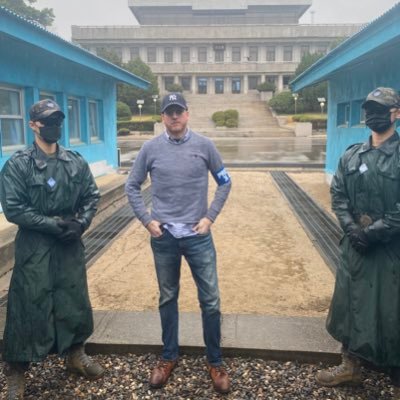
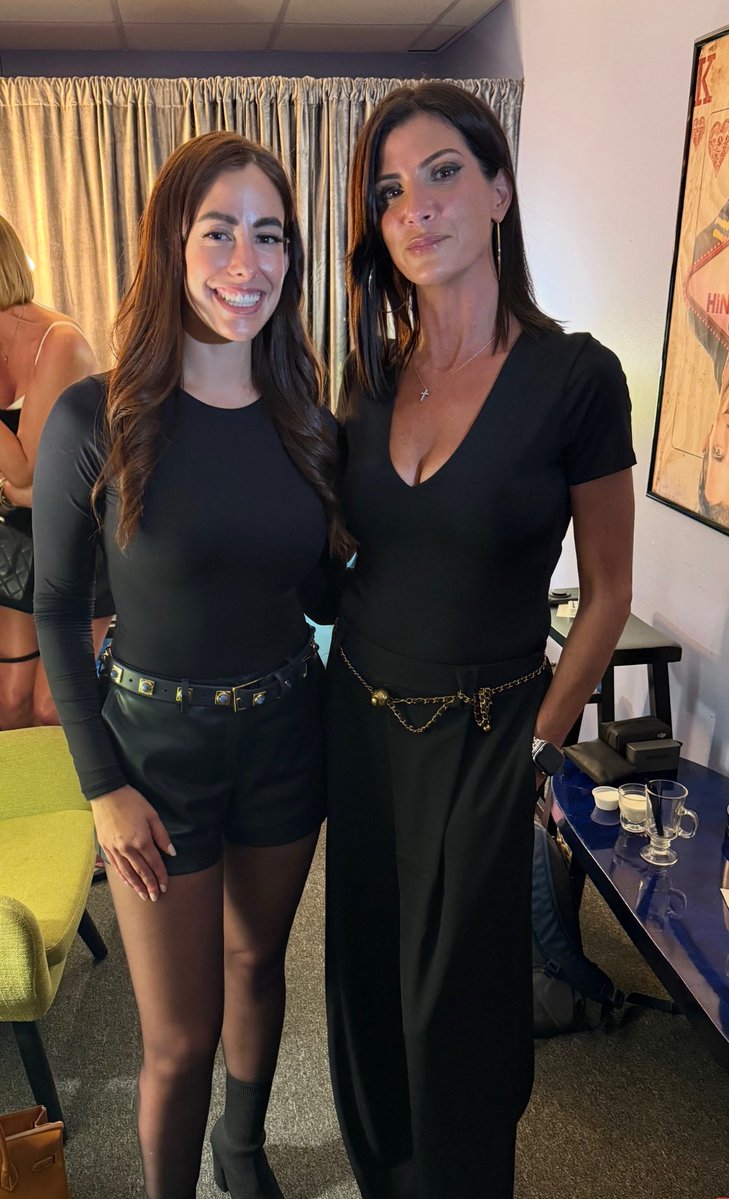
While reviewing Embassy-linked personnel in Damascus, I came across someone more interesting than a social media propagandist. Meet Mohammed Fawzi Aqila al-Warfalli, four photographs of him are provided below.
Appointed to the Libyan Embassy in Damascus by al-Lafi, al-Warfalli is not a standard diplomat. His activities appear to include covert information operations targeting members of the Libyan National Army and security officials in Benghazi, the same institutions that have fought al-Qaeda and ISIS-aligned networks in eastern Libya, including those responsible for the attacks on us in 2012.
But the methods attributed to him are not random or improvised. They are technical, calculated, and operational by design. They include the manipulation of IP routing to obscure true origin points, the masking of geographic indicators to create false digital footprints, and the use of phishing campaigns and malicious links designed to harvest credentials and sensitive data. Beyond simple propaganda, these techniques allow for the collection of detailed targeting information on individuals serving in the public sector, including law enforcement and military roles.
This is not just online harassment. It is the structured acquisition of operational intelligence that, in the wrong hands, can be used to track, pressure, compromise, or physically target individuals in the real world.
This goes well beyond narrative warfare.
Precise locational data in the wrong hands can be operationally decisive. In Benghazi, we have seen what happens when that kind of information is exploited. Good men get assassinated.
So when I say never underestimate the enemy, I mean it. An Embassy should represent diplomacy. Instead, we are looking at a hybrid threat: part diplomat, part intelligence operative, part terrorist.
The more you try to smear, the more facts come to light.
And facts, unlike propaganda, do not disappoint.
I would wager you never intended for anyone to publicly identify al-Warfalli. Yet here we are. Blowback has a way of arriving uninvited.