
Marc Feder מרדכי אריה retweeted

Translated from French
Written by @rehoov
A brief reminder.
Until the treacherous attack by Arab countries that led to the Yom Kippur War in 1973, Western nations had more sympathy for Israeli democracy than for the surrounding tyrannies.
But the Arabs, furious after yet another defeat by a people 100 times smaller, came up with one of their more insidious ideas.
In October, OPEC imposed an oil embargo on all countries that supported the Jewish state. Then oil prices were set according to each country’s level of friendliness toward Israel.
In short, from that moment on, Europe and other Western countries had an interest in treating the Palestinian narrative as historical truth, and in presenting the arch-terrorist responsible for the massacre of Jewish children, Yasser Arafat, as the equivalent of a bearded Mother Teresa in a keffiyeh, if they wanted access to oil at a price their economies could survive.
The blackmail worked.
France had no oil, but it had ideas. Its first idea was to adopt the Arab-Muslim narrative and recognize that the mix of Syrians, Turks, Egyptians, and other Muslim conquerors in Judea and Samaria constituted a people: the “Palestinians.”
And it was especially at that moment that the astonishing idea took hold that the small Jewish people, who had just rebuilt their nation in their ancestral homeland and wanted nothing more than to live in peace, were in fact the aggressors and the colonizers.
What won’t a government do for a barrel of oil at half price?
Since October 1973, Middle East diplomacy has been held hostage by this blackmail.
But that may change on May 1st.
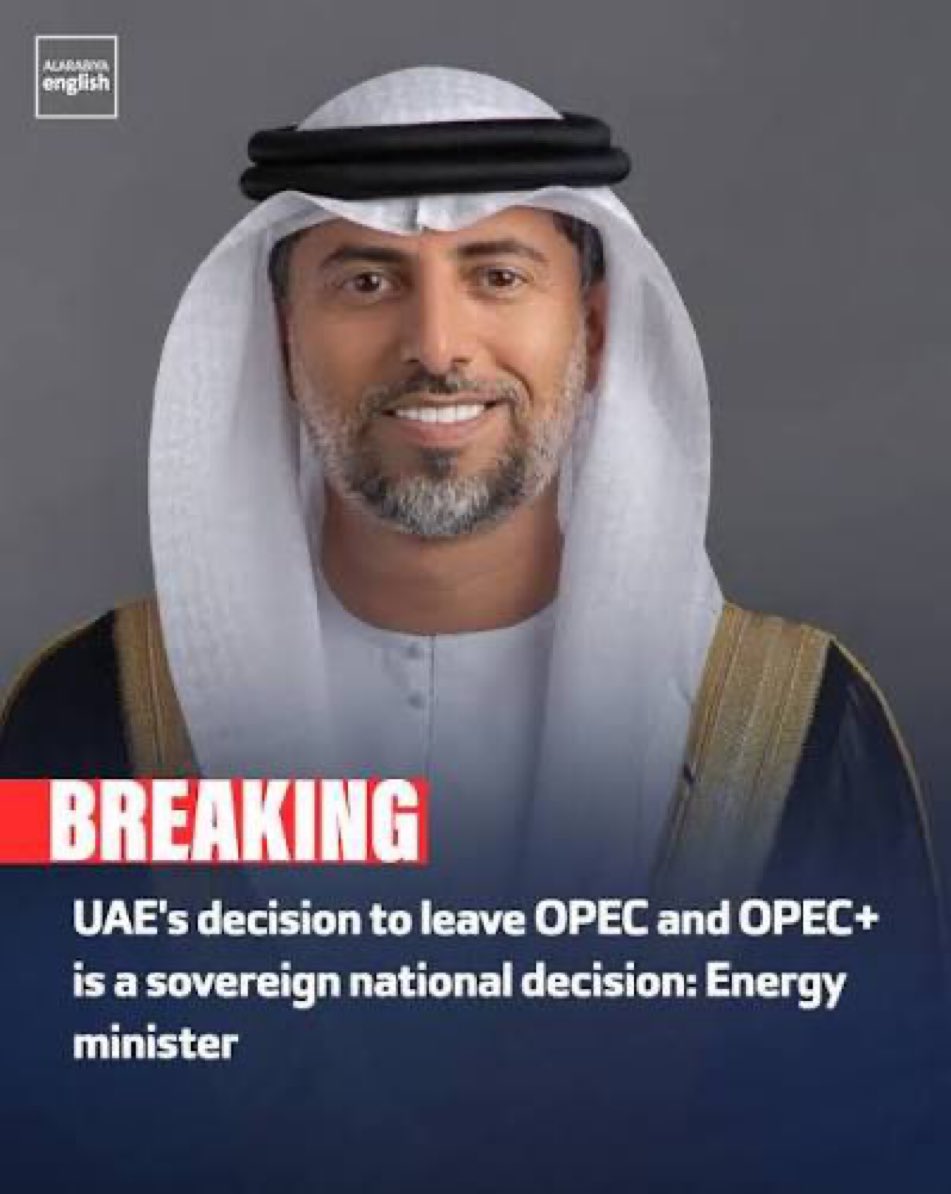
The United Arab Emirates is set to assert its independence by leaving OPEC.
A major shift in the energy paradigm may be coming.
And perhaps the gradual end of the Palestinian myth and the narrative of Arab colonization of Judea and Samaria.
English