Peter Drechsler

254 posts

Peter Drechsler banner
Peter Drechsler

Peter Drechsler

@peedstar

MS.c. Civil Engineering, CPO at @letsbuildcom changing ConTech, Agile development and #JTBD enthusiasts , Tall and quirky fellow

Denmark Joined Haziran 2008
393 Following80 Followers
Peter Drechsler retweeted
Brivael Le Pogam
Brivael Le Pogam@brivael·
Elon Musk avait dit un truc qui m'avait marqué sur l'allocation de ressources. En substance : passé un certain niveau de richesse, l'argent n'est plus de la consommation, c'est de l'allocation de capital. Cette phrase change tout. L'économie, dans le fond, c'est juste un problème d'allocation. Tu as des ressources finies et des usages infinis. Qui décide où va quoi ? Imagine une cour de récré. 100 enfants, des paquets de cartes Pokémon distribués au hasard. Tu laisses faire. Très vite, un ordre émerge. Les bons joueurs accumulent les cartes rares, les collectionneurs trient, les négociateurs trouvent des deals. Personne n'a planifié. Et pourtant chaque carte finit dans les mains de celui qui en tire le plus de valeur. Le système maximise le bonheur total de la cour. C'est ça, la main invisible. Maintenant fais entrer la maîtresse. Elle trouve ça injuste. Léo a 50 cartes, Tom en a 3. Elle confisque, redistribue, impose l'égalité. Trois effets immédiats. Les bons joueurs arrêtent de jouer, à quoi bon. Les mauvais n'ont plus de raison de progresser, ils auront leur part. Les échanges s'effondrent. La cour est égale, et morte. Elle a maximisé l'égalité, elle a détruit le bonheur. Le problème de la maîtresse, c'est qu'elle ne peut pas avoir l'information que la cour avait collectivement. C'est le problème du calcul économique de Mises, formulé en 1920. L'URSS a essayé de le résoudre pendant 70 ans avec le Gosplan. Résultat : pénuries, queues, effondrement. Pas parce que les Soviétiques étaient bêtes, parce que le problème est mathématiquement insoluble en mode centralisé. Quand Musk a 200 milliards, il ne les consomme pas, il les alloue. SpaceX, Starlink, Neuralink, xAI. Chaque dollar est un pari sur le futur. Et lui a un track record. PayPal, Tesla, SpaceX. Il a démontré qu'il sait identifier des problèmes immenses et y allouer des ressources avec un rendement spectaculaire. L'État aussi a un track record. Hôpitaux qui s'effondrent, éducation qui décline, dette qui explose, services publics qui se dégradent malgré des budgets en hausse constante. Le marché identifie les bons allocateurs, la politique identifie les bons communicants. Le profit n'est pas une finalité, c'est un signal. Il dit : tu as alloué des ressources rares vers un usage que les gens valorisent suffisamment pour payer. Plus le profit est gros, plus la création de valeur est grande. Quand Starlink est rentable, ça veut dire que des millions de gens dans des zones rurales ont enfin internet. Quand un ministère est en déficit, ça veut dire qu'il consomme plus qu'il ne produit. L'un crée, l'autre détruit, et on appelle ça redistribution. Dans nos sociétés il y a deux catégories d'acteurs. Les entrepreneurs et les bureaucrates. L'entrepreneur prend un risque personnel pour identifier un problème, mobiliser des ressources, créer une solution. S'il se trompe il perd. S'il a raison, ses clients gagnent, ses employés gagnent, ses fournisseurs gagnent, l'État collecte des impôts. Il est la cellule de base du progrès humain. Le bureaucrate ne prend aucun risque personnel. Son salaire est garanti. Au mieux il maintient une rente existante. Au pire il la détruit par excès de réglementation, mauvaise allocation forcée, incitations perverses qui découragent ceux qui produisent. Mais dans aucun cas il ne crée. Regarde les 50 dernières années. iPhone, internet civil, SpaceX, Tesla, Google, Amazon, Stripe, mRNA, ChatGPT. Toutes des inventions privées, portées par des entrepreneurs, financées par du capital risque. Pas un seul ministère n'a inventé quoi que ce soit qui ait changé ta vie au quotidien. La France est devenue le laboratoire mondial de la dérive bureaucratique. 57% du PIB en dépenses publiques, record absolu. Une administration tentaculaire, une fiscalité qui pénalise la création de richesse. Résultat : décrochage face aux États-Unis, à l'Allemagne, à la Suisse. Fuite des cerveaux. Désindustrialisation. Dette qui explose. Et le pire c'est que la mauvaise allocation s'auto-renforce. Plus l'État prélève, moins les entrepreneurs créent. Moins ils créent, moins il y a de base fiscale. Plus l'État s'endette et taxe. Boucle de rétroaction négative parfaite. La maîtresse pense qu'elle aide, et chaque année la cour produit moins. Dans nos sociétés, ce sont les entrepreneurs, toujours, qui font avancer la civilisation. Les bureaucrates au mieux maintiennent une rente, au pire la détruisent. Aucune société n'a jamais progressé en taxant ses créateurs pour subventionner ses gestionnaires. La question n'est jamais qui a combien. C'est qui alloue le mieux la prochaine unité de ressource pour maximiser le futur de l'humanité. La réponse depuis 200 ans n'a jamais changé. Ce ne sont pas les fonctionnaires.
Français

3.3K
16.4K
61.6K
81.4M
Peter Drechsler retweeted
DHH
DHH@dhh·
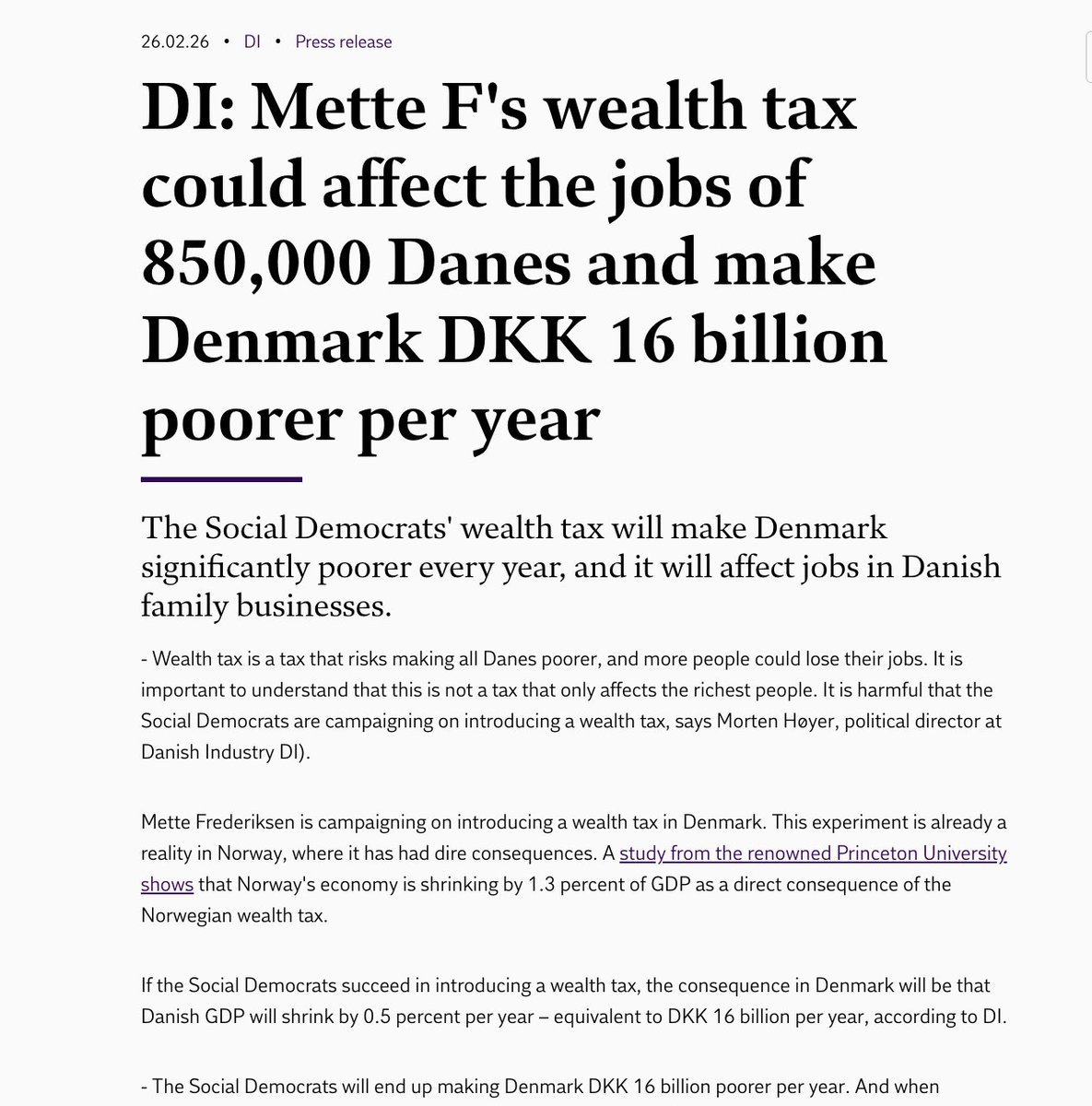
The Danish prime minister is campaigning for the next election on a wealth tax. Poisonous for entrepreneurship, and its unrealized paper gains. The state doesn't even need the money (huge surplus!), but needs to feed the envy. So Danish, so sad. borsen.dk/nyheder/perspe…
DHH tweet media
English
62
57
994
50.3K
Matthieu ❙❙ ElevenLabs
Matthieu ❙❙ ElevenLabs@matt_elevenlabs·
We’ve now sent 10k+ DMs 📩 If you didn’t receive your 11k credits: reply to this tweet with your original reply and we’ll double-check it. Hope you have a great time exploring the platform!
Matthieu ❙❙ ElevenLabs@matt_elevenlabs

We just raised $500M at an 11B valuation 🎉 To celebrate, we’re giving away 1,000 free credits so you can test our platform. For the next 6 hours, comment “11B” below and we’ll DM you the credits (must follow) 👇

English
866
40
738
64.8K
Peter Drechsler retweeted
AlphaFox
AlphaFox@alphafox·
Soon no one will even know how to talk to another human in person...
English
795
5.9K
29.9K
1.3M
Peter Drechsler retweeted
Erik Brynjolfsson
Erik Brynjolfsson@erikbryn·
“In science, it often happens that scientists say: ‘You know that’s a really good argument; my position is mistaken,’ And then they would actually change their minds and you never hear that old view from them again. They really do it. It doesn’t happen as often as it should, because scientists are human and change is sometimes painful. But it happens every day. I cannot recall the last time something like that happened in politics or religion.” -Carl Sagan
English
36
76
634
103.1K
Peter Drechsler retweeted
Jonathan Stokes
Jonathan Stokes@jonathanwstokes·
The speed of Tesla's Robotaxi expansion fascinates me. I'm not sure anyone is tracking the progress of all 18 cities in one place, so I compiled a chart this weekend in a fit of OCD...
Jonathan Stokes tweet media
English
295
693
4.5K
582.1K
Peter Drechsler retweeted
jimmah
jimmah@jamesdouma·
I’m kind of sad that most folks can’t appreciate how crazy it is that LLMs work, and how lucky were are that they do and that we stumbled onto this technology. The idea that there’s a simple mechanism that lets you load vast, vast amounts of unstructured data into it that will then self-organize to the degree that it will *learn the languages that the data is encoded in* and then talk you about what’s in there and go on to learn the skills captured in the data - it’s just crazy. This wasn’t on my radar. This wasn’t on *anyone’s* radar - it’s completely unforeseen. And then this miracle, this absolute ne-plus-ultra gift from the universe gets discounted by *experts* who nearsightedly focus on the stuff it can’t do yet - the ways in which it doesn’t live up to their personal platonic ideal of intelligence. Who cares about that? This is arguably the most useful single thing we’ve ever discovered. I feel so lucky that we found it and have it and I’m looking forward to seeing the million and one ways that it’s going to make life better for almost everyone. We live at the best time. I wish more people knew it.
English
175
229
2K
93.6K
Peter Drechsler retweeted
djcows
djcows@djcows·
the best IQ test is to ask someone what they think of Elon Musk
English
262
249
7.3K
661.6K
Peter Drechsler retweeted
Rothmus 🏴
Rothmus 🏴@Rothmus·
It’s so over.
Rothmus 🏴 tweet media
English
2.5K
2.8K
16.9K
62.2M
Peter Drechsler retweeted
Garry Tan
Garry Tan@garrytan·
The sweet sweet moment you find product market fit (wait for it)
English
323
935
9.9K
1.4M
Peter Drechsler retweeted
Jason DeBolt ⚡️
Jason DeBolt ⚡️@jasondebolt·
Numerous factors here. 0) People are less happy in marriages than they’ve ever been because men and women need each other less and less every year. The reason? Science, technology, and strong emphasis on personal freedom instead of purpose and religion. Marriage doesn’t work as well as it used to. Not saying this is good or bad. 1) Women: Birth control, feminism, abundant job opportunities competing with motherhood, and now social media providing women with more attention, freedom and choices than ever. 2) Men: Fear of losing assets in divorce. Lots of women who don’t know how to make a man want to keep her around, and honestly it’s not entirely their fault. Their mothers didn’t either, and society no longer pressures these women to learn. Some women can still do it. 3) Decline in religion, which celebrates and encourages fertility. 4) Fewer men and women are interested in starting families because they live a life full of distractions, thanks to technology. An abundance of entertainment. Children used to provide distraction and entertainment for families. 5) Most people who want kids have only 1 child because they are broke. These people would have had 2 or more children in previous generations. There have always been people who never wanted children, but now it’s easier than ever to ensure they never have them with numerous types of birth control. 6) Compounding effect of multiple generations of divorced families producing children who never experienced strong family life, and thus don’t want children of their own. There are no easy solutions to this problem. No government policy changes are sufficient to fix it. We basically need a new religion or belief system that encourages fertility and reduces the emphasis on personal freedom. It must be a social movement as big as the centuries long transition from paganism to monotheism and Christianity. A complete rejection of our current generation’s social operating system by future generations is needed.
English
38
15
193
33.2K
Peter Drechsler retweeted
Gad Saad
Gad Saad@GadSaad·
Well done to the person who created this longitudinal pedagogic summary.
Gad Saad tweet media
English
1.4K
8.3K
34.8K
60.8M
Peter Drechsler
Peter Drechsler@peedstar·
Perhaps what happens when you die is that you loose your mass; then travel at the speed of light, then lives for eternity. I wonder if having mass is our blessing or curse. youtu.be/Rc7OHXJtWco?si…
YouTube video
YouTube
English
0
0
0
8
Peter Drechsler
Peter Drechsler@peedstar·
He also said that according to Einsteins theory of relativity, things traveling at the speed of light does not experience time. At that point, time stands still..
English
1
0
0
10
Peter Drechsler
Peter Drechsler@peedstar·
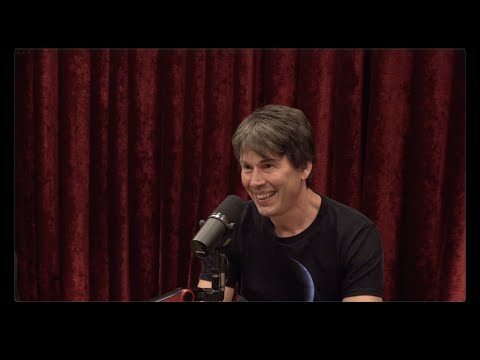
I watched Brian Cox on Jo Rogan. He described how that things with mass theoretical will never be able to travel at the speed of light. He also said things with no mass are like protons and does travel at the speed of light.…
English
1
0
0
33