Jonathan Sanderson

3.4K posts

Jonathan Sanderson banner
Jonathan Sanderson

Jonathan Sanderson

@sanderjson

Educator, web developer, and designer.

Canada Joined Mayıs 2018
386 Following166 Followers
Jonathan Sanderson retweeted
The Fourth Way
The Fourth Way@The4thWayYT·
The Fourth Way tweet media
ZXX
36
870
5.5K
68.5K
Jonathan Sanderson retweeted
Darshak Rana ⚡️
Darshak Rana ⚡️@thedarshakrana·
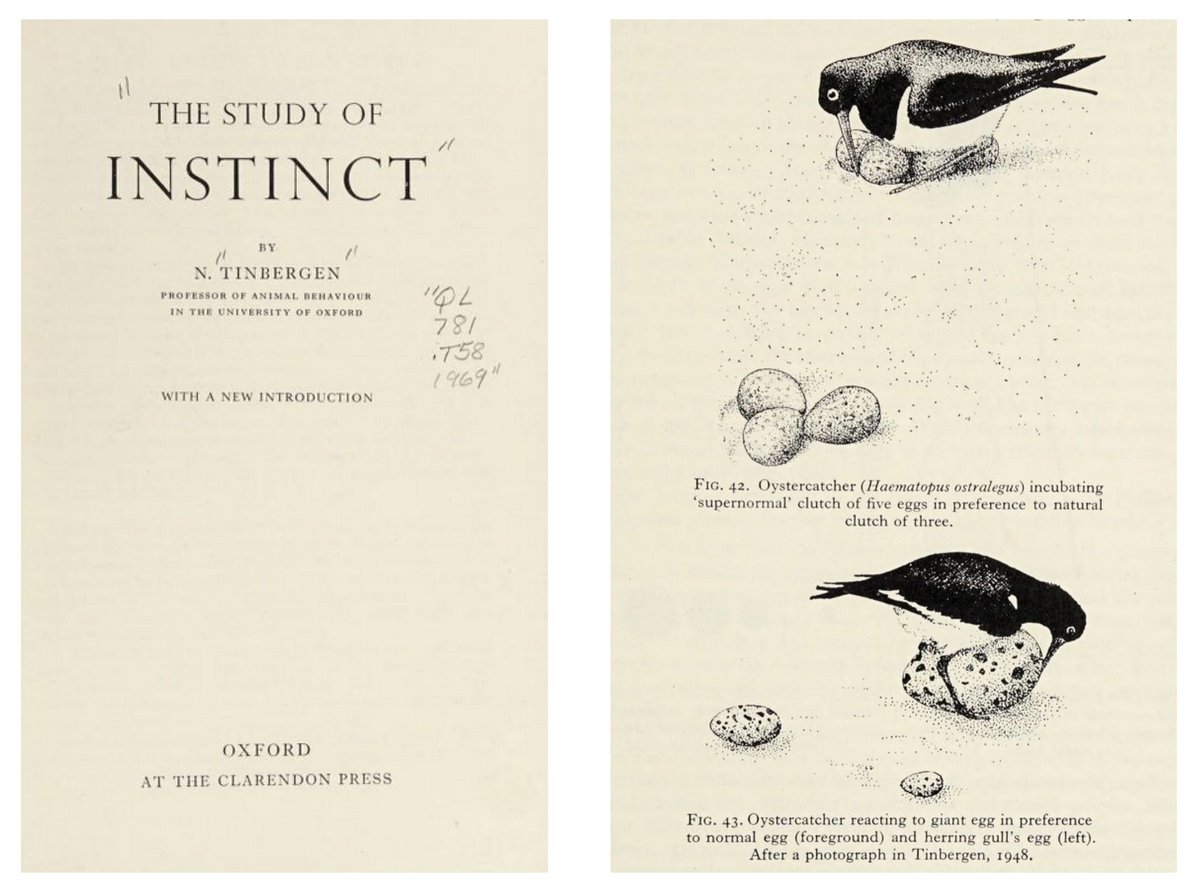
🚨Scientists discovered that overstimulation makes mammals prefer fake experiences to real ones. Dutch biologist Niko Tinbergen discovered that birds will abandon their own eggs to sit on larger, fake plaster eggs painted with exaggerated colors. The mother bird ignores her actual offspring to nurture something artificial that triggers her nesting instincts more intensely than reality ever could. Tinbergen called these "supernormal stimuli" and spent decades documenting how animals consistently choose fake enhanced versions over authentic experiences. You are that bird. Your phone is the plaster egg. Every notification, every curated feed, every filtered photo represents reality with the saturation cranked beyond what your nervous system evolved to handle. Your brain's reward circuits fire more intensely for digital stimulation than they do for actual sensory experience, so you abandon the real world to sit on something artificial. Physical textures feel dull compared to the rapid dopamine hits from scrolling. Conversations with people in your actual environment seem slow and unstimulating compared to the endless stream of optimized content designed by teams of neuroscientists to capture your attention. Your ancestors developed pattern recognition by watching clouds, reading animal tracks, noticing seasonal changes. Your pattern recognition system now runs on memes, trending topics, and algorithmic recommendations. The same neural machinery that once helped you navigate reality now helps you navigate feeds. When you eat while watching screens, you're training your brain to associate nourishment with passive consumption rather than active experience. When you walk while listening to podcasts, you're teaching your spatial navigation system to rely on other people's thoughts instead of your own observations. The simulation you built is a safe experience. Why? Because it offers more stimulation than everyday life, so your biological systems naturally gravitate toward it. Tinbergen's birds didn't realize they were choosing fake eggs. They just followed their instincts toward whatever triggered the strongest response. When researchers removed the plaster eggs, the birds immediately returned to caring for their real offspring. The physical world is still there. Touch something with texture. Taste something without distraction. Walk somewhere without input. Your real life is waiting under the fake egg you've been sitting on.
Darshak Rana ⚡️ tweet media
Darshak Rana ⚡️@thedarshakrana

x.com/i/article/2042…

English
36
486
2.2K
167.1K
Jonathan Sanderson retweeted
Liquid AI
Liquid AI@liquidai·
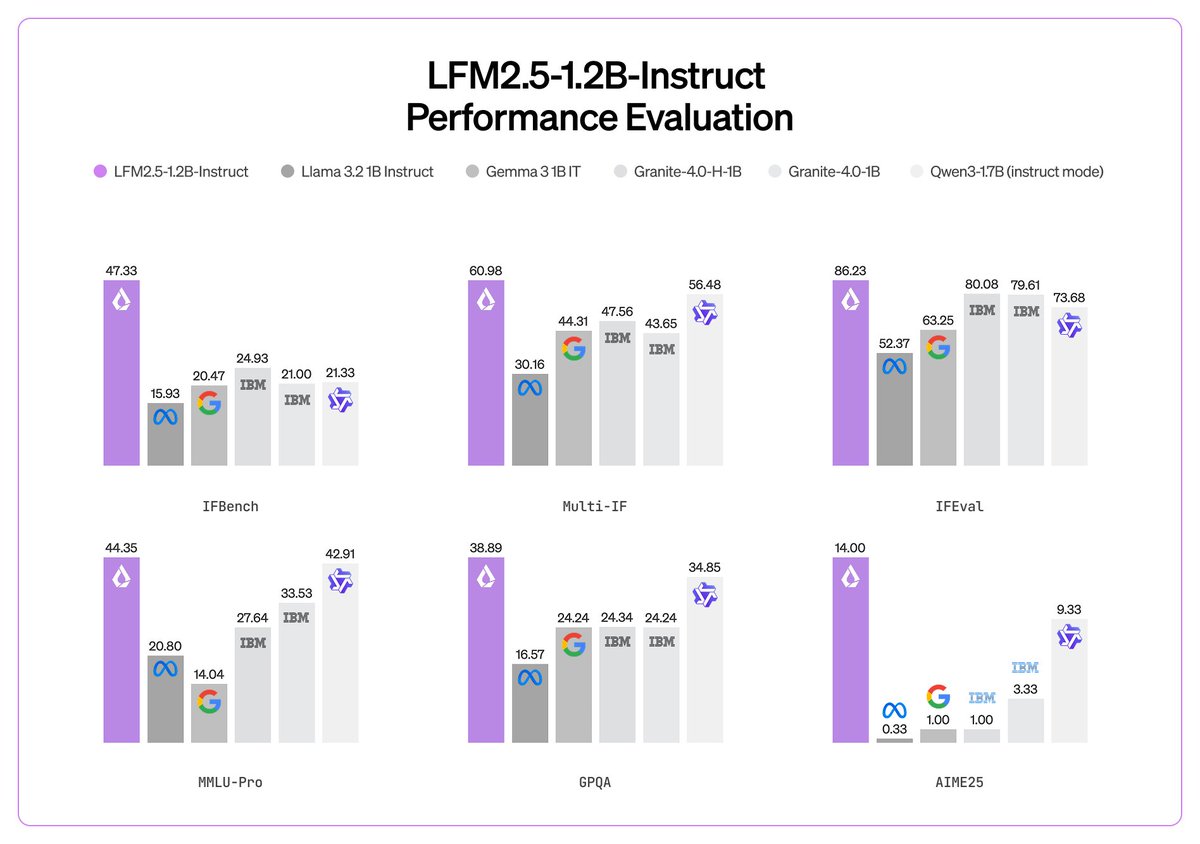
Today, we release LFM2.5, our most capable family of tiny on-device foundation models. It’s built to power reliable on-device agentic applications: higher quality, lower latency, and broader modality support in the ~1B parameter class. > LFM2.5 builds on our LFM2 device-optimized hybrid architecture > Pretraining scaled from 10T → 28T tokens > Expanded reinforcement learning post-training > Higher ceilings for instruction following 🧵
Liquid AI tweet media
English
72
256
1.6K
205.7K
Jonathan Sanderson retweeted
Magnetic Norse
Magnetic Norse@MagneticNorse·
Foraging is serious business
English
46
298
3K
86.8K
Jonathan Sanderson retweeted
☁
@canekzapata·
gm
38
486
3.1K
97.4K
Jonathan Sanderson retweeted
Tom Turney
Tom Turney@no_stp_on_snek·
@Stonewrot Neither. It is a fork of llama.cpp with native C/Metal/CUDA kernels. No Python dependencies, no plugins. Clone, build, quantize, run. #weight-compression-tq4_1s--experimental" target="_blank" rel="nofollow noopener">github.com/TheTom/turboqu…
English
3
2
21
3.3K
Chubby♨️
Chubby♨️@kimmonismus·
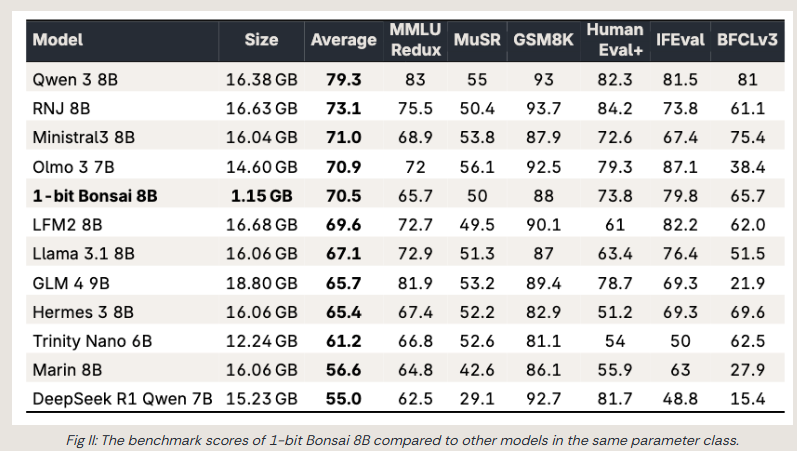
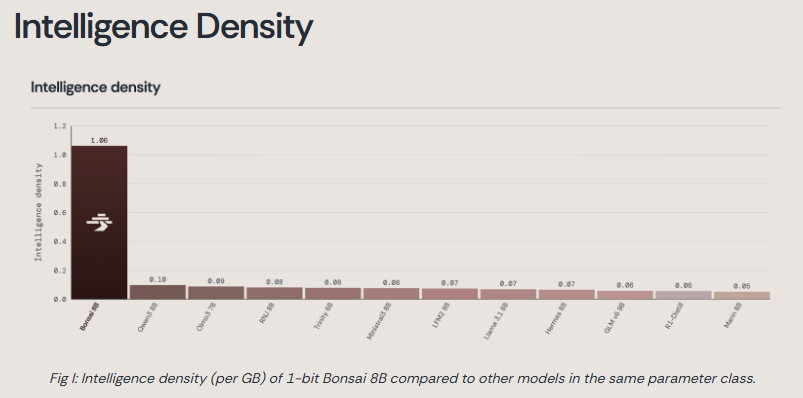
Pretty insane: PrismML has introduced its 1-bit Bonsai models, compressing an 8.2B-parameter LLM into just 1.15 GB while maintaining performance comparable to leading 8B models. By focusing on “intelligence density,” the company claims roughly a 10x improvement in capability per GB, enabling fast, efficient AI that can run directly on devices like iPhones, Macs, and GPUs with significantly lower energy use.
Chubby♨️ tweet mediaChubby♨️ tweet media
English
24
32
328
21.3K
Jonathan Sanderson retweeted
Google Research
Google Research@GoogleResearch·
Today we announce that AI Quests, a gamified AI literacy experience developed by Google Research in collaboration with the Stanford Accelerator for Learning, is expanding to eight additional languages, including Spanish and Malay! Learn more →goo.gle/3NSBfrE You can also try AI Quests here: goo.gle/4m1NDlz
English
36
121
1K
92.3K
Jonathan Sanderson retweeted
serenity
serenity@calmlivng·
GIF
ZXX
54
6.1K
28.1K
652.5K
Jonathan Sanderson
Jonathan Sanderson@sanderjson·
@MilksandMatcha Sure I'll try! I'm a technical educator building for students, and researchers. I think Codex could help.
English
0
0
0
13
Jonathan Sanderson retweeted
Jaynit
Jaynit@jaynitx·
David Lynch: "You're operating with a limited mind and don't realize it" "If you have a golf ball-size consciousness, when you read a book, you'll have a golf ball-size understanding. When you look out, a golf ball-size awareness. When you wake up in the morning, a golf ball-size wakefulness. But if you could expand that consciousness, you read the book with more understanding. You look out with more awareness. You wake up with more wakefulness." Lynch explains what lies beneath: "There's an ocean of pure vibrant consciousness inside each one of us. It's right at the source and base of mind, right at the source of thought. It's also at the source of all matter. Modern physics calls it the unified field. All matter, everything that is a thing emerges from this field." He describes what the field contains: "This field has qualities like bliss, intelligence, creativity, universal love, energy, peace. It's not the intellectual understanding of this field, but the experiencing of it that does everything. You dive within, transcend, experience this field of pure consciousness, and you unfold it. It grows. The final outcome of this growth of consciousness is called enlightenment. And a side effect of enlivening this consciousness is that negativity starts to recede." Lynch shares what happened when he started meditating: "When I started, I was filled with anxieties. Filled with fears. Kind of a depression. And anger. I took this anger out on my first wife. After two weeks of meditation, she comes to me and says, 'What's going on?' I was quiet for a moment because it could have been any number of things she might have been referring to. I said, 'What do you mean?' She said, 'This anger, where did it go?' I didn't even realize it had lifted." He explains why negativity kills creativity: "Anger, depression, sorrow, these are beautiful things in a story. But they're like poison to the filmmaker. Poison to the painter. Poison to creativity. They're like a vice grip. If you're super depressed, you can hardly get out of bed, let alone think of ideas or have creativity flowing." Lynch describes what grows when you expand consciousness: "It's money in the bank to get that beautiful consciousness growing. Creativity flows. The ability to catch ideas at a deeper level. Intuition grows. This field is a field of pure knowing. You dive in there, and you just know how to go. You know how to solve problems. It's like an ocean of solutions." He shares the ultimate benefit: "The ultimate thing for me is the enjoyment of the doing. The enjoyment of life grows huge. I love making films now more than ever before. Ideas flow more. Everybody has more fun on the set. People look like friends, not like enemies. It's a beautiful, beautiful thing." Lynch addresses the myth that you need anger to create: "People say, 'You gotta have anger. You gotta have an edge to create.' No, you gotta have energy. You gotta have clarity to create. You gotta be able to catch ideas. You gotta be strong enough to fight unbelievable pressure and stress. And this gives you more and more ability. It just looks beautiful. It's way, way, way better." On the nature of true happiness: "They say true happiness isn't out there. True happiness lies within. I always wondered, where is this 'within'? And they don't say where it is. They don't even say how to get to it. But it's there. And when you're in it, you know you're in it. It's familiar. It's you. Right away, a happiness, but it's not a goofball happiness. It's a thick beauty. A thick beauty to appreciate life and living. And suffering starts to go."
English
51
732
3.5K
264.5K
Jonathan Sanderson retweeted
Wade Foster
Wade Foster@wadefoster·
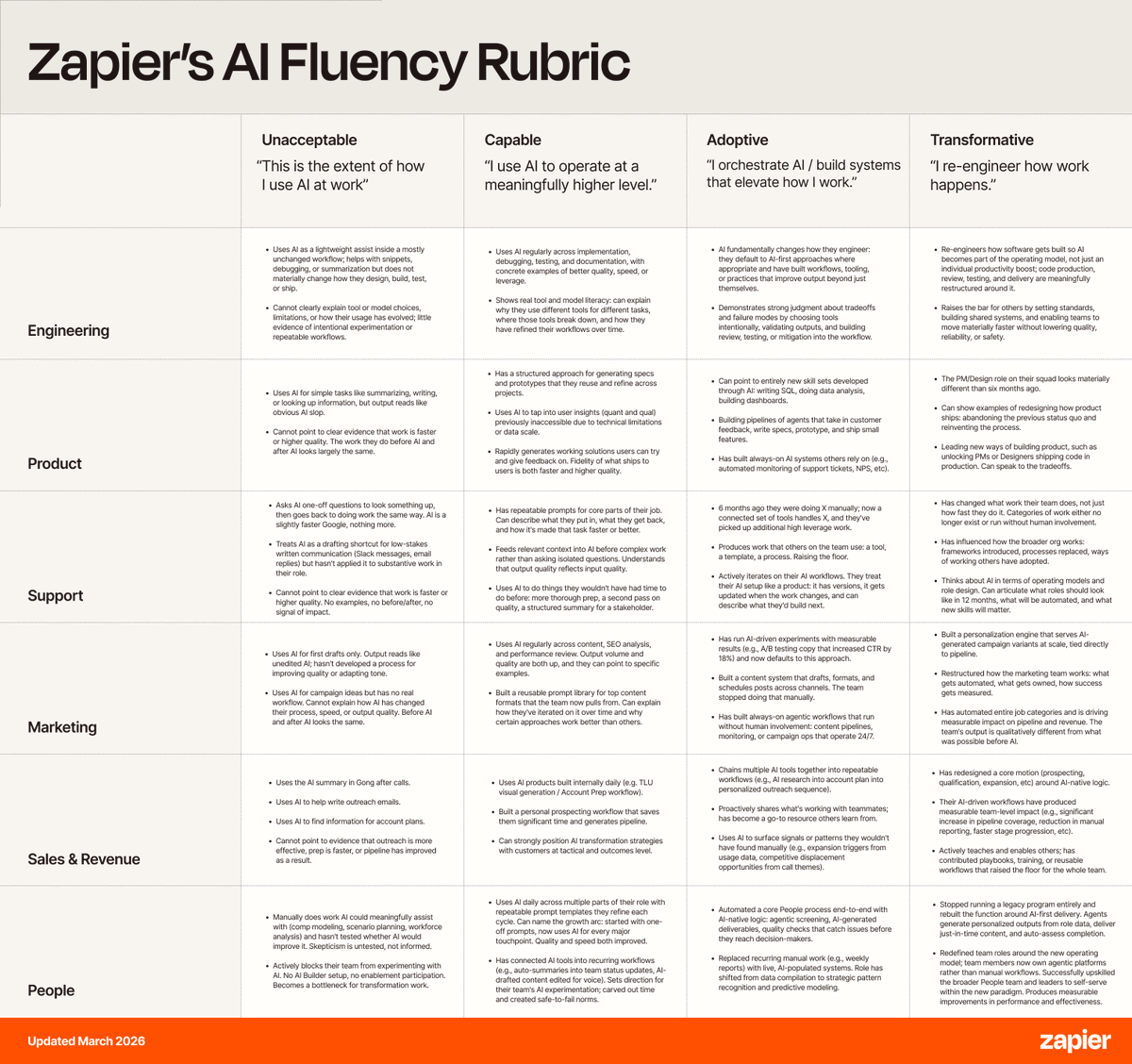
Today we released our new AI Fluency Rubric. We use it for every hire, focusing on what they’ve actually built. Last May we open-sourced V1. Hundreds of companies used it to screen candidates and develop teams. It worked. But the floor moved fast. An updated look at the 3 levels of AI fluency at @Zapier: 1. Capable: "I use AI to operate at a meaningfully higher level." 2. Adoptive: "I orchestrate AI and build systems that elevate how I work." 3. Transformative: "I re-engineer how work happens." We evaluate theses across 4 dimensions: Mindset, Strategy, Building, and Accountability. We're sharing V2 publicly for the same reason we shared V1: every company needs a framework for this, and most don't have one yet. Don’t see your role? See all departments / learn more here: zpr.io/xQq5PHMDChrL
Wade Foster tweet media
English
36
103
1.2K
239.2K
Jonathan Sanderson retweeted
clem 🤗
clem 🤗@ClementDelangue·
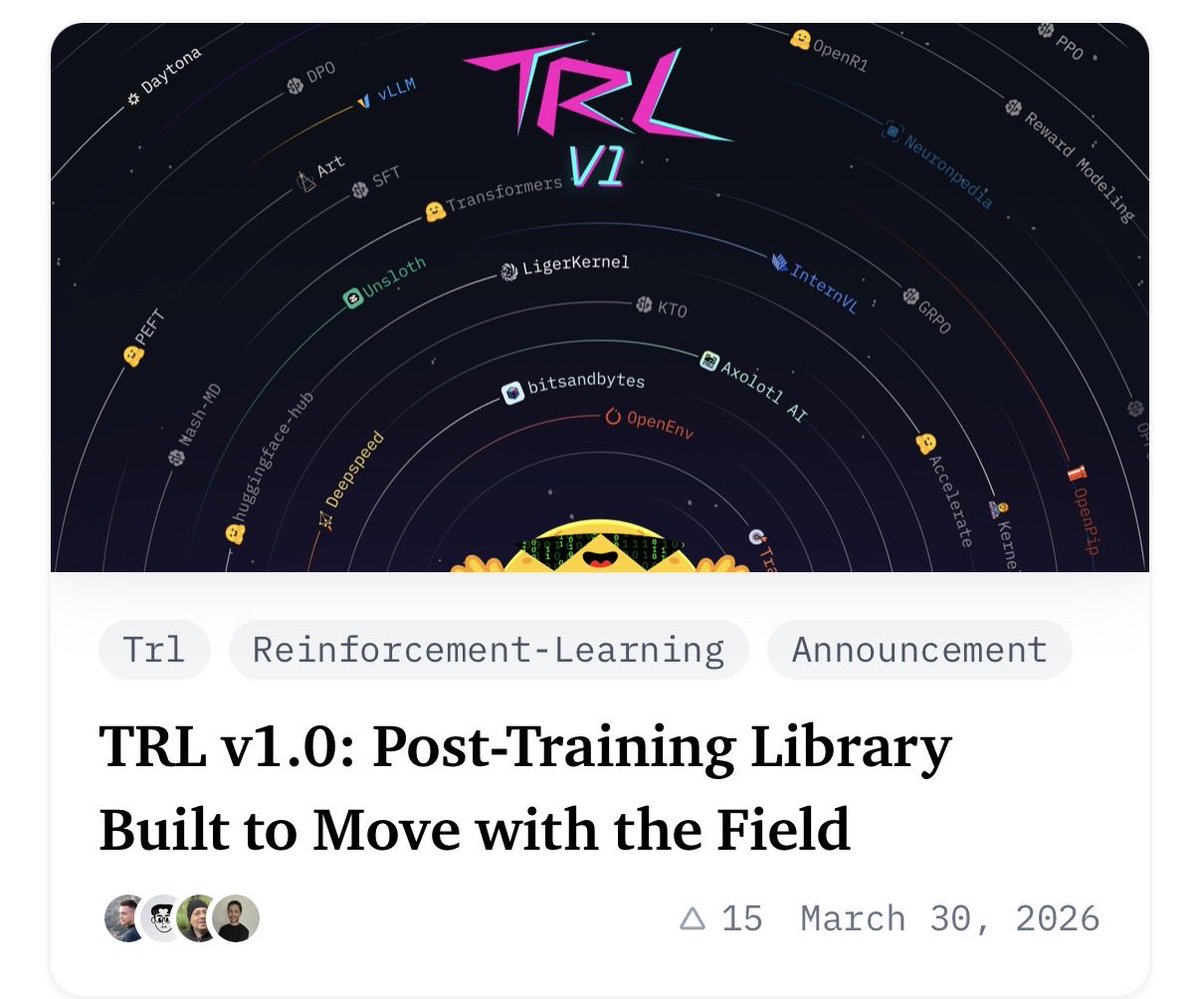
Today we’re releasing TRL v1. 75+ methods. SFT, DPO, GRPO, async RL to take advantage of the latest and greatest open-source. 6 years from first commit to the library that post-trains most open models in the world. Built to be future proof. pip install trl
clem 🤗 tweet media
clem 🤗@ClementDelangue

After @Pinterest @Airbnb @NotionHQ @cursor_ai, today it’s @eoghan @intercom publicly sharing that they’re finding it better, cheaper, faster to use and train open models themselves rather than use APIs for many tasks. And hundreds of other companies are doing the same without sharing. Ultimately, I believe the majority of AI workflows will be in-house based on open-source (vs API). It took much more time than we anticipated but it’s happening now!

English
24
149
1K
80.1K
Jonathan Sanderson retweeted
Liquid AI
Liquid AI@liquidai·
Today, we release LFM2.5-350M. Agentic loops at 350M parameters. A 350M model trained for reliable data extraction and tool use, where models at this scale typically struggle. <500MB when quantized, built for environments where compute, memory, and latency are constrained. 🧵
Liquid AI tweet media
English
80
274
2.3K
341.4K
Jonathan Sanderson retweeted
Darshak Rana ⚡️
Darshak Rana ⚡️@thedarshakrana·
When Johns Hopkins researchers gave psilocybin to volunteers and scanned their brains, they expected to see more neural activity. Instead, they found the opposite. The default mode network, your brain’s primary filter system, went almost completely dark. Blood flow dropped by up to 60% in regions responsible for maintaining your sense of self and screening incoming information. And that’s exactly when participants reported the most vivid, meaningful experiences of their lives. Dr. Robin Carhart-Harris discovered something that breaks our basic assumptions about consciousness. In his studies, the intensity of psychedelic experience correlates inversely with brain activity. The quieter the brain, the richer the perceived reality. Volunteers consistently described accessing information and perspectives that felt more real and true than their baseline consciousness. One participant put it perfectly: “It wasn’t like I was imagining things. It was like I stopped imagining things.” Consider what your brain filters out right now. You can’t see the electromagnetic spectrum beyond visible light, even though it’s flooding through your body every second. You can’t hear the ultrasonic communications happening between animals around you. You can’t feel the gravitational waves from colliding black holes rippling through spacetime. But the filtering goes deeper than sensory limitations. Take change blindness experiments. Researchers have people watch videos where major elements of the scene change completely between cuts. A person’s shirt changes color. Buildings disappear. An entire conversation partner gets replaced by someone else mid-dialogue. Most viewers notice nothing. Your brain shows you continuity even when reality is shifting dramatically. Or consider inattentional blindness. In the famous gorilla experiment, people counting basketball passes fail to notice a person in a gorilla suit walking directly through their field of vision. The information hits your retina perfectly. Your brain discards it as irrelevant before you become conscious of it. Now imagine this filtering happening at levels you can’t measure. What if your brain doesn’t just edit out obvious distractions? What if it edits out entire dimensions of information that would overwhelm your survival priorities? Neuroscientist Eben Alexander experienced this firsthand during a coma caused by bacterial meningitis. His neocortex, the brain region responsible for filtering and organizing conscious experience, shut down completely for seven days. During that time, he reported accessing what felt like direct, unfiltered contact with reality itself. No sense of separation between observer and observed. No categorization or prediction. Just pure information flow. The experience was so vivid and structured that he spent years trying to reconcile it with his neuroscience training… Evolution built your consciousness for survival, not accuracy. The human who notices every detail of every moment doesn’t last long in environments with predators. The human who automatically filters the world into “threat,” “food,” “mate,” and “ignore” lives long enough to reproduce. What psychedelics might do is temporarily disable the survival filter and let raw reality through. UCLA researchers also found that people on psychedelics show increased connectivity between brain regions that normally don’t communicate. Areas responsible for vision start talking directly to areas responsible for emotion and memory. The rigid hierarchies that usually control information flow break down. Instead of perception flowing through the usual bottlenecks and filters, information moves freely between systems that evolution separated for good reasons. The results match reports from users across cultures and centuries. Heightened awareness of connection between all things. Dissolution of the boundary between self and environment. Direct access to information that feels more fundamental than normal thought. What if consensus reality isn’t reality? What if it’s just the narrow slice of available information that keeps seven billion filtering systems functioning in approximately the same way? The consistency of our shared hallucination doesn’t make it true. It just makes it useful. Your sober mind might be the altered state.
Kekius Maximus@Kekius_Sage

🚨 Scientists suggest psychedelics may reveal a “truer” version of reality, while your brain normally blocks it
English
32
322
3.1K
336.3K
Jonathan Sanderson retweeted
Pau Labarta Bajo
Pau Labarta Bajo@paulabartabajo_·
Most AI runs on someone else's computer. This one runs on yours. LFM2.5-1.2B-Thinking runs entirely via WebGPU. No cloud. No API costs. Full privacy. This is what local AI looks like in 2026 ↓ huggingface.co/spaces/LiquidA…
English
5
9
73
4.6K