Tweet fijado
BuildAndBet
859 posts

BuildAndBet
@BuildAndBet
Learning Shipping thoughts on X Refining opinion with feedback
USA Se unió Eylül 2025
190 Siguiendo58 Seguidores

@Futurenvesting If that capital is used for buyback then it would be clear the company has no good strategy to grow the company.
English

Hear me out... $SOFI raised $1.6b at the end of 2025 at a share price of $27.50.
The stock has dropped 42.3% since the last raise!
Is it time to issue a stock buyback with the capital you raised?
$SOFI issued ~58m shares.
$SOFI has the opportunity to buy back ~100.5m shares using the $1.6b they just raised.
SoFi would end up with the same amount of cash as before the raise, but with ~42.5 million fewer shares outstanding. This effectively undoes the dilution and provides an additional bonus reduction in share count, making each remaining share represent a larger percentage of the company.
Anthony Noto would only do this if they believe they couldn't use the capital more effectively.
That said, dilution has been a drag on the sentiment of this company, and this might be a creative way to get excitement back into the stock and raise EPS.

English

@KobeissiLetter Important question is - are you buying or selling?
English

BREAKING: Institutional investors sold -$11.0 billion of US equities last week, the largest weekly sale in 5 weeks.
This comes after 3 consecutive weekly purchases totaling +$12.6 billion.
At the same time, hedge funds bought +$1.8 billion worth of US equities, following 4 straight weeks of sales.
Meanwhile, retail investors sold -$80 million, posting just their 3rd weekly sale over the last 10.
In total, US equities recorded -$9.3 billion in outflows last week, up from -$1.0 billion the prior week, bringing the 16-week total to -$25.5 billion.
This was primarily driven by single stocks, which saw -$8.3 billion in outflows, the 4th-largest since 2008, while ETFs posted -$1.1 billion in withdrawals, the most in 6 months.
Institutional investors are moving to the sidelines.

English

@omisuniversal @1shankarsharma @riteshmjn Can you link to Shankar's facts please? I'm interested in learning more about his reasoning.
English

@1shankarsharma @riteshmjn @riteshmjn kindly provide a proper fact based reply or rest your case, Sharmaji has always had a fact based analytical approach.
English

He is absolutely right.
*Walter Bloomberg@DeItaone
🚨 TRUMP: WE DONT NEED HORMUZ, IT DOESN'T AFFECT US AT ALL
English

@eric_seufert It is all converging towards a point where agents will be central.
English

Meta partners with Stripe for in-ad shopping
If Instant Checkout didn’t represent agentic commerce, using that term to describe Meta’s new ‘purchase-from-an-ad’ experience is simply absurd. An agent plays no role in this transaction: a user sees an ad and clicks a button to make a purchase. This workflow merely resurrects the social commerce model Meta had previously abandoned, with no agent involved whatsoever. The fact that this interaction format is being classified as agentic commerce underscores how diluted, distorted, and devoid of analytical rigor that phrase has become.
mobiledevmemo.com/meta-partners-…

English

@KrisPatel99 @Kross_Roads I sold my MSFT months ago, still holding 200+ NVDA and making min $500 a week selling cc’s. It’s hard to sell when your dropping your cost basis $2.50 a week.
English

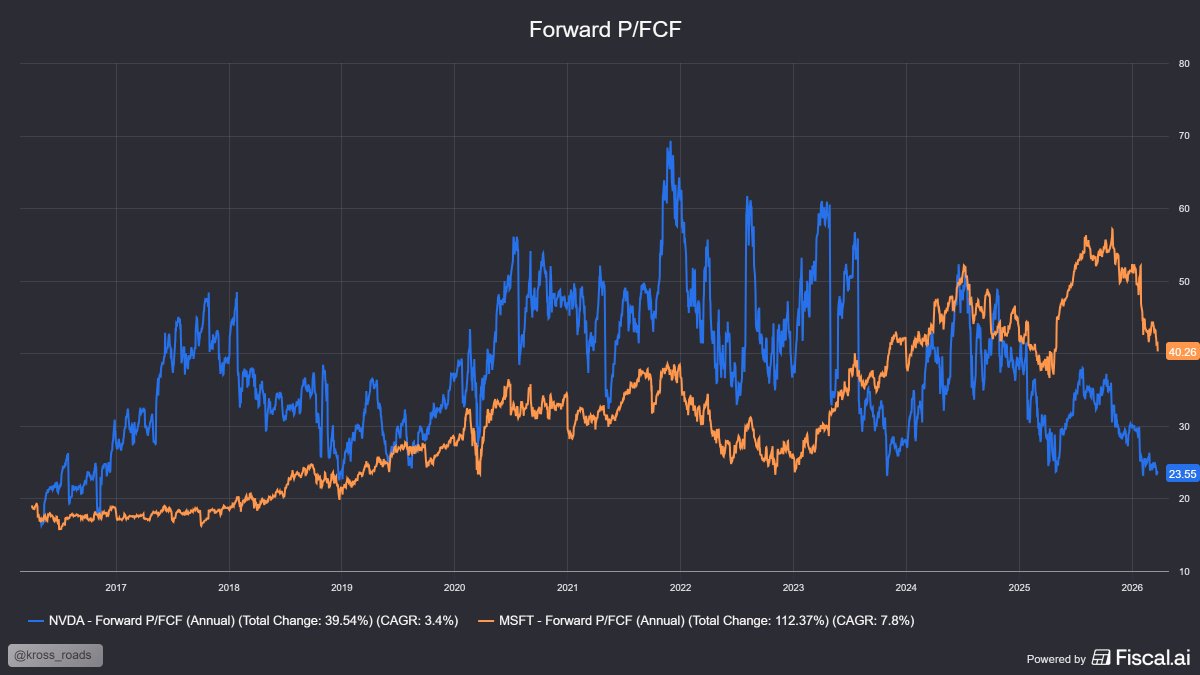
$MSFT and $NVDA are both incredibly attractive here, but I'd pick Nvidia easily.
Three reasons:
1⃣ Nvidia is at the epicenter of the AI wave, which looks to continue for a while (likely surpassing most estimates). Microsoft is positioned decently and not going away, but I'd rather stick with the prime beneficiary rather than worry about software's moat.
Further, with Microsoft and most of the hyperscalers, there are significant CapEx concerns. These concerns mostly benefit Nvidia.
Unless you believe China invades Taiwan, or AI is a passing fad, it's just a cleaner bet.
2⃣ While forward P/E looks similar over the next 12 months, when we look 2 years out, it's clear $NVDA is more attractive.
3⃣ FCF trumps all, and the P/FCF of Nvidia is lower. And on a forward basis, substantially lower than $MSFT.
Both are, over the long term, great opportunities, but Nvidia's returns will likely dwarf that of Microsoft.

amit@amitisinvesting
Would you rather buy $MSFT or $NVDA at these levels for a one year holding period? $MSFT — $370, -21% YTD, $2.7T MC, 22x FWD PE $NVDA — $179, -5% YTD, $4.3T MC, 21x FWD PE
English

@Kross_Roads @amitisinvesting $MSFT is the right choice here IMO. The -21% discount creates a great margin of safety that $NVDA's -5% doesn't.
NVDA also has a lot of sensitivity to China demand and any of the hyperscalers not blinking on CapEx, relative to MSFT.
NVDA has a higher upside but also higher risk
English

Because AI is real and Nvidia is at the epicenter.
Microsoft is a steal here too, but unless you believe in China invading Taiwan or AI being a passing fad, it's hard to pick them over Nvidia.
P/E in 12 months looks similar.
In 24 months? Nvidia crushes MSFT.
And forward P/FCF? It's not even close.

English

Since 2023, the top quartile of AI spenders on @tryramp have more than doubled their revenue. Bottom quartile? Flat
A roofing company in Texas. A window installer in Utah. A construction firm in Florida that grew 65%
The gap is accelerating and most companies don't feel it yet

Eric Glyman@eglyman
English

@jukan05 It started falling before Turboquant announcement though?
English

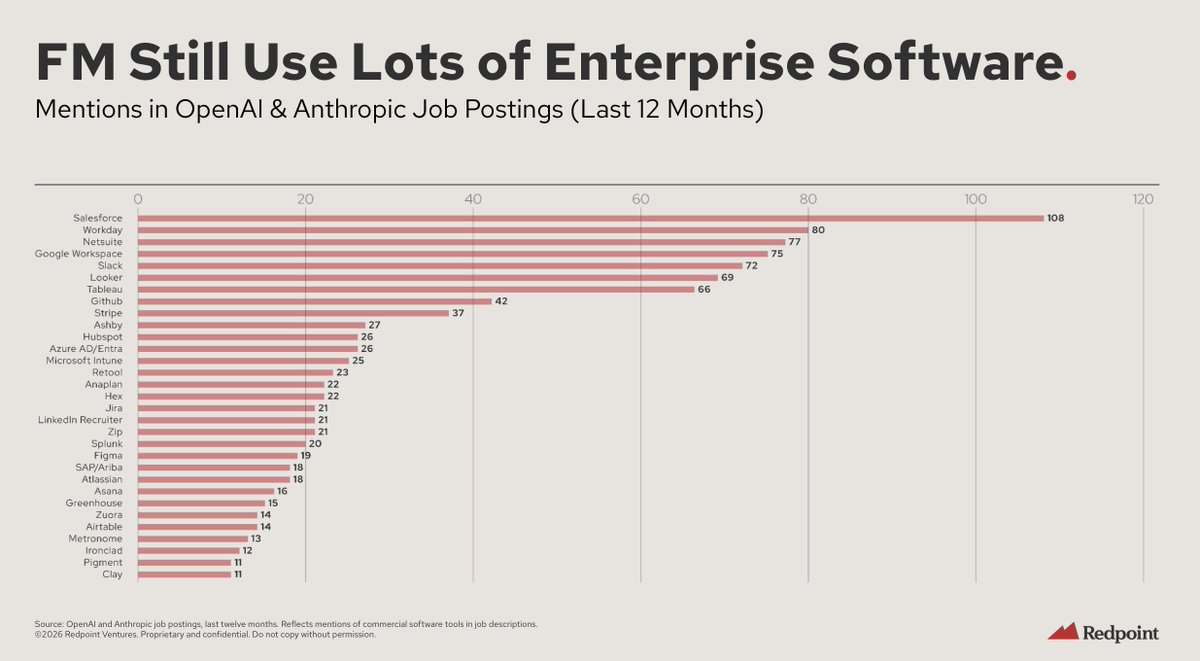
@firstadopter People in early 2000s probably - "Internet companies still use a lot of Newspapers"
English

@1shankarsharma @sandeep_PT At this point any "deal" can be claimed as victory no?
English

@sandeep_PT Indeed. So America cannot Retreat as a loser from the war. So what option does it have?
English

The amount of fear being pumped right now is hilarious... Keep at it boyzzz Im looking for discounts =).
CNBC@CNBC
Private credit’s ‘zero-loss fantasy’ is coming to an end as defaults and fund exits rise cnbc.com/2026/03/25/pri…
English

@seyitaylor Tik tok shops is changing everything in the US. The debate is over. Social commerce is real.
English

Uhhh is this the beginning of the inevitable breakup between Stripe and Shopify?
This is a big deal. It’s also a bunch of my predictions coming to life at once.
Here's what's happening:
Stripe is powering a native checkout inside Facebook ads. You see an ad, tap "Buy now," and purchase without ever leaving Facebook. Powered by Stripe's new Agentic Commerce Protocol (ACP)*, an open standard built with OpenAI.
This is not the breakup. It's worse. It's Stripe building the layer that makes Shopify optional.
Here's the threat chain:
1. Checkout moves off the storefront.* If customers buy inside Meta ads via Stripe, they never visit the Shopify store. The store becomes a warehouse backend, not the point of sale.
2. Stripe becomes the merchant of record infrastructure.* ACP lets any AI agent (ChatGPT, Meta, whoever) trigger a purchase. The business keeps merchant of record status, but the commerce infrastructure is Stripe, not Shopify.
3. Shopify Payments IS Stripe under the hood. Shopify's payment processing is a white-labeled Stripe integration. Stripe going direct to Meta means they're routing around their own reseller. Why let Shopify clip the ticket when Stripe can own the relationship directly?
4. The "agentic" angle is the real play. ACP isn't just Meta. OpenAI is the first AI platform to implement it. This means ChatGPT, and eventually every AI assistant, can trigger purchases through Stripe without touching a storefront. That's a future where "browse a website and add to cart" becomes a legacy behavior.
For brands specifically
This changes the ad-to-purchase funnel fundamentally. If a Prophit Engineer is optimizing Meta ads and the purchase happens inside the ad unit via Stripe checkout, the attribution model changes, the role of the landing page changes, and creative becomes even MORE important because the ad IS the store.
Brands should be watching this closely. Short-term, nothing changes. Medium-term (12-18 months), the brands that figure out how to sell inside AI surfaces and ad units via ACP will have a structural advantage.
So is it the breakup? Not yet. But it's Stripe signaling that they don't need Shopify as the distribution layer anymore. Stripe + Meta + OpenAI is a commerce stack that doesn't require a storefront. Shopify's response will tell you everything: do they build their own ACP competitor, or do they lean into being "the backend" for agentic commerce?
John Collison@collision
Businesses can now sell directly within an ad or browsing session on Facebook, powered by the Agentic Commerce Protocol and @stripe stripe.com/newsroom/news/…
English

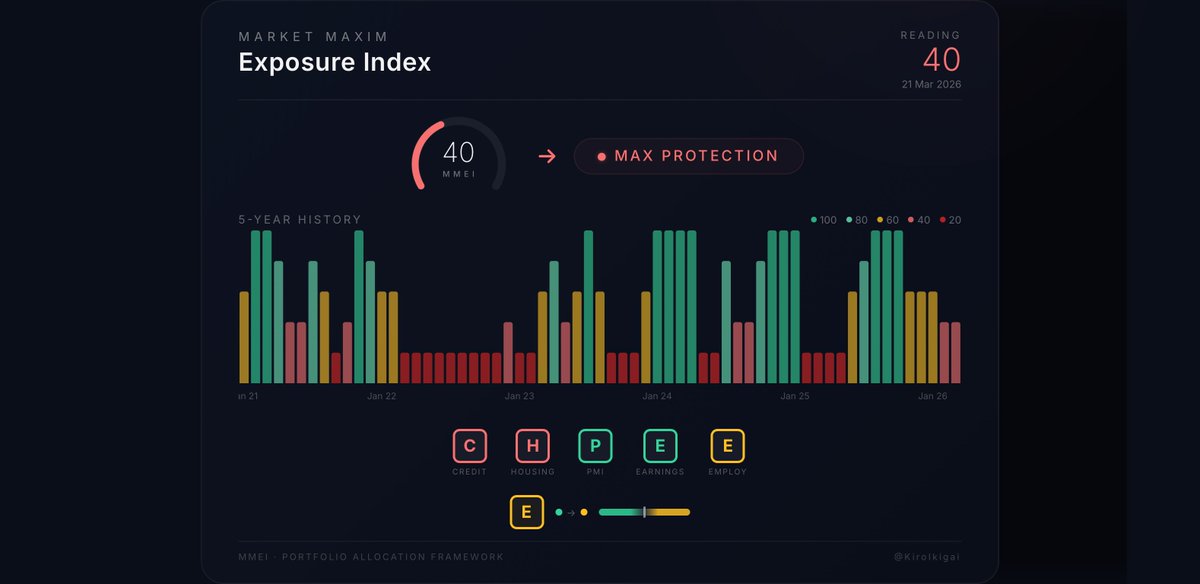
@KiroIkigai @Midnight_Captl That is now. NVDA has hovered around $175 / $180 since the last 6 to 7 months I think.
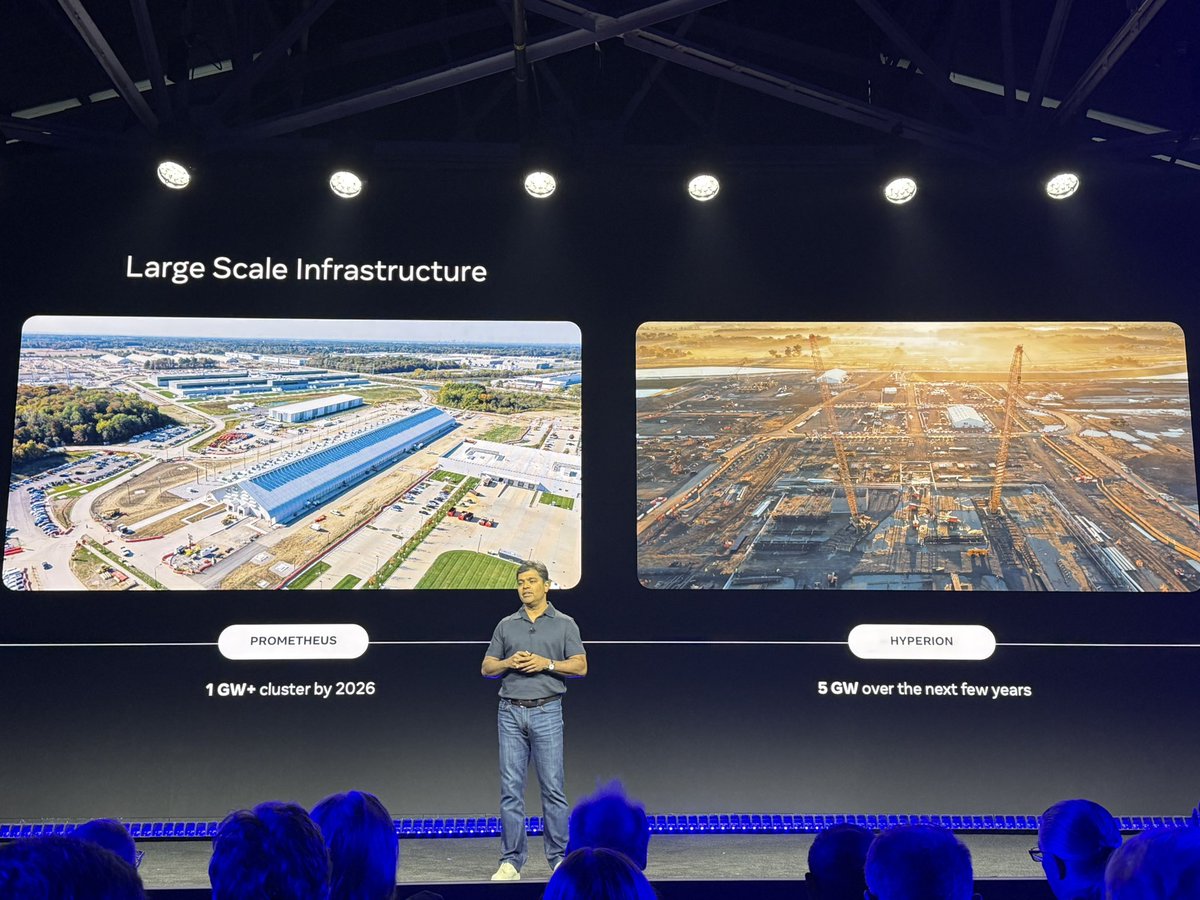
Also, shouldn’t risk off in fact help NVDA because that is a safe stock? Market knows CapEx isn’t slowing down and majority of it is going to them.
English


@Midnight_Captl @KiroIkigai What explains $NVDA not catching a bid despite the crazy growth and CapEx numbers?
English

@KiroIkigai It’s not slowing down. The whole ecosystem is signaling it but people still don’t believe.
English

@realroseceline Love your analysis framework and write up. How much time did this analysis take? (Not the write up, just the analysis)
English

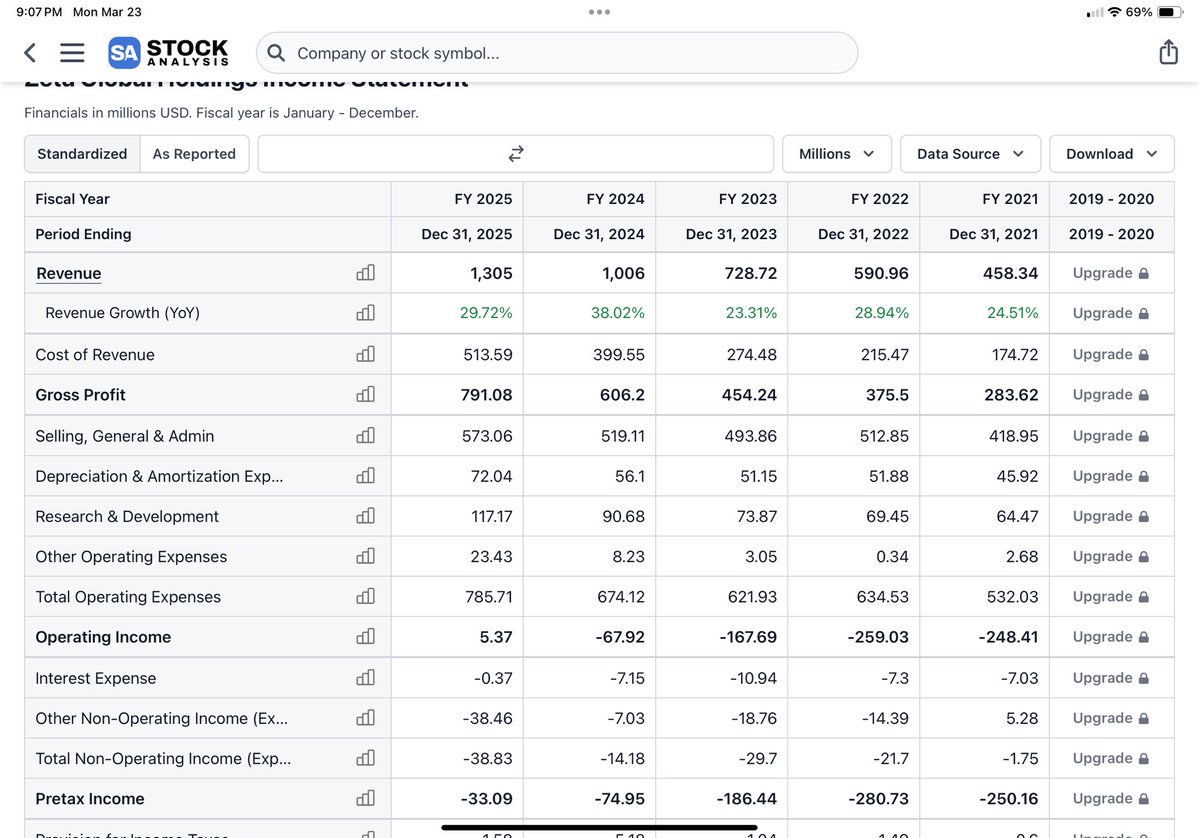
Thoughts on $ZETA
Lots of you asked me about $ZETA, so I took a quick look at the financials and wanted to share a few early thoughts.
This is actually an interesting one because it looks messy on the surface, but there’s something happening underneath. Sales are strong, revenue grew from $458m in 2021 to $1.3b in 2025, and it has been fairly consistent along the way.
Gross profit was ~$790m on $1.3b of revenue, so roughly 60% margins, which means the core product is not the issue. The problem has been everything below that line on the income statement. SG&A is extremely high at ~$575m or about 45% of revenue, and it has not scaled well, which is why operating leverage has been nonexistent. R&D at ~$120m is fine on its own, but combined with SG&A it overwhelms the business.
The key is that operating income just turned roughly break even in 2025 at ~$5m after years of losses. Operating expenses grew only about ~$100m while revenue jumped by ~$300m, which is the first sign that incremental dollars are starting to fall through. This is not a broken business, it’s a high growth company that historically lacked discipline and is now starting to mature, although non operating losses and still negative pretax income show it is not fully there yet.
The balance sheet is not weak, but it is not strong either. Liquidity is fine with ~$320m in cash and ~$685m in current assets against ~$430m in current liabilities, and debt at ~$200m is manageable so there is no survival risk.
What stands out is how much of the asset base is goodwill and intangibles, roughly ~$776m combined, which is more than half of total assets. That tells you growth has been acquisition driven to some extent, and if those deals do not deliver, you risk impairments and poor capital allocation. Retained earnings are deeply negative at around -$1.06b, meaning shareholders have funded the business historically, but equity is now growing quickly, which aligns with the move toward profitability and improving efficiency.
Current liabilities jumped from ~$200m to ~$430m is something to watch. Some of it may be normal for growth or deferred revenue, but it can also mean working capital pressure.
Then you get to the cash flow statement, which is where things look better than I expected after reviewing the income statement and balance sheet. Operating cash flow is ~$200m on $1.3b of revenue, about 15%, and it has grown consistently from ~$78m to ~$200m over a few years.
But a big part of that comes from stock based compensation ~$178m, which means a large part of the cash flow is dilution. Even so, free cash flow at ~$185m with low capex shows this is an asset light model with strong economics.
What is interesting is the capital allocation. After issuing a large amount of stock in 2024, $ZETA bought back around ~$121m in 2025. That suggests a transition from relying on shareholders to starting to return capital, which is a meaningful change if it continues.
There are still risks. Receivables are a drag on cash, down ~$77m, which means they are waiting longer to get paid. Acquisitions are still ongoing, around ~$90m, which comes back to the goodwill and raises the question of how much growth is truly organic.
So when you put it all together, the income statement says barely profitable, while the cash flow statement says this is already a decent but loosely managed business. The truth is probably somewhere in the middle. This is a company with strong underlying economics that converts revenue into cash, but still masks part of its costs through SBC and depends on acquisitions.
If they keep growing operating cash flow, bring SBC down as a percentage of revenue, and grow organically, $ZETA can become a quality cash generator. If not, it will continue to look good on the surface while largely redistributing value through dilution and acquisitions.
🌹


English

Brands on @Shopify are now shoppable inside @ChatGPTapp.
AI shopping isn’t coming. It’s here. As always, our merchants are best positioned.
Let's go.
English

@GavinSBaker @WSJ I think your long response to that article is giving it more attention than the article itself.
English

Strange @WSJ article about Jensen renting out the San Francisco opera house last year for a performance of “The Monkey King.” The article essentially frames it as a gilded age “champagne and opera” style event for “AI’s kingmaker.”
Makes for a good story, but the reality was quite different.
Mostly because the article leaves out an important detail; Jensen’s stated reason for hosting the event: helping to revitalize San Francisco’s downtown and the opera house. This was the actual focus of his speech, not the “champagne and opera” joke. And the event was full of Jensen’s good friends as well as various AI figures.
When I spoke with Jensen that night at the opera, the first thing he said to me was that it was really personally important to him to help downtown San Francisco get back to its glory days. It was essentially a fundraiser for the opera and San Francisco where no one was asked to contribute.
As someone who gets asked to contribute to a lot of charities and go to a lot of charitable events, I thought this was a generous and classy gesture on Jensen’s part and I’m sure many attendees took it upon themselves to donate. I certainly did!
Article would read differently with these facts, which kinda seem like the most important ones to me.
As far as the illustrious AI figures in attendance, important to note that the CEO of Jensen's largest accelerator competitor was actually at the opera at Jensen's invitation the night I was there; which again is quite at odds with what is described in the article. And please note that Nvidia’s largest competitor is not actually AMD.
One of the defining features of tech in the 90s was that the CEOs generally hated each other. I think it is good for the world and the AI industry for someone like Jensen to bring the industry together and I'm happy that he is doing this.
If anyone believes that any of the companies referenced would’ve struggled to raise money without Nvidia’s participation - they are simply wrong. I know because I was around many of these fundraises. And OpenAI’s embrace of AMD is object evidence that companies who have raised money from NVIDIA feel free to use competing products.
Finally, kinda sad that the net effect of this article might be to make other CEOs less likely to host comparably civic minded events.
I hope that I am wrong and that both Jensen - and other CEOs - are undeterred by this article. Nice for people to give back.

English

@GergelyOrosz Tbh applying for a job via a link has been dead for a long time.
English

The death of inbound applications is upon us: and yes, it’s in a big part because of AI making it dead simple to apply. And so inbound applications become noisy, with increasingly more of non-qualified people. And so companies rely on referrals and recruiters to source instead.
Tips Excel@gudanglifehack
Claude Cowork can apply to 50 jobs in under 30 minutes. Here's how to set it up.
English