Chiss Protocol ❄️

791 posts

Chiss Protocol ❄️ banner
Chiss Protocol ❄️

Chiss Protocol ❄️

@ChissProtocol

Permissionless on-chain FX market for seamless earning, borrowing & affordable global trade. Built on @avax 🔺 https://t.co/eKCozJv3sK

Onchain Se unió Ekim 2024
12 Siguiendo1.5K Seguidores
Tweet fijado
Chiss Protocol ❄️
Chiss Protocol ❄️@ChissProtocol·
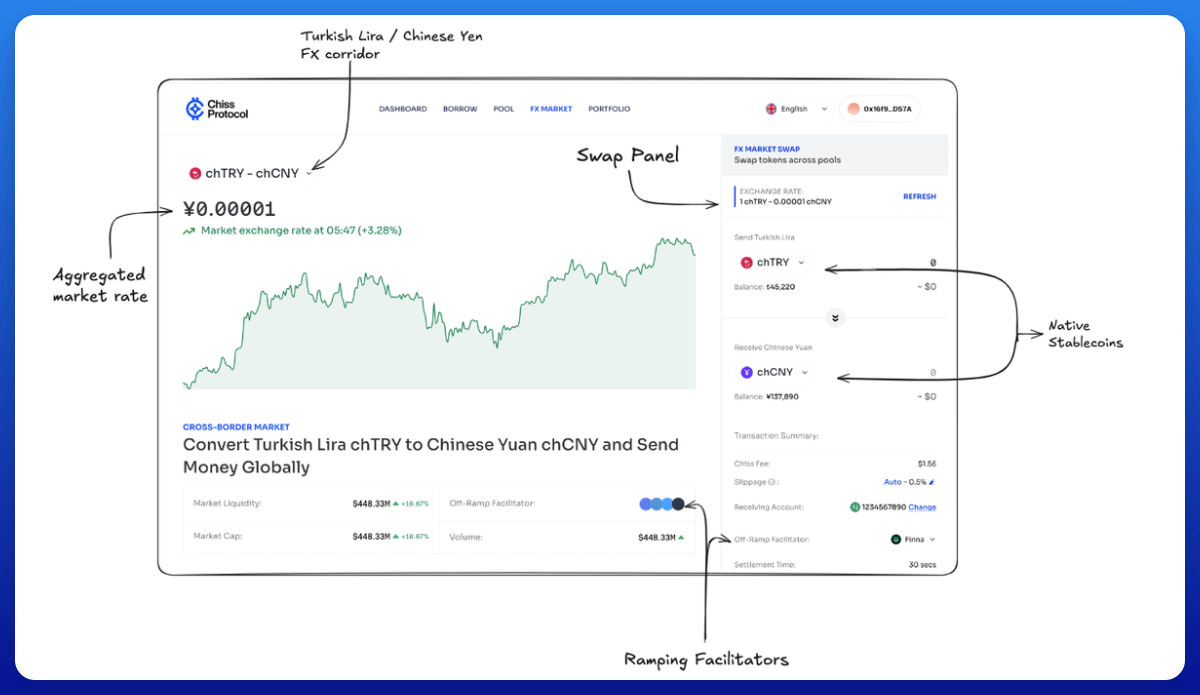
The future of FX will be powered by an instant FX settlement layer onchain. Cross-border payments will feel like a local intrabank money transfer; ❄️ Easy ❄️ Instant ❄️ Near-zero Fees. Here are 6 things about @ChissProtocol, powered by @avax, that positions it as a next-gen FX engine - #6 is our favourite👇🧵
Chiss Protocol ❄️ tweet media
English
30
48
134
17.9K
Chiss Protocol ❄️
Chiss Protocol ❄️@ChissProtocol·
@borjaneira_ Collateralizing non-USD stables with a more global asset, gives them a better chance of breaking through, structurally, yes?
English
1
0
1
81
neira
neira@borjaneira_·
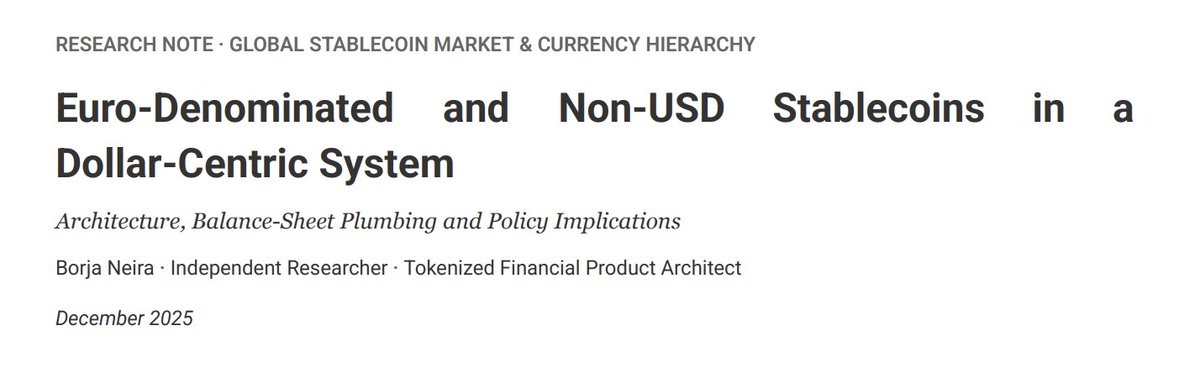
The Monetary Hierarchy of On-Chain Liabilities The persistence of USD dominance (>95%) in stablecoin markets is not a behavioral preference, it is a structural derivative of collateral fungibility. My latest Research Note maps the balance sheet constraints of fiat-referenced tokens against the hierarchy of money: 1. The Collateral Constraint USD issuers operate with infinite scalability due to a unified, globally fungible outside asset (T-bills). Euro issuers, conversely, manage a "fragmented sovereign mosaic" (Bunds vs. OATs vs. BTPs) with divergent credit spreads and liquidity profiles. Without a unified Euro safe asset, the token cannot scale as pristine collateral. 2. The Transmission MechanismThe "crypto island" hypothesis is dead. Data confirms a direct transmission channel from on-chain redemptions to offshore funding markets, with stablecoin flows now impacting 3-month T-bill yields by ~2–8bps per shock. 3. The Survival Constraint Under MiCA, Euro tokens are effectively stripped of yield, forcing them to trade at a structural disadvantage to USD instruments. Meanwhile, EM stablecoins act as redundant "inside money" wrappers that bleed into tokenized USD during stress events (flight-to-quality). The on-chain ecosystem has evolved into a shadow-banking limb of the US Treasury market. Non-USD stablecoins remain valid settlement rails, but they are structurally capped as stores of value. FIND LINK TO RESEARCH NOTE BELOW👇
neira tweet media
English
5
2
30
2.9K
AadEth
AadEth@aadith_gbd·
@0xcoconutt This is so true And Brics would probably put up the best fight I can't imagine china saying yes to $
English
1
0
1
40
coco🔮 壳壳
coco🔮 壳壳@0xcoconutt·
no sovereign nation will let its currency die without a fight people that thinks non-USD stablecoin will not have adoption are missing the forest for the trees they are hyper-focused on economic efficiency (remittance cost, yields, spreads) but completely ignores the geopolitical reality. in 2024, nigeria restricted use of binance, because p2p market became the real forex market. people were dumping naira for USDT to exit the local system, funding foreign consumption (games, vices, imports) while the local economy bled out. banning crypto/ stablecoin usage was a sovereign defense mechanism against capital flight. this is why non-USD stablecoins will take off, not because the market demands them, but because governments will force them. they need a digital tool to compete with the dollar, just like how tech companies want to reach feature parity with competitors
Artemis@artemis

nobody wants non-USD stablecoins Five years, dozens of new issuers, every major currency tried, and none have made any progress in dethroning the dollar.

English
12
0
24
2.6K
Chiss Protocol ❄️
Chiss Protocol ❄️@ChissProtocol·
@maybeltr @0xcoconutt Another important angle to consider. As non-USD stables grow, global USD stables would have to penetrate regulatory firewalls to find adoption in different regions.
English
0
0
0
16
LTR
LTR@maybeltr·
@0xcoconutt Complete agree, China is already starting to get the Yuan adopted in more places like the Middle East via deals. I don't know why any large BRICS country would just "let" the USD gain even more dominance
English
1
0
1
106
Chiss Protocol ❄️
Chiss Protocol ❄️@ChissProtocol·
@echulshin @0xcoconutt You make a good point ser. Very possible to start to see a pattern where local stablecoins depeg from the underlying fiat, as a result of more sell or buy pressure (if price is not anchored by FX oracle data).
English
0
0
0
31
echul
echul@echulshin·
@0xcoconutt ie. why would they want or promote their own stablecoin
English
1
0
0
46
Chiss Protocol ❄️
Chiss Protocol ❄️@ChissProtocol·
@artemis There's this Russian ruble-pegged stablecoin, that seems to be garnering massive supply, Ya heard?
English
0
0
0
38
Chiss Protocol ❄️
Chiss Protocol ❄️@ChissProtocol·
@borjaneira_ @paddi_hansen Another interesting narrative. Users seem to not fancy regulated stablecoins or regions. USDT thrives over USDC, in value parking, because of this. Can non-USD Stables emerge without heavy regulation on it? This is a critical consideration.
English
0
0
0
49
neira
neira@borjaneira_·
Great data, Patrick, the divergence is structural The EM currencies bleed into USD because the utility function in the Global South is flight-to-quality (Long USD). The Euro survives because it’s a hard currency, serving as a settlement rail rather than a flight vehicle That said, the EURC growth signals institutional hedging for MiCA compliance, not organic DeFi velocity but it's not your problem, it's just the euro onchain is weak by design. Until the Eurozone solves the fragmented collateral issue (no unified Safe Asset vs. infinite T-Bills), EUR on-chain will likely remain a terminal settlement asset, while USD remains the ecosystem's numeraire
English
2
0
3
452
Patrick Hansen
Patrick Hansen@paddi_hansen·
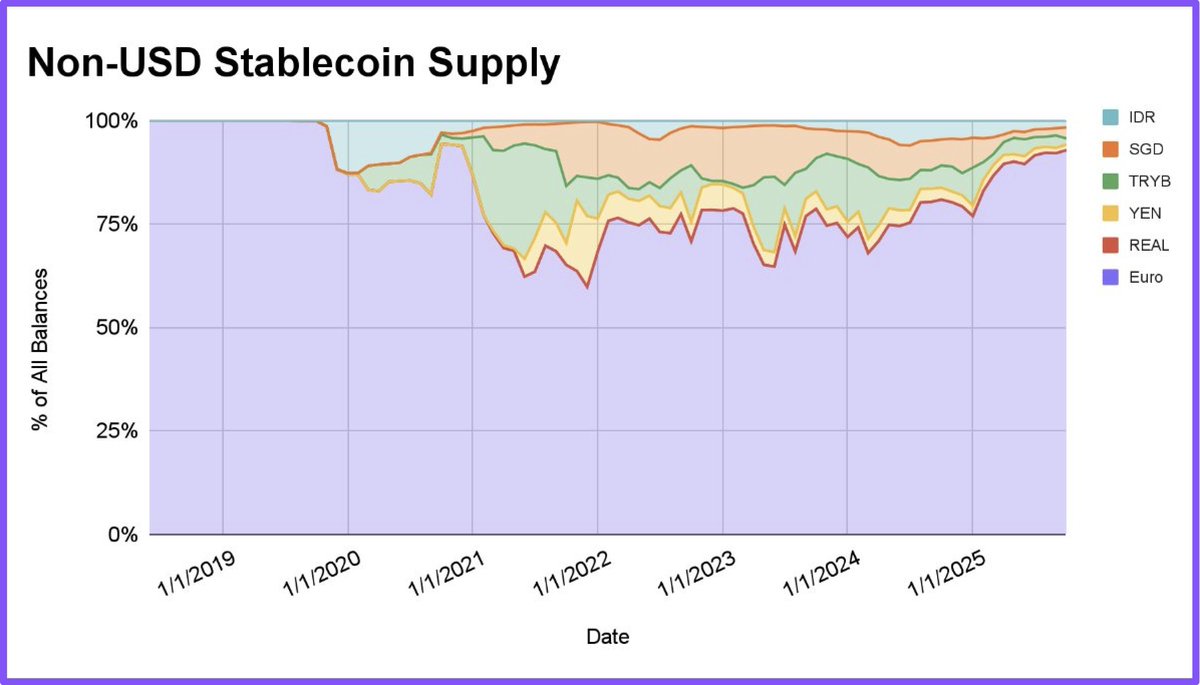
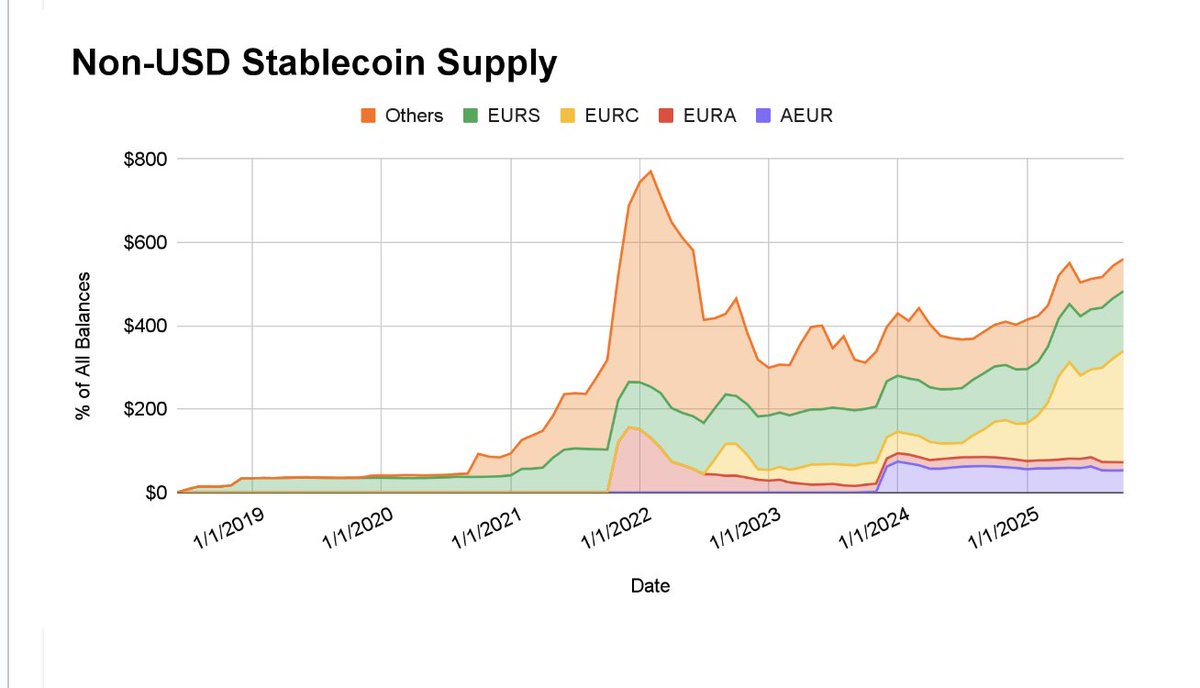
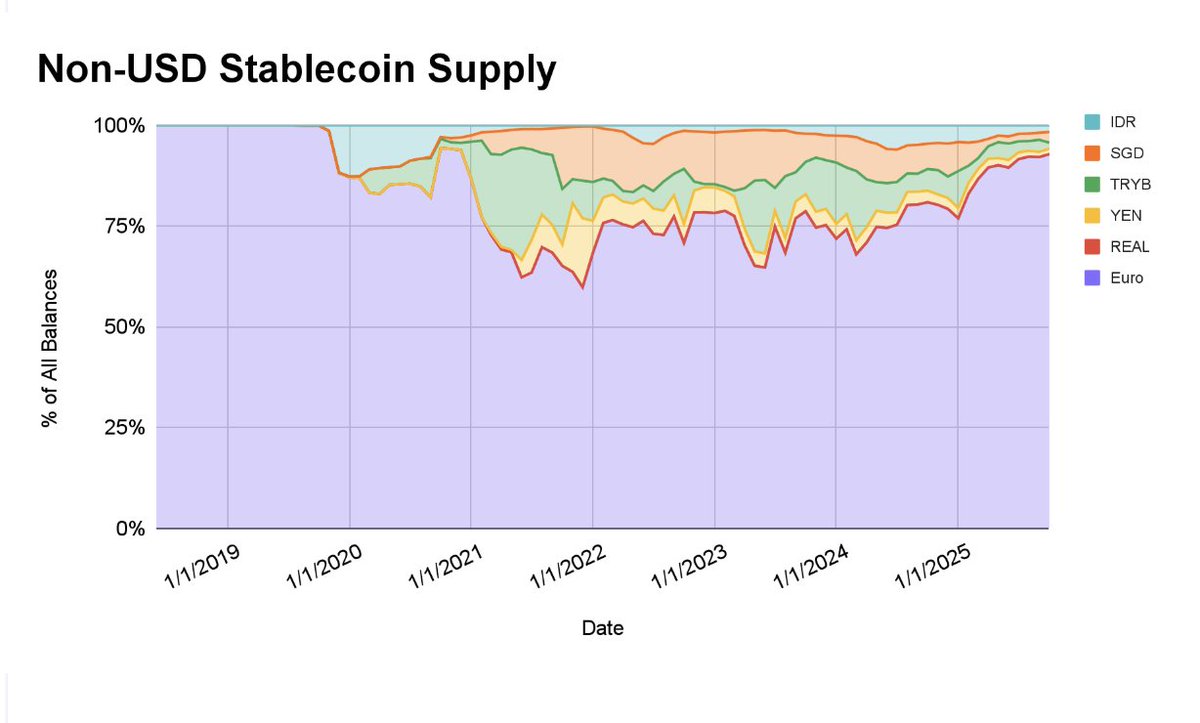
It is often pointed out here in Europe that euro-stablecoins still make up only a tiny slice of the overall stablecoin market - and that’s true. But if you zoom in on the non-USD segment, another fact emerges. Euro-stablecoins are essentially the only non-USD stablecoins showing consistent growth over the past year, driven primarily by EURC, which has now reached €287M in circulation. So while the euro’s share of the global stablecoin market remains small, euro-stablecoins - and especially EURC - are sending clear growth signals compared to other on-chain currencies. Source: @artemis
Patrick Hansen tweet mediaPatrick Hansen tweet media
English
12
8
71
27.8K
Chiss Protocol ❄️
Chiss Protocol ❄️@ChissProtocol·
@njokuScript Well, said. Inflation hedge, is just one Utility (and USD is not the best at it.) Cross-border payments are another.
English
0
0
0
3
njokuscript.um
njokuscript.um@njokuScript·
In fact most people who send and receive money would indirectly be users of local stables. They just won’t know it.
English
1
0
6
514
manny
manny@mannyornothing·
Totally in Argentina the “save in USD, spend in pesos” pattern is real. But that pattern only works because users have access to both currencies. That’s the whole point: people need the ability to choose the currency they save in and the currency they spend in. USD for protection, local currency for life. On-chain money should mirror that flexibility globally not force everyone into USD or into their local currency. Choice is the feature
English
1
0
1
25
Kanishk.hl
Kanishk.hl@kanishkkhurana·
What's the point of non-USD stablecoins ? > you make a pesos or inr stablecoin. > These currencies themselves depreciate in value. > Your stablecoin is pegged to the value of the currency, it also loses value. " I can do onchain payments with it" " I can generate yield with it." Can you not do that with usdc/t ? Make it make sense.
English
9
0
13
1.2K
manny
manny@mannyornothing·
@kanishkkhurana USD loses value too it just does it slower. Not everyone lives in the US, earns in USD, or wants FX exposure for daily expenses. Local currency stables matter because people live their financial lives locally, even if the money rails are global.
English
4
1
11
465
Chiss Protocol ❄️
Chiss Protocol ❄️@ChissProtocol·
True winner takes all, but what defines the winner? - Liquidity? - Yield? - Friendly regulations? - Payment efficiency? For different people, "the winner" means different things. While USD stablecoins may currently win for most of these categories, non-USD stablecoins are emerging to sweep them off that position, especially in payment efficiency & regulatory buoyancy (instituted by countries).
English
0
0
0
7
Chiss Protocol ❄️
Chiss Protocol ❄️@ChissProtocol·
@borjaneira_ 💯 Yet, combination of FX Lending + Spot market (together operating like FX swaps - forwards+spots) onchain would be a killer.
English
1
0
3
196
neira
neira@borjaneira_·
After syncing with several of you, I’m recalibrating. My core thesis remains: the endgame for on-chain FX is indeed the BIS vision of rewiring global collateral and credit. However, I was blinded by the macro scale, ignoring the inefficiencies that exist below the institutional threshold. The alpha right now isn't in competing for the G10 trillions yet but in servicing the corridors where incumbents are failing players today. These "marginal" volumes for the big players are literally hundreds of millions actively seeking a solution to operational friction that I hadn't accounted for in my macro model. Genuinely appreciate the insights. There are some incredibly sharp minds building out there.
neira@borjaneira_

Most “FX on-chain” pitches treat FX as a big spot market that should live in AMMs. The balance sheets tell a different story. Roughly half of global FX turnover is in short-dated FX swaps, not spot, and those swaps embed tens of trillions of off-balance-sheet dollar obligations for non-US banks, insurers and asset managers. Stress in 2008 and 2020 didn’t start in retail FX; it started in this dollar-funding machine and forced central banks to open swap lines to keep it running. This note starts from that machine, not from token prices. It looks at CLS vs non-CLS rails, PvP vs Herstatt risk, and the “hidden” dollar debt sitting in FX swaps and forwards, then asks a simple question: if we’re serious about tokenisation and 24/7 collateral, where does “on-chain” actually move the needle? The answer is deliberately narrow: • Turning FX swaps into explicit, margined and netted contracts with programmable collateral in tokenised bank money or T-bills • Extending PvP settlement to non-CLS currencies and tokenised fiat, collapsing correspondent chains • Giving treasurers and supervisors a real-time view of cross-currency funding gaps and maturity walls If you run digital assets, tokenisation or market structure, this is the lens that decides whether your “FX on-chain” roadmap becomes core funding infrastructure for dealers and central banks or just another trading venue sitting at the edge of someone else’s balance sheet. FIND THE LINK TO THE NOTE BELOW 👇

English
10
4
64
11.7K
Abdulfatai | Blockradar
Abdulfatai | Blockradar@iamnotstatic·
the real value of local stablecoins isn’t in holding them, it’s in the efficiency they create. they make it easy to move in and out of any currency, something traditional systems still fail at. from my experience building stablecoin infrastructure, this flexibility is what actually empowers people: faster movement, cheaper transfers, and access to global liquidity when they need it.
shafu@shafu0x

I saw my families net worth drop 50% in one year. I'm super bullish USD denominated stablecoins not because I live in NYC now but because I grew up in Egypt. You can not imagine how much people hate their local currencies. USD is the global currency. Everyone would hold it if they could.

English
9
13
89
9K
Zoltán
Zoltán@zcserei·
I live in Hungary and I saw tens of thousands of families wrecked because their loans were denominated in CHF. USD stablecoins are not the only answer. Imagine if crypto becomes mainstream and suddenly lots of people hold their money in USD / EUR + a couple other major currencies like RMB or JPY. What happens to the rest? What happens to e.g. random, average, hard working Egyptian families? We need structures that don’t destroy late adopters.
English
1
0
4
245
shafu
shafu@shafu0x·
I saw my families net worth drop 50% in one year. I'm super bullish USD denominated stablecoins not because I live in NYC now but because I grew up in Egypt. You can not imagine how much people hate their local currencies. USD is the global currency. Everyone would hold it if they could.
English
26
5
133
26.3K