Kuang Xu

2.5K posts

Kuang Xu banner
Kuang Xu

Kuang Xu

@ProfKuang

@Stanford. Ex-AI @Uber. Suzhou--UIUC--MIT--Stanford

Palo Alto, CA Se unió Mayıs 2019
280 Siguiendo3.3K Seguidores
Kuang Xu
Kuang Xu@ProfKuang·
@liujiashuo77 I'm going to write some loose notes that go along with the course. Very casual though. If there's sufficient interest I will post them.
English
0
0
1
14
Kuang Xu
Kuang Xu@ProfKuang·
I will be teaching a PhD course titled “Charting Reality with Stochastic Modeling (OIT 677)” this spring. The course will combine lectures, paper-reading seminars, and guest talks. I encourage you to check it out if you are a full-time Stanford graduate student, especially PhD students working in operations research, statistics, economics, or engineering. (Sorry, this will be in-person only. No online videos.) Many decision-making systems benefit from the use of stochastic models. These models help an algorithm or AI agent make sense of the world and understand how the effects of various actions propagate. However, choosing the right model and refining it with data remains a daunting challenge. Placing emphasis on dynamics arising from physical reality and business problems, we will examine core frameworks for stochastic modeling while illustrating their application through examples ranging from personalization and dynamic pricing to reinforcement learning and world models. We will also hear from guest speakers who wrestle with stochastic modeling in real-world systems, including founders and technical leaders from Arena, Recursive Intelligence, DeepMind, AI robotic, as well as other Stanford researchers. Tentative Syllabus: docs.google.com/document/d/1Zh…
English
3
0
16
996
Kuang Xu
Kuang Xu@ProfKuang·
Teach not what you know. Teach what you are seeking.
English
0
0
2
357
Kuang Xu
Kuang Xu@ProfKuang·
@XYHan_ So you pay for both CC and Cursor? Or just pay through cursor?
English
1
0
0
30
XY Han
XY Han@XYHan_·
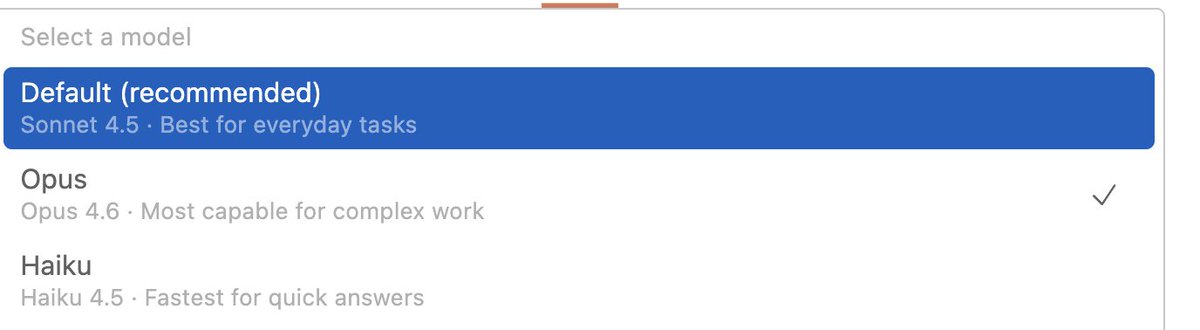
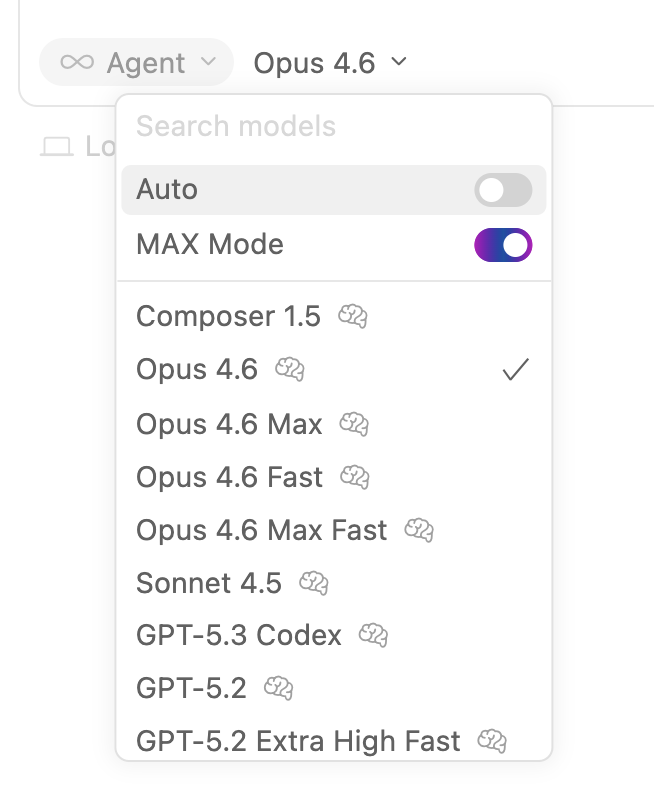
I like the Cursor UI better than Claude Code+VSCode extension. Claude code limits you to one version of Sonnet/Opus/Haiku (screenshot1). Cursor gives me a lot more control in terms of model, cost, and thinking duration (screenshot2). Mentally, it makes me feel more secure controlling which model+strengths I use for which tasks.
XY Han tweet mediaXY Han tweet media
English
1
0
0
67
Kuang Xu
Kuang Xu@ProfKuang·
What happened to Cursor? It feels more sluggish and worse than 3 months ago. It's almost unusable.
English
1
0
2
590
Kuang Xu
Kuang Xu@ProfKuang·
@XYHan_ I'm mostly using their auto mode. Curious why don't you just use Claude Code + VS code?
English
1
0
1
45
XY Han
XY Han@XYHan_·
@ProfKuang Which model? I’ve been on Cursor with Opus 4.6 regular/max this past week and haven’t noticed anything. But, Gemini and GPT Codex become unstable not-infrequently in my experience…
English
1
0
0
96
Kuang Xu
Kuang Xu@ProfKuang·
@shaunmmaguire On the flip side, I find it interesting that some of my best, most hard working students have been those with severe disabilities. Rarely asking for accommodations even though it would have been more than reasonable.
English
1
0
1
202
Shaun Maguire
Shaun Maguire@shaunmmaguire·
Dear Stanford undergrads, It is better to grind, struggle and fail during your formative years Than to take short cuts It doesn’t matter where you are at 22 What matters is how your abilities compound over the next decade Optimize for slope not intercept Good luck
Owen Gregorian@OwenGregorian

Nearly 40% of Stanford undergraduates claim they’re disabled. I’m one of them | Elsa Johnson, The Times In 2023, one month into my freshman year at Stanford University, an upperclassman was showing me her dorm room — a prized single in one of the nicest buildings on campus. As she took me around her space, which included a private bathroom, a walk-in shower and a great view of Hoover Tower, she casually mentioned that she had lived in a single all four years she had attended Stanford. I was surprised. Most people don’t get the privilege of a single room until they reach their senior year. That’s when my friend gave me a tip: Stanford had granted her “a disability accommodation”. She, of course, didn’t have a disability. She knew it. I knew it. But she had figured out early what most Stanford students eventually learn: the Office of Accessible Education will give students a single room, extra time on tests and even exemptions from academic requirements if they qualify as “disabled”. Everyone was doing it. I could do it, too, if I just knew how to ask. A recent article in The Atlantic reported that an increasing number of students at elite universities were claiming they had disabilities to get benefits or exemptions, which can also include copies of lecture notes, excused absences and access to private testing rooms. Those who suffer from “social anxiety” can even get out of participating in class discussions. But the most common disability accommodation students ask for — and receive — is the best housing on campus. At Stanford University in Palo Alto, California, where competition for the best dorm rooms is fierce, this practice is particularly rife. The Atlantic reported that 38 percent of undergraduates at my college were registered as having a disability — that’s 2,850 students out of a class of 7,500 — and 24 per cent of undergrads received academic or housing accommodations in the fall quarter. At the Ivy League colleges Brown and Harvard, more than 20 per cent of undergrads are registered as disabled. Contrast these numbers with America’s community colleges, where only 3 to 4 per cent of students receive disability accommodations. Bizarrely, the schools that boast the most academically successful students are the ones with the largest number who claim disabilities — disabilities that you’d think would deter academic success. The truth is, the system is there to be gamed, and most students feel that if you’re not gaming it, you’re putting yourself at a disadvantage. That’s why I decided to claim my legitimate illness — endometriosis — as a disability at Stanford. When I arrived on campus two and a half years ago, I would have assumed that special allowances were made for a small number of students who genuinely needed them. But I quickly discovered that wasn’t true. Some diagnoses are real and serious, of course, such as epilepsy, anaphylactic allergies, sleep apnea or severe physical disabilities. But most students, in my experience, claim less severe ailments, such as ADHD or anxiety. And some “disabilities” are just downright silly. Students claim “night terrors”; others say they “get easily distracted” or they “can’t live with others”. I know a guy who was granted a single room because he needs to wear contacts at night. I’ve heard of a girl who got a single because she was gluten intolerant. That’s why I felt justified in claiming endometriosis as a disability. It is a painful condition in which cells from the uterus grow outside the womb. I’m often doubled over in agony from the problem, for which there is no known cure, so I decided to ask for a single room in a campus dorm where I could endure those moments in private. The application process was very easy. I registered my condition on the Stanford Office of Accessible Education website and made an appointment to meet an adviser later that week. The system is staffed largely by empathetic women who want to help students. As I explained my diagnosis and symptoms over Zoom to one woman, she listened, nodded sympathetically, related my problems to her own life and asked a few basic questions. Within 30 minutes, I was registered as a student with a disability, entitled to more accommodations than I asked for. In addition to a single housing assignment, I was granted extra absences from class, some late days on assignments and a 15-minute tardiness allowance for all of my classes. I was met with so little scepticism or questioning, I probably didn’t even need a doctor’s note to get these exemptions. Had I been pushier, I am sure I could have received almost any accommodation I asked for. While I feel entitled to my single room, I would feel guilty about some of the perks I have — except that so many of my fellow students have gamed the system. Take Callie, a recent Stanford grad with ADHD and Asperger’s who agreed to be quoted under a pseudonym. Callie was diagnosed with her conditions in elementary school; in return, Stanford granted her a single room for all four years, plus extra time on tests — and a few more perks. “In college, I haven’t had that many ‘in real life’ tests as opposed to take-home essays,” Callie told me. “When I did use the extra time, I felt guilty, because I probably didn’t deserve the accommodations, given the fact I got into Stanford and could compete at a high academic level. Extra time on tests — some students even get double time — seems unfair to me.” But at Stanford, almost no one talks about the system with shame. Rather, we openly discuss, strategise and even joke about it. At a university of savvy optimisers, the feeling is that if you aren’t getting accommodations, you haven’t tried hard enough. Another student told me that special “accommodations are so prevalent that they effectively only punish the honest”. Academic accommodations, they added, help “students get ahead … which puts a huge proportion of the class on an unfair playing ground”. The gaming even extends to our meals. Stanford requires most undergraduates living on campus to purchase a meal plan, which costs $7,944 for the 2025-26 academic year. But students can get exempted if they claim a religious dietary restriction that the college kitchens cannot accommodate. And so, some students I know claim to be devout members of the Jain faith, which rejects any food that may cause harm to all living creatures — including small insects and root vegetables. The students I know who claim to be Jain (but aren’t) spend their meal money at Whole Foods instead and enjoy freshly made salads and other yummy dishes, while the rest of us are stuck with college meals, like burgers made partly from “mushroom mix”. Administrators seem powerless to reform the system and frankly don’t seem to care. How do you prove someone doesn’t have anxiety? How do you verify they don’t need extra time on a test? How do you challenge a religious dietary claim without risking a discrimination lawsuit? I often think back to that conversation with my upperclassman friend. She wasn’t proud of gaming the system and she wasn’t ashamed either. She was simply rational. The university had created a set of incentives and she had simply responded to them. That’s what strikes me most about the accommodation explosion at Stanford and similar schools. The students aren’t exactly cheating and if they are, can you blame them? Stanford has made gaming the system the logical choice. When accommodations mean the difference between a cramped triple and your own room, when extra test time can boost your grade point average, opting out feels like self-sabotage. Who would make their lives harder when the easiest option is just a 30-minute Zoom call away? thetimes.com/us/news-today/…

English
56
46
1.1K
152.2K
Tsla Archive
Tsla Archive@tesla_archive·
🚨 $TSLA PROMOTES PHIL DUAN TO DIRECTOR OF AUTOPILOT ENGINEERING • Tesla has promoted Phil Duan, former software lead for Full Self-Driving, to Director of Engineering for Autopilot • Duan previously held the role of Principal Software Engineer and led the FSD v14 release as well as the launch of Tesla’s Robotaxi ride-hailing service using unsupervised FSD • He joined Tesla in 2017 as a Senior Software Engineer, became perception tech lead, briefly worked at Zoox (2019–2020), then returned and built the Occupancy Network and helped create the world’s largest physical AI data engine • As Sr. Staff Software Engineer he co-led FSD v12 and v13; as Principal he led v14 and Robotaxi
Tsla Archive tweet media
English
71
118
1.7K
87K
Kuang Xu
Kuang Xu@ProfKuang·
@AIDRIVR imo near term a robotaxi network that rely on occasional safety interventions that also relies on local 5G network (which can easily be jammed / attacked) is a major security risk at scale
English
2
0
1
576
ΛI DRIVR
ΛI DRIVR@AIDRIVR·
real reason for SpaceX + Tesla merger is so they can supervise the Robotaxis from space Level 2 forever
English
96
34
1.1K
59.7K
Kuang Xu
Kuang Xu@ProfKuang·
@elonmusk @SawyerMerritt I don't understand why people freak out about TSLA's 20B Capex when Meta is about to burn 130B
English
1
0
0
263
Sawyer Merritt
Sawyer Merritt@SawyerMerritt·
Tesla expects record capital expenditure in 2026. CapEx spend: • 2026: $20 billion (planned) • 2025: $8.5 billion • 2024: $11.3 billion • 2023: $8.9 billion • 2022: $7.2 billion • 2021: $6.5 billion • 2020: $3.2 billion • 2019: $1.3 billion
English
115
189
4.2K
276.6K
Kuang Xu
Kuang Xu@ProfKuang·
@LuyiYang_ Yes, but on that front I'm much less worried for our students than I am for older folks
English
0
0
0
27
Luyi Yang
Luyi Yang@LuyiYang_·
@ProfKuang entry-level jobs will probably be hit the hardest, and unfortunately that’s what matters the most to students in the immediate term.
English
1
0
0
37
Kuang Xu
Kuang Xu@ProfKuang·
It's clear by now that AI is going to make routine computer programming obsolete. There's much more consensus that medium term AI is going to vastly outperform the best humans in many intellectual domains and verticals. This is clearly going to shake the foundation of higher education that focuses on transferring "hard" and "standard" knowledge. Some personal speculations for educators and students: - Things are just going to have to change all the time - get used to it. You won't be teaching the same thing for a second time, let alone 3+ years. Curriculum, software, materials, everything. The extra burden will be somewhat offset by AI tools that make the updates more expedient. - Fundamentals will stay the same, but how they are applied will need to be updated frequently. Counterintuitively, in the world of cheap AI slops, understanding fundamentals (math, philosophy, language, etc.) can become more of a sought after differentiator. - The focus will shift from mass "hard information" education to smaller, more personal "soft information" education: more laborious, more human to human interactions. At least for the short term, education will increasingly focus on things that can't easily be found in standard texts as sort of a moat until AI becomes more pervasive (or invasive). - The ultimate question higher education has to answer is how and why education adds value to the student's life or career. Bull case: if there'll truly be some sort of universal basic income, higher education may evolve away from about survival (e.g., getting a job) to about enrichment or entertainment (e.g., the joy of understanding and discovery). Bear case: if AI simply creates a pressure cooker of a "race to the bottom," then there will be tremendous pressure for higher education to help students survive (and hopefully thrive) in the new world order; enjoyment will be a second/third order luxury. Unfortunately, I believe the bear case is likely more relevant in the short run. There will be inevitable confusion and pain. Life gives us what we need. Here is to enjoying the journey, for all of us!
English
1
0
14
758
Kuang Xu retuiteado
Rabbi Poupko
Rabbi Poupko@RabbiPoupko·
HAMAS TERRORISTS CALLED HER MOTHER WHILE TAKING HER LIFE Hodaya David from Beit Dagan was a 27-year-old, kind, giving, golden-hearted woman who loved jazz. She went with her sister Ta'ir to the Nova music festival. Her mother received a phone call and a message from the terrorists as they were torturing and murdering her. Her parents were not allowed to see her body before she was buried due to the horrific circumstances in which she was found. Never forget what Hamas did on October 7th May her memory be a blessing.
Rabbi Poupko tweet media
English
839
4K
12.6K
175.2K
Kuang Xu
Kuang Xu@ProfKuang·
@raines1220 But if you watch Ashoka’s talk, most of fsd is not vlm but more conventional DNN . Vlm is used in slower speed scenarios to understand say a construction zone
English
0
0
5
1.8K
Raines
Raines@raines1220·
I have to admit that I feel a bit worried when I saw Nvidia release Alpamayo. It is, in my opinion, the first real competitor to FSD. First of all, it does not rely on LiDAR, which is already impressive and better than all other losers out there. Then, the concept of VLA is my exact understanding of what FSD 14.3 would be. And I believe Nvidia is doing really well at training general-purpose, small-sized VLMs. So, I don’t think it is very obvious who will train the better VLM for driving between Nvidia and Tesla. I’d guess Tesla, but you just can’t be so sure because it is not trivial to predict this part. Elon and Ashok surely both actively engaged with this news, and basically confirmed that Nvidia is doing exactly the same thing that Tesla is doing, with the only difference being how far they have gone along this technical path. I understand that going from 99% to 100% is hard, but first of all, Tesla isn’t at 100% yet, and second of all, the fact that Nvidia could reach near 99% without any fleet kind of proved that it is no longer critical to have large-scale fleet data for training and evaluation.
English
329
129
3.3K
748.8K
Peyman Milanfar
Peyman Milanfar@docmilanfar·
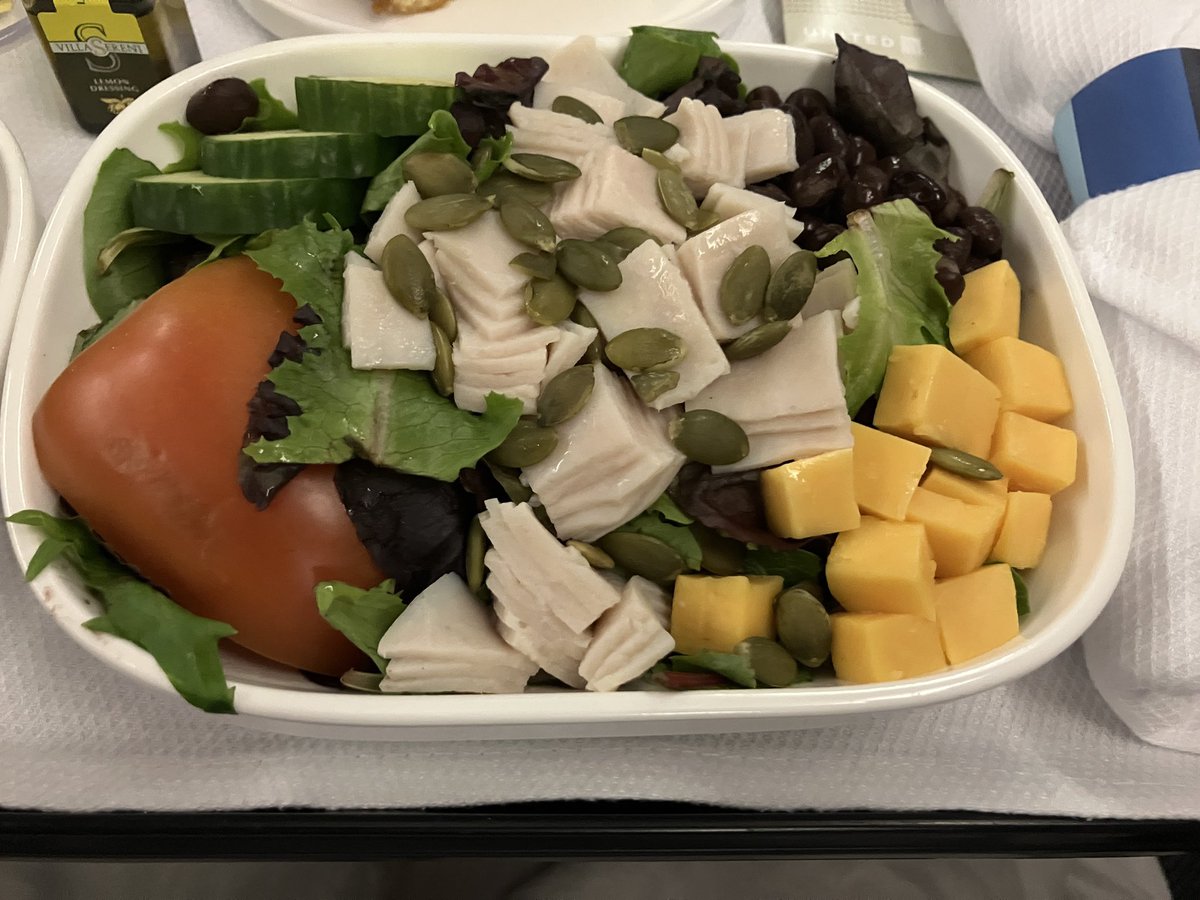
Hey @united is this a joke? I just flew 5+ hours in First Class and this bowl of sadness is what you serve me for dinner. Between the 3D-printed mystery meat, the cafeteria cheese cubes, and the whole tomato I need a chainsaw to cut, this is genuinely unbelievable.
Peyman Milanfar tweet media
English
866
1.6K
37.6K
15.1M
Kuang Xu
Kuang Xu@ProfKuang·
@DrPaulMason How does putting Vaseline on your eye lids help with nasal congestion?
English
4
0
6
12.8K
Paul Mason MD
Paul Mason MD@DrPaulMason·
Out of the hundreds of papers I read last year, this one could be the most GAME-CHANGING! Demodex mites (cousins to dust mites) likely fuel issues like rosacea, acne, dry eyes, and even chronic nasal congestion. Infestation with these mites, most commonly on the face, is extremely common. But here's the the most important finding - applying plain Vaseline to your eyelids at night could be a SAFE, CHEAP and EFFECTIVE fix, trapping these critters and slashing their numbers. Doctor's, consider a 28-day Vaseline trial for your patients. If effective, this simple hack might save billions on indefinite treatments. pmc.ncbi.nlm.nih.gov/articles/PMC12…
English
230
896
8K
16.9M
Kuang Xu retuiteado
Garry Tan
Garry Tan@garrytan·
94% of Ro Khanna’s contributions came from outside his district (CA-17). Only 5% came from within District 17, while over $9M came from out of district. He has become a hard leftist Congressman, abandoning the 56% Asian American immigrants who he supposedly is supposed to represent. We want economic mobility and he is about to bring down the hammer destroying tech and jobs. I grew up in Fremont. I learned to code there. My parents bought their first home there. This is not what the people of CA-17 want. The aunties and uncles don’t want Ro. And they’re tired of him. He is selling out our immigrant communities to role play as a hard leftist in DC, to play culture war games, to vilify businesspeople. For what? For his aspirations for higher office. He forgot his community. And people who forget they are in public service to their community get removed from public office.
English
352
446
4.8K
408.9K
Kuang Xu
Kuang Xu@ProfKuang·
@silvirouskin “You can play any game you want” on a ps5? dude clearly doesn’t gam
English
0
0
1
127