
Kuang Xu
2.5K posts

Kuang Xu
@ProfKuang
@Stanford. Ex-AI @Uber. Suzhou--UIUC--MIT--GSB
Palo Alto, CA Katılım Mayıs 2019
269 Takip Edilen3.3K Takipçiler

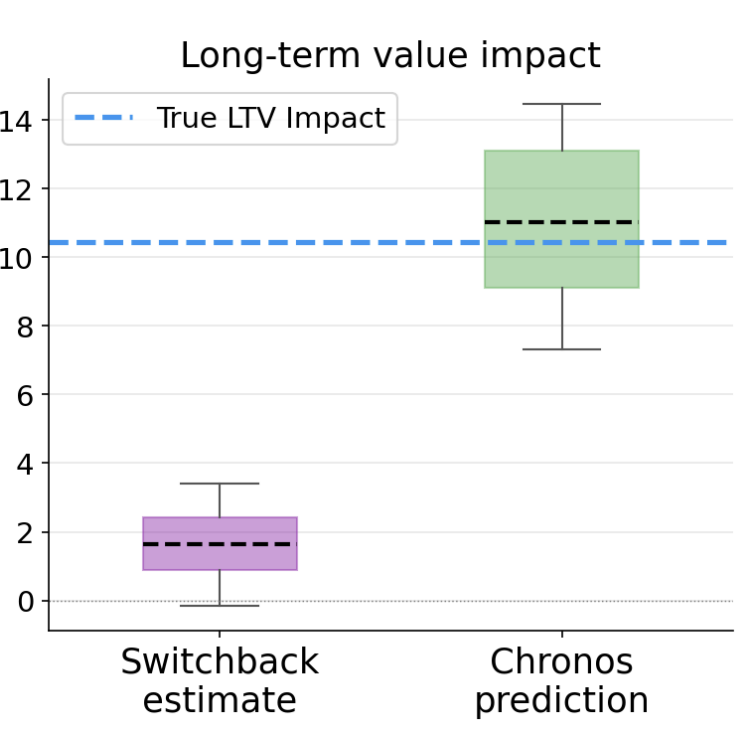
All models are wrong, but why and when can wrong models produce the right predictions? In Chapter 3 of Charting Reality, we look at how mechanistic models are learned and evaluated. Brown et al 2005 provides a stunning example where despite demonstrably wrong distributional assumptions, an Erlang type model was able to produce remarkably consistent predictions.

English
Kuang Xu retweetledi

life rewards action not intelligence
ʇuᴉɐS📍@saint_cloudy
what's a hard pill to swallow in life ??
English

@RadicalFalk Great take. I'm so used to your 1-yr in Japan videos that honestly wasn't ready to watch such a serious video from you
English

Amazing summary of what went wrong in Germany
Radical Living@RadicalFalk
I'm leaving Germany | Brutally Honest Review
English

@gabriberton Indeed, great framing about "problems that LLM/VLMs will never be able to solve", or at least not for now.
English

Based on my experience:
In vision I had mostly worked on image localization, and there are plenty of open problems there which would be useful to industries (e.g. cross-view or aerial localization)
For LLMs long-context Q&A is a big open problem which I tried to tackle in CompLLM (you can check out the paper) to increase LLMs' context length and make inference cheaper
These are just two problems that can be tackled with an "academic" number of GPUS
In general, if I started a PhD now I'd focus on problems that LLM/VLMs will never be able to solve, and the two problems above are good examples
English

Some advice to anyone starting a PhD in ML, or things that I heard from more experienced researchers and I tried to follow:
1) focus on a real problem. Something tangible, that can benefit people. Talk to industry folks if you're looking for open problems. Talk to the end (1/8)
Gabriele Berton@gabriberton
A few numbers from my PhD: 8 first-author top-conference (CVPR/ICCV/ECCV) papers 100% acceptance rate per paper 80% acceptance rate per submission 1 invited long talk at CVPR tutorial 5 top-conf demos (acceptance rate 100% vs ~30% average) ~2k GitHub stars
English

Chapter 2 of Charting Reality is up. What does a 100+ year-old theory have to say about AI inference? Why was modern network engineering theory born in 1909 Copenhagen rather than in the U.S.? Why might a technically sound model fail in practice?
I spent a lot of time over the last couple of days reading about the early days of data science and stochastic modeling, and I’m honestly floored by how interesting, and rhythmic, this scientific history was. I could probably have written the whole chapter by swapping out company names from the 1900s with today’s hottest AI startups, and few would even bat an eye!
Modeling Congestion - From Telephony to AI Inference
github.com/kuangxu/charti…
English

Open Lecture Sign-Ups: If you are a Stanford student/faculty, fill out this form if you'd like to be notified for one of the guest lectures open to the broader Stanford community (Note: Stanford login is required): forms.gle/KWRJnMp9M9kVz2…
Course syllabus: docs.google.com/document/d/1Zh…
English

I will be posting the lecture notes of Charting Reality with Stochastic Modeling (OIT 677) as they become available. Here is the first chapter: What is a model? What is modeling and a typical modeling workflow cycle? What can a practitioner of OR or AI modeling learn from the Copernicus revolution?
Chapter 1: github.com/kuangxu/charti…

English

@liujiashuo77 I'm going to write some loose notes that go along with the course. Very casual though. If there's sufficient interest I will post them.
English

I will be teaching a PhD course titled “Charting Reality with Stochastic Modeling (OIT 677)” this spring. The course will combine lectures, paper-reading seminars, and guest talks. I encourage you to check it out if you are a full-time Stanford graduate student, especially PhD students working in operations research, statistics, economics, or engineering. (Sorry, this will be in-person only. No online videos.)
Many decision-making systems benefit from the use of stochastic models. These models help an algorithm or AI agent make sense of the world and understand how the effects of various actions propagate. However, choosing the right model and refining it with data remains a daunting challenge. Placing emphasis on dynamics arising from physical reality and business problems, we will examine core frameworks for stochastic modeling while illustrating their application through examples ranging from personalization and dynamic pricing to reinforcement learning and world models.
We will also hear from guest speakers who wrestle with stochastic modeling in real-world systems, including founders and technical leaders from Arena, Recursive Intelligence, DeepMind, AI robotic, as well as other Stanford researchers.
Tentative Syllabus: docs.google.com/document/d/1Zh…
English

I like the Cursor UI better than Claude Code+VSCode extension. Claude code limits you to one version of Sonnet/Opus/Haiku (screenshot1). Cursor gives me a lot more control in terms of model, cost, and thinking duration (screenshot2).
Mentally, it makes me feel more secure controlling which model+strengths I use for which tasks.


English

@ProfKuang Which model? I’ve been on Cursor with Opus 4.6 regular/max this past week and haven’t noticed anything. But, Gemini and GPT Codex become unstable not-infrequently in my experience…
English