TheQualityLab
1.3K posts

TheQualityLab retuiteado

JPMorgan's Dimon: Obviously, gas prices going up going to hurt people a little bit, but they still have money to spend and they still have jobs… I hear people say they were not imminent threat. These people have been doing something bad for 47 years. These are bad people that needed to be stopped.
English
TheQualityLab retuiteado

Strait of Hormuz: A CitriniResearch Field Trip
The Field Report from Analyst #3 is live.
citriniresearch.com/p/strait-of-ho…
English

Iran based their foreign policy on making themselves appear to be the craziest guy on the block. The guy you didn't fuck with because—even if you won the fight—you left with several stab wounds.
Trump is fighting that fire with fire.
They aren't the psycho on the block when he's around.
He is.
English

@captive_dreamer He’s low IQ.
He’s done nothing for Ireland he’d rather play influencer online and complain and farm engagement bait.
Another guy that’s been one-shotted by the whole Jew hysteria.
English

"You were wary of a conflict before it happened but now you support your country and hope for a sound resolution, curious!"
- ancient Irish retard wisdom (how long did it take you to make this? Humiliating)
Keith Woods@KeithWoodsYT
None of these people supported an Iran war until last month. They even promised it wouldn't happen under Trump. They just call you a third worldist if you point this out.
English

Tony Blair is the man most responsible for creating modern Britain.
Blair says he was motivated in his moral crusades by watching Schindler's List. He is uncomplicated and unapologetic. He is more hated than ever, and also more influential:
keithwoods.pub/p/the-meaning-…
English
TheQualityLab retuiteado

Bill Ackman: "I turned an $8B railroad company into $25B in 16 months"
"My father, he's here, that's Dad over there in the corner, he told me it's a really dumb idea to start an investment fund right out of business school. He recommended I go work for Michael Steinhardt or George Soros or one of the other famous investors at the time."
But Ackman didn't listen:
"I figured I knew enough. This is the perils of youth. But the answer is, I was an entrepreneur. I felt I wanted to approach investing my own way, as opposed to learning from someone else. And investing is one of the few things you can really learn on your own. You can learn by reading books, reading annual reports. You can have a portfolio and invest $100 and learn the business, unlike many other businesses which require a lot more."
He shares how he started:
"I went to business school to learn how to be a good investor. I learned the first rule of investing: you do your due diligence before you wire in your money. When I got to Harvard Business School, I opened the course catalog for the first time, and there wasn't a class on investing. So I decided to develop my own self-study program."
Ackman opened a brokerage account with his savings:
"I had some money I'd made in the real estate brokerage business. This was my tuition in the investment business about a year of tuition. If I lost it, it was as if I had gone to business school for two years but paid for three. The first stock I bought went up, and I said, 'Okay, I found what I want to do.'"
He explains how investing has changed:
"The vast majority of capital invested in the markets today is passive index funds, ETFs, long-only institutions. You do your research, or in some cases you don't do the research; you just blindly follow an index. But if you think about investing 100 years ago, you had Andrew Carnegie owning 20% of U.S. Steel. You had J.P. Morgan as a large owner of various companies. In the old days, an owner would act like an owner. If they were unhappy with the performance of the business, they would replace the CEO. If they were unhappy with the board's judgment, they would make changes."
Ackman describes what his firm does:
"We look for situations where a business has lost its way. An otherwise great company in a business with significant barriers to entry, what Warren Buffett would describe as having a moat around it. A business that is simple, predictable, generates cash, and we can be confident will be here 50 years from now."
He shares the Canadian Pacific story:
"We owned a stake in Canadian Pacific, a railroad in Canada. It's a business where they're not going to build a new one across the street. You can be pretty comfortable that goods will be shipped on rail for a very long time. This was the worst-run railroad in North America. Lowest profit margins. Lowest valuation relative to earnings. Very unhappy shareholder base. But there was nothing they could do about it because the biggest investors tend to be very passive."
Ackman saw the opportunity:
"If you could replace the worst CEO in the railroad industry with the best CEO in the railroad industry, a lot of money could be made. We bought 14% of the stock. We recruited a guy named Hunter Harrison, widely considered the best railroad executive of all time. He had retired at 65. He was 66 and a half. He had signed a two-year non-compete with his employer, and I think the biggest mistake they made was a two-year non-compete."
They hired him as a consultant first:
"He had plenty of fire in his belly. We said, 'Would you be interested in the day job?' He said, 'Let me check with my wife.' She said, 'It's time to get you out of the house again.'"
But the board didn't want him:
"Canadian Pacific had one of the most esteemed boards in Canada, former head of the Royal Bank of Canada, former CEO of Suncor Energy, former head of the steel business. They didn't like the idea that this was coming from outside the company. So they said no."
Ackman went to the shareholders:
"We ran an election, a proxy contest. We put up seven directors for seven seats on a 13-seat board. The shareholders voted with us 90% of the time. The other guys got between 3 and 11% of the vote. We put our directors on, did a review of the best CEOs in the world, turns out the guy we identified was the best guy, and we put him in as CEO."
The result:
"That was 16 months ago. It's now almost the most profitable railroad in North America. The stock went from $46 to $151 a share. From a little under $8 billion market cap to a $25 billion market cap. That's the perfect example. Now it doesn't always work that way."
English
TheQualityLab retuiteado

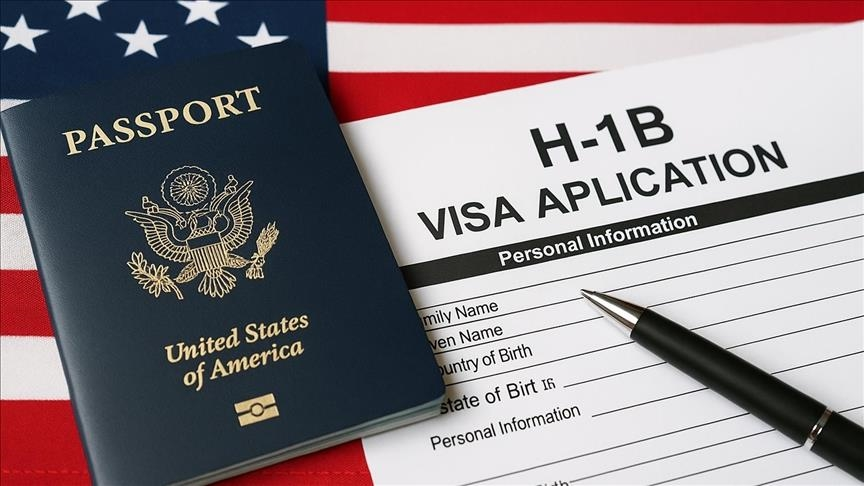
🚨BREAKING: Since stepping back into the White House in January of 2025, President Trump has been aggressively throttling back the H-1B visa program.
In 2024, there were 758,000 H-1B visa applications, with 188,000 getting accepted.
In 2027, only 220,000 H-1B applications were filed, with just 98,000 getting accepted.
This marks the largest decline in outbound H-1B visas since the program’s inception in 1990.

English
TheQualityLab retuiteado

@0x101vm @zephyr_z9 No way you unironically believe that lmao.
English
TheQualityLab retuiteado

.@SecretaryWright: “We spent too many years sending all of our manufacturing overseas, and now we're going the other way. We got to build stuff in America.”
English
TheQualityLab retuiteado

the real test is whether someone shows up when you’re not that generous initially & still ends up staying.
like anyone can stick around when you’re spoiling them & paying for everything. the ppl who truly matter are the ones buying calls on you before the market catches on.
one of my best & longest relationships started cuz she insisted on paying for our first date. not cuz i gave a shit about the money but because she was investing when my expected value was unproven. as a dude that’s how you know.
teo@teodorio
My incredibly hot girlfriend basically took me as a fixer upper and now I am rich as hell because of her. Women make or break a man!
English
TheQualityLab retuiteado