uhdebbie

387 posts

uhdebbie banner
uhdebbie

uhdebbie

@UhDebbie

Howdy! I do stuff online. Owner/developer of https://t.co/8ms4T7Hn1G. Opinions are my own, not a reflection of my employer(s).

United States Se unió Nisan 2019
20 Siguiendo59 Seguidores
Tweet fijado
uhdebbie
uhdebbie@UhDebbie·
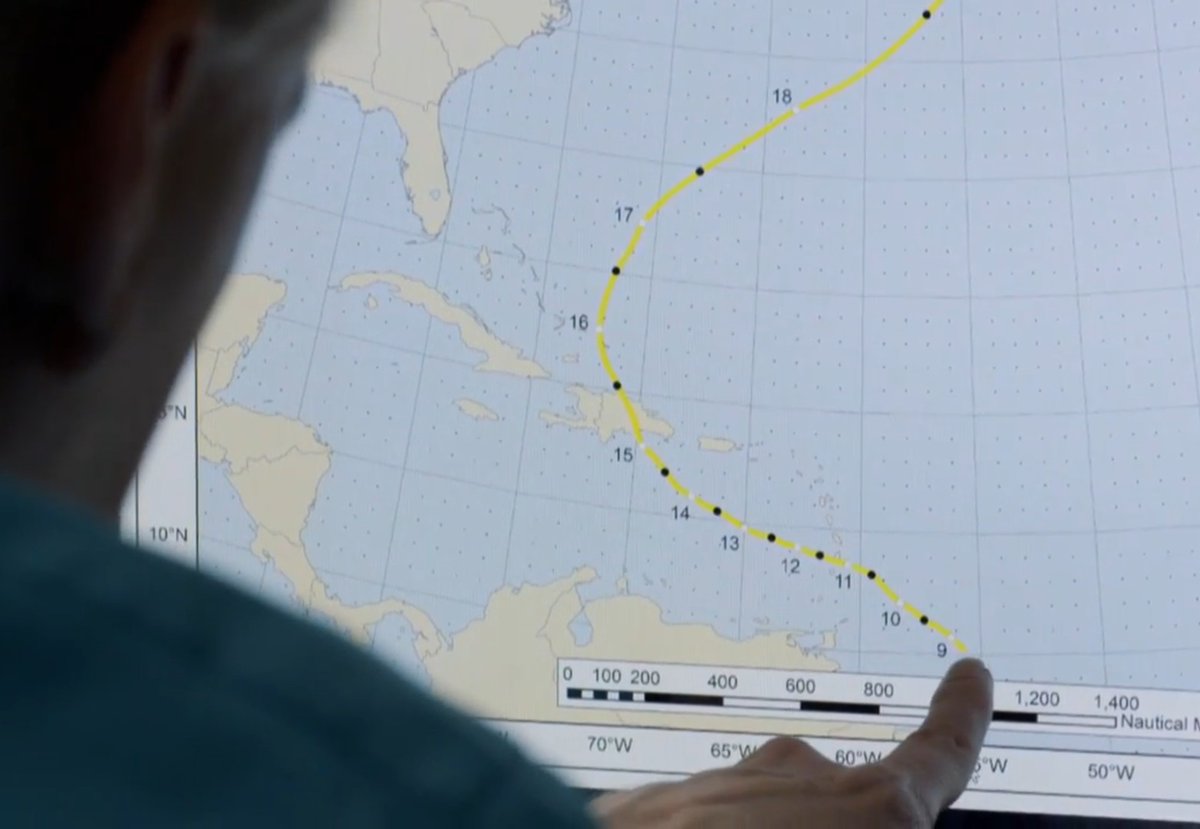
(1 of 2) We have plenty of historical Category 5 landfall candidates for the Atlantic basin. Storms like 1825 Santa Ana, 1831 Barbados, 1838 Bahamas, and et cetera. Yet out of all of these, one has always stood out. The 1780 Great hurricane. The environmental wind damage reported from this cyclone was unbelievable. While storms like Dorian 2019 had some slight debarking here and there, what was documented in 1780 was widespread and seemingly unseen until Melissa. At least for the Atlantic. It's hard to compare 1780 to storms like Haiyan 2013. Their environments differ vastly. Though nonetheless, it's been surreal actually tracking an event that compares to the 1780 storm.
uhdebbie tweet mediauhdebbie tweet media
English
3
1
2
915
uhdebbie
uhdebbie@UhDebbie·
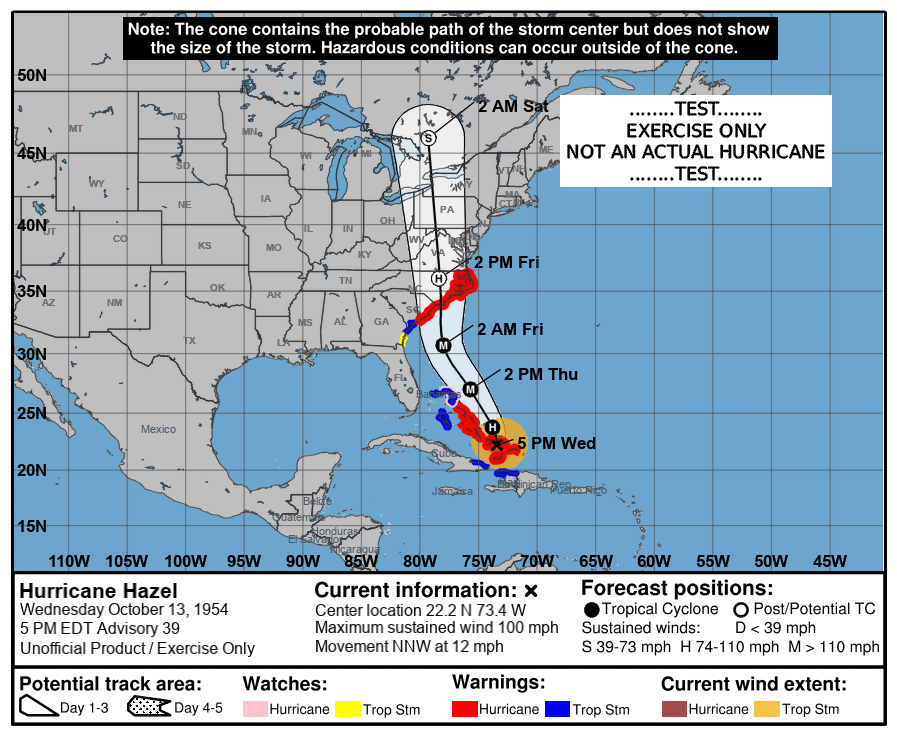
@FerragamoWx Not sure if you'll see this, but you're welcome to use this instead. Here are a few other ones you may find interesting too. @FerragamoWx
uhdebbie tweet mediauhdebbie tweet mediauhdebbie tweet media
English
0
0
0
869
Michael Ferragamo
Michael Ferragamo@FerragamoWx·
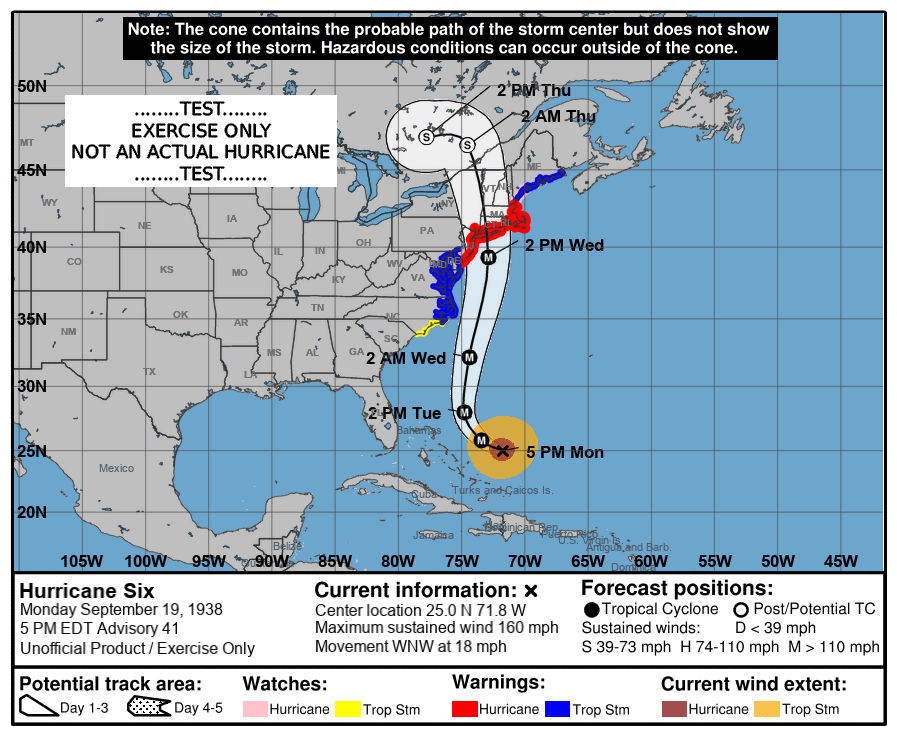
For my documentary, I reconstructed what a forecast cone would look like for the 1938 hurricane today. Computer models today would've been screaming at us for days to evacuate Long Island and coastal Southern New England for this monster. This reconstructed cone is displayed exactly 48 hours prior to landfall. With today's forecasting abilities and the environmental factors around the hurricane, the cone would likely have been very narrow (if not more narrow than what is shown). Although New England sees a major hurricane about every 50-70 years, a 1938-type event likely occurs every 300-400+ years.
Michael Ferragamo tweet media
English
38
51
525
88.1K
uhdebbie
uhdebbie@UhDebbie·
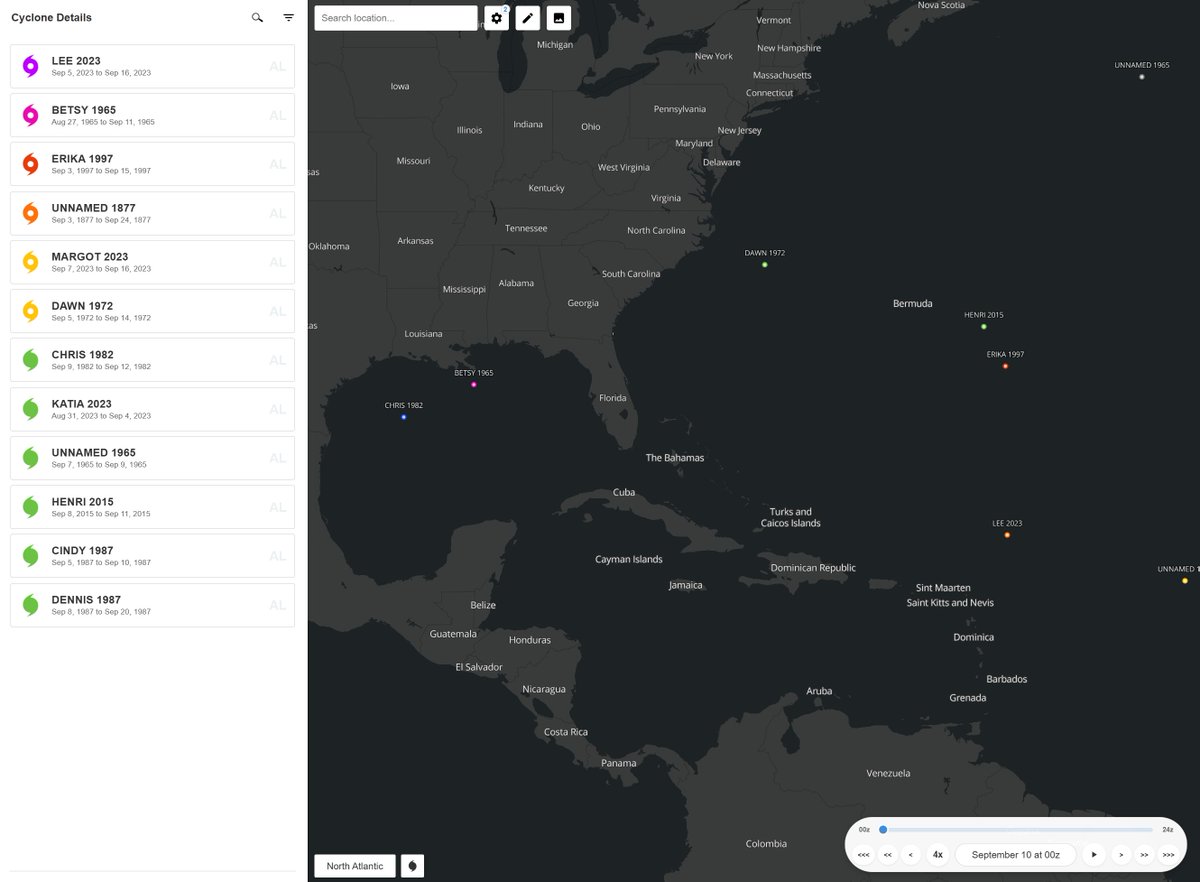
New updates to my site! - Added a new "Analog" tool. - Added a new “Polygon Statistics” section. The analog tool (shown below) still needs work. Any screenshots or recommendations would be awesome. Check it out: cyclonearchive.com/home
uhdebbie tweet media
English
0
0
0
129
uhdebbie
uhdebbie@UhDebbie·
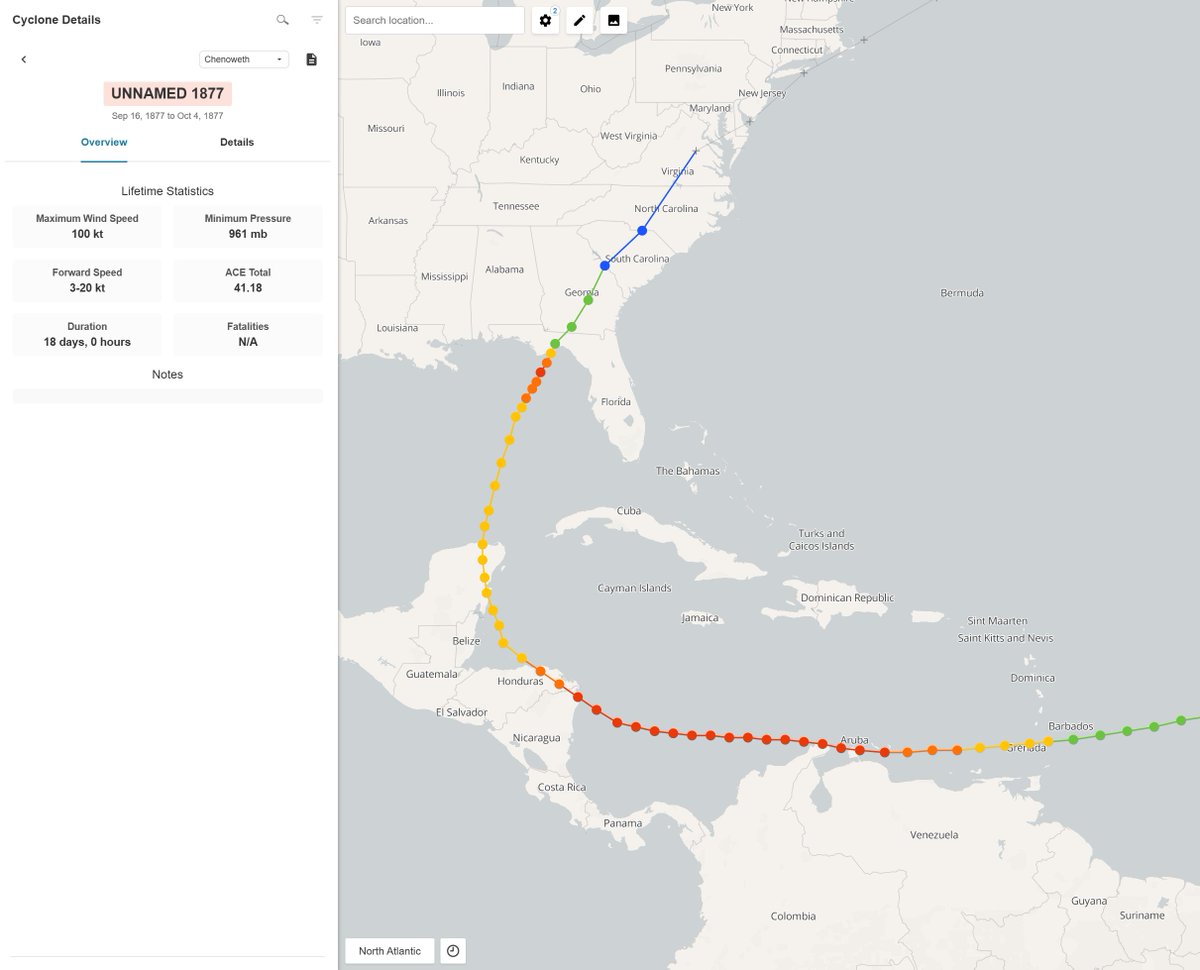
(2 of 2) Freak events do happen though. The storm on the left occurred during a Super El Niño. It struck both Venezuela, Nicaragua, and Florida as a major hurricane. Much of the track is likely underestimated too due to us lack information and reports on it. The storm on the right is one of the scariest examples though. It occurred during a Moderate El Niño. Yet despite that, it found a way to be in the wrong place, at the wrong time. The upper-end estimate on lives taken is ~8,000. Modern DR was devasted, and more likely than not, it struck at Category 5 status. I'd imagine we'll see an upgrade during its next analysis.
uhdebbie tweet mediauhdebbie tweet media
English
0
0
0
42
uhdebbie
uhdebbie@UhDebbie·
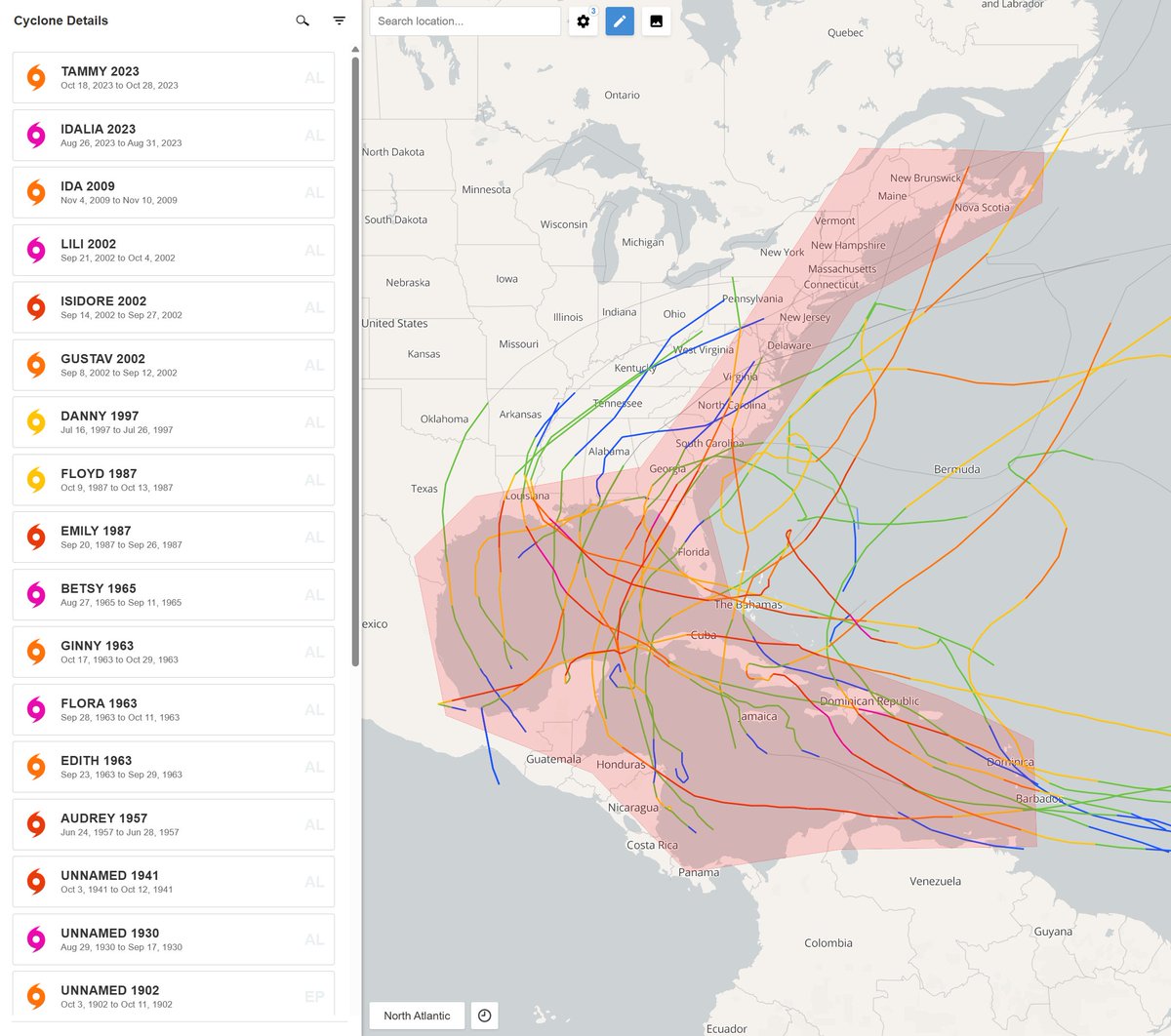
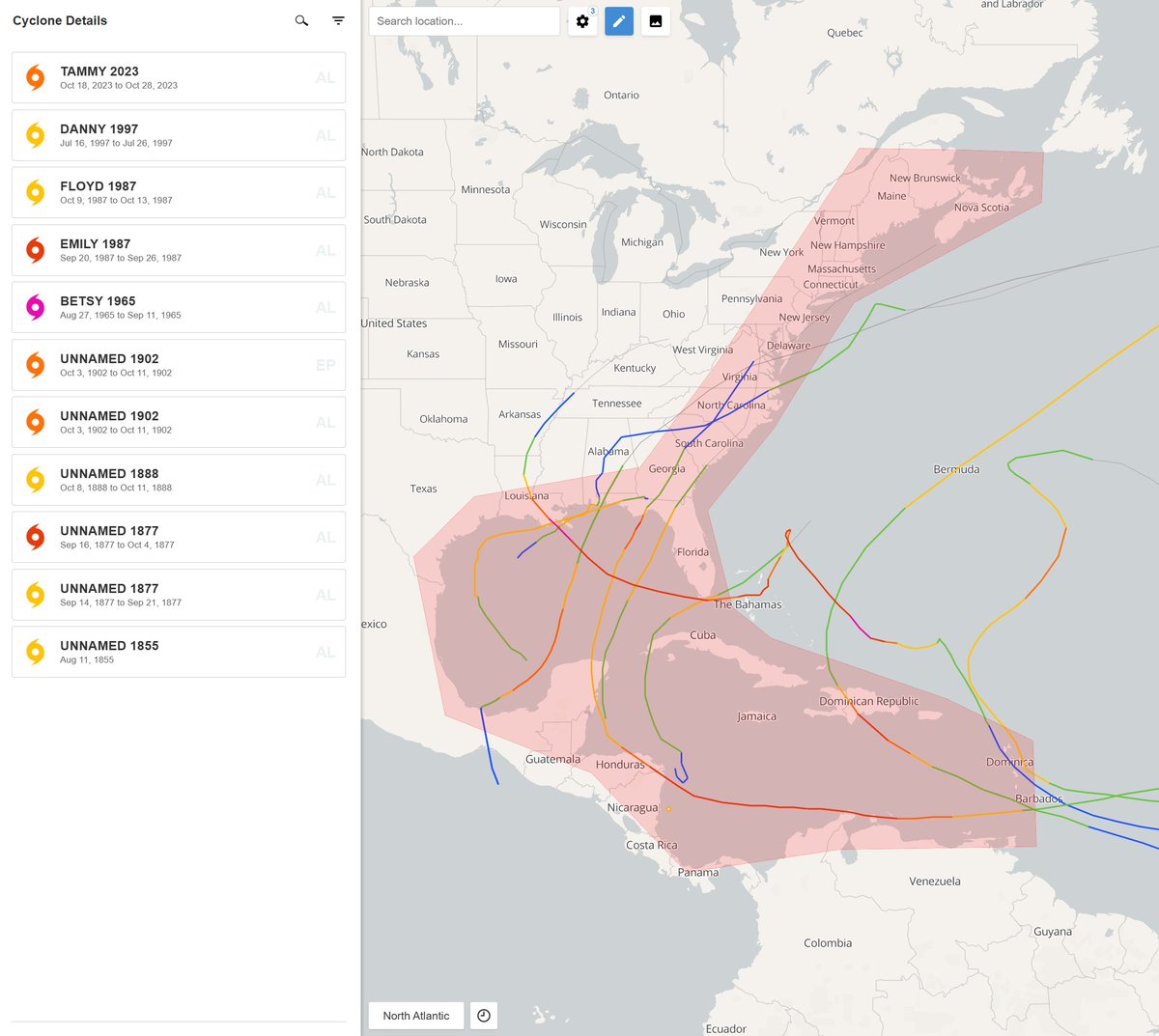
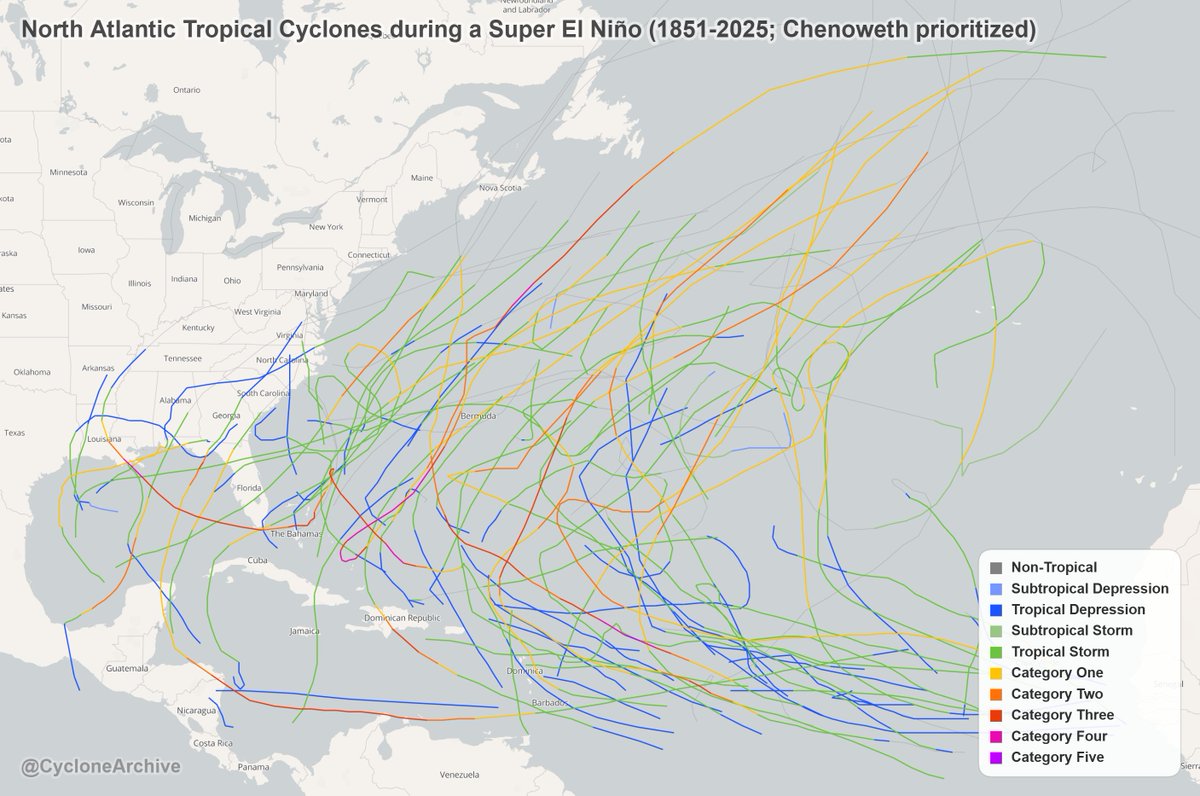
Indeed! Here's a extended showcase of tropical cyclones to reach hurricane status within this region (1851–2025; data pre-1899 is from Chenoweth). Major landfalls can still happen within the US (even during a Super like 1877). That said, these storms break the rule and are the exceptions. It's quite unlikely that we'll see something like it this year. (Image Details: Moderate + Strong El Niño / Strong El Niño)
uhdebbie tweet mediauhdebbie tweet media
English
1
0
2
153
Andy Hazelton
Andy Hazelton@AndyHazelton·
This is something to remember. While "it only takes one" is certainly true and we can't rule out a big impact somewhere, the reality is most of the examples of such storms in the past come from weaker El Niños. Strong El Niños tend to almost completely shut down the Gulf and Caribbean majors that affect the CONUS. The only counter-example in this set was Idalia from 2023, which featured a much warmer Atlantic.
Jeff Berardelli@WeatherProf

Big El Nino’s make a big difference! With the big El Niño expected this summer, I compared the recent 5 strongest El Nino’s with the 5 strongest La Nina’s. First, take a look at close to home - Gulf and Caribbean. During strong El Nino’s it’s much less active. Another big thing that stands out: many less “major” Cat 3,4,5 hurricanes. These limiting effects are both due to the major heating in the East Pacific - the adjacent basin to the Gulf/ Caribbean - which is overpowered by it’s relatively warmer neighbor, causing stable air and wind shear on the Atlantic side, suppressing hurricane activity. This #hurricane season may defy the odds, but odds are for a “relatively” quieter season. Nevertheless, we always say, “it only takes one”, so be prepared! #florida

English
8
10
63
9.1K
Andy Hazelton
Andy Hazelton@AndyHazelton·
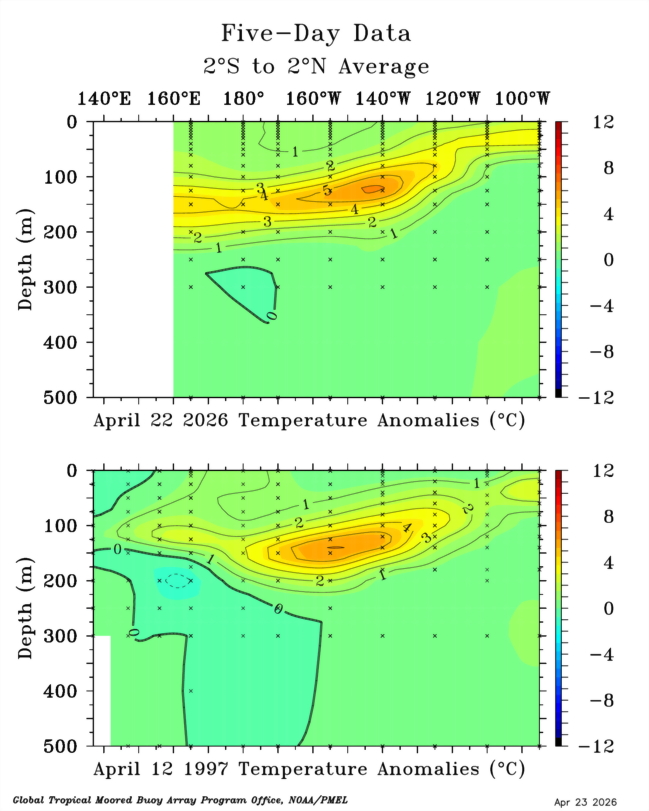
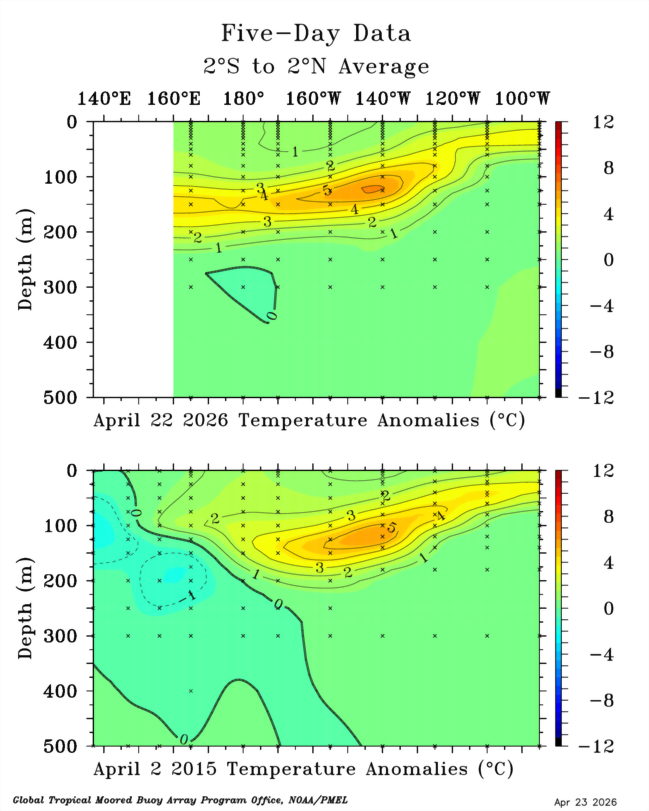
The downwelling Kelvin Wave over the Central Pacific is now slightly stronger than previous events (1997 and 2023) were at the same approximate longitude. There's also yet another downwelling wave yet to propagate east from the WPAC (driven by the last westerly wind burst). With weak trade winds forecast across the Pacific the next two weeks, there will be nothing to attenuate these Kelvin Waves, so they will continue to propagate east and lead to rapid warming of the Central and East Pacific as we progress into #ElNiño.
Andy Hazelton tweet mediaAndy Hazelton tweet mediaAndy Hazelton tweet media
English
7
46
191
14.3K
uhdebbie
uhdebbie@UhDebbie·
This would be awesome to see! I have a website that could help you organize your thoughts; at least more easily. If you're aiming for accuracy, I'd recommend using Chenoweth's 1851–1898 work; and he should be publishing an updated version from 1803–1941 sometime soon. With the website, you can sort the priority so the Chenoweth database is used from 1851 to 1898, while HURDAT2 takes care of the rest (in which its 20th Century data is much better). You can also sort via ENSO State, Forward Speed over the state, time of the year, and much more. Best of luck! cyclonearchive.com/home
English
0
0
0
824
Andy Hazelton
Andy Hazelton@AndyHazelton·
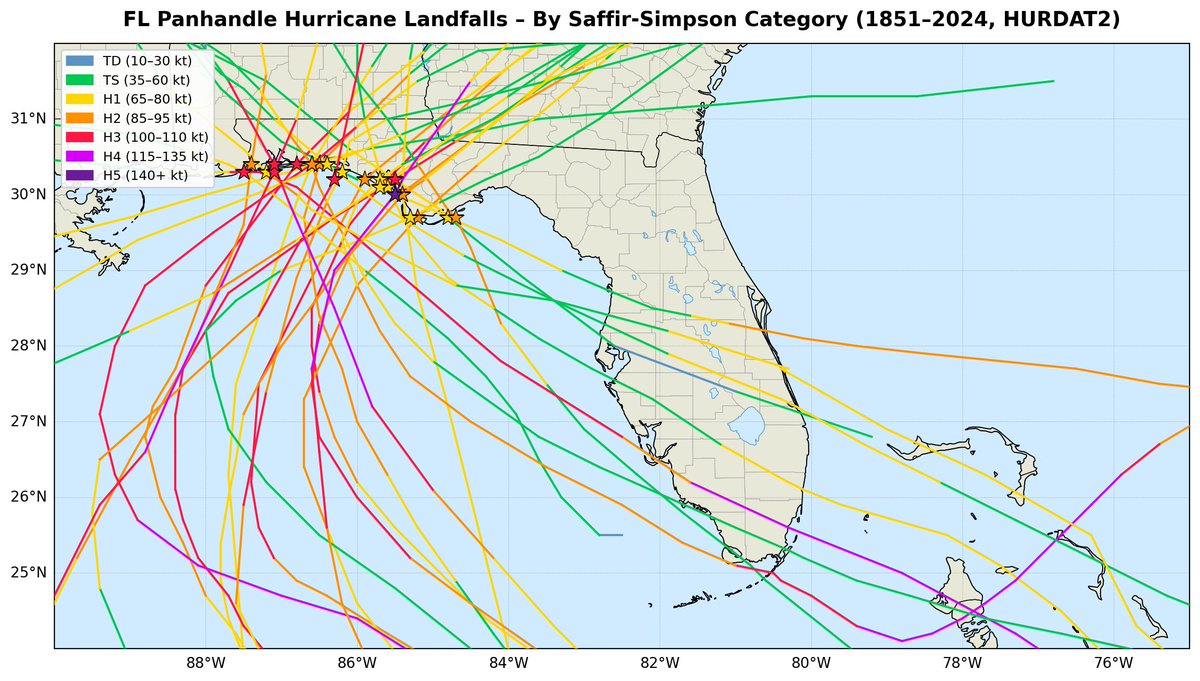
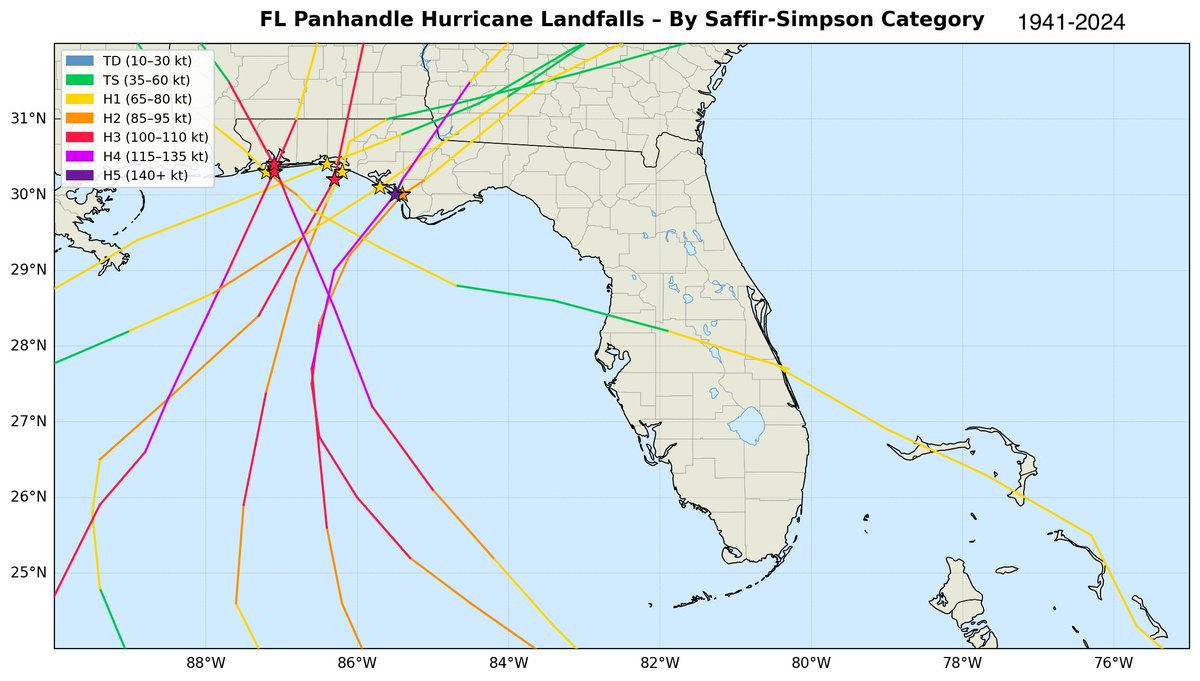
The FL East Coast hurricane drought has been thoroughly discussed, but another sneaky area that's been spared for a while is much of the Panhandle. I'm doing a detailed dive on FL landfalls in different parts of the state as an AI-assisted side project, and there were a ton more landfalls in the first half of the HURDAT2 (1851-2024) era than the last half or so. Obviously, Michael was a big one for the Panama City area, but the area west of that (including Destin and Pensacola) has been largely spared since Ivan+Dennis in 2004-2005 (maybe not coincidentally the last period that also saw FL East Coast impacts). In contrast, the FL west coast has seen a surge in major landfalls in the last decade, with Idalia, Helene, Milton, and Ian, as well as weaker hurricanes like Hermine and Debby.
Andy Hazelton tweet mediaAndy Hazelton tweet media
English
18
21
234
29.7K
uhdebbie
uhdebbie@UhDebbie·
@cyclonicwx Thanks, Alex! This is awesome to see on the site.
English
0
0
0
148
Alex Boreham
Alex Boreham@cyclonicwx·
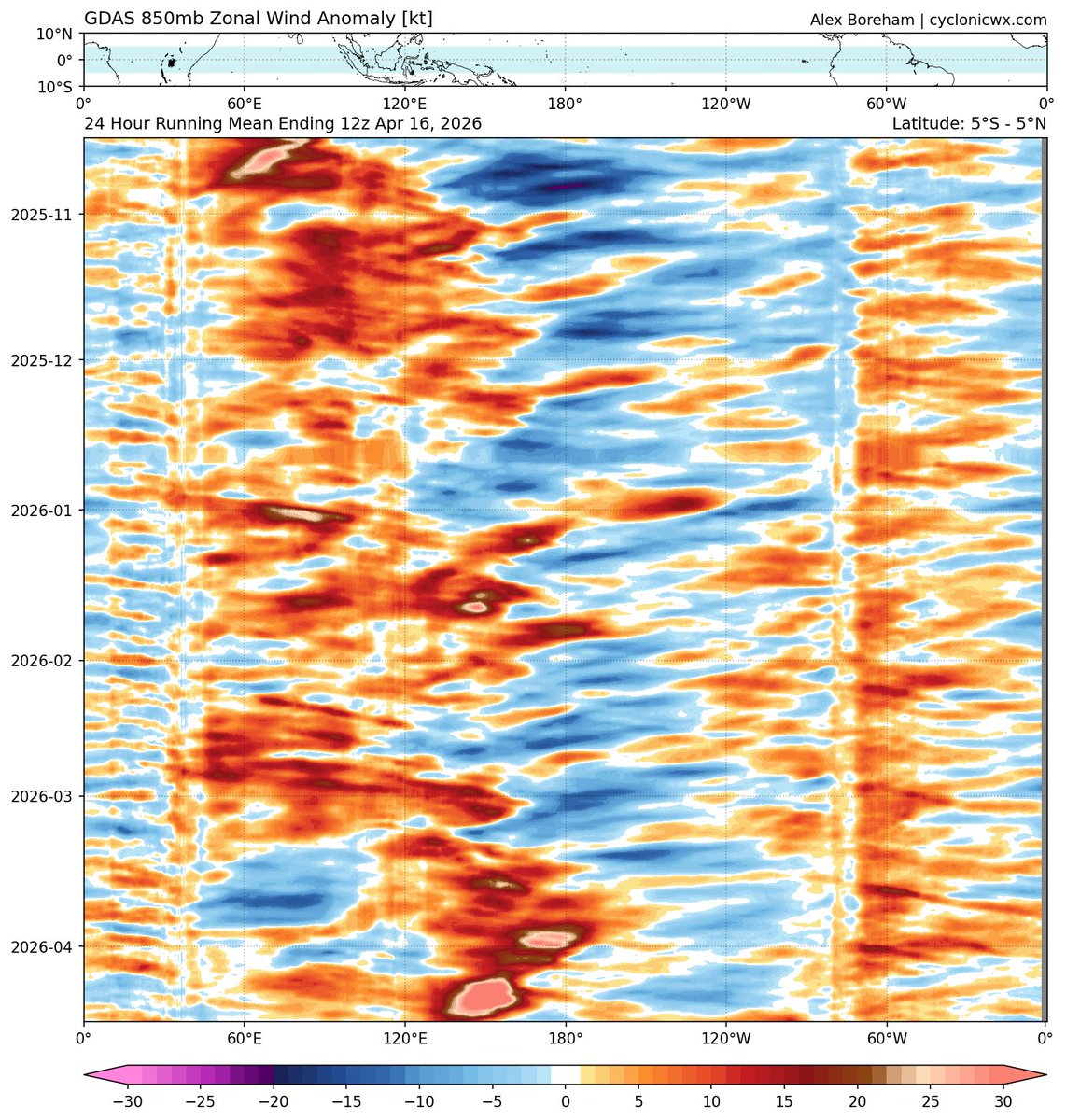
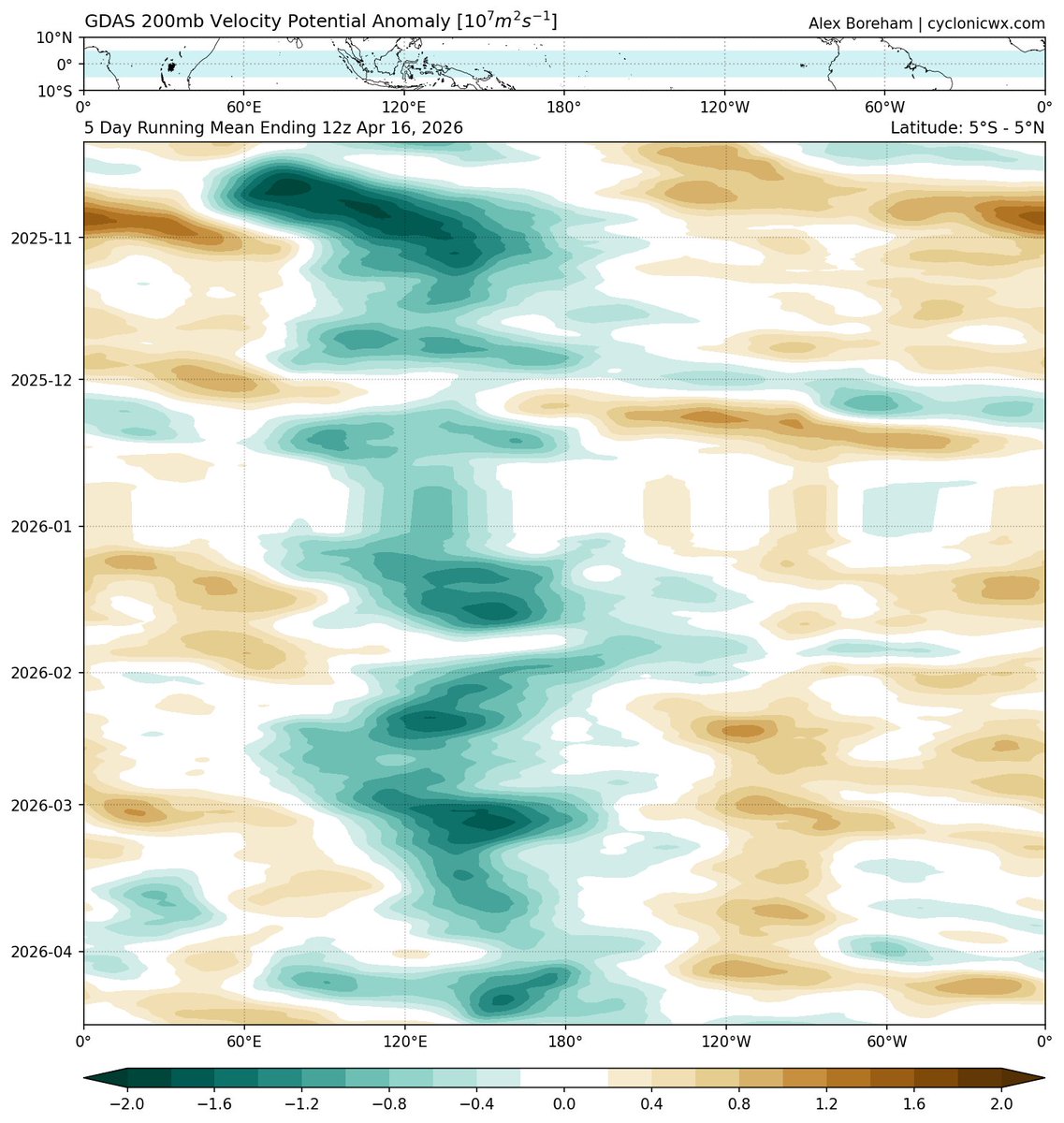
I've added some Hovmoller plots to the Current Analysis page! Now you can see the evolution of zonal wind and velocity potential over the last 6 months. Notable eastward shifts with both! Sign of the atmosphere shifting towards El Nino
Alex Boreham tweet mediaAlex Boreham tweet media
English
4
14
93
6.8K
uhdebbie
uhdebbie@UhDebbie·
@rushtropicalwx @AndyHazelton This is largely why both Katrina 2005 and Dorian 2019 (August storms) looked a lot less impressive for their intensity. And it's why late-season Caribbean storms (e.g. Eta 2020) usually look better.
English
0
0
1
21
Rush Rush
Rush Rush@rushtropicalwx·
Anybody know why this is?
Josh Morgerman@iCyclone

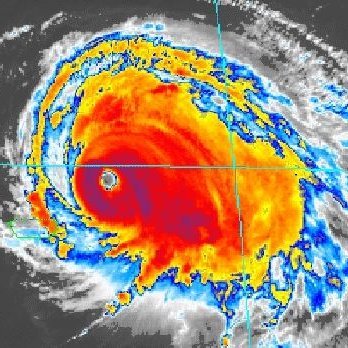
@EarthUncutTV One thing: WPAC cyclones typically have colder cloud tops than NATL ones, but that doesn't mean they're necessarily stronger. There've been papers on this. Between these, MELISSA looks stronger—it's more symmetric. If you're gonna bring sacred storms like MELISSA into it...😃

English
3
1
7
4.2K
uhdebbie
uhdebbie@UhDebbie·
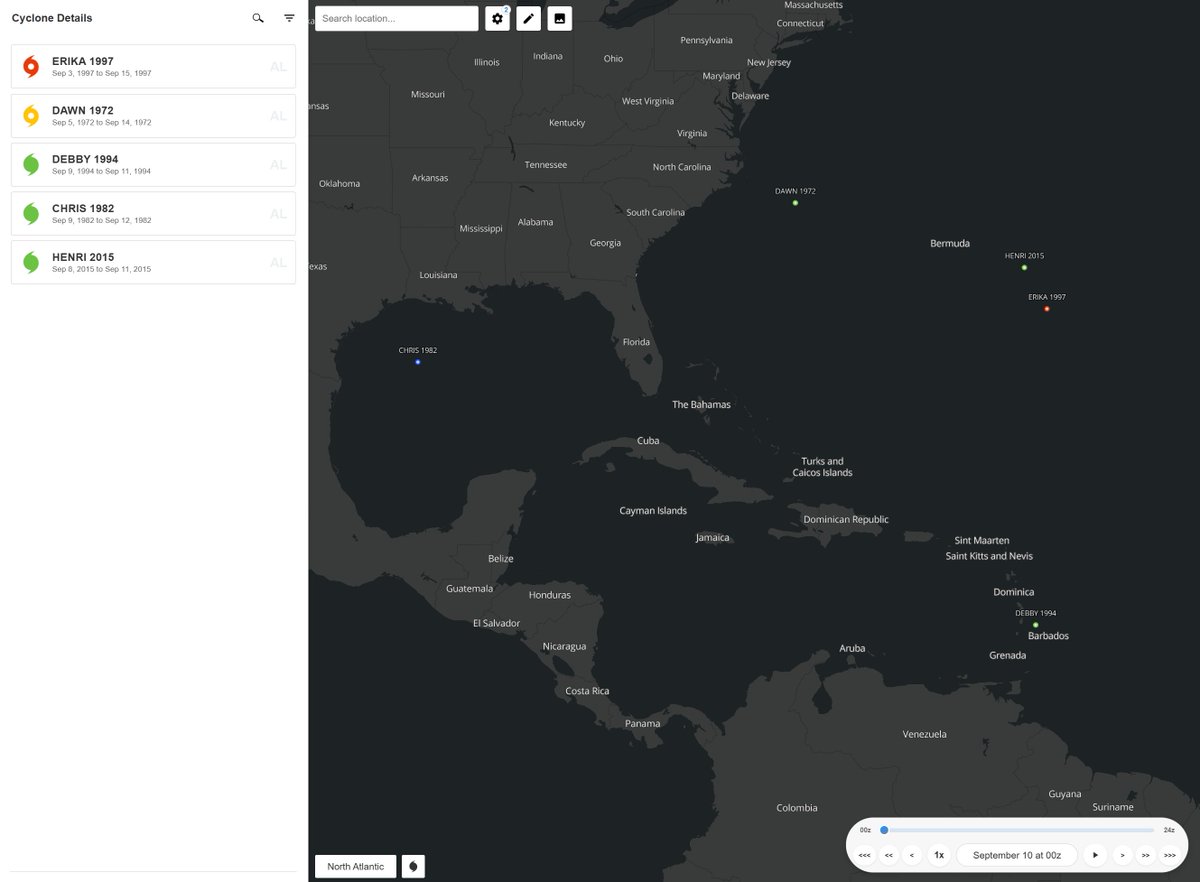
@AndyHazelton @TropicalTidbits Here's a quick showcase of those years. Even the typical Atlantic peak of these seasons are bare. That being said, there are some interesting storms (which is to be expected during unusual / rare setups).
uhdebbie tweet mediauhdebbie tweet media
English
0
0
2
192
Andy Hazelton
Andy Hazelton@AndyHazelton·
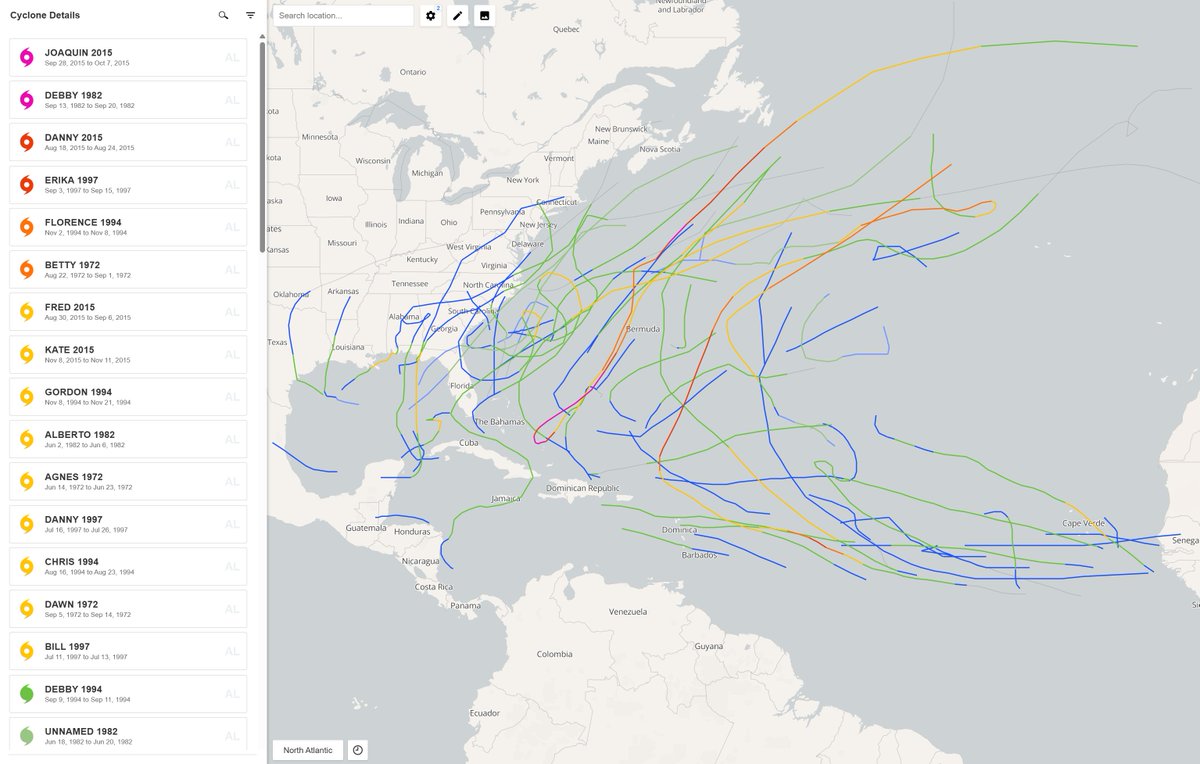
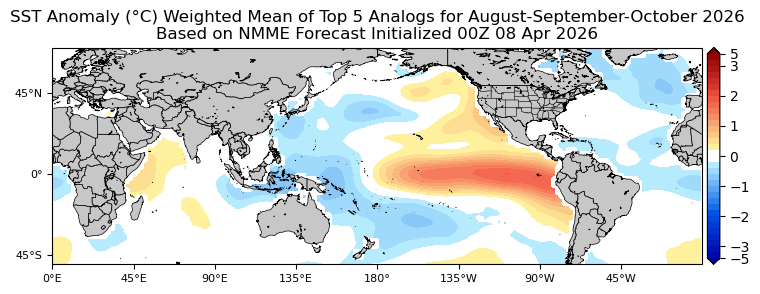
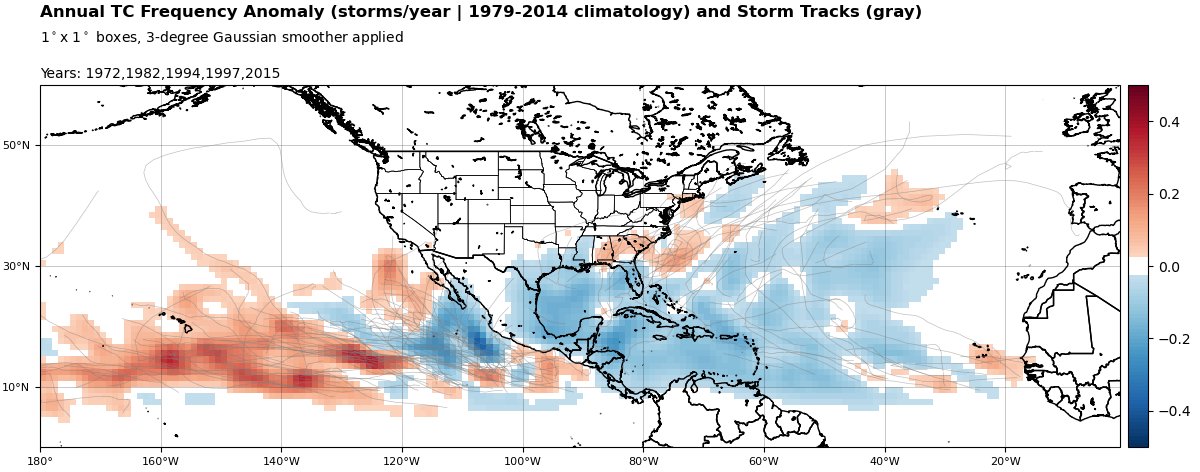
The updates to the @TropicalTidbits hurricane season analog page tropicaltidbits.com/analysis/hsana… based on the latest NMME forecast paints a picture of a very inactive Atlantic season due to strong El Niño. TC activity in these analogs (1972, 1982, 1994, 1997, 2015) was greatly reduced across the MDR, Gulf, and Caribbean, with best chances for any TC activity off the SE coast and maybe in the far East Atlantic, away from the shear. Also note the westward-shifted and expanded activity in the East Pacific, with more threats to Hawaii. This fits pretty well with what I would expect this season, at this range.
Andy Hazelton tweet mediaAndy Hazelton tweet media
English
10
42
190
17.9K
uhdebbie
uhdebbie@UhDebbie·
@MattDevittWX Indeed! I recent published a website that can help showcase this (i.e. filter storms via ENSO intensity). Ideally, I'm hoping it will serve a use for those who aren't experienced with weather data (e.g. HURDAT2, NCEI, et cetera). Check it out: cyclonearchive.com/home
uhdebbie tweet mediauhdebbie tweet mediauhdebbie tweet media
English
0
0
0
22
Matt Devitt
Matt Devitt@MattDevittWX·
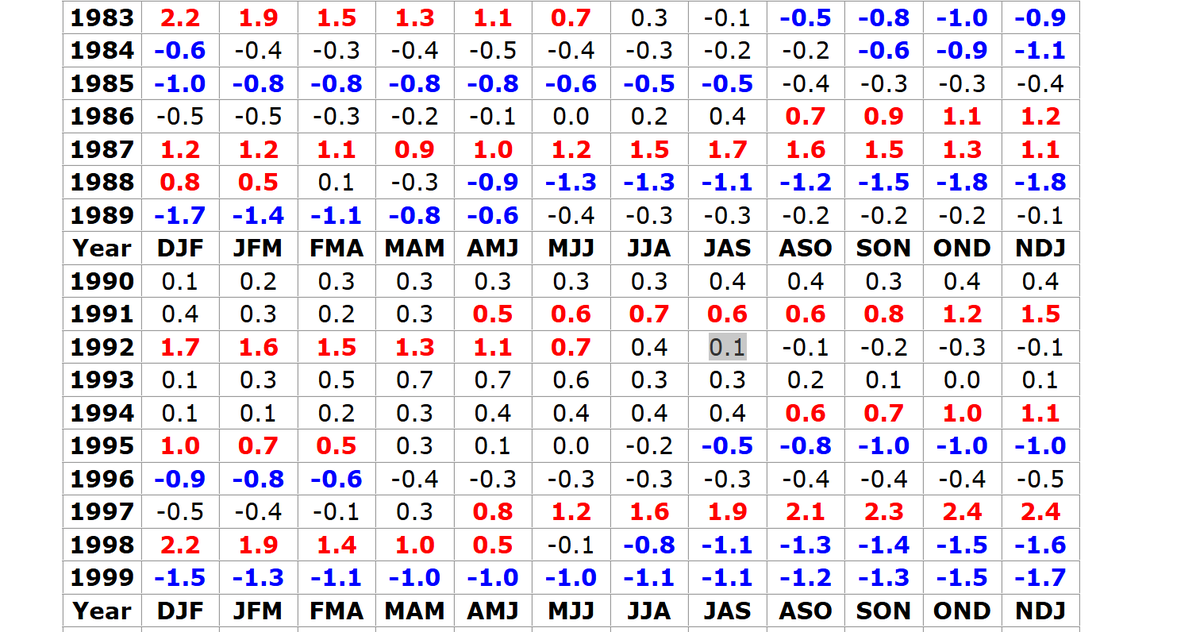
Hurricane Andrew in 1992 occurred during a neutral phase, not El Niño. Been seeing that a lot today on the topic. Almost as neutral as it gets (data below).
Matt Devitt tweet mediaMatt Devitt tweet media
Matt Devitt@MattDevittWX

STRONG EL NIÑO POSSIBLE: New data shows the increasing potential for one by this Fall...leading into the peak of hurricane season. Could even be in the Top 5 strongest since 1950 (list below). Forecast is preliminary and subject to change. Historically, strong El #Niño events lead to greater wind shear and a suppression / lowering of tropical activity across the Atlantic Basin. While this would be good news, remember, still just takes one big storm landfall to seem like an active year (which can still occasionally occur even during El Niño years - Hurricane Betsy, 1965). Across the United States, it also favors a more active southern storm track, increasing the chances for greater rainfall and severe weather during the fall and winter. Stay tuned...

English
17
12
156
26.2K
uhdebbie
uhdebbie@UhDebbie·
Apparently, Jacksonville actually reported a trace of snow on April 1, 1856. I'd imagine, if true, it's Florida's latest snowfall we have documented. During the second half of April in 1849, parts of the Panhandle actually dipped into the 20s. Within a long enough period, you can see some weird weather.
English
0
0
0
144
Star
Star@StarInBoxWx·
SHOCKING: Snow is not expected in Florida within the next 46 days.
Star tweet media
English
7
9
224
7.8K
uhdebbie
uhdebbie@UhDebbie·
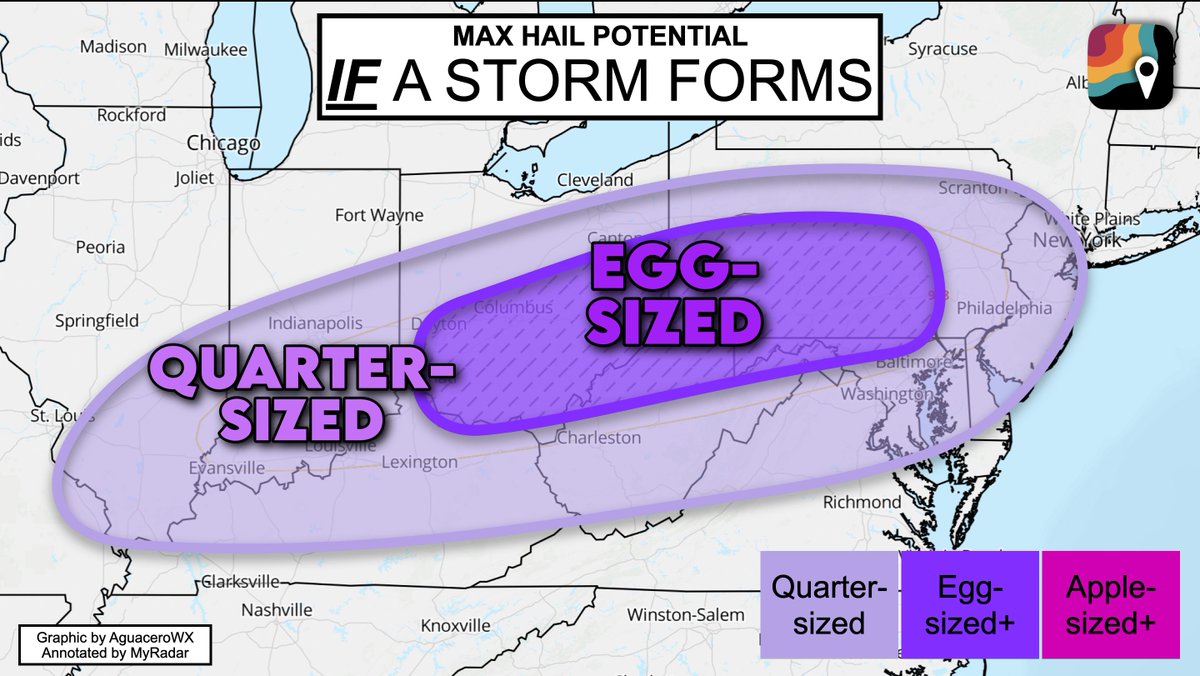
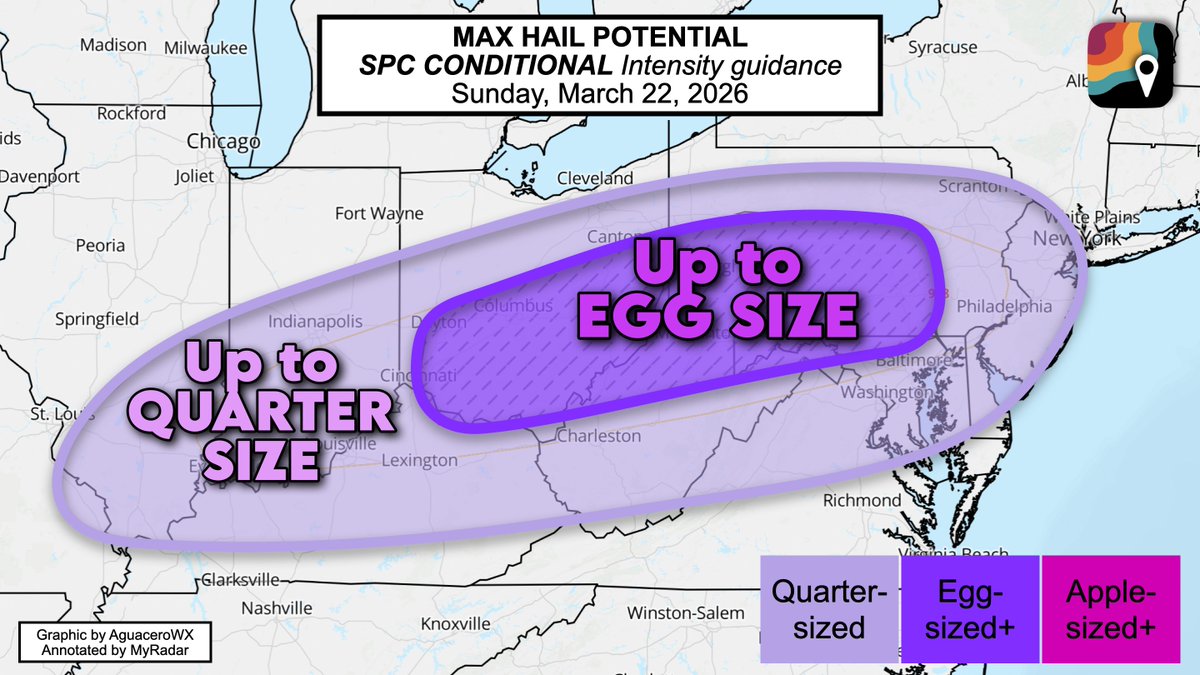
I'd put my money on #3. It's fairly simple to understand, and it's less of a sensory overload (unlike #1). "Up to" provides the understanding that the hail could be that large, without giving the expectation that it will be. Since most areas won't see the high-end of their forecast, less trust will be eroded.
English
1
0
0
198
Tristan
Tristan@Tristan35480341·
@MatthewCappucci Last time DC had a 15% chance for tornadoes? I need to know badly
English
4
0
2
7.5K
Matthew Cappucci
Matthew Cappucci@MatthewCappucci·
SERIOUS SEVERE WEATHER: The Storm Prediction Center has UPGRADED to a rare Level 4 out of 5 severe weather risk for Monday in the Mid-Atlantic. This includes Washington D.C., Richmond, Raleigh, Charlotte and part of South Carolina! In the red zone, there is an increasing concern for a couple supercells that could produce an isolated EF2+ tornado, and given fast storm motions, we can't rule out a longer-track tornado as well. This risk tier happens 3 times per decade on average in our area; the last times in D.C. were August 7, 2023 and April 19, 2019. These risk tiers are reserved for only the most substantial, higher-impact severe weather events that are somewhat reminiscent of what I chase out west. Dangerous storms, some of which may produce 60-75 mph wind gusts, are likely. A few rotating supercells with tornado potential could crop up, and we'll also likely see a few brief spin-up tornadoes within the main squall line that should come through during the evening hours. School districts – use Sunday to plan. Multiple rounds of potentially dangerous storms, including with some tornado risk, are likely in some spots.
Matthew Cappucci tweet media
English
39
279
1.6K
449.6K
uhdebbie
uhdebbie@UhDebbie·
At least with the Southeast and Mid-Atlantic, I've noticed that late-season events tend to have the bellwether of a Southeast drought. 1774, 1818, and 1849 are some of the most extreme examples I can think of. I'm less familiar with the modern list of events. Though even with such, anything too abnormal is still unlikely.
English
0
0
0
80
Stephen Eckhardt ☀️
Stephen Eckhardt ☀️@seckhardt·
@burgwx Mid-March snow isn’t too unusual. Certainly happens less than half the time but still enough that it’s not a pipe dream. Tomer is just just laying out possibilities. But too many ridiculous comments here.
English
2
0
13
1.9K
Tomer Burg
Tomer Burg@burgwx·
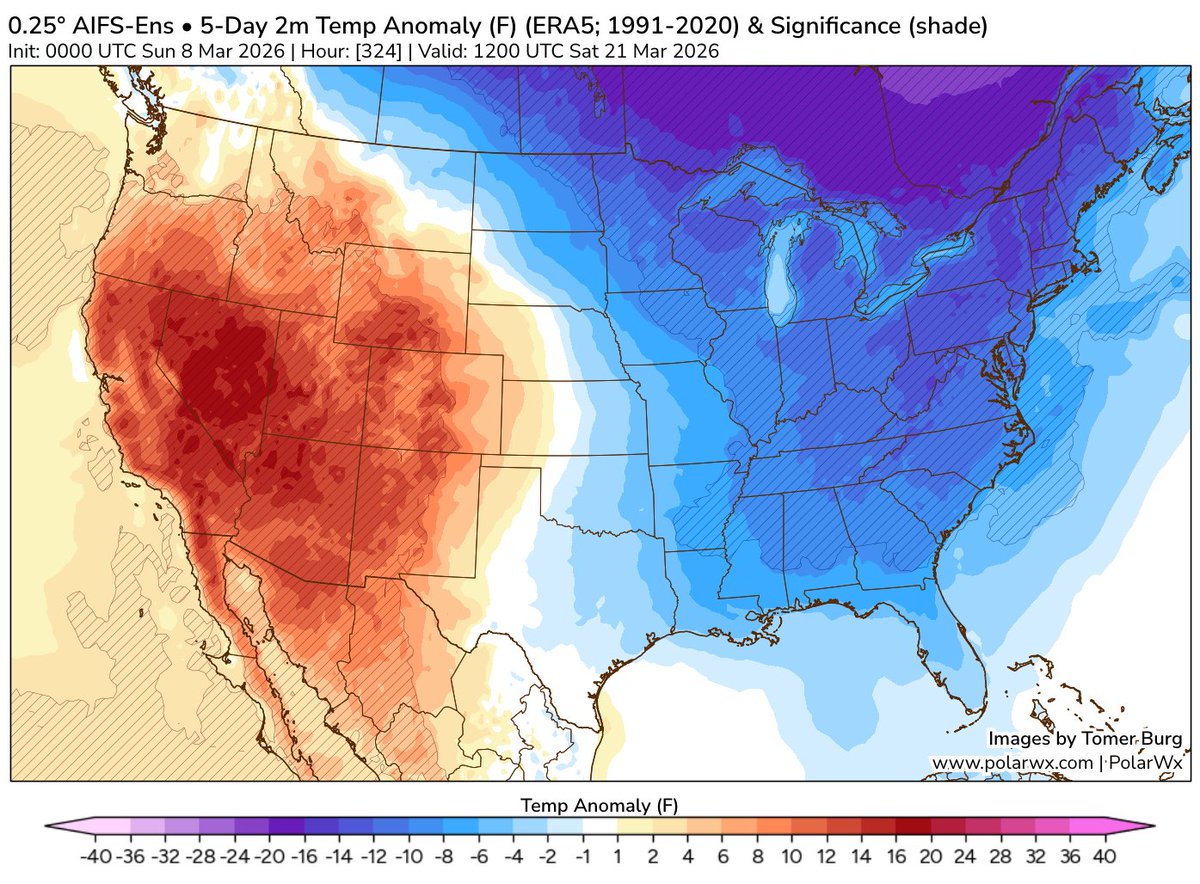
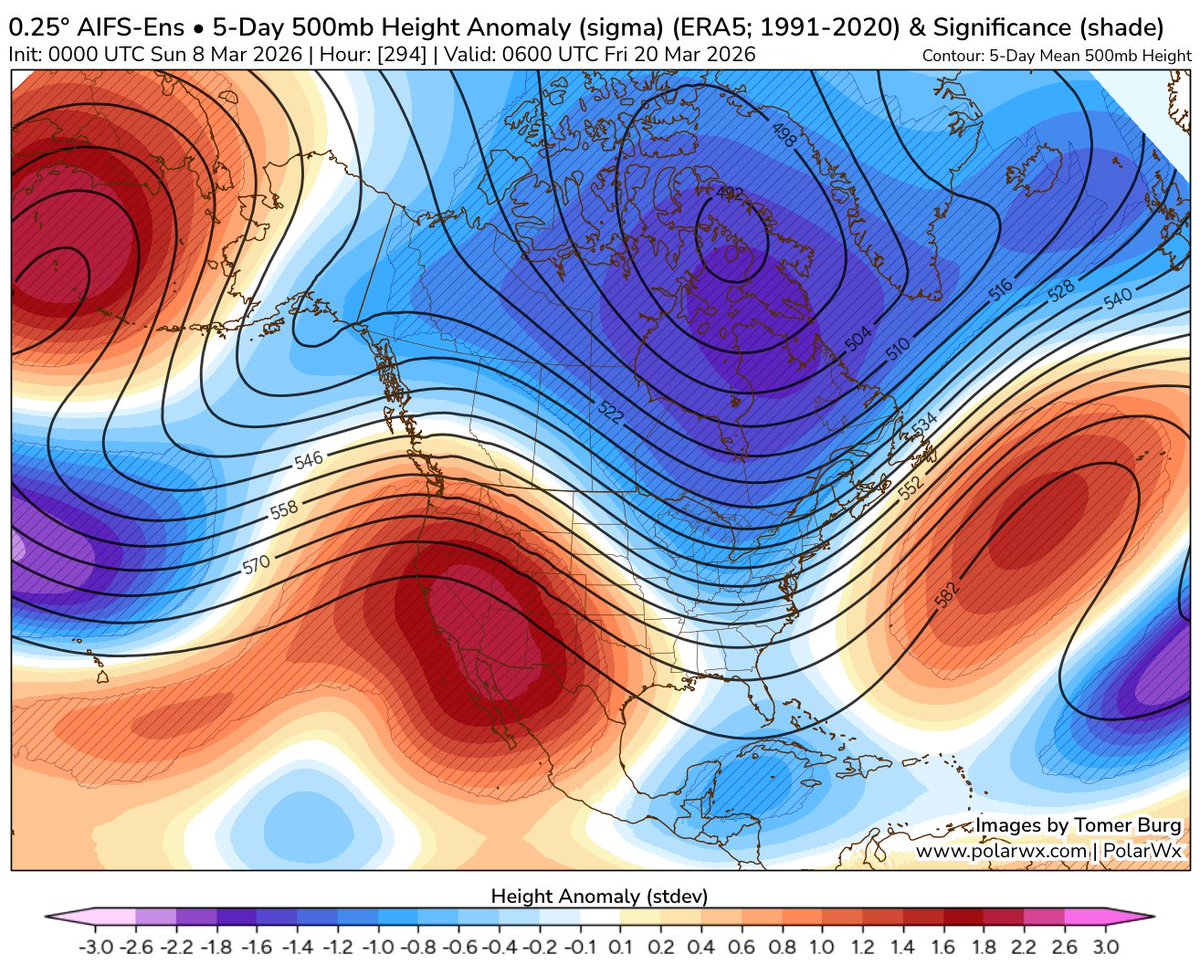
New England most certainly isn't done with snow this winter after the temporary warm-up this week ends and we return to the East Coast trough/West Coast ridge pattern that has been dominant for much of this winter. I'm not convinced the Mid Atlantic into NJ/NYC metro is quite done with snow potentials either
Tomer Burg tweet mediaTomer Burg tweet media
English
23
25
226
52.7K
uhdebbie
uhdebbie@UhDebbie·
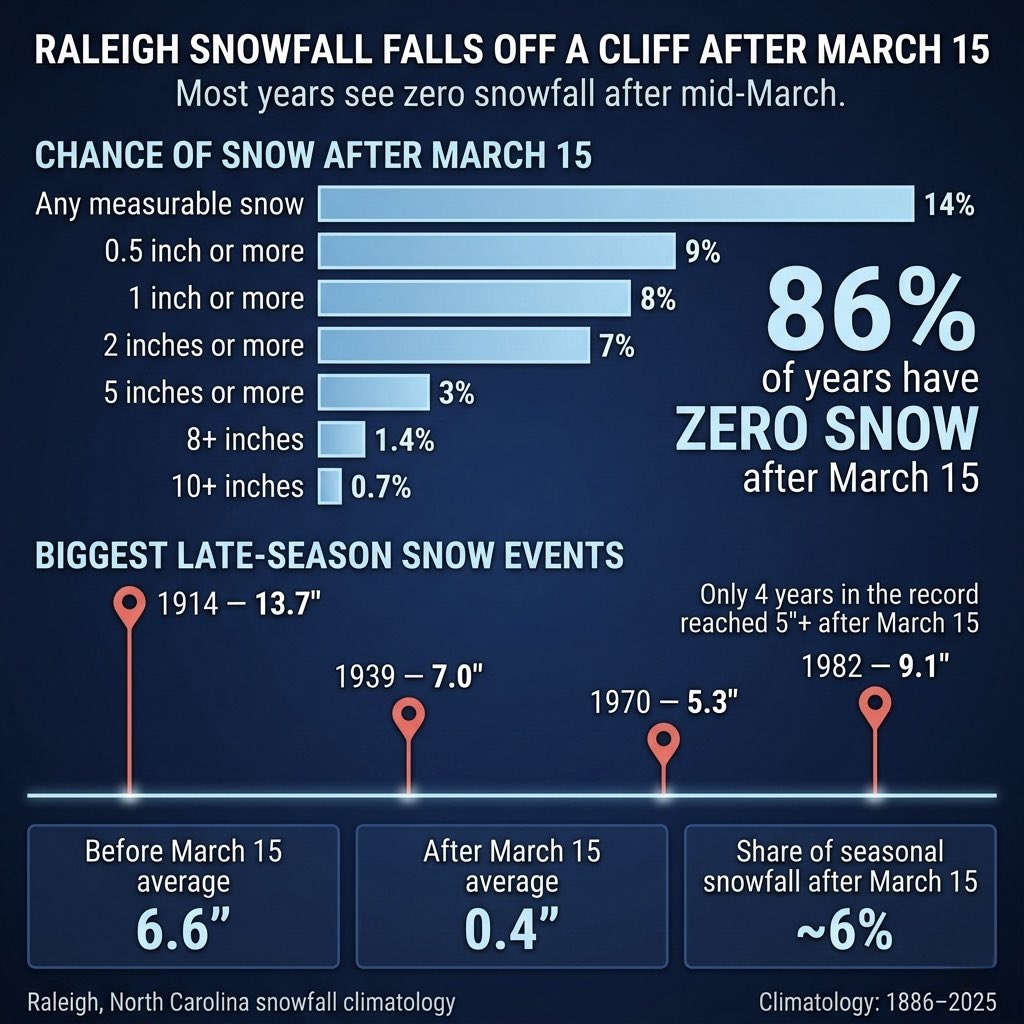
The 1915 April event was quite the storm. A freak of freaks for the greater Raleigh area. Not only was it a major April snow storm! It was quite windy too. And not even a mere week prior, they had another significant late-season snow storm. It can get a lot more odd than this though. On April 15, 16, 17, 19, 20, and 21 of 1849, frost occurred throughout the greater Raleigh area. And from April 15–16, there was a significant Southeast snow storm. Columbia, SC accumulated ~6 inches (15.2 cm), while Charleston saw ~3 (7.6 cm). If 1915 occurred today with modern measuring techniques, Raleigh probably would have seen something closer to 13 inches. One of the greatest bellwethers for such an event is a Southeast drought. Though even with such, it's still very unlikely.
English
0
0
0
135
Dr. Jonathan Wall
Dr. Jonathan Wall@_jwall·
It’s almost impossible to get a decent March snow in Raleigh.
Dr. Jonathan Wall tweet media
English
3
2
22
2.6K
Hurricane Man
Hurricane Man@HurricaneManWx·
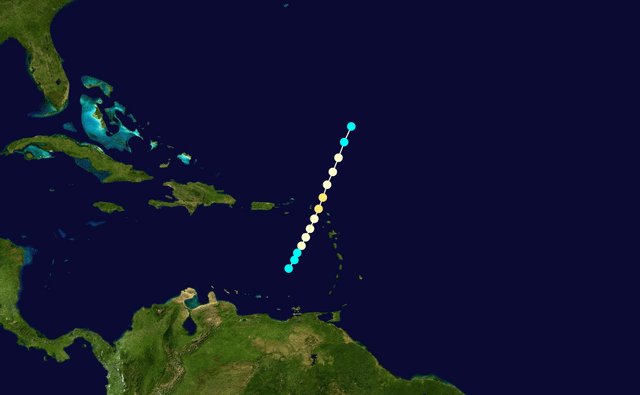
The 1908 "Southward" Hurricane The Rare Date: Formed on March 6, 1908, the only March hurricane in Atlantic history. The "Impossible" Path: Instead of moving West, it traveled North to South (South-Southwest), a movement almost never seen in that region. The Power: It reached Category 2 strength (100 mph winds) and slammed into the Leeward Islands. The Mystery: Meteorologists still study it today because its path and timing were so scientifically "wrong."
Hurricane Man tweet media
English
3
13
71
4.6K
uhdebbie
uhdebbie@UhDebbie·
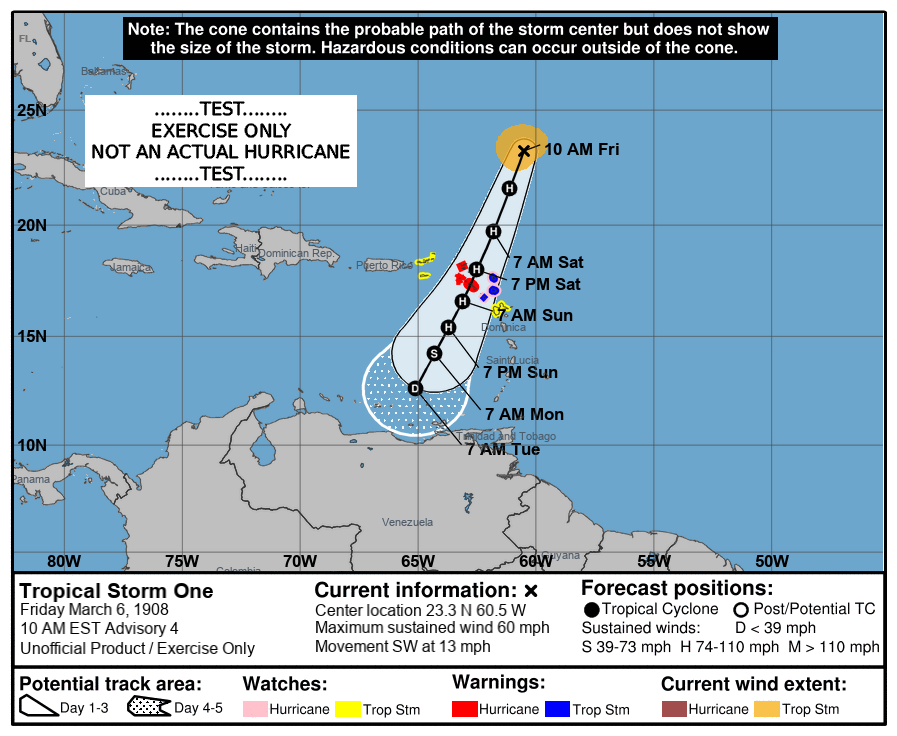
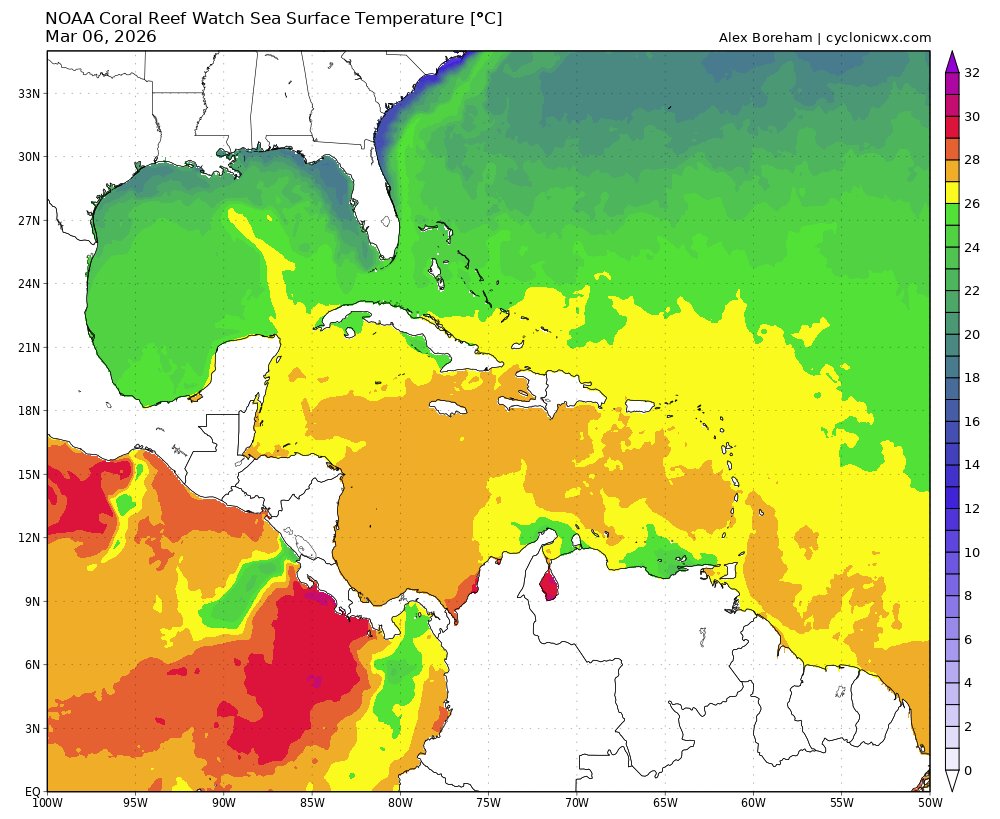
@Weather_Earth25 @HurricaneManWx Here's the set up if it's of your interest! To the right is what the SST are today, 118 years later. I'll try and do a visual recreation of what the storm looked like later tonight.
GIF
uhdebbie tweet media
English
1
0
2
46
Weather & Earth 25
Weather & Earth 25@Weather_Earth25·
@HurricaneManWx Crazy, looking at the track one would've thought it actually moved NNE instead, especially being March bizarrely enough 👀 Indeed, very bizarre track.
English
1
0
1
146
uhdebbie
uhdebbie@UhDebbie·
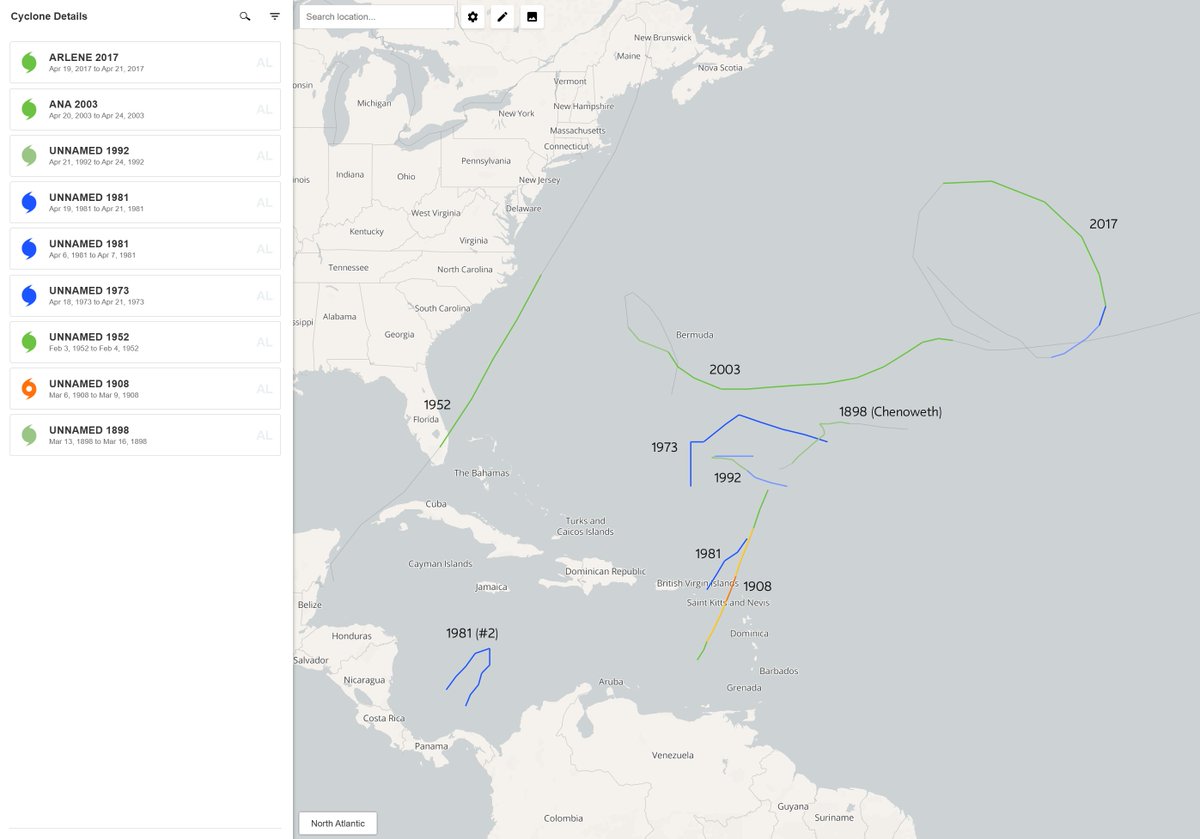
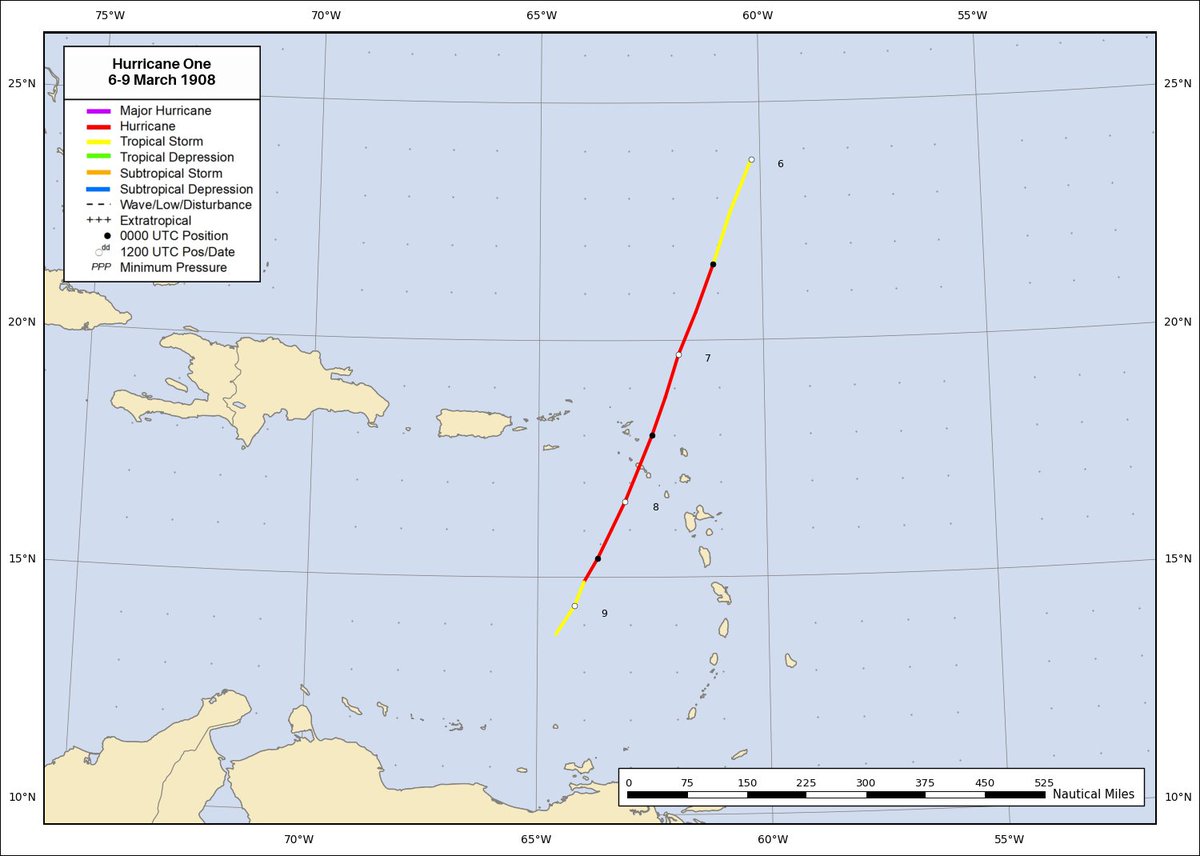
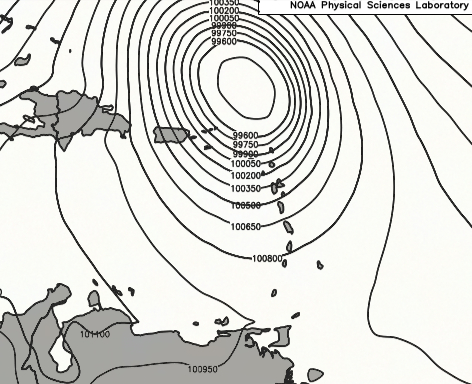
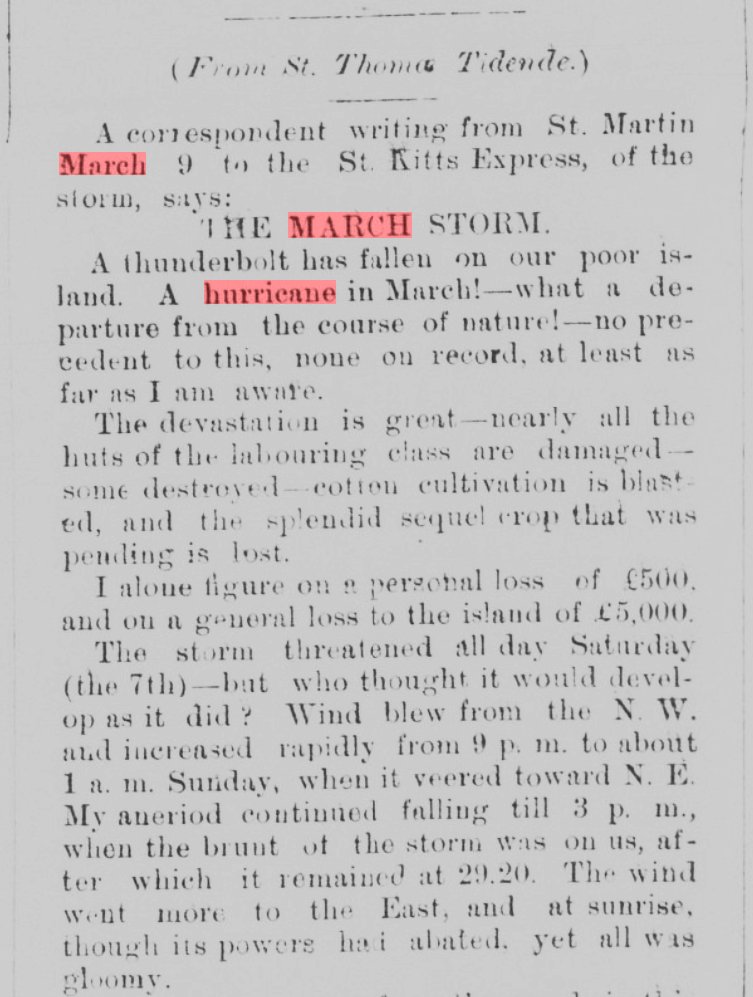
(2 of 2) The first observations of this storm began on March 06 via ship. 12 hours later, it likely attained hurricane status. And during the latter half of the 7th, it peaked in intensity roughly 30 miles (48 km) east of Saint Martin where a measurement of 988 mbar (29.17 inHg) occurred. The storm was described as unusual and a first of its kind by locals. Most notably was its unusual southwest trajectory and appearance so odd in the calendar year. Officially, no tropical storm has existed within a month before or after the formation of the hurricane. The earliest known hurricane preceding the formation of the storm occurred in mid-January of 2016. The earliest proceeding it was in mid-May of 1951; nearly 70 days later into the season! Despite this, it's also the 2nd or 3rd strongest off-season hurricane we have recorded (May 1863 was potentially a major, while Dec 1822 likely reached at least Category 2 status). In total, at least 1 fatality occurred. Several islands were also said to have been "devastated" by the hurricane. This is one of the rarest tropical cyclones we have documented globally...
uhdebbie tweet media
GIF
uhdebbie tweet media
English
0
0
0
128
uhdebbie
uhdebbie@UhDebbie·
(1 of 2) Exactly 118 years ago tonight (~05z), one of the rarest tropical cyclones ever documented struck the islands of Saint Kitts and Nevis as an intense hurricane. Despite forming completely opposite to that of the climatological peak of its season, it had 1-minute sustained winds of at least 100 mph (160 km/h) and a pressure well below 984 mbar (29.06 inHg). en.wikipedia.org/wiki/1908_Marc…
uhdebbie tweet mediauhdebbie tweet mediauhdebbie tweet media
English
1
0
0
153