
MONIGORA

67.4K posts

MONIGORA banner
MONIGORA

MONIGORA

@_MONIGORA_

DIRECTOR 🎬🎞️🎥 FILMMAKER ✨✨✨✨✨I am directing a feature film in ONE SHOT. The film lasts 187 minutes, 110 actors will play in the film and 21 ballerinas.

The Universe... Europe... Se unió Mayıs 2021
5.2K Siguiendo3.6K Seguidores
MONIGORA retuiteado
Astronomy Vibes
Astronomy Vibes@AstronomyVibes·
The Artemis II crew is currently orbiting Earth for 24 hours to test all systems… before heading to the Moon 🌙 NASA doesn't just fly straight to the Moon. First, they orbit Earth and check everything. 🌍 🔹 Is the air system working? 🔹 Can they drink water? 🔹 Are all controls responding? 🔹 Is life support keeping them safe? Everything has to work before they go any further. And if something goes wrong… they're still close enough to come home. 💡 Once all systems are good, Orion fires its engine and heads to the Moon. 🚀 24 hours of testing. Then 4 days to the Moon. 🌕
Astronomy Vibes tweet media
English
7
29
105
2.9K
MONIGORA retuiteado
Astronomy Vibes
Astronomy Vibes@AstronomyVibes·
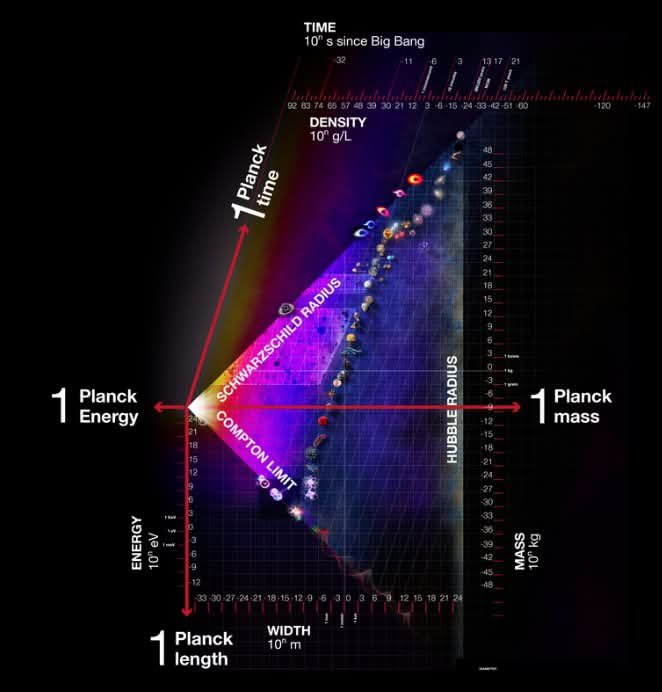
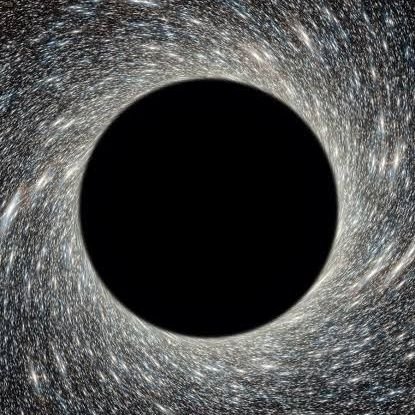
🚨 Physicists Are Asking a Wild Question: Are We Living in a Black Hole? Nobody panic — but some physicists are starting to suspect that our entire universe might actually exist inside a black hole. Here’s why that idea isn’t as crazy as it sounds: You can calculate the event horizon — the point of no return — of a black hole using the Schwarzschild radius formula: rₛ = 2GM / c² It tells us that the more mass a black hole has, the larger its event horizon becomes. Now, imagine taking all the mass of the observable universe and plugging it into that equation. Surprisingly, the resulting black hole would have an event horizon almost exactly the same size as the observable universe itself. It could just be an uncanny coincidence… Or maybe, just maybe — we really are living inside a cosmic black hole. 🕳️
Astronomy Vibes tweet media
English
34
31
93
4.2K
MONIGORA retuiteado
Massimo
Massimo@Rainmaker1973·
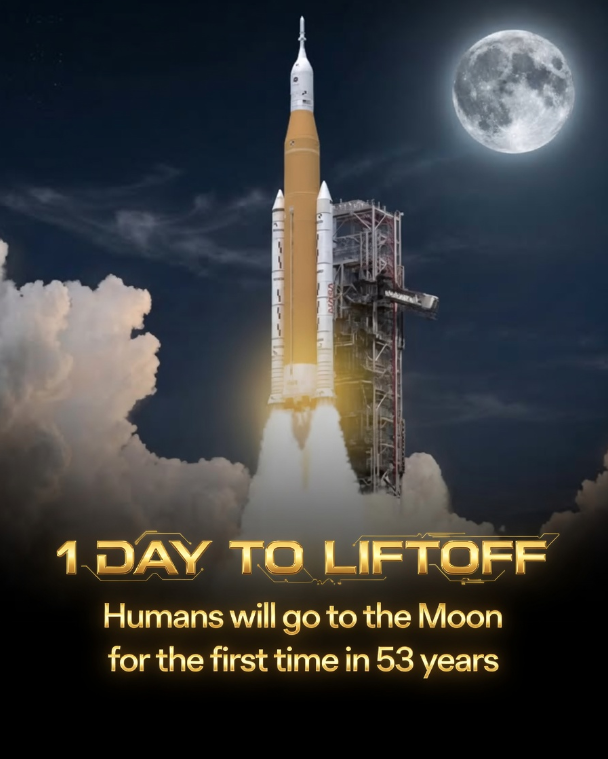
Tomorrow, humans return to the path of the Moon. NASA is set to make history as the Artemis II mission lifts off from Kennedy Space Center at 6:24 p.m. EDT. This landmark flight marks the first time in more than 50 years that humans will venture beyond low Earth orbit toward the Moon. Aboard the powerful Space Launch System rocket, four astronauts will ride the Orion spacecraft on a daring ten-day journey that will take them nearly 250,000 miles from Earth. Unlike the Apollo missions, this flight will be broadcast live around the world in stunning high definition. A new generation will witness the thunderous roar of liftoff and the dramatic ascent into space in real time. The crew will fly a precise loop around the far side of the Moon before returning home — a high-stakes test of the Orion spacecraft’s life-support systems, navigation, and deep-space capabilities. Though Artemis II will not land on the lunar surface, it is the critical dress rehearsal for humanity’s return to the Moon later this decade. This mission is more than a flight — it is the bridge between our past achievements and a future of sustained human presence on the Moon and beyond.
Massimo tweet media
English
68
223
1K
56.2K
MONIGORA retuiteado
NASA
NASA@NASA·
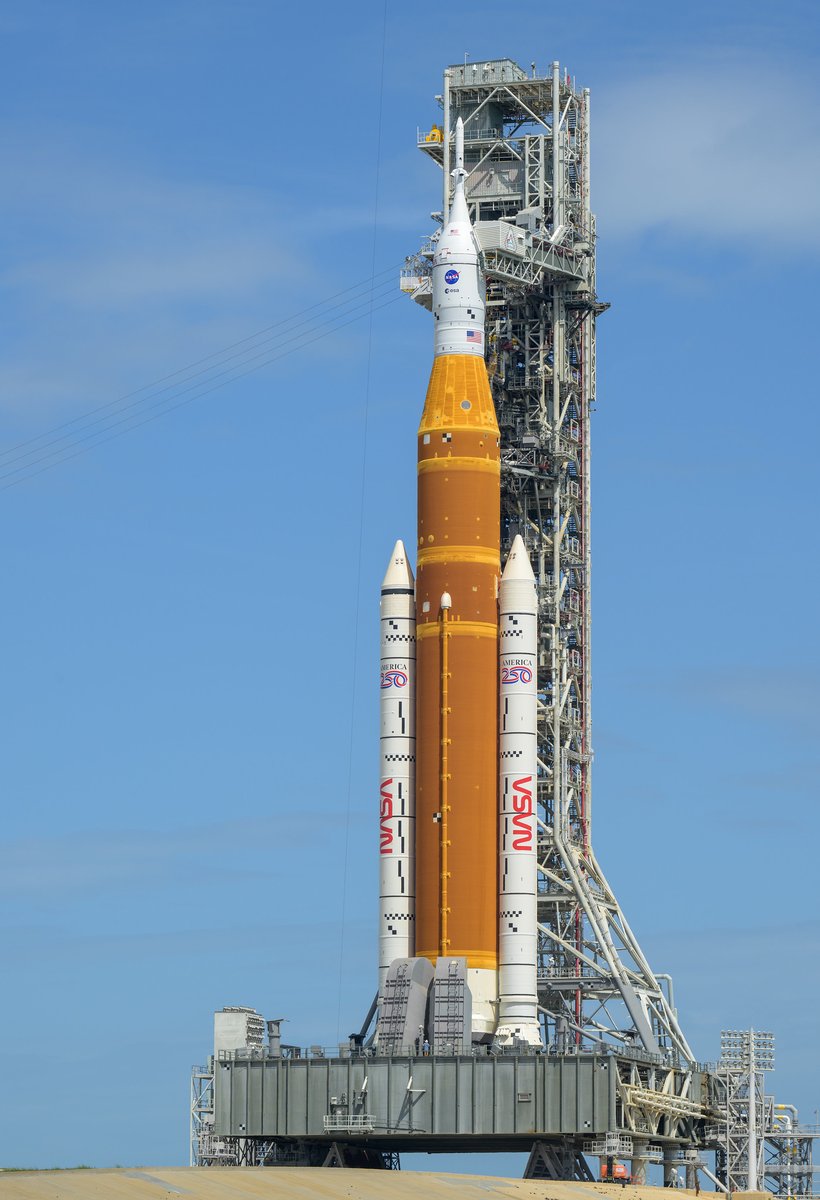
The countdown begins. Teams at @NASAKennedy have arrived to their stations at the Launch Control Center. We are about 48 hours from the launch of the Artemis II mission around the Moon. go.nasa.gov/4bHcwzx
NASA tweet media
English
1.9K
12K
51.7K
3.4M
MONIGORA retuiteado
NASA
NASA@NASA·
Action. Wonder. Adventure. Artemis II has got it all. Don't miss the moment. Our crewed Moon mission will launch as early as April 1. Learn how to watch: nasa.gov/ways-to-watch/
English
1.6K
9.5K
39.5K
7.1M
MONIGORA retuiteado
Night Sky Now
Night Sky Now@NightSkyNow·
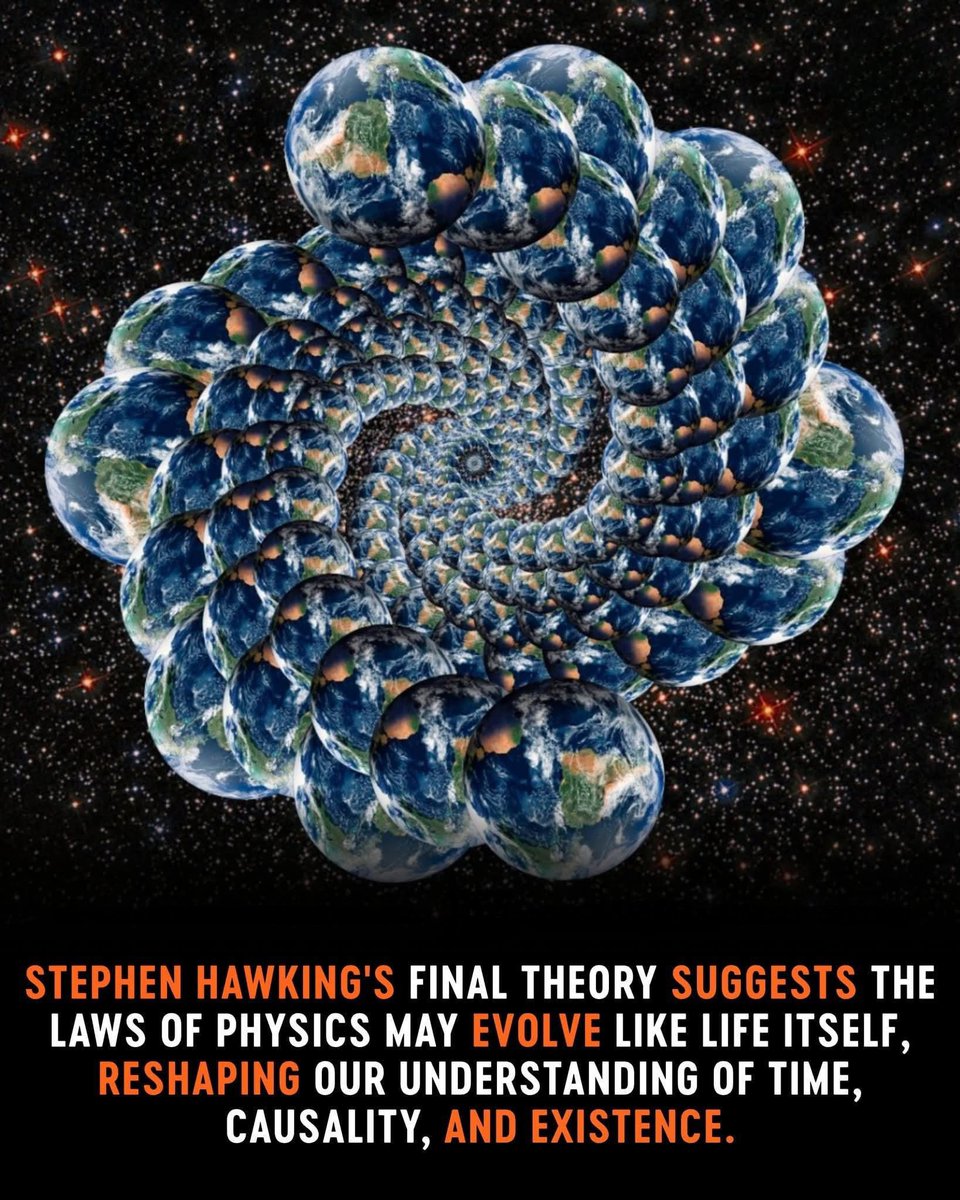
🔥 Stephen Hawking’s Final Theory Rewrites the Rules of the Cosmos In his final collaboration with physicist Thomas Hertog, Stephen Hawking proposed a bold new vision of the universe—one where the laws of physics are not fixed, but evolve much like life itself. This revolutionary idea reframes our cosmos as not a cosmic accident, but the outcome of a kind of “quantum Darwinism” in its earliest moments. For decades, scientists have puzzled over why our universe seems so finely tuned for life, where even the slightest change in physical constants could make existence impossible. While many turned to the multiverse for answers, Hawking found that explanation unsatisfying. Instead, he envisioned a “top-down cosmology,” in which quantum observations made today help shape and stabilize the physical laws of the past—turning our traditional sense of causality on its head. If future evidence from gravitational waves or quantum experiments supports this model, Hawking’s final theory could stand as his boldest legacy—redefining our understanding of time, causality, and the very fabric of existence. It reminds us that the universe is not just something to observe, but a mystery still unfolding. 📌 Source: Thomas Hertog, “Stephen Hawking’s Final Theory Turns Time and Causality Inside Out,” New Scientist (2023)
Night Sky Now tweet media
English
11
36
120
3.5K
MONIGORA retuiteado
NASA
NASA@NASA·
LIVE: Our Artemis II astronauts are answering media questions as they quarantine to prepare for their mission around the Moon, targeted to lift off as soon as April 1. twitter.com/i/broadcasts/1…
English
318
1.3K
4.7K
695.4K
MONIGORA retuiteado
CBS News
CBS News@CBSNews·
Artemis II astronauts say they're "ready to go" for moon launch ahead of 49-hour countdown cbsn.ws/412f19t
English
21
59
320
43K
MONIGORA retuiteado
DiscussingFilm
DiscussingFilm@DiscussingFilm·
First reactions to ‘THE DRAMA’, starring Robert Pattinson & Zendaya: “Zendaya & Robert Pattinson are dynamic & I'm obsessed with them together” — @popculturechlo “A wildly unconventional rom-com that hit all the right spots for me” — @ErikDavis “Will spark endless conversations once it comes out. Get ready for it…” — @dunesmessiah
DiscussingFilm tweet media
English
121
376
4.7K
478K
MONIGORA retuiteado
Night Sky Now
Night Sky Now@NightSkyNow·
James Webb just uncovered a serious problem with our understanding of the universe. New data from the James Webb Space Telescope confirms a major discrepancy in the universe's expansion rate, suggesting our current understanding of physics may be fundamentally incomplete. For years, astronomers have been caught in a tug-of-war over the "Hubble tension," a baffling disagreement between two methods of measuring how fast the universe is growing. While measurements of the early universe suggest one speed, observations of local stars suggest another. Many scientists hoped this gap was simply the result of measurement errors; however, new high-precision observations from the James Webb Space Telescope have now confirmed the discrepancy is undeniably real. By analyzing more than 1,000 pulsating stars across galaxies millions of light-years away, the telescope has validated previous findings and ruled out the possibility of technical glitches. This confirmation puts modern cosmology at a crossroads. If the math is right but the numbers do not match, it suggests that our standard model of the cosmos is missing a vital ingredient. This could mean the existence of unknown subatomic particles, a new form of dark energy, or a fundamental misunderstanding of how gravity behaves on a universal scale. As we continue to push the boundaries of space exploration, these results prove that the universe still guards secrets that may eventually force us to rewrite the textbooks on how reality itself is structured. source: Riess, A. G., et al. JWST Observations Reject Unrecognized Crowding of Cepheid Photometry as an Explanation for the Hubble Tension at 8σ Confidence. The Astrophysical Journal Letters.
Night Sky Now tweet media
English
24
74
240
8.9K
MONIGORA retuiteado
Black Hole
Black Hole@konstructivizm·
Our galaxy isn’t alone in the cosmos.The Milky Way and its largest neighbor, the Andromeda Galaxy (M31), are locked in a slow, inexorable gravitational dance—rushing toward each other at about 110 km/s (roughly 250,000 mph).Right now, from our vantage point on Earth, everything appears serene. Andromeda is still a faint, fuzzy smudge visible to the naked eye on dark nights, lying about 2.5 million light-years away.But the clock is ticking on a truly epic scale.In roughly 4–5 billion years, the two spiral giants are expected to begin their dramatic interaction—though recent 2025 research using the latest Gaia and Hubble data has introduced uncertainty: there's now about a 50/50 chance of a full merger within the next 10 billion years (with only a tiny ~2% probability of a close encounter in the next 4–5 billion years, factoring in influences from the Triangulum Galaxy and the Large Magellanic Cloud). If they do merge, the first close pass could happen around 4.5 billion years from now, with a full coalescence potentially taking longer—perhaps 7–8 billion years or more.Stars, vast as they are, will mostly pass harmlessly by one another—the immense distances between them ensure few actual stellar collisions. Instead, gravity will reshape everything: tidal forces will warp the elegant spiral arms into chaotic tidal tails, trigger bursts of new star formation, and eventually blend the two into a single, giant elliptical galaxy (sometimes playfully called "Milkomeda").Our night sky would transform utterly. Andromeda, once a distant whisper, would swell to dominate the heavens, its glowing arms stretching across the stars—before the merger scatters them into a diffuse, glowing blob.This cosmic slow-motion spectacle is already underway, unfolding on timescales far beyond any human lifetime or even the existence of our species.A reminder that the universe is dynamic, patient, and full of grand reunions. These stunning artist conceptions and simulations capture what that future merger might look like—from the dramatic approach to the swirling merger aftermath.The future of our galaxy? Not destruction... but transformation on a breathtaking, cosmic scale.
Black Hole tweet media
English
2
7
31
3.3K
MONIGORA retuiteado
Night Sky Now
Night Sky Now@NightSkyNow·
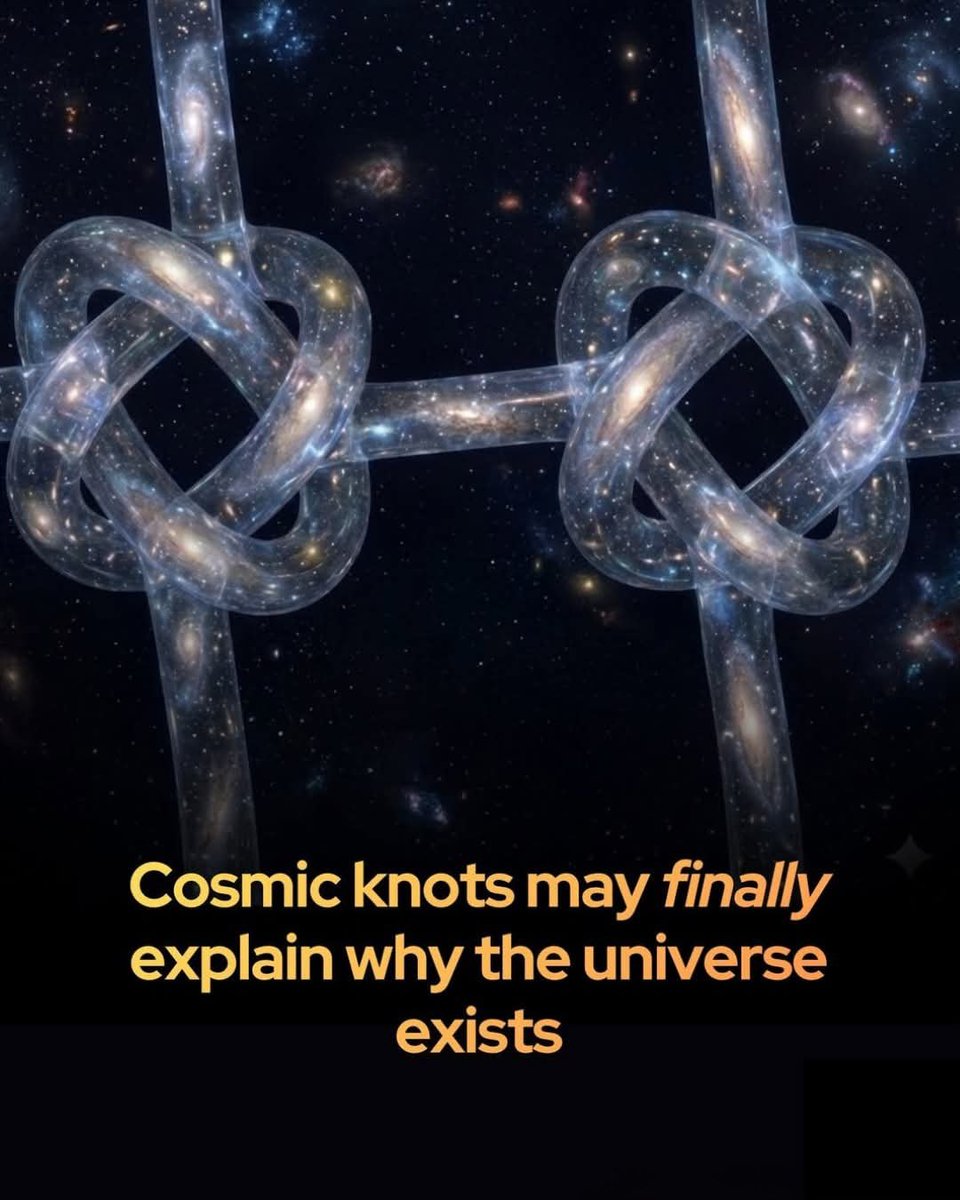
🚨 Scientists say the universe may exist because of cosmic knots. And the theory may have just tied together the biggest mysteries in physics. A daring new theory from a team of Japanese physicists suggests the universe may owe its very existence to cosmic knots—stable, high-energy loops of spacetime formed just after the Big Bang. These “knots” might hold the answer to one of the biggest mysteries in physics: why anything exists at all. According to current theory, matter and antimatter should have been created in equal amounts and annihilated each other. But a tiny imbalance—just one extra matter particle per billion pairs—tilted the scales and led to the universe we know. The new model explains that imbalance through an elegant interplay of two symmetries known as B–L and PQ, which together may have created these knotted structures in the early universe. As the universe expanded, the knots slowly unraveled via quantum tunneling, releasing heavy right-handed neutrinos—particles that decayed in a way that favored matter over antimatter. This process, called baryogenesis, could have seeded the matter-filled cosmos we see today. Even more exciting: this theory makes a testable prediction. The unravelling of cosmic knots would have produced a distinct gravitational wave signature—something future observatories like LISA and DECIGO might be able to detect. If confirmed, the theory could not only solve the mystery of why we exist, but also open a new chapter in fundamental physics. Source: Nakai, Y., et al. (2025). Tying Knots in Particle Physics. Physical Review Letters.
Night Sky Now tweet media
English
27
45
174
7.1K
MONIGORA retuiteado
TheNewPhysics
TheNewPhysics@CharlesMullins2·
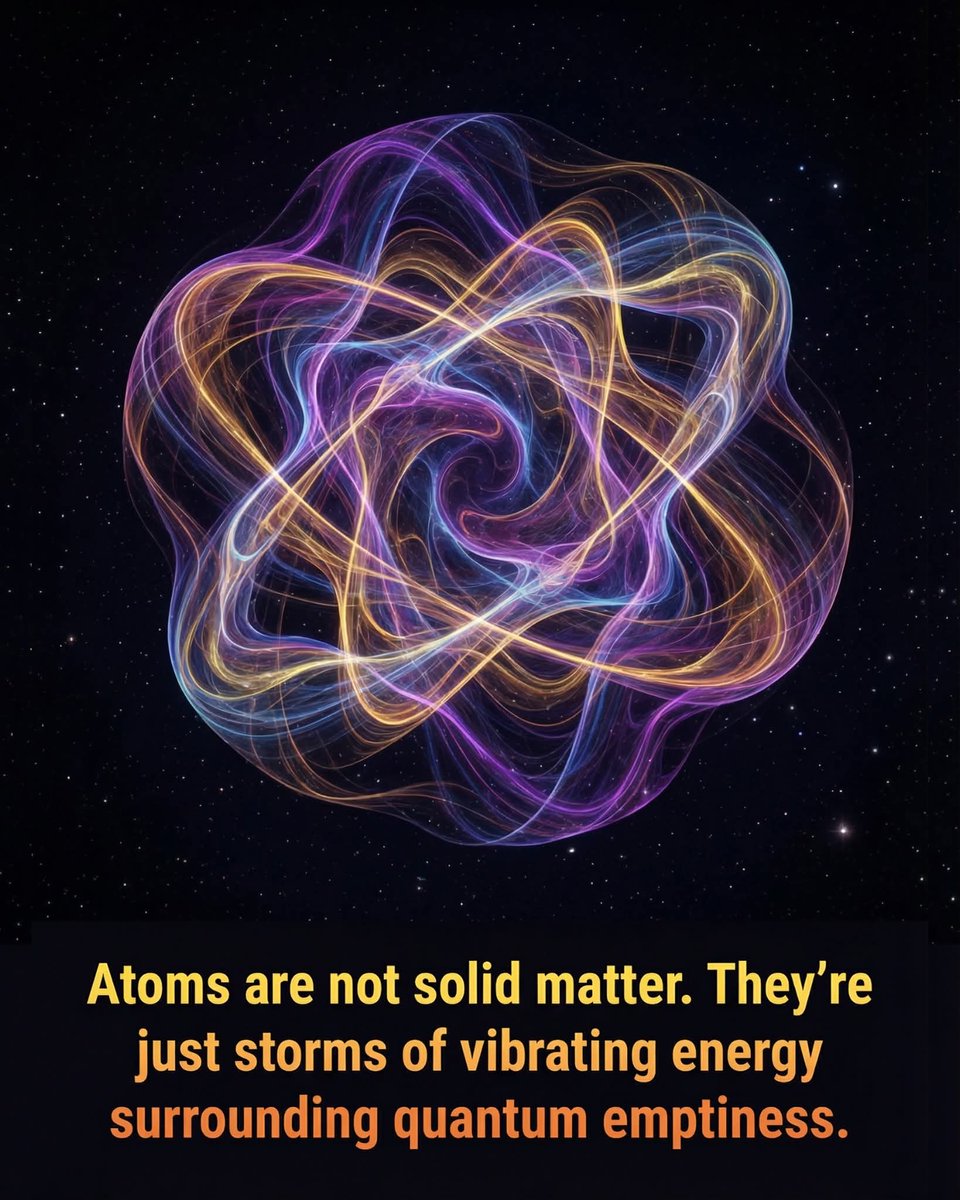
Quantum physics revealed something surprising about reality. Atoms are not tiny solid objects. They are mostly empty space filled with probability waves and energy fields. But what if there is an even deeper layer behind this? In my framework, these “energy storms” exist because time itself forms a geometric structure. Matter isn’t just particles sitting in space. Instead, particles emerge where the geometry of time becomes compressed or imbalanced, creating stable resonant patterns. What we call an electron or atom may simply be a localized standing wave in the structure of time. That would explain why matter behaves like both particles and waves. The “particle” is just the point where the probability wave stabilizes in the time-geometry of the universe. So when quantum physics says matter is mostly empty space, it may actually be telling us something deeper: Reality may not be made of solid objects at all. It may be made of structured patterns in the flow of time itself. If matter is just a stable resonance in the geometry of time… could the entire universe be a vast network of time-structured energy patterns? #QuantumPhysics #Spacetime #Cosmology #Physics #Science
English
3
8
20
1.5K
MONIGORA retuiteado
Night Sky Now
Night Sky Now@NightSkyNow·
🚨 Quantum physics shows that the solid world we perceive is actually made of energy lines, emptiness, and probability — not physical matter. For centuries, we have viewed the universe as a collection of solid objects, but quantum physics is dismantling that illusion. At the heart of every atom lies not a tiny, hard marble, but a swirling electric storm of probability and vibration. Scientists have proven that what we perceive as physical substance is actually a series of ghostlike force fields and resonant waves dancing in a vast, silent void. This fundamental shift in understanding suggests that the material world is less like a construction site of fixed parts and more like a complex symphony of energetic happenings. This discovery challenges our very sense of identity, suggesting that we are not solid beings inhabiting a solid world, but rather intricate patterns of energy echoing through space. If the foundation of reality is built on probability instead of substance, the boundaries between the observer and the observed begin to blur. We are part of a continuous, dynamic dance where nothing is truly static, reminding us that existence is an ongoing process of vibration rather than a collection of independent, inanimate things. source: Heisenberg, W. Physics and Philosophy: The Revolution in Modern Science. Harper & Row.
Night Sky Now tweet media
English
56
167
491
60.8K
MONIGORA retuiteado
Film Updates
Film Updates@FilmUpdates·
Anne Hathaway has been announced as a presenter at the next Oscars.
Film Updates tweet media
English
35
318
6.8K
118.3K
MONIGORA retuiteado
Chronos Intelligence
Chronos Intelligence@ChronosIntelX·
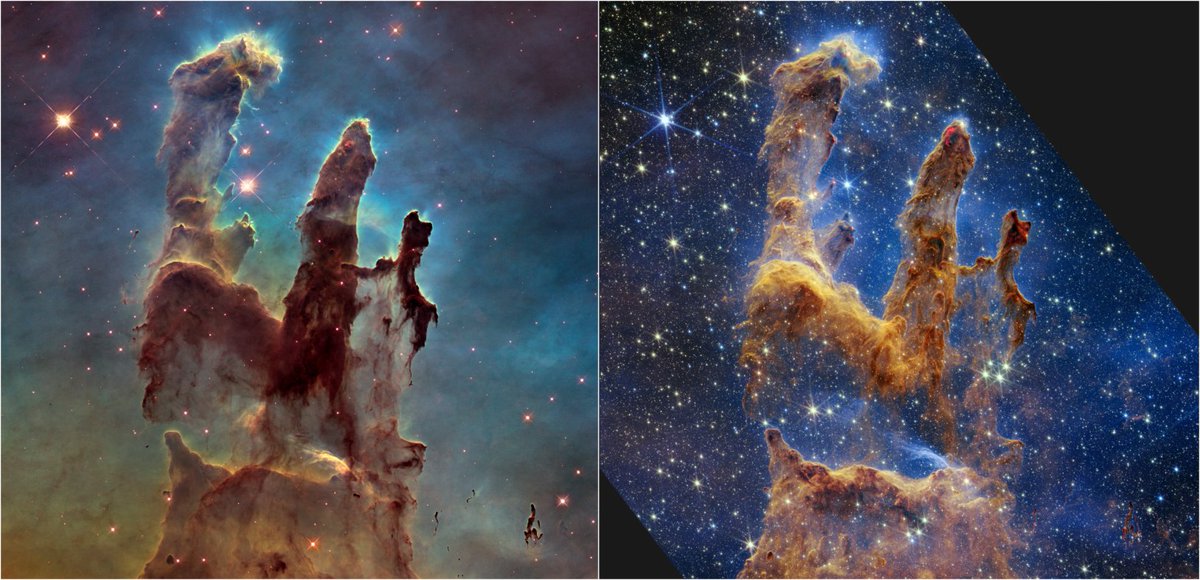
🔭 The Pillars of Creation are almost certainly already gone. They sit 6,500 light years away. What both telescopes captured is light that left before the Roman Empire existed. Astronomers estimate a nearby supernova destroyed the pillars roughly 6,000 years ago. The shockwave won't reach us for another 1,000 years. Every image ever taken of them including these is a photograph of something that no longer exists.
Chronos Intelligence tweet media
English
14
9
101
18.7K
MONIGORA retuiteado
NASA
NASA@NASA·
These pictures of the Pillars of Creation were taken 19 years apart by different telescopes, with each image capturing a unique perspective. On the left, @NASAHubble shows more thick dust. On the right, @NASAWebb peers through the dust to show more stars. Which is your favorite?
NASA tweet media
English
2.3K
7.2K
55.8K
3.3M
MONIGORA retuiteado
Black Hole
Black Hole@konstructivizm·
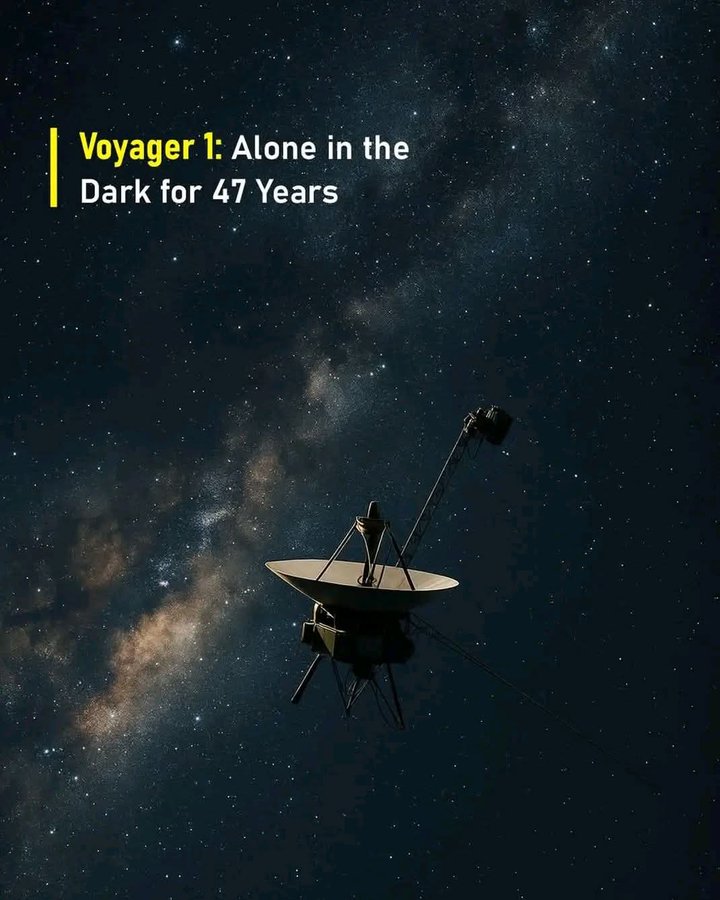
Right now, more than 24 billion kilometers from Earth, a tiny spacecraft is drifting through the darkness—Voyager 1, the most distant object we've ever sent into space. Launched in 1977, it's been traveling for nearly half a century, carrying with it a golden record filled with Earth’s sights, sounds, and greetings—just in case it meets intelligent life. No spacecraft has ever gone farther. No signal takes longer to reach us—over 22 hours just for a one-way message. Yet it still speaks to us. Voyager 1 is a silent witness to the vast unknown… a lonely ambassador of humanity, moving deeper into the stars. Just imagine: something we built is out there… forever exploring.
Black Hole tweet media
English
84
188
1.1K
88.3K
MONIGORA retuiteado
Massimo
Massimo@Rainmaker1973·
Gravitational lensing, illustrated [🎞️ thebrainmaze]
English
16
158
659
41.4K
MONIGORA retuiteado
Variety
Variety@Variety·
#AnneHathaway stayed “fully in character” on set of #TheOdyssey, even when the camera “wouldn’t see her for three days,” says co-star Logan Marshall-Green. “He is Christopher Nolan, and the second you are on set, you are working,” the #Marshalls star said. “I took my cues from actors who had worked with him, like Anne. Anne would be fully performing in character, and the camera wouldn’t even see her for three days in the one scene we’d be shooting. That all begins and ends with Chris, and what he demands of himself, so he expects it of others. I loved his process. I would do it in a heartbeat again.” wp.me/pc8uak-1lGXJs
Variety tweet media
English
18
106
2.1K
209.9K