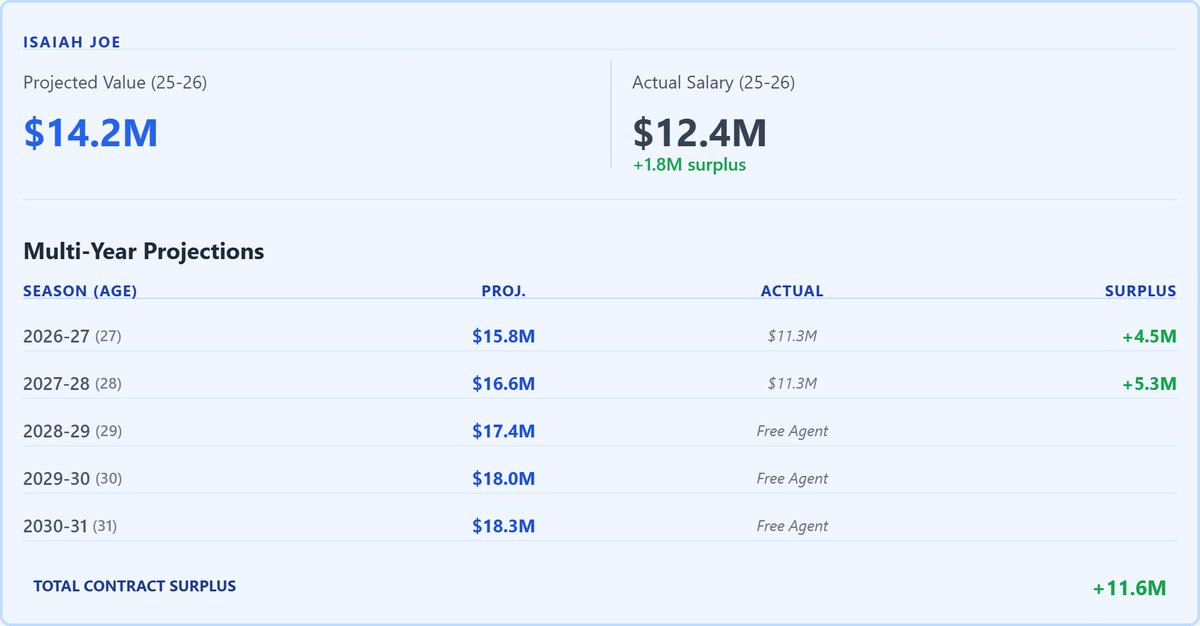
@rudyjuly2 @DoeJumars I dont think this happens, but could do a s&t centred around Stew (and likely Caris) to make it work cap-wise.
Just don't see Reeves wanting to come here
English
Aussiepiston
19.9K posts



Cap and Tax impacts for the Nets, Bulls and Wolves three-team trades: Brooklyn: $36.1M in projected cap space available Chicago: $32.5M in projected cap space available Minnesota: $43.8M under the luxury tax, create a $33.3M TPE



Just in: Minnesota is sending Julius Randle and the No. 28 pick in the NBA Draft to the Brooklyn Nets in a three-team trade that sends Nic Claxton to the Chicago Bulls, sources tell ESPN. The Timberwolves will acquire Brooklyn’s No. 33 pick for Randle and No. 28.


Anthony Davis and his camp have been seeking a max extension, and it’s plausible to consider him a potential trade candidate out of Washington, per @JakeLFischer The Portland Trail Blazers are a team expected to show interest. (Via @BleacherReport )
Amen Thompson is the only "near untouchable" player on the Rockets' roster, per @KellyIko. "Houston isn't actively shopping its All-Stars or other key members but are merely expressing more of a willingness to listen than at previous junctures."
Adjusting these figures slightly, as Young's new contract is reported to start at the 30% max amount of $49.5M: 26-27: $49.5M 27-28: $51.9M 28-29: $54.5M 29-30: $56.9M (player option) Total: $212.85M (matches what Young could have gotten from another team as a FA)