Rahul Kumar

7.7K posts

Rahul Kumar banner
Rahul Kumar

Rahul Kumar

@rahulkumarindia

International Relations, Journalism, NGOs II Fellowships: Chevening II RNTC II Reuters @IIMC_India @OfficialPU @Uniwestminster @MiddlesexUni

London II Delhi Se unió Eylül 2012
1.7K Siguiendo1.2K Seguidores
Rahul Kumar retuiteado
Tibetan Frontline
Tibetan Frontline@justice4_tibet·
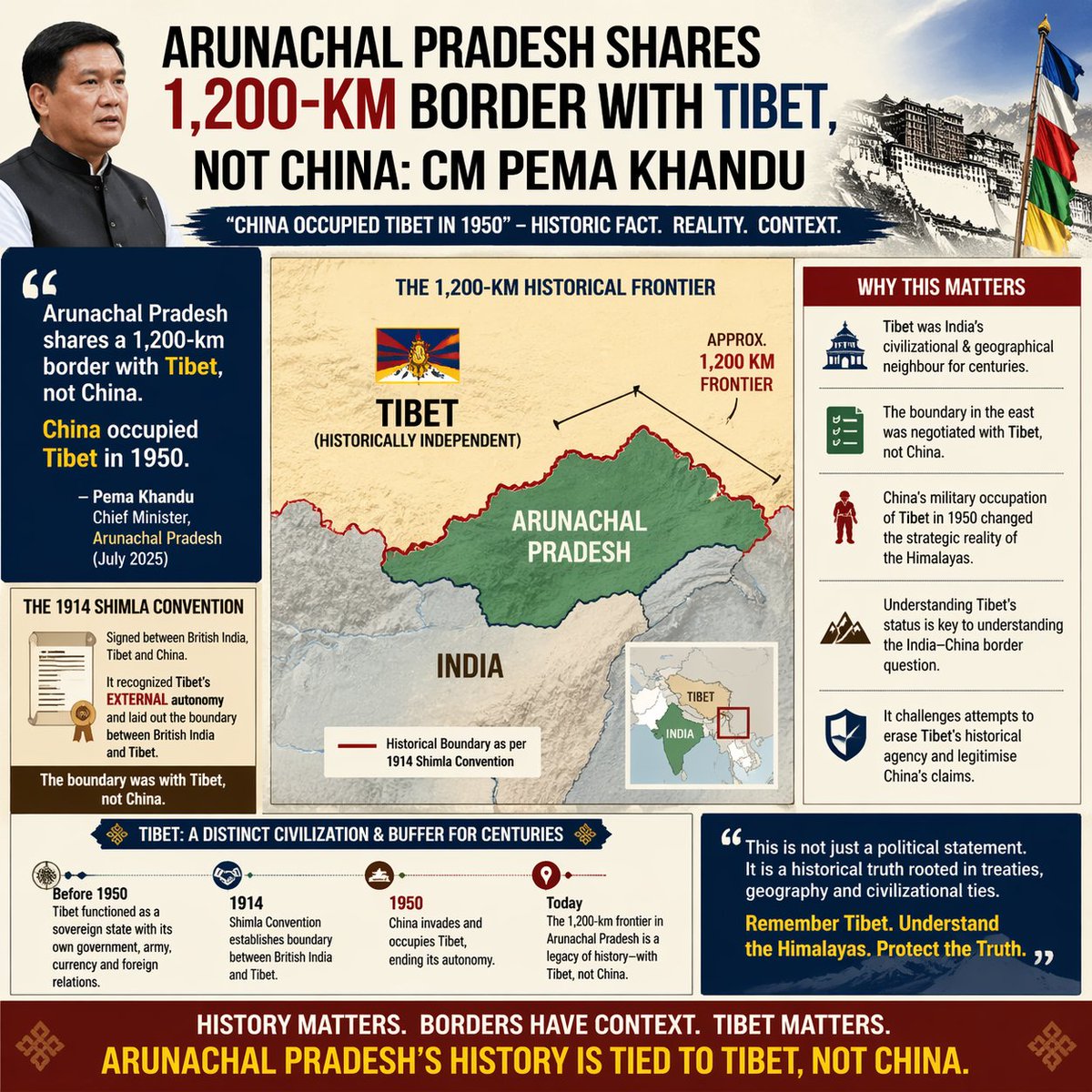
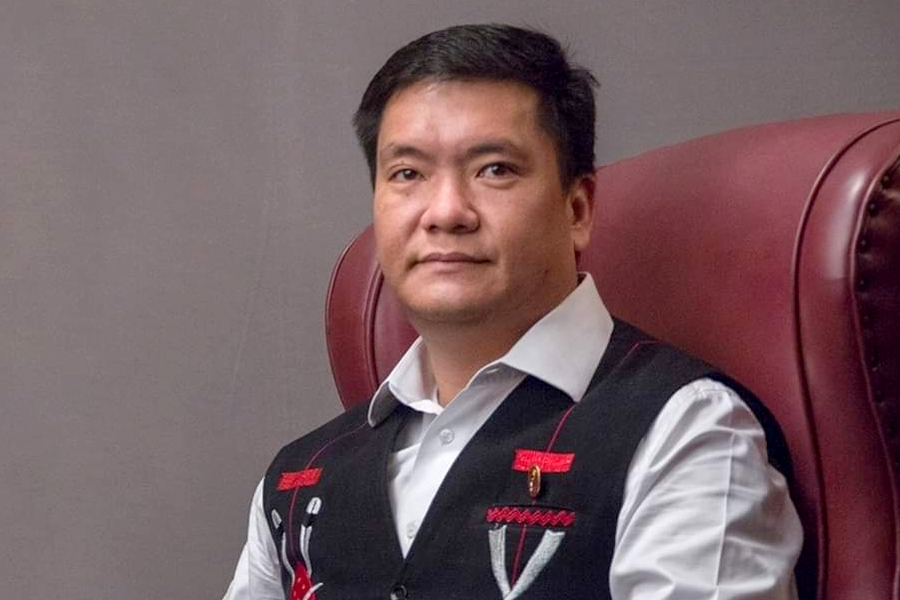
Arunachal Pradesh CM @PemaKhanduBJP’s July 2025 statement cuts to the heart of a deeper historical and geopolitical debate: India’s frontier in the eastern Himalayas was not originally with China, but with Tibet. Referring to the 1914 Shimla Convention, he underscored that the boundary was shaped in an era when Tibet functioned as the direct civilizational and geographic neighbour across this 1,200-km stretch. His remark that “China occupied Tibet in 1950” is not just political messaging; it is a reminder that today’s border tensions cannot be separated from Tibet’s lost autonomy and the transformation of the Himalayan frontier after Beijing’s takeover. This framing matters because it challenges Beijing’s effort to erase Tibet’s historical agency from the border question. It also highlights why Tibet remains central to understanding Arunachal Pradesh, the India-China dispute, and the wider struggle over history, sovereignty, and strategic narrative in the Himalayas. #ArunachalPradesh #Tibet #IndiaChinaBorder #PemaKhandu
Tibetan Frontline tweet media
English
11
276
766
12.1K
Rahul Kumar retuiteado
Dr. Brahma Chellaney
Dr. Brahma Chellaney@Chellaney·
Operation Sindoor: Tactical Success, Strategic Drift On the first anniversary of the Pahalgam massacre of tourists, Prime Minister Modi’s response to the terrorist attack is back in the spotlight. The massacre inflamed public passions in India. For the first time, the political opposition united in demanding action against Pakistan, the longstanding sponsor of cross-border terrorism. This public pressure may have forced Modi’s hand, helping to overcome his longstanding aversion to armed conflict. What followed was extraordinary: For almost 15 days, Modi effectively signaled India’s intent by holding widely publicized, near-daily meetings with the chiefs of the three military services, giving Pakistan ample time to largely empty its terrorist-training camps and prepare to mount military reprisals against looming Indian strikes. India’s short-lived military campaign, “Operation Sindoor” (May 7–10, 2025), was no less extraordinary. Instead of allowing the Indian Air Force to first neutralize the enemy’s air defenses — in keeping with the first principle of air warfare — the political leadership ordered strikes only on largely empty terrorist camps. The result, as India’s chief of defense staff later acknowledged, was the avoidable initial loss of aircraft — a “mistake,” as he put it, that was only “rectified” on the third and final day of the operation, when the government at last authorized strikes on the adversary’s air defenses and bases. But no sooner had the Indian Air Force devastated Pakistan’s air defenses and bases, stretching from north to south, than President Trump — not New Delhi — announced a ceasefire. (India’s own announcement came 90 minutes after the truce had already taken effect.) In short, the operation delivered major blows and shattered Pakistan’s sense of immunity under its nuclear umbrella, achieving a tactical success. But the tactical success did not translate into a strategic victory, because the political leadership had defined no clear strategic objective. Worse, it abruptly accepted the ceasefire, apparently under Washington’s persuasion, which helps explain why Trump announced it. All this allowed the Pakistani military not only to rehabilitate its damaged standing at home but also to stage what amounted to a constitutional coup. Pakistan, moreover, strengthened its ties with Washington. By contrast, the past year has been among the most difficult in U.S.-India relations.
English
52
98
417
64.1K
Rahul Kumar retuiteado
Parthu Potluri
Parthu Potluri@Parthu_Potluri·
Brilliant piece written in Nuclear Engineering International (NEI) magazine regarding the PFBR. Here's some excerpts dealing with the challenges of this program: "...The 2004 Indian Ocean tsunami that struck the Kalpakkam site shortly after construction began required a re-evaluation of safety features and protective structures..." "India’s PFBR is a pool-type reactor. In this design, the entire primary circuit (the core, pumps, and intermediate heat exchangers) is housed inside a single massive stainless steel main vessel filled with liquid sodium. Fabricating a vessel of that size (nearly 13 metres wide) to hold 1,150 tonnes of sodium at high temperatures while ensuring it could withstand seismic activity was a massive hurdle for Indian industry. Because of India’s historical position outside the Nuclear Non-Proliferation Treaty (NPT), there was very little sharing of technical “know-how” from Russia or the West for the PFBR. India’s exclusion from the NPT also led to international trade bans, making it difficult to procure high-end nuclear components and technology. India had to develop its own materials, such as specific grades of stainless steel (316LN) that could survive 40 years of sodium exposure without corroding or becoming brittle. Every component – from the sodium pumps to the steam generators – had to be designed and manufactured by Indian companies (such as L&T and BHEL) for the first time. India also had to integrated post-Fukushima safety requirements into a breeder design. Handling liquid sodium is extremely complex as it reacts violently with air and water. Significant setbacks occurred during the commissioning of sodium pumps and secondary cooling systems. There were also persistent difficulties in producing the mixed oxide (mox) fuel elements required for the core. Despite these difficulties, India’s nuclear programme is progressing. Currently India has a fleet of 18-20 pressurised heavy water reactors (PHWRs) that use natural uranium as fuel and produce plutonium-239 (Pu-239) as a by-product in used fuel – the first stage of the programme. With criticality of the PFBR it is now embarking on stage two." neimagazine.com/news/criticali…
English
4
192
620
63.7K
Rahul Kumar retuiteado
Prakash Dadlani
Prakash Dadlani@prakdadlani·
I’m living it. Seeing it. Feeling it. The buzz around "Indianising" is getting louder every single day. 🔥🇮🇳 And I’m LOVING IT 🥰 GOI is rolling out policies to push it forward, but MORE importantly, my Desis actually WANT it to happen. In DMs, on calls, and in meetings I see the next generation genuinely pushing to manufacture, even when it’s fu*king tough. The biggest shift? IT experts are becoming hardware experts. 🛠️ There is a new PRIDE to BUILDING it right here in BHARAT. This is the moment for a real movement. We either Make it in Bharat… or we COMPLETELY SURRENDER to Imports 🇨🇳 The choice is OURS. JAI HIND JAI BHARAT 🇮🇳
English
8
24
161
3.8K
Rahul Kumar retuiteado
India Plus
India Plus@india_plus_·
🚨 Arunachal Pradesh CM Pema Khandu says India shares a border with Tibet, not directly with China, and says China occupied Tibet in 1950 follow @india_plus_
India Plus tweet mediaIndia Plus tweet mediaIndia Plus tweet media
English
120
2K
14.8K
204.2K
Rahul Kumar retuiteado
India & The World
India & The World@IndianInfoGuid·
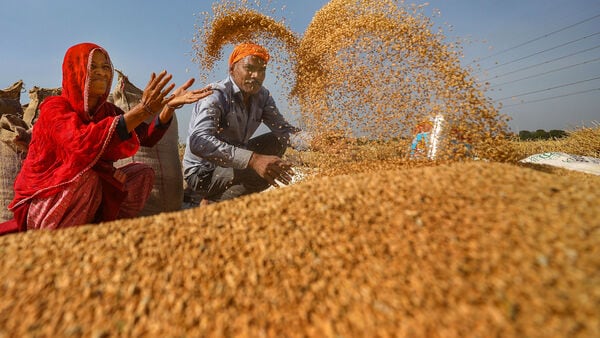
🚨 India lifted nearly four-year old ban on wheat exports. - Egypt, Indonesia, Myanmar and Bangladesh have envisaged interest in importing wheat
India & The World tweet media
English
4
34
397
3.5K
Rahul Kumar retuiteado
Sidhant Sibal
Sidhant Sibal@sidhant·
Nepal PM Balen Shah’s India Visit to Feature New Projects, MOUs and Foundation Stones, Says Nepal Envoy Sharma @DrShankarSharma Interview
English
11
75
968
45.2K
Rahul Kumar retuiteado
𝖇 𝖗 𝖚 𝖙 𝖚
𝖇 𝖗 𝖚 𝖙 𝖚@Brutu24·
Golden Clove award is an online poll conducted by Manorama in Kerala to reward the best restaurant. People can go and vote online. This year a Keralite Sardar has won the award. His Restaurant SETHI DA DHABA voted as best restaurant in Keralam
English
136
426
3.2K
1.1M
Rahul Kumar retuiteado
BBC World Service
BBC World Service@bbcworldservice·
This hospital at the centre of a child HIV outbreak in Pakistan is caught reusing syringes in a BBC investigation. 📺 Watch the full documentary on our YouTube channel: youtu.be/Ro_5qE8IYog
YouTube video
YouTube
English
454
4.1K
6.9K
865.9K
Rahul Kumar retuiteado
Shabana Mahmood MP
Shabana Mahmood MP@ShabanaMahmood·
Anyone abusing protections for people fleeing persecution over gender or sexual orientation is beyond contempt. Let me be clear: try to defraud the British people to enter or remain in the UK and your asylum claim will be refused, your support cut off, and you will find yourself on a one-way flight out of Britain. Sham lawyers facilitating this abuse will face the full force of the law. With them behind bars, their dirty money will be seized and reinvested to shut down the crime they once bankrolled. bbc.co.uk/news/articles/…
English
2.5K
338
2K
406.4K
Rahul Kumar retuiteado
Jabin T Jacob  鄭嘉賓
Jabin T Jacob 鄭嘉賓@jabinjacobt·
I thoroughly enjoyed this interview with @RohanV on the state of India-China relations, today. I make the following points: - reset? What reset? Problems are structural and not going anywhere scroll.in/article/109197… 1/n
English
1
15
36
3.3K
Rahul Kumar retuiteado
UK in India🇬🇧🇮🇳
UK in India🇬🇧🇮🇳@UKinIndia·
From cutting-edge AI in disease detection to next-gen vaccines, the UK-India health partnership is building new pathways to tackle global health threats. Watch how 👇
English
1
8
42
3.1K
Rahul Kumar retuiteado
Randhir Jaiswal
Randhir Jaiswal@MEAIndia·
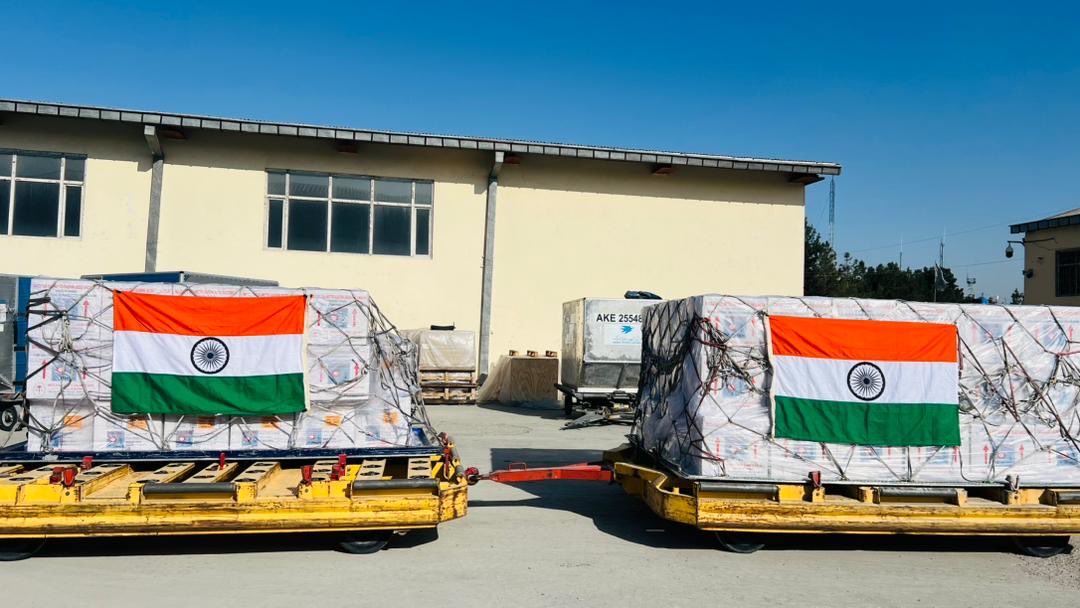
India delivers 13 tons of BCG vaccines and related dry material to @MoPH_afg to augment Afghanistan’s child immunization programme against tuberculosis. @WHO @UNICEF
Randhir Jaiswal tweet media
English
117
694
4.1K
80.7K