Nikhil sinha

1K posts

Nikhil sinha banner
Nikhil sinha

Nikhil sinha

@sinhaniik

SDE-1 @claimzippy → DevOps | Learning DevOps in Public | Docker • AWS • Linux • CI/CD | Real journey + mistakes | Open to DevOps roles (Remote/BLR)

Bengaluru , India Se unió Şubat 2020
12 Siguiendo42 Seguidores
Tweet fijado
Nikhil sinha
Nikhil sinha@sinhaniik·
This month is chaotic. • Resigned from my job • Started creating content on X (late, but better late than never • Moving from SDE → DevOps/SRE officially • Leaving Bangalore after 2 years Funny how life works. Sometimes many things have to go wrong before the right thing starts taking shape. People know me as an SDE. But behind the scenes, for ~1.5 years, I’ve been doing deployments, fixing VA points, handling infra-related work, and slowly moving closer to DevOps without realizing it. Looking for opportunities in DevOps / SRE. If you're in DevOps, SRE, Cloud, or Backend — let’s connect. New journey starts today.
Nikhil sinha tweet media
English
1
0
2
350
Thais Castello Branco
Thais Castello Branco@thaiscbranco_·
We’re excited to introduce Taste Labs. Our mission is to end AI slop. We’re building the data and infrastructure layer to give AI models and agents taste. And today we’re coming out of stealth, announcing our $18.5M seed funding, co-led by @CRV and @AmplifyPartners AI has nailed objective domains and made it easy to generate anything. But it still feels off. Now, the challenge is judgement. What fits, what feels like you, what’s GREAT. This requires turning a fuzzy, subjective domain into something we can measure and codify. We’re starting with design. There are two sides to cracking this, the foundation model layer and the agent layer: - We’ve already been working with the top frontier labs to evaluate and improve their models, crafting the right post-training data and RL environments. - We’ve also been working with app-layer companies to build the context and verification tools for their agents to produce better, more on-brand, more creative outputs. We want a future where AI feels right. If you’re passionate about this mission, join us!
English
360
150
2.5K
960.6K
Nikhil sinha
Nikhil sinha@sinhaniik·
DeepSeek is proving that AI leadership isn’t reserved for Silicon Valley. While many chased closed ecosystems, DeepSeek bet on open-source research, long-term AGI work, and domestic innovation. A $50B valuation, a founder who kept control, and models that push the frontier despite chip restrictions. China isn’t just catching up in AI anymore. It’s building its own path.
English
0
0
1
2
Rohan Paul
Rohan Paul@rohanpaul_ai·
DeepSeek takes the crown as China’s most valuable AI startup after a massive $7.4B raise at a $50B valuation. The unusual part is control: Liang Wenfeng, DeepSeek’s founder, held almost 90% of the company before the financing and invested around $3 B as the biggest contributor. DeepSeek’s bet is to keep pushing open-source models and AGI research, while also helping domestic chipmakers such as Huawei run powerful models despite U.S. chip limits. Other top disclosed investors : Tencent: about $1.5B CATL: about $740M China’s National Artificial Intelligence Industry Investment Fund: about $150M
Rohan Paul tweet mediaRohan Paul tweet media
English
5
13
96
7.7K
Nikhil sinha
Nikhil sinha@sinhaniik·
First time using Composer 2.5, and I'm impressed. I've been using Codex 5.5 for a while, but surprisingly, Composer feels better for planning, architecture, and keeping context across larger tasks.
Nikhil sinha tweet media
English
0
0
1
4
Nikhil sinha
Nikhil sinha@sinhaniik·
@T3chFalcon First we wrote code. Then we reviewed code. Soon we'll mostly supervise code. Origin isn't competing with GitHub. It's competing with the assumption that humans are the primary producers of software.
English
0
0
0
1
IT Guy
IT Guy@T3chFalcon·
2023: Cursor launches. a VS Code fork with AI autocomplete. 2025: Cursor acquires Graphite. a code review startup. 2026: Cursor launches Origin. git hosting. a direct GitHub competitor. also 2026: SpaceX acquires Cursor through xAI. three years. VS Code plugin to GitHub competitor owned by Elon Musk. the pitch for Origin is genuinely interesting: GitHub was built for humans. Origin is built for agents. the demo showed 22.6 commits per second inside one repo. hundreds of thousands of clones and pushes per hour. because the assumption is that soon it won't be one developer committing code. it'll be hundreds of AI agents committing in parallel, branching, merging, and fixing failures simultaneously. Someone online said: "Cursor needs your code to train their models." You write code in Cursor. Cursor hosts it on Origin. Cursor owns a frontier AI model trained on code. Your code is now the training data for the AI that is replacing you. Microsoft owns GitHub. Microsoft owns the code of hundreds of millions of developers. SpaceX now owns Cursor. SpaceX now wants the code of hundreds of millions of developers.
Polymarket@Polymarket

JUST IN: Cursor unveils “Origin,” a new code storage & git hosting platform built to take on GitHub.

English
5
10
109
11K
Nikhil sinha
Nikhil sinha@sinhaniik·
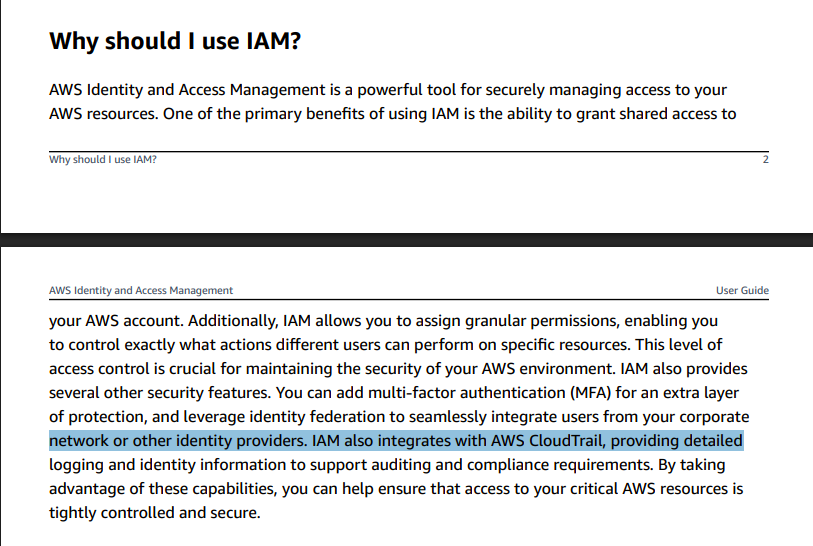
started my day with a good read
Nikhil sinha tweet media
English
0
0
1
20
Nikhil sinha
Nikhil sinha@sinhaniik·
June 16 - 26 Done for the day kinda good day i would say started AWS, i have already worked with AWS but i never got the chance to deep dive into concepts and “why” and behind the code what is happening and all services and all if you are also on the same journey consider follow you will not regrets this i promise good night
English
0
0
1
14
Nikhil sinha
Nikhil sinha@sinhaniik·
@ns123abc The AI problem is no longer intelligence. It's economics.
English
0
0
0
2
NIK
NIK@ns123abc·
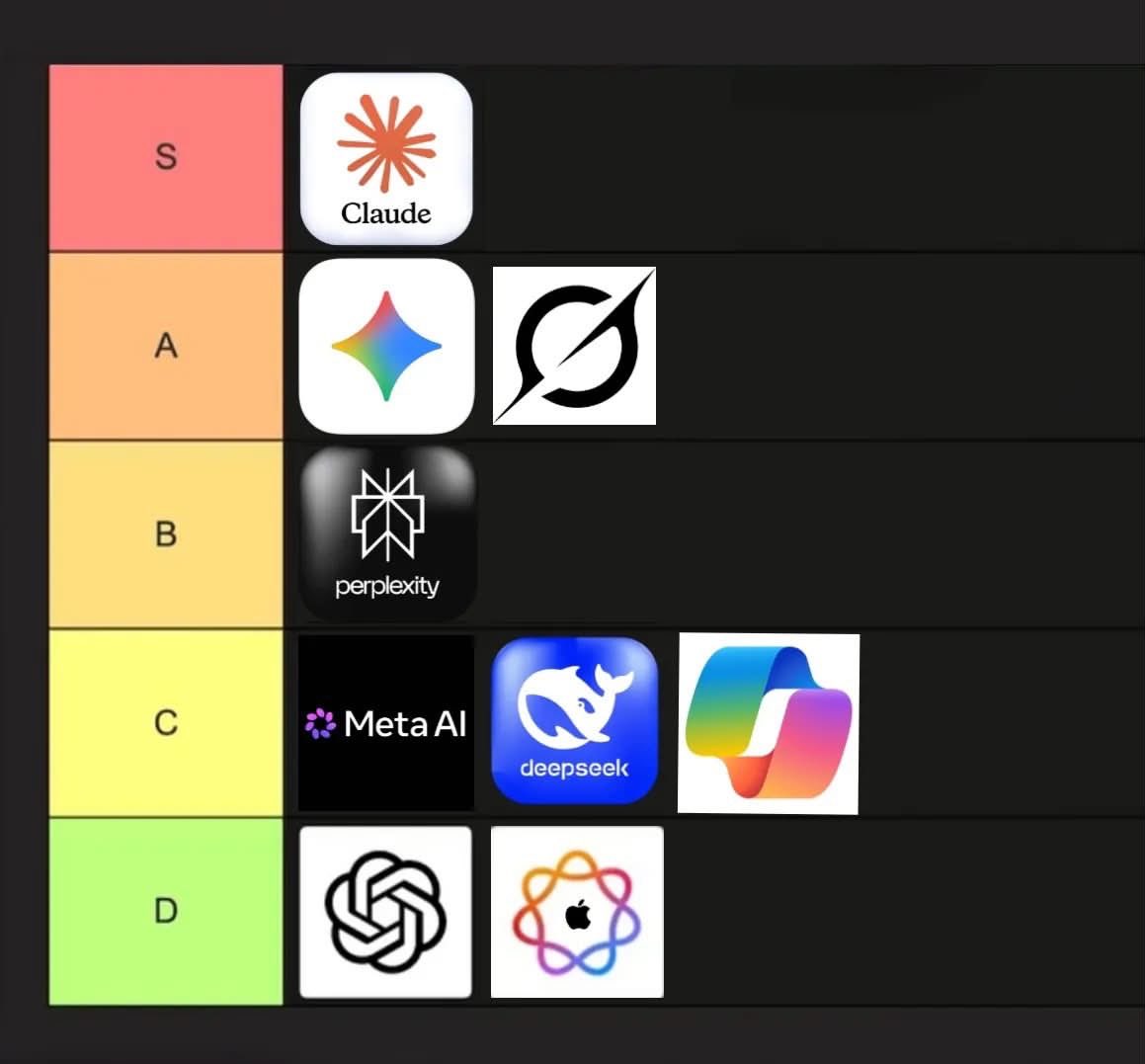
BREAKING: Microsoft exploring DeepSeek over OpenAI and Anthropic as Copilot Cowork moves to usage-based pricing “We have users who do hundreds of tasks a week… the consequence is the costs can go very high...” Jevons paradox
NIK tweet mediaNIK tweet mediaNIK tweet media
English
162
246
2.5K
470.2K
Nikhil sinha
Nikhil sinha@sinhaniik·
Many beginners who are trying to learn AWS, this page either does not make sense to them or they are way too scared to fill in their billing details. Because somewhere they heard: *"AWS charged me $100."* But that's usually not how it works. When creating an AWS account, AWS asks for a debit/credit card mainly for identity verification and to prevent abuse (people creating hundreds of accounts). A few things to keep in mind: • AWS may place a small temporary verification charge (often around $1 or local currency equivalent) and later reverse it. • AWS does not instantly start draining money from your card the moment you add it. • The card is there to verify you're a legitimate user. • If you stay within the Free Tier limits, you typically won't be charged for eligible services. • The real danger isn't adding the card — it's launching resources and forgetting to monitor them. The lesson: Don't fear the billing page. Understand the billing model. Cloud is expensive when you're careless, not when you're learning. #AWS
Nikhil sinha tweet media
English
0
0
1
17
Nikhil sinha
Nikhil sinha@sinhaniik·
Before AWS: 🏢 Buy servers ⚡ Manage power & cooling 🔧 Rack and configure hardware 💰 Pay upfront ⏳ Wait weeks or months to scale 1998 → Virtualization arrives 2006 → AWS turns infrastructure into an on-demand service Cloud didn't replace servers. It changed who manages them.
Nikhil sinha tweet media
Nikhil sinha@sinhaniik

Before AWS or any kind of public cloud, how did companies run applications? A brief history lesson (i promise i wont be boring) The old way was physical servers. If a company wanted to host an application, it had to buy actual hardware from vendors like IBM, HP, Dell, Cisco, etc., and place those machines inside its own data center. A data center wasn't just a room full of computers. It needed: • Servers • Network switches and routers • Cooling systems • Power backup (UPS, generators) • Fire suppression systems • Physical security • Dedicated operations teams The biggest problem? Servers were expensive and horribly underutilized. Imagine buying a server with 100 GB RAM and 100 CPU units. Your application only needs 1 GB RAM and 1 CPU unit. That means: Used: - 1% CPU - 1% Memory Idle: - 99% CPU - 99% Memory You've already paid for the entire machine, but most of it sits doing nothing. Now multiply that by: • 15 servers • 200 servers • 2,000 servers The waste becomes enormous. And it gets worse. Companies had to estimate future demand months in advance. If traffic suddenly increased: → Buy new hardware → Wait for procurement → Rack and cable servers → Configure networking → Deploy applications This could take weeks or even months. So most organizations overprovisioned infrastructure "just in case," creating even more waste. Then virtualization changed everything. Instead of one application per physical server, hypervisors allowed multiple virtual machines to share the same hardware safely. A single server could now host many workloads. Utilization improved dramatically. Public cloud providers like AWS took this idea to internet scale. Instead of buying servers: • Rent compute by the hour/second • Scale up in minutes • Pay only for what you use • Let AWS manage the hardware, power, cooling, and facilities Cloud wasn't just about renting servers. It was a solution to decades of underutilized hardware, slow provisioning, and massive capital expenditure. Understanding this history makes AWS, EC2, containers, and Kubernetes much easier to appreciate. Cloud is not magic. It's the evolution of infrastructure economics. #AWS

English
0
0
1
25
Nikhil sinha
Nikhil sinha@sinhaniik·
in grok now you can access cursor's composer
Nikhil sinha tweet media
English
0
0
1
12
Devaansh Bhandari
Devaansh Bhandari@ThisIsBhandari·
Joining a pre-seed startup taught me more than any FAANG job. I wasn't just writing code. I was constantly talking to users. We shipped features every 2–3 days. I once spent hours perfecting drag and resize functionality for an analytics dashboard because I was convinced users would find it useful. Almost nobody touched it. That taught me a lesson I'll never forget: Customers don't care how cool a feature is. They care whether it solves their problem. Building products, getting feedback, and seeing real usage patterns taught me that product development is as much about deciding what not to build as it is about deciding what to build. That lesson alone made me a much better engineer.
English
2
0
31
1.3K
Nikhil sinha
Nikhil sinha@sinhaniik·
Before AWS or any kind of public cloud, how did companies run applications? A brief history lesson (i promise i wont be boring) The old way was physical servers. If a company wanted to host an application, it had to buy actual hardware from vendors like IBM, HP, Dell, Cisco, etc., and place those machines inside its own data center. A data center wasn't just a room full of computers. It needed: • Servers • Network switches and routers • Cooling systems • Power backup (UPS, generators) • Fire suppression systems • Physical security • Dedicated operations teams The biggest problem? Servers were expensive and horribly underutilized. Imagine buying a server with 100 GB RAM and 100 CPU units. Your application only needs 1 GB RAM and 1 CPU unit. That means: Used: - 1% CPU - 1% Memory Idle: - 99% CPU - 99% Memory You've already paid for the entire machine, but most of it sits doing nothing. Now multiply that by: • 15 servers • 200 servers • 2,000 servers The waste becomes enormous. And it gets worse. Companies had to estimate future demand months in advance. If traffic suddenly increased: → Buy new hardware → Wait for procurement → Rack and cable servers → Configure networking → Deploy applications This could take weeks or even months. So most organizations overprovisioned infrastructure "just in case," creating even more waste. Then virtualization changed everything. Instead of one application per physical server, hypervisors allowed multiple virtual machines to share the same hardware safely. A single server could now host many workloads. Utilization improved dramatically. Public cloud providers like AWS took this idea to internet scale. Instead of buying servers: • Rent compute by the hour/second • Scale up in minutes • Pay only for what you use • Let AWS manage the hardware, power, cooling, and facilities Cloud wasn't just about renting servers. It was a solution to decades of underutilized hardware, slow provisioning, and massive capital expenditure. Understanding this history makes AWS, EC2, containers, and Kubernetes much easier to appreciate. Cloud is not magic. It's the evolution of infrastructure economics. #AWS
English
0
0
1
39
Nikhil sinha
Nikhil sinha@sinhaniik·
@benjamin_horne We're in a weird phase where AI feels less like a power tool and more like management. You spend less time writing code and more time reviewing, steering, validating, and correcting. Output goes up, but craftsmanship goes down. Productive? Usually. Satisfying? Not always.
English
0
0
1
7
Ben Horne
Ben Horne@benjamin_horne·
The shittiest thing about AI as a SWE is that while it's not the 10x nitro-boost that all the AI hypebeast grifters on here claim it is, it *is* a net ~30% productivity gain (once you factor in all the review, code slop clean up, etc.), which is *just* enough of a boost where you cannot justify not using it. This is a letdown because using AI after years of learning to code without it is of course an ongoing humiliation ritual, (counterintuitively) *more* exhausting/draining than coding by hand, and way less enjoyable in general.
English
104
117
2.7K
179.9K
Nikhil sinha
Nikhil sinha@sinhaniik·
Interesting pattern: most AI tools are racing to improve the model, but the real unlock is reducing context-switching. Browser + files + terminal in one workflow means fewer "copy this here, paste that there" loops. The productivity gain isn't any single feature—it's keeping the agent inside the same environment from idea → inspection → edit → execution.
English
0
0
1
4
Julius
Julius@jullerino·
Desktop app has fallen a bit behind over the last few weeks as I've focused on infra and other behind the scenes stuff (more on that soon), but spent some tokens getting some new stuff in, including: - In-app browser: Including annotation tools, drawings, screenshots/screenrecordings. Your agent has full context and control over it, just tell it what you wanna do - Works seamlessly with `serve-sim` for iOS development. - Or use it to look at your HTML plans - File Explorer, Viewer and Light-weight Editor. Great for small tiny edits you don't feel like throwing tokens at (still a bit buggy, will improve it over time) - Full sized terminals w/ vertical splits Will polish these up on nightly before pushing to latest later in the week. Enjoy!
English
48
16
737
89.5K
Nikhil sinha
Nikhil sinha@sinhaniik·
Done with CI/CD (for now) Starting my AWS journey from scratch today I'll be sharing what I learn, building projects, documenting mistakes, and growing in public. If you're learning Cloud, DevOps, or AWS, follow along. It should be an interesting journey. ☁️🚀 #AWS
English
0
0
1
41
VL Luffy 👑
VL Luffy 👑@LuffyVL_56·
One piece Elbaph arc takes over Time Square
VL Luffy 👑 tweet media
English
119
1.5K
19K
171.5K
Nikhil sinha
Nikhil sinha@sinhaniik·
@pewpiece things about to get heated, you are not ready for whats coming
English
0
0
1
13
Pew
Pew@pewpiece·
First look at Harald in onepiece anime
Pew tweet media
English
43
273
8.6K
212.5K