Joe Skeaping

49.2K posts

Joe Skeaping banner
Joe Skeaping

Joe Skeaping

@JSkeaping

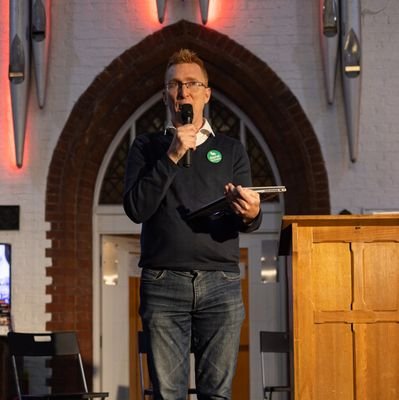
Chair @BHGreens | teacher of history and critical thinking | he/him | One must imagine Sisyphus happy

Inscrit le Ekim 2015
6.8K Abonnements7K Abonnés
Tweet épinglé
Joe Skeaping
Joe Skeaping@JSkeaping·
Time for me to check out of here. Thanks to everyone who made this website a space where, for a time, elites were exposed and new ideas flourished. I guess that's why it had to be taken over by a man-child and enshittified along with the rest of the Internet. Take care x
English
6
1
45
2.5K
Joe Skeaping
Joe Skeaping@JSkeaping·
This is Zombie Blairism: wannabe political strategists who just assume that politics hasn't shifted in any way since the "long 1990s", amd refuse to consider the idea that it is even possible to make it shift.
Seaford, England 🇬🇧 English
4
10
116
0
Mike S.
Mike S.@symmo1969·
@JSkeaping I used to enjoy my time here, you could have some very good arguments and debates with others, tweets received a decent number of views and engagements and there were many genuinely good, informative threads... not so much over the past 3 years
English
2
0
1
163
Joe Skeaping
Joe Skeaping@JSkeaping·
Time for me to check out of here. Thanks to everyone who made this website a space where, for a time, elites were exposed and new ideas flourished. I guess that's why it had to be taken over by a man-child and enshittified along with the rest of the Internet. Take care x
English
6
1
45
2.5K
Ben Goren
Ben Goren@BanGaoRen·
@JSkeaping Thanks Joe, will miss seeing you on here.
English
1
0
3
215
Eylon Levy
Eylon Levy@EylonALevy·
It's barely visible in the YouTube footage, but I'm told the Star of David was not intentionally omitted, it eventually come up, and the same technical problem affected a number of blue and white flags, including Guatemala, Argentina and Honduras.
English
239
212
1.2K
279.1K
Joe Skeaping
Joe Skeaping@JSkeaping·
@technopopulist This would have been a profound observation five years ago, a cliche two years ago, and now it isn't even true, in that if you listen to Lewis Goodall or the FT podcast they will probably also quote Gramsci at you and tell you the old political order is finished.
English
0
0
3
855
Mike Jones
Mike Jones@technopopulist·
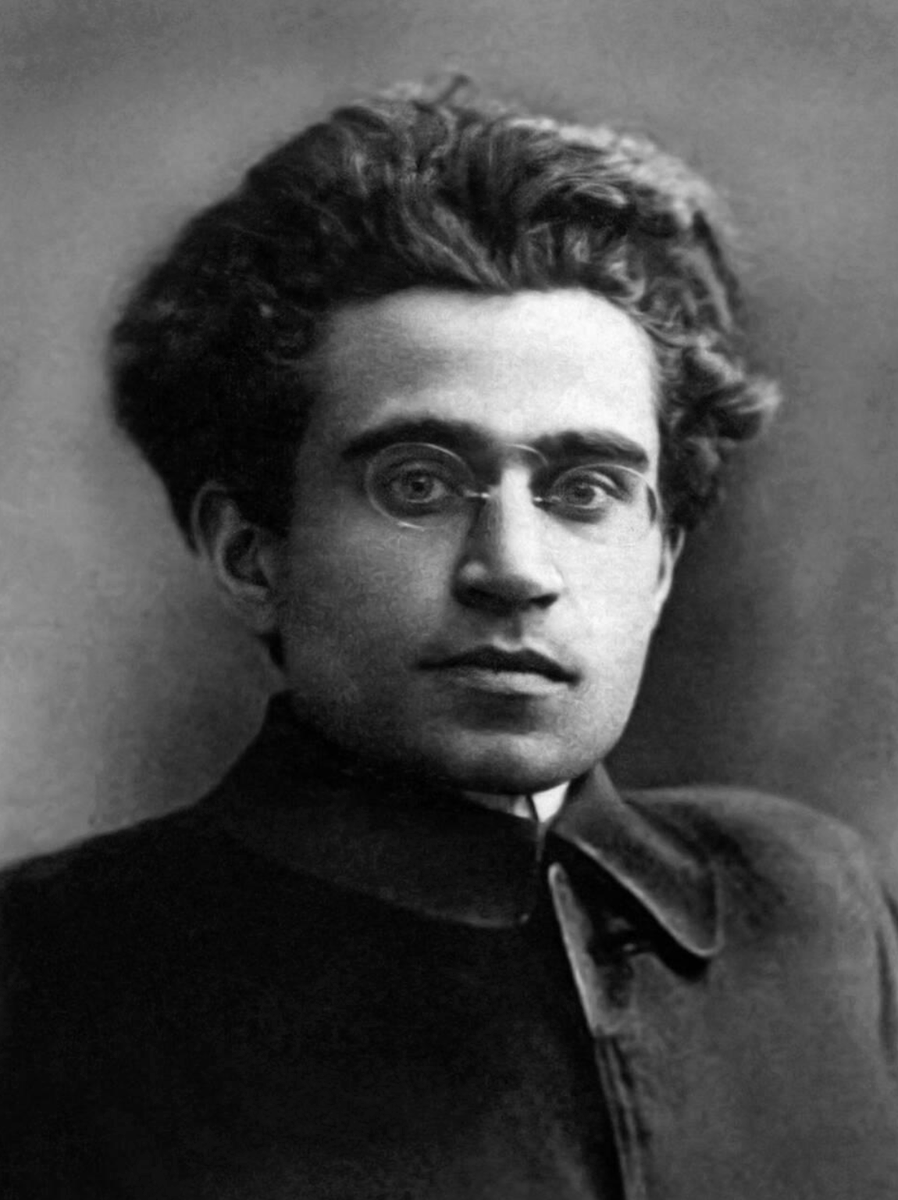
I very rarely say anything profound on X, if at all. What I mostly do is point out things that are obvious, sitting right in front of people’s noses, yet oddly under-articulated. One of those things matters more than almost anything else right now: we are living through an interregnum. The old order is dying, but the new one has not yet been born, to borrow from Gramsci. Plenty of people instinctively understand this. The left-liberal elite do not. They simply refuse to believe it. The chattering classes are convinced this moment is a blip, a temporary spasm of discontent, a rough patch before the road smooths out again. In their minds, Labour will settle into power like a comfortable pair of slippers, the public will calm down once Starmer eventually moves on and is replaced by someone more personable, and British politics will quietly revert to its old pre-Brexit rhythms, with the real centres of power once again genuflecting before the FT and the Times. It sounds absurd when you spell it out. But that really is what they think.
Mike Jones tweet mediaMike Jones tweet media
English
43
102
781
47.1K
Joe Skeaping retweeté
Aaron Bastani
Aaron Bastani@AaronBastani·
Replies saying “no it’s not about capitalism!” Guys, we had a consensus in this country for 45 years that said, whatever happened (dying high street, deindustrialisation, unemployment) “well, that’s the market, sorry!” Leading it was the Tory party after 1979. Get real.
Oliver@OWS1892

"I vote for parties that cut spending & encourage hardcore capitalism. Then I cry about the inevitable consequences." Fucking idiot.

English
97
213
2.4K
165.8K
Joe Skeaping retweeté
Karl Hansen
Karl Hansen@karl_fh·
Once you set the precedent that citizenship is a privilege that can be revoked, dual citizens become a second class of Britons, who a far-right government will undoubtedly target.
English
4
24
147
69.8K
Joe Skeaping retweeté
Free Alaa
Free Alaa@FreedomForAlaa·
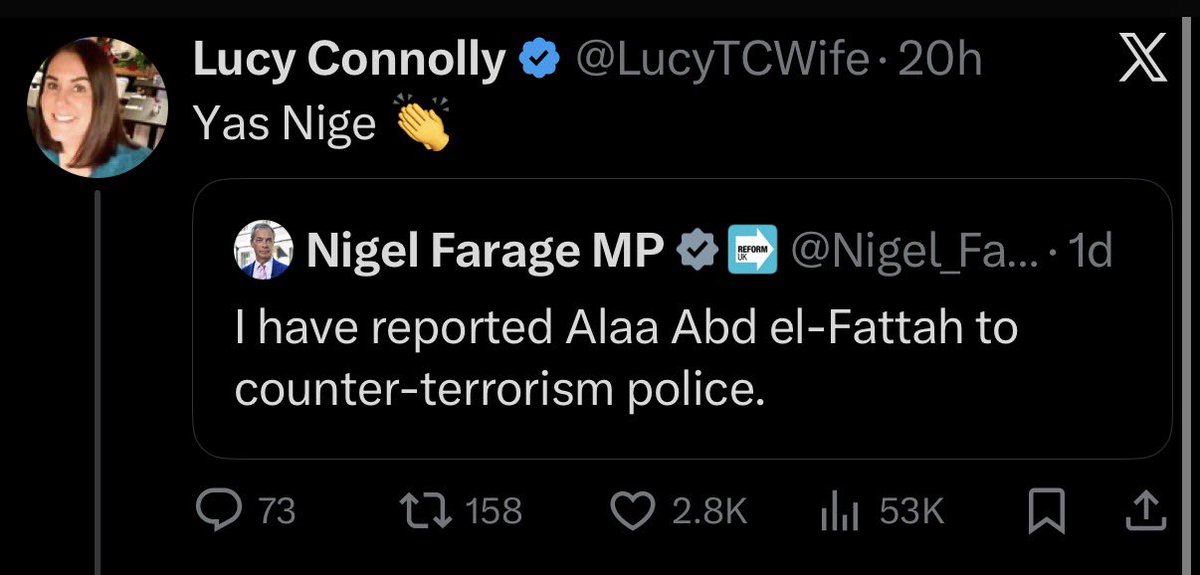
Responding to historic tweets, Alaa today says: "I am shaken that, just as I am being reunited with my family for the first time in 12 years, several historic tweets of mine have been republished and used to question and attack my integrity and values, escalating to calls for the revocation of my citizenship. Looking at the tweets now - the ones that were not completely twisted out of their meaning - I do understand how shocking and hurtful they are, and for that I unequivocally apologise. They were mostly expressions of a young man’s anger and frustrations in a time of regional crises (the wars on Iraq, on Lebanon and Gaza), and the rise of police brutality against Egyptian youth. I particularly regret some that were written as part of online insult battles with the total disregard for how they read to other people. I should have known better. Looking back I see the writings of a much younger person, deeply enmeshed in antagonistic online cultures, utilising flippant, shocking and sarcastic tones in the nascent, febrile world of social media. But this young man never intended to offend a wider public and was, in the real world, engaged in the non-violent pro-democracy movement and repeatedly incarcerated for calling for full equality, human rights and democracy for all. Today, this middle aged father firmly believes all our fates are entwined and we can only achieve prosperous and safe lives for our children together. All the initiatives I’ve led reflect this. I must also stress that some tweets have been completely misunderstood, seemingly in bad faith. For example, a tweet being shared to allege homophobia on my part was actually ridiculing homophobia. I have paid a steep price for my public support for LGBTQ rights in Egypt and the world. Another tweet has been wrongly interpreted to suggest Holocaust denial - but in fact the exchange shows that I was clearly mocking Holocaust denial. I take accusations of antisemitism very seriously. I have always believed that sectarianism and racism are the most sinister and dangerous of forces, and I did my part and paid the price for standing up for the rights of religious minorities in Egypt. I faced a military tribunal and imprisonment for defending Christians in Egypt falsely accused of violence. This weekend was supposed to be the first time I celebrated my son’s birthday with him since 2012, when he was one year old. I have been imprisoned in Egypt for almost his entire life for my consistent promotion of equality, justice and secular democracy. That included publicly rejecting anti-Jewish speech in Egypt, often at risk to myself, defence of LGBTQ rights, defence of Egyptian Christians, and campaigning against police torture and brutality - all at great risk. And, indeed, my freedom was stripped from me for these defences of human rights. These values are core to my identity. It has been painful to see some people who supported calls for my release now feel regret for doing so. Whatever they feel now, they did the right thing. Standing up for human rights and a citizen unjustly imprisoned is something honourable, and I will always be grateful for that solidarity. I have received huge empathy and solidarity from people across the UK, enough to win me my freedom, and I will be forever grateful for this."
English
0
316
913
2M
Joe Skeaping retweeté
carl beijer
carl beijer@_carlbeijer·
As Wittgenstein pointed out, this kind of argument cannot distinguish between "humans experiencing the world differently" and "humans experiencing the world identically but talking about that experience in different ways." Philosophically bankrupt argument.
The Atlantic@TheAtlantic

A common assumption is that throughout history, people have experienced the same basic range of emotions. A radical field of history now challenges this assumption, Gal Beckerman reports. theatln.tc/KD2QRX9Y People tend to imagine that other people “have the exact same set of emotions that we have,” Beckerman writes. “We perform this projection on any number of human experiences: losing a child, falling ill, being bored at work. We assume that emotions in the past are accessible because we assume that at their core, people in the past were just like us, with slight tweaks for their choice of hats and of personal hygiene.” Rob Boddice, a leader in the field of the history of emotions and senses, mistrusts this universalism, a philosophy that emerged during the Enlightenment, when European intellectuals began to assume that all people share a common nature. Many critics now understand that they were attempting to exert power and order over a world that had recently become bigger and stranger. “By the time we get to our current globalized culture, in which a Korean thriller can win Best Picture at the Oscars and Latin pop stars dominate the U.S. charts, the notion that our emotional registers are all essentially alike feels self-evident,” Beckerman continues. “Boddice starts with the opposite premise, that we are not the same,” Beckerman writes. “Rather than being a constant—extending across space and time—human nature for Boddice is a variable and unstable category, one with infinite possible shades.” Although his approach might seem “squishy and postmodern,” Beckerman writes, Boddice’s research layers his own thinking on top of the most recent advances in neuroscience. At the link, read more about the field of study that is pushing historians to reconsider their assumptions about the people of the past. 🎨: Nicolás Ortega

English
46
430
6K
219K
Joe Skeaping retweeté
malu
malu@anjobotticelli·
“you think your pain and your heartbreak are unprecedented in the history of the world, but then you read. it was books that taught me that the things that tormented me most were the very things that connected me with all the people who were alive, who had ever been alive.”
The Atlantic@TheAtlantic

A common assumption is that throughout history, people have experienced the same basic range of emotions. A radical field of history now challenges this assumption, Gal Beckerman reports. theatln.tc/KD2QRX9Y People tend to imagine that other people “have the exact same set of emotions that we have,” Beckerman writes. “We perform this projection on any number of human experiences: losing a child, falling ill, being bored at work. We assume that emotions in the past are accessible because we assume that at their core, people in the past were just like us, with slight tweaks for their choice of hats and of personal hygiene.” Rob Boddice, a leader in the field of the history of emotions and senses, mistrusts this universalism, a philosophy that emerged during the Enlightenment, when European intellectuals began to assume that all people share a common nature. Many critics now understand that they were attempting to exert power and order over a world that had recently become bigger and stranger. “By the time we get to our current globalized culture, in which a Korean thriller can win Best Picture at the Oscars and Latin pop stars dominate the U.S. charts, the notion that our emotional registers are all essentially alike feels self-evident,” Beckerman continues. “Boddice starts with the opposite premise, that we are not the same,” Beckerman writes. “Rather than being a constant—extending across space and time—human nature for Boddice is a variable and unstable category, one with infinite possible shades.” Although his approach might seem “squishy and postmodern,” Beckerman writes, Boddice’s research layers his own thinking on top of the most recent advances in neuroscience. At the link, read more about the field of study that is pushing historians to reconsider their assumptions about the people of the past. 🎨: Nicolás Ortega

English
29
4.4K
29.8K
855.5K