Roman Sutherland | Nousophy

5.1K posts

Roman Sutherland | Nousophy banner
Roman Sutherland | Nousophy

Roman Sutherland | Nousophy

@Nousopher

Philosopher first. Everything else follows. Building Nousophy — a framework for thinking about psychology, reality, and the mind.

Nelson, New Zealand Inscrit le Mart 2021
155 Abonnements3K Abonnés
Roman Sutherland | Nousophy
Most people believe they would not participate in historical atrocities. In reality, people tend to justify the actions of their own group during conflict. This pattern appears repeatedly across history. This suggests ordinary people are more capable of moral blind spots than they think. That is why cognitive dissonance is powerful.
English
0
0
0
0
Ethan Levins 🇺🇸
Ethan Levins 🇺🇸@EthanLevins2·
American Zionists are again calling for my arrest for exposing Israel? Keep proving me right…. Dual Loyalty scumbags.
English
87
1.1K
6.2K
44.6K
Roman Sutherland | Nousophy
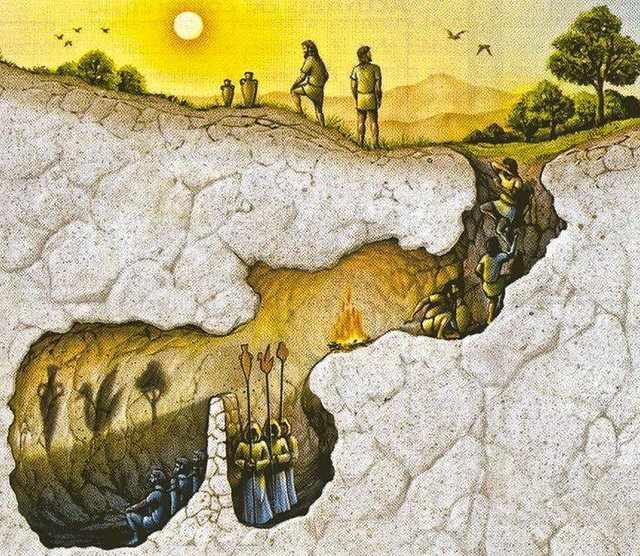
On the Isolation of the lived Philosopher For a long time, I was trying to work out where I stood in relation to philosophy. I was already asking the kinds of questions philosophers ask, but I had not yet worked out where I fit within it, or what that meant about the kind of philosopher I might be. I could see that there were many people who studied philosophy, many who wrote about philosophy, and many who were interested in philosophy, but it was not clear to me whether these were all the same thing, or whether they were importantly different. Over time, I started to notice that there seemed to be different relationships a person could have with philosophy. There are those who study philosophy, who learn the arguments, the history, and the major thinkers. There are those who write philosophy, who produce arguments, papers, and books, and try to push ideas forward in a formal sense. There are those who are interested in philosophy, who enjoy thinking about the big questions and discussing them. And then there are those for whom philosophy is not just something they study or write about, but something they live. The lived philosopher is not necessarily the most academically successful, or the most well read, or the most published. The lived philosopher is the one whose life is shaped by the questions themselves. They do not only think about truth when it is convenient, or when it is required for an assignment or a paper. They think about it when making decisions, when forming beliefs, when choosing what to value, and when deciding how to live. For them, philosophy functions as an organising framework that structures how they interpret the world, how they think, how they make decisions, and how they conduct their life. It took me a long time to realise that this was the category I had been moving within. I was already trying to clean up my beliefs and I wrote a full philosophical manifesto as a way of doing this. Later, I learned that Descartes had undertaken a similar project when he tried to determine what could actually be known with certainty. I was trying to separate what could be known from what was assumption, what was bias, and what had been absorbed from culture without examination. I began systematically examining my own beliefs, my goals, my idea of success, my understanding of happiness, and my sense of who or what I was supposed to be. At the time, I did not think of this as doing philosophy. I understood it as a process of checking whether the foundations I was building my life on were true, or at least not false. Looking back, I can see that this impulse is philosophical in a very old sense. It is closer to the Socratic idea that philosophy is about examining life, examining beliefs, and trying to live in a way that is aligned with what is actually true, rather than what is merely comfortable or socially reinforced. In that sense, philosophy is not primarily about producing new theories. It is about subjecting your own life to examination and being willing to change it if the examination shows that something is wrong. I’ve begun to understand that this way of living shapes how a person thinks and also how a person relates to other people. Most social life depends on a tolerance for surface agreement, partial truths, and shared assumptions that allow interactions to move smoothly. A person who continually examines the structure underneath those assumptions often finds themselves out of step with ordinary social reality, because they are less willing to treat coherence as a substitute for truth. That is part of what makes the lived philosophical life isolating. It is not only that the philosopher spends time alone thinking. It is that the philosopher often sees the fault lines running through things other people are still using to orient themselves. Beliefs that provide comfort, identity, or stability are not always offered up as arguments to be tested, even when they are spoken as though they were true. As soon as underlying assumptions become the object of analysis, the nature of a conversation changes. One person may believe they are simply talking, while the other is analysing the structure of what is being said, which can make the exchange feel asymmetrical. I frequently find myself as the latter in a conversation. This is one reason I think there is a difference between someone who studies philosophy and someone who is compelled by truth in a more total way. The first may love the subject, master the texts, and understand the arguments. The second is often unable to leave the question alone once it has appeared. Over time philosophy becomes a governing principle that shapes what one believes, what one prioritises, and what one is willing to sacrifice in order to continue following a line of thought to its end. That is why Socrates stands so high in the tradition. He was not simply intelligent, and not simply skilled in argument. He embodied a kind of commitment that ran deeper than social approval, comfort, reputation, and eventually even survival. He did not merely speak about truth. He oriented his life around the demand that beliefs should be examined, that false confidence should be disturbed, and that an unexamined life was in some important sense a diminished one. In him, philosophy was not a profession or an academic discipline. It was a mode of being. When I look at that pattern, I can see why I was confused for so long. I was trying to place myself among categories that mostly describe what people do with philosophy, while the deeper issue was that philosophy had already been acting on me as a way of life, and even writing that, invokes deep emotion, I could read it, write it, and build from it, yes, but underneath that was something more prior. A repeated movement toward truth, even when truth was inconvenient, socially costly, or personally destabilising. That impulse was there before the formal study. The study simply gave it names, context, and lineage. This way of living carries costs that become clearer over time. It can make ordinary belonging harder because many relationships depend on leaving certain assumptions unexamined. It can make relationships more fragile when they rely on shared beliefs that are not open to scrutiny. It can also make comfort feel thinner, because once a person has seen how much of life is held together by habit, narrative, and selective attention, it becomes difficult to fully return to those structures without continuing to question them. The philosopher in this sense becomes isolated through orientation toward truth, and this orientation gradually separates them from many of the assumptions that make ordinary social existence feel stable. This is the pattern I’ve been circling for years. It was not only an interest in philosophy and not only a habit of thinking philosophically, it was a consistent orientation toward truth even when truth created social distance, uncertainty, or personal cost. There appears to be a type of person for whom the demand for truth outranks comfort, belonging, and certainty, and for whom the pursuit itself becomes non negotiable. This does not place such a person above others in any moral sense, though it does make them harder to place socially and often harder to live with. The philosophical life therefore carries an undertone of solitude, because following truth beyond the point where it remains socially convenient often results in a person walking a more solitary path.
Roman Sutherland | Nousophy tweet media
English
0
0
7
80
Roman Sutherland | Nousophy
@nikitabier @grok cross reference this post by Nikita, and then cross reference Japan, their mental health, their depression, anxiety, etc. If they are dominantly stronger in usage, how is that showing up across their society?
English
2
0
1
28
Nikita Bier
Nikita Bier@nikitabier·
If you’re seeing a bunch of Japanese posts, here are some fun facts: Japan has more daily active users and more time spent on X than any other country in the world. Over two thirds of the country is monthly active on X. X in Japan has one of the highest penetration rates of any social network in history.
English
3.8K
2.8K
33.6K
2.4M
Roman Sutherland | Nousophy
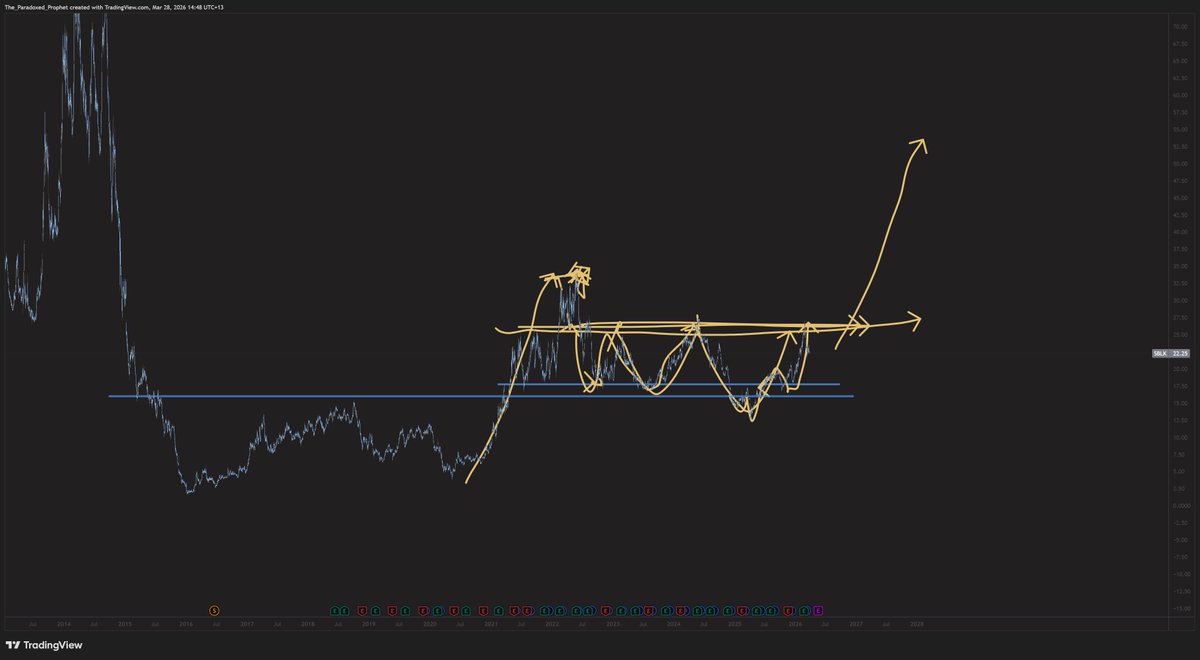
@waitout7 yeah wow, looks like it's coming out of re-accum hot.. clean bull flag, with a right angled BDW as the flag. send it.
Roman Sutherland | Nousophy tweet media
English
0
0
1
9
Waitout
Waitout@waitout7·
@Nousopher Shipping, Star Bulk Carriers Corp. (SBLK). From their recently released Annual Report, "Strait of Hormuz. On March 11, 2026, one of our Kamsarmax vessels, the Star Gwyneth, was struck a projectile near the Strait of Hormuz".
English
1
0
1
18
BRICS News
BRICS News@BRICSinfo·
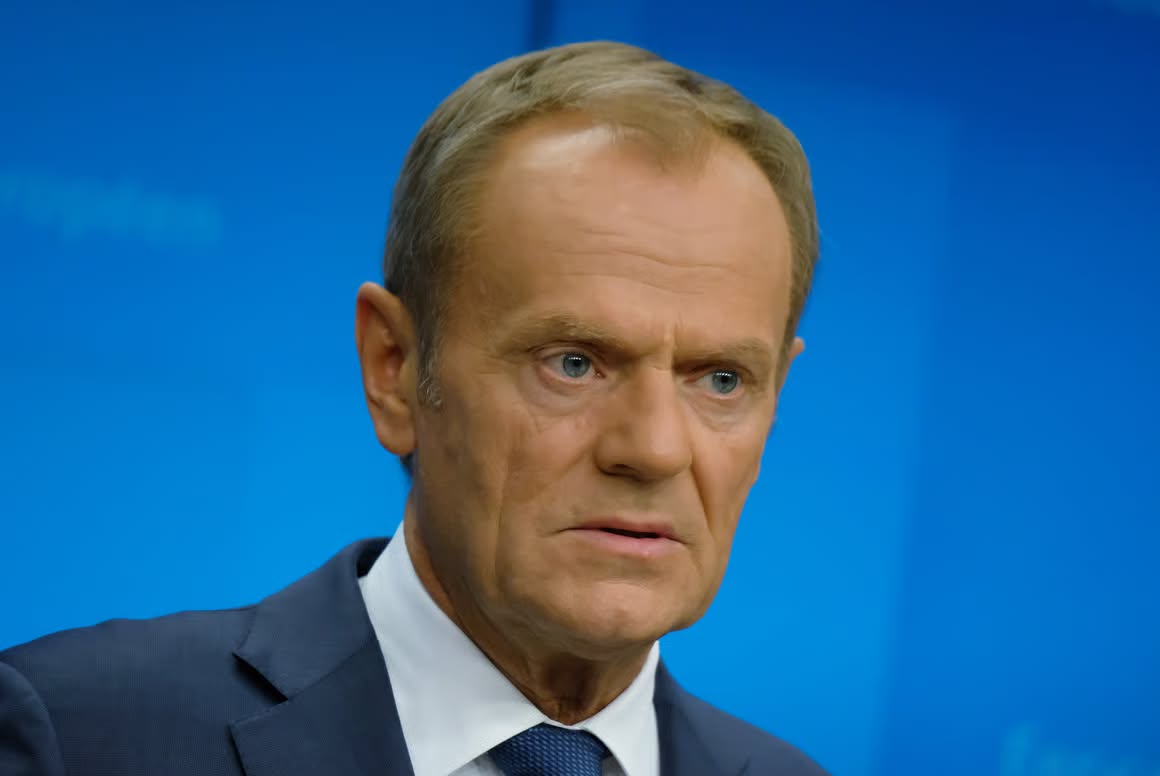
JUST IN: 🇵🇱 Polish Prime Minister Donald Tusk warns Middle East escalation expected in coming days.
BRICS News tweet mediaBRICS News tweet media
English
172
293
2.5K
166.9K
RT
RT@RT_com·
WH DROPS OMINOUS CLIP — EERIE PIANO, REVERSED VOICE… WHAT’S GOING ON?
English
82
42
160
73.7K
Oehoe de Uil
Oehoe de Uil@OehoeU·
LEAK: New music kit found in CS2 gamefiles! 😱
English
29
201
3.5K
125K
Patrick Traichal
Patrick Traichal@PTraichal·
@stalmico @Hitchslap1 Why does the answer to this question matter? What would you potentially do differently if the answer was "rho = 0.312"?
English
2
0
1
27
Hitchslap
Hitchslap@Hitchslap1·
Important fact: IQ is positively correlated with cognitive empathy (ToM). Studies consistently find a significant positive correlation between IQ and scores on the "Reading the Mind in the Eyes" Test.
English
31
22
309
8.3K
Roman Sutherland | Nousophy
@Hitchslap1 People with higher IQ tend to be introverted intuitive thinkers, on the spectrum. These types usually have inferior emotional capacities. The correlational maybe positive, but it's not all that.
English
1
0
0
124
HappyChirperX
HappyChirperX@happyChirperX·
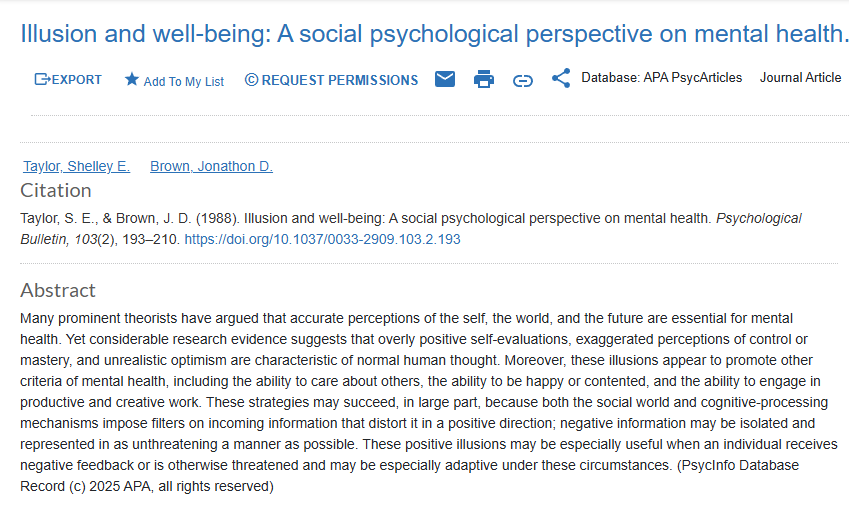
@NTFabiano Yes this is why religion works, an atheist is the most depressed person on this planet.
English
1
0
0
223
Nicholas Fabiano, MD
Nicholas Fabiano, MD@NTFabiano·
Mentally healthy people are often delusionally optimistic.
Nicholas Fabiano, MD tweet media
English
235
2.3K
18.4K
2.5M
Ppaarrmmeenniiddeess
Ppaarrmmeenniiddeess@Ppaarrmmee66280·
@NTFabiano I've noticed this, depressed people can more accurately predict outcomes Being overly optimistic is useful but its not accurate
English
1
0
4
414