Aaron Meyer, CFP®

10.8K posts

Aaron Meyer, CFP® banner
Aaron Meyer, CFP®

Aaron Meyer, CFP®

@ahmeyer

a dog and a bike. I don’t take criticism from people I wouldn’t take advice from.

United States Inscrit le Temmuz 2009
957 Abonnements448 Abonnés
World updates
World updates@itswpceo·
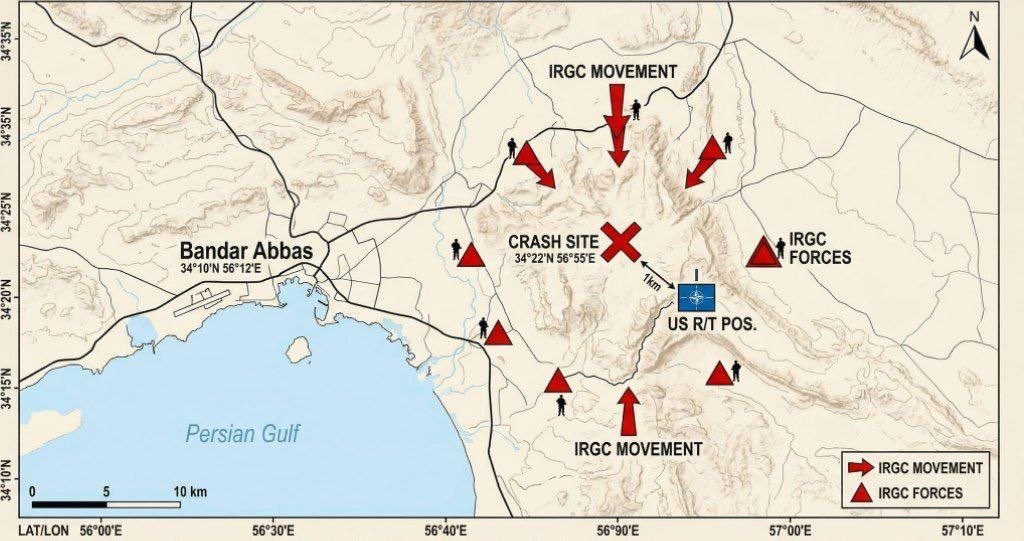
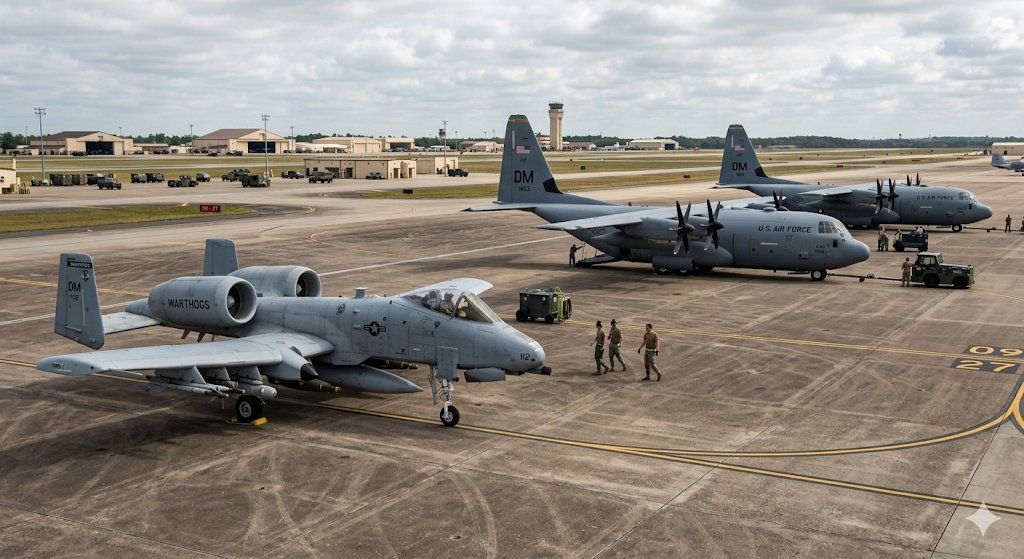
BREAKING: 🇺🇸 This is the greatest Rescue operation in history of America. 48-HOUR RESCUE INSIDE IRAN HOUR BY HOUR APRIL 3 - F-15E Strike Eagle (Viper 21) shot down by Russian missile over southwestern Iran. - Mach 2.8 intercept, proximity fuse detonation. - Both crew eject successfully. HOUR 0 - Pilot recovered within minutes by ground team. - WSO lands alone, injured (broken ankle), deep in enemy territory. HOURS 1-4 - WSO starts evasion using night and terrain. - IRGC launches massive manhunt with drones and dogs. HOURS 4-8 - Thousands of Iranian civilians join the search for bounties. - U.S. jams Iranian radars and communications. HOURS 8-12 - WSO climbs 7,000-ft ridge despite injury. - U.S. strikes crater roads to block IRGC reinforcements. HOURS 12-18 - WSO reaches ridge top, hides in rocky crevice. - Makes first brief radio contact with friendly forces. HOURS 18-24 - A-10 Warthog shot down by Chinese MANPADS. - Pilot safely recovered by naval assets. HOURS 24-30 - Two HH-60W rescue helicopters hit by ground fire during attempt. - Crews wounded but return to base. HOURS 30-36 - U.S. escalates with cruise missile strikes on IRGC air defenses. - WSO survives near-miss drone strike, relocates under fire. HOURS 36-42 - Nighttime full extraction launched. - Special operations teams insert and engage IRGC in firefight. HOURS 42-48 - WSO located, stabilized on site, and extracted under heavy fire. APRIL 5 — EARLY HOURS - WSO pulled out alive and conscious. - Both F-15E crew members safe.
World updates tweet mediaWorld updates tweet media
English
1.3K
5.8K
32.9K
2M
Big Cat
Big Cat@BarstoolBigCat·
Giannis needs to just demand a trade. He doesn’t want to be the one to break up but clearly wants to break up. Man up and rip the bandaid off. You’re in the one league where the players have the most power. Even Bucks fans have to be tired of this right?
English
250
43
2.3K
453.8K
Chicago Cubs
Chicago Cubs@Cubs·
They say if you look closely, you can see the gold in Ian’s glove. 😌
English
92
119
2.4K
222.6K
Aaron Meyer, CFP® retweeté
Cosmos Archive
Cosmos Archive@cosmosarcive·
Why are there no green stars? As they burn hotter, stars shift: red → orange → yellow → white → blue... But green? Never! This stunning animation shows the blackbody physics trick; our eyes see white when the peak hits green.
English
38
474
2.8K
197.6K
Krista Doebel-Hickok
Krista Doebel-Hickok@KristabelDH·
New new arrived 💫 I will test them out tomorrow. I love the color. Not sure about the fit. TBD.
Krista Doebel-Hickok tweet media
English
10
2
144
1.2K
Aaron Meyer, CFP® retweeté
The Curious Tales
The Curious Tales@thecurioustales·
🚨 This is exactly how the 4 moonbound astronauts will travel 400,000 km from Earth. Strap yourself to 4.1 million kilograms of controlled explosion and ride it to the edge of everything humans have ever known. The Artemis II trajectory reveals something most miss about deep space travel: you don’t pilot to the moon. You become cargo on a ballistic arc calculated with mathematical precision that would make ancient astronomers weep. Launch from Cape Canaveral begins with two solid rocket boosters generating 3.6 million pounds of thrust each. These aren’t engines you can throttle or shut off. Once lit, they burn until empty. You’re riding pure chemical violence upward at accelerations that compress your organs and blur your vision. Each booster burns through 1.1 million pounds of propellant in 120 seconds, generating more power than the entire electrical grid of most countries. When the boosters separate two minutes in, you’re already traveling 3,000 miles per hour. The core stage takes over, burning liquid hydrogen and oxygen through four RS-25 engines. These are the same engines that powered the Space Shuttle, but upgraded for deep space. Each engine operates at temperatures that would vaporize most metals, channeling combustion through nozzles engineered to nanometer tolerances. Six minutes after launch, the core stage drops away. You’re in low Earth orbit, but barely. The trajectory puts you in an elliptical path that skims the upper atmosphere. Solar arrays deploy like mechanical wings. Life support systems activate. Four humans now depend entirely on machines to survive in an environment that kills unprotected life in seconds. The next 90 minutes are psychological preparation for what comes next. You’re still close enough to Earth that if something fails catastrophically, you might survive reentry. After translunar injection, that safety net disappears completely. The Interim Cryogenic Propulsion System fires once. A single engine burn lasting minutes accelerates you to escape velocity: 25,000 miles per hour. You are now traveling faster than any human has traveled since 1972. The burn must be perfect. Too little thrust and you fall back to Earth. Too much and you overshoot the moon entirely, drifting into solar orbit with no possibility of rescue. What follows is four days of coasting through interplanetary space on a trajectory so precisely calculated that it accounts for the gravitational influence of the sun, Earth, moon, and even Jupiter. You’re riding a path through space and time that exists only because teams of mathematicians spent years modeling celestial mechanics down to the microsecond. The spacecraft carries no radar, no GPS, no external reference points. Navigation depends on star trackers that identify constellations and calculate position by comparing stellar angles to digital star maps. You navigate the same way Polynesian sailors did, except your ocean is vacuum and your destination moves 2,000 miles per hour relative to Earth. Seventy hours into the mission, you cross the point where lunar gravity becomes stronger than Earth’s pull. The mathematics of your trajectory flip. You’re no longer escaping Earth. You’re falling toward the moon. But you don’t land. The trajectory aims for the moon’s far side, using lunar gravity like a cosmic slingshot. As you swing around, the moon’s mass redirects your momentum back toward Earth. Ancient orbital mechanics discovered by Johannes Kepler 400 years ago bend spacetime to fling you home. The far side transit is when psychological isolation peaks. You pass behind the moon, losing radio contact with Earth for the first time since launch. The only humans in the solar system disappear behind 2,000 miles of lunar rock. Mission Control goes silent. You are alone with the machinery in ways no human has experienced since Apollo 17. During lunar approach, you fly closer to the moon’s surface than the International Space Station orbits Earth. Craters and mountains pass beneath at lunar dawn, shadows stretching across terrain untouched by atmosphere or weather for billions of years. You see geology older than complex life on Earth. The return trajectory begins automatically. Lunar gravity has already bent your path homeward. You’re riding Newton’s laws back across 400,000 kilometers of emptiness at speeds that compress the return journey into four days. Reentry begins 400,000 feet above the Pacific Ocean. The heat shield faces temperatures of 5,000 degrees Fahrenheit—hot enough to melt copper, approaching the surface temperature of the sun. Atmospheric friction converts 25,000 miles per hour into thermal energy that would vaporize the spacecraft without the carbon composite barrier between you and physics. Parachute deployment requires split-second timing. Deploy too early and the chutes shred in the hypersonic airflow. Deploy too late and you impact the ocean at terminal velocity. Main chutes slow you from 300 miles per hour to 20 miles per hour in seconds. The deceleration forces compress your spine and test the limits of human physiology. Pacific splashdown ends a ten-day journey covering 1.4 million miles. You return as the first humans to travel beyond Earth orbit in over fifty years, carrying radiation exposure from cosmic rays that passed through your body, and psychological changes from seeing Earth as a pale blue dot suspended in infinite dark. The entire mission depends on technologies working perfectly in an environment that destroys electronics, boils lubricants, and subjects every component to temperature swings of 500 degrees. One software glitch, one seal failure, one navigation error means four humans drift through space until life support expires. Engineering manages these risks through redundancy, testing, and margins of safety built into every system. But at 400,000 kilometers from Earth, margin for error approaches zero. Success requires mechanical perfection operating in conditions no Earth laboratory can fully simulate. We call it exploration, but what Artemis II really tests is whether human consciousness can psychologically handle complete separation from everything that created it while trusting life entirely to machines operating at the edge of physical possibility. The trajectory looks like a simple loop on paper. In reality, it’s controlled falling through spacetime using mathematics as your only safety net.
The Curious Tales tweet media
Curiosity@CuriosityonX

🚨: This is how the 4 moonbound astronauts will travel 400,000 km from Earth, which would be the farthest any human has ever gone in all of humanity.

English
47
602
1.8K
377.4K
Hike & Bike 🚵
Hike & Bike 🚵@tracknumber06·
@Capital4Value @ReganCoda Why won’t a 60/40 portfolio (or 70/30 or 80/20 or whatever) with two or three low cost total market index funds help them?
English
3
0
2
587
Dal Riata Capital
Dal Riata Capital@ReganCoda·
Apparently Edward Jones recently launched a private client service group for people with over $10mm in assets. I would love to see the Venn diagram of people with that kind of money who choose Edward Jones as their wealth manager.
English
120
32
2.1K
287.4K
Tedbro
Tedbro@Tedbro41·
@AdamMcCalvy I was excited to watch CB behind the plate today.
English
1
0
1
26
Adam McCalvy
Adam McCalvy@AdamMcCalvy·
Home plate umpire CB Bucknor was struck flush on the face mask by a foul tip and is coming out of the Rays-Brewers game.
English
42
7
221
29.1K
DividendMillennial
DividendMillennial@DividendMil·
Paid 5k for my state taxes with my Robinhood credit card to get 3% back… Guess what…they paid me $0 and said it wasn’t eligible. Do better @RobinhoodApp This is just another reason people lose faith in your company
English
85
5
416
101.7K
ebo
ebo@ebosays·
You desperately need a ride. Out of nowhere, two different cars pull up One is Tiger Woods telling you to climb in, the other is the quadruple amputee waving you in with his nub. Which do you choose?
English
9
0
14
2.3K
Erik Haslam
Erik Haslam@haslametrics·
@ahmeyer The autograph signing went well. We had to turn people away after six hours.
English
1
0
0
20
Erik Haslam
Erik Haslam@haslametrics·
Rough Monday.
Erik Haslam tweet media
English
7
0
27
3.4K
Cody Garrett, CFP®️
Cody Garrett, CFP®️@MeasureTwiceMNY·
Do you remember learning your Time Value of Money (TVM) calculations? I'm recording a video for Measure Twice Planners this week that shows how the fundamental calculations actually apply to real financial planning! You do not truly understand these concepts until you can explain the calculations in plain language, step by step.
Cody Garrett, CFP®️ tweet media
English
1
1
3
1.2K
SCHD STAN | Craig
SCHD STAN | Craig@SCHDETF·
The S&P 500 is down over 9% and people are panicking. This is exactly what you should be hoping for. 10% corrections happen about once per year on average. We’ve already had one this year and here we are again. For long term investors, this is a gift. This is where portfolios are built. Stay focused and keep buying quality. When in doubt, don’t get cute… just buy a broad market index. Yes it can go lower fly. Here but Markets always come back. Are you taking advantage or freezing?
SCHD STAN | Craig tweet media
English
25
4
121
11.3K
Aaron Meyer, CFP® retweeté
The Scientific Lens
The Scientific Lens@LensScientific·
Two balls rolling down two slopes. While the indirect path proves faster at first, the direct path wins in the end. Credit: Matt Henderson
English
99
129
1.6K
1.3M