Becky Quick

15.3K posts

Becky Quick banner
Becky Quick

Becky Quick

@beckyquick83

Fighting Gresham's Law one day at a time

Inscrit le Eylül 2013
154 Abonnements634 Abonnés
Becky Quick
Becky Quick@beckyquick83·
@GautiEggertsson It depends on the speed: change over 20-30 years is fine, 2-3 years less so. People over about 45 don’t really retrain in significantly different areas, and those over 35 typically take a large pay cut when doing so. Humanity survives of course.
English
1
0
0
248
Gauti Eggertsson 🇺🇦
Gauti Eggertsson 🇺🇦@GautiEggertsson·
A new technology arrives. What 90 percent of the labor force was doing can now be performed by less than 2 percent. Evil machine overlords are taking over! What are we human underlings to do? Of course, I'm talking about the 88 percent of the US labor force working in agriculture when the US was founded, who eventually moved on to something else. Now AI will replicate some jobs. Will it apply to 88 percent of the labor force? I doubt it. Will humanity survive? I'd give it a shot.
English
7
7
80
20.1K
Becky Quick
Becky Quick@beckyquick83·
@Mark_Graph You seem very certain grandfathering will apply. But where is the opposition to not grandfathering? Not from anyone who matters in the Senate.
English
1
0
1
94
Becky Quick
Becky Quick@beckyquick83·
@mumbletwits There’s never been a better time for people who ‘build things’ and ‘fix things’ relative to those seeking a white collar career.
English
0
0
1
82
Peter Brent
Peter Brent@mumbletwits·
Why does Kos start with the GFC? Hawke-Keating were the big detariffers.
Kos Samaras@KosSamaras

Why the growth of One Nation? My latest Oped in the AFR. Since the GFC, Australia has quietly dismantled the economic foundations of the outer suburbs and the regions. The car industry, gone. Steel, in some parts in administration. Timber towns, hollowed out by policy decisions made by people who never lived near one. Over 200,000 manufacturing jobs lost in seven years. Textiles, clothing, footwear, effectively eliminated. Wholesale trade contracted. Bank branches stripped from regional high streets. Energy-intensive manufacturing crushed by gas prices that tripled after LNG exports began. Health services in decline or now costing more. Being diagnosed with cancer in a big city is traumatic, in the regions, it’s far more severe as you have to battle day trips to a care facility….try doing that with today’s petrol prices. None of this happened to the inner city. It happened to the people who built things, fixed things, and drove things for a living. And the parties that governed through all of it, on both sides, never really had to answer for it. They called it modernisation. They called it the ‘just’ transition, or a move to a service economy where the service is done by one class of worker to enrich the life of another. One Nation didn’t come from nowhere. It came from exactly this. My new piece in the AFR on the long betrayal that made it inevitable. After you read this, you may realise that the votes wont easily come back. Link below.

English
9
1
10
2K
Becky Quick
Becky Quick@beckyquick83·
@ShaneOliverAMP Why free PT? Shouldn’t PT fares rise to reflect higher demand (willingness to pay)? Reducing fares only makes sense if fuel prices are below market levels. That might be true if you agree with @FootnotesGuy that suppliers are scared to raise due to previous gouging accusations.
English
0
0
1
262
Shane Oliver
Shane Oliver@ShaneOliverAMP·
Things Aust govs should announce Monday: encourage/allowing workers who can to work from home, free or half price public transport, avoid non-essential air travel & encourage greater use of E10 fuel. Aim is to conserve fuel in least disruptive ways. Fuel excise cut won’t do that
English
87
54
452
32.6K
Becky Quick
Becky Quick@beckyquick83·
@s8mb Very puzzling, I must say - to many of your followers I think!
English
0
0
0
75
Sam Bowman
Sam Bowman@s8mb·
I’m sorry to say this, but I just do not get wine and food. I like wine, and I like food, but I don’t see how they go together. A cold glass of water is always a more refreshing accompaniment to a meal for me.
English
74
4
173
77.8K
Becky Quick
Becky Quick@beckyquick83·
@s8mb @richardparke15 Pinot/red Burgundy with duck, Chablis with oysters (and with Brie and baguette in my case), off-dry Riesling with Thai, Vietnamese or Indian food as an alternative to beer.
English
1
0
2
95
Sam Bowman
Sam Bowman@s8mb·
@richardparke15 Yeah TBF that’s a nice combo. I’d call that the exception that proves the existence of the rule.
English
5
0
10
2K
Becky Quick retweeté
Mike Bird
Mike Bird@Birdyword·
Financial professionals will tell you not to check your retirement and brokerage accounts every day. Don't listen to them. They're engaged in a conspiracy to stop you noticing that they're going down in value and freaking out.
Brooklyn, NY 🇺🇸 English
4
14
208
18.9K
Becky Quick
Becky Quick@beckyquick83·
@mumbletwits How many [ ] does it take to fill a tank? Or maybe pay for a tank (?), in which case they should have their wallets out.
English
0
0
3
74
Peter Brent
Peter Brent@mumbletwits·
🤷‍♀️
Peter Brent tweet media
QME
2
0
3
403
Steve Woosnam
Steve Woosnam@SteveWoosnam·
@geehall1 @DailyMail Im guessing you've no idea what his NDIS qualifying disability is. Ive had an NDIS client that was residing in a forensic mental health facility after being incarcerated there for 13 years for stabbing his friend to death in a psychotic episode. Was a lovely, friendly, guy
English
2
0
0
35
Daily Mail
Daily Mail@DailyMail·
Serial rapist at 'high risk' of sexually assaulting women and children gets $220k NDIS package - plus a special porn perk for his hideous urges trib.al/BJkpnwx
English
91
203
455
214.3K
Becky Quick
Becky Quick@beckyquick83·
@FootnotesGuy @SkyNewsAust Totally agree, this is a natural consequence of government intervening in RAT pricing during Covid. I find it quite satisfying that farmers - being the biggest whingers in the country when it comes to supermarkets - are amongst those suffering the most.
English
3
0
2
159
Aidan Morrison
Aidan Morrison@FootnotesGuy·
I weighed in on the fuel security debate last night on @SkyNewsAust with Sharri Markson. My unpopular opinion is that fuel prices probably aren't nearly high enough. Remember, if there's a real shortage, someone, at some point, is going to miss out. Scarcity pricing is the market's way of determining who misses out and when. Those who really need fuel will pay for it. The alternative is hoarding, and we lose control of that process. Fuel becomes simply unavailable. The price is ok, but the fuel is just not there. If people think that fuel today is much more affordable than it will be next week, they're going to grab and hold as much as they can. For markets to manage this, prices have to rise high enough to fully price in the expected future shortage. Unless every second person who comes to the pump and sees the price thinks "Wow... perhaps it'll actually be cheaper next week, I'll only buy what I have to now..." then prices aren't high enough. In other words, what people call price-gouging is actually the necessary and valuable service of the market deploying the natural antidote to hoarding. The alternative is that people look at their assessment of future supply, look at the price, and buy as much as they can hold. This isn't just at the petrol pump, it happens up and down the length of the supply chain. From the importers and refiners, to distributors and depots. If you think it's near certain that you'll be able to charge more in the future, you just hold. And this is what we can see has been happening. Chris Bowen is probably correct in telling us that demand has doubled, at least from the top of the supply chain. And he's probably also correct in saying that there's still quite enough fuel in Australia. For now. So what's going on? Everyone, all along the supply chain, is buying (or not selling) as much fuel as they can, because they know that the price today doesn't reflect the shortage coming tomorrow. When, within days of the first bombs farmers stopped getting their fuel delivered... that's what's happening. The diesel was in country, but everyone, up and down the supply chain, wanted to hold onto more of it. Those that could buy, bought. Those who normally sell, slowed or stalled deliveries. If prices were allowed to rise to the level that distributors wanted to sell fuel at this price, (because the knew there was a chance it could be lower soon) then this wouldn't happen. Yes, it has to be high. Really high. Unfortunately, there's an unhelpful knee-jerk political reaction to demonise the market's method of rationing by labelling it as 'price-gouging'. This panders to the populist instinct to blame some greedy capitalist corporate entity for every pain and problem in the world. Unfortunately, the pain from a fuel shortage is real. Pain is inevitable. It's been caused by decades of governments abstaining from doing their duty to support in more domestic fuel production. But there's absolutely nothing that can be done in the grip of a crisis other than to manage the distribution of the pain. Either that pain is administered by the markets, with extreme prices that eviscerate the instinct to buy as much as one can today. Or that pain is administered by the government imposing rationing. Setting rules and limits on what people can buy, because prices are so low, that everyone still wants to grab as much as they can. Or, we blunder on without the honesty that the pain is coming one way or another. Spewing rhetoric against the evils of price-gouging, while vainly pleading with people not to buy more than they need. And scratching our heads as to why deliveries are delayed, and service station tanks run dry. The government must level with the population. The risk of running out is real. And the shortage must be managed somehow. The market can be an ally in administering the pain, but needs to function freely. The alternative is government rationing, which will probably need to arrive sooner, rather than later. skynews.com.au/opinion/sharri…
English
34
17
119
11.8K
Alex Tabarrok
Alex Tabarrok@ATabarrok·
Went to the dentist for a cleaning. Refused the blood pressure check, refused redundant x-rays, refused to sign a waiver for refusing the x-rays. Three nos to get one teeth cleaning. I am now known as a troublemaker.
English
465
98
2.2K
186.5K
Becky Quick retweeté
Mark 🇦🇺
Mark 🇦🇺@Mark_Graph·
I have been thinking about my list of worst Federal Government policy failures this century. What am i missing? What have I misclassified? #auspol #ausbiz #ausecon GFC second round stimulus – BER and HIP specifically. Unnecessary by time of delivery, structurally wasteful, never honestly audited as a failure because the first round success story absorbed it. Correct macro intent perhaps, but structurally poor micro design and governance. Owner: Labor (Rudd). NDIS – good intent, catastrophic scale, design assumptions that were always fantasy, a PC that gave itself a free pass, and a fiscal trajectory that may be genuinely uncontrollable. Open-ended eligibility creep, administrative pricing pretending to be a market, and direct competition with aged care and health for the same workforce. Once those dynamics lock in, cost control becomes politically radioactive. Owner: Labor conceived it (Gillard), both sides own the blowout. NBN – the original sin was the financing model, not just the technology choice – a commercial return requirement retrofitted onto what is essentially a natural monopoly utility with social pricing constraints. Turnbull's MTM shift solved political timing but entrenched long-term performance constraints without fixing the balance sheet logic. A bad model patched with a worse implementation, then frozen because reversal is too costly. Owner: Labor owns the foundation and broken business model (Rudd/Conroy), Coalition owns the technology degradation (Turnbull). WA GST deal – not a failed system but a deliberate redistribution distortion. Known to be inefficient, maintained for political reasons – entrenched political rent allocation at cumulative cost to every other state. Owner: Coalition (Morrison/Turnbull). Aged Care – billions spent, royal commission, systemic neglect. Not just neglect – a pricing model that cannot support the workforce it requires, underpaying labour while demand rises structurally. Now competing directly with the NDIS for the same workers at the same price caps. Reform attempts keep adding funding without fixing who does the work, at what wage, and in what numbers. Owner: Both, but Coalition owned it longest and most recently. Morrison's "not my job" during COVID is the defining moment. Murray-Darling Basin Plan – a genuine environmental crisis addressed with a decade of process and regulatory capture. The plan wasn't empty – it was gradually hollowed out: water recovery targets diluted, compliance weakened, buybacks politicised. Less a single policy failure and more a decade-long governance failure, which arguably makes it worse. Owner: Both. Labor legislated it (Wong), Coalition let irrigator capture run unchecked for a decade, Labor returned and hasn't meaningfully fixed it either. Climate policy – the failure wasn't Gillard introducing the carbon tax or Abbott repealing it. The failure was conducting an entire decade of policy debate as if pricing was the only instrument that mattered. A carbon price disincentivises electrification by making energy more expensive during the transition period when you most need people to switch. The real problem is an infrastructure and planning problem of the first order – grid investment ahead of demand, transmission before generation, industrial energy supply reliable and cheap enough to electrify everything. A price signal does none of that, and the actual transition infrastructure went unplanned and unbuilt while the politics consumed itself. Owner: Both. Bipartisan framework collapsed 2009-2014, a decade of investment uncertainty followed, and neither side has yet built the planning framework the transition actually requires. The common thread across all seven: systems built on incorrect economic or institutional assumptions – or in climate's case, the wrong instrument entirely – which became politically irreversible once their failures emerged. The Commonwealth consistently overpromises at announcement, produces weak or absent business cases, and faces political incentives to expand rather than constrain. Both sides own that pattern. Neither has been held to account for it.
English
33
3
42
4.9K
Becky Quick
Becky Quick@beckyquick83·
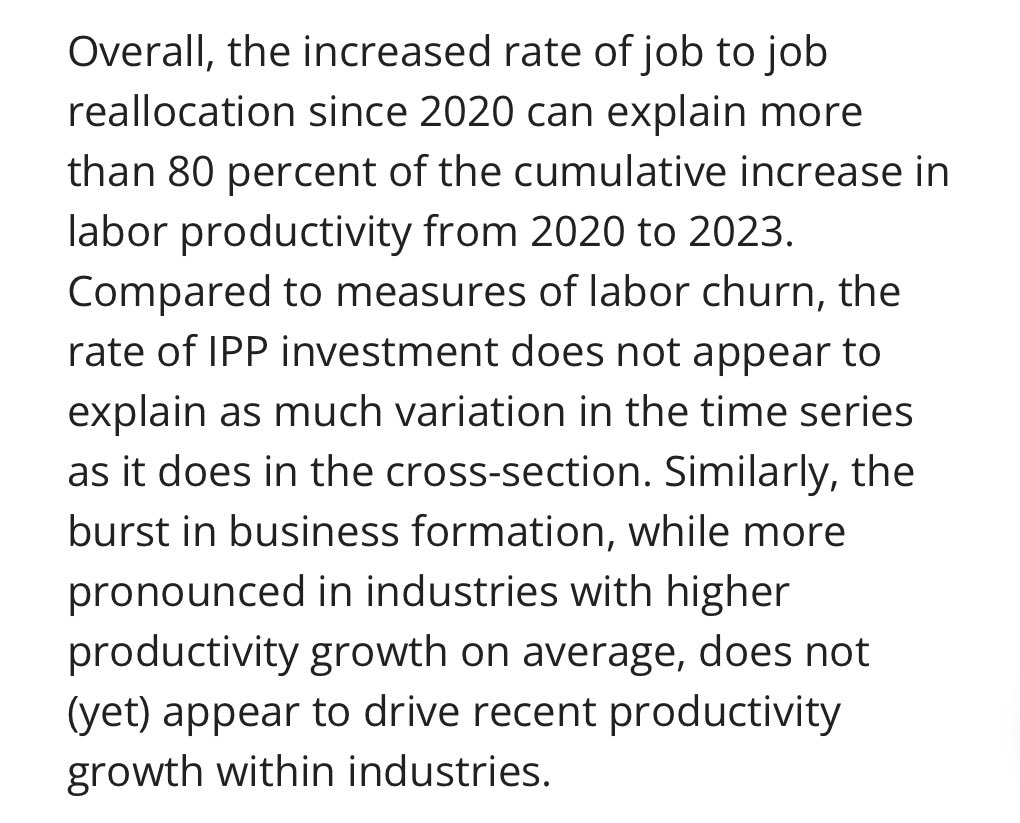
@Mark_Graph I would add the bulk of Covid JobKeeper payments. It now appears that maintaining what was described as ‘critical connections’ between employers and employees prevented valuable restructuring and reallocation, reducing productivity vs, say, the US: elibrary.imf.org/view/journals/…
Becky Quick tweet media
English
0
0
1
135