Muhammad Hamza Shafqaat

23.1K posts

Muhammad Hamza Shafqaat banner
Muhammad Hamza Shafqaat

Muhammad Hamza Shafqaat

@beyondfiles

Reforming self to reform the system
Inscrit le Kasım 2018
629 Abonnements384.8K Abonnés
Muhammad Hamza Shafqaat
Muhammad Hamza Shafqaat@beyondfiles·
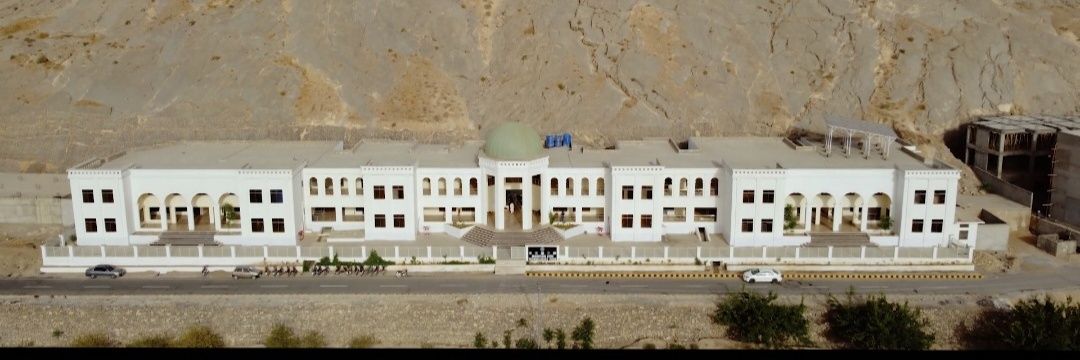
25 minutes from Quetta Breathtaking! Crystal waters, beautiful hills, and pure peace away from the city chaos. Balochistan’s best-kept secret Saraghurgai Dam. If you haven’t been here , what are you even doing ?
English
6
20
95
2.8K
Abid Majeed
Abid Majeed@AbidMajeed1969·
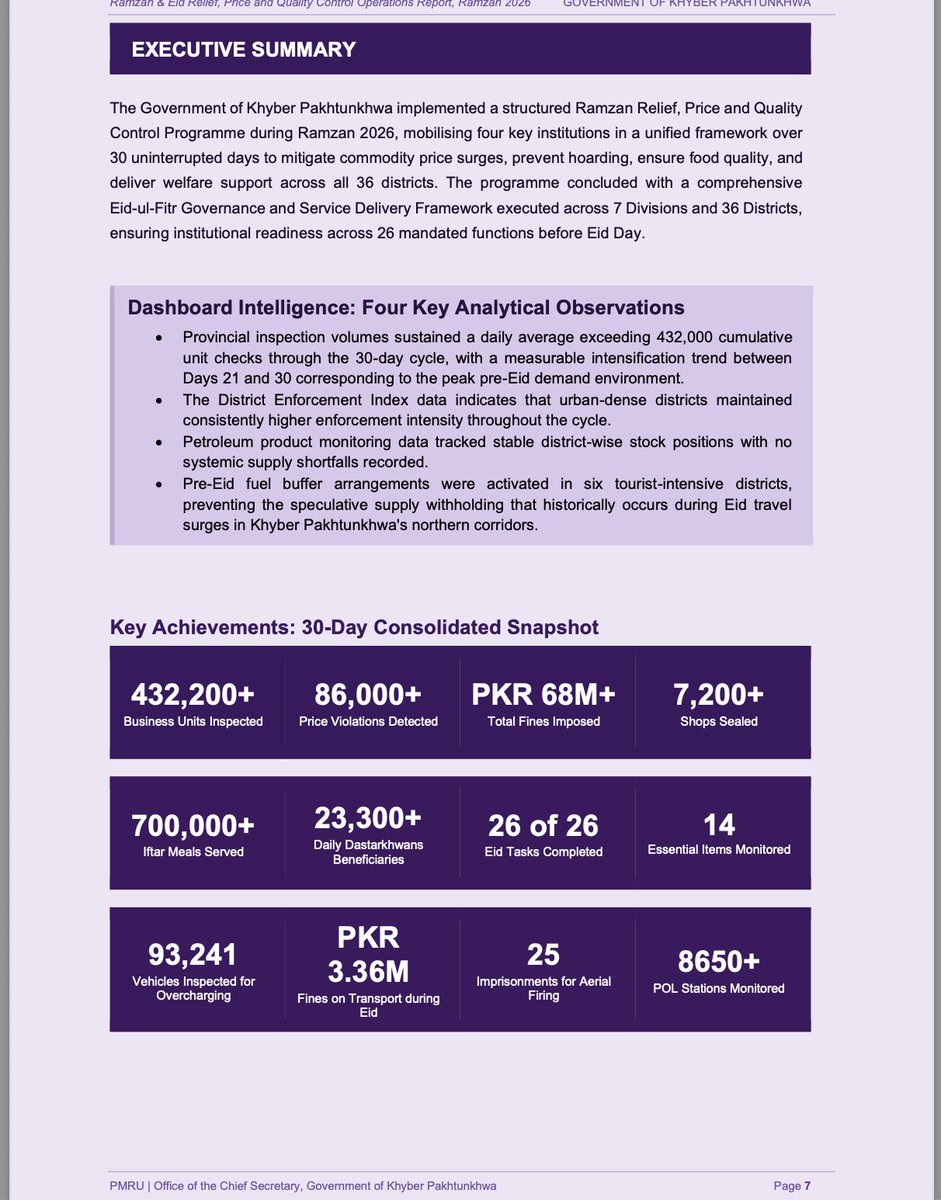
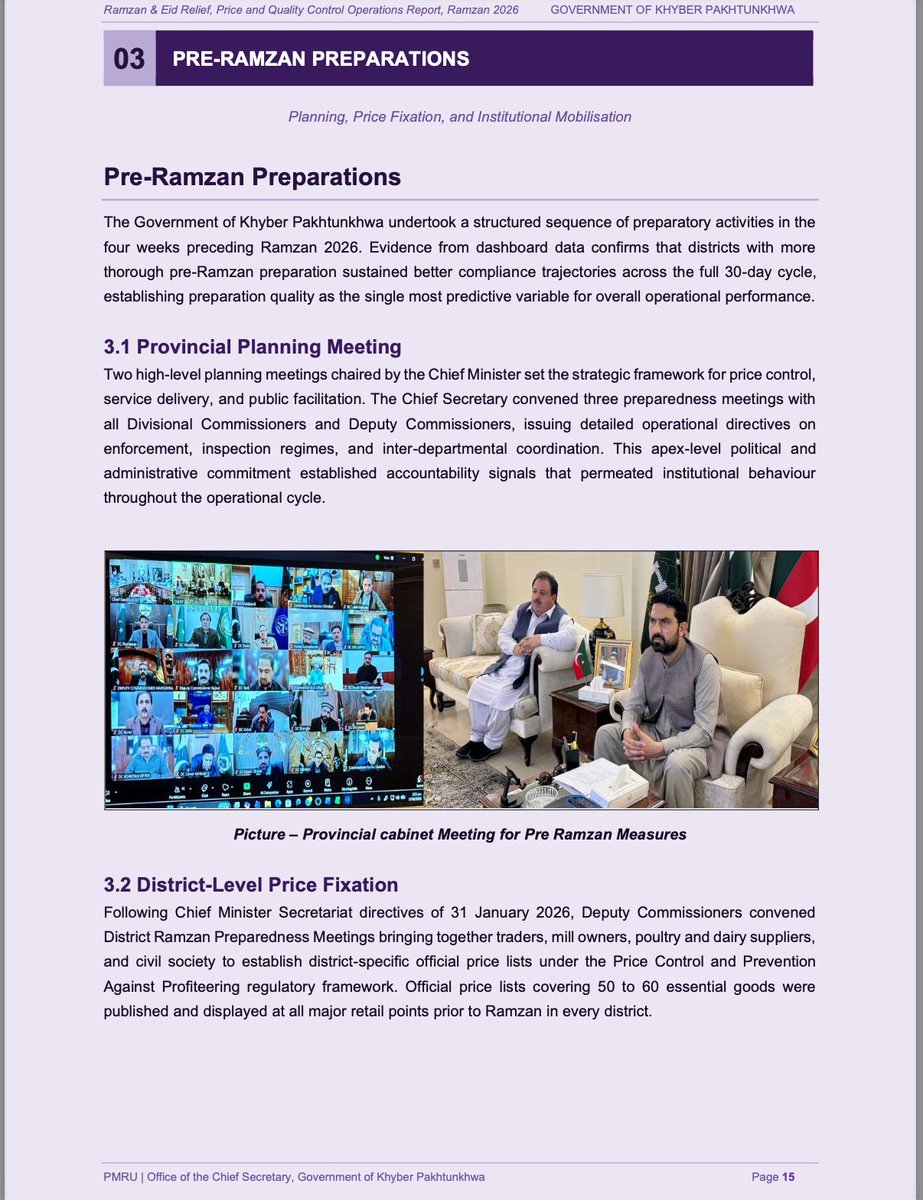
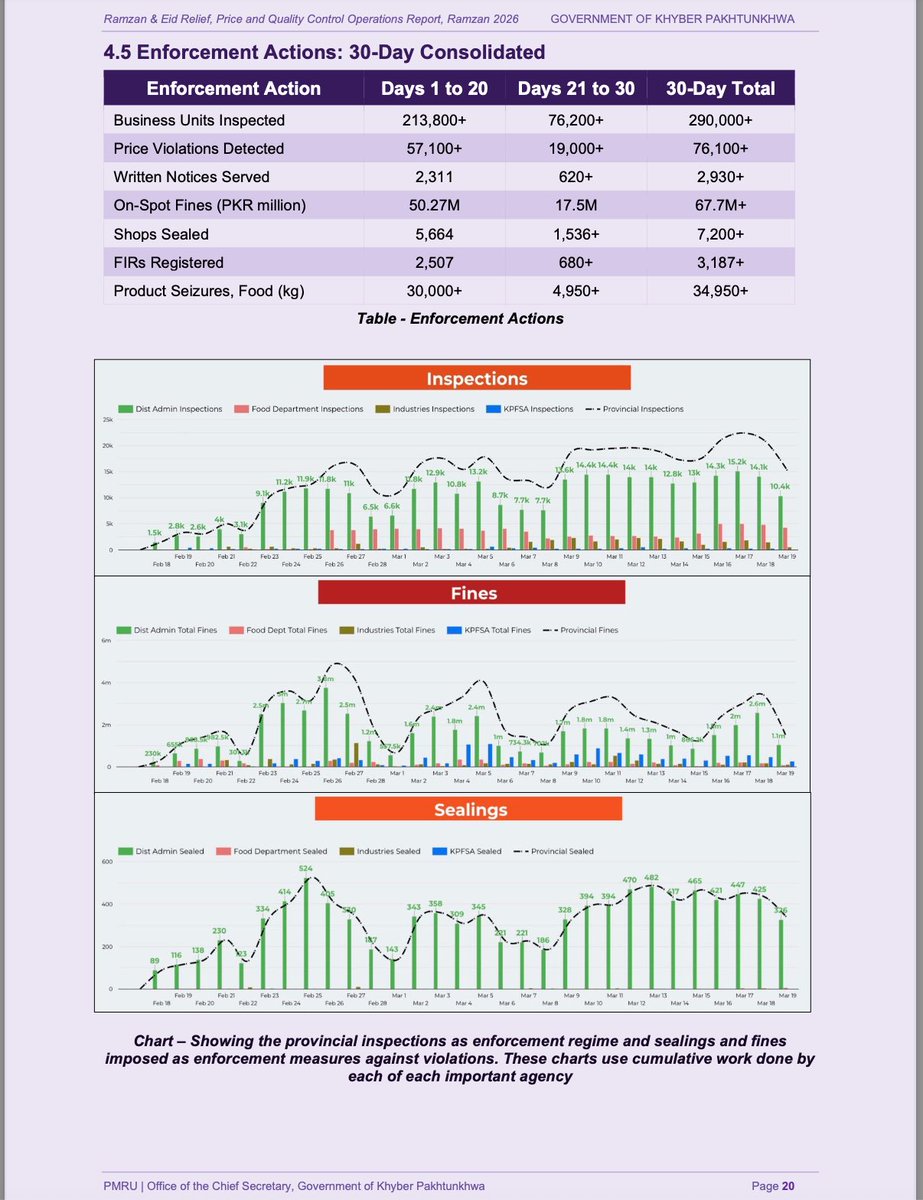
KP Govt’s Ramzan effort -from Day 1 thru Eid -Sustained focus on market monitoring, price control, food safety enforcement, fare checks, fuel oversight -Operational experience offers direction for strengthening these systems in future cycles. Report: pmru.kp.gov.pk/uploads/kp_ram…
Abid Majeed tweet mediaAbid Majeed tweet mediaAbid Majeed tweet mediaAbid Majeed tweet media
English
6
19
50
2.7K
Muhammad Hamza Shafqaat
Muhammad Hamza Shafqaat@beyondfiles·
This time thousand acres of poppy eliminated in District Washuk using Drones . It’s the same district where FAH and Drugs Mafia attacked SSP house and burnt it to the ground . More than 60 percent of poppy crops are eliminated in Balochistan which means more than 100,000 lives saved from this menace
Muhammad Hamza Shafqaat@beyondfiles

Let me present you an upcoming international success story of how Govt of Balochistan fought narco mafia and won . How ? —-> Clarity of command + eviction of illegal foreigners +Synergy of all LEAs + Drones + 4th schedule Recipe of how we are winning on ground

English
11
46
204
14.3K
Abid Majeed
Abid Majeed@AbidMajeed1969·
1.0 M crossed in plantation target of KP Govt for 23 Mar We will be publishing digital report soon listing sites, planted number, species, GPS etc Includes Forest Dept, students & schools, Dist Admin, other Govt areas & public can still plant & post on ehsaaseshajar.kp.gov.pk
Abid Majeed tweet media
English
15
52
148
14K
Muhammad Hamza Shafqaat retweeté
Mateen Haider
Mateen Haider@haider_mateen·
Pakistan’s National Flag displayed on Burj Khalifa , Dubai local time 07:20 PM on the occasion of #PakistanDay #23rdMarch برج خلیفہ دبئی، پر آج رات پاکستان کا پرچم لہرایا گیا۔۔۔
Mateen Haider tweet media
0
10
40
1.1K
Muhammad Hamza Shafqaat retweeté
Muhammad Hasan Shafqaat
Muhammad Hasan Shafqaat@hasanshafqaat·
In a matter of days, the tone of the conflict around Iran has shifted from signals of de-escalation to explicit ultimatums. What appeared as a limited campaign now carries the risk of evolving into a broader confrontation with deep implications for global energy security. Latest warnings around the reopening of the Hormuz are not just tactical messaging, they go to the heart of how modern conflicts intersect with economic systems. Logic of Washington is relatively straightforward. Once military action has begun, credibility and deterrence become intertwined. Ensuring that one of the world’s most critical maritime chokepoints remains open is not just a regional objective but a global economic imperative. Yet the assumption that pressure alone will compel compliance underestimates how states behave on existential threats. For Iran, the closure or disruption of Hormuz represents more than leverage, it is the culmination of decades of strategic thinking shaped by geography and asymmetry. Historically, Tehran avoided crossing this threshold, aware of the consequences. That restraint has now eroded. Once such a capability is actively deployed, it alters the calculus permanently. Control over a narrow waterway that carries a significant share of global oil flows gives even a weakened state disproportionate influence. Military superiority does not always translate into strategic control. Even where conventional dominance is clear, asymmetric tools can rebalance negotiations. This pattern has been visible across conflicts, including in Ukraine, where energy infrastructure has repeatedly become both target and instrument of pressure. History also suggests that coercion alone rarely produces quick capitulation, particularly against actors with high tolerance for economic and social costs. Iran’s wartime conduct in the 1980s demonstrated a willingness to endure prolonged hardship under pressure. That institutional memory still shapes decision making today, among IRGC who might prioritise regime survival over economic stability. There is also a growing risk of horizontal escalation. If energy or water infrastructure across the Gulf becomes a target, regional actors may reassess their restraint. Until now, many have sought to contain the conflict geographically, wary of triggering broader systemic instability. But once critical infrastructure is directly threatened, the incentives to remain on the sidelines diminish rapidly. What emerges is a more complex strategic picture. Despite battlefield advantages, US may find that leverage is not as one-sided as it appears. Disruption risks, market sensitivity, and the potential for prolonged instability give Iran negotiating weight that did not exist before the conflict escalated. That creates a narrowing set of choices between intensification and negotiated settlement. For global markets, the implications are visible. Energy prices are reacting to current disruptions ad long-term blockage. Rebuilding flows, restoring confidence, and stabilising supply chains could take months rather than weeks. There are, however, clear thresholds that should remain off limits. Civilian nuclear infrastructure, particularly facilities under international oversight, represents one such boundary. Crossing it would set a precedent with consequences far beyond the current conflict, introducing risks that are difficult to contain once unleashed. The broader lesson is that energy security and geopolitical strategy are now inseparable. Control over flows, infrastructure, and chokepoints can shape outcomes as much as conventional military power. History shows that once these dynamics are activated, they are difficult to reverse. The challenge for policymakers is not only to manage the immediate crisis but to avoid decisions that lock the system into a volatile equilibrium. #EnergySecurity #Geopolitics #Hormuz #GlobalEconomy #OilMarkets #StrategicStability #MiddleEast #EnergyTransition #EconomicSecurity
English
0
2
3
1.5K
Muhammad Hamza Shafqaat retweeté
Muhammad Hasan Shafqaat
Muhammad Hasan Shafqaat@hasanshafqaat·
Just In: @FinancialTimes reports: Donald Trump has postponed his threatened attacks on Iranian energy infrastructure following “good and productive” talks with Iran. In a statement on Truth Social, the US president said the talks had covered “a complete and total resolution of hostilities in the Middle East”. He said: I AM PLEASE TO REPORT THAT THE UNITED STATES OF AMERICA, AND THE COUNTRY OF IRAN, HAVE HAD, OVER THE LAST TWO DAYS, VERY GOOD AND PRODUCTIVE CONVERSATIONS REGARDING A COMPLETE AND TOTAL RESOLUTION OF OUR HOSTILITIES IN THE MIDDLE EAST. BASED ON THE TENOR AND TONE OF THESE IN DEPTH, DETAILED, AND CONSTRUCTIVE CONVERSATIONS, WITCH WILL CONTINUE THROUGHOUT THE WEEK, I HAVE INSTRUCTED THE DEPARTMENT OF WAR TO POSTPONE ANY AND ALL MILITARY STRIKES AGAINST IRANIAN POWER PLANTS AND ENERGY INFRASTRUCTURE FOR A FIVE DAY PERIOD, SUBJECT TO THE SUCCESS OF THE ONGOING MEETINGS AND DISCUSSIONS. THANK YOU FOR YOUR ATTENTION TO THIS MATTER! PRESIDENT DONALD J. TRUMP #BREAKİNGNEWS
English
1
2
4
1.2K
Muhammad Hamza Shafqaat retweeté
Muhammad Hasan Shafqaat
Muhammad Hasan Shafqaat@hasanshafqaat·
The Iran conflict may have just accelerated the global energy transition more than a decade of climate negotiations. Reported by the @FinancialTimes, Chinese clean energy giants like CATL, BYD and Sungrow have added over $70 billion in market value since the US–Israel strikes on Iran. What is striking is not just the scale, but the signal: they have outperformed major oil companies even as oil prices surged nearly 50%. Markets are telling us something very clearly. This is no longer just an energy crisis. It is a turning point in how the world defines energy security. For decades, energy security meant securing access to oil and gas. Today, it increasingly means reducing dependence on them altogether. Countries that rely heavily on imported fuels, particularly across Asia, are now facing a harsh reality. A disruption thousands of kilometres away can instantly translate into inflation, industrial slowdown and external account pressure. Attacks on LNG infrastructure and supply chains have exposed just how fragile the current system is. The response is already visible. China is doubling down on electrification. Japan, South Korea and Taiwan are expected to follow. The logic is simple: the less you depend on imported fossil fuels, the less exposed you are to geopolitical shocks. This is where batteries and grid-scale storage become strategic assets. They are not just enabling renewables. They are enabling resilience. From stabilising power systems to supporting data centres and industrial operations, storage is becoming as critical as generation itself. The key lesson for policymakers is clear. Energy transition is no longer a climate agenda. It is an economic security strategy. Those who move early to build domestic renewable capacity, electrify demand and invest in storage will be better positioned to withstand volatility, protect competitiveness and maintain macroeconomic stability. Those who delay will remain exposed to recurring shocks, each more disruptive than the last. In a world where geopolitical risk is rising, energy independence is no longer optional. It is the foundation of long-term economic sovereignty. Source: Financial Times share.google/E1mv6IclZtgA7b… #EnergySecurity #Geopolitics #CleanEnergy #EnergyTransition #GlobalEconomy #Renewables #BatteryStorage #LNG #OilMarkets #EconomicResilience #IndustrialPolicy #ClimateStrategy
English
0
2
5
697
Muhammad Hamza Shafqaat retweeté
Muhammad Hasan Shafqaat
Muhammad Hasan Shafqaat@hasanshafqaat·
A recent report in the @FinancialTimes highlights how the global LNG market is approaching a very sharp turning point. You can read the report here: ft.com/content/64c5a6… What makes this situation different from previous disruptions is the timing. Over the next few days, the last LNG cargoes that were loaded before the Strait of Hormuz disruption will reach their destinations. Once these are absorbed, the market will start feeling the real impact of supply cuts from the Gulf. Qatar, which contributes about one fifth of global LNG supply, has effectively been forced out of the market due to the blockade of the Strait of Hormuz and damage to its Ras Laffan facilities. The cargoes that were already on the water have delayed the shock, but that buffer is now ending. For Pakistan, the exposure is particularly high. Almost all LNG imports come from Qatar, and the final shipments have already arrived in the early days of the conflict. Since then, terminal operations have reduced significantly and one of the terminals is expected to run out of LNG very soon. This means supply constraints could become visible at the system level within days. The challenge is not just availability but affordability. Spot LNG prices have surged sharply and freight costs have also increased due to rerouting and limited vessel availability. For countries like Pakistan, entering the spot market at these levels is extremely difficult. Globally, the response is already unfolding. Smaller import dependent economies are beginning to manage demand, while larger economies such as China and Japan are switching back to coal and nuclear where possible. Europe is competing aggressively for limited supplies, which is pushing prices even higher. What is more concerning is that this is not a short term disruption. With a portion of Qatar’s LNG capacity expected to remain offline for several years, the market is likely to remain tight well beyond the immediate crisis. In the near term, Pakistan may have to rely more on furnace oil for power generation, which comes at a higher economic and environmental cost. But the bigger takeaway is clear. Energy systems built on a single source of supply become highly vulnerable in times of geopolitical stress. This situation is a reminder that energy security is not just about securing the lowest price. It is about building resilience through diversification, flexibility and long term planning. #EnergySecurity #LNG #Geopolitics #PakistanEconomy #EnergyPolicy #GasCrisis #GlobalMarkets #SupplyShock #EnergyTransition #StrategicResilience
English
0
5
11
1.4K
Muhammad Hamza Shafqaat
Muhammad Hamza Shafqaat@beyondfiles·
Reading this gave me chills. We just watched the shift from efficiency-maxxing to resilience-maxxing happen in real time
Muhammad Hasan Shafqaat@hasanshafqaat

Unfortunately developments around the Strait of Hormuz suggest that we may be underestimating the depth and duration of the current crisis. Iranian side seems to reassess it strategy. Seems reopening the Strait is no longer an immediate focus, as the leadership is dealing with military pressure and internal security concerns. This is against different analysis shared yet. The nature of conflict has also changed. The targeting of major energy infrastructure (South Pars and Ras Laffan) is a dangerous escalation. For decades, there was an understanding that certain assets were too critical to be touched. That line has been crossed. The immediate market reaction has been upward movement of Oil prices back above $110 and gas markets tightening. Risks are being reassessed. Prolonged and structural constraint on supply is being priced. For Europe, this is particularly difficult. The strategy to reduce dependence on Russian energy was based on assumptions of stable supplies from the Middle East. That has changed. If Qatar’s supply outlook is compromised and Hormuz remains uncertain, options are considerably narrowed down. There is also a broader geopolitical dimension that is becoming harder to ignore. Higher oil prices, delayed energy transitions in Europe, and renewed uncertainty in global gas markets all work in Russia’s favour. At the same time, Asian buyers are likely to find themselves in a more competitive environment for LNG cargoes, which could drive prices higher for an extended period. An important point to ponder is what happens even if the conflict de-escalates. Confidence, once lost, is not easily restored. Shipping companies, insurers, and traders will continue to factor in risk premiums. It is possible that even reopening of the Strait does not translate into a full normalization. This is where the conversation needs to move beyond immediate price movements. We may be entering a phase where energy security is no longer about efficiency or cost optimization, but about resilience and redundancy. That shift has implications for inflation, industrial competitiveness, and global trade patterns. In many ways, this crisis is exposing a deeper vulnerability in the global system. A single chokepoint continues to carry a disproportionate share of global energy flows, and any sustained disruption there reverberates across continents. The assumption that supply can always be rerouted or substituted is being tested in real time. What we are witnessing is not just another episode of volatility. It looks increasingly like a structural inflection point for global energy markets and for the way geopolitical risk is priced into the global economy. #EnergySecurity #Geopolitics #StraitOfHormuz #OilMarkets #LNG #GlobalTrade #MiddleEast #EnergyCrisis #SupplyChains #Inflation #EnergyPolicy #GlobalEconomy

English
0
0
20
7.2K
Muhammad Hamza Shafqaat
Muhammad Hamza Shafqaat@beyondfiles·
Quetta was targeted by 2 kamikaze drones. One was shot down by LEAs. However other dropped on a village outside Quetta . No casualties reported . Drones were sent from Afghanistan- Chaman border
English
3
26
151
11.6K
Muhammad Hamza Shafqaat
Muhammad Hamza Shafqaat@beyondfiles·
Let me present you an upcoming international success story of how Govt of Balochistan fought narco mafia and won . How ? —-> Clarity of command + eviction of illegal foreigners +Synergy of all LEAs + Drones + 4th schedule Recipe of how we are winning on ground
Muhammad Hamza Shafqaat@beyondfiles

Carrying on with the operation. This time in Chagi . Poppy cultivation for narcotics is illegal in Pakistan under national law and international obligations including the Single Convention on Narcotic Drugs. Illegal cultivation feeds the heroin trade and organised crime. That is why it is being eradicated.

English
9
40
260
49.8K
Mir Imran Gichki
Mir Imran Gichki@MirImranGichki1·
In pursuance of the vision of honorable CM Balochistan @PakSarfrazbugti , The Forest & Wildlife Department has launched a targeted tree plantation campaign with the media fraternity in Quetta. Earlier, over 6,000 saplings of various species were distributed among officers and officials at the Balochistan Civil Secretariat. Grateful to the members of the Balochistan Press Club for their enthusiastic participation. Under the able leadership of the CM, we can collectively mitigate environmental challenges. Special thanks to Irfan Saeed and friends from the Press Club for supporting this plantation drive. 🌱🌳 @dpr_gob @bfwd1876 @irfansaeed
Mir Imran Gichki tweet media
English
4
3
21
2.2K