
TheFinancialInvestor

301 posts

TheFinancialInvestor banner
TheFinancialInvestor

TheFinancialInvestor

@pythonandfinhub

Writing about AI infrastructure at https://t.co/nFgbVx0ZPK

Inscrit le Aralık 2023
82 Abonnements42 Abonnés
TheFinancialInvestor
TheFinancialInvestor@pythonandfinhub·
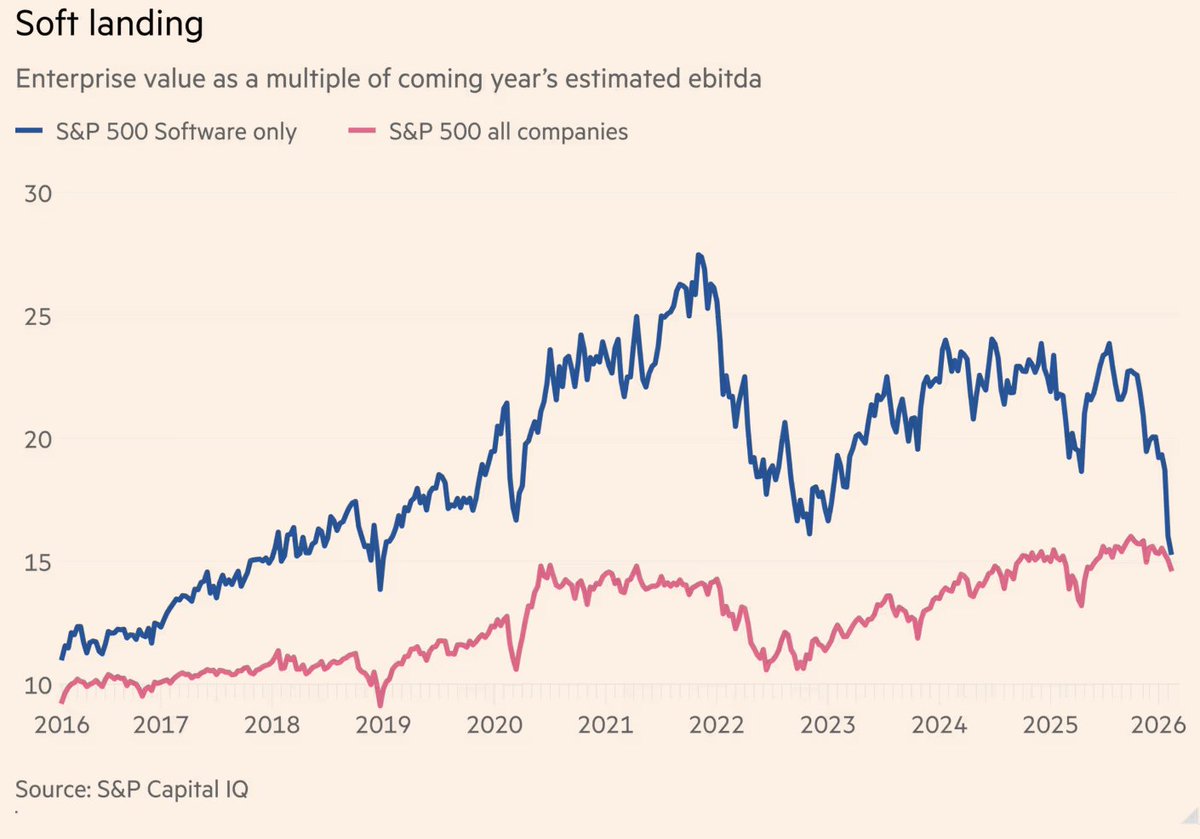
$MSFT at 21x forward earnings with 19% revenue growth and $625 billion in contracted obligations. The CapEx panic has compressed the multiple to levels not seen since 2016. Copilot is 3.3% penetrated across 450 million seats. I see huge upside in MSFT if Copilot seats grow a bit
English
0
0
0
39
Kairos
Kairos@KairosPraxis·
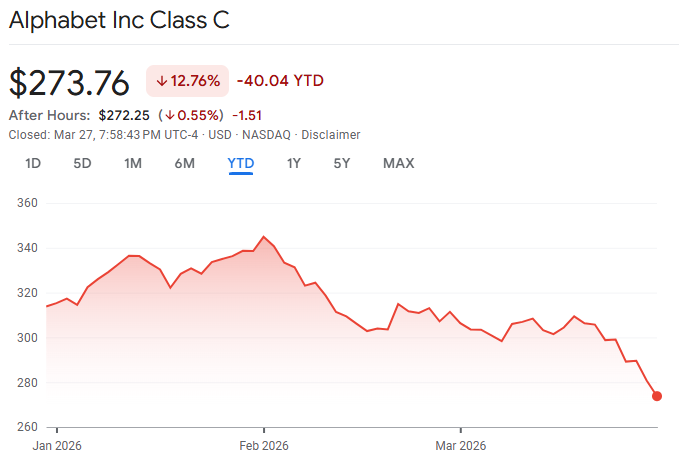
I'm sure there are stocks with better r/r out there, but $GOOG is starting to look interesting again at 25x P/E (trailing). Gemini has fallen behind Claude/OpenAI, but cloud, search, Youtube are still going strong. Additionally, lots of upside from TPUs and datacenters.
Kairos tweet media
Kairos@KairosPraxis

My barebones investment thesis for $GOOG is that their cloud offering will continue growing at 20-25% CAGR for the next 5 years at higher margins (AWS is at 39%) whereas Youtube will grow at 10% for the next 5 years.

English
17
4
170
38.7K
SuspendedCap
SuspendedCap@ContrarianCurse·
GOOG / AMZN are going to be your lowest cost producers of compute when you combine in house programs (which bend the cost curve) and total scale We have a glut in compute not in that demand isn’t there, but in the fact that there is too much capital chasing projects and compute/intelligence is being sold WAY below cost. There is massive consumer surplus So I think AMZN / GOOG can majorly win as 1) highest cost producers get pushed off their plans / rationalize (being signalled, would explain NVDA) 2) compute scarcity rises, prices go up and reduces competition at the lab level as the least funded labs can’t afford access to 3) this gives incumbent labs headroom to raise prices since they are the only ones that can pay for compute 4) IF value delivery continues to rise, there should be crossover where labs have been able to charge a lot more and cost downs in performance cross over These advantages around scale will compound to potentially just only a few consolidated players
English
10
6
144
16.7K
TheFinancialInvestor
TheFinancialInvestor@pythonandfinhub·
@Ritholtz Expectation of higher rates is bad for gold. If real rates, led by higher expected interest rates increase, the opportunity cost of holding gold increases
English
1
0
10
2K
Barry Ritholtz
Barry Ritholtz@Ritholtz·
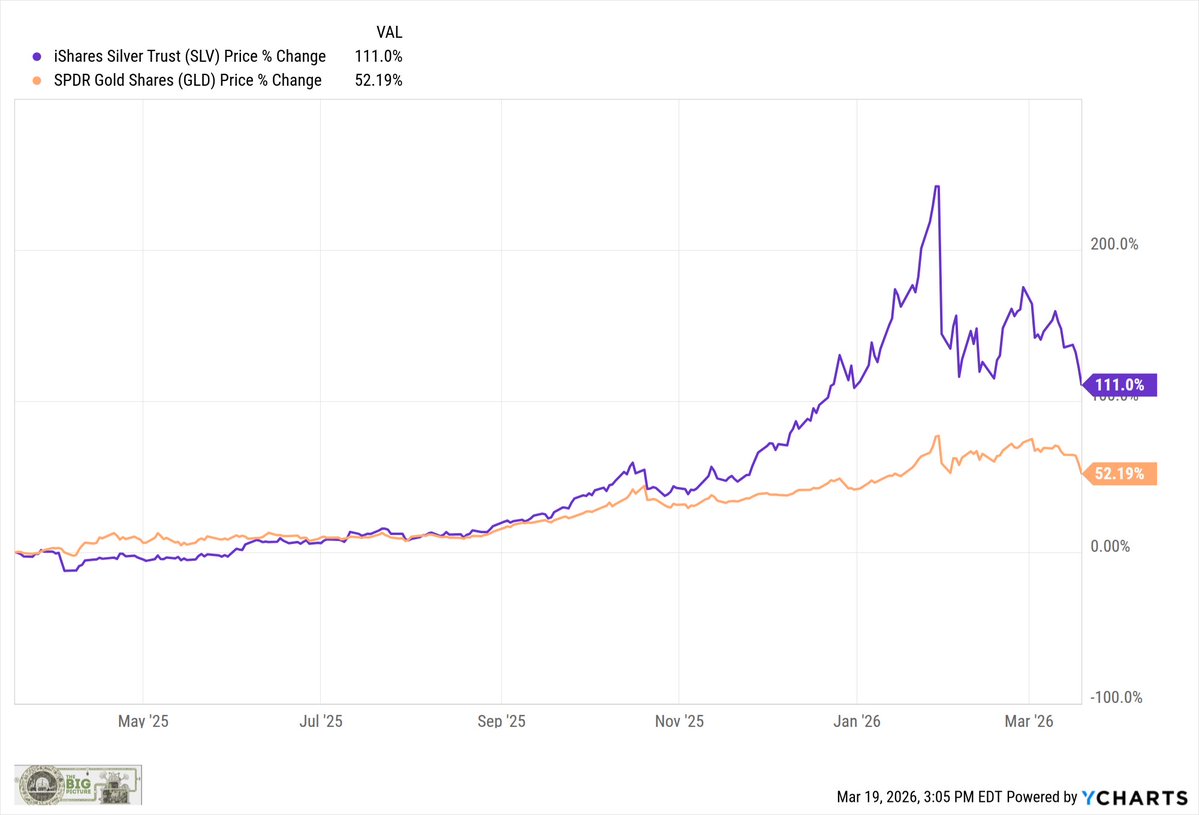
We are in the midst of a hot war in the Middle East, with Oil prices kissing $120, a cooling (pre-war) labor market, and the odds of a recession ticking up from modest levels. And despite all of this geopolitical economic chaos, Silver and Gold are both crashing. Besides capital flow reversals and speculative unwind, can anyone explain what is driving this action?
Barry Ritholtz tweet media
English
72
8
151
53.5K
TheFinancialInvestor
TheFinancialInvestor@pythonandfinhub·
There is a number that explains the entire copper bull-bear debate: 12 vs 27 tonnes of copper per megawatt of data center capacity. One counts what is inside the building. The other counts what it takes to power it. The gap between them is 450,000-840,000 tonnes per year of "hidden" demand. open.substack.com/pub/sectorplay…
English
0
0
0
21
Brandon Beylo
Brandon Beylo@marketplunger1·
Getting really excited about this pullback in the metals and miners. Some extremely attractive companies down 20-30%+ over the past 1-2 months. Great time for those with lots of cash ready to deploy once bases start forming. Love it.
English
39
16
462
67.4K
TheFinancialInvestor
TheFinancialInvestor@pythonandfinhub·
The EIA’s March oil forecast is $21/barrel higher than February’s — and it already assumes the Strait of Hormuz reopens by April. The market at $94 disagrees. Traced what that means for hyperscaler margins, the Fed, and your portfolio: @sectorplaybook/note/p-191003713?r=6d4wuv&utm_medium=ios&utm_source=notes-share-action" target="_blank" rel="nofollow noopener">substack.com/@sectorplayboo
English
0
0
0
49
TheFinancialInvestor
TheFinancialInvestor@pythonandfinhub·
If hyperscalers cut CAPEX 10-20%, the hyperscaler stocks go up. And the infrastructure supply chain. $CRDO, $ALAB, $NVDA, $AMD, $MU goes down hard. The companies funding the buildout benefit from cutting it. The companies feeding the buildout have nowhere to hide. sectorplaybook.substack.com/p/the-646-bill…
English
0
0
0
220
TheFinancialInvestor
TheFinancialInvestor@pythonandfinhub·
$FCX made $25.9B in revenue last year at an average copper price of $4.75/lb, while its biggest mine was literally buried under mud. The Grasberg mud rush in September 2025 knocked out 20% of FCX's copper production. Output fell from 4.2B lbs to 3.4B lbs. And revenue still grew. Now Grasberg is restarting. Copper is at $5.90/lb. And nobody seems to be doing the math. Production was flat for three years, then dropped 20%. Revenue didn't care because the copper price kept climbing. The gap between today's spot ($5.90) and last year's realized price ($4.75) is $1.15/lb. On normalized production, that's roughly $3.8B in incremental annual cash flow that hasn't shown up in a single quarterly earnings print yet. Grasberg at full capacity is the lowest-cost copper operation on the planet. It also produces 1.3 million ounces of gold per year. At $4,000 gold, that's another $5.2B in revenue from a single asset. Sometimes the most interesting setup is just a company getting back to normal.
TheFinancialInvestor tweet media
English
0
0
2
198
TheFinancialInvestor
TheFinancialInvestor@pythonandfinhub·
$CRWD spent years being told Microsoft would eat their lunch by bundling security "for free." This week Satya Nadella and George Kurtz spoke to CrowdStrike's sales team together. Falcon is now on the Azure Marketplace. The most dangerous competitor became a distribution channel.
English
0
0
0
80
TheFinancialInvestor
TheFinancialInvestor@pythonandfinhub·
$RIO2 doubled in 6 months and trades at 4.0x forward EBITDA on consensus gold/copper. Fairly valued? At consensus, sure. But consensus has gold at $4,742 while spot is $5,293. @sectorplaybook/note/p-189687097?r=6d4wuv&utm_source=notes-share-action&utm_medium=web" target="_blank" rel="nofollow noopener">substack.com/@sectorplayboo
English
0
0
0
41
TheFinancialInvestor
TheFinancialInvestor@pythonandfinhub·
That 14% Agentforce deployment rate is the number to watch. Klarna tried the "rip out Salesforce" playbook and ended up replacing it with other SaaS + an AI layer on top. If deployment catches bookings, the AI-as-interface-layer thesis wins. If not, margin compression eats everything.
English
2
0
0
36
Eric Jackson
Eric Jackson@ericjackson·
I've analyzed Salesforce earnings calls spanning 22 years. $40M to $41.5B. Same CEO. Tonight's call had a tell. Benioff's rhetoric declined while his numbers improved. He dropped "inflection." Dropped "paradigm." Dropped "revolution." Delta score: 2.5/100. Lowest in 22 years of calls. Meanwhile: growth reaccelerated. 9% last quarter. 12% tonight. First acceleration in 5 quarters. He brought live customers onto the earnings call. SharkNinja. Wyndham. First time in the entire dataset. In 22 years of studying CEO rhetoric across 32 companies, here's the pattern: At tops, rhetoric rises while the business slows. At bottoms, rhetoric cools while the business turns. Benioff tonight was the quietest version of himself I've measured. And the business just reaccelerated. The risk is one number: 14%. That's the Agentforce deployment rate. 29,000 deals. 4,000 in production. If deployment catches booking, no 20% decline. If it doesn't, nothing else matters.
English
21
12
268
83.8K
TheFinancialInvestor
TheFinancialInvestor@pythonandfinhub·
@KobeissiLetter Hedge funds are record-short software but the Klarna case shows something weirder, they didn't replace SaaS with AI, they replaced expensive SaaS with cheaper SaaS. AI became the glue, not the replacement. Are shorts pricing in displacement that isn't actually happening?
English
0
0
0
27
The Kobeissi Letter
The Kobeissi Letter@KobeissiLetter·
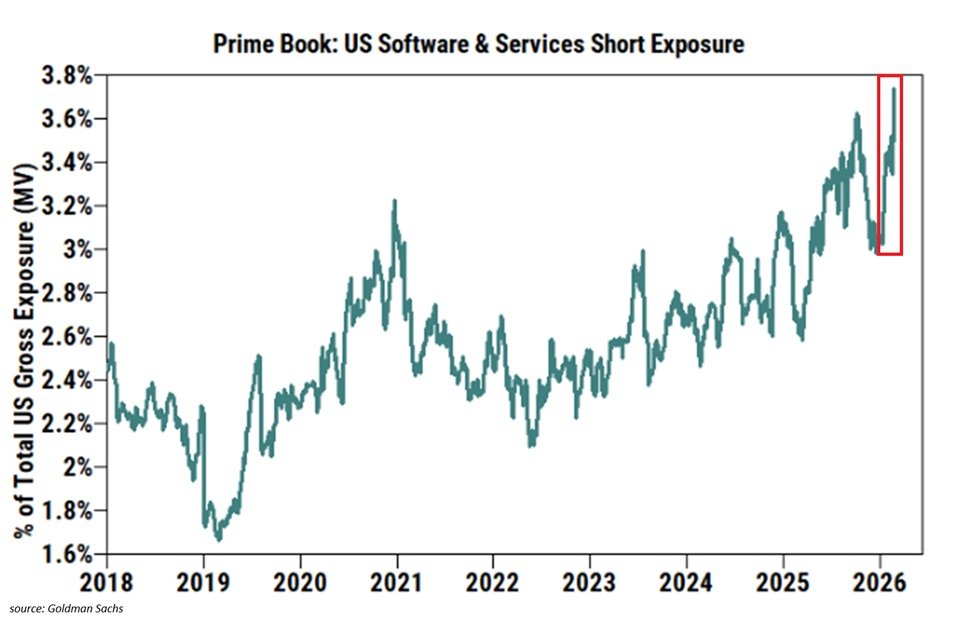
Hedge funds have never been this bearish on US software stocks: Hedge fund short exposure on US software and services stocks is up to a record 3.8%. Short exposure has surged +90% since 2022. By comparison, the 2019 low was 1.6% while the previous peak in 2021 was 3.2%. As a result, hedge funds' long-short ratio for the sector is down to an all-time low of 1.15 from the 2021 peak of 4.74. Furthermore, funds are underweight software and services stocks versus the Russell 3000 by a record -6.8 percentage points, down from +7.0 points in 2023. Is a short-squeeze brewing in software?
The Kobeissi Letter tweet media
English
71
102
804
108.7K
TheFinancialInvestor
TheFinancialInvestor@pythonandfinhub·
The gap between "AI can answer a question" and "AI can run a process that requires mid-stream judgment in a regulated environment" is measured in years, not quarters. Most CFOs are not going to bet their payroll system on closing that gap early. @sectorplaybook/note/p-189482248?r=6d4wuv&utm_source=notes-share-action&utm_medium=web" target="_blank" rel="nofollow noopener">substack.com/@sectorplayboo
English
0
0
0
26
TheFinancialInvestor
TheFinancialInvestor@pythonandfinhub·
@BenEsmael1 Honestly, if I'm the CTO? Per seat, every time. Per token pricing is a nightmare for budget planning. You're essentially signing up for a variable cost that scales with usage you can't fully predict.
English
1
0
1
10
Ben Esmeil
Ben Esmeil@BenEsmael1·
@pythonandfinhub Yes, sure - but if you are the CTO of a company, would you choose per seat or per Token? And if software companies offer both and in both you get the perks of the underlying LLM and less the COOS, why would you change?
English
1
0
0
10
Ben Esmeil
Ben Esmeil@BenEsmael1·
AI will kill SaaS. The Big Short put it: “If you can’t dazzle them with returns, confuse them with terminology.” Per seat → per task → per token. Repricing isn’t disruption. It’s accounting and SalesForce, ServiceNow did it already & isn't working
Ben Esmeil tweet mediaBen Esmeil tweet media
English
1
0
1
141
TheFinancialInvestor
TheFinancialInvestor@pythonandfinhub·
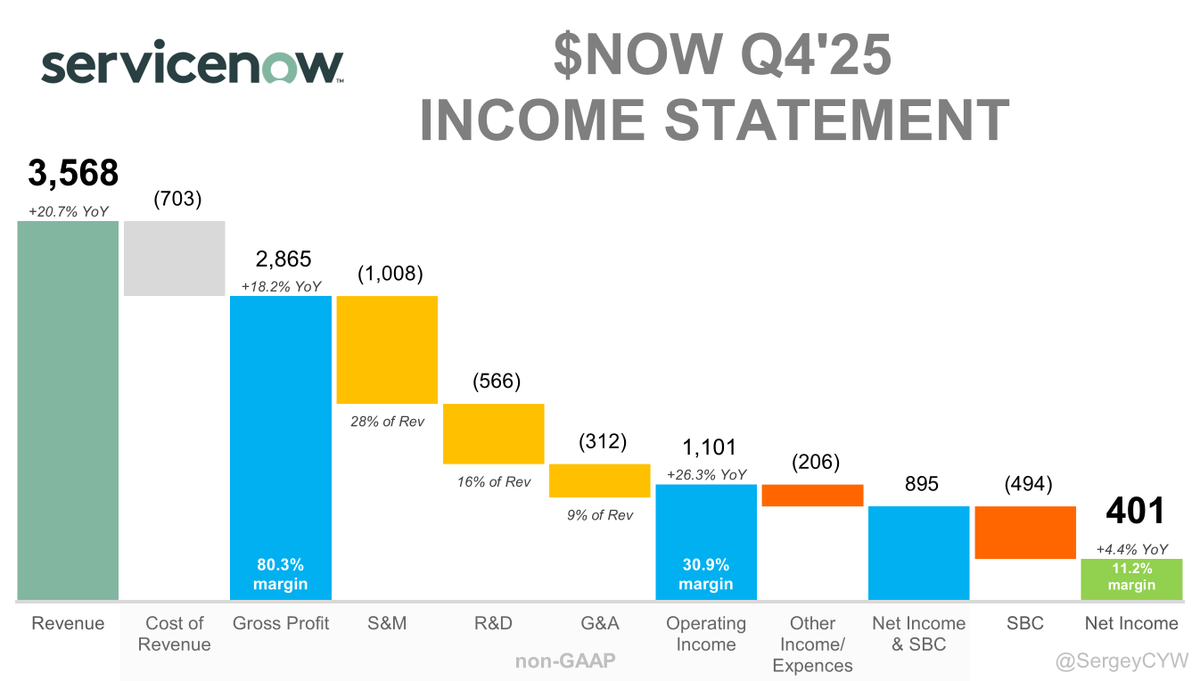
$NOW The underappreciated problem with SaaS companies selling AI features: every AI action has a real inference cost paid to hyperscalers. Old model was zero marginal cost per user. New model has variable costs the company doesn't control. That's a permanent change in business quality, not a temporary margin headwind. sectorplaybook.substack.com/p/will-ai-agen…
English
1
0
0
100
TheFinancialInvestor
TheFinancialInvestor@pythonandfinhub·
The seat compression risk is real but it's not the whole story. The bigger issue is the double squeeze, hosting costs go to hyperscalers, inference costs get shared with model providers. NOW's moving to consumption pricing ("Assists") but that introduces margin volatility they've never had at 84% gross.
English
0
0
1
159
Sergey
Sergey@SergeyCYW·
Is $NOW really at risk of AI disruption? $NOW is down ~52% from ATH. The bear case is simple: ~97% of revenue is seat-based. If AI reduces headcount, seat growth slows. But the real question is whether AI replaces ServiceNow… or makes it more central. Management is targeting $1B in AI-related ACV by 2026. That’s roughly 6–7% of projected ~$15.5B FY26 revenue. Not massive on its own, but meaningful this early in the adoption curve. Switching costs remain high. ServiceNow is deeply embedded across IT, HR, and operational workflows. Rip-and-replace carries material execution risk, which most CIOs avoid unless absolutely necessary. Competitive positioning remains strong. The key variable is how effectively the company executes its new hybrid consumption model. Early signals are constructive. Now Assist is scaling ahead of expectations.
Sergey tweet media
English
6
9
68
7.5K
TheFinancialInvestor
TheFinancialInvestor@pythonandfinhub·
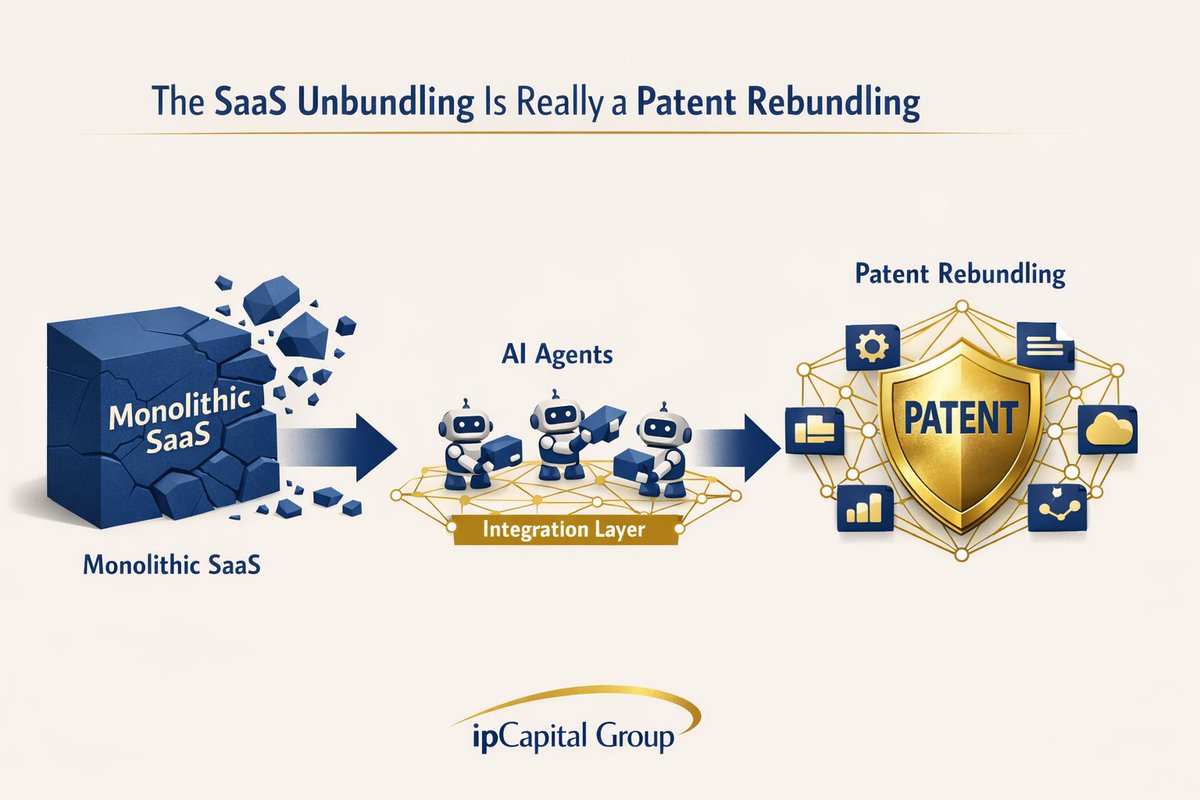
@SethCronin Interesting angle on patents. ServiceNow is a good case study here, they're not getting unbundled, they're getting squeezed from above. Hyperscalers host their platform AND provide the AI models. That's a margin compression story, not a disruption story.
English
1
0
1
18
Seth Cronin
Seth Cronin@SethCronin·
Everyone is talking about AI unbundling SaaS. Nobody is talking about what gets rebundled. Patents. Here is the contrarian take. The SaaSpocalypse unbundles monolithic software into modular AI agent workflows. Salesforce becomes five AI agents. ServiceNow becomes three. HubSpot becomes a prompt and a data connector. But here is what happens next. Those AI agents need to talk to each other. They need to share data across systems. They need to produce consistent, reliable outputs. The integration layer between AI agents and enterprise systems becomes the new high-value real estate. And integration architectures are some of the most patentable innovations in software. Think about it: Methods for orchestrating multiple AI agents across different data sources? Patentable. Systems for maintaining data consistency when agents access competing platforms? Patentable. Architectures for translating between different AI agent protocols and enterprise APIs? Patentable. The companies building this "glue" layer are sitting on patent goldmines. They just do not know it yet. The SaaS unbundling destroys old moats. The patent rebundling creates new ones. The question for every software company: are you building the glue, or are you being dissolved? #SaaS #AI #Patents #IPStrategy #Innovation #SaaSpocalypse
Seth Cronin tweet media
English
2
0
0
67
TheFinancialInvestor
TheFinancialInvestor@pythonandfinhub·
@ChrisJVersace @ServiceNow McDermott can push back all he wants but the CFO quietly guided gross margins down 200bps. NOW's moat is real, 98% renewals don't lie, but the shift from per seat to consumption based "Assists" introduces variable inference costs they've never had to manage before.
English
0
0
0
15