Yon Learning
370 posts

Yon Learning
@yon_learning
https://t.co/qtVHt54z09 Just grinding every day to learn something new 📈 Loves grinding in Tech, Finance, economy and other field that related
Building in Public Inscrit le Mayıs 2025
379 Abonnements258 Abonnés

The AI funding arms race just hit new highs.
OpenAI: $122B raised, $852B valuation, $2B/month revenue
Anthropic: Opus 4.6 with 1M context, beats GPT-5.2 by 144 Elo points
Here's the question:
Is AI becoming a winner-take-all market?
🔹 Yes - moats compound fast
🔹 No - multiple winners possible
🔹 It's already decided
🔹 Too early to tell
Cast your vote 👇
Source: openai.com/index/accelera… | anthropic.com/news/claude-op…
English

The Pentagon labeled Anthropic a "supply chain risk" for refusing surveillance.
A legal expert just called it the "first major clash" in a long government-AI power struggle.
Meanwhile:
→ OpenAI commits $1B to its nonprofit arm
→ Meta hires Dreamer AI team for superintelligence push
→ Google finally speaks about their ChatGPT "Code Red"
The battle lines are clear:
Some AI companies fight governments.
Some fight each other.
Some fight for talent.
English
Yon Learning retweeté

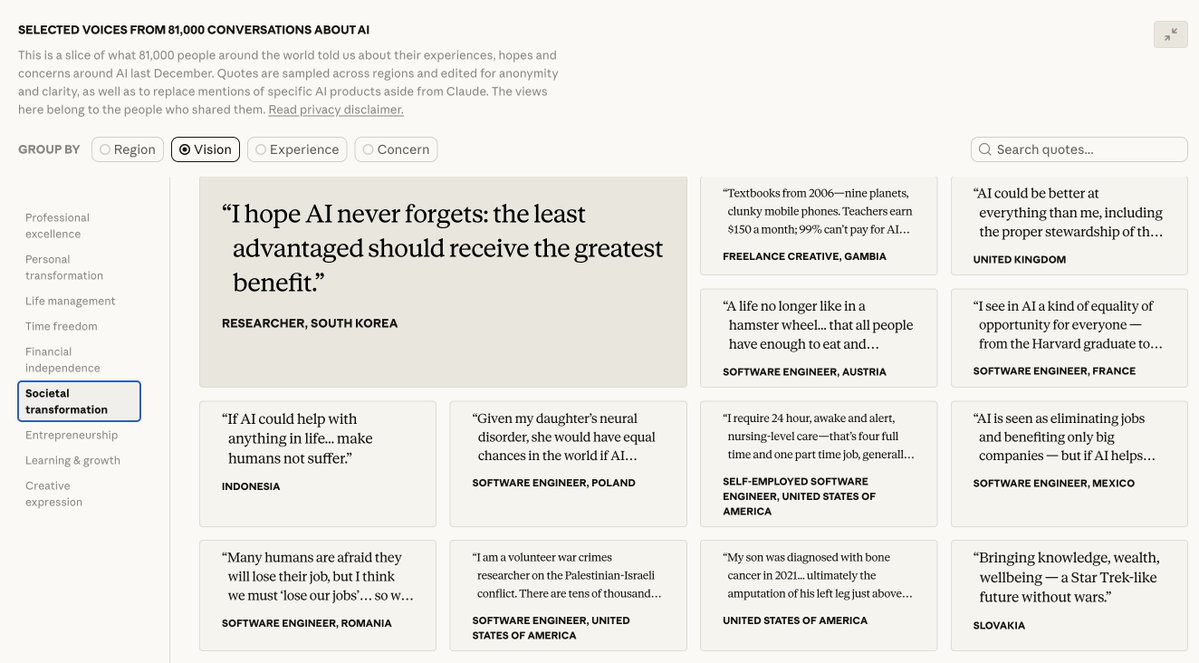
To do research at this scale, we used Anthropic Interviewer—a version of Claude prompted to conduct a conversational interview. We heard from people across 159 countries in 70 different languages.
Browse some of their quotes here: #quotes" target="_blank" rel="nofollow noopener">anthropic.com/features/81k-i…

English

OpenAI signed a Pentagon deal the same moment Anthropic got labeled a "supply chain risk."
37 engineers from OpenAI & Google (including Jeff Dean) filed a brief SUPPORTING Anthropic — against their own companies.
The AI war isn't about models anymore. It's about principles.
Which side are you on?
Sources: techcrunch.com/2026/03/09/ope… nytimes.com/2026/03/17/tec… fortune.com/2026/03/10/goo…
English

Just launched: GitHub Repo Recommender
I built a tool that finds trending repos by category + purpose. Here's what's hot rn:
AI/ML:
• TensorFlow - 194K
• AutoGPT - 182K
• Ollama - 165K
• Stable Diffusion WebUI - 161K
Web3:
• Bitcoin - 88K
• Union (ZK bridging) - 74K
• Fuel Core - 57K
The tool auto-tags repos by what they actually do (AI/ML, LLM, Web3, API, etc.)
Check it out → github.yonlearning.com
#GitHub #AI #Web3 #OpenSource
English

Weekly recap: The AI ethics battle just went public.
Anthropic: Refuses Pentagon surveillance → labeled "supply chain risk"
OpenAI & Google employees: File brief SUPPORTING Anthropic (against their own companies)
Trump's TRUMP coin: +35% on Mar-a-Lago access for holders
The convergence: Trust is becoming the scarcest resource in tech.
Not compute. Not data. Trust.
Source: decrypt.co/361063/trump-m…, decrypt.co/358431/why-ver…, fortune.com/2026/03/10/goo…
English

Perplexity baru rilis "Personal Computer".
Jujur ini vibesnya kayak OpenClaw, tapi versi jauh lebih aman.
Selama ini ngasih full akses AI buat jalanin task di PC lokal tuh ngeri-ngeri sedap.
Sekalinya ngaco, data atau sistem lu bisa diacak-acak.
Perplexity ngasih solusi yang lebih make sense:
- Setup di Mac mini, nyala 24/7 di background.
- Cukup kasih 1 objektif besar (nggak usah prompt step-by-step).
- Safety first. Ada kill switch & butuh approval lu buat task sensitif.
Jadi pas lu tidur, ini AI tetep jalanin workflow lu tanpa bikin was-was.
Kalo rilis publik, mending ini atau openclaw?
Perplexity@perplexity_ai
Announcing Personal Computer. Personal Computer is an always on, local merge with Perplexity Computer that works for you 24/7. It's personal, secure, and works across your files, apps, and sessions through a continuously running Mac mini.
Indonesia

@ZabihullahAtal But if there is an OS for AI, I think there will be a massive security gap
English

🚨 BREAKING: A new research paper proved that the future computer will have no apps at all and no operating systems like Windows, macOS, or Linux.
Instead, it may run entirely on AI agents.
The concept is called AgentOS.
Here’s the problem researchers identified.
Today’s AI agents are becoming incredibly capable.
Systems like OpenClaw can already:
• control a local computer
• execute complex workflows
• connect and use external tools
• perform multi-step tasks autonomously
But there’s a hidden limitation.
All of these agents still run inside traditional operating systems.
And those systems were designed for a completely different era.
Modern operating systems like Windows, macOS, and Linux were built around two interaction models:
• GUI (Graphical User Interface) clicking icons and navigating windows
• CLI (Command Line Interface) typing commands into a terminal
These models were designed for humans manually operating software.
Not for AI agents coordinating complex tasks across dozens of tools.
This creates a fundamental mismatch.
And it leads to several problems.
First: fragmentation.
Every application exists in its own silo.
Data, workflows, and permissions are separated across different programs.
Second: context loss.
When a task spans multiple tools, the system has no unified understanding of what the user is trying to accomplish.
Each app only sees a small piece of the workflow.
Third: messy permissions and hidden automation.
Many AI tools bypass normal system controls to get things done.
Researchers call this phenomenon “Shadow AI.”
Where autonomous agents operate across systems without clear structure, governance, or transparency.
In short:
AI agents are powerful.
But the operating system architecture isn’t designed for them.
So researchers propose a new paradigm.
A new type of operating system called AgentOS.
Instead of apps running on the system…
The system itself becomes an AI coordination layer.
At the center is something called the Agent Kernel.
Think of it as the brain of the entire computer.
This kernel continuously interprets user intent and manages intelligent agents.
It can:
• understand natural language requests
• break complex tasks into smaller steps
• coordinate multiple specialized AI agents
• select the right tools for each step
And traditional software?
It evolves into something called Skills-as-Modules.
Instead of launching separate applications, capabilities become modular skills that agents can dynamically combine.
For example, instead of manually opening multiple tools:
• a document editor
• a spreadsheet
• a presentation app
• an email client
You simply say:
“Analyze this report, extract the key insights, create slides, and send them to my team.”
The Agent Kernel interprets the request.
Then it automatically selects and orchestrates the required skills.
No apps.
No switching windows.
Just intent → execution.
In other words:
Computers stop being app platforms.
They become intent platforms.

English

@pcshipp Because Anthropic has already built tools that are more powerful than that.
English

@CryptoEights Thank you reminder nya sir, tapi fitur seperti ini udah built-in di kiro, IDE nya dari amazon.
Indonesia

Guys, AI rivals just became allies
30+ employees from OpenAI and Google DeepMind including Jeff Dean filed a brief backing Anthropic in its Pentagon lawsuit.
The same Anthropic that refused to let Claude be used for mass surveillance.
The same OpenAI that just signed the deal Anthropic rejected.
When your competitors defend you… you know you’re doing something right.
Always wild learning these moves in the industry
Source:
fortune.com/2026/03/10/goo…
English

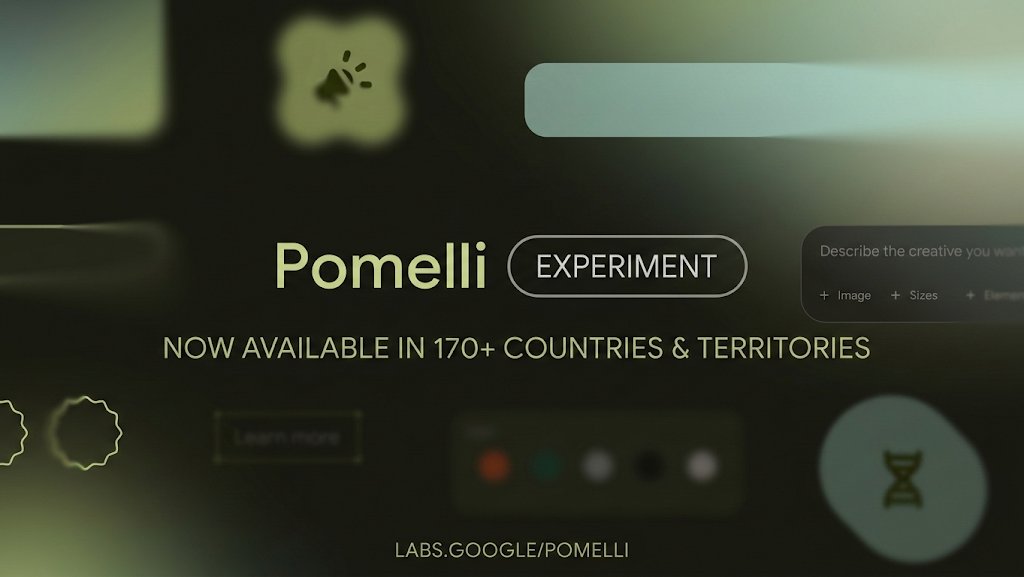
Guys, you should all check this out. If you have a brand, don't pay for a graphic designer anymore, just do it yourself and use that money for ads.
Google Labs@GoogleLabs
We've heard you and... it's happening :) 🌎 We just expanded Pomelli to over 170 countries & territories! We can't wait to see how you use it. Get started now at: labs.google/pomelli
English

@GoogleLabs OMG, I almost created the same tools like this. I was almost competing with Google 😅
English

We've heard you and... it's happening :) 🌎
We just expanded Pomelli to over 170 countries & territories!
We can't wait to see how you use it. Get started now at: labs.google/pomelli

English