पिन किया गया ट्वीट

Report of the High-Level committee to study the Impact of NEET on Medical Admissions in Tamil Nadu.
#DrAKRajanCommitteeReport 🧵
English
𝓢𝓪𝓷𝓴𝓪𝓻
34.1K posts

@CodeNDrive
Freethinker | Ailurophile | Programmer | Petrolhead | Arakkan | Stoic | Perfectionist



Important Context on the @GrapheneOS x Motorola Partnership Motorola is now a subsidiary of Lenovo (which acquired it from Google in 2014). Lenovo is headquartered in Beijing and its largest shareholder is Legend Holdings -- company founded and partially controlled by the Chinese Academy of Sciences (state institution of the People’s Republic of China). [China’s 2017 National Intelligence Law (Article 14) legally compels Chinese organizations to support and cooperate with state intelligence work. This is the mandatory operating framework for any company under that jurisdiction.] Lenovo’s security track record: - 2006: the US State Department restricted 16K Lenovo computers to unclassified use only after security objections regarding hardware intended for classified embassy networks. - Intelligence agencies across the Five Eyes alliance enacted similar bans on their secret networks after MI5 identified backdoor vulnerabilities in Lenovo firmware. - 2013: Motorola Droid phones were silently transmitting personal data (including email and social media passwords) to Motorola’s servers every 9 minutes (often unencrypted). - 2015: Lenovo was caught preinstalling Superfish on consumer laptops -- which performed MITM attacks. - 2026: privacy class action was filed alleging that Lenovo’s own website tracking technologies expose American behavioral data to Chinese entities. The technical transition away from Pixel hardware involves significant trade-offs. Google Pixels use the Titan M2 - a RISC-V security chip with air-gapped manufacturing controls that provides hardware-backed key storage and verified boot protection isolated from the main CPU. Motorola does NOT have this. GrapheneOS publishes a non-exhaustive list of hardware requirements that any future device must meet (#future-devices" target="_blank" rel="nofollow noopener">grapheneos.org/faq#future-dev…
): - hardware memory tagging (ARM MTE), - hardware-based control flow integrity (BTI/PAC), - isolated radios and components, - StrongBox keystore via secure element, - Weaver disk encryption throttling, - insider attack resistance for secure element updates, - inline disk encryption with wrapped key support, - verified boot with rollback protection for both firmware and OS, - hardware key attestation with attest key pinning support. Current Motorola hardware, including the flagship Motorola Signature, does not yet meet these standards. GrapheneOS is pursuing this to break the hardware monoculture where a single vendor dictates the project’s future. Future devices (targeted for 2027) are expected to feature physical sensor kill switches to disconnect cameras and microphones. However, a hardware kill switch is not a total solution. It can disable the mic and camera - it does NOT cover the baseband processor, storage controller, or other components with Direct Memory Access. If the underlying hardware or firmware is compromised at the factory level - a sensor switch cannot prevent data from being exfiltrated via the cellular modem or manipulated within the storage.genuinely why is there not an alternative to Android or IOS? it cant be that hard, we have hundreds of linux distros



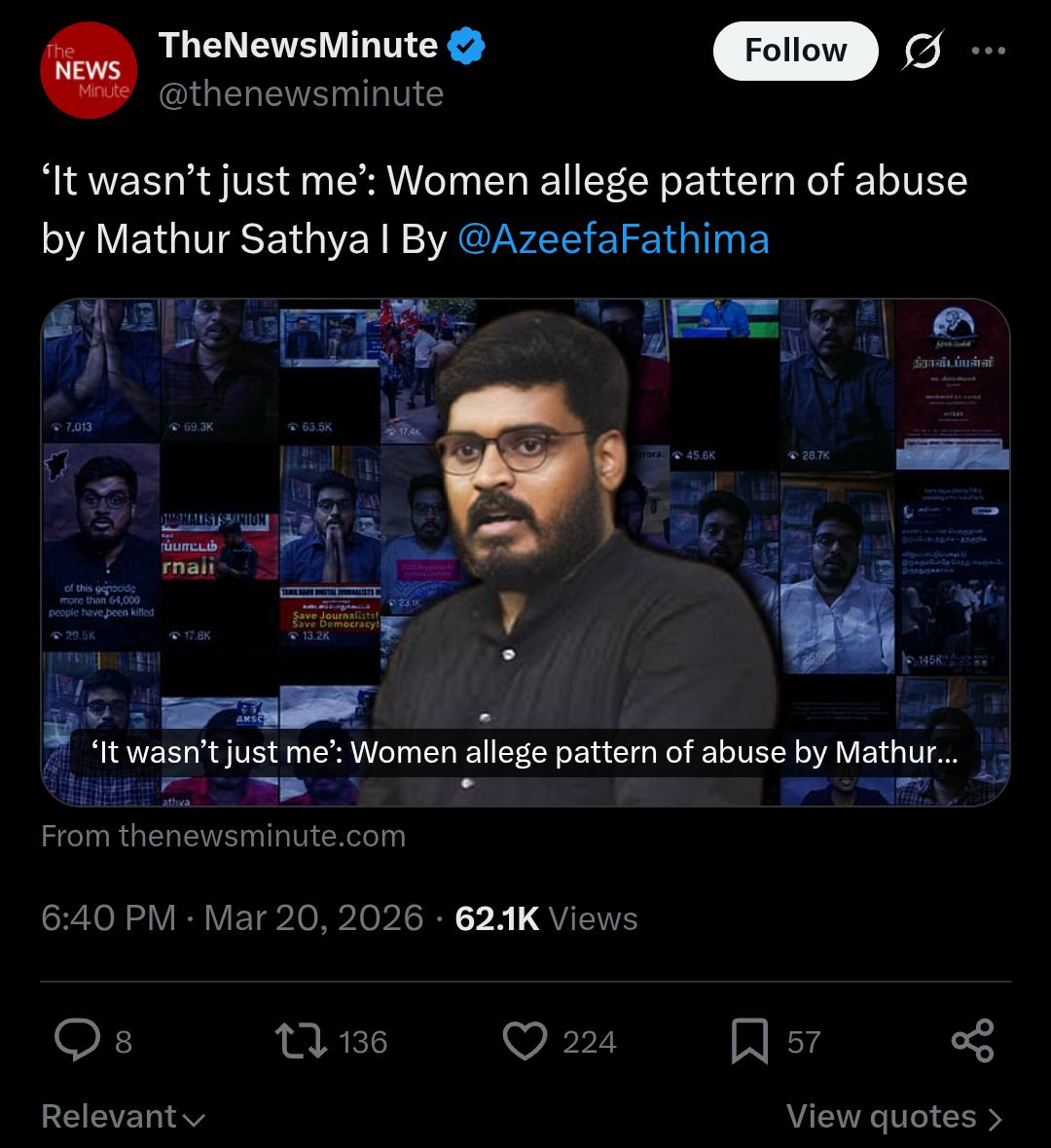
@brucee_20_25 @looker_on__ @dhanyarajendran @thenewsminute DM Screen shot களை வைத்து அநாமதேய புகாருக்கு கட்டுரை எழுதிய நியூஸ்மினிட் தங்கசோபனாவின் வெளிப்படையான சட்ட நடவடிக்கையை கவர் செய்யாததன் காரணம் என்னனு கேளுங்க!




BREAKING: Starlink India launch just got closer. SpaceX has just signed an MoU with Meghalaya to bring satellite internet to some of the most remote and hard-to-reach regions of the country.