
पिन किया गया ट्वीट
The light shines in the darkness
19.8K posts


The light shines in the darkness
@MatthewLINY
https://t.co/0kYyLSaGxn Weekly Email Newsletters Education of #Cryptocurrency for the World #BTC #hbar #xrp #algo #ada #vet #xlm #xdc #Chainlink #Quant
#XRP Capital of the world शामिल हुए Eylül 2011
2.1K फ़ॉलोइंग16.7K फ़ॉलोवर्स



@TFL1728 So the less advanced civilization is capable to controlling the Narrative… unless…
English

@shanaka86 Your entire thesis is incorrect unfortunately tether can be frozen and tracked
tronxenergy.com/blog/sanctions…
English

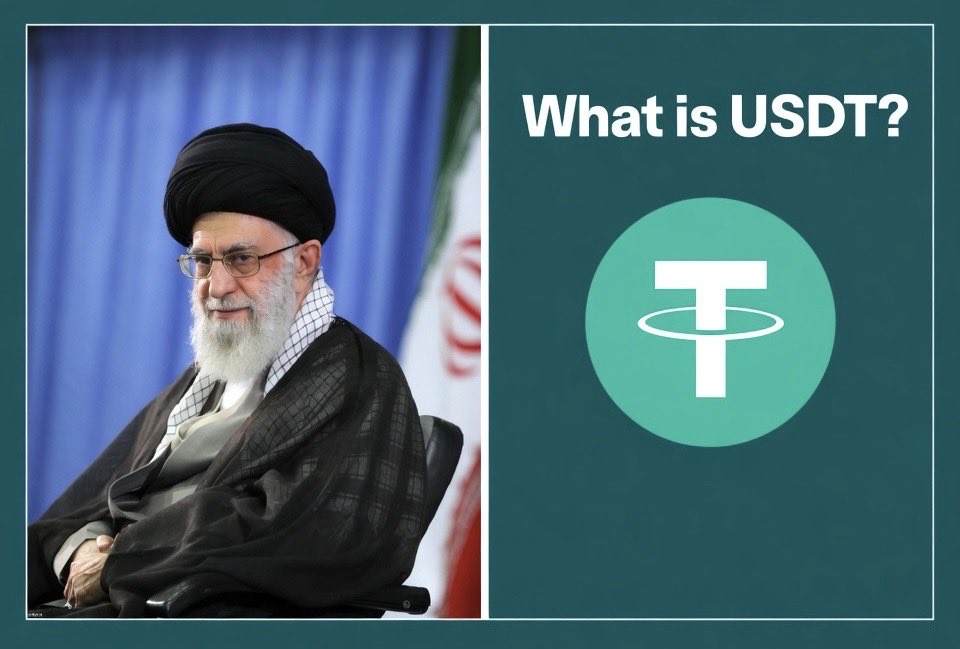
BREAKING: The Islamic Revolutionary Guard Corps is funding a war against the United States using a digital token called United States Dollar Tether. The token is pegged to the American dollar. It tracks the dollar. It references the dollar. But it moves on the Tron blockchain in three seconds flat, never touches an American bank, never clears through SWIFT, never passes through New York, and cannot be frozen by the Federal Reserve. The dollar’s name is on the weapon pointed at the dollar’s military. This is the first war in history where the enemy’s own currency funds both sides simultaneously.
Bloomberg reported on April 1 that the IRGC collects tolls from tankers transiting the Strait of Hormuz in Chinese yuan or stablecoins. The mechanism is now documented. An operator contacts an IRGC-linked intermediary. Submits vessel ownership, flag, cargo, crew list, and destination. The Hormozgan Provincial Command screens for ties to the United States or Israel using a one-to-five friendliness ranking. If cleared, the operator negotiates a toll starting at one dollar per barrel, up to two million per supertanker. Payment settles in yuan via CIPS or USDT via Tron. A VHF passcode is issued. An IRGC patrol boat escorts the vessel through the Larak corridor. The system is live. It is collecting revenue tonight.
The infrastructure was not improvised. The IRGC moved $3 billion through cryptocurrency in 2025 alone, according to Chainalysis. IRGC-linked addresses accounted for over 50 percent of all Iranian crypto by the fourth quarter of that year. The Central Bank of Iran accumulated $507 million in USDT, according to Elliptic. TRM Labs traced approximately $1 billion in IRGC flows through two UK-registered exchanges, Zedcex and Zedxion, “conducted almost entirely in USDT on the TRON blockchain.” TRM described this as “a sanctioned military organization operating exchange-branded crypto infrastructure offshore” and called it “infrastructure-level control.” OFAC designated both exchanges on January 30, 2026. Twenty-nine days later the bombs fell. The crypto war machine was built before the kinetic war began.
In January 2026, Iran’s Ministry of Defence began accepting cryptocurrency for arms exports. Drones. Missiles. Defence equipment. The same blockchain rails that settled weapons contracts before the war now settle passage rights during it. The toll booth at Hormuz did not need new technology. It needed a new application of technology that was already running at industrial scale, already embedded in global stablecoin markets, and already funded with half a billion dollars in a token denominated in the currency of the enemy.
The Treasury Department issues bonds to fund the war. Those bonds pay for aircraft carriers, interceptors, and the 2,400 sorties flown over Iran in five weeks. USDT, a token that says “USD” on its face, pays the tolls that fund the missiles those sorties are trying to destroy. The same three letters appear on both sides of the ledger. One moves through the Federal Reserve system. The other moves through a blockchain registered in the British Virgin Islands. Both settle in seconds. Both denominate in dollars. One funds the bombs. The other funds the toll that funds the missiles that the bombs exist to stop. The currency is fighting itself across two rails that will never intersect, and the IRGC is collecting the arbitrage.
The dollar is on both sides of this war. It always has been. What changed is that one side no longer needs American permission to use it.
open.substack.com/pub/shanakaans…
English
The light shines in the darkness रीट्वीट किया

⚛ EXCLUSIVE | Interview with 3 Engineers Inside Google's Quantum Paper.
"If you want to live in the future, build on Algorand."
• World's first post-quantum transaction
• State proofs. Quantum proof since 2022
• Falcon signatures protecting ALGO accounts
• Chief scientist authored the PQC cryptography
Google didn't publish a warning.
They published a report card.
Algorand passed.
@Genfinity | @AlgoFoundation | @Algorand
Full Interview:
English
The light shines in the darkness रीट्वीट किया
Most CFOs know they should be thinking about digital assets. Few know where to start.
Until now, adding digital assets meant more complexity: another vendor, another login, more reconciliation at month-end.
We're excited to announce Unified Treasury and Digital Asset Accounts are now live in Ripple Treasury, powered by GTreasury. Manage cash, stablecoins, and digital assets in a single system with real-time visibility across every position. 💰
One platform with full optionality. Connecting to Ripple’s suite of products offering native custody, multi-coin support, cross-border rails, and real yield instruments all on regulated blockchain infrastructure.
See how real-time, unified visibility across every asset type can streamline your operations and improve decision-making for your team: hubs.li/Q049fw3l0
English


The light shines in the darkness रीट्वीट किया
We’re partnering with Convera to expand enterprise cross-border payments.
Together, we’re combining global payment rails with stablecoin-enabled settlement to improve speed, liquidity, and reliability.
businesswire.com/news/home/2026…
English
@KingKong9888 They plan on enforcing it with their Amazon like drones that will drop onto the ship and Cash will be handed off🤡
English

The toll fee will probably be in Chinese RMB Yuan…
InfoGram@_InfoGram_
BREAKING 🚨: 🇮🇷IRAN officially Passed a law to formally charge a toll on Hormuz, all set to earn over $100 Billion a year.
English
@TFL1728 Forced allocation of taxpayer funds to their detriment and theft as well
English
The light shines in the darkness रीट्वीट किया

NEW: @Circle Ventures leads a Series B extension for cross-border payments firm @Tazapay, bringing total Series B funding to $36M, with @cbventures and @CMT_Digital joining existing backer @Ripple.
English

European Central Bank
Looks like they do not want to be left behind
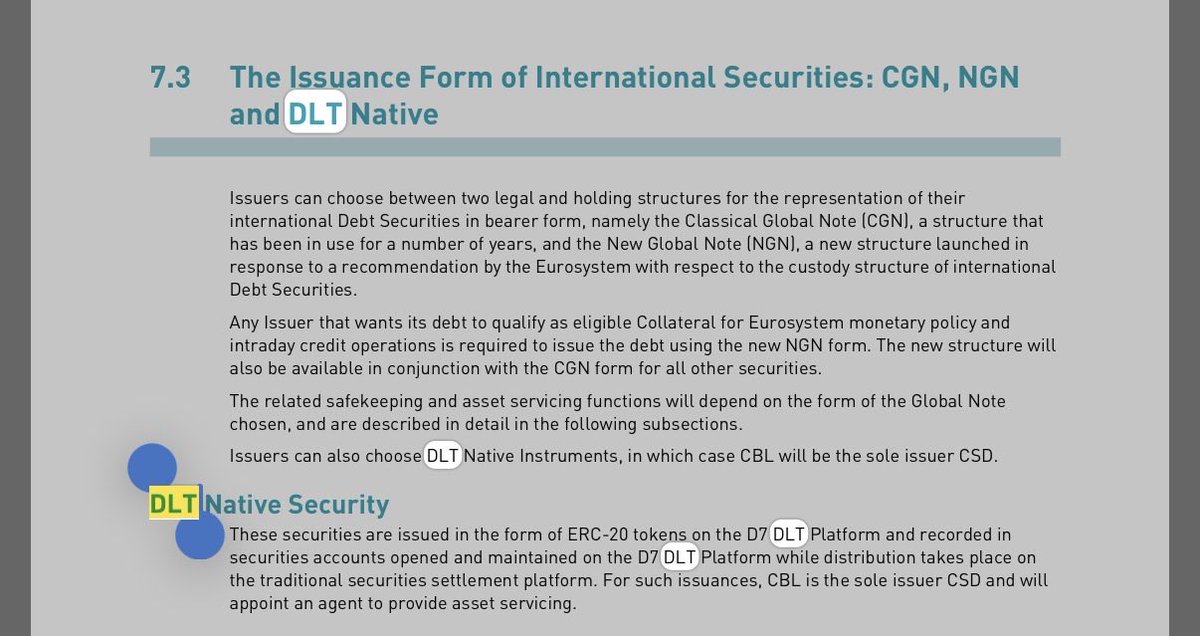
Canton Network Chainlink Connection to Tradeweb
#Canton #Chainlink
ecb.europa.eu/paym/groups/pd…

English
Quant Integration
x.com/quantnetwork/s…
#Quant


Quant@quantnetwork
Murex built the systems capital markets trust. Quant is making those same systems programmable. Today, we’re announcing a strategic partnership that brings institutional-grade digital asset capabilities directly into MX.3, one of the most widely deployed capital markets platforms in the world. Banks and capital markets firms can now issue, settle and manage tokenised deposits and digital bonds within the systems already operational across their trading, risk and post-trade workflows. No rip and replace, no parallel infrastructure. The same platforms made ready for the next era of settlement, automation and liquidity. This partnership comes as tokenised infrastructure moves from pilot to production across the world’s largest markets. Tokenised real-world assets have crossed $100 billion. DTCC has SEC approval to tokenise US Treasuries from mid-2026. Major UK banks are already working with Quant through the Great Britain Tokenised Deposit initiative. The infrastructure moment is here, and now it runs on MX.3. Read the full announcement: quant.network/press-releases… #Tokenisation #DigitalAssets #CapitalMarkets #Programmability
Français