David Hacker, Sufficientist

46.5K posts

David Hacker, Sufficientist banner
David Hacker, Sufficientist

David Hacker, Sufficientist

@dhacker29

Reformed Baptist DVM from @LSUVetMed BTh, MTh, & DTh from @ICCScampus MDiv from @GBTSeminary Free book on Charles Finney https://t.co/mtID06oOJZ


Ashdown, AR शामिल हुए Mayıs 2011
1.4K फ़ॉलोइंग3.6K फ़ॉलोवर्स
पिन किया गया ट्वीट
David Hacker, Sufficientist
David Hacker, Sufficientist@dhacker29·
Just as I Am: The Aftermath of Charles Finney’s Conversion Theology by David C. Hacker Find this book at your favorite digital store! books2read.com/u/4DDEKe
English
0
3
6
247
David Hacker, Sufficientist
Sabbatarians who hold Sunday as a mandated full day of worship... How do you address the issue that Sunday was a workday in the Roman Empire and most Christians would have been required to work, thus they meeting 'early in the morning' or 'at night?'
Ashdown, AR 🇺🇸 English
0
0
3
42
David Hacker, Sufficientist रीट्वीट किया
Eduardus Ekofius
Eduardus Ekofius@EddyEkofo·
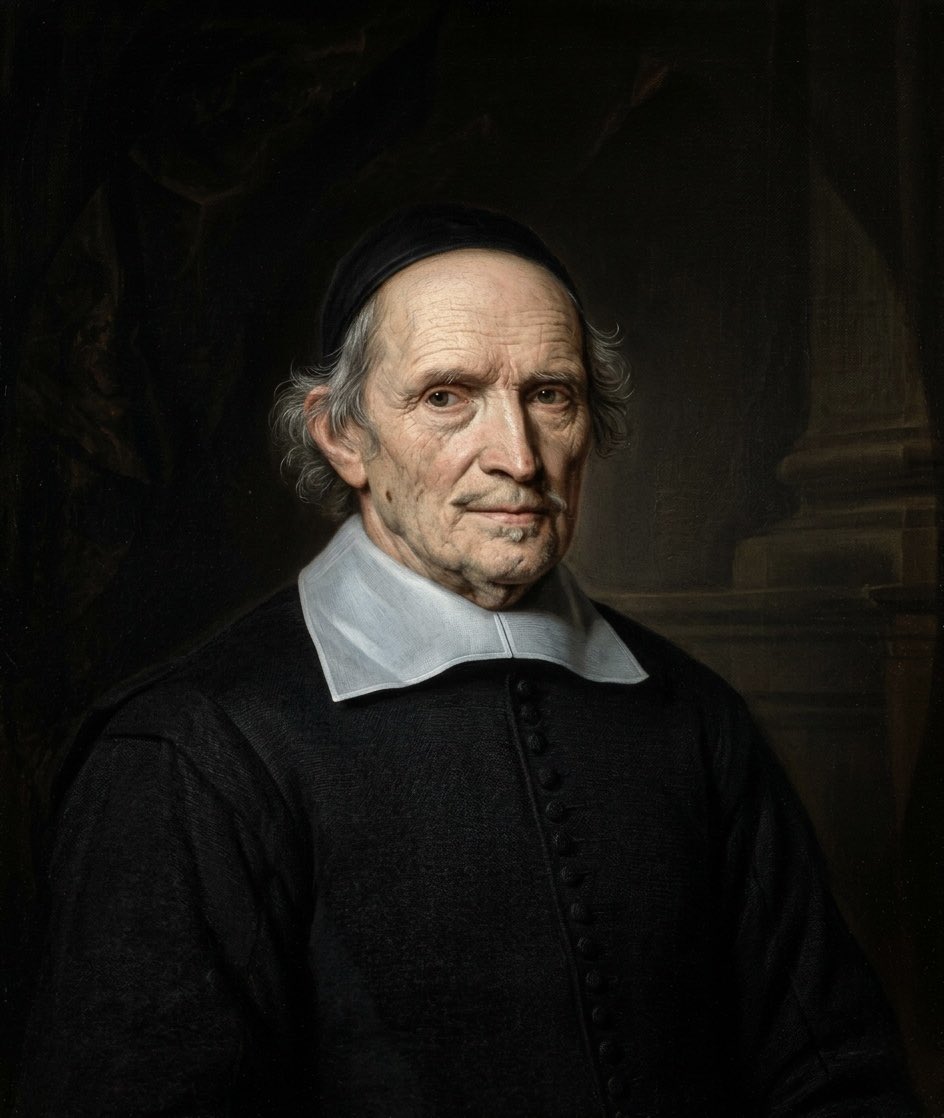
Gisbertus Voetius (1589-1676) Wrote a criticism of Scholastic Theology yet he’s reffed to as “Reformed-Scholastic”, yet he openly avowed “Biblicist” or “Scriptarian” yet we’re told he was not a Biblicist?
Eduardus Ekofius tweet mediaEduardus Ekofius tweet media
English
1
3
5
295
David Hacker, Sufficientist
#OTD 1676 Death of Baptist minister John Clarke, a founding father of Rhode Island, and the agent who obtained the colony’s charter from King Charles II in 1663.
English
0
0
2
39
David Hacker, Sufficientist
#OTD 1529 At the Second Diet of Speyer, the term “Protestant” is first applied to participants of the Reformation. The term was taken from the Protestatio, a statement by the reformers challenging the imperial stance on religion.
English
0
1
4
64
David Hacker, Sufficientist रीट्वीट किया
Dr. John Frame
Dr. John Frame@DrJohnFrame·
Our views must ultimately be determined by Scripture, not by the course of historical debate.
English
8
14
76
2.3K
David Hacker, Sufficientist रीट्वीट किया
Eduardus Ekofius
Eduardus Ekofius@EddyEkofo·
“Orthodox theologians are rightly termed "biblicists" (𝑠𝑐𝑟𝑖𝑝𝑡𝑢𝑟𝑎𝑟𝑖𝑖) in contrast to its despisers, for the Bible alone is the sole principle of faith and theology.” —Voetius, Selectarum disputationum, 5:6
Eduardus Ekofius tweet media
English
7
11
50
6K
David Hacker, Sufficientist रीट्वीट किया
John Koontz ReformedDoc
John Koontz ReformedDoc@ReformedDoc·
John Koontz ReformedDoc tweet media
ZXX
0
1
0
97
David Hacker, Sufficientist रीट्वीट किया
RichardSibbes
RichardSibbes@SibbesRichard·
God’s Word is truth and eternal. And no devilish being or human earthly power can discount it.
English
0
6
13
219
Mark
Mark@mark_rivenbark·
@jaynitx So much of Gladwell's work has been debunked.....your just posting for clicks............
Mark tweet media
English
9
1
232
5.5K
Jaynit
Jaynit@jaynitx·
In the 1920s, a Stanford psychologist tracked genius children for 50 years. Malcolm Gladwell breaks down what he discovered: Rich families → successful. Poor families → failures. Not average. Failures. Genius-level IQs that produced nothing. He spent 60 minutes at Microsoft explaining why we're wrong about success: The psychologist was named Terman. He gave IQ tests to 250,000 California schoolchildren. He identified the top 0.1%. Kids with IQs of 140 and above. His hypothesis: these children would become the leaders of academia, industry, and politics. He tracked them. And tracked them. For decades. The results split into three groups. The top 15% achieved real prominence. The middle group had average, moderately successful professional lives. And the bottom group? By any measure, failures. The difference wasn't personality. Wasn't habits. Wasn't work ethic. It was simple: the successful geniuses came from wealthy households. The failures came from poor families. Poverty is such a powerful constraint that it can reduce a one-in-a-billion brain to a lifetime of worse than mediocrity. There's a concept called "capitalization rate." It asks a simple question: what percentage of people who are capable of doing something actually end up doing that thing? In inner city Memphis, only 1 in 6 kids with athletic scholarships actually go to college. If our capitalization rate for sports in the inner city is 16%, imagine how low it must be for everything else. Here's something stranger. Gladwell read the birth dates of the 2007 Czech Junior Hockey Team: January 3rd. January 3rd. January 12th. February 8th. February 10th. February 17th. February 20th. February 24th. March 5th. March 10th. March 26th... 11 of the 20 players were born in January, February, or March. This isn't unique to the Czechs. Every elite hockey team in the world shows the same pattern. Every elite soccer team too. Why? The eligibility cutoff for youth leagues is January 1st. When you're 10 years old, a kid born in January has 10 months of maturity on a kid born in October. That's 3 or 4 inches of height. The difference between clumsy and coordinated. So we look at a group of 10 year olds, pick the "best" ones, give them special coaching, extra practice, more games. We think we're identifying talent. We're just identifying the oldest. Then we give the oldest more opportunities, and 10 years later they really are the best. Self-fulfilling prophecy. The capitalization rate for hockey talent born in the second half of the year? Close to zero. We're leaving half of all potential hockey players on the table because of an arbitrary date on a calendar. Kids born in the youngest cohort of their school class are 11% less likely to go to college. 11% of human potential squandered because we organize elementary school without reference to biological maturity. Now here's the part about math. Asian kids dramatically outperform Western kids in mathematics. The gap is enormous and consistent across decades of testing. Some people say it's genetic. It's not. It's attitudinal. When Asian kids face a math problem, they believe effort will solve it. When Western kids face a math problem, they believe the answer depends on innate ability they either have or don't. Here's the proof. The international math tests include a 120-question survey. It asks about study habits, parental support, attitudes. It's so long most kids don't finish it. A researcher named Erling Boe decided to rank countries by what percentage of survey questions their kids completed. Then he compared it to the ranking of countries by math performance. The correlation was 0.98. In the history of social science, there has never been a correlation that high. If you want to know how good a country is at math, you don't need to ask any math questions. Just make kids sit down and focus on a task for an extended period of time. If they can do it, they're good at math. Why do Asian cultures have this attitude? Gladwell's theory: rice farming. His European ancestors in medieval England worked about 1,000 hours a year. Dawn to noon, five days a week. Winters off. Lots of holidays. A peasant in South China or Japan in the same period worked 3,000 hours a year. Rice farming isn't just harder than wheat farming. It's a completely different relationship with work. There's a Chinese proverb: "A man who works dawn to dusk 360 days a year will not go hungry." His English ancestors would have said: "A man who works 175 days a year, dawn to 11, may or may not be hungry." If your culture does that for a thousand years, it becomes part of your makeup. When your kids sit down to face a calculus problem, that legacy of persistence translates perfectly. Now consider distance running. In Kenya, there are roughly a million schoolboys between 10 and 17 running 10 to 12 miles a day. In the United States, that number is probably 5,000. Our capitalization rate for distance running is less than 1%. Kenya's is probably 95%. The difference isn't genetic. The difference is what the culture values and where it spends its attention. Here's the most fascinating finding. 30% of American entrepreneurs have been diagnosed with a profound learning disability. Richard Branson is dyslexic. Charles Schwab is dyslexic. John Chambers can barely read his own email. This isn't coincidence. Their entrepreneurialism is a direct function of their disability. How do you succeed if you can't read or write from early childhood? You learn to delegate. You become a great oral communicator. You become a problem solver because your entire life is one big problem. You learn to lead. 80% of dyslexic entrepreneurs were captain of a high school sports team. Versus 30% of non-dyslexic entrepreneurs. By the time they enter the real world, they've spent their whole life practicing the four skills at the core of entrepreneurial success: delegation, oral communication, problem solving, and leadership. Ask them what role dyslexia played in their success and they don't say it was an obstacle. They say it's the reason they succeeded. A disadvantage that became an advantage. Here's what Gladwell wants you to understand: When we see differences in success, our default explanation is differences in ability. We forget how much poverty, stupidity, and attitude constrain what people can become. We refuse to admit that our own arbitrary rules are leaving talent on the table. We cling to naive beliefs that our meritocracies are fair. The capitalization argument is liberating. It says you don't look at a struggling group and conclude they're incapable. It says problems that look genetic or innate are often just failures of exploitation. It says we can make a profound difference in how well people turn out. If we choose to pay attention. This 60 minute Microsoft talk will teach you more about success than every self-help book you've ever read combined. Bookmark this & give it an hour today, no matter what.
English
406
2.1K
7.8K
1.5M
David Hacker, Sufficientist रीट्वीट किया
Creation Museum
Creation Museum@CreationMuseum·
God created the heavens, the earth, and all that is in them in six normal-length days around 6,000 years ago.
English
35
28
152
2K
David Hacker, Sufficientist
#OTD 1854 Nineteen-year-old English Baptist preacher, C.H. (Charles Haddon) Spurgeon, is called to pastor the New Park Chapel in London, one of the city’s largest churches.
English
0
0
2
55
David Hacker, Sufficientist रीट्वीट किया
WWUTT?
WWUTT?@WWUTTcom·
WWUTT? tweet media
ZXX
10
26
301
4.6K
David Hacker, Sufficientist रीट्वीट किया
UrbanPuritano
UrbanPuritano@UPuritano·
There are better, more precise terms to describe not accepting inferences. Illogical. Not appreciating creeds and confessions? Anti-Creedal. Biblicist was considered a good descriptor for adherents to…checking notes…Sola Scriptura by…checking notes…Roman Catholic priests.🤷🏽‍♂️
Jack Kilcrease@jack_kilcrease

@EddyEkofo No, he believed in Sola Scriptura. But he wasn't a biblicist. A biblicist doesn't accept inferences drawn from Scripture, or appreciate how the catholic creedal tradition develops and clarifies ideas from Scripture. Turrentin definitely loved the councils of the ancient Church

English
0
1
2
65
Rodney
Rodney@Fish4Fun3·
@dhacker29 That picture looks like Calvin to me
English
2
0
0
19
David Hacker, Sufficientist
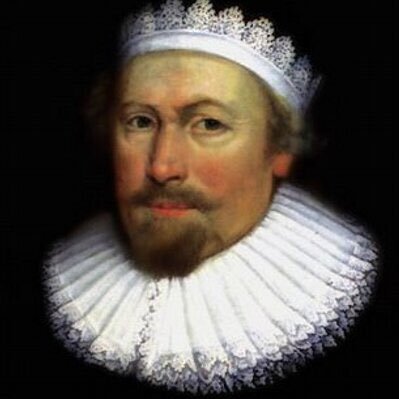
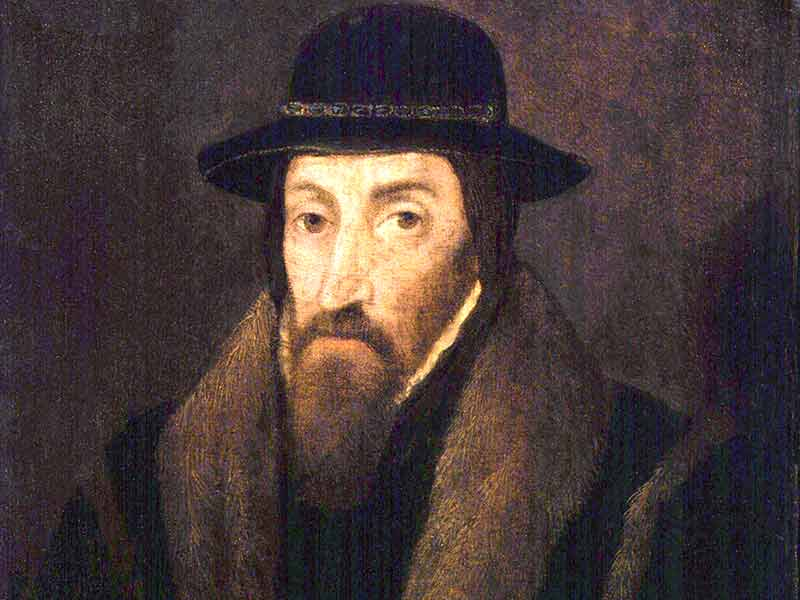
#OTD 1587 Death in London of John Foxe, author of The Actes and Monuments of the Church (first published in 1563), better known as Foxe’s Book of Martyrs.
David Hacker, Sufficientist tweet media
English
1
0
4
73
David Hacker, Sufficientist
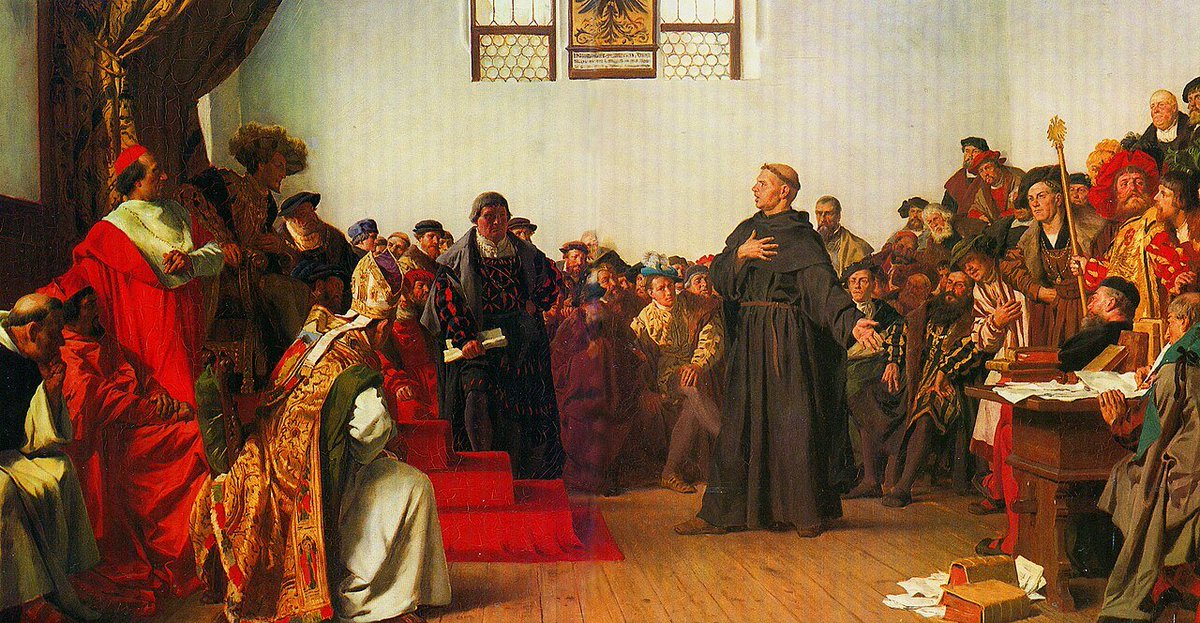
#OTD 1521 Luther makes his bold declaration, “Here I stand!” at a second hearing before emperor Charles V at the Diet of Worms.
David Hacker, Sufficientist tweet media
English
6
29
173
6.4K
David Hacker, Sufficientist रीट्वीट किया
𝔚𝔥𝔦𝔱𝔢𝔅𝔢𝔞𝔯𝔡
With the Pope in Algiers, with Tucker Carlson opining on how Muslims love Jesus, and with Joel Webbon demonstrating a shocking ignorance of the Reformation (and, of course, compromising Reformation principles so as to stay buddy buddy with Calvin Robinson while Dale Partridge just stares blankly on), there isn't any way we will keep this one under an hour! 5pm EDT.
English
34
29
426
14.9K
David Hacker, Sufficientist रीट्वीट किया
Stuart DiNenno
Stuart DiNenno@DinennoStuart·
"An ineffably holy God, who has the utmost abhorrence of sin, was never invented by any of Adam's descendants." — Arthur W. Pink
English
0
2
4
57