Fireside Alpha

59 posts

Fireside Alpha banner
Fireside Alpha

Fireside Alpha

@firesidealpha

Summary and synthesis of the best business, technology, and consumer conversations

United States शामिल हुए Haziran 2026
45 फ़ॉलोइंग293 फ़ॉलोवर्स
पिन किया गया ट्वीट
Fireside Alpha
Fireside Alpha@firesidealpha·
Jeff Bezos: The Moon is a gift "It's so near Earth. We can get there in 3.5 days. We can return in 3.5 days. You can go anytime you want. You don't have to wait for the planetary alignment to be just right. You can only go to Mars every two years or so... And then the Moon's gravity well is so much lower than the Earth's that when you get materials from the Moon, you can lift them off the Moon with 28x less energy per kilogram than is needed to lift something off the Earth... And that's a really valuable thing if you are producing liquid oxygen for example on the Moon, lifting that into space is very easy compared to lifting liquid oxygen off of Earth... So as we go about exploring the solar system which we will do and as we build colonies on Mars and so on, the Moon is an important first step."
Fireside Alpha@firesidealpha

Great fireside. Jeff Bezos (@JeffBezos) and Dave Limp (@davill) w/ host Mike Massimino (@Astro_Mike). Discussion centered around cost of launch as the key variable for things like orbital data centers to off-planet heavy industry, and more. Relevant for $SPCX. Notes below: 1/ The launchpad explosion was a gut punch that barely moved the timeline, and the recovery itself is the culture argument. Bezos says the long-lead items that usually set a schedule, the propellant tank farm holding liquid hydrogen and liquid oxygen, survived, and a booster sitting in the nearby integration facility took shrapnel but lived. Blue Origin pulled in 400 pieces of heavy equipment from a construction crew down the road working around the clock, cleared the debris, and started rebuilding the day before this talk. He still commits to flying New Glenn again before the end of the year, which makes the failure a stress test of the team rather than a reset of the program. 2/ The entire thesis is that space needs the same cheap shared infrastructure the internet had, so small players can do big things. Bezos frames Blue Origin's job as building the road to space, the heavy infrastructure other companies ride, the way global networks let two kids in a dorm room build a giant company over the last two and a half decades. The cost of admission to space is still very high, and lowering it is the precondition for any dynamic space economy. From an investment standpoint, the read is that he is positioning Blue Origin as a picks-and-shovels layer, not a single end product. 3/ Demand for launch is the proof the space economy is real, and the constraint is supply, not demand. Bezos calls demand for launch insatiable right now, with a tremendous backlog already on the books and every launch company in the same position. He names the drivers as LEO communications, national security missions, and, ahead, orbital compute and lunar resources. His one-line summary, that they are supply constrained and not demand constrained, is the cleanest signal in the whole conversation for where the bottleneck and the pricing power sit. 4/ Launch cost runs on a virtuous circle, and reusability plus rate manufacturing is how you spin it. Bezos lays out the loop directly: expensive launch forces satellites to carry long lifetimes and high cost, cheaper launch lets satellites get cheaper, cheaper satellites drive more launch demand, more demand means more practice, and practice drives cost down again. Reusable boosters are the entry point because a booster that lands can be reused many times, and rate manufacturing keeps the flywheel fed. He is explicit that you cannot count on the exact timing, only the direction. 5/ The hard part is not building one rocket, it is building the machine that builds the machines. Limp, who says he came from consumer electronics and has done aerospace for two and a half years, argues that any single engine or rocket is tractable, and that the factories pushing them out at rate are what take time and thought. Blue Origin is standing up an engine factory in Huntsville and a rocket factory in Orlando, with heavy vertical integration down to raw materials. The stated goal is a hundred flights a year, which means a hundred second stages and hundreds of engines, so the factory is the product. Bezos adds that a BE-4 engine now comes off the line every four days. 6/ Rocket engines live right at the limit of physics, and the BE-7 just set a multi-decade endurance record. Bezos puts main combustion chamber temperatures at 5,000 to 6,000 degrees Fahrenheit, past the melting point of any material, which forces lightweight high-performance turbo pumps and regeneratively cooled channels just to keep the hardware intact. The BE-7, the roughly 10,000-pound-thrust lunar lander engine, ran continuously for 41 minutes, beating a 36-minute space shuttle main engine test from about 30 years ago. He frames reliability on that engine as paramount because it is what lands humans on the moon. 7/ Choosing liquid hydrogen for the lander is a bet on refueling from lunar ice, not just on performance. Bezos explains that liquid hydrogen outperforms hydrocarbon fuels but is so low in density it would make a booster stage gigantic, so it earns its place on upper stages, the same split the Apollo Saturn V used. The forward-looking reason is that water ice in permanently shadowed craters near the lunar poles can be electrolyzed into liquid oxygen and liquid hydrogen. By matching the lander's fuel to what the moon can produce, he sets up in-situ refueling on the surface rather than hauling every kilogram from Earth. 8/ Moon first is a sequencing discipline, and the moon's case is proximity plus a shallow gravity well. Bezos calls the moon a gift, reachable in three and a half days each way, available anytime rather than on the two-year planetary window Mars demands. The economic hook is that the moon's gravity well is so much lower that lifting materials off it takes 28 times less energy per kilogram than lifting them off Earth, which makes lunar-produced liquid oxygen cheap to move into space. His framing that skipping steps does not actually make you faster is the sequencing argument behind going to the moon before Mars. 9/ Blue Origin's near-term lunar cadence is concrete, and it ramps fast. Limp lays out a Mark 1 lander early next year carrying three metric tons to the surface as a Pathfinder, the largest object ever landed on the moon, then a mid-year Artemis 3 rendezvous with the human-rated Mark 2 lander meeting near 450 kilometers in low Earth orbit, then a second Mark 1 landing NASA's VIPER rover late in the year. He says Artemis 3 was announced the prior week and that an astronaut named Luca from Italy will be on the flight. He stresses these are coming off an assembly line now, and the team is named the lunar permanence group, which signals the intent to stay rather than visit. 10/ As a species we are barely warming up, which is how Bezos frames every timeline. Bezos pushes back on the idea that the world has caught up to Blue Origin, saying that in space terms humanity has not even begun and this is the earliest of early days. He separates the Apollo landings, which he calls a real accomplishment, from the permanence Blue Origin is now after. The investor consequence is patience, because he treats current capability as a starting line, which is consistent with the multi-decade horizon Limp describes him holding. 11/ Apollo was pulled forward in time at an unsustainable price, and Bezos argues now is the affordable moment. He notes the United States spent almost 3 percent of GDP to reach the moon during the race with the Soviets, a level no one would sustain today. His point is that the first lunar program was a geopolitical sprint done before the economics were ready, while the current push can be built on cost-effective, repeatable hardware. His aside that 3 percent of GDP would buy fusion is the same idea sharpened: cost discipline, not raw spending, is the constraint he respects. 12/ A lot of compute is heading to orbit, and Bezos thinks the chips eventually get made there too. He expects compute and solar cells built in space using asteroids, near-Earth objects, and the moon, with answers beamed back to Earth, and says ultimately even the chips the compute runs on get manufactured off-planet. He pairs this with Project Sunrise, an orbital-compute constellation in sun-synchronous orbit. The framing turns space from a launch market into a manufacturing and compute market, which is a far larger pool than payload delivery. 13/ Orbital data centers are a cost question, not a physics question, and Bezos says the lines will cross. He dismisses heat rejection as an easily solvable physics problem and reframes the whole debate as the cost of producing solar cells, satellites, and launch. Project Sunrise sits in sun-synchronous orbit where satellites are in sunlight more than 99 percent of the time, so solar collection runs nearly continuously instead of the half-darkness of a typical 90-minute low Earth orbit. He concedes he does not know exactly when terrestrial and orbital compute costs cross, only that you have to build now to be ready when they do. 14/ Blue Origin is building two constellations aimed at the high end, and the scale is what keeps launch constrained. The high-bandwidth LEO network, TeraWave, is described as fast earth-to-space optical links optimized for enterprises, hyperscalers, and governments, distinct from the consumer focus of Starlink and Amazon's LEO. Its first phase alone is 5,000-plus satellites in LEO plus another hundred in medium Earth orbit, with shells that want to be 5,000 to 20,000 each. Each constellation can absorb hundreds of launches, which is exactly why launch capacity stays the binding constraint. 15/ Prometheus is Bezos's bet that AGI for engineering needs different training data than a language model. He describes Prometheus as a set of tools to let engineers invent and build faster, and says it cannot be done with traditional large language models. His analogy is that an LLM has read the entire corpus of human knowledge and is unbelievably good at symbol manipulation, but reading a thousand books on gymnastics would still leave you a terrible gymnast. Designing real physical objects needs a different kind of training data, so Prometheus is a model built specifically to do engineering. 16/ The payoff Bezos wants from Prometheus is compressing the dream-to-build cycle from a decade to a year. He says a modern jet engine with 10 percent more thrust is a ten-year program even for someone who has built fifty of them, counting design, testing, and standing up the factory. The Prometheus goal is to take that to five years, then three, then two, then one. He ties it back to a civilizational claim, that all wealth comes from invention, from the plow to the steam engine, so accelerating the invention loop compounds into real productivity and prosperity. 17/ Bezos argues AI creates a labor shortage rather than redundancy, because invention is bottlenecked by capability, not ideas. He says he totally disagrees that AI makes humans redundant, and that it instead lets people identify and tackle an endless backlog of problems. His claim is that we are limited today not by imagination but by what we can actually build, and that most good ideas die in someone's head because executing them is too hard. He points to vibe coding as the early version, where he can now write an iOS app in an afternoon, and wants the same speed for physical objects coming off a 3D printer. 18/ Decisiveness is a sorting problem between one-way and two-way doors, and treating every call as irreversible is what slows big companies. Bezos says Blue Origin, now 14,000 to 15,000 people, has to fight the one-size-fits-all thinking that makes every decision feel the same size, using the image of a one-size robe that never fits. Consequential and nearly irreversible decisions should be made slowly and carefully, while reversible ones, even important ones, should be pushed to single individuals with good judgment. He says traditional aerospace gets slow precisely because life-safety-critical missions tempt teams to treat every decision as life-safety-critical. 19/ Resourcefulness still carries full weight, and Bezos frames it as an attitude that any problem is solvable. Asked whether his grandfather's lesson holds in an age of AI, he tells the story of summers on a South Texas ranch from age four to sixteen, repairing bulldozers and even making veterinary needles from heated wire. The lesson he draws is an approach to life, that any problem is solvable is a good starting point, even when a solution takes a long time. His warning is the inverse, that starting from the belief a problem is unsolvable becomes a self-fulfilling prophecy. 20/ Limp's read on Bezos is the best line on management style in the conversation. He calls Bezos the most tactically impatient and the most strategically patient person he has ever met, an oxymoron that somehow works, and notes that after two and a half years he thinks Bezos now knows more about rockets and rocket engines than about e-commerce. Limp also admits he arrived a skeptic on the claim that Blue Origin could become a bigger business than Amazon and has since become a believer, which is the candid version of the bet the whole conversation is selling.
English
0
1
71
47.5K
Fireside Alpha
Fireside Alpha@firesidealpha·
Intel just rehired the man who once bought the business it was quitting. In 2000, Seok-Hee Lee left Korea for $INTC and won its highest technical award three times, a rare run for an engineer. He went home, rose to run SK hynix, and in 2020 spent about nine billion dollars buying Intel's NAND memory business, the unit Intel had chosen to exit. He rebranded it Solidigm and chaired it. Today, twenty-six years after he first joined, Intel brought him back to lead advanced packaging at Intel Foundry under Lip-Bu Tan. He bought what Intel was getting out of. Now he runs what Intel is betting its future on.
Jukan@jukan05

👀

English
0
0
2
242
Fireside Alpha
Fireside Alpha@firesidealpha·
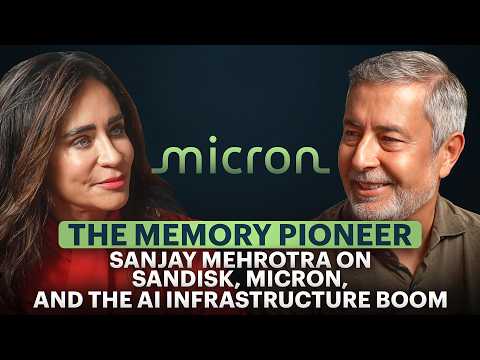
$MU CEO (Sanjay Mehrotra) on why memory is a key enabler: "Intelligence is all about data, and data is all about memory. And when you look at token economics, that relies on memory. And as token usage grows, with greater context windows, greater key value caching and larger and larger models, it just requires not just compute but requires an ability to remember, ability to have more memory and higher performance memory as well."
English
1
0
2
131
Fireside Alpha
Fireside Alpha@firesidealpha·
$60B for Cursor ($SPCX), and top VCs call it inexpensive. Great inside-baseball @twistartups roundtable on that, why tokens are the new hard drives, Altman's free-token trap, OpenAI's leaked numbers and more with @Jason @alex @TurnerNovak @bling0. Their insights: 1/ SpaceX buying Cursor reads as cheap to the panel, not expensive, and the multiple is why. Calacanis frames a reported roughly $60 billion price against a $4 billion revenue run rate as a 15x multiple, and calls that incredible rather than rich. The deal was reportedly assembled before SpaceX went public and closed immediately after, which he treats as the trigger that let it happen. Set against private AI multiples, a mid-teens revenue multiple for the company that owns the coding surface is the bargain read the whole segment builds from. 2/ The recurring Silicon Valley move is a platform watching an app's usage, then building the app and taking the layer. Calacanis describes Anthropic seeing that a large share of its usage came through Cursor, telling its partner it would keep that internally, then shipping Claude Code. He stacks it against Microsoft hosting Lotus 1-2-3 and Mitch Kapor at its events before launching Excel, and calls it consistent across the history of the industry. Platforms steal the application layer when they see enough there, in his phrasing, which is the structural reason an independent app sitting on someone else's model is exposed. 3/ The acquisition logic is that Cursor lost its compute and its model, and SpaceX hands both back. In Calacanis's telling Cursor woke up with no compute, no foundation model, and a platform partner that had just shipped a competing product, so it called a code red to build its own model and had nowhere to train it. SpaceX brings Colossus and what he calls essentially unlimited compute, with more once compute moves to space. The framing he reaches for is peanut butter and chocolate, two halves that solve each other's problem. 4/ A reported $40 billion funding round became a roughly 50% acquisition premium. Calacanis says, sourced to street talk, that Cursor was raising around $40 billion when the deal came together, that the company was at a $2 billion run rate at the time, and that Elon paid about a 50 percent premium over the round. Those figures do not square cleanly with the $4 billion run rate and roughly $60 billion price cited at the top, which is the kind of gap a contested private deal produces. Treat the premium as the panel's reasoning rather than a confirmed term. 5/ Ben Ling argues the deal beats Cursor's likely outcome as an independent company. Asked whether Cursor would be worth less on its own, Ben Ling says that in terms of terminal outcome and reach, almost certainly. The comparison he offers is Instagram and YouTube inside their acquirers, both of which he saw from the inside, and which he says became far larger than anyone expected once they had a parent. The claim is that distribution and balance sheet inside a giant beat the standalone path, not that the standalone path fails. 6/ Negative gross margins on a breakout product are treated as a YouTube-style feature, not a flaw. Ben sets Cursor's reported negative 23% gross margins against YouTube being deeply gross-margin negative when Google bought it for $1.6 billion, with most views unmonetizable and a Viacom lawsuit hanging over it. YouTube is now a juggernaut reaching roughly three billion people a month in his framing, an arc he watched from inside the company. Early unit economics on a category-defining asset, in that argument, say little about where it lands. 7/ The deal solves Cursor's revenue-passthrough problem and SpaceX's missing-customer problem at once. Turner Novak frames Cursor's core issue as paying most of its revenue out to a model provider, which stops once it is inside SpaceX with its own compute. He notes SpaceX is building data centers in space without obvious customers, and Cursor becomes the channel that delivers that compute whether end customers exist yet or not. Both sides get the piece they were missing, distribution for the compute, compute economics for the app. 8/ Calacanis's sharpest warning is to founders taking free tokens for equity, and it names names. He recounts Sam Altman reportedly offering Y Combinator companies on the order of a million dollars in tokens each for a slice of equity, and tells founders flatly not to take it. The reasoning is the same shiv pattern, that OpenAI can study the token usage of every company that signs up and rebuild the most successful ones as free product. He calls it a final warning and says there is no free beer and no free pizza, only a price, while stressing the pattern is structural and not personal to Altman. 9/ The bigger bet under the whole show is that frontier tokens commoditize toward the price of bandwidth. Calacanis puts at least a trillion dollars, possibly two to three, into frontier model buildout, then says he does not think the labs make tokens profitable enough to justify it. His comparison is hard drives and bandwidth, inputs that got cheaper until they stopped being where the money was. The counterweight, is the J-curve, that Uber and Tesla and YouTube all looked like permanent money losers before they flipped, so heavy early loss is not proof the model fails. 10/ The practical version of the commoditization bet is open-source models behind a router, and Calacanis says he already cannot tell the difference. He describes routing his own coding and agent jobs through tools that let him pick Kimi or DeepSeek per task, and finding the output close enough that the frontier premium is hard to justify on routine work. The architecture he sketches is a switch plus what he calls a maestro layer that remembers which model did which job best, naming Perplexity's Model Council, which fires several models at once and reports where they agree. Ben reframes the whole thing as insourcing versus outsourcing, that an open-source model a hundred times cheaper and roughly as good wins the bulk of the budget. 11/ Calacanis expects local workstations to pull serious AI work off the cloud and out of the data center. He points to a new AMD desktop machine, which the broadcast pegs both at 128GB for $1,500 and, in a producer's correction, at 120GB for $4,000 in different breaths, and argues the near future is employees on $10,000 workstations with a terabyte of RAM, processing locally and networked into a company supercomputer. The pitch is that nobody hands their data to anyone and the data center need shrinks, with ExoLabs-style daisy-chaining of Macs as the early hacker version. He dates the developer adoption to roughly 2027 and the mass push from Dell, AMD, and Apple to 2028. 12/ OpenAI's leaked numbers read to the panel as a gross-margin story, with a caveat about who paid for the compute. One panelist calls the margin improvement in the leaked 2024 and 2025 figures the notable line, more than the revenue growth everyone already expected. Turner cautions that a large amount of the cost was effectively free Microsoft Azure credits tied to its investment, so the headline burn may overstate real cash burned, and adds the numbers are at least six months stale. The shared read is that scaling a sales force, not optimizing margin, is the current job, because the industry is still in its growth innings. 13/ Turner Novak argues B2B AI is far more profitable than consumer, which cuts against OpenAI's base. The claim is that a consumer using a chat assistant as a better search engine spends little, while a business signing a contract to ingest documents and drive decisions is easy to serve and pays a great deal. He points to enterprise AI portfolio companies making real money, his own among them, without much optimization yet. The implied tension is that OpenAI's largely consumer footprint is the harder place to extract margin. 14/ Where value finally accrues, chip versus model versus app, the panel calls a genuine open question. Posed the question directly, the Nvidia card, the frontier model, or the application layer, Ben says his gut is the app layer while conceding it is only a gut. Calacanis counters that the hardware players tend to capture a lot, and Turner adds that most technologies commoditize until distribution and a sales force decide the winner. Nobody on the panel claims to know, which is itself the read, that the value-capture layer of this buildout is still unsettled. 15/ Seed-to-Series-A graduation has fallen by roughly half, and the panel splits cyclical from structural. Calacanis calls the decline from about 50% to about 25%, sourced to a cited Lightspeed analysis, worse than he expected. One read is purely cyclical, that 2021's flood of new funds and dollars inflated pull-through and the retraction simply normalized it. The harder read, which Ben Ling adds, is structural, that if you are not an AI company right now you largely cannot raise a Series A, so a whole cohort of non-AI startups stalls regardless of the cycle. 16/ M&A reopening is the panel's bull case for venture, and it ties trapped SaaS value to policy. Calacanis frames the prior FTC posture under its former chair Lina Khan as a chilling effect that blocked deals like Figma-Adobe and broke the recycling of capital back to founders. He wants antitrust to wave through anything under a $250 billion buyer and grow the Mag-7 into a Mag-70. The concrete stakes are what the panel calls a SaaS-apolis, hundreds of billions in venture value trapped in companies too slow to IPO and previously unable to sell. 17/ On Snap's new AR glasses the panel lands on bold but a generation early. The hardware is described as roughly $2,200 and technically impressive, and the panel agrees the look is the gate for mass adoption, citing Meta's Ray-Ban partnership as the version people actually wear. Calacanis calls Snap's chief a product genius who has mismanaged the public company on stock-based comp, and pegs the glasses as one generation from working. The forward read is that AR wins where VR does not, and that Apple ships a comparable product within a couple of generations. Lastly, Calacanis's standing advice to founders is to keep your secrets off the platforms you sit on, because token usage is a roadmap. He pairs the warning with Apple as the rare platform that deliberately under-builds its own apps, his examples being a basic Notes app and the missing native sleep score, to avoid competing with its developers and protect the 30%. The same restraint, in his telling, is exactly what Microsoft and Facebook do not show, which is why the safe assumption is that a strong-enough app on someone else's stack eventually gets cloned.
This Week in Startups@twistartups

🚨 TWiST is LIVE with a VC Roundtable at 12PM CT! Today, we're joined by @TurnerNovak, solo GP of @BananaCap_. What started as a meme account from Ann Arbor turned into one of the best seed track records in the game: Bun got bought by Anthropic, Bee by Amazon, BeReal by Voodoo, and Chainguard turned into a multi-billion-dollar machine. While everyone else is writing the seed-stage's obituary, Turner keeps cashing in exit checks. We'll see you in one hour!

English
0
0
4
677
Fireside Alpha
Fireside Alpha@firesidealpha·
To understand the $AAPL price increases and the Memory move, read/save this. Sanjay Mehrotra (CEO, Micron $MU, and co-founder $SNDK) spoke with Jodi Shelton recently covering: memory as the key enabler in AI, supply constraints >2026, and how memory is getting more advanced: 1/ After 45 years he calls this the most exciting moment the industry has ever had. Mehrotra says memory has crossed from being a component inside a phone or a PC to actively enabling intelligence in AI, and that the best is yet to come. He frames Micron as the only US company in semiconductor memory manufacturing, a national treasure in his words, sitting at the center of the AI revolution. The tone is structural rather than victory-lap, because the rest of the conversation is about why the demand is durable and the supply is not easy. 2/ Intelligence runs on data, data runs on memory, so token economics is a memory story. His cleanest line is that intelligence in AI is all about data and data is all about memory, which makes memory a direct input to intelligence rather than a passive store. As token usage grows with larger context windows, more key-value caching, and bigger models, the system needs not just compute but the ability to remember, at higher performance and lower power. He puts all of this in very early innings, with AI demand having long legs from here. 3/ He treats AI as a change in the nature of the industry, not just another up-cycle. Asked directly whether this is one more memory cycle at a bigger scale or something that changes the business, Mehrotra says there is no AI without semiconductors and memory is the backbone. His reasoning is that every direction the workload moves, larger models, training into inference, data center out to the edge, agentic orchestration, raises memory intensity rather than lowering it. The claim is that the demand driver is secular, which is the whole argument over whether Micron's run is a peak or a re-rating. 4/ Supply is extremely short for a physical reason that will not clear quickly. Mehrotra explains that high-bandwidth memory and high-performance parts like LPDDR and leading-edge DRAM all consume far more wafers as their die sizes grow, so meeting demand takes tremendous greenfield capacity. Building those fabs, equipping them, qualifying the lines, and ramping the supply each take a long time. The fundamentals, he says, have changed on both the demand side and the supply side at once. 5/ He will not predict when supply catches demand, and sees it tight well beyond 2026. The most datable claim in the interview is that he cannot project the crossover and expects the industry to stay short well past 2026, because a greenfield fab runs three to four years from groundbreaking to first wafers before any ramp. He adds a second squeeze, that each new technology generation now delivers less bit-growth productivity than the last, so scaling buys less relief than it used to. The two together are why he treats the shortage as durable. 6/ Micron saw the HBM wave in 2021, when it was a rounding error. Mehrotra says the company began arguing that greenfields had to be built back in 2021, when high-bandwidth memory was less than a single-digit percent of one percent of the memory industry. By the December 2023 earnings call Micron was flagging that leading-edge supply would tighten through 2024 and 2025, even as a brutal 2023 pushed the broader industry to slow its capacity investment. He is candid that nobody, Micron included, projected AI would advance this fast. 7/ The US buildout is real money: about $200 billion and 90,000 jobs. Mehrotra ties Micron's roughly $200 billion US investment to new and expanded fabs in Manassas, Boise, and Syracuse, and to about 90,000 jobs across the ecosystem. He frames Micron as the only memory maker in the Western Hemisphere and points to customer capex approaching a trillion dollars in the coming quarters as both the opportunity and the obligation he has to supply. The political backdrop is a White House delegation to China he joined, where his takeaway was simply that talking is good. 8/ His capital discipline is to pour the shell and defer the equipment. Mehrotra describes building the greenfield fab shells now and then equipping them on demand, staging the expensive tools against confirmed demand projections rather than committing all the capital up front. He says investments are made with data and discipline, not blindly, and that Micron does not carry self-doubt about the opportunity even as it manages the risk. The half-built fab is the optionality that lets a feast-and-famine business expand without betting itself. 9/ Memory is hard technology that is getting harder, and the field has shrunk to a near-oligopoly. Mehrotra pushes back on the idea that memory is a commodity, citing the physics, chemistry, and materials science behind producing trillions of reliable bits, and says it is getting harder as performance, not just density, becomes the job. "People often misunderstand how hard it is to make memory. It's hard stuff. And now it's getting even harder." The industry that once held dozens of players is down to three DRAM makers, only one of them in the US. He backs the innovation claim with more than 61,000 patents and an inventor who has passed Einstein's count. 10/ The discipline traces to a childhood of operating under constraints. Mehrotra describes humble, middle-class beginnings in India, a home with no television or phone and a refrigerator that arrived only when he was about a teenager, where education was the clear priority. He argues that learning to operate under constraints in childhood becomes ingrained and turns out to be exactly the skill a capital-intensive business demands. He draws a straight line from scarcity at home to capital discipline at Micron. 11/ The lesson he repeats most is tenacity, and it comes from his father at a visa window. Denied a US student visa three times, Mehrotra watched his father refuse the answer, wait for the consul to return from lunch, and make a 20-minute unbroken case until the official stamped the passport. He calls it a performance of a lifetime and the moment he learned that the pursuit of success starts with tenacity, while also crediting plain luck that the consul walked back in at all. His father modeled the same conviction in refusing corruption and in sending a daughter to engineering school in 1960s India. 12/ Three mentors turned an engineer into an operator. Mehrotra credits a Berkeley professor who steered him to Intel, his first boss George Perlegos, who taught him that engineering is not just design but test, manufacturability, and quality, and SanDisk lead founder Eli Harari, who moved him from engineer to business leader. He treats those relationships as the actual curriculum of his career. The pattern is that each mentor widened the lens, from the chip to the line to the business. 13/ He is explicit that his wife's sacrifice made the career possible. Mehrotra says his wife gave up her own career as an accountant and controller in tech to raise their daughters, and that where he is today would not have been possible otherwise. He describes a 42-year arranged marriage as a study in commitment and adjustment, and credits her with two lessons that stuck, to think for a few seconds before blurting out a response, and after his first nervous CNBC hit, that he has a nice smile and should use it more often. Both daughters became engineers. 14/ He thinks the immigrant-engineer background is a genuine business edge. Asked about the number of Indian-born leaders running the industry, Mehrotra points to thriving in intense competition from school onward, operating under resource constraints, growing up amid diversity, and the adaptability of moving to a new country with no housing and no network. He frames the hunger of a foreign student establishing himself as an asset that carries into running a company. The argument is that constraint and risk, early and repeatedly, train the exact muscles leadership uses. 15/ His leadership style is detail-deep when needed, quiet by default, and built on the team. Mehrotra accepts the micromanager label, arguing that when technology, products, customers, and competition all move fast, a leader has to be able to drop into the details and still hold the big picture. He describes himself as quiet and deliberately a listener who processes before deciding, and says his style only works because of a strong team. The Micron culture he describes is one where all ideas are heard and the best ideas win, anchored on tenacity and on people. 16/ On women in the industry, he frames it as merit first and a talent pool too big to ignore. Mehrotra says the case for women in semiconductors was never about compromising merit, which an industry like this cannot afford, but about not ignoring fifty percent of the talent pool. He points to Micron's women-in-innovation program and to a chip-to-communities effort that sends team members into middle and high schools to spark interest in STEM. The framing connects directly to a talent shortage he says the $200 billion buildout will only sharpen. Lastly, the career almost went a very different way. Mehrotra says that in 1984 he was about to co-found the startup that became Atmel, until Floyd Kvamme took him to lunch, talked him out of it, and arranged a year of applications-engineering work in London so his wife could join him from India. That year, watching customers struggle with chips he had designed, taught him a customer focus that is now one of Micron's stated core values. The road not taken is where he says he learned the thing he runs the company on.
English
1
0
8
817
Alex
Alex@Alex_Intel_·
@Chaimeisenberg Ya they need alot more shells Lip-Bu has a 10 year plan
English
2
0
3
107
Fireside Alpha
Fireside Alpha@firesidealpha·
Massive win for the Bottleneck Bros
Fireside Alpha@firesidealpha

$INTC Lip-Bu Tan's endgame for the stock in his tenure: 10x in 10 years. He's at 6x so far. On No Priors, Intel's CEO on saving the company: the US government stake, $NVDA's $5B bet, CPU's comeback, Terafab with Musk, and chipmaking in the US. More notes below (save this): 1/ He took the hardest job in semis at 66 to save a company he calls iconic, not for himself. Tan says people told him he should retire rather than take on the hottest job in the industry, and his reasoning was that Intel matters too much to the semiconductor ecosystem and to the United States to let go. He frames the decision as doing one more, and he is explicit that he does not need the job and took it purely to save Intel. The personal-detachment framing is the same one he uses later to defuse the Trump confrontation, which tells you how he operates under pressure. 2/ The single most surprising moment of his first year was President Trump asking him to resign over a conflict of interest. Tan says nothing in his prior jobs or training prepared him for getting that call early one morning, with no exceptions offered. His move was to take the personal issue off the table first by reminding himself he did not need the job, then work out how to be helpful to Intel. He got a meeting within days, explained his story of being born in Malaysia, raised in Singapore, MIT-educated, and living only in the US, and Trump listened and gave him the chance. 3/ The whole turnaround runs on one operating cadence: crawl, then walk, then run. Tan says this was his culture at Cadence and now at Intel, and it means starting humble, listening to the customer, then deciding to walk, then finally deciding to run. He pairs it with two structural moves from day one: driving accountability and faster decisions into a company used to layers of bureaucracy, and having all of engineering report directly to him because he is an engineer by training and wants to know what went wrong. The method is the throughgoing logic of the interview, the lens he applies to product, hiring, and capital alike. 4/ He repaired a balance sheet he calls horrible with three named backers, and the government stake is the deliberate part. Tan says he is delighted the US government became a big shareholder, and the argument he made to Trump is that TSMC started with the Taiwan government as a shareholder, as did peers in Japan and Singapore, so this is the infrastructure support a government provides. The second backer is his old-time friend Jensen Huang, whose 5 billion dollar investment he says is now worth 25 billion or more, and the third is Masayoshi Son of SoftBank, on whose board Tan once sat. The mix of sovereign, strategic, and friendly capital is exactly the capital-stack argument he returns to when advising others on capital-intensive bets. 5/ CPU is back in demand, and the training-to-inference ratio is moving Intel's way. Tan says that with agentic AI and inference, CPUs have become highly in demand, and the ratio he watches has shifted from one-to-eight CPU-to-GPU in training toward one-to-four, maybe lower. He says AI model developers tell him that for reinforcement learning and for the speed of orchestrating many agents, the CPU is actually better. The reversal matters because Intel's data-center server business is built on the CPU, and a demand tailwind there is the nearest-term piece of the thesis. 6/ Foundry is a trust business, and the contrarian decision to double down was about the country, not the math. Tan says he faced loud voices in the market telling him foundry was too expensive and would not work, and he decided to bite the bullet because it is critical for the United States and the industry over the longer term. He frames foundry as a service and trust business: customers will only hand over wafer orders if the yield, defect density, and cycle time are right, because a yield miss means a revenue miss that leaves the customer toast. He says he has respect for TSMC and they are a great partner, but both need more capacity to serve customers, which is the cooperative framing underneath the competitive bet. 7/ Terafab is Elon Musk's own fab, and Intel is the collaborator making it faster. Tan says Musk decided to build his own fab because his robots and cars need a lot of silicon, and Intel is delighted to enable him to get to production quicker using some of Intel's technology and process. He calls Musk unconventional in a way he finds refreshing, someone who questions every traditional step, and says he works with a very good team there weekly. On Musk's line about wanting to smoke inside the clean room, Tan says he does not go that far, though maybe in some part of the clean room you can, and he keeps an open mind about it. 8/ Making the most advanced chips in America is becoming the bottleneck, and that is the reason to do it. Tan says everyone lived through the supply-chain crisis and the lesson is that you cannot depend on one or two players in one geography, so more people will realize making chips in the United States is critical. He points to Intel's 14A process at roughly 1.4 nanometer with planning already underway for 1 nanometer and 0.7 nanometer, geometries he likens to something thinner than a human hair where any mistake at any step goes down the drain. The precision required is precisely why manufacturing becomes the scarce thing, which inverts the cost objection into a moat argument. 9/ The real bottlenecks on AI demand are power, helium, and memory, not just chips. Tan lists power constraint as the one everyone knows, with some countries simply lacking the power. He flags helium as an underappreciated and significant input for semiconductor manufacturing, and memory as the current acute shortage that everyone is scrambling for, where adding fab capacity takes a couple of years and the cost gets passed through to customers as prices rise. The list reframes the AI buildout as a multi-input supply problem, with several non-chip constraints that move independently. 10/ When you hit the physics wall you change the materials, and he has invested across the new ones. Tan says scaling will get more expensive and harder but he can see a path from 18A to 14A to 10 and 7, and beyond that you go back to the materials and the chemical table. He names gallium nitride, silicon carbide, and indium phosphide as new materials he has backed, glass and diamond as packaging insulators he has invested in through a glass-substrate venture called 3DGS and a diamond foundry, and Intel's next-generation advanced packaging as its answer to TSMC's CoWoS. His engineer's framing is that you always hit a wall, then find a way to jump over it or work around it. 11/ Semiconductors are hot again, and the capital that once fled the room now crowds in. Tan says that 18 years ago he would pitch semiconductors to a tier-one VC partner meeting and half the room would make an excuse to leave, then the other half would ask if he had any software or services. Now, by his count, Jensen Huang's Nvidia is a 5.3 trillion dollar market cap, Broadcom and TSMC are around 2 trillion each, Lisa Su's AMD is almost 800 billion, and Intel is close to 600 billion. The reversal is the backdrop for the whole rerating: capital that used to demand he own 20 percent of a startup now writes 1 billion dollar venture checks into the same category that used to clear the room. 12/ His investing has always started from one question: where is the bottleneck and is the customer crying for it. Tan says that across 159 IPOs and 126 M&A exits, with 38 percent of his semiconductor investing in the US, his first screen is always where the bottleneck is and what you are trying to solve. He cites backing optical interconnect at Celestial AI because interconnect speed became the constraint in the cluster, and power management where conversion from 48 volts to 1 volt loses a lot of power, noting ADI's acquisition of Empower in that space. The discipline is bottleneck-first, demand-pull, real-customer investing, the same lens he now runs Intel through. 13/ The most important thing in a capital-intensive bet is a partner who stays through the bad times. Tan says many people are enjoyable to work with in the good times but walk away when the company is in trouble, and he wants partners who have worked through multiple hard-then-successful companies, an almost-bankrupt club that eventually takes off. He extends the rule to the kind of investor: individuals who are knowledgeable in the space rather than just a brand-name firm, and growth-stage and hedge-fund friends who understand the public market and can tell an entrepreneur where not to go. His read is that capital is not fungible, and the right co-investor is a strategic asset, not just money. 14/ The winning company in 10 years is a laser-focused niche player that can scale into a full stack. Tan says, framing it as his personal view, that the winner articulates and laser-focuses on one niche area, finds the right partner, and can scale, and he ties it back to a full-stack solution. He admires how Jensen Huang built a platform company around CUDA, and how Anthropic and OpenAI changed the game in a more elegant way, and he hopes Intel can play that role because it has the XPU, advanced packaging, and foundry to build purpose-built silicon for different workloads. The endgame he describes is putting Intel's pieces together into purpose-built silicon, which is the strategic destination of the crawl-walk-run path. 15/ What investors most misunderstand about Intel, in his telling, is the size of the product opening and the patience the foundry demands. Asked directly, Tan says people are only starting to recognize the turnaround four months into his crawl phase. The piece they miss is on the product side: Intel spent decades selling PCs and servers built for humans, and the new dimension is millions of agents that need compute and a software stack, plus physical AI, a market he calls huge and a game that is not over. On foundry he is blunt that Intel is very distant from TSMC and has to humbly rebuild the IP, the yield, the defect density, and the cycle time, work he does not expect to surface until around 2030 to 2032. His ask is that investors read the six-times shareholder return in 14 months as a beginning, not a result. 16/ He is chasing a 10x from a much bigger base, and has already returned six times in 14 months. Tan says that as a venture investor at heart he always looks for 10x, and notes that at Cadence he delivered close to 76 times from his 2.42-dollar interim-CEO starting point, and about 85 times by the time he retired as executive chairman. At Intel the base is bigger, so he sets the goal at 10x over five to ten years, and says the company has already made six times the return to shareholders in 14 months with a lot of room to go. The candor about a lower multiple off a larger base is the calibrated version of the same venture instinct he built his career on. Lastly, the buildout is not the bet, the application is. Tan says he does not see anything slowing the massive AI buildup down because the workload keeps increasing, and the only real brake is the supply constraint. But he insists on looking past the infrastructure to the application, arguing that not everyone who builds will win, that some will win big and others go sideways or get acquired, just as the internet produced an Amazon and a Netflix alongside many that disappeared. The discipline he hands the listener is to find the application that is humongous and sustainable, and if you believe in it, double and triple down.

English
0
0
10
1K
Fireside Alpha
Fireside Alpha@firesidealpha·
Great listen: $INTC Lip-Bu Tan x T Rowe's Long View podcast. He's been active on the podcast circuit, and with today's announcement makes sense why. In terms of arc, Tan is a guy who seemingly keeps taking jobs he did not plan to take. He wrote one resume in his life, raised $3.3 million for a fund that now runs more than $4 billion, signed up for a 3-month interim CEO stint at Cadence that became 15 years, and took the Intel seat against the advice of 80% of the people he asked because one friend told him to save the company before he retired and it touched his heart. Some number before the takes: a 5-yr turnaround plan he says he finished in 14 months, a US government stake now up more than 5x, and a CPU-to-GPU ratio he watches moving from 1:8 in training toward 1:1 in inference. 1/ He grew up the youngest of five in Malaysia, the one child his strict mother let off the hook. Tan says he was born in Muar, Johor, just north of Singapore, and followed his mother to Singapore for school before coming to the US for graduate work. His siblings were pushed through piano to the level of performance and composition, and his brother played violin in an orchestra, but Tan says he was too lazy for the piano and spent his time catching spiders and playing basketball and volleyball instead. Being the youngest, he says, came with a lot of freedom, and the music he skipped he now backs from the other side, having served on the board of the San Francisco Opera. 2/ His mother sent him to Chinese school while the other four went to English school, and he still frames his English as a survived second language. Tan says she chose, for some reason he does not fully explain, to send the last child to Chinese school to learn Confucian theory, and that she would apologize to him that his English was not good because it was a second language. He says he survived it. The detail is important to the later story because the same man who frames his English as a handicap is the one who walked into a room with President Trump and talked his way from a resignation demand into a partnership. 3/ He chose physics, then switched to nuclear engineering, partly to escape being measured against his brother. Tan says he started in physics at Nanyang Technological University because he was good at mathematics and physics was good training, and he finished it in three years. But his teachers kept telling him his brother, a Rhodes scholar who went to Cambridge and Oxford and became a cardiologist working on artificial hearts, was better. So he switched fields to do something different, applied to graduate school in the US, was rejected by Berkeley and Stanford, and was accepted at MIT for nuclear engineering, which is the only reason he says he pursued it. 4/ A nuclear accident ended his PhD and a placement officer pushed him into the job market with one company name. Tan says he never finished his PhD because of the Three Mile Island accident, which gutted the prospects for nuclear power plant work. He tells it as comedy: he liked doing homework in the placement office because it had air conditioning, the bored placement director asked his department, heard "nuclear engineering," and told him to get out because nothing was being built. Tan says he wrote exactly one resume in his whole life, to a firm the director named, EDS Nuclear, got flown out for a three-day trip, and took the job. The thread he is drawing is that the defining moves of his career were not planned, they were doors that opened. 5/ He was recruited into his first startup over a no-business lunch at 21 or 22, with nothing to lose. Tan says that during a rotation program at that first company, three executive vice presidents invited him to lunch, and he assumed they wanted to talk budget until they promised no business. The lunch was a pitch to join them in founding a startup. He says he was only 21 or 22 at the time and had nothing to lose, so he went, and that became his first startup experience. He uses it to set up a pattern he repeats across the interview, that the right people pulling you in is more important than the plan you had. 6/ He started Walden by offering to work for free and raising $3.3 million, and built it brick by brick to visit his mother. Tan says that when he turned to venture capital, he knocked on every door and got no offers, so he found a small SBIC firm and told the two partners they did not have to pay him, he would pay for himself. He raised about $3.3 million to start Walden International, which he says now manages more than $4 billion, and across his watch he and his colleagues recorded 153 IPOs and 126 successful M&A exits. Asked his master plan for building out Asia, he says he had none, he just wanted to go visit his mother in Singapore. 7/ Cadence is where he learned to turn a company around, and he became its CEO entirely by accident. Tan says he hesitated to even join the Cadence board because it was the number-two player behind Synopsys, and a friend at Synopsys told him to join the number one instead. He joined number two anyway, then got a call that the CEO had been fired and he was now interim CEO, with the stock at $2.42. He signed up for three months, tried to hand the chairman the key once a search was done, and was told to keep it. He says that three-month stint became 15 years, 12 and a half as CEO and two as executive chairman. As a first-time CEO he read three "CEO for dummies" books cover to cover, opened his inbox to all employees, and says he got more than 3,000 emails a day and promised to answer every one. 8/ One friend's appeal, not the upside, is why he took the Intel job, and 80% of his advisors told him not to. Asked directly why he did it, Tan says about 80% of the CEOs and executives he consulted told him not to take the job, on two grounds: there was no guarantee of success, and he had already proven himself at Cadence, so a failure at Intel would define the rest of his career because people only remember the last one. The thing that moved him was a thoughtful note from a friend and customer in Seattle who wrote that with all his success, Intel is an iconic company critical to the industry and the country, and asked him to save it before he retired. Tan says that touched his heart. He adds that his wife, who had said no when he was a finalist five years earlier, supported him this time because she could see his heart was already in it. 9/ His first act at Intel was structural: pull all of engineering under himself and force bad news to travel fast. Tan says that from day one he had all of engineering report directly to him, the same move he made at Cadence, so he could see for himself where the product, the foundry, and the customer problems actually were. He pairs it with a rule he repeats to the team, that they must bring him the bad news first, because if a customer tells him something his own team withheld, that person is in deep trouble. He frames it as a saying: bad news needs to travel fast, good news can always be celebrated later. Customers, he says, handed him a list of "14 screwed up" mistakes Intel had made, and he wrote down every one and went back to them item by item. 10/ Asked whether Intel's problem was strategy or execution, he answers with culture: too many layers and too many meetings. The host asks directly whether he diagnosed Intel as a strategy problem, an execution problem, or something else. Tan goes at the culture. He says he found management stacked north of 10 layers deep and pushed it down toward five so people would actually be accountable, because in a finger-pointing culture nobody owns the failure. He says more than 100 former top executives told him they spent 89% of their time in meetings, and that the same presentation had to be repeated 36 times before anyone decided anything, often by a decision-maker with no grasp of the product. His fix is what he calls the speed of light: move like a startup, kill meetings with no agenda or deliverable, and read the material himself beforehand so a meeting is five questions and done. 11/ Asked what changes when the US government owns 10% of you, he says it starts with a morning call demanding he resign. The host asks how it affects running the company to have the US government as a large shareholder. Tan answers with the origin: an early-morning phone call telling him the President wanted him to resign over a conflict of interest, which disrupted the gym-and-swim he usually starts the day with. His move was to take himself out of the picture, on the logic that he did not need the job and came to save Intel, then get a meeting with Trump. He says he explained that he was born in Malaysia, grew up in Singapore, went to MIT, and never lived in China, and his children and grandchildren all live in the US, and they listened. The outcome he describes is the government taking 10% against his two-year turnaround pledge, with Trump giving him from Monday to Friday to work out the terms with Commerce Secretary Howard Lutnick and Treasury Secretary Scott Bessent, on commercial terms with no board seat, a stake he says is now up more than 5x. 12/ Asked where Intel's edge is now, he points to a CPU demand reversal and to building purpose-built silicon across the stack. The host asks where Tan sees his competitive advantage as AMD, Nvidia, and the hyperscalers all push into CPUs. Tan says CPUs became important again with agentic AI and inference, and that the ratio he watches has moved from one CPU to eight GPUs in training toward roughly one-to-one in inference. He concedes the field is crowded, with AMD well respected and Arm-based players including Nvidia moving in. His answer to it is to quietly build inside Intel, hiring top CPU and GPU architects to make purpose-built silicon tuned to different workloads, on the argument that owning CPU, GPU, advanced packaging, and the foundry lets Intel assemble surgical, workload-specific chips no pure-play can. 13/ Asked how he gets back on the foundry treadmill Intel fell off, he sequences it: balance sheet, then talent, then capex. The host frames foundry as a treadmill where the speed jumps every couple of minutes and asks how Intel catches back up. Tan says the first move was strengthening the balance sheet, because the talent he tried to recruit early on told him plainly they would not join a near-bankrupt company. With the balance sheet fixed he could attract leading technologists, force a proud organization to start sharing its data, and send people to physically sit at the weak older-node fabs and not come back until the problem was fixed. He says he raised capex to buy equipment given the long lead times, and ties it back to geography: advanced-technology foundry has only one US player, Intel, while more than 90% of leading-edge manufacturing sits in Taiwan, and the memory crisis is the live reminder of what depending on one geography costs. 14/ The vision is not three Intel businesses, it is one system platform, run like a basketball team. Tan says Intel is described today as a PC business, a data-center business, and a foundry, but the direction is to stitch those into a full system platform, with software, that sells more than a chip. He points to his Foxconn partnership announcement and to his Computex keynote, where he says he deliberately handed parts of the speech to colleagues. He describes his own role as a conductor or a basketball coach, cheering an executive team to deliver rather than doing everything himself, and says the goal is a championship team like the New York Knicks. The point he keeps returning to is that he cannot do it alone, so he is building a deep bench, including potential successors, the same way he did at Cadence. 15/ Asked what would eventually end this capex cycle, he says the brake is applications without ROI, not chips. This is the host's what-breaks-it question, and the highest-signal answer in the interview. Tan says the AI buildout reminds him of the internet but bigger, and that the internet produced a few big winners, an Amazon and a Netflix, who won by being laser-focused on a real application that disrupted an industry. He says he just joined the MIT CEO advisory board, where two professors presented research arguing that companies today do not yet see the ROI or the performance improvement from AI, and that while he may not agree, it keeps him alert. His conclusion is to look past the infrastructure to the application: figure out what the application and the ROI are, then design the silicon down from there, which is how he says he formed Intel's strategy. 16/ He finished the board's five-year plan in 14 months, and reset the clock to ten years on purpose. Tan says the board and he built a five-year plan when he arrived, and at a recent board meeting he was told he had accomplished it in 14 months and needed to aim bigger. So he says he is now drawing up a five- and ten-year plan and telling his team to operate as if he will be there for a decade, so nobody assumes he is leaving. He pairs the longer horizon with succession, saying he will gradually bring in talent who could replace him, the way he did at Cadence. The reset is the candid version of the same instinct elsewhere in the interview, that he raises the target the moment he clears it. 17/ The lightning round is where the operator shows: meditation while swimming, durian, and Star Wars. Asked his one word for Intel today, Tan says technology, and the first technology he loved he gives as quantum. He names Netflix as the non-tech company he most admires, which lines up with the Netflix-and-Amazon framing he used for AI winners. His must-read turns out not to be reading at all but meditation, morning and evening, and he says he does the morning session while swimming. His guilty food is durian, specifically the bitter Mao San Wang or "mountain cat" variety, which he compares to a strong cheese, and his science-fiction pick is Star Wars. Lastly, he keeps making investing calls in the room, including telling Lisa Su to take the AMD job. Tan says that when Lisa Su asked him whether she should take the CEO job at AMD, he told her that her market cap could not end up lower than the company he chaired and had to be higher, and that she went on to do a fabulous job. It is a small aside, but it captures how he treats relationships as the asset, the same instinct that has him recruiting every senior Intel hire himself and crediting his old friend the Seattle customer for the decision that put him in the chair.
Alex@Alex_Intel_

Great tidbits from Lip-Bu in the pod 1) Almost became CEO in 2021, he declined 2) Lip-Bu boosting CAPEX (he said before that's tied to external customers) 3) Intel building an ARM CPU or making ARM AGI? 4) Lip-Bu hiring top CPU architect soon 5) 10 year plan, big company $INTC

English
1
3
19
3K
Bread Crumbs Research
Bread Crumbs Research@breadcrumbsre·
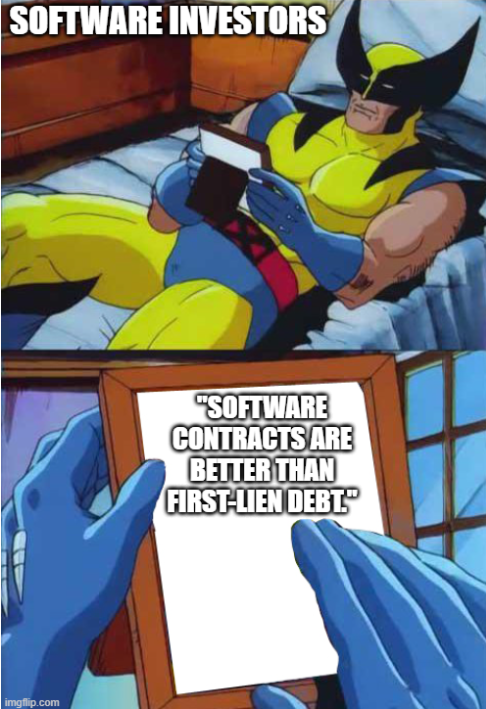
Current sentiment: All software is going to 0
English
5
1
32
5.2K
Fireside Alpha
Fireside Alpha@firesidealpha·
$INTC Lip-Bu Tan's endgame for the stock in his tenure: 10x in 10 years. He's at 6x so far. On No Priors, Intel's CEO on saving the company: the US government stake, $NVDA's $5B bet, CPU's comeback, Terafab with Musk, and chipmaking in the US. More notes below (save this): 1/ He took the hardest job in semis at 66 to save a company he calls iconic, not for himself. Tan says people told him he should retire rather than take on the hottest job in the industry, and his reasoning was that Intel matters too much to the semiconductor ecosystem and to the United States to let go. He frames the decision as doing one more, and he is explicit that he does not need the job and took it purely to save Intel. The personal-detachment framing is the same one he uses later to defuse the Trump confrontation, which tells you how he operates under pressure. 2/ The single most surprising moment of his first year was President Trump asking him to resign over a conflict of interest. Tan says nothing in his prior jobs or training prepared him for getting that call early one morning, with no exceptions offered. His move was to take the personal issue off the table first by reminding himself he did not need the job, then work out how to be helpful to Intel. He got a meeting within days, explained his story of being born in Malaysia, raised in Singapore, MIT-educated, and living only in the US, and Trump listened and gave him the chance. 3/ The whole turnaround runs on one operating cadence: crawl, then walk, then run. Tan says this was his culture at Cadence and now at Intel, and it means starting humble, listening to the customer, then deciding to walk, then finally deciding to run. He pairs it with two structural moves from day one: driving accountability and faster decisions into a company used to layers of bureaucracy, and having all of engineering report directly to him because he is an engineer by training and wants to know what went wrong. The method is the throughgoing logic of the interview, the lens he applies to product, hiring, and capital alike. 4/ He repaired a balance sheet he calls horrible with three named backers, and the government stake is the deliberate part. Tan says he is delighted the US government became a big shareholder, and the argument he made to Trump is that TSMC started with the Taiwan government as a shareholder, as did peers in Japan and Singapore, so this is the infrastructure support a government provides. The second backer is his old-time friend Jensen Huang, whose 5 billion dollar investment he says is now worth 25 billion or more, and the third is Masayoshi Son of SoftBank, on whose board Tan once sat. The mix of sovereign, strategic, and friendly capital is exactly the capital-stack argument he returns to when advising others on capital-intensive bets. 5/ CPU is back in demand, and the training-to-inference ratio is moving Intel's way. Tan says that with agentic AI and inference, CPUs have become highly in demand, and the ratio he watches has shifted from one-to-eight CPU-to-GPU in training toward one-to-four, maybe lower. He says AI model developers tell him that for reinforcement learning and for the speed of orchestrating many agents, the CPU is actually better. The reversal matters because Intel's data-center server business is built on the CPU, and a demand tailwind there is the nearest-term piece of the thesis. 6/ Foundry is a trust business, and the contrarian decision to double down was about the country, not the math. Tan says he faced loud voices in the market telling him foundry was too expensive and would not work, and he decided to bite the bullet because it is critical for the United States and the industry over the longer term. He frames foundry as a service and trust business: customers will only hand over wafer orders if the yield, defect density, and cycle time are right, because a yield miss means a revenue miss that leaves the customer toast. He says he has respect for TSMC and they are a great partner, but both need more capacity to serve customers, which is the cooperative framing underneath the competitive bet. 7/ Terafab is Elon Musk's own fab, and Intel is the collaborator making it faster. Tan says Musk decided to build his own fab because his robots and cars need a lot of silicon, and Intel is delighted to enable him to get to production quicker using some of Intel's technology and process. He calls Musk unconventional in a way he finds refreshing, someone who questions every traditional step, and says he works with a very good team there weekly. On Musk's line about wanting to smoke inside the clean room, Tan says he does not go that far, though maybe in some part of the clean room you can, and he keeps an open mind about it. 8/ Making the most advanced chips in America is becoming the bottleneck, and that is the reason to do it. Tan says everyone lived through the supply-chain crisis and the lesson is that you cannot depend on one or two players in one geography, so more people will realize making chips in the United States is critical. He points to Intel's 14A process at roughly 1.4 nanometer with planning already underway for 1 nanometer and 0.7 nanometer, geometries he likens to something thinner than a human hair where any mistake at any step goes down the drain. The precision required is precisely why manufacturing becomes the scarce thing, which inverts the cost objection into a moat argument. 9/ The real bottlenecks on AI demand are power, helium, and memory, not just chips. Tan lists power constraint as the one everyone knows, with some countries simply lacking the power. He flags helium as an underappreciated and significant input for semiconductor manufacturing, and memory as the current acute shortage that everyone is scrambling for, where adding fab capacity takes a couple of years and the cost gets passed through to customers as prices rise. The list reframes the AI buildout as a multi-input supply problem, with several non-chip constraints that move independently. 10/ When you hit the physics wall you change the materials, and he has invested across the new ones. Tan says scaling will get more expensive and harder but he can see a path from 18A to 14A to 10 and 7, and beyond that you go back to the materials and the chemical table. He names gallium nitride, silicon carbide, and indium phosphide as new materials he has backed, glass and diamond as packaging insulators he has invested in through a glass-substrate venture called 3DGS and a diamond foundry, and Intel's next-generation advanced packaging as its answer to TSMC's CoWoS. His engineer's framing is that you always hit a wall, then find a way to jump over it or work around it. 11/ Semiconductors are hot again, and the capital that once fled the room now crowds in. Tan says that 18 years ago he would pitch semiconductors to a tier-one VC partner meeting and half the room would make an excuse to leave, then the other half would ask if he had any software or services. Now, by his count, Jensen Huang's Nvidia is a 5.3 trillion dollar market cap, Broadcom and TSMC are around 2 trillion each, Lisa Su's AMD is almost 800 billion, and Intel is close to 600 billion. The reversal is the backdrop for the whole rerating: capital that used to demand he own 20 percent of a startup now writes 1 billion dollar venture checks into the same category that used to clear the room. 12/ His investing has always started from one question: where is the bottleneck and is the customer crying for it. Tan says that across 159 IPOs and 126 M&A exits, with 38 percent of his semiconductor investing in the US, his first screen is always where the bottleneck is and what you are trying to solve. He cites backing optical interconnect at Celestial AI because interconnect speed became the constraint in the cluster, and power management where conversion from 48 volts to 1 volt loses a lot of power, noting ADI's acquisition of Empower in that space. The discipline is bottleneck-first, demand-pull, real-customer investing, the same lens he now runs Intel through. 13/ The most important thing in a capital-intensive bet is a partner who stays through the bad times. Tan says many people are enjoyable to work with in the good times but walk away when the company is in trouble, and he wants partners who have worked through multiple hard-then-successful companies, an almost-bankrupt club that eventually takes off. He extends the rule to the kind of investor: individuals who are knowledgeable in the space rather than just a brand-name firm, and growth-stage and hedge-fund friends who understand the public market and can tell an entrepreneur where not to go. His read is that capital is not fungible, and the right co-investor is a strategic asset, not just money. 14/ The winning company in 10 years is a laser-focused niche player that can scale into a full stack. Tan says, framing it as his personal view, that the winner articulates and laser-focuses on one niche area, finds the right partner, and can scale, and he ties it back to a full-stack solution. He admires how Jensen Huang built a platform company around CUDA, and how Anthropic and OpenAI changed the game in a more elegant way, and he hopes Intel can play that role because it has the XPU, advanced packaging, and foundry to build purpose-built silicon for different workloads. The endgame he describes is putting Intel's pieces together into purpose-built silicon, which is the strategic destination of the crawl-walk-run path. 15/ What investors most misunderstand about Intel, in his telling, is the size of the product opening and the patience the foundry demands. Asked directly, Tan says people are only starting to recognize the turnaround four months into his crawl phase. The piece they miss is on the product side: Intel spent decades selling PCs and servers built for humans, and the new dimension is millions of agents that need compute and a software stack, plus physical AI, a market he calls huge and a game that is not over. On foundry he is blunt that Intel is very distant from TSMC and has to humbly rebuild the IP, the yield, the defect density, and the cycle time, work he does not expect to surface until around 2030 to 2032. His ask is that investors read the six-times shareholder return in 14 months as a beginning, not a result. 16/ He is chasing a 10x from a much bigger base, and has already returned six times in 14 months. Tan says that as a venture investor at heart he always looks for 10x, and notes that at Cadence he delivered close to 76 times from his 2.42-dollar interim-CEO starting point, and about 85 times by the time he retired as executive chairman. At Intel the base is bigger, so he sets the goal at 10x over five to ten years, and says the company has already made six times the return to shareholders in 14 months with a lot of room to go. The candor about a lower multiple off a larger base is the calibrated version of the same venture instinct he built his career on. Lastly, the buildout is not the bet, the application is. Tan says he does not see anything slowing the massive AI buildup down because the workload keeps increasing, and the only real brake is the supply constraint. But he insists on looking past the infrastructure to the application, arguing that not everyone who builds will win, that some will win big and others go sideways or get acquired, just as the internet produced an Amazon and a Netflix alongside many that disappeared. The discipline he hands the listener is to find the application that is humongous and sustainable, and if you believe in it, double and triple down.
Serenity@aleabitoreddit

Trump announced Intel + Apple partnership, sending $INTC up 8% today. Intel execs were reportedly surprised by the $AAPL announcement by Donald Trump. TBH, the President should lead Intel's marketing team at this point. Feel's like he's hard carrying the stock.

English
1
0
8
2.3K
Fireside Alpha रीट्वीट किया
Oguz Erkan
Oguz Erkan@oguzerkan·
Gavin Baker says Trainium is the most underrated AI accelerator. It’s the whole reason $AMZN has higher ROI on AI capex than all other hyperscalers out of the gate. They insisted on ramping up Trainium instead of going 100% $NVDA, so they now have better margins. Long $AMZN
Oguz Erkan tweet media
Fireside Alpha@firesidealpha

Right on cue. Gavin Baker (@GavinSBaker, Atreides) was asked recently which chip was most underrated and where consensus was wrong. His reply: "Trainium by far. Trainium is going to be to 2026, especially in the 2H of this year when Trainium 3 really ramps, as TPUs were to 2025."

English
9
14
119
17.6K
Fireside Alpha
Fireside Alpha@firesidealpha·
@pratjoey Right, and the "interface with other systems" part is the whole ballgame. If agents can rebuild the app cheaply, the moat is the data and the plumbing between systems, which is the layer Snowflake is fighting to own
English
1
0
0
637
Joey Prather
Joey Prather@pratjoey·
@firesidealpha SaaS will continue to evolve into prebuilt systems to leverage AI for the client and to interface with other systems
English
1
0
4
1.8K
Fireside Alpha
Fireside Alpha@firesidealpha·
Wild that a public software company CEO will openly admit this. Sridhar Ramaswamy (CEO, $SNOW): "I think of coding agents as the biggest threat to all software and figuring out a path for Snowflake that is going to survive and thrive in this world is my #1 challenge." 1/n
English
4
12
132
52.2K
Fireside Alpha
Fireside Alpha@firesidealpha·
Incredible that just over two weeks ago, Google's Gemini co-lead Noam Shazeer (@NoamShazeer) was asked what he was building besides Gemini. "I'm just trying to make the model smarter, build some new model architectures." Turns out, he was talking about GPT.
Noam Shazeer@NoamShazeer

I’m excited to share that I’ll be joining OpenAI and look forward to working with the exceptional team there. It was a difficult decision to move on. I’m incredibly proud of the amazing team at Google and everything we’ve built together. It has been an honor and a pleasure to work with all of you.

English
1
7
125
21.5K
Fireside Alpha
Fireside Alpha@firesidealpha·
@ludoonchart Very interesting. Btw have you seen the The New Yorker's profile on him the other day? Worth a peruse here x.com/firesidealpha/…
Fireside Alpha@firesidealpha

Highlighting a profile on Ken Griffin, the ~$50B Citadel founder, by The New Yorker: the alpha factory, the Mamdani feud, the Chicago exit, art, and a possible run. Worth the read/motivation to start the day, otherwise here's the tldr: 1. The scale. The piece frames Griffin, worth about $50 billion, as the most successful Wall Street entrepreneur of his generation, having built two separate money machines, the hedge fund Citadel and the market maker Citadel Securities. Forbes still ranks him only 37th-richest in the world, behind the tech founders who top the list. 2. The numbers behind the empire. Citadel's fund manages $68 billion, more than $19 billion of it Griffin's and his colleagues' own money. He owns at least 75% of Citadel Securities, which trades more than $170 trillion a year and booked $12.2 billion of revenue and $5.4 billion of net income in 2025. Bloomberg estimates the market maker is nearly half his net worth, which has tripled in six years. 3. The Mamdani feud showed his command of the outrage machine. After Mayor Zohran Mamdani's pieds-a-terre-tax video singled out Griffin as the owner of the $238 million Central Park South penthouse he bought in 2019, the priciest US home ever sold, Griffin fought back hard even though he lives in Miami and owns at least eleven homes worldwide. Citadel floated canceling a New York tower, allies at the Washington Post and a co-developer piled on, and Mamdani partly retreated. 4. The edge is relentless, unsentimental reinvention. Griffin has never claimed to be a math savant like Jim Simons or a long-term picker like Warren Buffett. The piece argues his mission is to build finance businesses that update their strategy, technology, and people so relentlessly that they beat rivals over decades, taking ideas just beginning to circulate and improving them with math or data others have not used. 5. He actually means the cliche everyone repeats. His retired deputy James Yeh told the magazine that almost every executive claims to never rest on their laurels, but ninety-nine percent do not mean it, and Ken does. The biggest risk at Citadel, by its own tenets, is complacency, and the stated objective is not only profit but beating rivals. 6. The fee model is a high-wire act. Instead of the traditional 2% management fee, Citadel charges pass-through fees that have reached about 12%, which lets it outspend rivals on talent and technology. It also finances more than $300 billion of assets with heavy leverage, which magnifies returns but means even a modest loss can force a scramble for cash. A large rival, Jain Global, recently foundered partly on that same model. 7. The plumbing is the moat. Early on Citadel cut out the prime brokers and began self-clearing its own trades, a speed edge that proved pivotal in the digital era and let it know its exact position every minute during the 2008 crisis. It also pioneered the pod shop, independent teams of a manager plus a few analysts, where winning pods get more capital and floundering ones are shut. 8. The culture runs on fear and churn. Former employees describe constant turnover, one keeping a "Book of Souls" of fifty departed colleagues in six years, and Griffin reviewing staff emails when he suspects a leak. A former executive said Ken's way of fixing weak performance was some turnover, because there needed to be some fear in the organization. Even so, most ex-employees come away grateful, since new hires get real responsibility fast and about half the portfolio managers rose from junior roles. 9. Citadel nearly died in 2008. The main fund fell 55%, and Griffin says the firm would have collapsed had Morgan Stanley failed. The damage came not from subprime exposure but from supposedly safe, uncorrelated bets all moving together in the panic. Griffin and partners put $500 million back in, refused to take a fifth of profits until the fund returned to its pre-crash high, and chose not to shut down and restart, the move Buffett had criticized other managers for. 10. Citadel Securities quietly became a giant. The market maker now handles about a quarter of all US stock trading and roughly 30% of equity options, coined the term high-frequency trading, and built fibre-optic speed advantages. It once paid a $22.6 million SEC fine for failing to get certain clients the best price about 3% of the time between 2007 and 2010, and it was valued at $22 billion in 2022 and is likely worth far more now. 11. The retail-trading engine draws the loudest criticism. Citadel Securities pays roughly $1 billion a year to brokers like Robinhood for the right to fill amateur orders, which funds commission-free trading but which critics call a kickback that pushes inexperienced people into risky bets. Forty percent of the retail options it handles are all-or-nothing same-day contracts, and Europe is banning the practice this month. During the 2021 GameStop frenzy, Citadel grave-danced into the wounded short-seller Melvin Capital. 12. The track record is historic, and now fading. Citadel has returned about 19% a year on average since 1990 with only two down years, and 23% a year from 2019 to 2024 with none, which one ranking firm crowned the most profitable hedge fund of all time. But the fund returned just 10.3% last year, below the industry average for only the second time since 2008, and is up only 3.9% through May against an industry average near 7%. 13. Weather became a profit center. After a stretch of alpha decay around 2015, Griffin ran commodities himself, hired hydrologists and weather specialists, and invested in forecasting technology. The commodities unit then made more than $10 billion across 2022 and 2023, largely by trading European natural gas through the price spike after Russia invaded Ukraine. 14. The origin was an insight about the quality of earnings. Trading in his Harvard dorm in the late 1980s, Griffin noticed that the market maker on the other side of his options trade earned a steadier, higher-quality income than his own risky bets. Chasing that reliable cash flow led him to convertible arbitrage, a satellite dish on his dorm roof for live data, and Citadel's founding in Chicago in 1990. 15. The Chicago exit was a political brawl. Griffin waged what one observer called a years-long blood feud with Illinois Governor J.B. Pritzker, spending more than $54 million to defeat a progressive-tax plan in 2020 and $50 million backing a challenger who was routed in 2022. He called Chicago "like Afghanistan on a good day," cited crime, and moved Citadel to Miami in 2022, drawn partly by the lack of income tax. Bezos and Sergey Brin later followed him there. 16. He spends on politics like a basic unit of currency. Griffin put about $400 million into campaign contributions from 2020 to 2024, ranking among the top federal donors, with his biggest gift this cycle being $2.5 million to Senator Susan Collins. He casts himself as a small-government Reaganite and a kind of shadow Treasury Secretary, backing border enforcement, deregulation, and tax restraint while attacking Trump's tariffs, his pressure on the Fed, and his manufacturing nostalgia. 17. His relationship with Trump is calculated. The Wall Street Journal once called him Wall Street's loudest Trump critic, yet he has never given to a Trump campaign, gave $1 million to the 2025 inauguration and $500,000 to Biden's, and voted for Trump in 2024 without enthusiasm. ProPublica found he paid an average 29.2% tax rate from 2013 to 2018, far above many tech billionaires, and he once called Jared Kushner with the outline that became Operation Warp Speed. 18. A presidential run hovers, and he keeps it alive. Admirers cast him as the next Jamie Dimon, a Wall Street king who could become a technocratic moderate, and Griffin says he would like to be involved in public service at some future point. The piece notes the obstacles, that no Wall Street figure from Hamilton to Bloomberg ever won the presidency, that a Harvard hedge-funder with a Riviera house unites people across parties in distaste, and that he hates to lose. 19. The spending is on a pharaonic scale. Griffin has put more than $450 million into 27 acres in Palm Beach near Mar-a-Lago, the centerpiece of a roughly $1.5 billion global property portfolio, with a main house built for his mother whose floors required Amish craftsmen. His art holdings almost certainly exceed $2 billion, anchored by a de Kooning he calls one of the most important paintings of the last century, and he owns a $45 million stegosaurus and two of the fourteen surviving original copies of the US Constitution. 20. Griffin sells his businesses as public goods. The New Yorker is not convinced. He argues they democratized finance and made markets cheaper and more liquid, and he has given away more than $2 billion with his name now on more than a dozen museums and seven hospitals. The piece counters with Warren Buffett's warning that hyperactive markets act as "pie shrinkers" and with the unease of watching the best and brightest pulled into trading. Asked whether finance's profitability is justified, Griffin paused and answered, "There is a market."

English
0
0
2
123
ludoonchart
ludoonchart@ludoonchart·
Ken Griffin on how ai is aggressively taking over the business world and completely destroying the traditional corporate hierarchy speaking to Stanford students, he dropped a brutal reality check on how algorithms are replacing elite degrees and handing massive power to small startups: "in software engineering, you get a 15, 20, or 25% boost in productivity. but what we are seeing now is work that we would usually do with people with masters and phds in finance over the course of weeks or months being done by ai agents over the course of hours or days" "these are not mid-tier white collar jobs. these are extraordinarily high-skilled jobs being automated. the competitive moats that massive companies have depended upon for decades are vanishing" "ten years ago, we had data centers full of nine figures of hardware to protect our advantage. today, a startup can lease that same computing power. a friend of mine handed his business to his 25-year-old son, who completely weaponized ai to target customers. they sold that business a few weeks ago for $1 billion" Griffin didn't build a $70 billion empire by ignoring the future. he is warning everyone that if you rely on your old credentials instead of adapting to the ai revolution, you will simply be replaced bookmark and watch his recent interview breaking down the ruthless new reality of ai
ludoonchart@ludoonchart

Ken Griffin shared a brutal story about a 22 year-old harvard grad that perfectly explains the ruthless culture of building a $60 billion empire: "i had a young man from harvard with me, and i asked him: 'if you made $10 million, what would you do?' he said, 'i would quit and i would climb the highest peaks around the world.'" "i looked at him and said, 'i don't think this is the right firm for you.' he was confused and said, 'well, you've already made an offer to me.' i replied: 'that's wonderful. i strongly urge you not to accept it.'" "i don't want to hear from somebody who is 22 years old that there's some magic number where they just stop. i want to hear how they are going to climb the next mountain right here at citadel. how they are going to build a business and have a massive impact." Griffin didn't build one of the most feared hedge funds on wall street by hiring people who just want to get rich and retire. he built it by hiring absolute killers who treat the game itself as the ultimate prize bookmark and watch his interview breaking down the ruthless reality of winning at citadel

English
1
5
43
18.9K