

HonestLiberal
7.7K posts

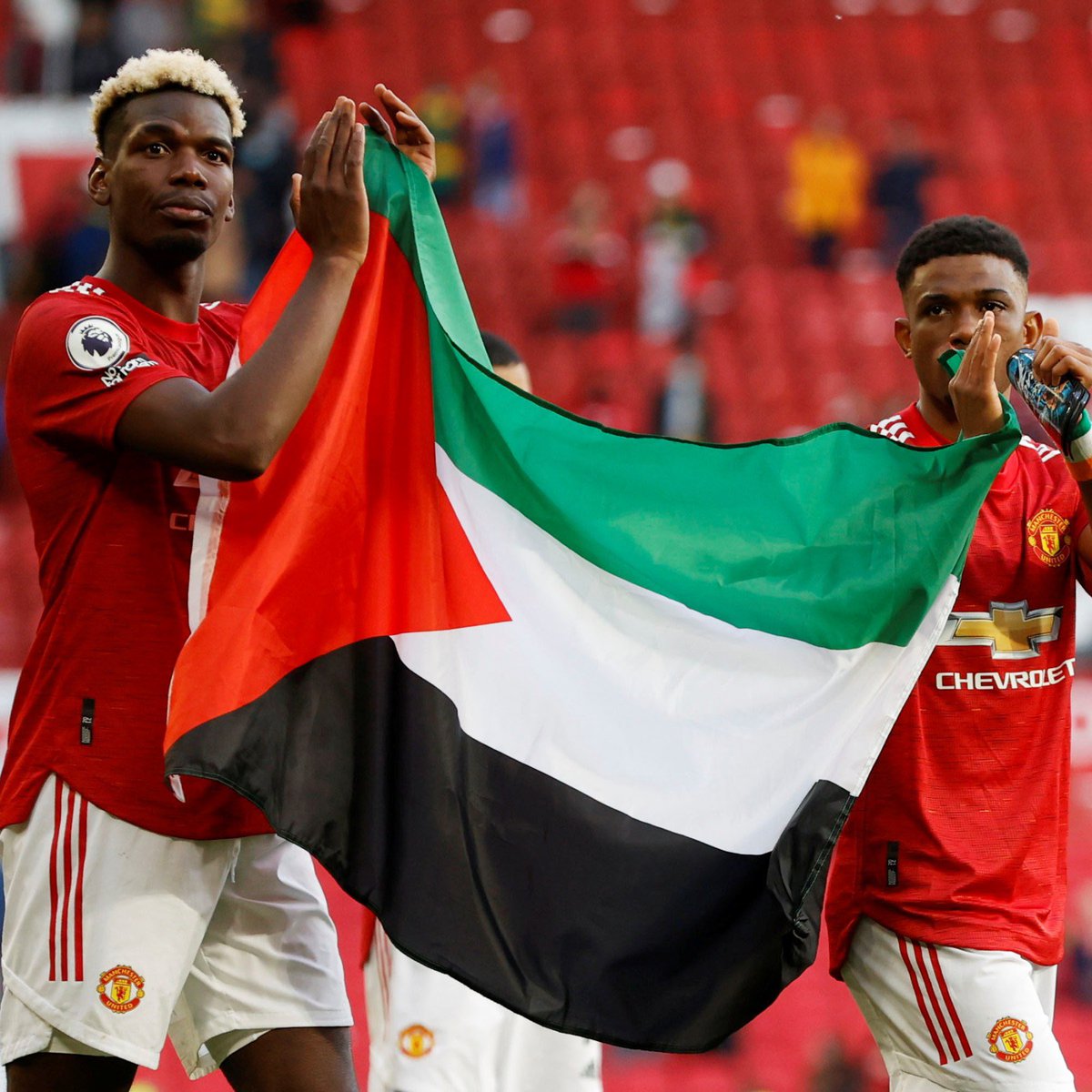
@BarcaTimes Why is everyone worked out about Lamine supporting Palestine ??? Isn’t that the right thing to do ?
English

Q- "What are your thoughts on Lamine holding the Palestine flag?"
🚨🎙️| Flick: "I spoke with him and told him" "If you want to do that, it's your decision, you're old enough." He's 18 years old and mature enough to make his own decisions." #fcblive 🫂


English



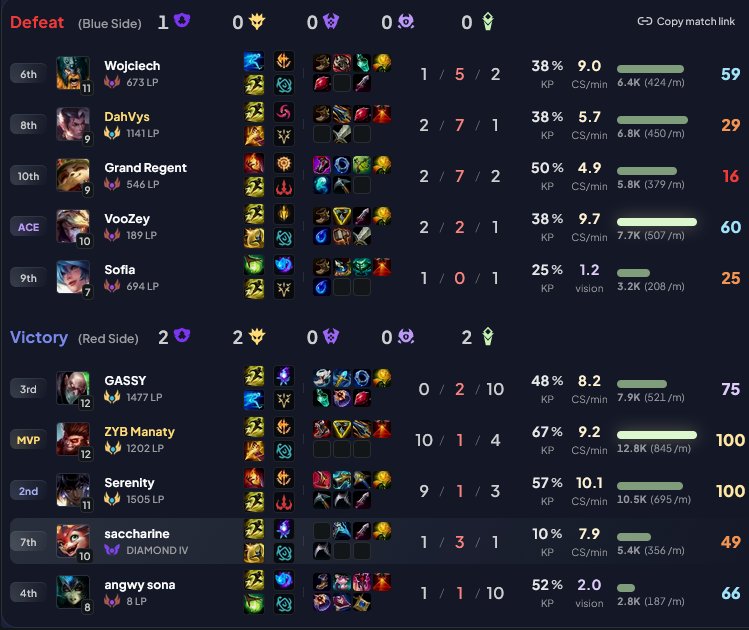
There's no argument in this existence that justifies this match being made
"We match by MMR now!" Excuse me? You just reset the MMR and somehow these low Master players make up for the MMR diff or what?
Matt Leung-Harrison@RiotPhroxzon
[Apex Matchmaking] Wanted to add a bit of context to some of the Apex Matchmaking fairness conversations happening recently. What we've been hearing 1. It's frustrating to have Diamonds and Challengers in the same game Response: Agree with this being a not ideal experience and it's an item to resolve when we can get to it. Only making Challenger queue times longer isn't something we can do right now without unintended consequences or negative tradeoffs on queue times/match quality We currently have a few higher priority things we're working on, but it's something we want to be able to do in the future 2. These massive LP Diff games are unfair Response: We currently believe that games that have Large LP diffs are ~fair, with the way we are matchmaking them rn. There are other factors we take into consideration as well like Duos, Autofill balance, etc. On average, we observe Apex+ teams have between a 49-51% chance to win anywhere from 0 LP diff between teams to 2000 LP diff. This is because we're matchmaking on MMR, not LP currently. However, these large LP diffs can be pretty confronting to look at and make the match look unfair. 95% of games fall under 1500 LP diff between teams, 86% under 1000LP, 65% under 500LP. We have more work to do here to make matches both be fair and look fair. I've attached 2 examples of random games with these diffs. Sometimes there are low rank alt accounts that are actually super strong players that actually have very high ratings (and are often duoing). Other times (the vast majority), the MMR of the teams are fair, but their LP values are desynced for a variety of reasons (climb timing, etc.) There are of course games where there's a lopsided LP diff and the team with higher LP wins, but it happens as often as the lower LP team winning.
English
@HarukiNiklas @Rayo_Thunder Ofc the pick is normal.
Highely likely sth else happend.
English

@HonestLiberal4 @Rayo_Thunder What is there to write bro, Anivia top is nowadays a normal pick.
Its not like he picked Janna Top in 2026
English

So in this game i am the Anivia top my midlaner just inted. We wrote nothing he just did it.
This is a Diamond game
player: Φ NASTY Φ#Zed
Game ID: 7849798037
I already opened a ticket for player report.
He sure is Diamond with a level 59 account right
is this punishable @drewlevin @RiotSupport ?
English

Was würde ich als 16 Jähriger mit meinem Wissen von heute tun?
- Handwerksausbildung machen, egal was alle übers Studium erzählen
- Ab dem ersten Ausbildungsgehalt sofort anfangen zu sparen, auch wenn es nur 100 € im Monat sind
- Mit 22 dann die erste kleine Wohnung im ländlichen Raum kaufen, 40.000 bis 60.000 €, egal wie runtergekommen
- Alles in Eigenleistung sanieren, auch abends und am Wochenende
- das ganze bei insta/youtube dokumentieren und Zusatzeinnahmen generieren
- Mieteinnahmen tilgen den Kredit, der Mieter zahlt also die Wohnung ab
- die Sanierungskosten und Zinsen von der Steuer absetzen
- das Prinzip nach ein paar Jahren wiederholen mit der nächsten Wohnung
Man sieht: es ist kein Studium nötig, kein Erbe, kein Startup. Nur Handwerk, Geduld und die Bereitschaft abends an der eigenen Wohnung zu werkeln statt durch Instagram oder Tikok zu scrollen.
Deutsch
@MakkroLoL Literally nobody would miss a GM or Challenger irl.
Why hating Master players with a job and family?
English

@pathless__path @InvertTheWing He literally is fighting Vinicious to play left wing.
English

No, we don't need him at Liverpool, because-
- He doesn't press and track back
- He would want to play as a striker, not as a left winger
- Astronomical wages
I don't feel he'll move on from Madrid this summer. Can't see a top club taking a gamble on him considering the above factors.
English

I mean, realistically, I don’t know which elite club would want him?
Serie A cannot afford him. Pep Guardiola and Mikel Arteta would have a heart attack trying to deal with such a personality.
Perhaps Liverpool? His mum is a Liverpool fan. And they need a superstar name now Salah is leaving. And also a left winger.
Bayern? I do not know. Would fit very well, but they do not need to take a risk when they are already performing so well. Plus, money.
Kalshi FC@KalshiFC
JUST IN: Kylian Mbappé will NOT play El Clásico today 23% chance he leaves Real Madrid this season
English
@derJamesJackson Its easy math. That whites will become a minority.
English

Germany does not keep statistics on this. They measure “migration background” which includes white immigrants (like me)
World Insights@World_Insights1
Percentage of white population in Germany: 🇩🇪 2000 ⟶ 95.2% 🇩🇪 2001 ⟶ 94.9% 🇩🇪 2002 ⟶ 94.6% 🇩🇪 2003 ⟶ 94.2% 🇩🇪 2004 ⟶ 93.8% 🇩🇪 2005 ⟶ 93.4% 🇩🇪 2006 ⟶ 93.0% 🇩🇪 2007 ⟶ 92.6% 🇩🇪 2008 ⟶ 92.1% 🇩🇪 2009 ⟶ 91.6% 🇩🇪 2010 ⟶ 91.1% 🇩🇪 2011 ⟶ 90.6% 🇩🇪 2012 ⟶ 90.1% 🇩🇪 2013 ⟶ 89.6% 🇩🇪 2014 ⟶ 89.1% 🇩🇪 2015 ⟶ 88.5% 🇩🇪 2016 ⟶ 87.9% 🇩🇪 2017 ⟶ 87.3% 🇩🇪 2018 ⟶ 86.7% 🇩🇪 2019 ⟶ 86.1% 🇩🇪 2020 ⟶ 85.5% 🇩🇪 2021 ⟶ 84.9% 🇩🇪 2022 ⟶ 84.3% 🇩🇪 2023 ⟶ 83.7% 🇩🇪 2024 ⟶ 83% 🇩🇪 2025 ⟶ 82%
English

Man erfährt irgendwie nie, was die Russen damals 45 bewegt haben mag, einfach in Deutschland einzufallen.
Wilhelmine@ostmulle
Am 8. Mai 1945 kam mein Großvater nach tagelanger Flucht und brutaler Vertreibung aus Schlesien in Petersdorf (Sudetenland) an. Die Russen und Tschechen standen da, mit ihren MPs im Anschlag und plünderten und vergewaltigten alles, was nicht niet und nagelfest war.
Deutsch
@WHITE_F1GHT @MattWallace888 You are his buddy. Just to scared to do it.
Crazy Vibes@CrazyVibes_1
He died with 200 children in a gas chamber, holding their hands until the end. He was a father to 200 souls who had no one else in the world. As the soldiers shouted and the world collapsed into madness, he looked at his children and smiled, telling them not to be afraid because they were going on a trip together. Janusz Korczak was a famous doctor and a brave Polish military officer who spent his entire life proving that children are the most important people on Earth. This wasn’t just a job for him—it was his life’s mission. In 1912, he founded a very special place called the Orphans’ Home in Warsaw, designed specifically for children who had lost their parents and had nobody else to protect them. He didn’t just look after their health; he respected them as complete human beings with deep feelings and big dreams. He even created a “Children’s Republic” inside the home, where the orphans had their own small government and even their own court to settle arguments fairly. To him, every child was a “precious gift” and a “creative flame” that adults were lucky enough to protect. He lived by one simple, powerful rule: you haven’t done enough for a child until you have done everything you possibly can. Because he lived by that rule, his responsibility grew even heavier when World War II began. When the Nazi occupation forced the Jewish population into the walled-off Warsaw Ghetto, Korczak moved all 200 of his children there to keep them together. In a place filled with hunger and disease, he became their father figure, their doctor, and their only shield. He spent every day begging for food and medicine just to keep them alive. Because Korczak was so famous and respected, he was offered several chances to escape to the “safe” side of the city and hide. He refused every single time. He knew that if he abandoned those 200 children to save his own life, everything he had ever taught about loyalty and love would be a lie. He stayed because a father does not leave his children when the storm arrives. The day they were taken away to the death camps, the streets witnessed something that looked more like a happy school parade than a march to a tragedy. Korczak wanted to protect the children’s hearts from the terrifying truth, so he told them they were finally going on a trip to the countryside. He had them wash their faces and dress in their very best clothes. They marched through the ghetto singing songs and carrying a bright green flag. Korczak walked at the very front of the line, standing tall in his military doctor’s uniform, carrying the two smallest children in his arms while the others clung to his pockets to stay close. Even the enemy soldiers watching them at the train station were moved to silence by the sight of such incredible dignity. When a soldier recognized him and offered him one last chance to walk away, Korczak didn’t even hesitate. “You do not understand,” he told the officer. “The children are not just my work. They are my life. I will not leave them now.” In the end, he followed his children all the way into the dark gas chambers of Treblinka. He stayed true to his word until his very last breath, holding their hands so they wouldn’t be afraid of the dark. When the chambers were opened later, they found him still leaning forward, surrounded by the sea of children who had huddled close to him for safety in their final moments. Janusz Korczak was a man who had every excuse to run, every reason to save himself, and every opportunity to look away, yet he chose to stand in the fire so his children wouldn’t have to stand there alone.
English

@MattWallace888 they should "accidentally" shut off the cameras in his cell
English

Pay attention to the Police officers behind Tanner Horner 👀
You can tell they have daughters…
I want to see him try to run so bad!
English
@WHITE_F1GHT @MattWallace888 What are you talking?
You are a big fan of child killers.
You are literally him.
English
@BY1959 You have to be mentally retarded to think Trump had anything to do with that.
English

He didn't just recently become a piece of shit.

Milton, DE 🇺🇸 English
@btznsht @zukunft37 Kein Hochleistungssport ist gesund.
Was kannst du?
Deutsch


Die 34-jährige Rachel Entrekin gewann den Ultramarathon Cocodona 250 in Arizona.
VOR ALLEN MÄNNERN!
Über 56 Stunden dauerte der Lauf, geschlafen hat sie währenddessen ganze 19 Minuten!
Chapeau, eine großartige
Leistung! 👌🏆

Deutsch

Father who killed a police officer days after police shot his 18-year-old son walks past 30 officers in the courtroom!!
English
@infernodan Literally nobody above Master is a normal human with a decent job + family.
What are you actually proud of?
English

@FilthyMouthGamr @MrsErikaKirk You have to be a disgusting filthy subhuman with no morals.
You look outside as rotten as inside.
The whole left showed their character.
English

@MrsErikaKirk I wish I was there when you try to explain to your kids why you came out to a fireworks display less than a month after Charlie was murdered and then bragged about how much merchandise you sold at his funeral.
English

Even though our kids won’t see our love “grow old together” from an earthly stand point; they’ll see it from a Heavenly one. And I’ll tell them of our love story any moment I can.
Happy Anniversary to the love of my life.
English
@sparbuchfeinde Man literally unterschreibt die Versicherungssumme. Der Prozess ist ein Witz.
Deutsch

Vor der Sparkasse in Gelsenkirchen demonstrierten an diesem Donnerstag mehr als 500 Geschädigte.
Die meisten der Schließfächer waren lediglich mit 10.300 Euro versichert.
Unabhängig davon, wie wertvoll der Inhalt war.
In einem Monat sollen die ersten Zivilprozesse gegen die Sparkasse beginnen.
Der Ausgang könnte für das Institut existenzbedrohend werden.
Deutsch
@F0X_82 @Hyro_CH @RiotSupportDACH Bro, der wird des in aller Ruhe geschrieben haben.
Die alte Generation hat sich schon in der Lobby den Tod gewünscht.
Deutsch

@Hyro_CH @RiotSupportDACH Immer wieder frage ich mich, was in den Köpfen der Menschen falsch verkabelt ist, dass die wegen nem verkackten Videospiel so dermaßen ausrasten. 😂
Deutsch


@kingofleaguetwt You are literally a low iq dofg who cant create a family.
English

