Simon Court

605 posts

Simon Court banner
Simon Court

Simon Court

@SimonCourtACT

ACT Under-Sec for RM reform and Infrastructure. Portfolios-Energy-Resources-Climate Authorised by C. Purves, 27 Gillies Avenue, Auckland.

New Zealand Bergabung Eylül 2014
1.6K Mengikuti1.7K Pengikut
Tweet Disematkan
Simon Court
Simon Court@SimonCourtACT·
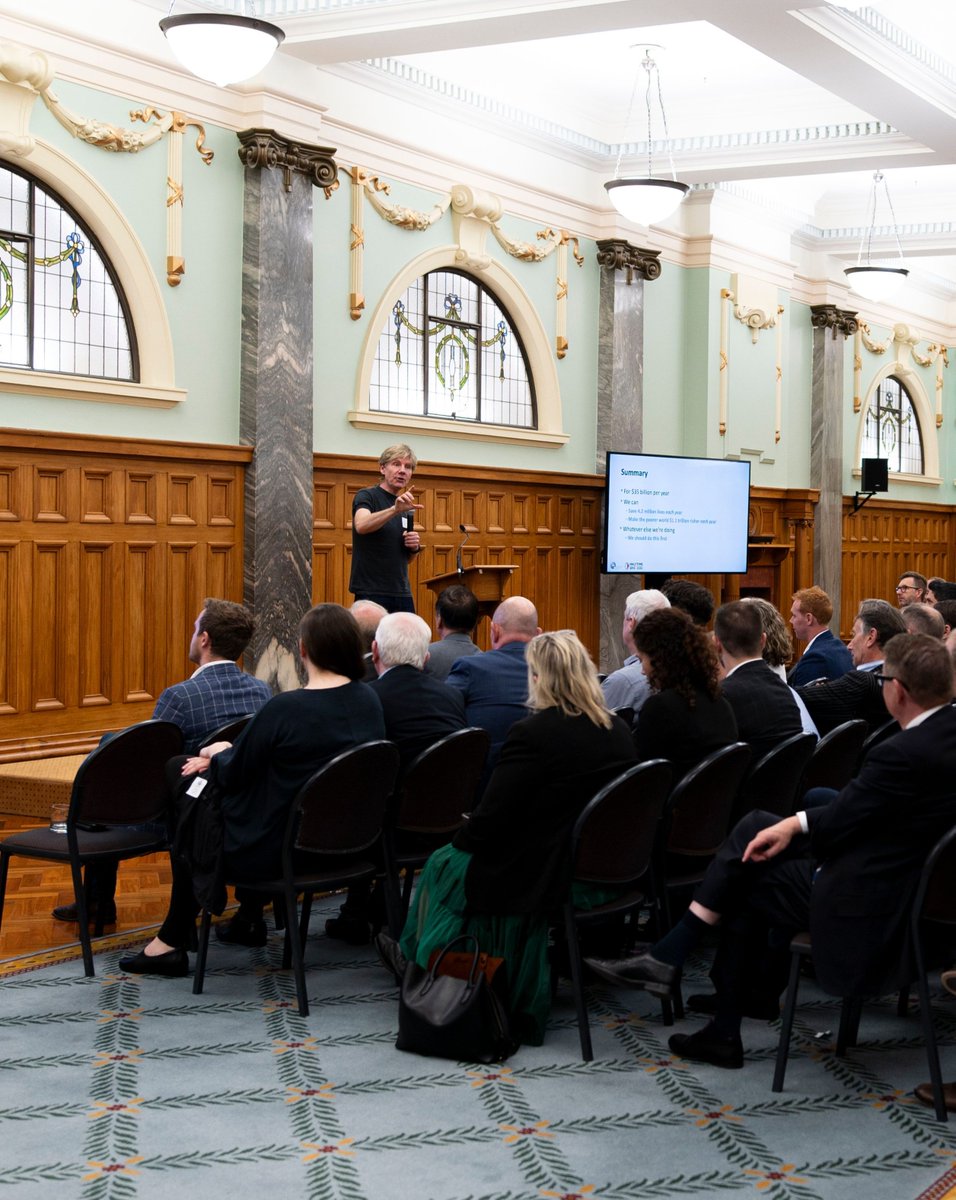
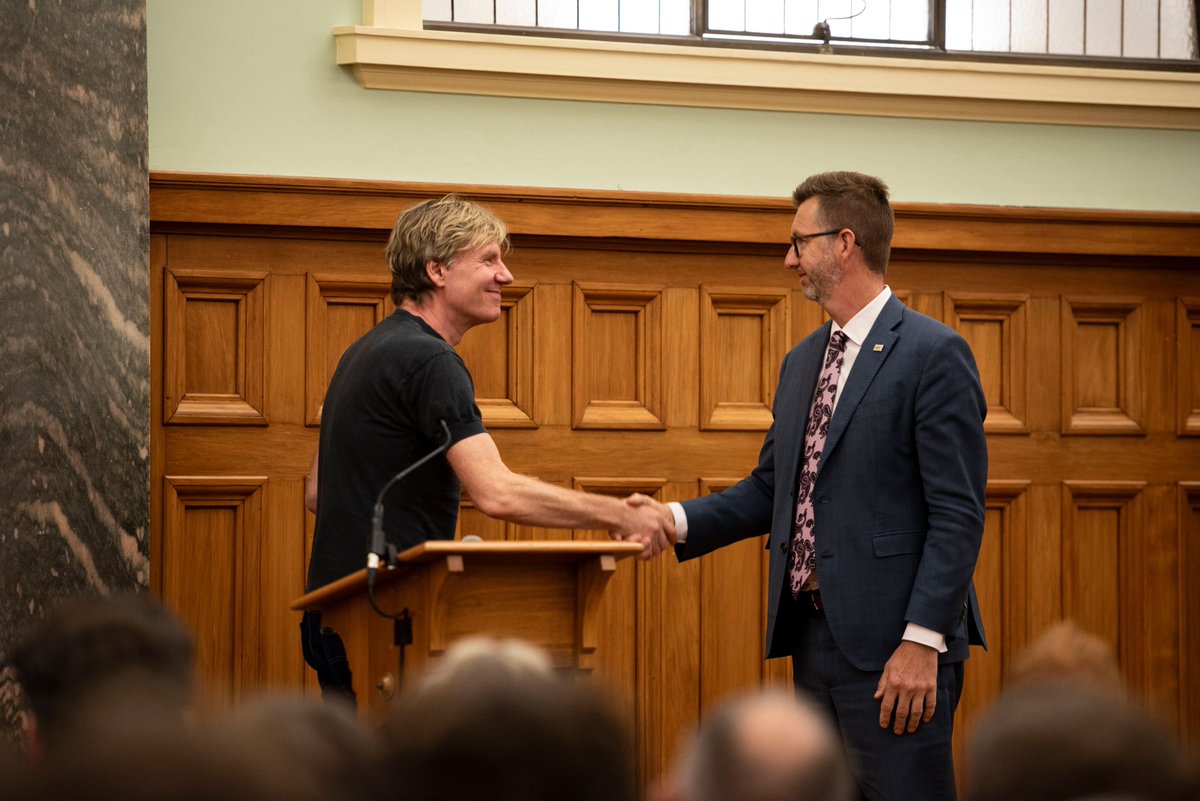
Thank you Bjorn Lomborg for your insights - how to get the most benefit by investing in Best Things First. ACT was chuffed to host Bjorn and Roland from Copenhagen Consensus Centre at Parliament this week, to present to around 80 guests. BCR key to good decision making!
Simon Court tweet mediaSimon Court tweet mediaSimon Court tweet media
English
17
15
141
22.1K
Simon Court me-retweet
ACT New Zealand
ACT New Zealand@actparty·
𝗖𝗼𝘂𝗻𝗰𝗶𝗹𝗹𝗼𝗿𝘀 𝘂𝗽 𝗮𝗻𝗱 𝗱𝗼𝘄𝗻 𝗡𝗭 𝗳𝗮𝗶𝗹𝗶𝗻𝗴 𝘁𝗼 𝗽𝘂𝘀𝗵 𝗯𝗮𝗰𝗸 𝗼𝗻 𝗰𝗼-𝗴𝗼𝘃𝗲𝗿𝗻𝗮𝗻𝗰𝗲 ACT is calling on local and regional councillors to push back against a proliferation of co-governance arrangements at the local level. “Up and down New Zealand, councils continue to advance arrangements that entrench iwi roles in governance structures and decision-making,” says ACT Local Government spokesperson Cameron Luxton. “Recently we’ve seen co-governance or special consultation proposals at Otago Regional Council, New Plymouth District Council, Tasman District Council, Taupō District Council, Kāpiti Coast District Council, and in the Central Districts Water governance framework. “We have seen some push-back – from ACT Local councillors. “At Otago Regional Council, councillor Robbie Byars stood up to oppose mana whenua membership in the proposed governance structure and argued voting membership should be confined to elected representatives. “At New Plymouth District Council, councillor Damon Fox pushed for scrutiny of the proposed Puketapu Hapū service level agreement and argued ratepayer-funded arrangements should be carefully tested. “ACT’s position is that democratic decision-making should remain accountable to voters. Councillors facing co-governance proposals should ask whether any proposed structure is legally required, legally permitted, or simply a policy choice. Where councils believe a proposal is required, they should identify the exact statutory provision. Where it is not required, they should be honest that it is a policy decision, motivated either by ideology or pressure campaigns from iwi. “Māori and mana whenua are already represented on councils via the standard democratic process. And councils are free to talk to iwi groups just as they can talk to any other interest groups – they don’t need to restructure themselves to give a privileged position to one group. “ACT continues to oppose voting rights for unelected local government appointees. I have drafted a member’s bill to make this position the law of the land under the Local Government Act. ACT would like to see this bill made Government policy."
English
49
70
313
3.9K
Simon Court
Simon Court@SimonCourtACT·
is reliable around the clock. So is nuclear, if the greenies let us take that path. For now, if we want affordable energy to power strong Kiwi industries, we need coal, and we need gas. Otherwise, “virtuously” shiver in the dark, while factories are shut down, and we regress.
English
5
0
7
361
Simon Court
Simon Court@SimonCourtACT·
If we want real energy abundance, we need to be honest about renewables. For years we’ve been told wind, solar and hydro will power New Zealand’s future. These technologies absolutely have a role to play. But pretending they can do the job alone ignores a basic reality:
Simon Court tweet media
English
64
15
101
3.9K
Chris Penk
Chris Penk@ChrisPenknz·
It's a real privilege to be appointed Defence Minister by PM Christopher Luxon. Thanks for all the well wishes here on X! I do wonder what this 21yo Navy sublieutenant would have thought about it 😂 (1/x)
Chris Penk tweet media
English
183
48
873
27.1K
Simon Court
Simon Court@SimonCourtACT·
ACT campaigned to lift defence spending to 2% of GDP. I am proud to be part of a Government delivering on that commitment. @actparty knows.
Melissa Chen@MsMelChen

It's fitting that 🇳🇿New Zealand's national bird is the kiwi: Because like the kiwi bird which was isolated with no predators, it lost the ability to fly and became easy prey when threats arrived. New Zealand imbibed the luxury belief that geography equals security, that "international order" is a given, and that someone else (the US or Australia) would always come to the rescue. Then when Chinese naval task forces started conducting live-fire drills near its waters and aggressively militarizing islands nearby, it finally woke up. Today New Zealand's army is small, while their navy barely has any fighting vessels left; their air force has NO fighter force whatsoever. This situation was really supercharged under the former PM Jacinda Ardern. Not only did New Zealand cuck itself by with pacifist posturing, it also indulged in her favorite ideological program, implanting DEI in every domain, and adopting the "Maori ways of knowing" in science curricula (lmao). Then Adern abandoned the country, took her family, and went to Australia (LMAO). Now, New Zealand has to build its armed forces practically from scratch. New Zealand is learning, late, that in a contested world, hard power still matters and predators don't respect flightless birds. This is the consequence of electing people drunk on idealism. Now, the NZ government is pledging billions to recruit personnel, buy helicopters, drones, anti-tank missiles, and boost spending toward 2% of GDP. It's a necessary correction, but rebuilding combat capability from near-scratch will take decades


English
2
0
13
339
Simon Court
Simon Court@SimonCourtACT·
The Ministry for Ethnic Communities handed out $30,000 to fund a nationwide Gaza advocacy campaign. @toddmstephenson says "ACT would end the Ethnic Communities Development Fund tomorrow, saving New Zealanders $4 million a year." Link to Todd's PR is comments below.
English
15
13
122
2K
Simon Court me-retweet
Handre
Handre@Handre·
In 1920, while Western intellectuals were gushing over Soviet "progress," a young Austrian economist named Ludwig von Mises published a bombshell paper. He argued that socialist economies would inevitably collapse because they couldn't calculate prices without markets. The academic world laughed him off. For the next 70 years, Nobel Prize winners, Harvard professors, and CIA analysts kept insisting the USSR was an economic powerhouse. Paul Samuelson's famous textbook predicted Soviet GDP would surpass America's by 1990. And the intelligence community? They estimated Soviet GDP at 60% of America's right up until the end. But Mises had nailed it from day one. Without real prices, central planners were flying blind — they literally couldn't tell if making a nail cost more than the nail was worth. When the Berlin Wall fell in 1989, Soviet GDP turned out to be maybe 15% of America's. The whole thing had been a Potemkin village propped up by Western loans and oil exports. Mises had been vindicated, posthumously — he died in 1973, missing his ultimate "I told you so" moment by just 16 years.
English
77
723
3.5K
93.6K