StockMarketUnit

19K posts

StockMarketUnit

StockMarketUnit

@StockUnit

Ideology—that is what gives the evildoing its long-sought justification and gives the evildoer the necessary steadfastness and determination. - Solzhenitsyn


Bergabung Şubat 2021
339 Mengikuti254 Pengikut
StockMarketUnit
StockMarketUnit@StockUnit·
@Caprice_721 @Its_ereko Nope war is war how it always was. Iran was weaker, tried to act like it wasn't, and lost. Period. The world moves on just like it always has
English
0
0
0
143
New Direction AFRICA
New Direction AFRICA@Its_ereko·
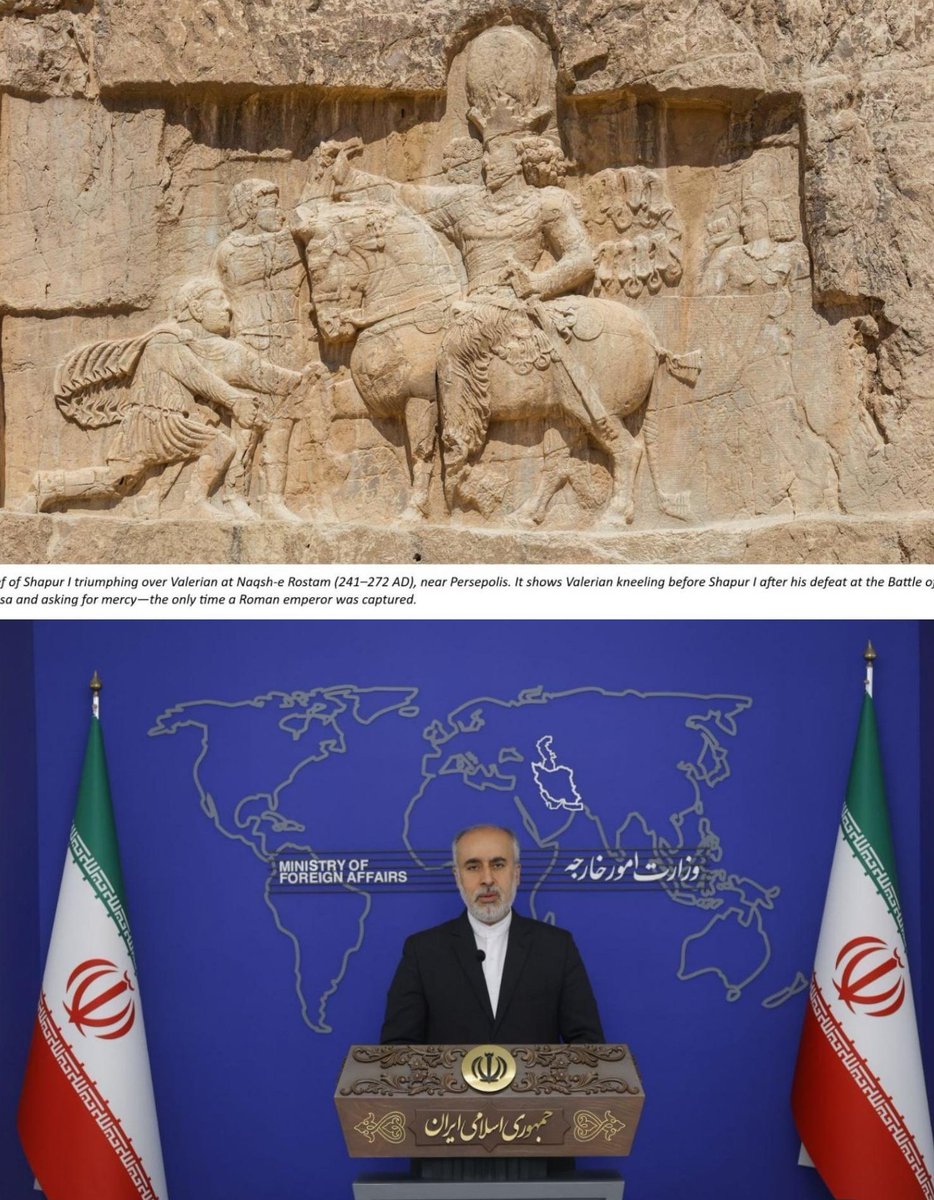
⚡🇮🇷 JUST IN: Iran's Foreign Affairs Minister Abbas Araghchi has responded to the joint statement condemning Iran over the Strait of Hormuz. 22 countries. All Western allies. All arming Israel. All bombing Yemen. All invading Iraq. All blockading Gaza. And now they want to lecture Iran about international law? When Iran defends its waters, it's called aggression. When the US blocks Iranian oil, it's called sanctions. When Israel bombs Iranian soil, it's called self-defense. The hypocrisy is the point. The list is long. The shame is longer. Iran isn't intimidated. The world isn't fooled.
New Direction AFRICA tweet media
English
376
9.6K
23.9K
509.9K
StockMarketUnit
StockMarketUnit@StockUnit·
@Its_ereko Lol yes the Iranian regime was the evil cancer butthole of the world. That's what 700 AD views of women and human life will get you. Islam deserves to be exorcised especially in theocratic form
English
0
0
0
15
StockMarketUnit
StockMarketUnit@StockUnit·
@unusual_whales This is total BS. Increased productivity begets more productivity. Otherwise we would have stopped working at the printing press
English
0
0
0
4
unusual_whales
unusual_whales@unusual_whales·
JPMorgan Dimon: t AI could create a four-day work week in the future
English
244
64
560
138.3K
Jim Bianco
Jim Bianco@biancoresearch·
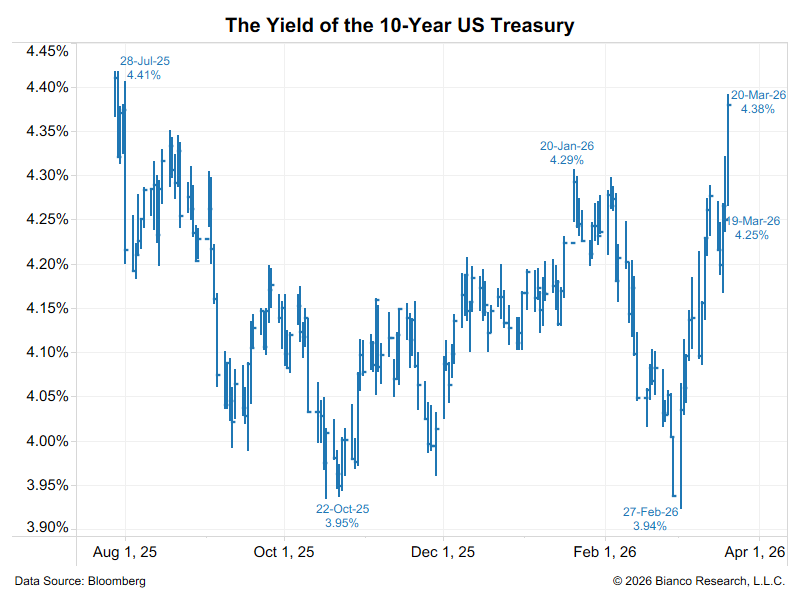
1/6 The 10-year yield was up 13 bps yesterday, closing at 4.38%, the highest level since late July The bond market's view changed in the last few days. 🧵
Jim Bianco tweet media
English
42
79
629
135.2K
Tracy Shuchart (𝒞𝒽𝒾 )
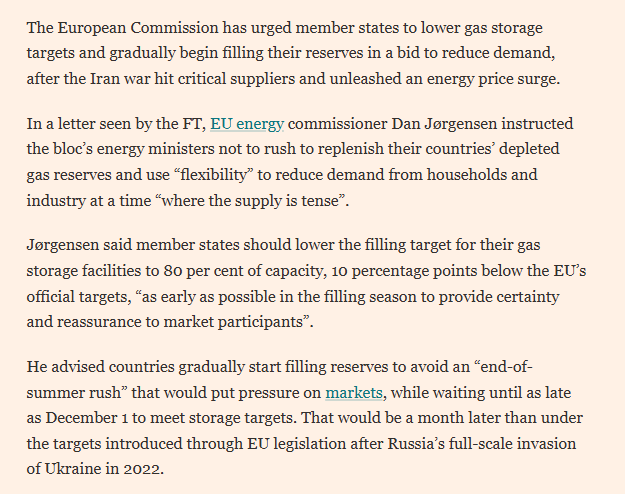
Just when I thought Europe could not get more insane, they surprise me again > EU member states urged to lower gas storage targets due to Iran war (FT)
Tracy Shuchart (𝒞𝒽𝒾 ) tweet media
English
29
61
292
22.4K
StockMarketUnit me-retweet
Aakash Gupta
Aakash Gupta@aakashgupta·
Instead of Netflix, watch this conversation with the greatest living mathematician on the future of AI
English
26
450
2.7K
280.8K
StockMarketUnit me-retweet
Anish Moonka
Anish Moonka@AnishA_Moonka·
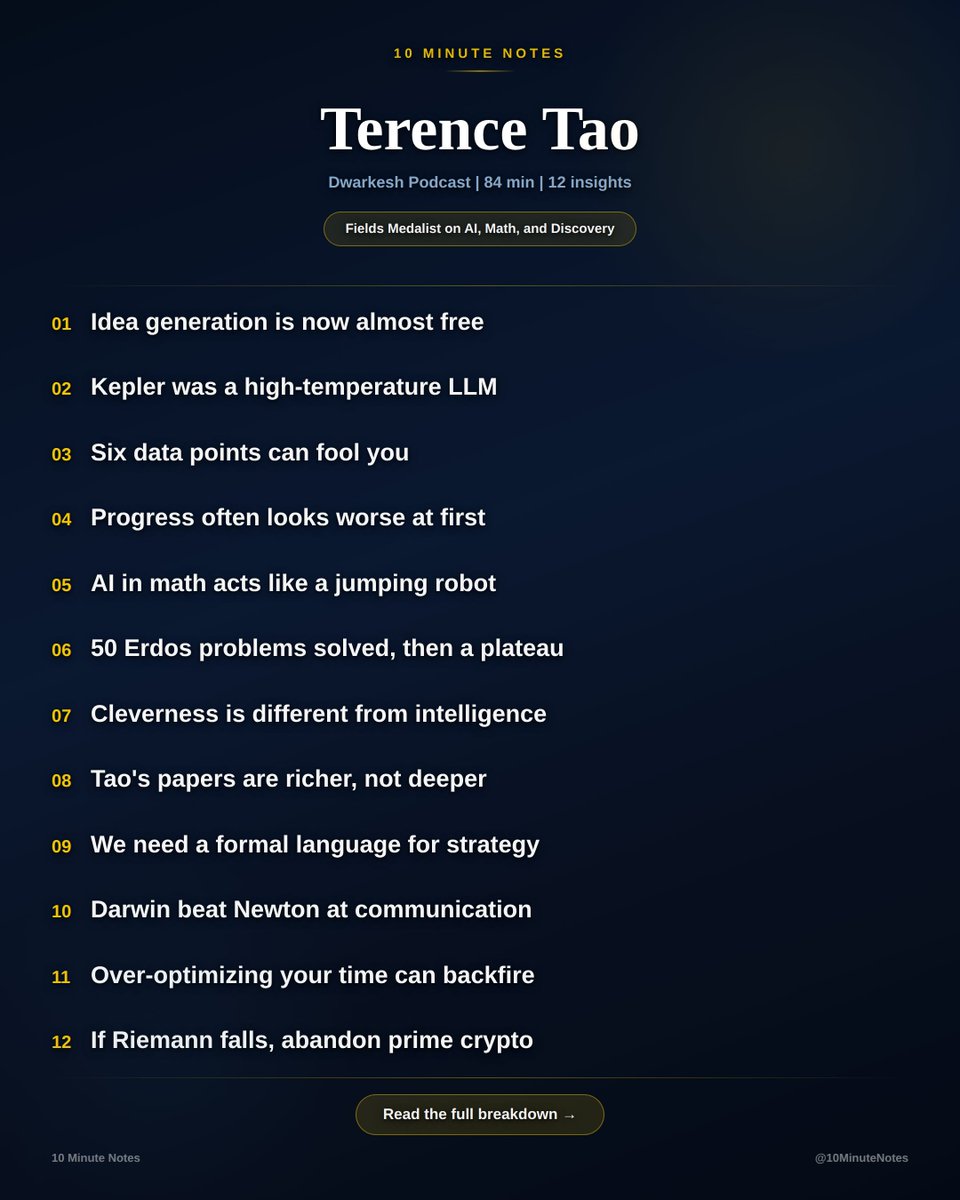
Terence Tao is arguably the greatest mathematician alive. He just sat down with Dwarkesh for ~84 minutes on AI, math, and what actually counts as scientific progress. Here is the clearest thinking I have heard on what AI can and cannot do for science. Our notes: 𝟭. 𝗔𝗜 𝗵𝗮𝘀 𝗺𝗮𝗱𝗲 𝗴𝗲𝗻𝗲𝗿𝗮𝘁𝗶𝗻𝗴 𝗶𝗱𝗲𝗮𝘀 𝗮𝗹𝗺𝗼𝘀𝘁 𝗳𝗿𝗲𝗲. 𝗧𝗵𝗲 𝗵𝗮𝗿𝗱 𝗽𝗮𝗿𝘁 𝗶𝘀 𝗻𝗼𝘄 𝗰𝗵𝗲𝗰𝗸𝗶𝗻𝗴 𝘄𝗵𝗶𝗰𝗵 𝗼𝗻𝗲𝘀 𝗮𝗿𝗲 𝗿𝗲𝗮𝗹. The internet made it nearly free to send a message to anyone. AI has done the same thing for coming up with possible explanations for scientific problems. You can now produce thousands of theories in minutes. But figuring out which ones are actually correct, and which are garbage? That part has not gotten any faster. Every company and research lab should be thinking about this gap. We can generate endlessly. We cannot verify at the same speed. 𝟮. 𝗞𝗲𝗽𝗹𝗲𝗿 𝘀𝗽𝗲𝗻𝘁 𝟮𝟬 𝘆𝗲𝗮𝗿𝘀 𝘁𝗿𝘆𝗶𝗻𝗴 𝗿𝗮𝗻𝗱𝗼𝗺 𝘁𝗵𝗲𝗼𝗿𝗶𝗲𝘀 𝗯𝗲𝗳𝗼𝗿𝗲 𝗵𝗲 𝗴𝗼𝘁 𝗶𝘁 𝗿𝗶𝗴𝗵𝘁. Johannes Kepler (the astronomer who figured out how planets orbit the Sun) started with a beautiful but completely wrong theory involving 3D geometric shapes nested between the planets. He kept guessing for two decades. The book where he finally published his correct law is mostly notes about astrology, about how Earth's musical notes cause famine. @Dwarkesh_sp puts it perfectly: the random idea generator is only useful if there is a reliable dataset to test against. Without the astronomical observations that another scientist (Tycho Brahe) had painstakingly collected, Kepler would never have found the right answer. 𝟯. 𝗣𝗮𝘁𝘁𝗲𝗿𝗻𝘀 𝗳𝗿𝗼𝗺 𝘀𝗺𝗮𝗹𝗹 𝘀𝗮𝗺𝗽𝗹𝗲𝘀 𝗰𝗮𝗻 𝗯𝗲 𝗰𝗼𝗺𝗽𝗹𝗲𝘁𝗲 𝗳𝗹𝘂𝗸𝗲𝘀. Kepler's law about orbital timing was based on just six data points, one per known planet. A later astronomer, named Bode, found a similar pattern and predicted a missing planet. Two new discoveries matched. People got excited. Then Neptune was discovered, and the pattern completely broke. It was a numerical coincidence from too few examples. I think about this every time someone shows a "law" based on a handful of cherry-picked data points. Kepler got lucky. Bode did not. 𝟰. 𝗧𝗵𝗲 𝗰𝗼𝗿𝗿𝗲𝗰𝘁 𝘁𝗵𝗲𝗼𝗿𝘆 𝗼𝗳𝘁𝗲𝗻 𝗹𝗼𝗼𝗸𝘀 𝘄𝗼𝗿𝘀𝗲 𝘁𝗵𝗮𝗻 𝘁𝗵𝗲 𝘄𝗿𝗼𝗻𝗴 𝗼𝗻𝗲 𝗮𝘁 𝗳𝗶𝗿𝘀𝘁. When Copernicus proposed that the Earth goes around the Sun, his model was actually less accurate than the old (wrong) Earth-centered model. The old model had a thousand years of tweaks, making it precise. Copernicus was simpler but rougher. Newton's theory of gravity left mysteries that Einstein, centuries later, resolved. Any AI system that scores ideas purely on "how accurate is this right now" would have dismissed most of history's biggest breakthroughs. That should make everyone pause before building benchmarks that only measure today's accuracy. 𝟱. 𝗔𝗜 𝗶𝗻 𝗺𝗮𝘁𝗵 𝗰𝗮𝗻 𝗷𝘂𝗺𝗽, 𝗯𝘂𝘁 𝗶𝘁 𝗰𝗮𝗻𝗻𝗼𝘁 𝗰𝗹𝗶𝗺𝗯. Tao's analogy: imagine a mountain range of walls, all different heights, all in the dark. Humans slowly feel their way up, finding handholds and mapping routes. AI is a machine that can jump straight up two meters. Sometimes it clears a short wall. Sometimes it jumps in the wrong direction and crashes. But it cannot grab a ledge, pull itself up, and jump again from a higher position. That inability to build on partial progress is the gap. Anyone who has worked on a hard problem where each small step makes the next one possible will recognize what is missing here. 𝟲. 𝗔𝗜 𝗰𝗹𝗲𝗮𝗿𝗲𝗱 𝘁𝗵𝗲 𝗲𝗮𝘀𝘆 𝗺𝗮𝘁𝗵 𝗽𝗿𝗼𝗯𝗹𝗲𝗺𝘀 𝗳𝗮𝘀𝘁, 𝘁𝗵𝗲𝗻 𝗵𝗶𝘁 𝗮 𝘄𝗮𝗹𝗹. There is a famous list of about 1,100 unsolved math challenges (called Erdos problems, named after a legendary mathematician who collected them). AI solved about 50 of them in a burst. Almost all were problems nobody had seriously tried before. Then progress stalled. Three separate teams threw the best AI models at every remaining problem and got almost nothing new. I keep seeing this same pattern across industries. The wins get posted on social media. The systematic failure rates stay quiet. If you only follow the highlights, your picture of AI progress is way off. 𝟳. 𝗧𝗵𝗲𝗿𝗲 𝗶𝘀 𝗮 𝗱𝗶𝗳𝗳𝗲𝗿𝗲𝗻𝗰𝗲 𝗯𝗲𝘁𝘄𝗲𝗲𝗻 𝗰𝗹𝗲𝘃𝗲𝗿𝗻𝗲𝘀𝘀 𝗮𝗻𝗱 𝗶𝗻𝘁𝗲𝗹𝗹𝗶𝗴𝗲𝗻𝗰𝗲. When two mathematicians solve a problem together, they try something, it almost works, they adjust, try again, and each failed attempt teaches them something that shapes the next one. AI mostly just guesses, fails, guesses again, fails again. It does not learn from each failure to make the next attempt smarter. Tao calls what AI does right now "artificial cleverness." That is the most precise two-word description of these systems we have seen anyone use. 𝟴. 𝗧𝗮𝗼'𝘀 𝗽𝗮𝗽𝗲𝗿𝘀 𝗮𝗿𝗲 𝗿𝗶𝗰𝗵𝗲𝗿 𝗻𝗼𝘄, 𝗯𝘂𝘁 𝘁𝗵𝗲 𝗰𝗼𝗿𝗲 𝘄𝗼𝗿𝗸 𝗶𝘀 𝘂𝗻𝗰𝗵𝗮𝗻𝗴𝗲𝗱. His research papers now include more charts, code, and numerical examples because AI makes those easy. Recreating his current papers without AI would take 5x longer. But the hardest part of the job, actually solving the mathematical puzzle, still happens with pen and paper. AI handles the side tasks. This is such an honest assessment. The 5x number is real, but it measures extras rather than the actual breakthrough. I think most knowledge workers are quietly discovering the same thing about their own jobs right now. 𝟵. 𝗪𝗲 𝗸𝗻𝗼𝘄 𝗵𝗼𝘄 𝘁𝗼 𝗳𝗼𝗿𝗺𝗮𝗹𝗶𝘇𝗲 𝗽𝗿𝗼𝗼𝗳, 𝗯𝘂𝘁 𝗻𝗼𝘁 𝗶𝗻𝘁𝘂𝗶𝘁𝗶𝗼𝗻. We now have computer systems (like the programming language Lean) that can check whether a mathematical proof is logically valid. AI has gotten good at using those. But there is no equivalent system for the softer questions: "Is this idea worth pursuing?" "Does this approach seem promising?" That kind of scientific intuition still requires human judgment and years of experience. If someone builds a way to formalize that kind of reasoning, it will be one of the most important tools of the decade. Formalizing scientific taste sounds impossible, but formalizing deductive logic also sounded impossible for 2,000 years before it happened. 𝟭𝟬. 𝗗𝗮𝗿𝘄𝗶𝗻 𝘀𝘂𝗰𝗰𝗲𝗲𝗱𝗲𝗱 𝗽𝗮𝗿𝘁𝗹𝘆 𝗯𝗲𝗰𝗮𝘂𝘀𝗲 𝗵𝗲 𝘄𝗿𝗼𝘁𝗲 𝘄𝗲𝗹𝗹. Darwin wrote in plain English and wove scattered evidence into a story people could follow. Newton wrote in Latin, invented new math to explain his ideas, and kept his best insights secret out of rivalry. It took decades for other scientists to translate Newton into terms that regular people could understand. How persuasive an explanation is turns out to matter hugely in science. And that is exactly the kind of thing that is very hard to teach an AI to optimize for. Maybe it should stay that way. 𝟭𝟭. 𝗧𝗮𝗼 𝘁𝗵𝗶𝗻𝗸𝘀 𝘆𝗼𝘂 𝘀𝗵𝗼𝘂𝗹𝗱 𝘀𝘁𝗼𝗽 𝗼𝘃𝗲𝗿-𝗼𝗽𝘁𝗶𝗺𝗶𝘇𝗶𝗻𝗴 𝘆𝗼𝘂𝗿 𝘁𝗶𝗺𝗲. He once spent a year at a research institute with zero distractions. After a few months, he ran out of ideas. He finds that the events he reluctantly attends outside his comfort zone often produce his best unexpected encounters. A certain amount of randomness and distraction is necessary for creative work. I built an app through Vibe coding precisely because we stumbled into it by accident. The most interesting things in any career tend to come from the unplanned detours. The greatest mathematician alive is telling you to stop maximizing your schedule. 𝟭𝟮. 𝗜𝗳 𝗮 𝗰𝗲𝗿𝘁𝗮𝗶𝗻 𝗺𝗮𝘁𝗵 𝗰𝗼𝗻𝗷𝗲𝗰𝘁𝘂𝗿𝗲 𝘁𝘂𝗿𝗻𝘀 𝗼𝘂𝘁 𝘁𝗼 𝗯𝗲 𝘄𝗿𝗼𝗻𝗴, 𝗼𝘂𝗿 𝗲𝗻𝗰𝗿𝘆𝗽𝘁𝗶𝗼𝗻 𝗰𝗼𝘂𝗹𝗱 𝗯𝗿𝗲𝗮𝗸. There is an unproven mathematical conjecture called the Riemann hypothesis about how prime numbers (numbers divisible only by 1 and themselves, like 7, 11, 13) are distributed. Much of modern encryption relies on the assumption that prime numbers have no hidden patterns. Tao says if this conjecture turned out to be false, it would mean there is a secret pattern in the primes that nobody knows about. And if one hidden pattern exists, there are probably more that could be exploited to break encryption. That is the single scariest sentence about internet security I have ever heard a Fields Medalist (the highest honor in mathematics) say out loud. Tao on careers: "We live in a particularly unpredictable era. Things we have taken for granted for centuries may not hold anymore." He points out that even high school students can now contribute to frontier math research using AI tools, something that used to require a PhD. The full podcast is worth listening to. Link in thread.
Anish Moonka tweet media
English
8
98
442
41.6K
StockMarketUnit
StockMarketUnit@StockUnit·
@TechLayoffLover Meta died when that tool Zuck went all in on the meta verse. We are just watching the slow motion destruction
English
0
0
0
272
Tech Layoff Tracker
Tech Layoff Tracker@TechLayoffLover·
Meta just confirmed 16,000 layoffs but sources inside are telling me the real bloodbath is still coming Word is they're sitting on approval for another 12,000 cuts. Total elimination could hit 28,000 by March Got a DM from someone in Menlo Park facilities: they're already deactivating badge access for entire floors in MPK 20 and 21 The surviving engineers are being handed "AI collaboration protocols" - basically playbooks for working with agents that do 60% of what their dead teammates used to handle One source showed me the internal deck: "human-AI optimal ratios" calculated down to the exact headcount per product area Reality Labs? 4,200 people last month. Targeting 800 by summer. The rest replaced by AI simulation tools and offshore contractors running Cursor They're calling it "efficiency at scale" but the engineering director I talked to said it differently: "we're training the machine to make us obsolete and calling it innovation" Most brutal part: the knowledge extraction is already complete. Every code review, every architectural decision, every debugging session from the past 18 months - all logged, all catalogued, all feeding the replacement systems Senior staff engineers with 8+ years at Meta getting managed out while watching their documented expertise train the models that eliminate their roles The $135 billion AI spend isn't just R&D. It's severance costs and replacement systems rolled into one number One insider told me: "Zuck isn't building the metaverse anymore. He's building the post-engineer reality" If you're still at Meta and reading this - the list is already made
English
17
16
94
13.5K
StockMarketUnit
StockMarketUnit@StockUnit·
@aiedge_ He is marketing his own product. If I have a $500K engineer who hasn't figured out how to minimize token expense then I would be deeply alarmed. Jensen is a mouthpiece and is treading into areas where he loses tech prestige and just becomes a salesperson
English
0
0
0
25
AI Edge
AI Edge@aiedge_·
NVIDIA CEO is spot on. "If that $500,000 engineer did not consume at least $250,000 worth of tokens, I'm going to be deeply alarmed." This is where the world is headed - to a place where paying for intelligence is a commodity that your best players absolutely NEED.
English
6
6
78
9.3K
Shruti
Shruti@heyshrutimishra·
Agentic AI is HERE. The future computer isn’t a laptop or an iPhone. It’s autonomous agents working, thinking, and acting for you 24/7.
English
48
59
350
22.9K
StockMarketUnit
StockMarketUnit@StockUnit·
@csjcode @ALEngineered It is still basically automated testing which we have had for years. AI also makes mistakes even when you put specifically rules in place that it should observe it will still sometimes overlook them. Claude does it all the time in little ways
English
1
0
1
20
Chris "CSJcode"
Chris "CSJcode"@csjcode·
This is what I don't understand about these kinda posts... You don't use agents to validate the code? What bugs? You can have 5 agents to check for different types of bugs (from extreme security to DX/modularity) running 24/7, to run various tests, E2E, unit etc. You can 100+ types of problems prior to deploying... no dev I knew ever did that manually..
English
2
0
2
491
Steve Huynh
Steve Huynh@ALEngineered·
AI lowers the cost of writing code but increases the need for code reviews, verification, observability, and operational excellence. It also exponentially increases the surface area for security. I think software engineers are safe for at least another 3 years.
English
40
19
242
15.1K
MJ Miller
MJ Miller@Persist_Change·
SMB as in owner/operators making 500k-2M gross.. They're in the weeds, scrambling and are worried about staffing, ordering, invoicing, and at best are using a an updated spreadsheet. There is no trust with those companies or time to 'figure it out.' They will need someone to do it for them, sometimes begrudgingly. Atleast, that's my experience, and who I am trying to help.
English
3
0
1
304
Luke Pierce
Luke Pierce@lukepierceops·
Anthropic and OpenAI are both building PE-backed consulting arms to deploy AI inside companies. Let that sink in for a second. The two companies building the most powerful AI on earth looked at the market and said "businesses can't figure out how to use this. We need to go in and do it for them." They are literally telling you where the gap is. Companies have access to the best AI models ever built. And most of them are still running on spreadsheets, disconnected tools, and manual processes because nobody showed them how to actually implement it. That's the whole game right now. Not building better models (obviously) or shipping new features. IMPLEMENTATION. Getting AI inside real workflows. Mapping the processes, building the systems, and making it stick. I've been doing exactly this for 4 years and have worked with 80+ companies at this point. It started with automation and naturally flowed into Ai. And every single engagement starts the same way. Not with AI or automation but with a process map. Because AI alone won't fix broken operations. Companies now understand that. They have not yet seen true ROI from Ai. You have to understand how the business actually runs before you touch a single tool. Where does the data live? Where are the bottlenecks? What's manual that shouldn't be? What breaks when volume goes up? That's the work, and that's what Anthropic and OpenAI just told the entire market is worth billions. Every company is going AI-first over the next 3-5 years. The demand for people who can actually make that happen is about to be unlike anything we've seen. The labs told you where the gaps are. Now go fill them.
Luke Pierce tweet media
English
136
189
2.2K
338.7K
StockMarketUnit
StockMarketUnit@StockUnit·
@lukepierceops In five years we will have a shortage of devs and accountants, watch. Lawyers and insurance companies are forked though
English
0
0
0
9
StockMarketUnit
StockMarketUnit@StockUnit·
@nickgerli1 I'm a Gen X Texas kid and went to Austin about a year ago after having been away for a couple of decades. Seeing what was done to South Congress etc is nauseating. Austin is no mas - couldn't pay me to live in that plastic shell it has become. So sad and a grim satisfaction 😢
English
0
0
2
30
Nick Gerli
Nick Gerli@nickgerli1·
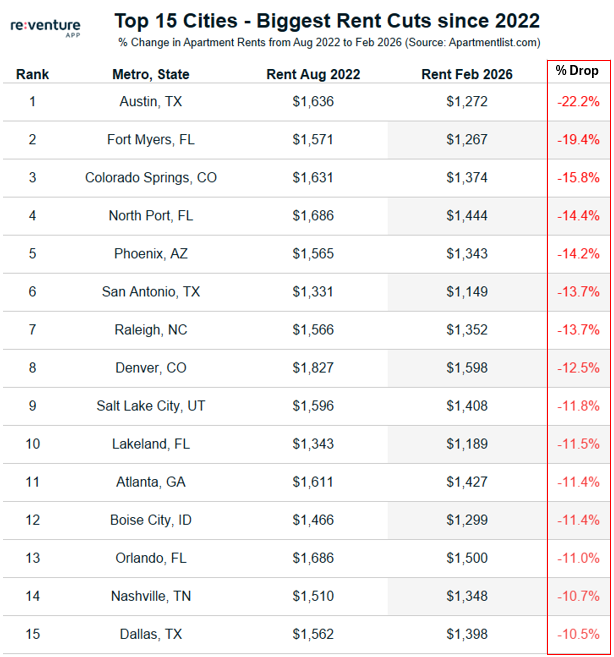
Rental market deflation is spreading across the U.S. Austin is down 22% from peak. Fort Myers is down 19% Denver is -13% Atlanta is -11% Nashville is -11% Dallas is -11% Landlords are doing big rent cuts across the Sun Belt and West. In some cases, they're even offering 3 months free rent (20-25% net rent cuts). This is great news for renters and homebuyers.
Nick Gerli tweet media
English
137
382
2.1K
247K
StockMarketUnit
StockMarketUnit@StockUnit·
@Ric_RTP Bezos Amazon tech is the worst in the world. The OG Kindle is literally the only thing done right. Amazon Auth and Apis? Laughable. Bezos Rocket Penis company? Couldn't get it up. Run as far away as possible from Bezos tech if you have two brain cells. The guy is a joke
English
0
0
1
6
Ricardo
Ricardo@Ric_RTP·
Jeff Bezos just announced the largest industrial takeover plan in history. He's raising $100 BILLION to acquire manufacturing companies across aerospace, defense, and chipmaking and REPLACE their workforces with AI. He's calling it a "manufacturing transformation vehicle." But here's the full picture and what actually makes this so genius: 6 months ago, Bezos quietly launched Project Prometheus with $6.2 billion in funding. His co-CEO is Vik Bajaj, a physicist who helped build the self-driving car project at Google X that became Waymo. They've been hiring from OpenAI, DeepMind, and Meta's AI division. Blue Origin CEO David Limp just joined the board. And the technology they're building isn't chatbots or content generators... It's digital twins. AI systems that simulate entire factories, stress-test materials, model supply chains, and design products without a single human touching the process. The kind of AI that could design a rocket engine, test it virtually across a million simulations, and manufacture the perfect version on the first attempt. That was phase one. Build the AI. And phase two just started: Now Bezos is flying to the Middle East pitching sovereign wealth funds. He went to Singapore meeting the world's biggest asset managers. He's in talks with JPMorgan Chase. The pitch: Give me $100 billion. I'll buy the factories. I'll install my AI. I'll automate the workforce. Then I'll SELL the playbook to every manufacturer on Earth. He's not licensing software to companies and hoping they adopt it. He's BUYING the companies and doing it himself. Think about what that means: Every other AI company sells tools and waits. OpenAI sells API access. Anthropic sells Claude subscriptions. Microsoft sells Copilot licenses. Bezos said forget that. I'll buy the entire production chain, replace the humans at the source, prove the model works with my own money, and then scale it globally. He did the exact same thing with retail. Amazon didn't sell software to bookstores. Amazon BECAME the bookstore. Then the department store. Then the grocery store. Then the pharmacy. Then the cloud. Now he's doing it with factories. And the fund is targeting the industries that matter most. Chipmaking. Defense. Aerospace. The sectors governments cannot afford to let fail. Which means once Bezos owns and automates these companies, governments become dependent on his AI infrastructure the same way they became dependent on AWS. The last time Bezos launched something at this scale, Amazon Web Services now powers a third of the internet. The US intelligence community runs on it. The Pentagon runs on it. Now imagine that same lock-in but for manufacturing. The man who automated how America shops is about to automate how America builds. And he's doing it with $100 billion of other people's money while risking about 2% of his own net worth through Prometheus. If it fails? Sovereign wealth funds take the loss. If it works? Bezos controls the AI operating system for global manufacturing. At a conference in Italy last year, Bezos said: "AI can have a huge impact on every company in the world, including manufacturers." That wasn't just a prediction. That was literally his business plan.
English
107
210
707
167.3K
StockMarketUnit
StockMarketUnit@StockUnit·
@VraserX This is pure hopium BS. Those who do AI for a living see it. The people saying these things are selling you a product via fear etc. He was touting OpenClaw just recently which is all you need to know about how preposterous not serious this is
English
0
0
0
18
VraserX e/acc
VraserX e/acc@VraserX·
Jensen Huang just casually described the end of software as we know it. 👀 You just hire AI agents that do the work for you. Not software… digital experts. And instead of shrinking the economy, this will blow it up. Because every task becomes instantly scalable.
English
35
27
170
9.1K
Elisa Mosini 🇪🇺🇮🇹
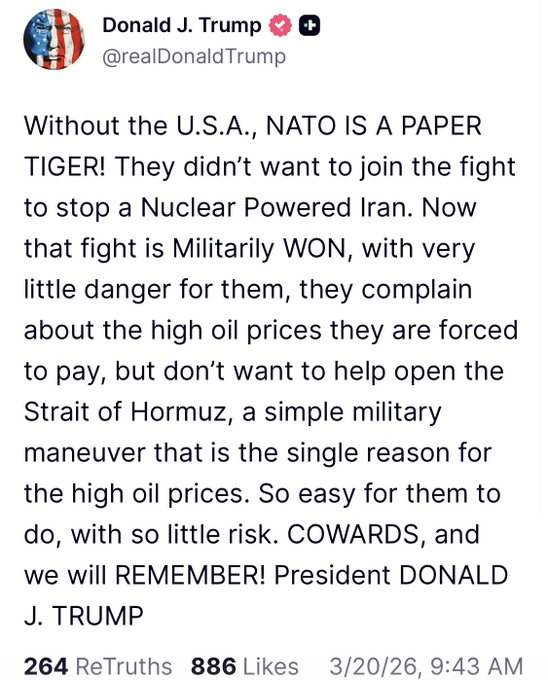
Yes, and we Europeans will remember the US betrayal. We will remember your blackmail. We will remember your threats. We will remember your malice. We are Europeans, and we will never forget those who try, now or in the future, to harm Europe or the European people. 🇪🇺
Elisa Mosini 🇪🇺🇮🇹 tweet media
English
4.5K
2.8K
13.8K
373.9K
StockMarketUnit
StockMarketUnit@StockUnit·
@MosiniElisa What? Yall harming yourself bros. Germany could solve its energy crisis by turning on nuclear power plants ALREADY BUILT but won't because of dumb leadership. It is your EU leadership who is failing you, not Trump. Quit trying to be a victim when your own ignorance killed you
English
0
0
0
2