Tweet Disematkan

Zam💚🤍❤
56.7K posts
@recognizeSL
ICU Nurse, Medical Translator

Humanitarian Betrayal: How Political Allegiances In Mogadishu Are Starving Northeast Somalia. UN agencies influenced by senior Somali officials from the Isaaq clan,particularly DPM @SalahJama and Finance Minister @BihiEgeh. panafricanvisions.com/2026/04/humani… via @PAVNewsNow


Muqdisho: Markale ayaa Dawladda Federaalku maanta maamulka Woqooyi-bari ka reebtay Mashruuca Wadajirka ah ee Nabadda iyo Ilaalinta Haweenka Wajiga II (WPP-II), kaas oo laga fulinayo maamulada kale ee dalka, balse aanu ku jirin Woqooyi-bari. Barnaamijkan waxa maalgelinaysa hay’adda UNDP, waxaana fulinaysa Wasaaradda Haweenka ee JFS. Tallaabadani waxay kusoo beegmaysaa xilli shalay Dawladda Federaalka ahi maamulka Woqooyi-bari ka reebtay mashruuca Bulsho oo in ka badan 30 milyan ku kacayay. Maamulkan curdinka ah ayaan weli helin maqaamkii qaran ee ay Dawladda Federaalka ah ka mudnayeen. Maxay kula tahay.? Mohamed Yusuf Bakayle.


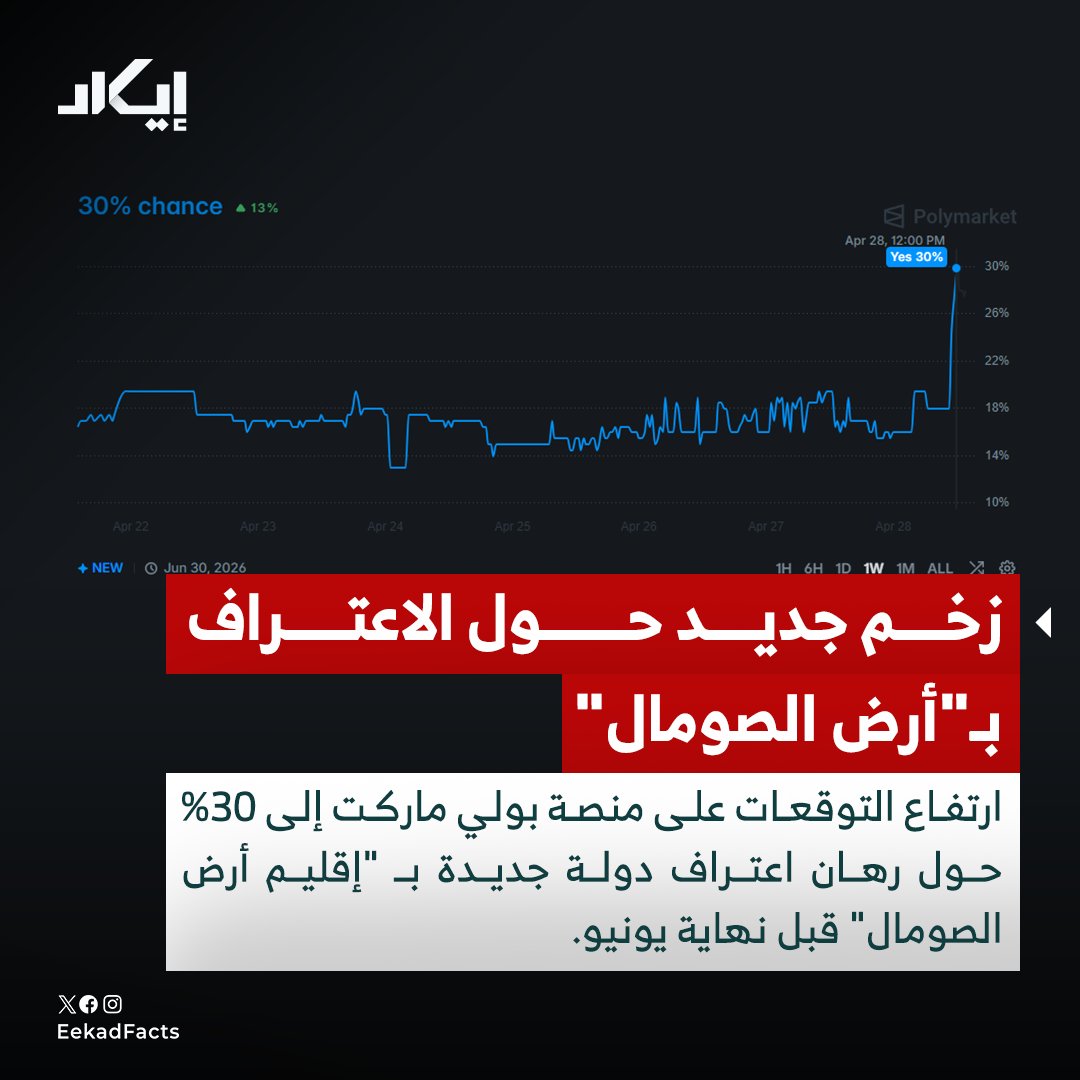



Geography, not rivalry, defines Saudi Arabia’s constraints. Despite its vast coastline, Saudi Arabia’s access to global trade is effectively shaped by three maritime chokepoints: the Suez Canal, the Strait of Hormuz, and Bab al-Mandeb. None are fully under Riyadh’s control. Each chokepoint is influenced by other actors. 👉🏾The Gulf of Aqaba is constrained by Israel. 👉🏾The Strait of Hormuz is shaped by the UAE and its regional alignments. 👉🏾Bab al-Mandeb is influenced by Horn of Africa actors, including Somaliland. The result is a rare condition in geopolitics: Saudi Arabia is almost sea-locked 😅, despite being surrounded by water. This explains Riyadh’s strategic anxiety. The growing alignment among Israel, the UAE, India, and Somaliland forms a network that effectively encircles Saudi maritime routes. That reality raises legitimate concerns over trade security, energy exports, and long-term strategic autonomy. But confrontation is not a solution. Escalating tensions with the UAE would weaken Saudi Arabia’s position, not strengthen it. Regional fragmentation only increases vulnerability at these chokepoints. Alternatives are not substitutes. Air bridges via Turkey or Pakistan cannot replace maritime trade in scale, cost, or efficiency. Air transport is strategic but it is not structural. Oil cannot be flown out plane by plane. Conclusion Saudi Arabia’s challenge is geographic, not diplomatic. The rational response is cooperation, redundancy, and regional accommodation not confrontation. In the Gulf, strategic survival depends on managing constraints, not creating new ones.



H.E. President @HassanSMohamud received UN Under-Secretary-General for Humanitarian Affairs and Emergency Relief Coordinator, Tom Fletcher, at Villa Somalia Presidential Palace. They discussed Somalia’s humanitarian priorities and ongoing recovery efforts, underscoring the importance of sustained partnership and coordination through the Somalia Disaster Management Agency @SoDMA_Somalia.