The first Christian church was Jewish.
The earliest Christian community — known as the Early Church of Jerusalem or the primitive church — emerged in Jerusalem in the weeks and months following Jesus' crucifixion, resurrection, and ascension (around AD 30–33). It began as a movement entirely within Second Temple Judaism, composed of Jewish believers who recognized Jesus (Yeshua) as the promised Messiah.
### Biblical Foundation (Primarily from Acts)
- Day of Pentecost (Acts 2): The church is widely understood to have launched publicly here. The Holy Spirit descended on about 120 Jewish followers (including the apostles) gathered in Jerusalem. Peter's sermon, delivered to a crowd of devout Jews and Jewish pilgrims from the Diaspora (Parthia, Media, Egypt, Rome, etc.), resulted in about 3,000 Jewish converts being added that day. These new believers were Jews who continued participating in Temple worship and synagogue life while devoting themselves to the apostles' teaching, fellowship, breaking of bread, and prayer (Acts 2:42-47). They are described as "the Way" — a Jewish sect or renewal movement, not yet seen as a separate religion.
- Composition: For the first several years (roughly AD 30–40), the church was exclusively or overwhelmingly Jewish. Jesus Himself was Jewish, as were all the apostles, the initial 120, and the thousands who joined. They observed Jewish customs, attended the Temple daily for prayer, and viewed their faith as the fulfillment of the Hebrew Scriptures and prophetic promises to Israel.
### Practices and Self-Understanding
Early believers did not immediately abandon Jewish life:
- They worshiped in the Temple (Acts 2:46; 3:1; 5:12) and likely synagogues.
- Many continued aspects of the Mosaic Law, festivals, and dietary practices, while adding belief in Jesus' resurrection and lordship.
- Leadership was Jewish (e.g., Peter, James the brother of Jesus).
- Outsiders and they themselves initially saw this as a movement within Judaism, alongside other groups like Pharisees or Essenes.a
### Gradual Inclusion of Gentiles and Transition
The church remained predominantly Jewish for its first decade. Key shifts included:
- Peter and Cornelius (Acts 10, ~AD 40): The first recorded Gentile (a Roman centurion) and his household received the Holy Spirit — a surprising development to the Jewish believers, who were "astonished" that God would pour out the Spirit on Gentiles too.
- The church in Antioch (Acts 11): A mixed Jewish-Gentile community where believers were first called "Christians."
- Jerusalem Council (Acts 15, ~AD 48–50): Jewish leaders (James, Peter, Paul, Barnabas) decided that Gentile converts did not need to fully convert to Judaism (e.g., no mandatory circumcision for salvation), though they encouraged basic moral guidelines. This opened the door wider to Gentiles without erasing Jewish roots.
Over the following decades and centuries, the church became increasingly Gentile in demographics, especially after:
- The destruction of the Jerusalem Temple in AD 70.
- The Bar Kokhba revolt (AD 132–135), which led to further separation and Roman policies affecting Jews and Jewish Christians.
The "parting of the ways" between Christianity and (emerging rabbinic) Judaism was a gradual process spanning the 1st–4th centuries, influenced by theology, demographics, persecution, and events — not an overnight split.
### Why This Matters
This Jewish origin highlights continuity with God's promises to Israel: Christianity is not a later invention but the fulfillment of the Old Testament through the Messiah. Jesus and the apostles rooted their message in Jewish Scripture. The New Testament itself was written mostly by Jews. Many Christian practices (e.g., elements of worship, prayer patterns, the concept of a gathered assembly) draw from synagogue and Temple roots.
In short, the very first church — the Jerusalem community born at Pentecost — was thoroughly Jewish in membership, leadership.
🇫🇷 | Presidente Macron:
Creo que Europa es un continente sumamente atractivo.
Y lo vengo diciendo desde hace varios meses porque nuestros amigos estadounidenses me han brindado una ventaja sin precedentes, así que la estoy utilizando: somos predecibles.
Un inglés en Windsor se le plantó a un negro que estaba predicando.
Lo bueno? Bien que los ingleses se están plantando ante el reemplazo
Lo malo? El negro estaba predicando la palabra de Dios. Que es la religión de Inglaterra
Otra cosa mala? Siempre una mujer metiendose defendiendo a los extranjeros
Como lo ven ustedes? Los leo...
🚨🇵🇰🇺🇸 | DEPÓRTESE: La diputada demócrata musulmana Maryam Khan reemplazó la bandera de Estados Unidos de su escaño y colocó la bandera de Pakistán, en una burla a los estadounidenses a los que "representa".
🇳🇮‼️ | El régimen del dictador socialista Daniel Ortega en Nicaragua ha decidido liberar a 1,200 presos comunes, una medida que llega en plena Semana Santa y despierta la sospecha de intentos de mejorar su imagen ante la comunidad internacional, mientras la represión continúa en el país.
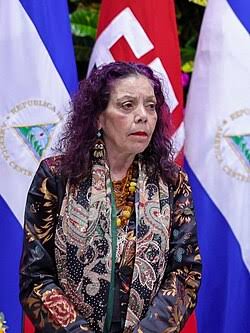
La Copresidenta de la República, Rosario Murillo, destacó los avances que vive el país gracias a la construcción diaria de la paz, reafirmando el compromiso de seguir trabajando para servir mejor al pueblo nicaragüense.
🚨🇨🇦 | SINIESTRO: El Colegio de Médicos de Quebec propuso la expansión de la eutanasia para incluir a los bebés recién nacidos que presenten "discapacidades graves" según vagos criterios, impulsando aún más la agenda globalista para asesinar y reemplazar a los canadienses.