Scott Bartelt

6.3K posts

Scott Bartelt banner
Scott Bartelt

Scott Bartelt

@srbartelt

I follow the Christ, and help others find Him! Secondly, by a mile... Go Seminoles, Astros, and Texans!!

Orlando Bergabung Temmuz 2008
1.3K Mengikuti360 Pengikut
Scott Bartelt
Scott Bartelt@srbartelt·
@KnightspurHouse Totally agree Ian, or maybe a few of the founding fathers? However, I'm just so glad it's not a golden statue of "you know who"! It would not have surprised me if he had done that.
English
2
0
1
73
Scott Bartelt
Scott Bartelt@srbartelt·
@JenBassAllen And seeing how far the phone cord would stretch so I could have a semi-private conversation.
English
0
0
1
4
JBA
JBA@JenBassAllen·
Tuesday humor for us oldies!!
JBA tweet media
English
7
2
17
485
J&L Historical
J&L Historical@Jason_R_Burt·
Some of you will know 😎
J&L Historical tweet media
English
254
64
1.2K
29.8K
TONY™
TONY™@TONYxTWO·
Artemis II Astronaut Victor Glover shares words of wisdom to his neighbors as he arrived home to a crowd 🇺🇸🙏🏼 “Let’s be this more. Let’s be neighbors. I don’t know if you heard me say it but God told us to love Him with all that we are and love our neighbors as ourselves.”
English
693
3.7K
29K
964.4K
Brian Ross
Brian Ross@brewmeone·
I totally beat my chicken a couple minutes ago…
English
5
0
2
248
Tracy
Tracy@noletracy·
So who puts the jacket on Rory?
English
10
0
5
359
Scott Bartelt
Scott Bartelt@srbartelt·
@sfrantzman It certainly seems like it's way beyond just the Middle East. So much of the world seems to be taking sides right now. Except for Europe who seem to be neither with us or completely against us when you include the Ukraine/russia conflict.
English
0
0
0
115
Seth Frantzman
Seth Frantzman@sfrantzman·
When the U.S. and Israel began strikes on Iran on February 28, I spoke to some friends in Jerusalem who said they believed this was the opening of the war that would transform the Middle East. What they meant, in terms of how I interpreted it, was that the conflicts after October 7 had been kind of opening moves, redrawing the region, and that now that the Hamas and Hezbollah pawns were defeated or weakened, that Iran’s regime would be overthrown or decimated and this would change the whole region. The theory was that now Iran’s proxies would wither and a new kind of Pax Israel would come into view, countries would rush to join the Abraham Accords, Israel might become the dominant power in the region, working with the US, and countries seeing this would rush to join the new power bloc; hesitancy that existed before would shift. It’s possible this process has been unleashed, however I wonder what people think now, a month and a half later. Is the New Middle East coming into view, a new regional order? The Tehran regime didn’t implode or fall; and while the Gulf is changed, it has sought to work with Ukraine, what else is happening that represents fundamental re-ordering? Thoughts?
English
11
2
14
6.3K
Scott Bartelt me-retweet
Arsen Ostrovsky
Arsen Ostrovsky@Ostrov_A·
OTD in 1945, Buchenwald Death Camp was liberated from the Nazis by American troops. Legendary newsman Edward R. Murrow was the first reporter on scene. This is how he began describing what he saw: "Permit me to tell you what you would have seen and heard had you had been with me on Thursday. It will not be pleasant listening ..." He then continued "There surged around me an evil-smelling stink. Men and boys reached out to touch me. They were in rags and the remnants of uniforms. Death had already had marked many of them, but they were smiling with their eyes." Murrow concluded: "I pray you to believe what I have said about Buchenwald. I reported what I saw and heard, but only part of it. For most of it, I have no words. If I have offended you by this rather mild account of Buchenwald, I'm not in the least sorry."
English
36
402
1.8K
120.3K
Scott Bartelt
Scott Bartelt@srbartelt·
@AaronBMacLean @LondonDefConf Yeah I've been wondering when you're going to do some podcasts about Ukraine and your experience you had there. Obviously the Iran conflict interrupted that.
English
0
0
1
76
Aaron MacLean
Aaron MacLean@AaronBMacLean·
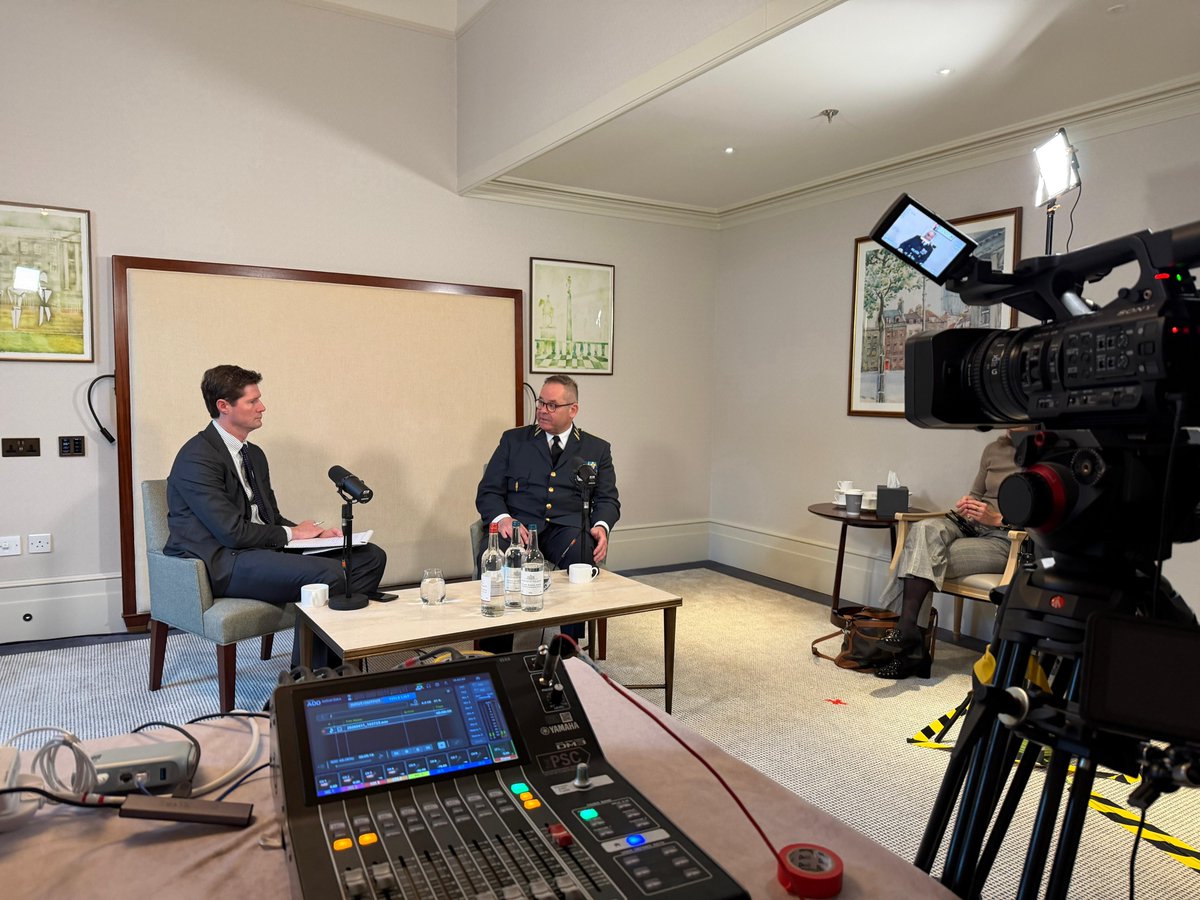
I know everyone is trying to figure out what's happening in the Strait and in Islamabad (me too!) but a quick note about earlier today at the @LondonDefConf--I interviewed Gen. Michael Claesson, Supreme Commander of the Swedish Armed Forces, about the strategic logic of the Baltic and the future of war. Coming soon @schoolofwarpod
Aaron MacLean tweet media
English
6
3
49
5.4K
Scott Bartelt me-retweet
Department of State
Department of State@StateDept·
Artemis II has shown the world what is possible. Welcome home! 🇺🇸
English
573
2.4K
13.4K
409.1K
᛭ Ian ᛭
᛭ Ian ᛭@KnightspurHouse·
Here is my Great great x2 grandfather Thomas.
᛭ Ian ᛭ tweet media
English
8
0
37
362
᛭ Ian ᛭
᛭ Ian ᛭@KnightspurHouse·
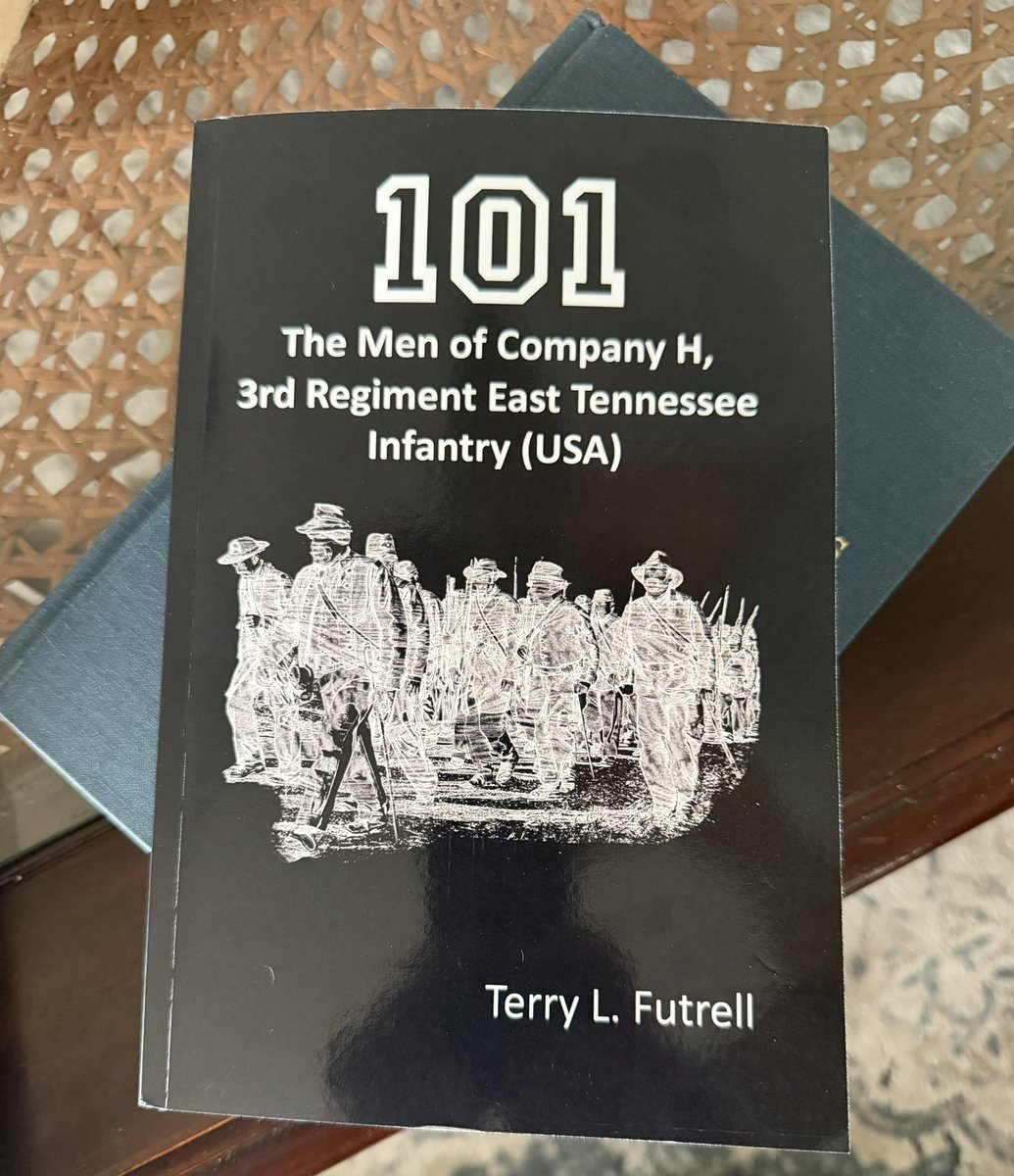
Someone told me about this book. It has my Great x 2 Grandfather in it. The author lives in Kingston,Tennessee but unfortunately I can’t find an email address to send him a photo of Thomas. The authors ancestor served in the same company. He’s written a few books it looks like about Tennessee. If any of you in the area know Mr. Futrell ,he can contact me here anytime.
᛭ Ian ᛭ tweet media
English
6
1
31
763
Scott Bartelt
Scott Bartelt@srbartelt·
@2ndMississippi That was fascinating reading this account and very moving, thank you! If only people today had so much respect for those they disagree with.
English
1
0
4
84
Michael Brasher
Michael Brasher@2ndMississippi·
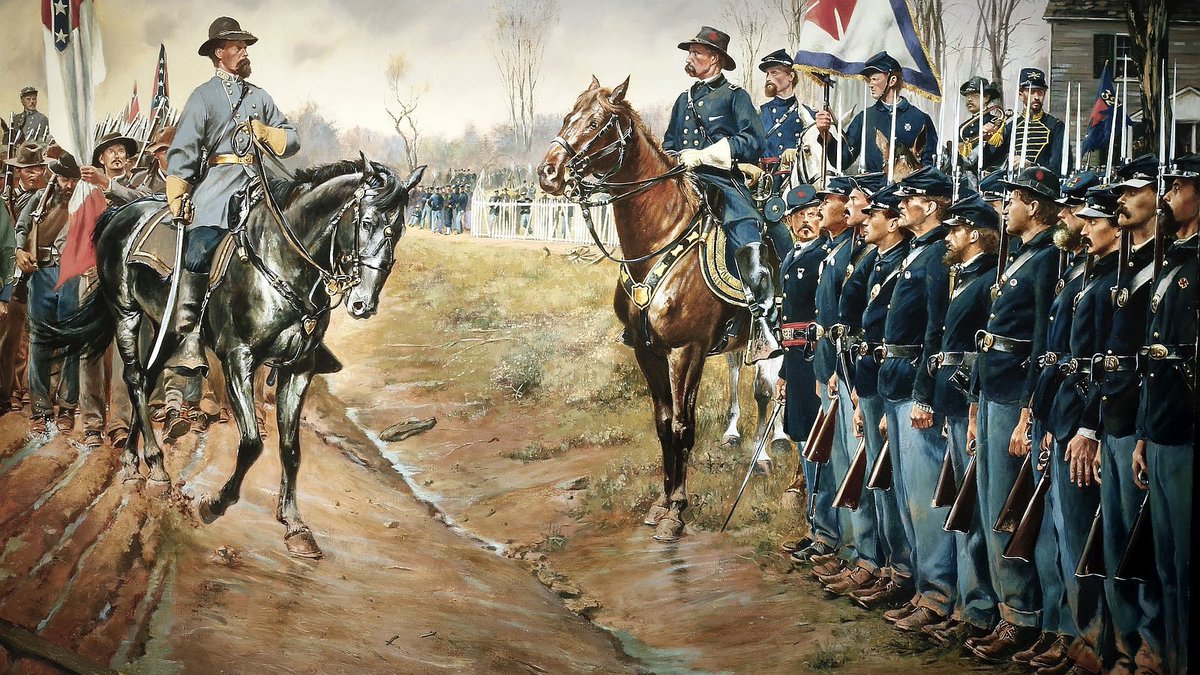
"The Passing of the Armies" - April 12, 1865 They came up the road in the early light of April 12, and what they carried they would not carry back. Three days had passed since the quiet drama in Wilmer McLean's parlor — three days in which the paperwork of surrender ground forward with the slow inevitability of a millstone, commissioners haggling over details while the two armies sat within earshot of each other and waited for someone to tell them what peace looked like. Now they would find out. Grant had chosen Joshua Lawrence Chamberlain to receive them, and the choice told you something about Grant. He could have picked a man who would make the Southerners feel it — God knows there were candidates — but he wanted the thing done clean, without vainglory, and Chamberlain was the man for that. The former rhetoric professor from Bowdoin College had learned his deeper lessons somewhere between Fredericksburg and Petersburg, where a bullet had torn through both hips and left him for dead in a field hospital. He survived that, and five other wounds besides, rising on nothing but battlefield merit to brevet major general and temporary command of the First Division, Fifth Corps. He was a thinking man who had done a fighting man's work, and he understood — the way not all fighting men did — that what was about to happen on this road mattered beyond the moment. Lee, for his part, had put John Brown Gordon at the head of the Confederate column, and that was fitting too. Gordon was a lawyer from Georgia who had entered the war as a captain of infantry and come out the other side commanding the Second Corps — Stonewall Jackson's old corps, the most storied formation in the Army of Northern Virginia. He had led the last offensive action of that army, a desperate lunge at Fort Stedman and then the final push on the morning of April 9 itself, before the white flags went forward and the guns fell silent. He had signed the surrender details on April 10 alongside Longstreet and Pendleton. If anyone had earned the right to lead these men on their last march under arms, it was Gordon. Chamberlain had his people in place by five o'clock that morning — roughly five thousand veterans of the Fifth Corps drawn up along the Richmond-Lynchburg Stage Road through the village, the 32nd Massachusetts on the right of the line, the 20th Maine and 1st Maine Sharpshooters nearby, Michigan regiments and Pennsylvania outfits — the 83rd, the 91st, the 118th, the 155th — stretching down the road in battle array, standing at order arms, facing the ridge where the Confederates were forming. They waited. The road between the two lines ran through a shallow valley, and the distance was not great — close enough to see faces, close enough to see the flags. Then the Confederates came down off the ridge and into the road. They marched in column, division by division, arms shouldered and colors uncased as though moving into an actual engagement — which, in a sense, they were, though the enemy this time was not flesh and blood but something harder to face. Gordon's Second Corps led. Behind them came what was left of Longstreet's command, including the remnants of Hood's and Anderson's divisions and, behind those, the ghost of Pickett's division, which had been shattered at Five Forks a week and a half earlier and now stacked exactly fifty-three muskets. They had no colors left to surrender. Behind Longstreet came Hill's Corps — or what bore Hill's name, A.P. Hill himself ten days dead on the outskirts of Petersburg. Nearly twenty-eight thousand officers and men had been paroled in all, and the infantry among them would stack their arms before the day was done. What happened next was Chamberlain's doing, and it was not in his orders. He had been thinking about it — how the thing should feel, what it ought to mean — and he had concluded that the men coming up that road deserved something more than silence. Not celebration, not condescension, but recognition: soldier to soldier, one last time. He had quietly instructed his subordinate officers that as each Confederate unit passed, the Union line would come to the carry — a marching salute, the same courtesy shown to troops passing in review. It was not a present arms. It was not theatrical. It was, as Chamberlain later described it, simply "some token of our feeling." Gordon rode at the head of the column with his chin on his chest, the picture of a proud man absorbing the worst morning of his life. He did not look up. Then Chamberlain's bugle sounded, and the entire Union line shifted with a single mechanical snap from order arms to the carry. Gordon's head came up. He caught the meaning of it instantly — a man did not need to have it explained — and in one motion he straightened in the saddle, wheeled his horse to face Chamberlain, touched the spur so gently that the animal reared just slightly, the horse's head dipping as though in a bow of its own, and dropped his sword point to the toe of his boot in salute. Then he turned back to his men and ordered them to return it, the same marching salute, passing honor for honor down the length of the column. "Honor answering honor," Chamberlain called it afterward. He was not a man given to easy phrases, and that one earned its place. The Confederates halted twelve feet from the Union line, faced toward it, and formed with their officers in place — parade-ground precision from men who had been starving a week ago. They fixed bayonets. They stacked arms. They hung their cartridge boxes on the stacks. And then came the hardest part. The flags. Some of these banners had been carried across every field from Manassas to Appomattox, and the men who laid them down did not do it easily. Chamberlain watched as soldiers broke ranks to press the torn silk to their faces, kissing the colors, clutching them against their chests with tears running freely, before finally leaning them against the stacked muskets and stepping back. It was, he wrote, "appealingly pathetic," though the word does not do justice to what he meant by it. On the Union side of the road, the men in blue held their silence, but Chamberlain noticed the twitching of jaw muscles and the shine of wet eyes along his own line. No one spoke. No one needed to. It took nearly the entire day. By the time the last regiment had passed and the last flag had been laid against the last stack, roughly twenty-seven thousand stands of arms and a hundred battle flags lay in the road between the two lines. The Army of Northern Virginia had ceased to exist. Gordon never forgot it. Writing nearly forty years later, he called Chamberlain "one of the knightliest soldiers of the Federal army" and described the moment with a generosity that matched the gesture itself — "a token of respect from Americans to Americans," he wrote, "a final and fitting tribute." Chamberlain, in his own accounts — a letter to his sister Sae written the very next day, April 13, and the fuller narrative he published in 1904 — returned the admiration with equal grace. The two men had tried to kill each other for four years. Now they stood twelve feet apart and found, between them, the first syllable of a language that might, in time, make one country out of the wreckage of two. Grant had wanted it done without humiliation. Chamberlain gave him something better. He gave it dignity. Painting: "The Last Salute" by Don Troiani
Michael Brasher tweet mediaMichael Brasher tweet mediaMichael Brasher tweet media
English
9
51
217
6.5K
Scott Bartelt me-retweet
Brianna Lyman
Brianna Lyman@briannalyman2·
On this day in 1865, Robert E. Lee surrendered to Ulysses S. Grant. Lee showed up dressed in his best, looking like a dignified gentleman. Grant was covered in mud after riding all morning. Before anything was signed, the two men spoke about their shared service in the Mexican War -- a reminder that Confederates and Union soldiers were nonetheless countrymen tied by mystic chords of memory. Grant did not create terms of surrender to humiliate the South. Grant and Lincoln understood that to unify the nation, you could not imprison half of it. Confederates were allowed to keep their sidearms and personal horses. When Grant learned that Lee's men were quite literally starving after having not eaten for days, he ordered 25,000 rations sent to them immediately. Lee said this would have "a very happy effect" on his men. When Lee rode away after signing terms of surrender, Union soldiers cheered. Grant forced them to stop, reminding Union soldiers that Confederates were "now our countrymen" and there would be no cheering over their downfall. (In fact, days later when actual ceremonial surrender occurred, Union Gen. Josh Chamberlain reportedly ordered his men to salute passing Confederates as a sign of respect) Lee also worked diligently to stop Confederates from waging guerrilla warfare, encouraging them to set their arms aside and return home and in peace. He was a titan in his own right. If the spirit of 1865 had been driven by the urge to shame and punish, the Union would not have lasted. So many people today misunderstand that and as such, they try to rewrite America history. God Bless America.
English
609
4.9K
35.5K
1.2M
Scott Bartelt
Scott Bartelt@srbartelt·
@ustonymc That's a great story, thanks for sharing. Humbling to see the civility between foes.
English
0
0
2
503
ustonymc
ustonymc@ustonymc·
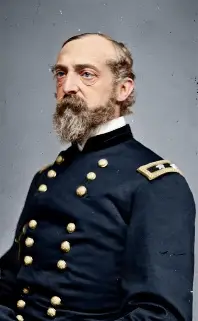
Appomattox Courthouse April 9 1865 Old Friends As Lee sat in his tent, he encountered General Meade who had ridden over to see him. Lee at first didn't recognize his old friend. Then he did but with something of a shock. "What are you doing with all that gray in your beard?" he asked, and his Gettysburg opponent replied, "You have to answer for most of it." As they rode together to headquarters soldiers camped along the side of the road began to cheer and Meade, not wanting to misrepresent himself told his color bearer who had the flag rolled up: "Unfurl that flag." the bearer did and drew a sharp retort. "Damn your old rag!" a butternut veteran called from the side of the road. "We were cheering General Lee."
ustonymc tweet mediaustonymc tweet media
English
10
66
638
27.4K
Scott Bartelt me-retweet
Military History Now
Military History Now@MilHistNow·
Today in 1865, Robert E. Lee surrenders the Army of Northern Virginia to Ulysses Grant at Appomattox effectively ending the U.S. Civil War. Grant orders his jubilant men not to cheer. "[They] were now our countrymen," he recalls. "We did not want to exult over their downfall."
Military History Now tweet media
English
56
379
1.8K
57.4K
Tracy
Tracy@noletracy·
Yes, Luna, of course I'd like to get out from under my blanket and chase you around the house for the 1,000th time 🤣
Tracy tweet media
English
3
0
17
246
JBA
JBA@JenBassAllen·
Can we not all collectively agree that National Championship games in college sports need to start at an earlier time?! I don’t even care who wins this game but here I am, still watching as if I did knowing damn well tomorrow I’ll be exhausted. 🥴
English
4
0
22
611
Scott Bartelt
Scott Bartelt@srbartelt·
@AaronBMacLean @CBSMornings this great Aaron, but I'd also like to hear your thoughts on Trump's outrageous post yesterday morning. Dropping F bombs and praising Allah? On Easter Sunday of all days. What the heck???
English
0
0
0
42
Aaron MacLean
Aaron MacLean@AaronBMacLean·
Incredible tactical/operational excellence (and personal valor) over the weekend, and a need for a strategic breakthrough in the days ahead—my analysis this morning on @CBSMornings.
CBS Mornings@CBSMornings

U.S. agencies undertook “extraordinary amounts of risk” in their rescue missions for downed fighter jet crew members in Iran, says CBS News national security analyst @AaronBMacLean. MacLean breaks down the latest on the Trump administration’s hopes for a deal with Iran and the president’s threats to hit civilian targets if Iran doesn’t open the Strait of Hormuz.

English
5
15
58
13.4K