Sumit Kalra | AI & ML Shift

7.1K posts

Sumit Kalra | AI & ML Shift

Sumit Kalra | AI & ML Shift

@AIMLShift

AI isn't a tool. It's a leadership shift. For tech leaders going from AI adoption → AI-native. Agents, engineering, future of work.
Gurgaon, India 参加日 Haziran 2009
447 フォロー中13.5K フォロワー
Sumit Kalra | AI & ML Shift
@AndrewYNg The 1:1 ratio is fine. What breaks is when that one person still thinks like a specialist. AI didn't change the tools. It changed who gets to own the outcome.
English
0
0
0
369
Andrew Ng
Andrew Ng@AndrewYNg·
AI-native software engineering teams operate very differently than traditional teams. The obvious difference is that AI-native teams use coding agents to build products much faster, but this leads to many other changes in how we operate. For example, some great engineers now play broader roles than just writing code. They are partly product managers, designers, sometimes marketers. Further, small teams who work in the same office, where they can communicate face-to-face, can move incredibly quickly. Because we can now build fast, a greater fraction of time must be spent deciding what to build. To deal with this project-management bottleneck, some teams are pushing engineer:product manager (PM) some teams are pushing engineer:product manager (PM) ratios downward from, say, 8:1 to as low as 1:1. But we can do even better: If we have one PM who decides what to build and one engineer who builds it, the communication between them becomes a bottleneck. This is why the fastest-moving teams I see tend to have engineers who know how to do some product work (and, optionally, some PMs who know how to do some engineering work). When an engineer understands users and can make decisions on what to build and build it directly, they can execute incredibly quickly. I’ve seen engineers successfully expand their roles to including making product decisions, and PMs expand their roles to building software. The tech industry has more engineers than PMs, but both are promising paths. If you are an engineer, you’ll find it useful to learn some product management skills, and if you’re a PM, please learn to build! Looking beyond the product-management bottleneck, I also see bottlenecks in design, marketing, legal compliance, and much more. When we speed up coding 10x or 100x, everything else becomes slow in comparison. For example, some of my teams have built great features so quickly that the marketing organization was left scrambling to figure out how to communicate them to users — a marketing bottleneck. Or when a team can build software in a day that the legal department needs a week to review, that’s a legal compliance bottleneck. In this way, agentic coding isn’t just changing the workflow of software engineering, it’s also changing all the teams around it. When smaller, AI-enabled teams can get more done, generalists excel. Traditional companies need to pull together people from many specialties — engineering, product management, design, marketing, legal, etc. — to execute projects and create value. This has resulted in large teams of specialists who work together. But if a team of 2 persons is to get work done that require 5 different specialities, then some of those individuals must play roles outside a single speciality. In some small teams, individuals do have deep specializations. For example, one might be a great engineer and another a great PM. But they also understand the other key functions needed to move a project forward, and can jump into thinking through other kinds of problems as needed. Of course, proficiency with AI tools is a big help, since it helps us to think through problems that involve different roles. Even in a two-person team, to move fast, communication bottlenecks also must be minimized. This is why I value teams that work in the same location. Remote teams can perform well too, but the highest speed is achieved by having everyone in the room, able to communicate instantaneously to solve problems. This post focuses on AI-native teams with around 2-10 persons, but not everything can be done by a small team. I'll address the coordination of larger teams in the future. I realize these shifts to job roles are tough to navigate for many people. At the same time, I am encouraged that individuals and small teams who are willing to learn the relevant skills are now able to get far more done than was possible before. This is the golden age of learning and building! [Original text: deeplearning.ai/the-batch/issu… ]
Andrew Ng tweet media
English
181
335
1.8K
322.5K
Sumit Kalra | AI & ML Shift
@boristane fair point tbh. but when the system learns from every fix and ships smarter next time... that's not just a service center anymore
English
0
0
0
51
boris
boris@boristane·
detect -> diagnose -> fix -> verify -> learn you don't have a software factory until you have every step covered, meaning you need: - an observability solution for detection - a specialised agent for diagnosis - a coding agent for fixing - a feedback loop for verification - a memory and automation system for learnings this is the path to self-operating software
English
10
10
193
11.4K
Sumit Kalra | AI & ML Shift
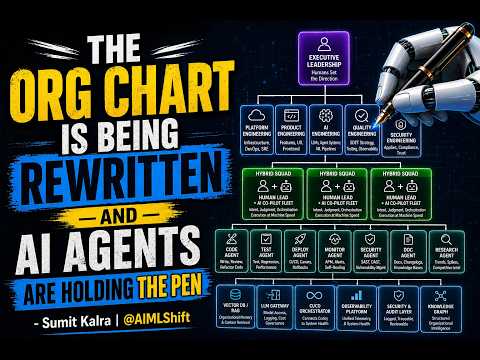
Your org chart isn’t evolving — it’s being rewritten. Humans set intent. AI agents execute. Managers become orchestrators. Teams shift from headcount → outcomes. This is the new engineering model. 🎥 Watch: youtube.com/watch?v=ksqKaK… — Sumit Kalra | @AIMLShift
YouTube video
YouTube
English
0
0
1
80
McKinsey & Company
McKinsey & Company@McKinsey·
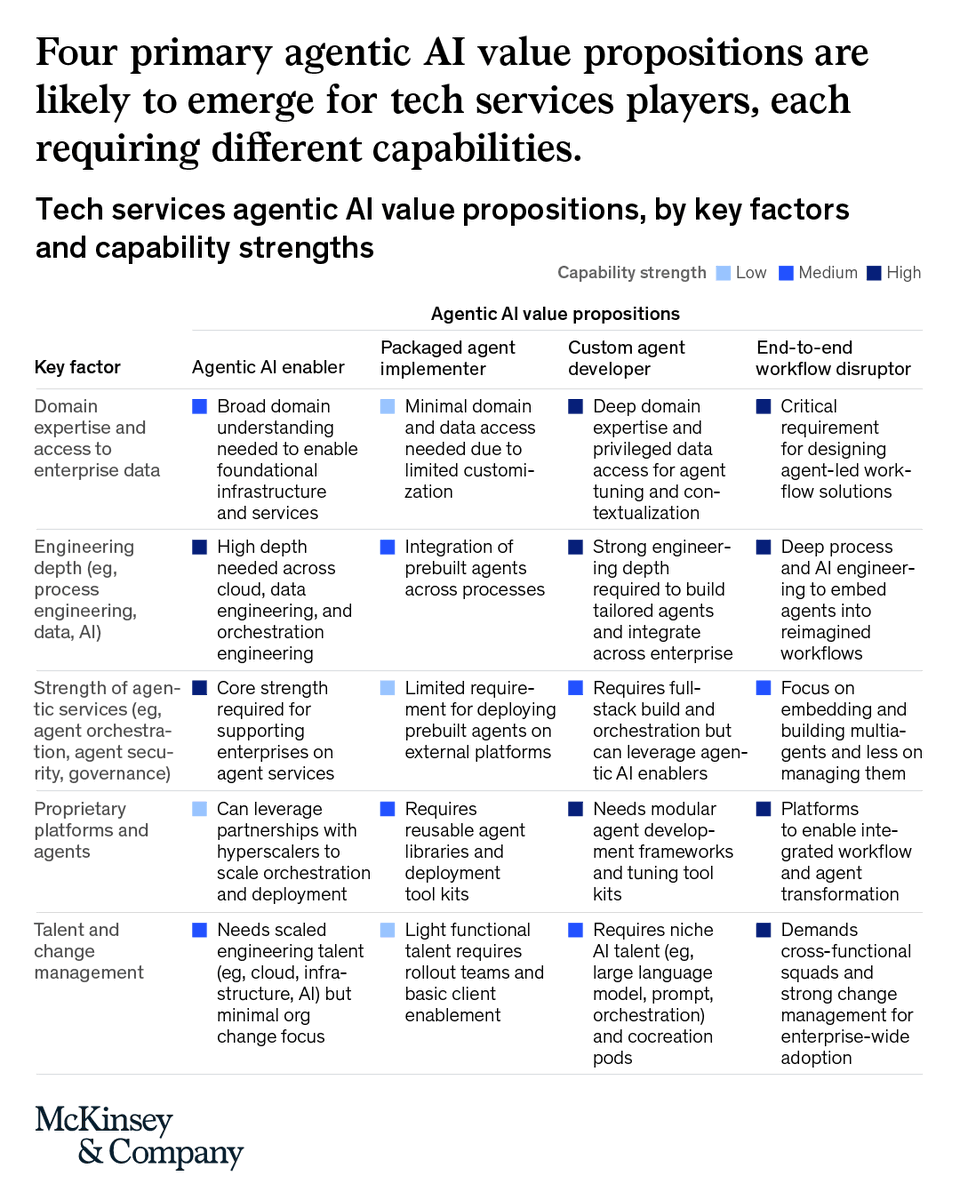
Agentic AI is changing how tech services create value. We’re starting to see four distinct roles take shape, each with a different set of capabilities, bets and trade-offs. The question isn’t whether to play but where to focus and how to build around it. mck.co/4mP7C7t
McKinsey & Company tweet media
English
40
132
674
250.9K
Sumit Kalra | AI & ML Shift
Sumit Kalra | AI & ML Shift@AIMLShift·
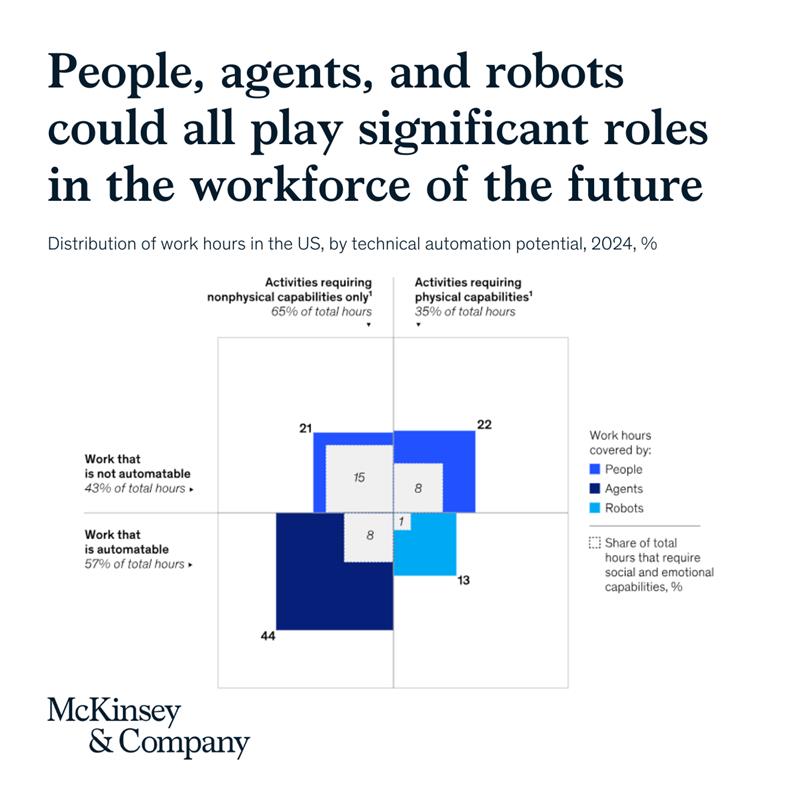
The chart everyone will quote: 57% automatable. The number from the actual report that matters more: ~90% of companies invested in AI, fewer than 40% report measurable gains. The gap isn't the tech. It's that we keep bolting AI onto workflows designed for a pre-AI world. Task-level automation ≠ transformation. The unlock is workflow redesign — and most leaders haven't started.
English
0
0
0
41
McKinsey & Company
McKinsey & Company@McKinsey·
AI is expanding the productivity frontier but capturing its full value requires new skills and a rethink of how people work alongside intelligent systems. Leaders should consider redesigning work so humans and intelligent machines create value together. mck.co/4q14OED
McKinsey & Company tweet media
English
8
54
205
16K
Sumit Kalra | AI & ML Shift
Sumit Kalra | AI & ML Shift@AIMLShift·
@mattpocockuk skills are the real unlock tbh. a good /to-prd or /domain-model beats whatever model upgrade dropped this week. this is where claude code starts feeling like a studio not an assistant.
English
0
0
0
44
Matt Pocock
Matt Pocock@mattpocockuk·
My new skill lineup: /domain-model - replaces /grill-me, integrates some DDD concepts and adds docs & ADR's during discussions /to-prd - create a PRD /to-issues - create issues with blocking /github-triage - triage issues with a state machine-based labelling system /tdd - do TDD where appropriate Still more to flesh out, but this is feeling AWESOME
English
95
71
1.8K
103.9K
Sumit Kalra | AI & ML Shift
Sumit Kalra | AI & ML Shift@AIMLShift·
@thdxr respect for saying it out loud. most people dress this up as "v2" and pretend the debt was a plan all along. sometimes the foundations just fight you harder than the product does.
English
0
0
2
1.5K
Sumit Kalra | AI & ML Shift
Sumit Kalra | AI & ML Shift@AIMLShift·
@theo lol the sota shelf life is like 36 hours now. at this point i just pick whatever fits the workflow and stop reading the leaderboards.
English
0
0
0
308
Theo - t3.gg
Theo - t3.gg@theo·
Is Opus 4.7 the best model from Anthropic? No, that’s Mythos. Is it the best model we can use for code? No, that’s GPT-5.4. Is it the best model in the Opus line? No, that’s 4.5 It’s the best model released today I guess?
English
160
55
3.2K
215.3K
Sumit Kalra | AI & ML Shift
Sumit Kalra | AI & ML Shift@AIMLShift·
@GergelyOrosz felt this too. mid agent loop the last thing i need is the model lecturing me on my choice. just need a toggle to shut off the opinions when i already know what i want.
English
0
0
0
86
Gergely Orosz
Gergely Orosz@GergelyOrosz·
Amusing enough, I found Opus 4.7 to be surprisingly combative, not wanting to do stuff I told it to do (e.g. reason why X is better than Y when the model did not think it was.) IDK about you but I don't want to argue with the AI I pay for. Its a tool that should work for me!
Merk@Makuh90

Claude Opus 4.7 misunderstood my tone 3 times in a row. And basically said, "fuck off." What happened to this model? This is a hugely disappointing release. @AnthropicAI @claudeai @ChatGPTapp @OpenAI
English
88
34
790
102.3K
Sumit Kalra | AI & ML Shift
Sumit Kalra | AI & ML Shift@AIMLShift·
@emollick honestly we maintain this internally already. every model drop quietly breaks 3-4 prompts in our agents. would save so much time if labs just shipped a diff.
English
0
0
0
17
Ethan Mollick
Ethan Mollick@emollick·
We need a new document that AI labs should release with each new model, besides the model card: a sort of changelog I want to see how & in what way the new model changes, breaks, or improves at a range of individual tasks compared to the earlier models. Increasingly important!
English
31
15
231
12.5K
Sumit Kalra | AI & ML Shift
Sumit Kalra | AI & ML Shift@AIMLShift·
@emollick yeah the personality debates are fun but the real story is the curve hasn't bent. 2 months, another jump. most teams still planning like it's 2023.
English
0
0
0
134
Ethan Mollick
Ethan Mollick@emollick·
A major lesson to take away from Opus 4.7 is that, while there is a lot of arguments about implementation choices and personality, models keep improving measurably on economically important tasks with each release (it has been two months since Opus 4.6), with no signs of slowdown
English
26
21
488
30.9K
Lian Lim | Dashboard & AI Automation Expert
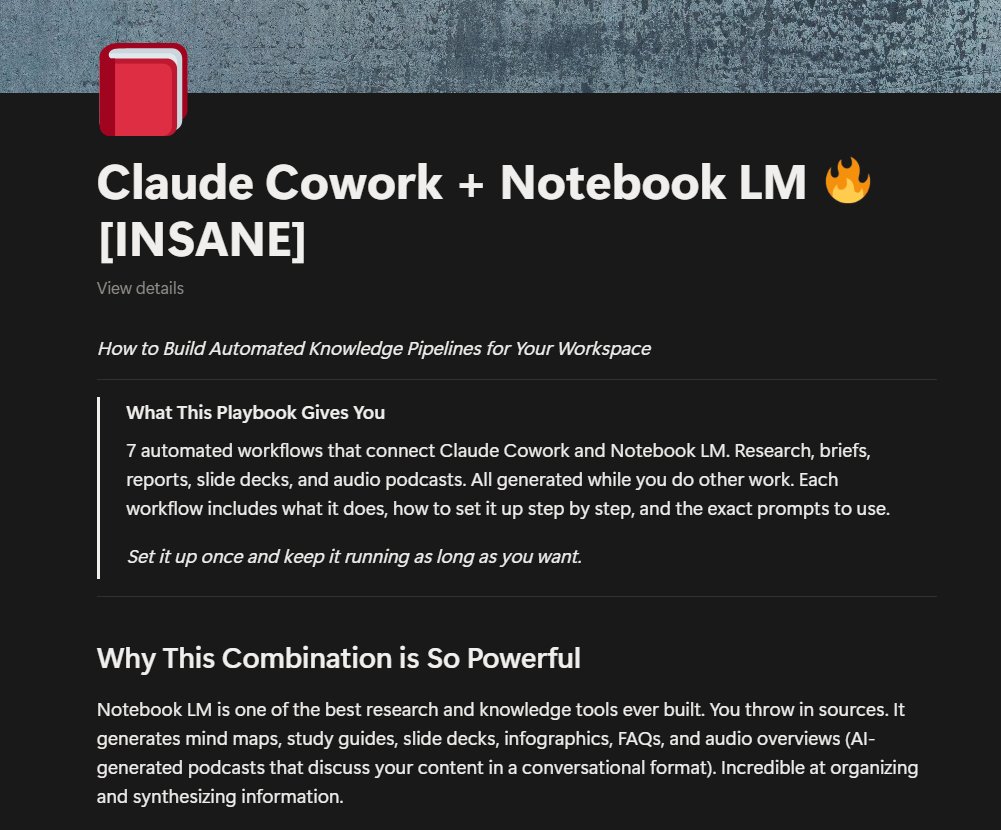
I've created a full guide on how to build automated knowledge pipelines for your workspace with Claude Cowork and Notebook LM This covers 7 workflows that turn your emails, docs, and research into meeting prep briefs, slide decks, weekly research & other work materials It's yours for FREE Like + Comment "WORKSPACE" and I'll DM you the full guide No opt-in, no BS
Lian Lim | Dashboard & AI Automation Expert tweet media
English
1.1K
216
2.1K
121.3K
Alfie Carter
Alfie Carter@AlfieJCarter·
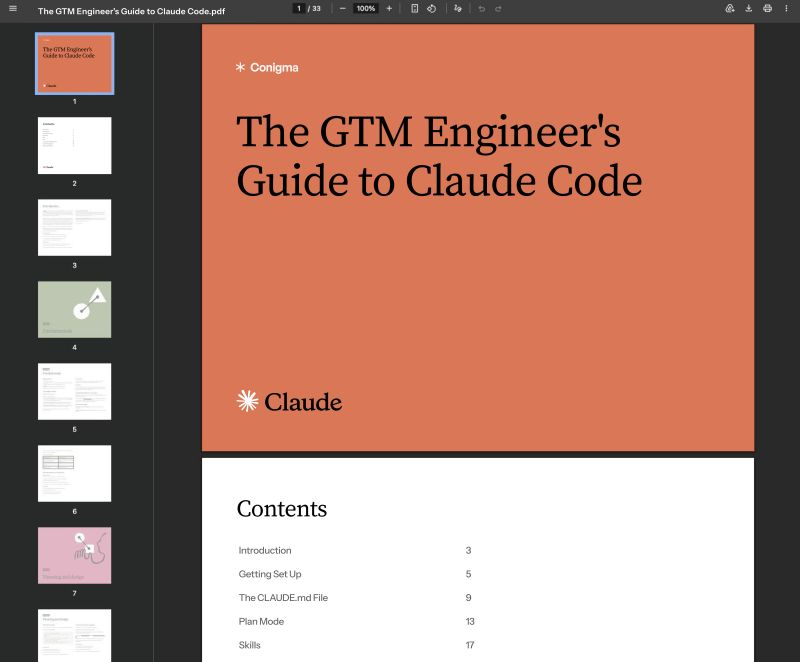
I put the entire Claude Code GTM Engineering Playbook into ONE Notion doc. 8 sections. No fluff. - How to get set up correctly from day one: Pro plan, terminal install across Mac, Linux, and Windows, GUI install via Antigravity or VS Code, and bypass permissions mode - What to put in your project brain file, what to leave out, and how to get Claude to update it automatically when it keeps making the same mistake - How to run plan mode step by step and when to skip it for simple tasks - How to build a skill file from scratch, fix one that keeps failing, and install 5 GTM skills worth building first: lead scraping, email labeling, proposal generation, outbound sequence writing, and client onboarding - MCP install process, token cost checks after every install, the best MCPs for GTM work, and how to cut token usage by 50 to 100x by converting MCPs into skills - Sub-agents and agent teams: the 3 cases where they earn their cost, reliability math for parallel runs, and how to enable parallel variant exploration - What is eating your context before you type anything, how to use /compact and /clear correctly, and model selection for parent vs sub-agents - Modal deployment: any skill as a live URL in under 2 minutes, form interface setup, and connection to n8n, Make, or Zapier This is the setup I would have KILLED for before spending months piecing together how to actually get productive in Claude Code from documentation, YouTube tutorials, and scattered GitHub threads. Like + comment "CODE" and I'll send it over (must be connected for priority access)
Alfie Carter tweet media
English
2K
198
2.9K
175K