

Sam
514 posts
Sam がリツイート

Wayfair takes a very simple approach to new channels: test them.
In this clip, Morgan Brown, @Wayfair's Head of Paid Media, explains how they evaluate new platforms, with real incrementality tests and strict ROAS thresholds.
They ran a state-level holdout test with Axon by AppLovin and saw higher revenue where Axon was live.
The unlock was Axon deploying their spend across their full creative mix and quickly learning what worked.
When the data cleared their ROAS threshold, the signal was clear.
For e-commerce and DTC teams focused on measurable growth, this is how serious testing gets done.
English
Sam がリツイート
Web brands often bring creative instincts shaped by social feeds onto Axon.
But Axon can benefit from a different approach.
In this post, Adam breaks down what that means in practice, why a full funnel channel needs full funnel creative, why longer videos often outperform, and how creative diversity drives scale.
If you’re advertising on Axon or just curious, this is a practical look at how to approach creative differently. 👇
axon.ai/en/blog/design…
English

get out the 🍿
next haus report / tyler horner masterpiece, dropping shortly

English
Just left the dentist. It’s so funny how hard they rip on the work of previous dentists while the patient has absolutely no way to verify the claims.
Not too dissimilar to agency ad account audits honestly
English
@eric_seufert Yep! Guess it just depends on if the definition of best changes relative to consumer intent. Appreciate you engaging.
English

@Sam18836 I think reaching a consumer with the best possible messaging improves outcomes no matter what level of intent the consumer possesses at that moment.
English
An epiphany I had about digital advertising came from reading The Man Who Solved The Market, about Jim Simons and the founding of Renaissance Technologies in 1982.
Simons’ novel thesis was that, in some cases, historical price patterns alone could be used to predict stock movements. Knowledge of what a company actually made or did wasn’t necessary in order to profitably trade its stock.
Creative production functions similarly. I’m skeptical of narrative-led creative production because 1. it’s nearly impossible to predict what will resonate a priori, and 2. digital media makes it easy to test creative concepts exhaustively.
This led me to publish “Producing and deploying advertising creative at scale” six years ago. The role of creative production in digital advertising success is even more profound today.
As Meta’s AAA / Advantage+ and Google’s UAC / PMax commanded larger proportions of advertisers’ budgets, creative production became the dominant lever of performance. This demands higher volumes of creative production. But I’m skeptical of orienting these production workflows around narrative design: I think teams should simply produce as high a volume of varied and diverse creative assets as their infrastructure supports.
And because I think intuiting whether a concept will work or not is futile, I also don’t think it’s helpful to try to explain why a concept worked after the fact through inductive reasoning. When I’ve seen teams do this, it has struck me as more of an exercise in post hoc rationalization than as a valuable input into a feedback loop.
Resonance can seem utterly random; it’s more likely a complex interaction of features that are imperceptible to the human brain. I’m exploring AI-driven approaches to creative hypothesis testing — I'll publish more on that soon — but I haven’t seen intuition-driven analysis lead to meaningful performance improvements. What works best is simply thorough, extensive experimentation.

English
That’s a good question ! My general pov is when setting a conversion event in meta to something like roas, meta finds people with some existing level of intent for the product being advertised. Said another way, the ad exposure rarely catalyzes the intent to purchase, instead it captures that intent and your job as a marketer is to deliver messaging to effectively convert them. This isn’t a rule, and no doubt ig ads for low barrier to entry products can spur impulse buying, but I think largely life events catalyze intent more than anything else (just bought a home catalyzing intent for a new mattress for example).
And so if I’m right - and maybe I’m not - if all your doing is roas optimized media, you’re missing out on the vast swath of your customers who aren’t ready to buy today - which is most of them.
Back to your original post - for the in market shopper, I do very much believe volume and variety in ad content drives better outcomes. But if you’re messaging a consumer who isn’t in market, and you want to drive salience and positive perception where there attention is definitionally scarce, narrative based content might be stickier, so that when that consumer is in market, they’re more likely to chose you than they would have otherwise.
Wdyt?
English
@Sam18836 Different question: Is the best way to drive general awareness to drive an immediate sale?
English
@eric_seufert do you think this applies to awareness campaigns (where a brand wants consistency) as well, with the KPI being reach/frequency? Or is there an inverse correlation between how prescriptive brand can be w/ messaging and how easy the platform KPI is to hit? If
English
This article was published in 2020, but I think the point is even more acutely relevant in 2024, in which:
- automated targeting through tools like Advantage+ and PMax play a considerably more aggressive role in determining who sees an ad, rendering explicit audience targeting mostly irrelevant;
- ad platforms are principally assessing effectiveness through modeled conversions, the logic of which is hidden from an advertiser but is updated over time. This favors an explore/exploit approach over a strictly-defined A/B test;
- advertisers are necessarily increasing creative volume to sufficiently resource automated optimization tools, and explit A/B testing slows that process down and increases testing costs.
English
The first priority of ad creative testing is not to find “winners” but to quickly uncover and stop funding losers. “Winners” emerge naturally in the process of pruning losers. When available, native platform optimization tools achieve this best — A/B testing on social platforms is wasteful and unnecessary.
Ad creative shouldn’t be A/B tested mobiledevmemo.com/ad-creative-sh…

English
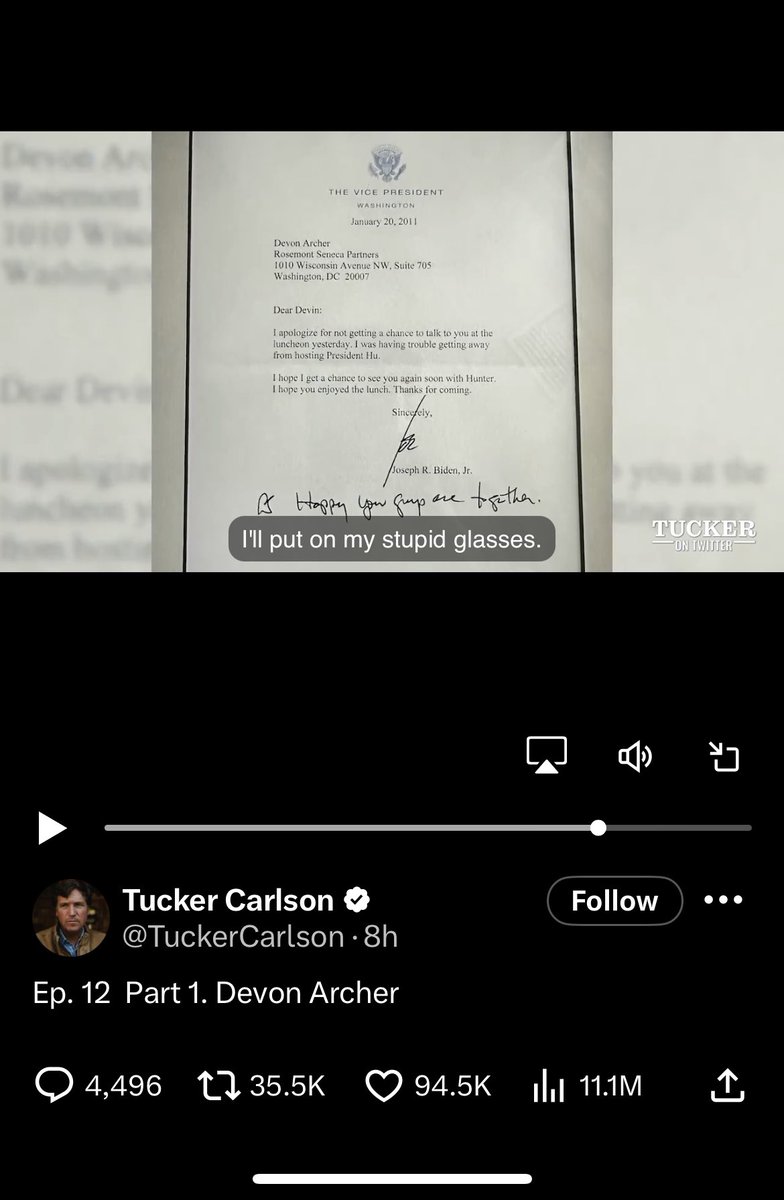
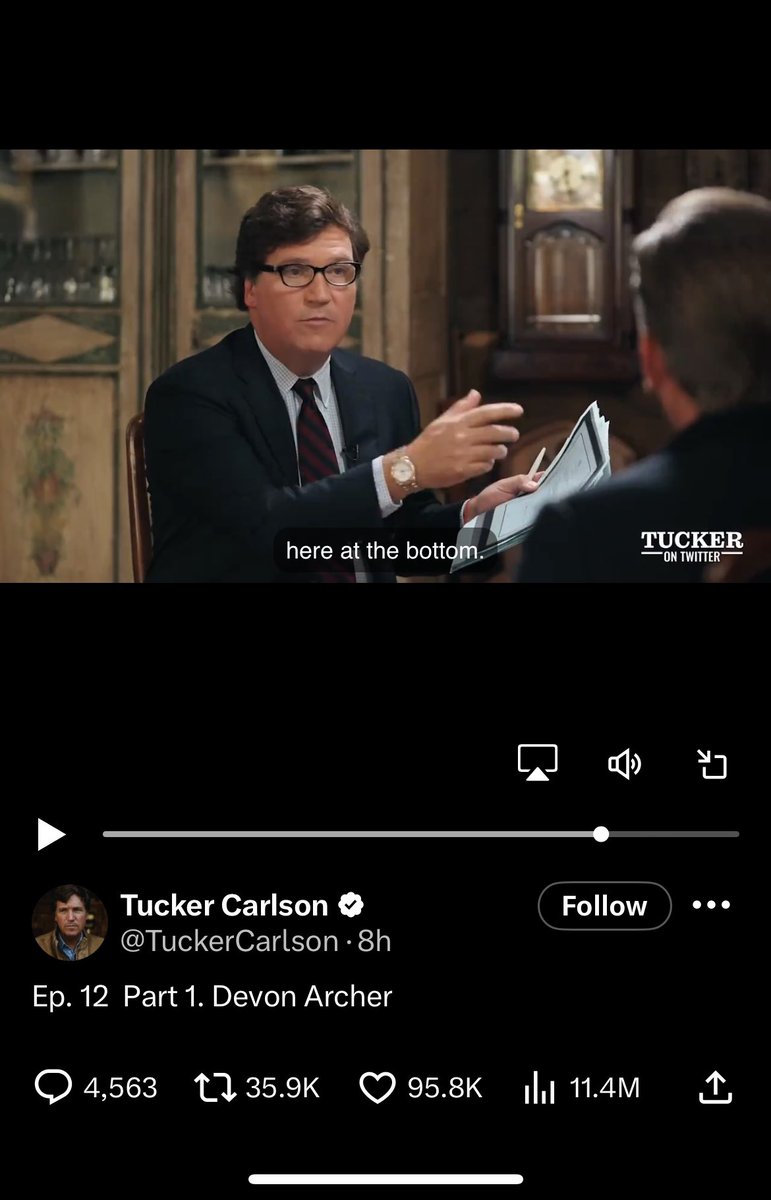
@TuckerCarlson Wait why @TuckerCarlson team do him dirty like this with the closed captions?
English

@benedictevans @hoogerwoord Yes. Organic search rank is a function of how many purchases you drive attributed to the customer search, compared to everyone else on that digital shelf. Anti vax books at the top because that’s what people who search “vaccination” on amz actually buy
English
@Bannedforself @SchockZach Hey - DM me. We specialize in FBM SFP for oversized SKUs.
English

@SchockZach showed the exact same issue with his oversize limit. It's going to be a very interesting Christmas for American consumers, who may be heading off Amazon if Amazon is "out of stock" - Amazon maybe tweak the algo for FBM? 4/4
English
@dharmeshmehta @amazon This thread about lowering oversize storage limits confirms our experience. 77% decrease in units allowed since May.
1/4

English
@SchockZach @amazon Hey - DM me. We specialize in FBM SFP for oversized SKUs.
English

individual sellers can make a living, riches even, doing nothing but selling a revolving door of no-name products or knockoffs on Amazon. But it's a bad way to build a brand, if what you want is a product that people will recognize and buy elsewhere.
Jason Goldberg@retailgeek
Amazon’s Revolving Door of Brands via @MarketplacePuls Brand moats on Amazon are rare. Being a brand who’s e-commerce strategy is “Amazon”, is like being a Turkey who’s life strategy is “Thanksgiving” marketplacepulse.com/articles/amazo…
English

On a walk with a friend today we stopped in a vintage counter-culture store. We saw this “QUESTION AUTHORITY” sticker alongside cool stuff from the 60s and 70s.
Where’d that attitude go?
Questioning authority is something they got right in the 60’s. We should do it more often.

English
Sam がリツイート



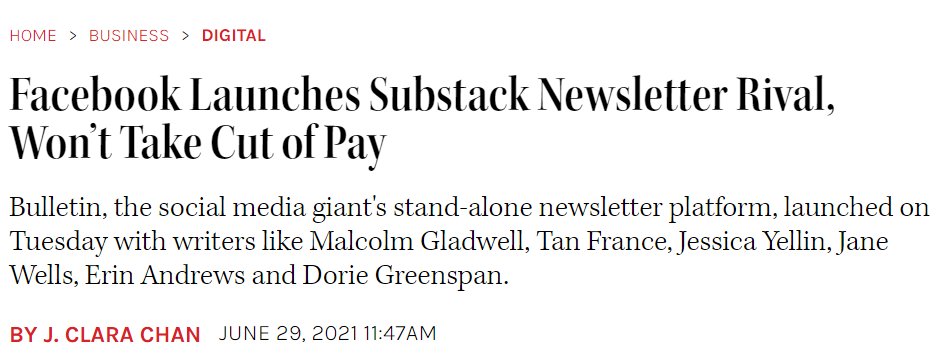
One antitrust concept that I'm surprised we don't hear more about these days with respect to tech giants is "predatory pricing." hollywoodreporter.com/business/digit…
English
@tedturnerisaliv @sullydish Right! Said another way, libs stoked animosity towards cops, so now they don't want to do their jobs. Maybe! But having a critical component of society refuse to do their jobs (that we all pay for) because the libs said mean things about them doesn't feel so sustainable
English

@Sam18836 @sullydish You really can't figure it out? An environment of lawlessness and tacit anti police attitudes by ruling class and by DA/court system. Pro crime anti police liberals foster this environment
English

“They need the police out here every day.” The total collapse of the BLM anti-policing campaign is quite something to behold.
WhatIsNewYork@whatisny
Billy Bob just tells it how it is #whatisnewyork (@loudlabsnyc)
English