Byzarchi☦︎ec☦︎

17.7K posts

Byzarchi☦︎ec☦︎ banner
Byzarchi☦︎ec☦︎

Byzarchi☦︎ec☦︎

@archisoteric

Byzantine Architecture Fanatic. Sober Husband, Father & Architect. Student of the Cappadocian Fathers. ICXC NIKA. #OrthodoxChurch circa 33AD ☧ ☦️☦︎ Come & see!

参加日 Temmuz 2019
883 フォロー中8.3K フォロワー
固定されたツイート
Byzarchi☦︎ec☦︎
Byzarchi☦︎ec☦︎@archisoteric·
Starting a list of Orthodox books I’ve read & recommend to others - a 🧵. After starting my journey from Protestantism to Orthodoxy in 2015, I began working my way through history, the canon, the fathers & theology. I still have a long way to go. So I’ll add chronologically…
English
36
78
599
95.7K
Byzarchi☦︎ec☦︎ がリツイート
Byzarchi☦︎ec☦︎
Byzarchi☦︎ec☦︎@archisoteric·
St. Augustine’s doctrine of Original Sin is tied to his views on preexistence of souls. Throughout his life he grapples with different theories of the soul’s origin. He rejects bits of some theories & embraces pieces of others. Here is a non-exhaustive arc of his thoughts (1/34):
Byzarchi☦︎ec☦︎ tweet media
English
12
38
264
23.9K
Byzarchi☦︎ec☦︎ がリツイート
Energetic Procession
Energetic Procession@Acolyte83349490·
Yeah, I don't think Maximus is expressing inherited guilt in the texts there, just inherited condemnation or doom. For that to be Maximus' thought you would need him to express that we were literally the same person or individual as Adam who committed the sin to get that idea, which is Augustine's justification. For Augustine, the guilt is inherited because the sin is inherited and the sin is inherited because he thinks we were the same person or soul as Adam who committed the act, but now individuated, which is why the mode of the guilt changes. And to my knowledge, Philaret didn't get the teaching from Maximus but by copying Catholic catechisms to own the Protestants, just as Prokopovich was copying Lutheran Dogmatic sources to own the Catholics. Whatever that is, that isn't derivation from the Fathers. ISTM that what you are doing is seeing conceptual overlap in various figures and then assuming that they all mean the same thing based on conceptual overlap. But one doesn't get to assume that. It has to be demonstrated. And even Catholic scholars, both old and new note the differences of views on this point. And one thing is for sure, they aren't reading Romanides. In sum you need to prove conceptual identity, not that say Augustine, Maximus or Cyril agree on certain propositions.
English
3
6
44
1.2K
Byzarchi☦︎ec☦︎ がリツイート
Alex Sorin, JD
Alex Sorin, JD@Alex_Ortodoxie·
No, it just uses the word “transubstantiation.” That’s not importing Aristotelian metaphysical categories like the RCs. Moreover, that part of the Confession of Dositheus, specifically, was redone by the Moscow patriarchate because of how confusing it was. To say there is a “perpetual war” between Holy Orthodoxy and the tiny group of online anons is an outright lie, dude. We’ve asked numerous times for them to point us to a living bishop who understands the tradition in the way they do. They’ve never shown us even one. And yes, Slavic countries used western textbooks because of the political instability in those countries. Ergo, they use the same language you see in those textbooks. Using the same words doesn’t mean they believe what Lutherans believe. That’s why with St Staniloae, Lossky, Florovsky, and others like them, it appears that there’s a sort of “return” to the patristic era. It’s not a return to that theology, it’s a return to that terminology.
English
21
14
157
20.7K
Byzarchi☦︎ec☦︎ がリツイート
Energetic Procession
Energetic Procession@Acolyte83349490·
No I haven't and no I won't. And the reason is that I have spent hours and hours in the past with Erick to get him to understand a point or issue and then to have him go right back to asserting the contrary after he had assented to the point I made. It is a hamster wheel. Erick seems like a nice guy, but I think he is out of his depth and lacks requisite education. That doesn't mean people can't learn without the formal education but I see the same kinds of mistakes over and over again so it isn't worth my time. On the atonement, Erick seems to think that having a penal feature in a model amounts to PSA or that if he can't come up with any other way of understanding certain terms or phrases, then it must be fundamentally the Protestant schema, which is a fallacy of ignorance. This is not how a proper analysis of a text proceeds. Nor will it do to keep using the Protestant term and then redefine it and speak of "properly defined." Yeah concepts and word meanings don't work that way. Here Saul Kripke could help him out. I leave it to Catholic theologians to deal with Erick's material since they are decidedly opposed to PSA and have been for 500 years and counting. And I feel bad for Catholics that they now have to clean up this mess Erick has created. On the bright side, Erick has just produced something that undermines his credibility as a representative of Catholic theology and as an apologist. I never needed to refute him. I just needed to wait long enough for him to do it to himself.
English
1
10
85
4.7K
Byzarchi☦︎ec☦︎ がリツイート
Michael Garten
Michael Garten@Michael__Garten·
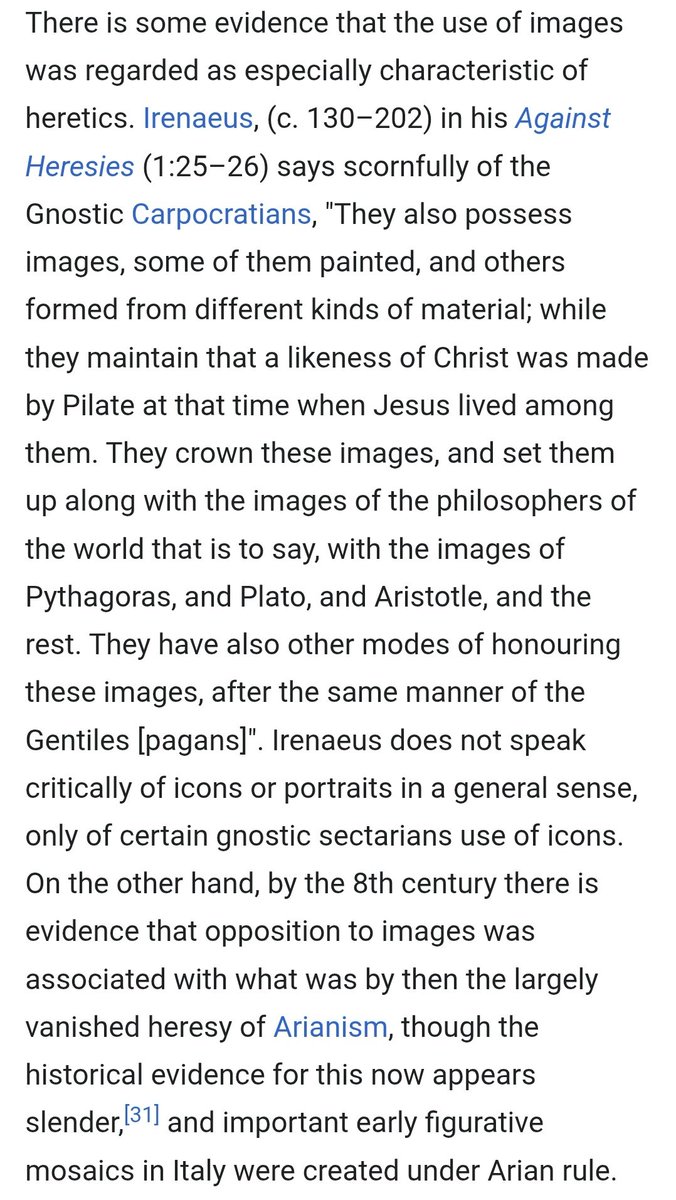
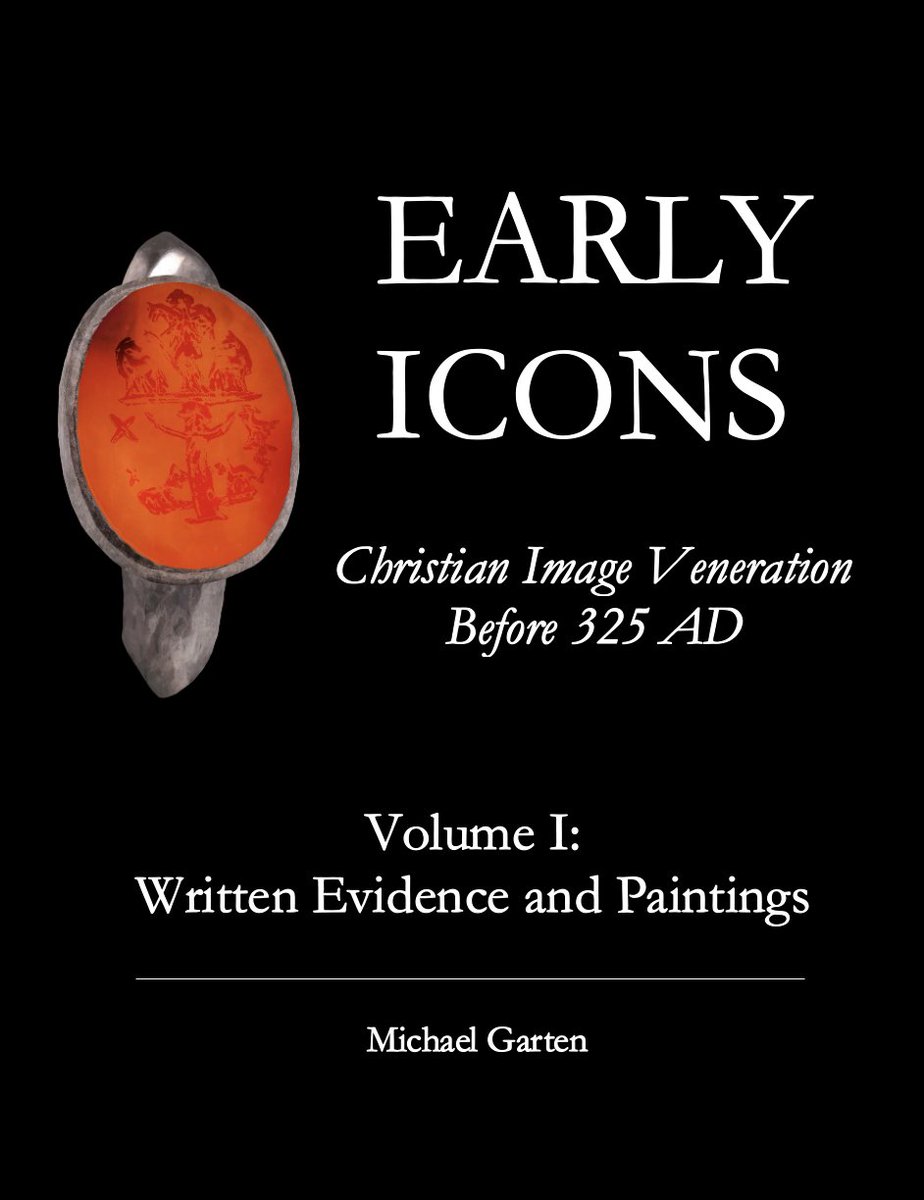
No, St. Irenaeus did not reject imagery in worship. He rejected idolatry and syncretism. The quote you gave later in a screenshot helps clarify this: "Irenaeus does not speak critically of icons in a general sense, only of certain Gnostic and sectarians use of icons." Saint Irenaeus appears to distinguish between the act of crowning an image and other modes of honor after the manner of the pagans (ie worship by sacrifice, lewd acts). The act of crowning is what the proto-iconodule/Orthodox character in the second century Gnostic Acts of John says is not intended as pagan worship when given to a portrait of the Apostle. This crowning is just an act of honor, given in Roman contexts to things like monuments, trophies, and portraits of the emperor. We should also note that Saint Irenaeus uses a mosaic of a king (a venerated image in the Roman world) as an analogy for the Gospel itself. The distortion and "blasphemy"/dishonor the Gnostics give to the Gospel is like rearranging the pieces of such a royal icon. This shows he would have accepted something like the claim "what is given to the image passes to the prototype"--the same iconodule principle Saint Basil states later. See screenshot below from my book, Early Icons. Finally, Saint Irenaeus accepts that earthly things (including aspects of worship) have an iconic function of bringing the mind to God through interaction with material types: x.com/Michael__Garte…
Michael Garten tweet mediaMichael Garten tweet media
English
1
11
80
2.4K
Byzarchi☦︎ec☦︎ がリツイート
Fr Joseph Huneycutt
Fr Joseph Huneycutt@Orthodixie·
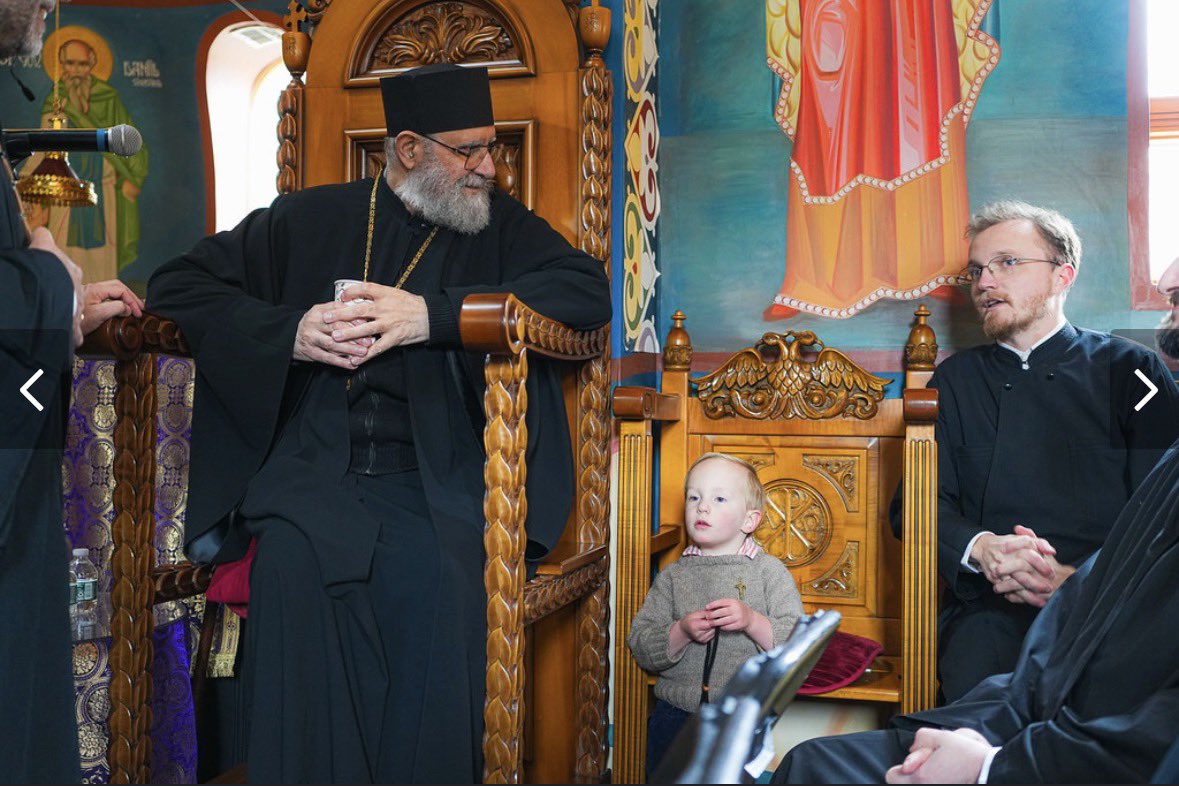
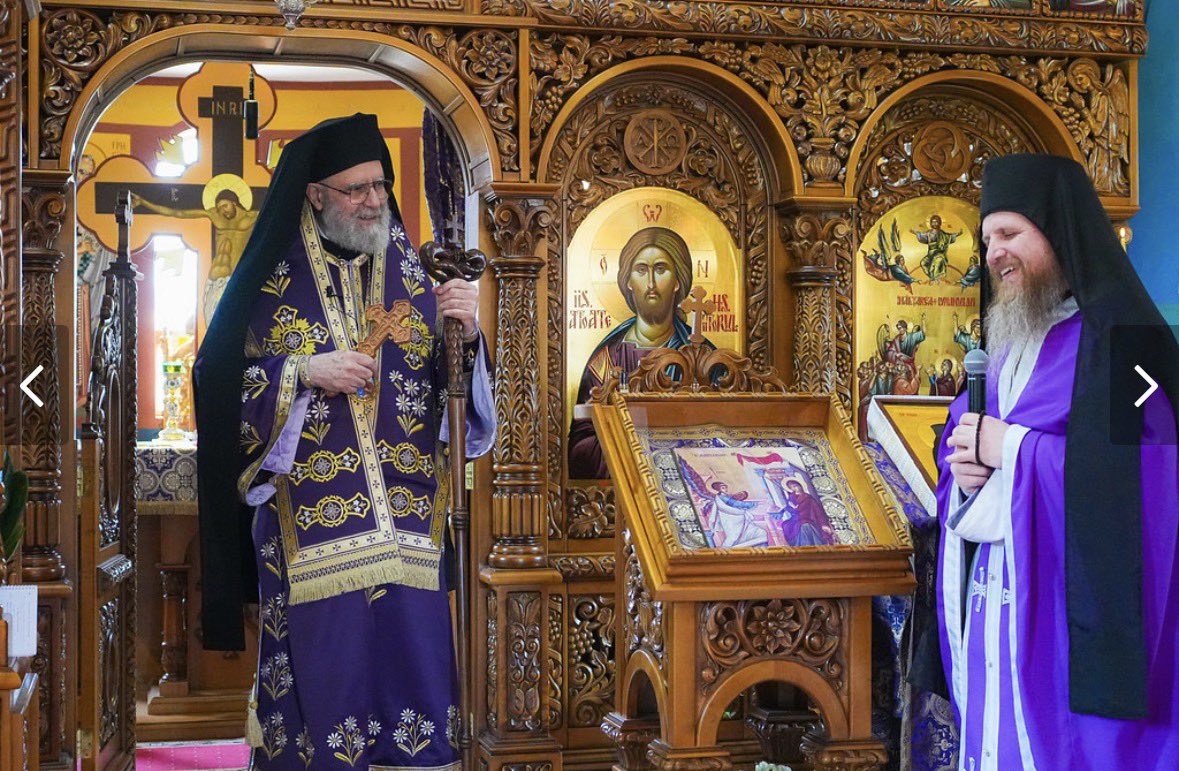
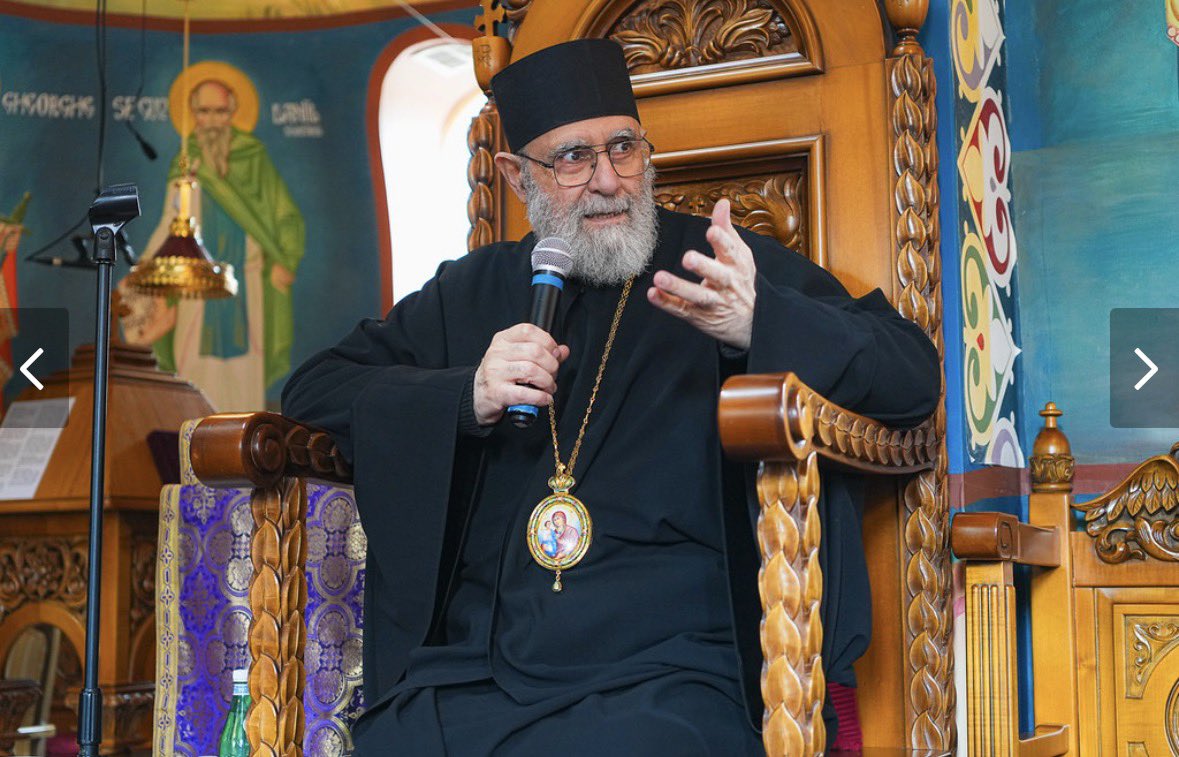
Metropolitan Saba Leads Seminarian Pilgrimage to St Dumitru Romanian Orthodox Monastery
Fr Joseph Huneycutt tweet mediaFr Joseph Huneycutt tweet mediaFr Joseph Huneycutt tweet mediaFr Joseph Huneycutt tweet media
Română
2
16
124
2.6K
Byzarchi☦︎ec☦︎ がリツイート
Byzarchi☦︎ec☦︎
Byzarchi☦︎ec☦︎@archisoteric·
@PatriotsTLH Covid really did a number on the evangelicals in America. So many churches lost huge swaths of their congregations that either never came back or just stream from time to time. Most hardly did communion before anyway.
English
0
0
3
141
Byzarchi☦︎ec☦︎
Byzarchi☦︎ec☦︎@archisoteric·
Primer & Upstream Color may be the best one-two punch by an indie science fiction writer & director (Shane Carruth).
Byzarchi☦︎ec☦︎ tweet media
English
0
0
4
303
Byzarchi☦︎ec☦︎ がリツイート
Michael Garten
Michael Garten@Michael__Garten·
@BasedDavePA Orthodox rightly stand by their claim that the earliest Christians had holy images and venerated them. This is something I explore in my book Early Icons; it may not be incompatible with Catholicism per se but it shows the spirit of the early Church and its emphases continue in Orthodoxy today. Link below:
Michael Garten tweet media
Catholicism Respecter 🇻🇦@BasedDavePA

The reason why I'm at a crossroad with choosing between Catholicism and Orthodoxy comes down to this: Which side has the better historical connection to the Church Jesus founded in 33 AD? Which side is objectively closer to the early followers of Christ and what they believed.

English
8
10
58
2.5K
Byzarchi☦︎ec☦︎
Byzarchi☦︎ec☦︎@archisoteric·
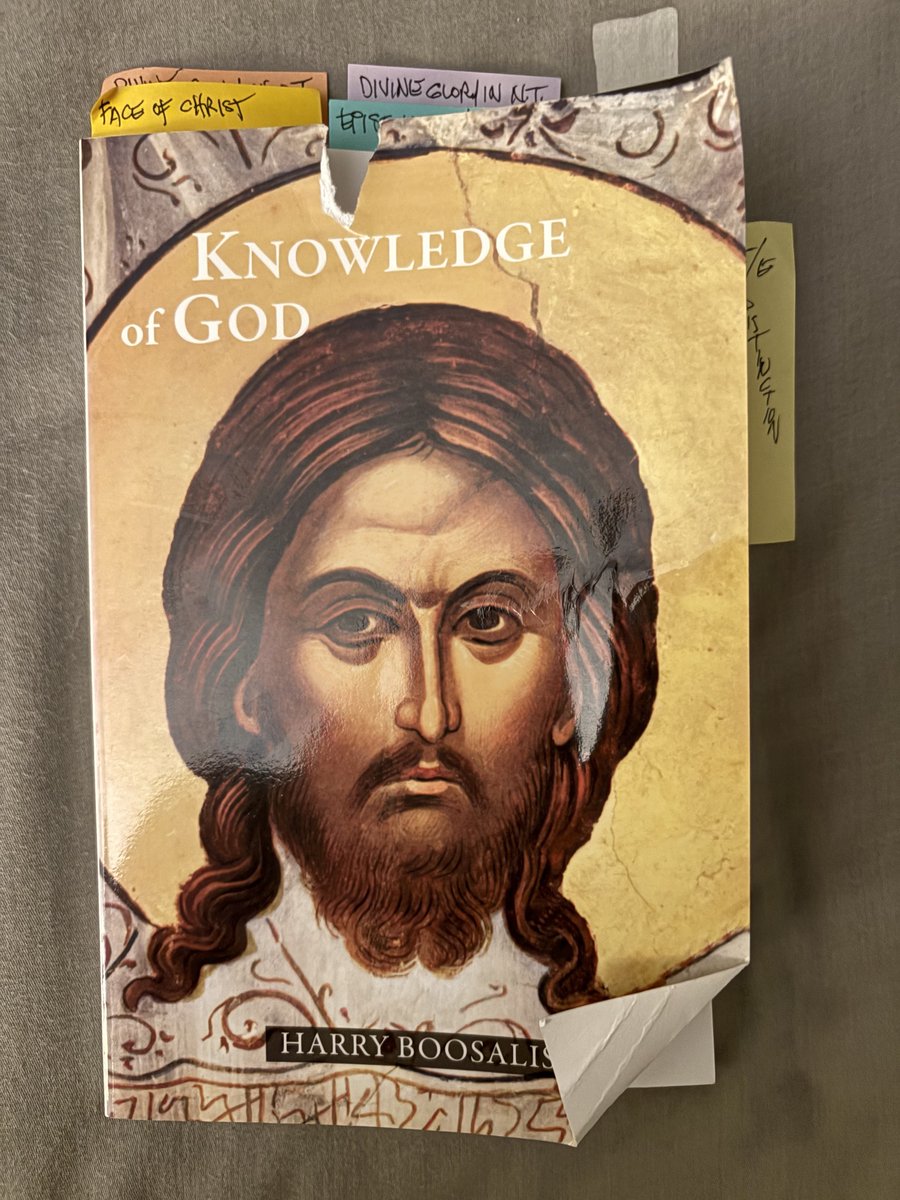
This book is intro level, and can be read in an afternoon. I’ve somehow still never met him in person. His trips to Mt. Athos are legendary.
Byzarchi☦︎ec☦︎ tweet mediaByzarchi☦︎ec☦︎ tweet mediaByzarchi☦︎ec☦︎ tweet mediaByzarchi☦︎ec☦︎ tweet media
English
0
0
3
240
Byzarchi☦︎ec☦︎
Byzarchi☦︎ec☦︎@archisoteric·
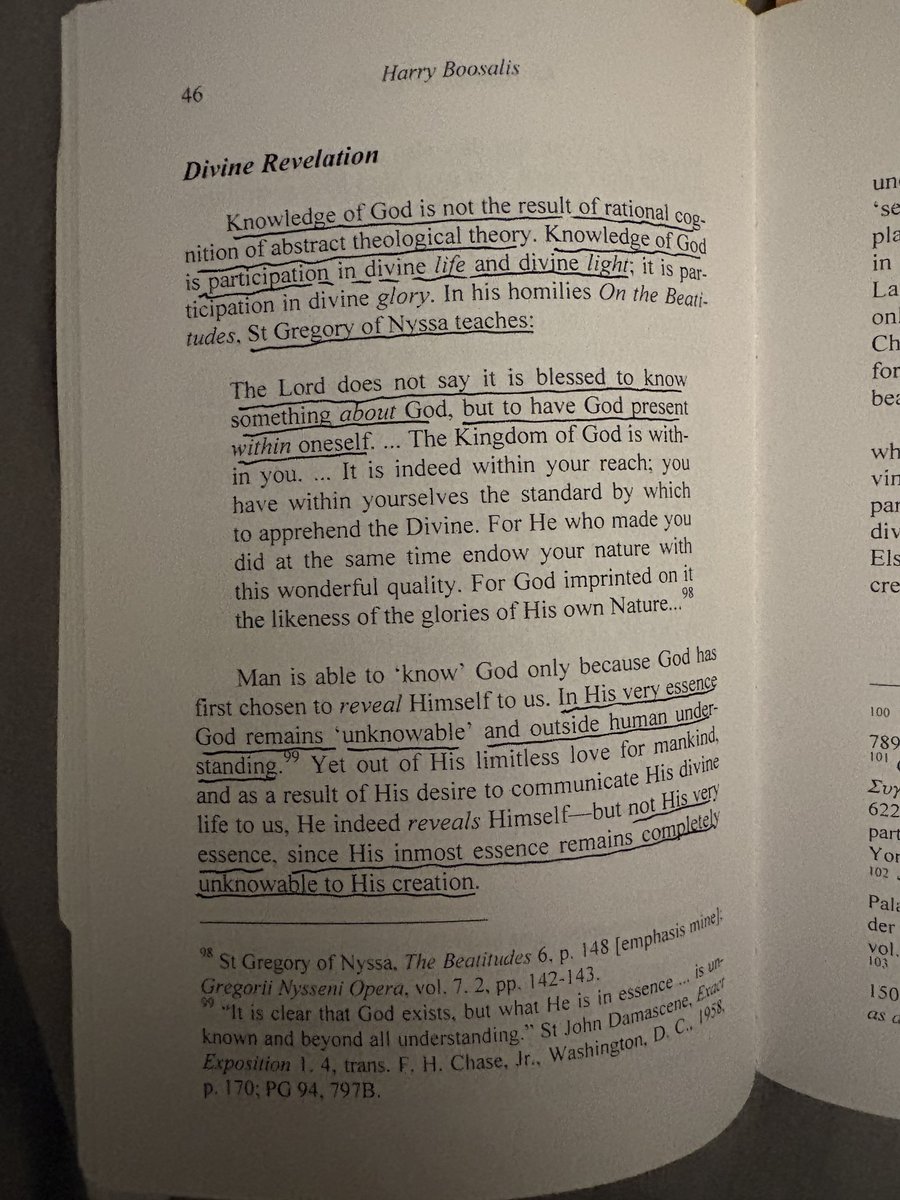
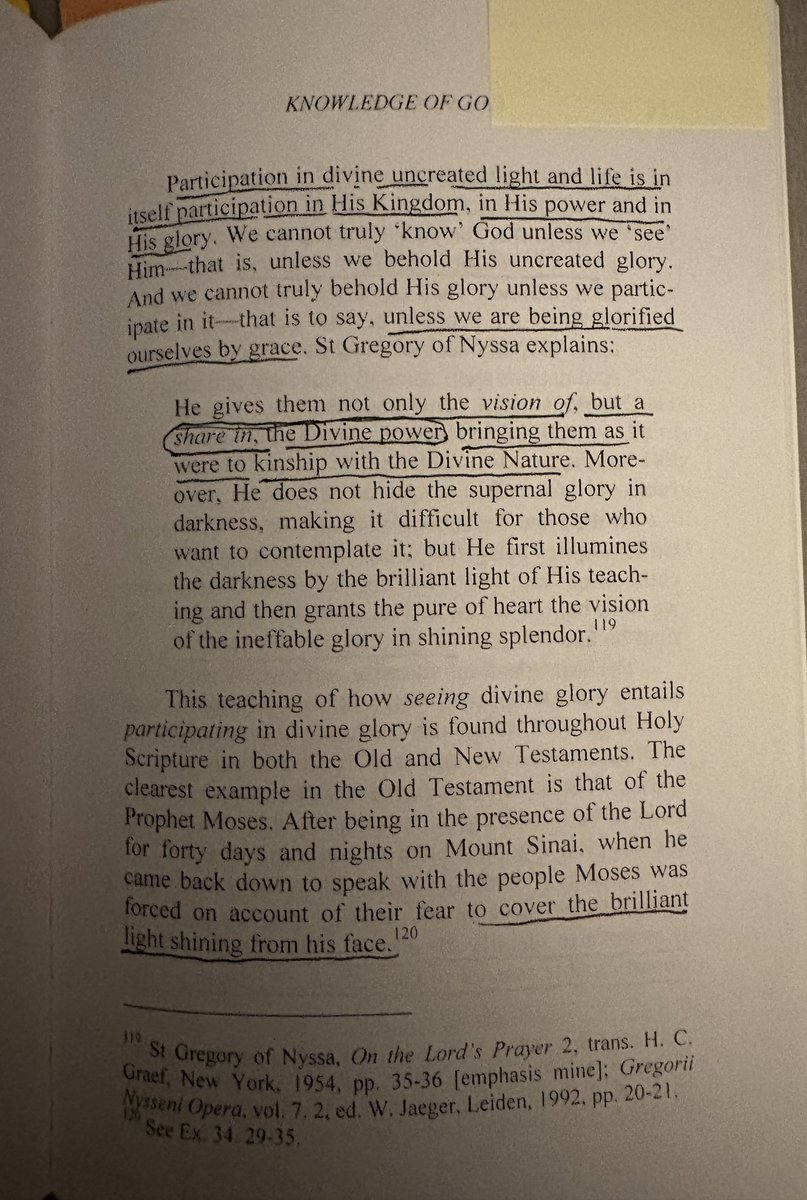
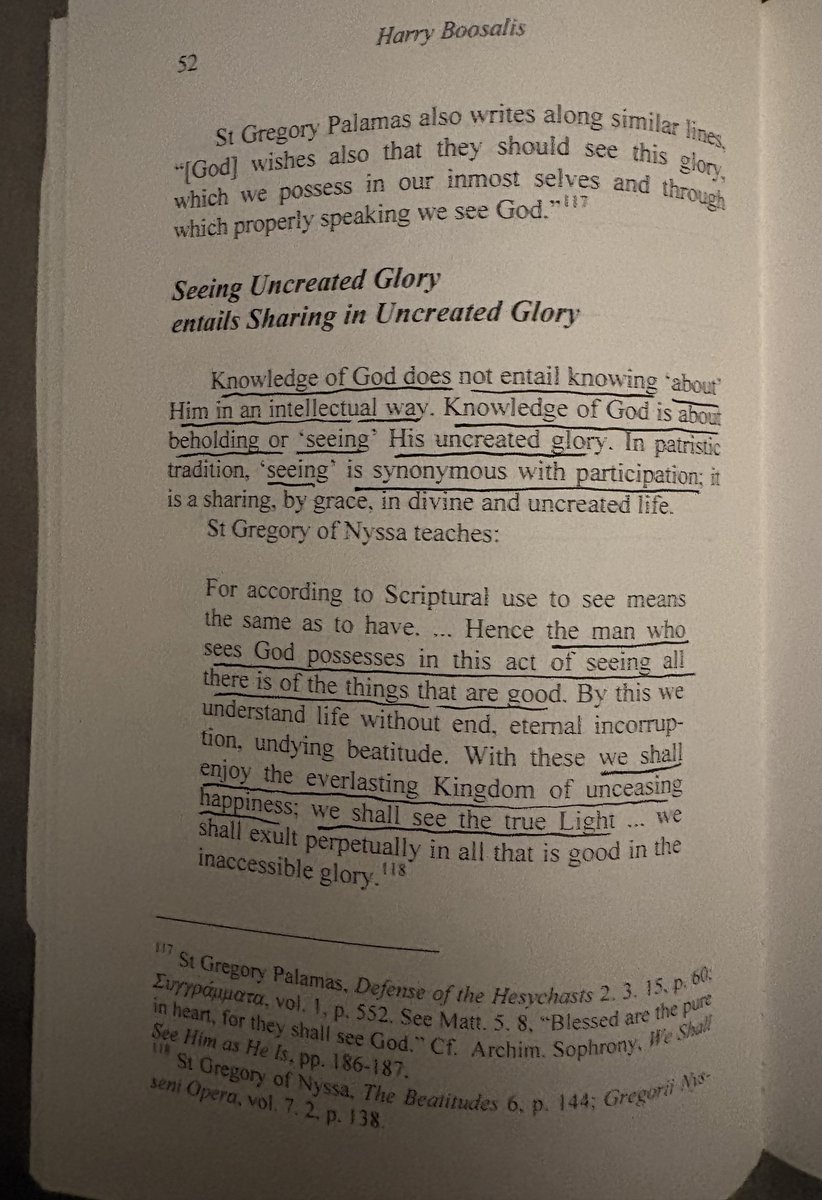
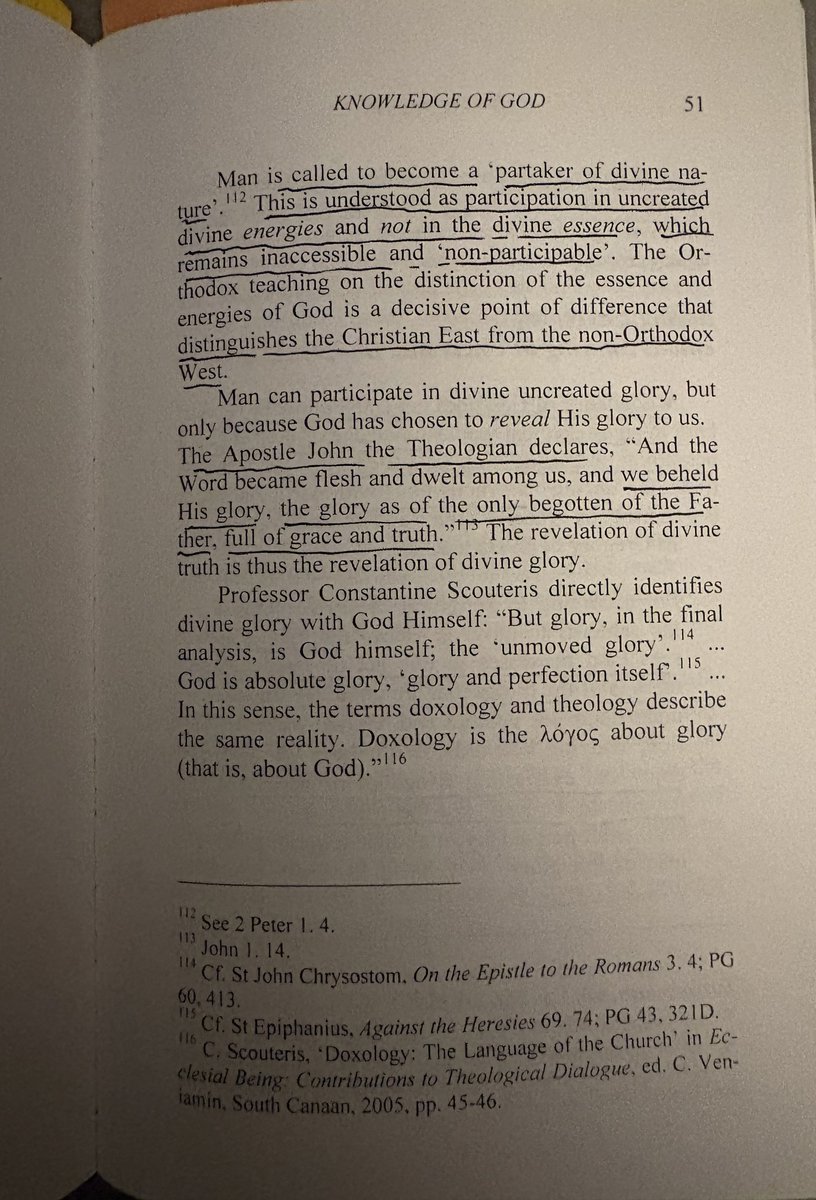
The knowledge of God is not a cognitive, rational exercise, but direct experience of God - and the best theological explanation for this is the essence energy distinction. Excerpts from Dr. Boosalis’ book ‘The Knowledge of God.’
Byzarchi☦︎ec☦︎ tweet mediaByzarchi☦︎ec☦︎ tweet mediaByzarchi☦︎ec☦︎ tweet mediaByzarchi☦︎ec☦︎ tweet media
English
1
2
27
693
Byzarchi☦︎ec☦︎ がリツイート
Fr. Barnabas Powell
Fr. Barnabas Powell@FrBarnabas·
When you hear someone say that the Father turned His back on His Son on the Cross, refer them to this article and ask them to stop slandering the Father. "My God, My God, Why Have You Forsaken Me?" open.substack.com/pub/fredericam…
English
3
14
64
4.4K
Byzarchi☦︎ec☦︎ がリツイート
Gregory David L Bahler - Gregorios Iconography
Fr SDY is effectively exposing the internal contractions and logical flaws of PSA and other Western atonement models The response from Protestants? Move the goal posts. Redefine their core theology on the fly and try to pretend like we didn't all grow up being taught the things we were taught. They're losing the battle when engaging with what we're saying, so they've moved to trying to discredit their opponents. I consider this a massive win for Orthodoxy
English
9
6
80
5.1K
Byzarchi☦︎ec☦︎ がリツイート
Michael Garten
Michael Garten@Michael__Garten·
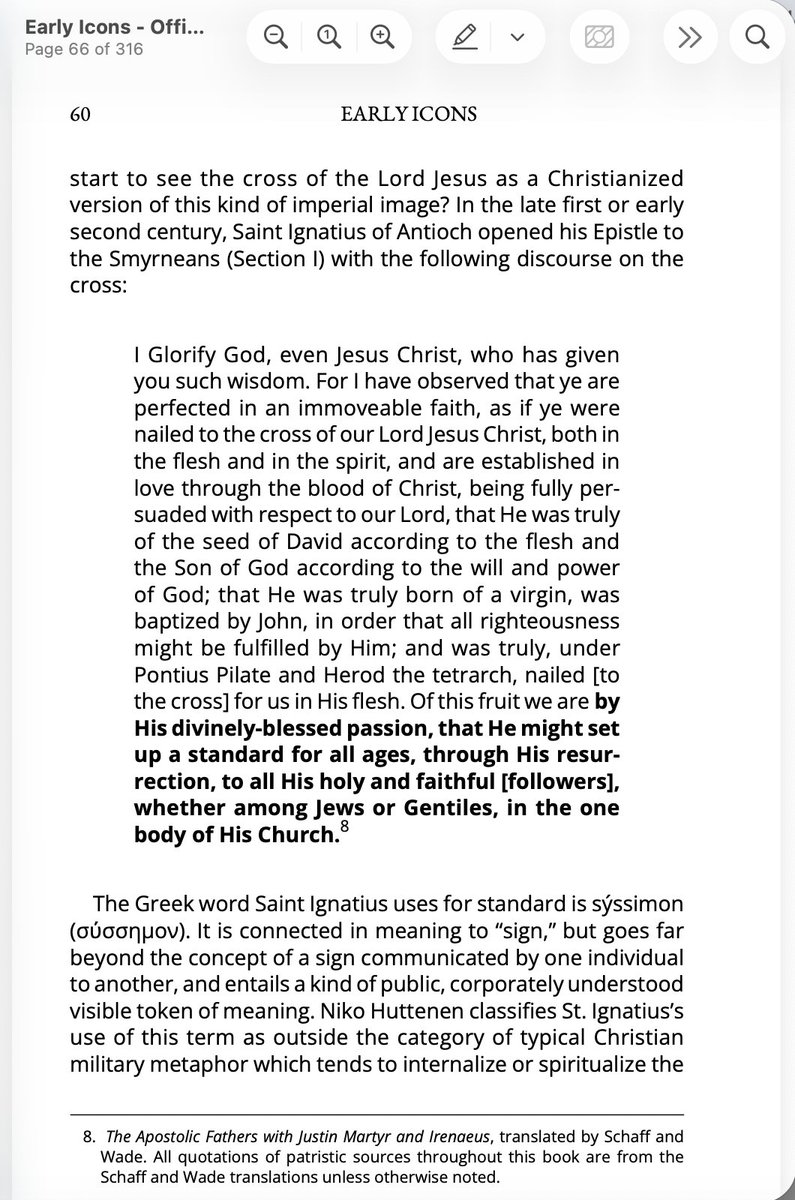
@shankusu1052692 early Christian authors consistently affirm various kinds of holy images in Christian worship gatherings. Here are some insights from my book Early Icons: 1. Tertullian (c. 155-220) in his "On Idolatry" contrasts the physical worship of the Roman imperial cult (the camp of darkness with its "human sacrament" and "standard of the devil") with Christianity. He describes the image of the cross of Christ ("the standard of Christ") in the Christian gathering ("the camp of light") alongside the Eucharist ("the divine sacrament"). Elsewhere ("Against the Nations", "Apology") he speaks of the cross as a sign of wood which Christians consecrate (this is an act of veneration like what was given to the Roman trophy standard). 2. Tertullian also describes the image of Christ as Good Shepherd on Eucharistic chalices. See link for an argument that this image was venerated: x.com/Michael__Garte… 3. Even before Tertullian, St. Ignatius of Antioch (d. 108 AD or alternately 140AD) describes the cross of Christ as a trophy standard (a venerated image type in the Roman world) which is raised up (elevated in exaltation) "in the one body of the Church." (see quote below) 4. Clement of Alexandria (c150-215) describes six images that were on Christian baptismal signet rings. These rings were given at baptism as Clement indicates and Tertullian explicitly states. One of these images is a representation of Christ using the humaniform figure of the Fisherman. In Early Icons, I argue (and cite scholars supporing) that these images were used to request spiritual protection from God. They were also treated as honored in the same kind of way Romans typically honored imperial or household seals. 5. Origen (c185-253) talks about honoring the altar and Church as themselves symbols of the heavenly altar and holy place in which Christ offers to the Father. (See chapter 5 of Early Icons) 6. Minucius Felix's (d. circa 250AD) Octavius dialog includes a Roman accusation that Christians venerate either crosses or crucifixes in their worship gatherings. The Christian response is indirect and evasive, which is one way such a dialog indicates concession. See a preview of my argumentation here: x.com/Michael__Garte… There are other references which can be brought up, but this should suffice. More importantly, it should be noted that confining ourselves to written evidence of images in Church buildings is already not the best approach: A. To narrowly speak about images in Churches is to already narrow the question down arbitrarily. Veneration can happen in domestic or graveside contexts too, as many scholars acknowledge. A lot of the physical evidence of veneration comes from artifacts B. The fact that Dura Europas, the Catacombs, and numerous Christian burial sites have iconography shows that it was acceptable in Christian holy places in the first 300 years.
Michael Garten tweet mediaMichael Garten tweet mediaMichael Garten tweet media
English
2
5
11
1.2K
Byzarchi☦︎ec☦︎ がリツイート
George
George@GeorgeNicholasK·
"I felt like I was standing in the Bible" - Marco, a CoC Preacher after his first visit to an Orthodox Church
English
15
108
1.1K
21K
Byzarchi☦︎ec☦︎ がリツイート
Energetic Procession
Energetic Procession@Acolyte83349490·
Satisfaction for Anselm means that the wrath is not poured out on the Son, but rather that the Son offers something of greater value than human sin and so divine wrath is averted. It is assuaged, not exhausted. For Calvin, Christ is classed as a sinner and treated accordingly, being an appropriate object of divine wrath or justice. This is in part why I think your characterization utilizing analogical predication doesn't work. What Satisfaction models are doing and what PSA is doing are conceptually different in substance.
English
4
7
98
3.7K
Byzarchi☦︎ec☦︎
Byzarchi☦︎ec☦︎@archisoteric·
@RealBenLuigi @GermanCarranza3 Theology suddenly made sense to me once I was introduced to this… the distinction between nature and person. It wasn’t just something you said to people, it had actual Biblical & Patristic support.
English
0
0
6
157
Byzarchi☦︎ec☦︎ がリツイート
Benjamin Michael
Benjamin Michael@RealBenMichaell·
Essence-Energy Distinction as taught by the entire patristic witness and in Scripture, not invented by St. Gregory Palamas (as is the slanderous narrative from Latins and other enemies of the Faith) Very simply, EED is the distinction between God’s essence (unknowable) and His energies (uncreated manifestations in creation). Note: Other words for energies can be activities, operations, power, etc. A thread 🧵
English
12
42
295
9.6K