The Golf Engineer

1.6K posts

The Golf Engineer banner
The Golf Engineer

The Golf Engineer

@engineeringolf

Your go-to bag setup & fitting resource. Sharing golf equipment design through experience inside OEMs. Use Gap Visualizer, Wedge Matrix & Moneyline Odds here.👇

参加日 Eylül 2025
927 フォロー中6.2K フォロワー
固定されたツイート
The Golf Engineer
The Golf Engineer@engineeringolf·
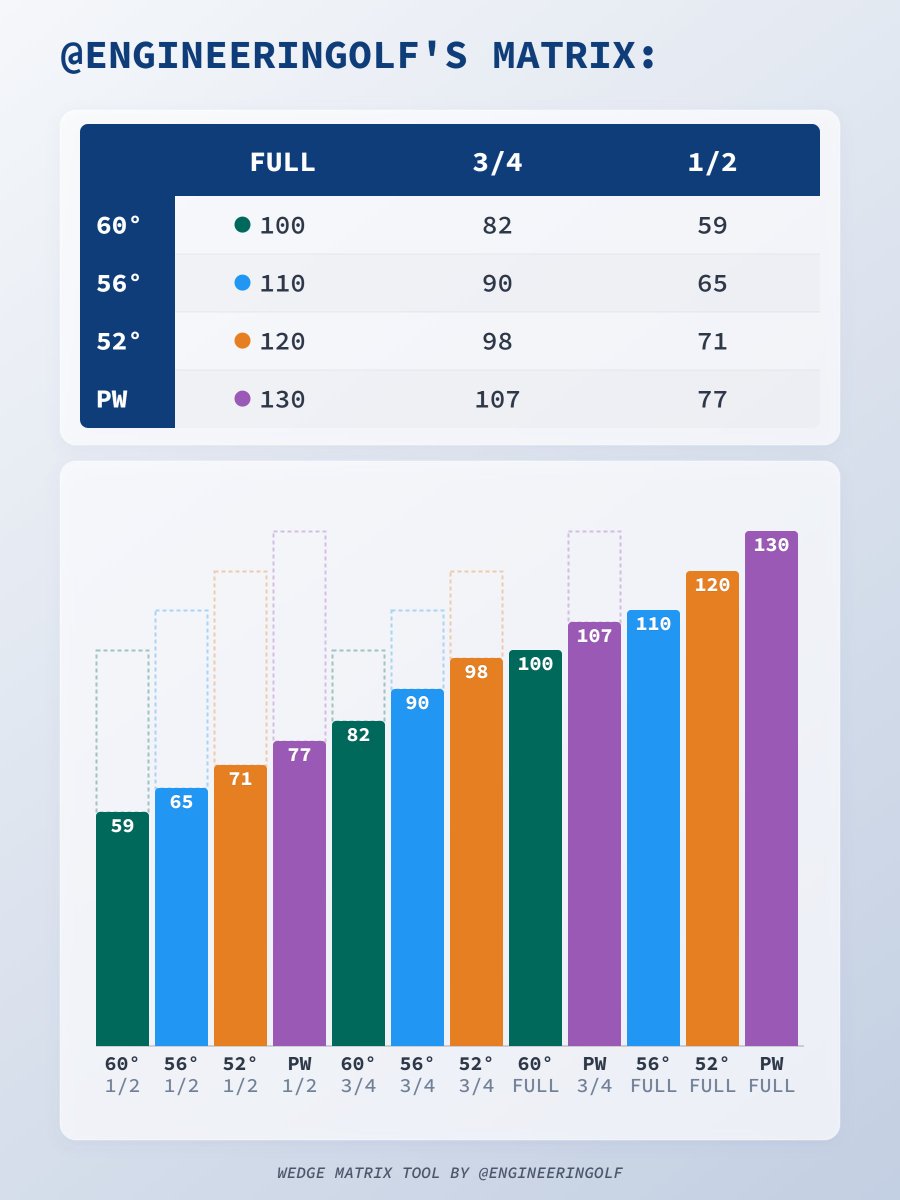
Here’s a new tool to dial in your less-than-full shots: the Wedge Matrix. - Use your preferred system (%/fraction/clock) - Create images like the one below - Dial in #'s at the range, store in your yardage book Wedge Matrix & Gap Visualizer are now on thegolfengineer.com
The Golf Engineer tweet media
English
13
6
90
24.3K
The Golf Engineer
The Golf Engineer@engineeringolf·
@fnf2017 I don't care if they have strong statistical evidence that this method is fine, they have removed a fun part of golf: Sleeping on a good 9 and being excited to combo it into a handicap drop.
English
0
0
1
9
Fairways & Freeways
Fairways & Freeways@fnf2017·
Time for my annual rant 😠😤😡🤬🤬🤬 Assuming *every time* (every SINGLE time) I post a decent 9 hole score that I'm going to 🥣💩 on a hypothetical second 9 is stupid. I get the regressing to the norm idea... But it's not normal to fall on your face EVERY SINGLE TIME. Enjoy the rest of the year, I'll be back with this next spring.
English
8
1
13
870
The Golf Engineer
The Golf Engineer@engineeringolf·
@Duke_113 I personally agree, I think it made more sense. And I suspect many clubs feel this way and simply kept their allocation regardless of the new recommendation.
English
3
0
1
323
Duke
Duke@Duke_113·
@engineeringolf The pre- 2020 system IMO was better for match play. But people were so very confused by it. Today, there's a much stronger correlation between index and difficulty, which is what most people assumed was the case
English
1
0
2
423
The Golf Engineer
The Golf Engineer@engineeringolf·
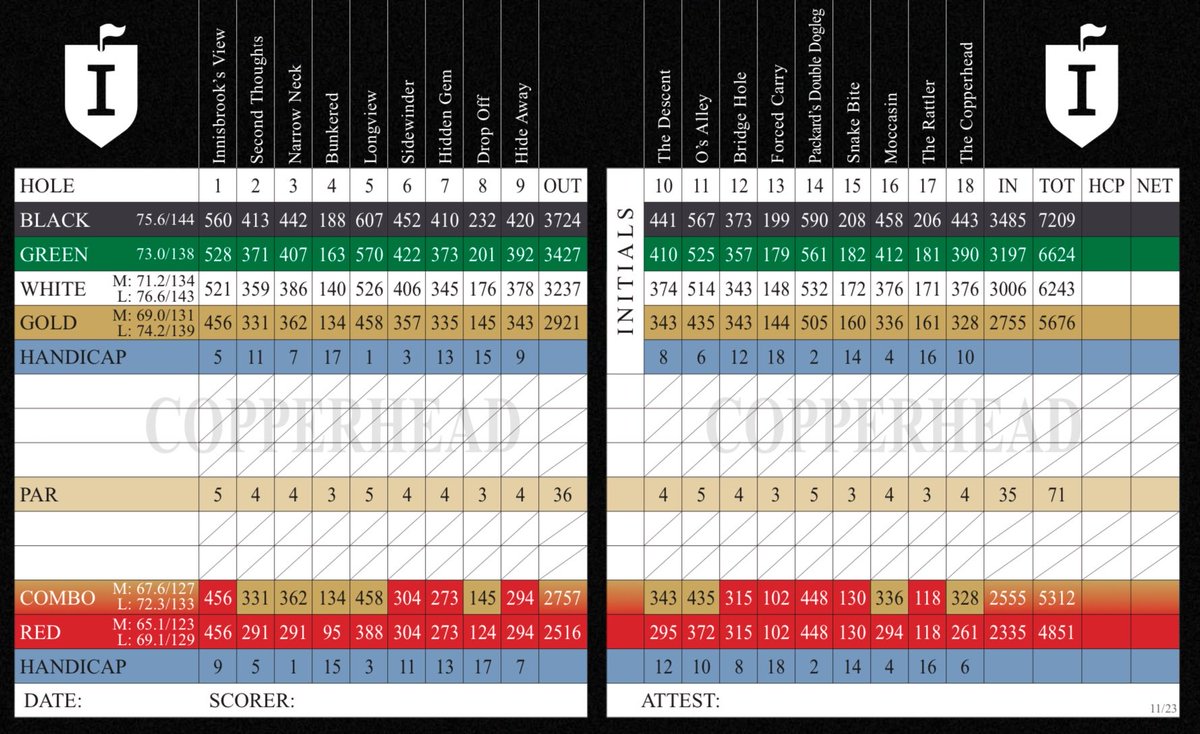
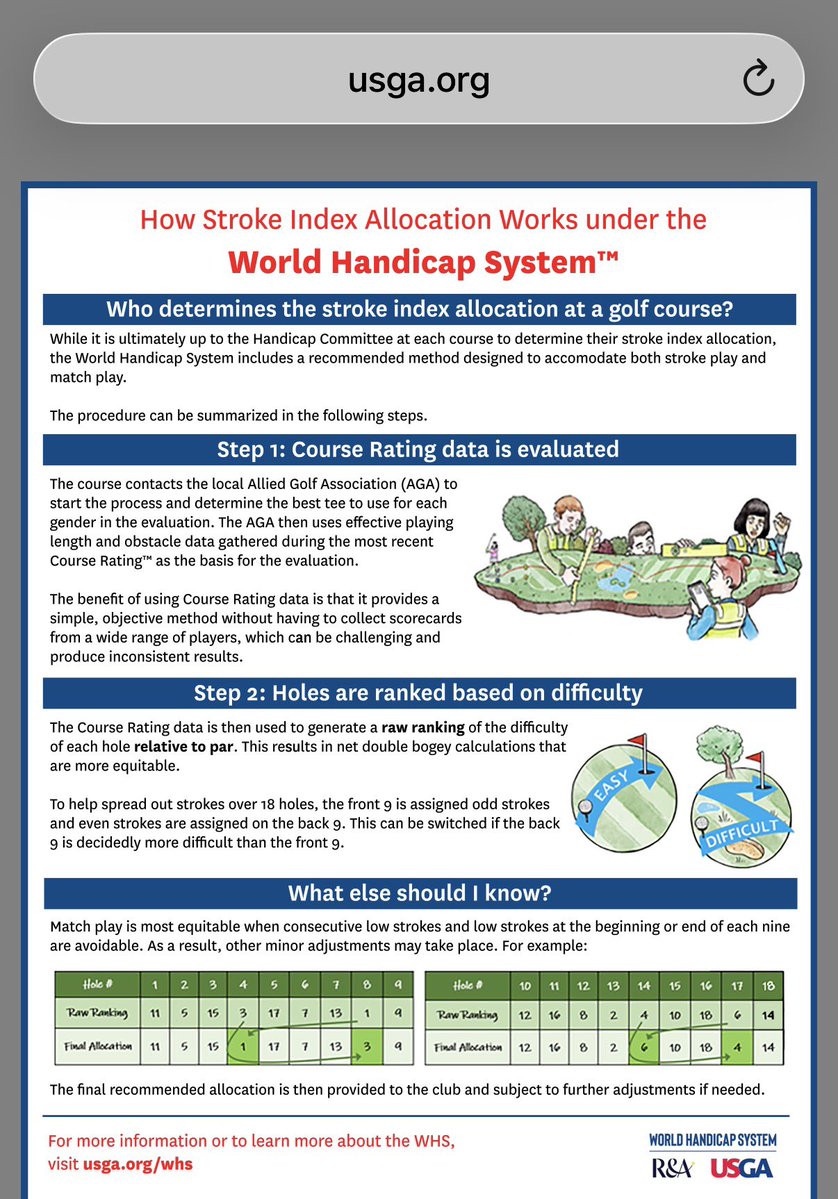
Hole-By-Hole Handicaps. That post yesterday stirred up some conversation, so let's expand. Designed to be your all-inclusive, bookmarkable reference for this topic. I will include links to sources in the comments. Things that didn't change: 1. The hole handicaps are up to the discretion of the handicap committee at each course. 2. It is recommended that the front 9 be odd numbers, and back be even. This spreads strokes evenly, making 18-hole matches more equitable. Can be flipped if back is deemed considerably harder. Pre-2020: 3. Prior to the introduction of the World Handicap System in 2020, it was recommended that hole handicaps be determined by the average score difference per hole between groups of low handicap & high handicap players, collected from actual scores. There is nuance to this, linked in comments. Post-2020: 4. Today, there is an updated handicapping recommendation for Stroke Index Allocation. It introduces key differences: -First, holes are ranked by each hole's difficulty to par using Course Rating data (obstacles and length, not actual scores) -Then, ratings are shuffled to spread strokes evenly and make match play most equitable -It is recommended that the lowest stroke index (1 or 2) be assigned to the middle 3 of each 9. -Apply HC 3 or 4 in the first or last 3 holes -Avoid low HC (6 or less) on consecutive holes. These changes aren't automatic. Even though there is a new recommendation, your club may not have been re-rated. They may have re-rated because the course changed, but preferred their existing allocation method. Many clubs appear to have the same allocations as they did in 2019. I'd love to hear from folks on handicap committees in the comments. So, I'll refine the statement in my original post: This is your reminder that the #1 handicap hole is not necessarily the hardest. #18 is not necessarily the easiest. They are correlated, but subject to a variety of recommendations and shuffling intended to make match play as equitable as possible, ultimately at your committee's discretion.
English
13
2
55
18.7K
The Golf Engineer
The Golf Engineer@engineeringolf·
Here’s the whole picture:
The Golf Engineer@engineeringolf

Hole-By-Hole Handicaps. That post yesterday stirred up some conversation, so let's expand. Designed to be your all-inclusive, bookmarkable reference for this topic. I will include links to sources in the comments. Things that didn't change: 1. The hole handicaps are up to the discretion of the handicap committee at each course. 2. It is recommended that the front 9 be odd numbers, and back be even. This spreads strokes evenly, making 18-hole matches more equitable. Can be flipped if back is deemed considerably harder. Pre-2020: 3. Prior to the introduction of the World Handicap System in 2020, it was recommended that hole handicaps be determined by the average score difference per hole between groups of low handicap & high handicap players, collected from actual scores. There is nuance to this, linked in comments. Post-2020: 4. Today, there is an updated handicapping recommendation for Stroke Index Allocation. It introduces key differences: -First, holes are ranked by each hole's difficulty to par using Course Rating data (obstacles and length, not actual scores) -Then, ratings are shuffled to spread strokes evenly and make match play most equitable -It is recommended that the lowest stroke index (1 or 2) be assigned to the middle 3 of each 9. -Apply HC 3 or 4 in the first or last 3 holes -Avoid low HC (6 or less) on consecutive holes. These changes aren't automatic. Even though there is a new recommendation, your club may not have been re-rated. They may have re-rated because the course changed, but preferred their existing allocation method. Many clubs appear to have the same allocations as they did in 2019. I'd love to hear from folks on handicap committees in the comments. So, I'll refine the statement in my original post: This is your reminder that the #1 handicap hole is not necessarily the hardest. #18 is not necessarily the easiest. They are correlated, but subject to a variety of recommendations and shuffling intended to make match play as equitable as possible, ultimately at your committee's discretion.

English
0
0
2
2.9K
The Golf Engineer
The Golf Engineer@engineeringolf·
This is your gentle reminder that the #1 handicap hole is not a difficulty ranking.
The Golf Engineer tweet media
English
72
11
311
532.3K
The Golf Engineer
The Golf Engineer@engineeringolf·
@timmmess @YipStrickler I think a key point here is, yes there are new recommendations, but what percent of courses have actually implemented them? And even under the new allocations, #1 hole isn’t always the hardest to par. Therefore my initial tweet is true and nobody can be upset. 😄
English
1
0
1
32
Timothy Mess
Timothy Mess@timmmess·
@engineeringolf @YipStrickler The USGA is horrible they make the worst most crummy expensive app ever. Then they cater to the country club elite because those places want to play PGAT events on 6300 yd courses. The pros won’t pay for smaller drivers or balls. We will.
English
1
0
1
31
Yip Strickler
Yip Strickler@YipStrickler·
This 👇…isn’t true anymore. 🤦‍♂️ My home club just changed all of their stroke hole allocations a few years ago. Apparently, the USGA must have switched the policy just months after we completed the process. I’ll be calling my PGA Pro to tell him we need new scorecards printed.
The Golf Engineer@engineeringolf

This is your gentle reminder that the #1 handicap hole is not a difficulty ranking.

English
5
0
34
43K
The Golf Engineer
The Golf Engineer@engineeringolf·
@timmmess @YipStrickler It's always us little guys who take the heat, and not the USGA and their website that is riddled with contradictions. Stick with us, Tim!
English
1
0
0
29
Timothy Mess
Timothy Mess@timmmess·
@engineeringolf @YipStrickler I’m just flabbergasted that this type of confusion has happened. Next thing you know there will be a prominent golf website saying mallet putters work better than blade putters. I thought all of you anonymous guys on X were correct all of the time!
English
1
0
0
25
The Golf Engineer
The Golf Engineer@engineeringolf·
Would love to hear from some folks who have gone through this new allocation. Today has sparked so many questions. 😄 Is it fair to assume that most courses have not adopted this new method? Do most committees even know about this? Could the USGA be any worse at educating the golfing public?
English
2
0
3
245
Yip Strickler
Yip Strickler@YipStrickler·
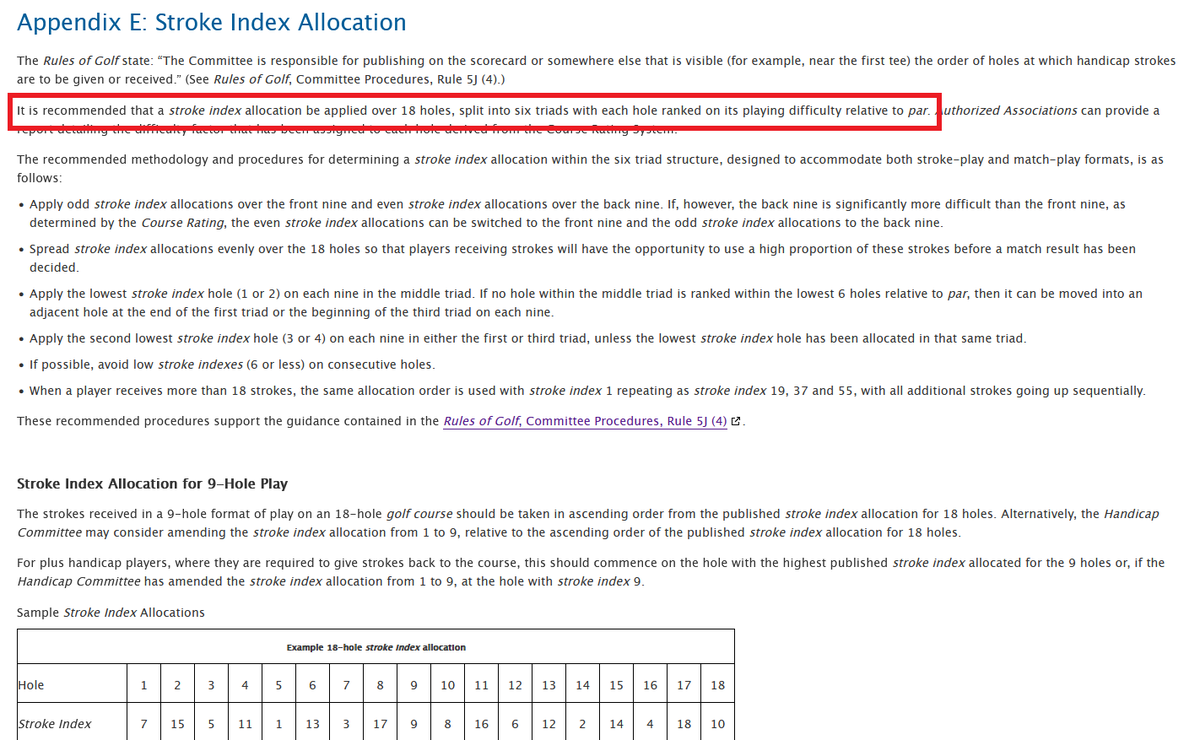
@engineeringolf Apparently it’s ultimately up to the Handicap Committee at each course as well.
Yip Strickler tweet media
English
3
0
3
1.4K
Michael Mason
Michael Mason@MichaelRMason·
@engineeringolf @Tyler_Covers That's fair and that needs to be updated! "Wrong" wasn't accurate on my part. It's up to the club to make these decisions locally and they can use the old methodology as well. Just making the point that the recommendation has changed to a stroke play focused process as of 2020.
English
2
0
0
207
Aaron Wilson
Aaron Wilson@AaronWilson_95·
@KeyKey76923110 @proctorzt @Kringle_Klaus @common8er @engineeringolf Incorrect. There’s plenty of holes that play over par for all players. Think par 3’s for example. They’re usually rated 15-18 but they aren’t easy holes because everyone struggles with those holes. Handicap system rates scoring differential from players not scoring to par.
English
4
0
3
299
The Golf Engineer
The Golf Engineer@engineeringolf·
A typical procedure would be put the club in the robot, and then adjust the tee x-y-z to hit center face. Replacing the club with everything the same, but different shaft, would result in different delivery and impact location. The way the robot delivers this change will be different than human. Many ways to approach the setup depending on what you’re testing.
English
1
0
1
86
LG ⛄️
LG ⛄️@cracking18beers·
@engineeringolf The one thing I don’t understand (and someone correct me if I am wrong) but different shafts are designed to load and release differently, can the robot effectively take that into account and tailor its swing to the optimal swing for each shaft?
English
1
0
1
88
The Golf Engineer
The Golf Engineer@engineeringolf·
A physical limitation w/ golf robots is simulating the human wrist. Humans vary their use of tiny hand muscles and wrist rotation. Robots clamp the grip firmly. It's a decent approximation, but an imperfect simulation of shaft loading, closure rate, and impact variation.
English
3
3
47
20.2K