Sabitlenmiş Tweet
The Golf Engineer
2.9K posts

The Golf Engineer
@engineeringolf
Your go-to bag setup & fitting resource. Sharing golf equipment design through experience inside OEMs. Use the Gear Guide here.👇
Katılım Eylül 2025
1K Takip Edilen13.3K Takipçiler

@BowTied_Golfer Great read about your Dad in the newsletter this week.
English

@engineeringolf This one was range. Didn’t have time for a round today. Figured a nice range session would be good.
English


@GolfPerthert Fitting heads is a science.
Fitting shafts is often an art.
Lmk if I can assist with something specific for you.
English

@engineeringolf I often wonder how much of this an "average" fitter might understand. Here in Australia we have very accessible fitting by varying levels of fitter. Some trained, some probably trained more in sales technique
English

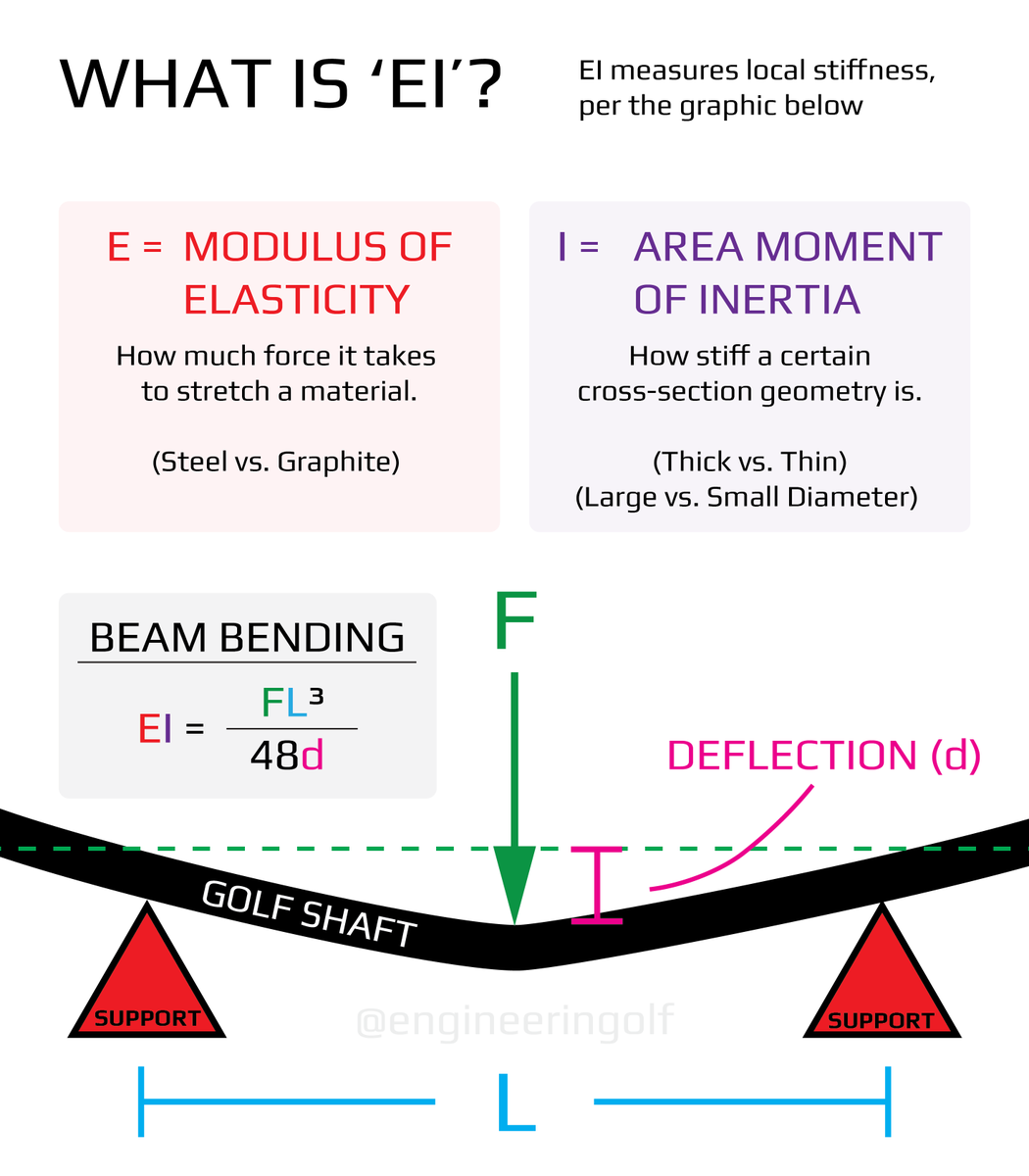
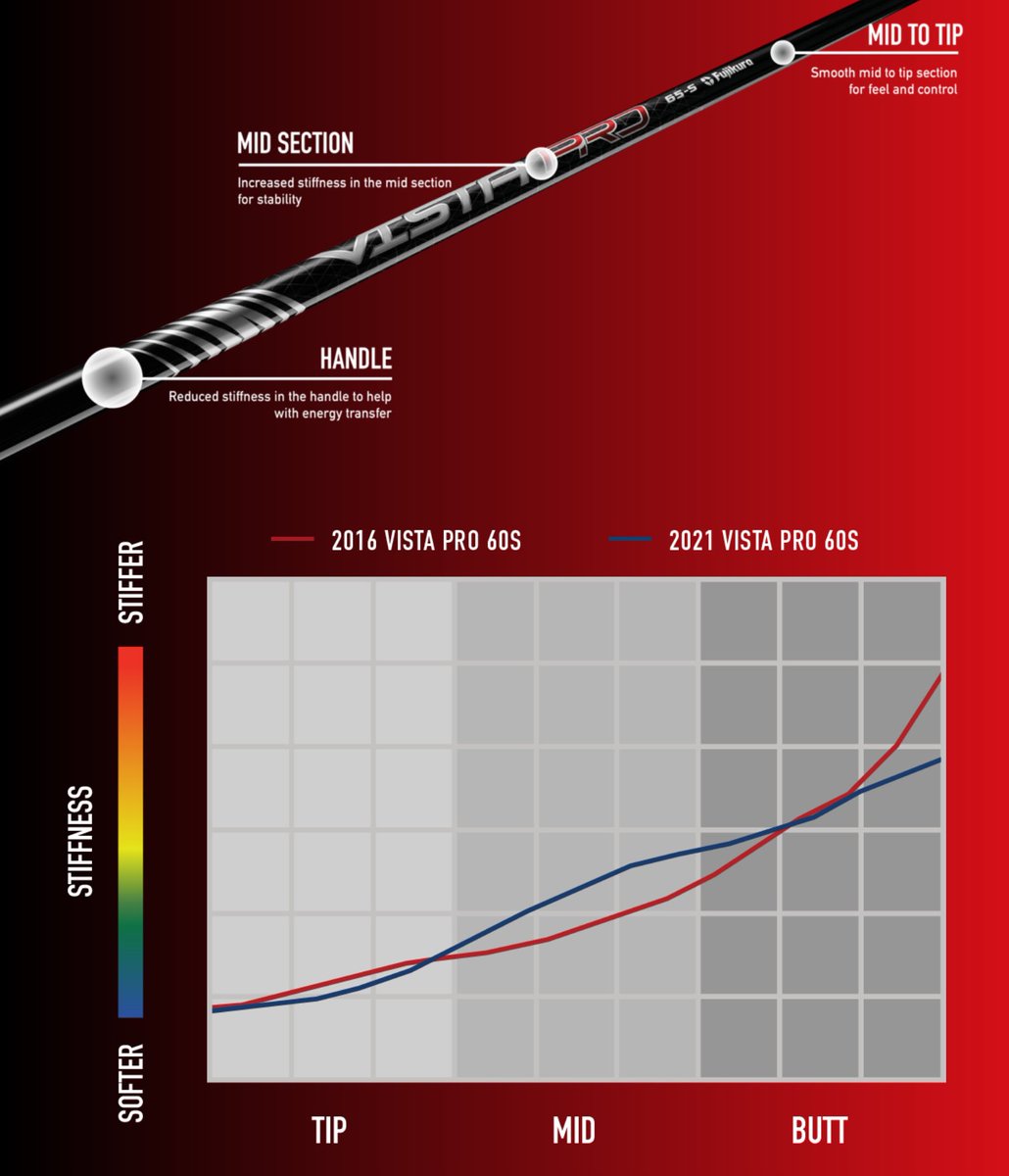
Shaft School: Lesson 1 - EI Curves
Everyone knows shaft flex, but it only tells part of the story.
EI curves show the stiffness at every section along the shaft.
Left image: the math
Right image: how it's typically presented to golfers
EI Curves are a foundation for Shaft School. Designs often start with a target EI curve, then engineers hit the spec.
Don't worry if the math looks intimidating. Future lessons will break down each component, and what it actually means for your game.
Like all classes, the lessons are better w/ Q&A.


English

@don10190878 Dang. Yeah, won’t be your last break.
Happen on course or range?
English

@engineeringolf @CallawayGolf Yes it did. I have 125+ chs and 185-190 ball speed. Things tend to break. But man, 4 months and this is fustrating
English

@BigSwingTempo One of the reasons why you see caddies tossing balls to pros hitting driver on the range - no sand
English

@engineeringolf Found this out the hard way and scratched my new driver face with a rock range ball 😭
English

Great question here. Tricky to answer. Most testing I’ve seen says that the durability impact is small. But it’s tough to test these conditions. Manufacturers use durability cannons, so you can imagine the challenge trying to keep clubs and balls freezing in these setups.
@MyGolfSpy did some great cold ball testing, showing that cold compression only changes by 2 or 3 pts.
The internet however is full of anecdotes that claim breaks in the cold. Physics supports this, as things get more brittle. Just a really tough scenario to simulate.
My suggestion is to keep your clubs and balls inside before those extra cold rounds.
English

@engineeringolf Question for us northern golfers…. What effect does cold balls have on driver face/woods? Early season here in out hitting balls In 4°c.
English

@THEMRRANDALL @engineeringolf @YuhYuh1483545 Yep, always try to crack ur driver face within the warranty period, typically 2 years. Literally beat my driver at the range for this very reason. If it doesn’t crack I’ll start hitting rocks with it until it gives. Haven’t paid for a driver in 5+ years and always have the latest
English

@freddydoubles How much do you think I could charge for a service where I put people’s clubs on durability cannons and send them back with perfect wear marks?
English

@engineeringolf How will I show people my awesome “wear mark” if I don’t hit rock hard balls covered in sand paper?
English

@YuhYuh1483545 I’ll add one piece - the face doesn’t get thinner. Fatigue stress creates micro-cracks that propagate and make it more flexible over time. Until, ultimately, a full break.
A dangerous game, but play it if you wish.
English

@engineeringolf Agree on 2. However for 1, there is some benefit to breaking in a newer driver face and thinning it out for faster ball speeds.
English

@HoppyHacker72 Someday, somebody important will game graphite iron shafts, and then it will become popular.
We’re currently where 7woods were 10 years ago.
English

@engineeringolf I just switched to all graphite thru the bag. Not having the wrist fatigue at the end of the round is a real thing. I sailed my 50⁰ 120 yards and over the green on the 18th yesterday. Might have been my purist contact of the day lol. 105g Recoil Dart F4.
English

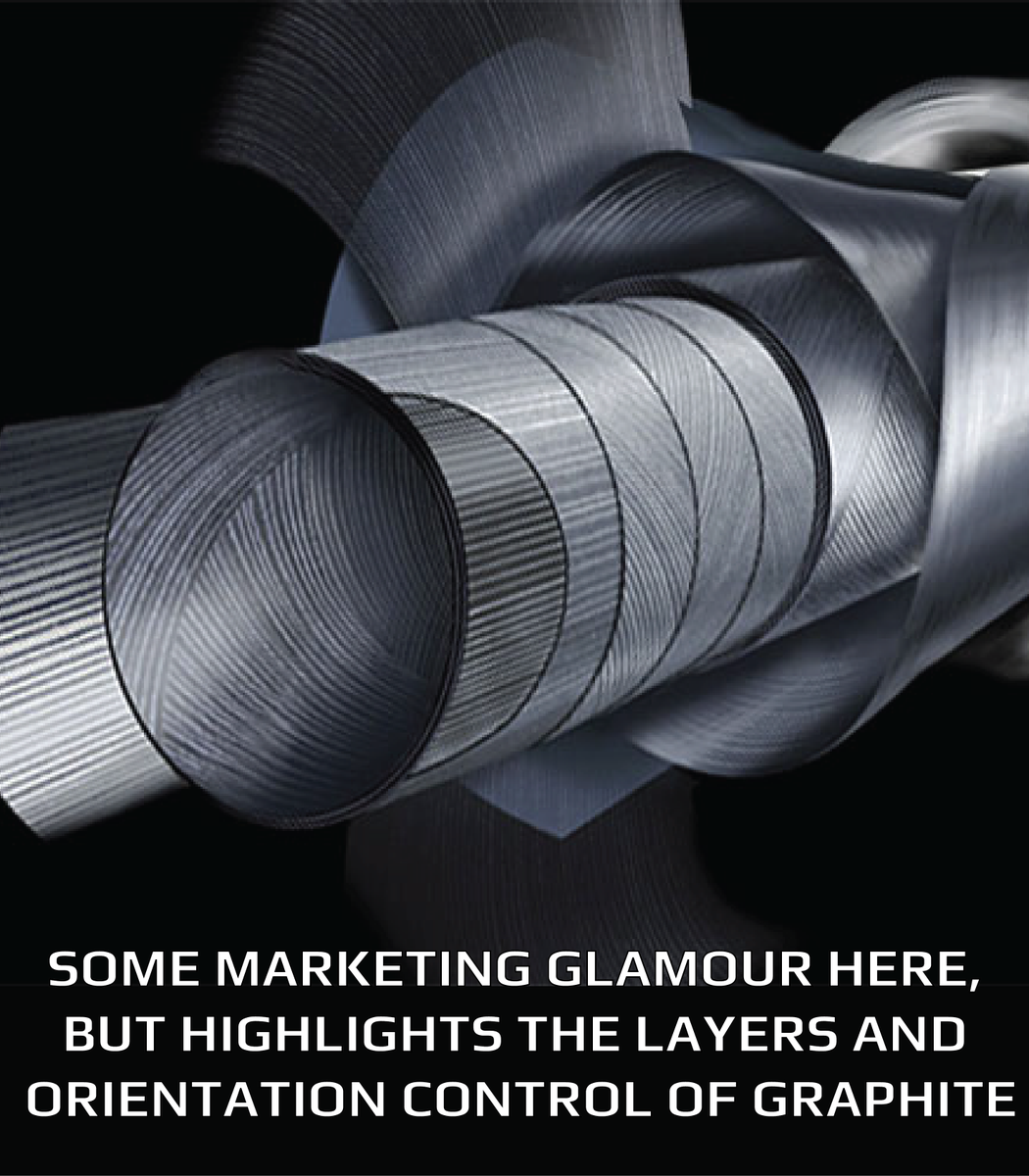
Shaft School: Lesson 2 – Steel vs. Graphite
Graphite has a lower 'E' than steel.
However, by stacking and orienting fibers, engineers have greater control over 'I', the stiffness of any given cross-section.
This enables a wide range of graphite bend profiles (EI Curves), some that steel simply can't replicate.
(see Lesson 1 for 'E', 'I', and 'EI Curves')
Driver Shafts:
Graphite dominates because it is light, stiff enough, and customizable.
Iron Shafts:
Many elite players still prefer steel for familiarity & feel. Frankly, if it works, there's no reason to get exotic (or spend more) for iron shafts.
The feel difference is real. Graphite has greater vibration-damping. Elites may say they prefer the feedback of steel. But damping is a real benefit if you experience wrist/elbow/shoulder injuries from frequent practice or harsh mats.
The old “senior shaft” stigma is rooted in graphite's early days: fragile, ultra-light, and marketed to slower players. Today, this is not the case, and graphite's versatility could benefit elite players.
Graphite enables unique use cases in irons:
1. Lighter overall club (swing faster)
2. Overlength w/ similar swingweight
3. More mass in the head for custom bias


English

@engineeringolf Love my modus 3s but I do miss my steelfiibers, such a pure feeling
English

@engineeringolf This is great stuff TGE! I hope you know, I think you’d make a tremendous aerospace structural engineer in another life… can’t wait to follow along for shaft school!
English

@MyGolfSpy This is content 101 right here. Expand your audience with posts that crossover into other niches.
New followers from garden 𝕏 inbound. 😄
English

If Bryson were an herb...he'd undoubtedly be cilantro.
You either love 'em or you hate him.
Lately, he's looking like a shell of himself.
Here's what we noticed at Shinnecock this week: buff.ly/7OUyNMn

English

@RichardTakai Well, the current differences aren’t too dramatic.
For the overlength example - you might get a free 0.5” if you pulled heads off a steel set and put them on graphite.
When building from scratch, heads already have a wide range of customizability via hosel weights.
English

@engineeringolf Iron head weights have remained fairly constant for years. With the advent of light graphite iron shafts, do you foresee heavier head weights that allow for much more manipulation and customization of CG, etc., while maintaining “traditional” SW/MOI?
English

@engineeringolf Did you correspond with Russ Ryden - the true expert on EI - about what you will present? Better yet followers here spend $15 to subscribe to Russ’s fabulous Golf Shaft Reviews page.
golfshaftreviews.info
English

@CliftonSellers Love when people share their numbers. Helps & motivates all creators. 💪
English

I’ll try my best thru this series of shaft posts to remove my bias as primarily a club designer. I hope to bring in a few true shaft design masters & fitters to assist.
The driver head designer will likely tell you to play the lightest shaft you can control. This way you can either:
1. Play a light build, increasing headspeed, or
2. Have extra mass to spend biasing your head wherever you need it
This often means “counterbalance” shafts, or stiff handles and soft tips.
English

Tomorrow’s lesson will cover the ‘E’ in E*I curves.
In other words - Graphite vs. Steel shafts.
The Golf Engineer@engineeringolf
Shaft School: Lesson 1 - EI Curves Everyone knows shaft flex, but it only tells part of the story. EI curves show the stiffness at every section along the shaft. Left image: the math Right image: how it's typically presented to golfers EI Curves are a foundation for Shaft School. Designs often start with a target EI curve, then engineers hit the spec. Don't worry if the math looks intimidating. Future lessons will break down each component, and what it actually means for your game. Like all classes, the lessons are better w/ Q&A.
English