固定されたツイート
Omar Marín
12.1K posts

Omar Marín
@omarinba
⬇️ Fisio Consultor/Asesor externo ⚽️ Cuidando el rendimiento de futbolistas 🦬 𝐑𝐞𝐡𝐚𝐛 & 𝐒𝐩𝐨𝐫𝐭𝐬 𝐏𝐞𝐫𝐟𝐨𝐫𝐦𝐚𝐧𝐜𝐞
Europe, Spain, Benicàssim 参加日 Ocak 2010
1K フォロー中6.2K フォロワー

@BeltranGR13 Que por la lesión recidivante (antecedentes), contemplaria valorar sus niveles de fuerza y activación, porque esos déficits nos harían pensar en un factor de riesgo para LCA.
Español
Omar Marín がリツイート

"Change of direction is a multi-step action... The steps preceding and following are also important"
Find out why with @TomDosSantos91 in our latest Sportsmith Premium expert presentation
sportsmith.co/premium/videos/
English
Omar Marín がリツイート
Omar Marín がリツイート

"It's the deceleration at the end of that movement where we get the space separation... It's deceleration movements where we can generate very high changes in velocity"
Deceleration: The most overlooked aspect of athletic movement speed
@DHMov
sportsmith.co/premium/videos/
English
Omar Marín がリツイート

Lumbo-pelvic control is often misunderstood. It's about managing trunk and pelvis rotation in all movement planes, preventing large, unpredictable movements @chrisbramah sportsmith.co/articles/optim… via @SportsmithHQ
English
Omar Marín がリツイート

Following any knee injury or surgery, there is commonly a phase of reduced activity and disuse that leads to muscle atrophy, diminished strength, and anterior knee pain.
After an anterior cruciate ligament (ACL) injury, patients might experience a decrease of 20% to 33% in their quadriceps muscle volume from the moment of injury up to three weeks post-ACL reconstruction (ACLR).
The decline in muscle mass and strength can be a source of pain, functional limitation, and decreased physical fitness. These persistent muscle weaknesses after surgery can result in functional deficits lasting up to 3 years postoperatively.
Periods of reduced mobility before and after surgery, vascular ischemia, and inability to perform high load strength training preoperatively and in the early postoperative period contribute to these early losses.
An extensive amount of research after ACLR indicates that a significant proportion of patients fall short of meeting adequate levels of strength, function and performance as recommended at the time of return to sport (RTS).
Approximately 35% of athletes fail to return to sport (RTS) at their preinjury level and are at a high risk of reinjury in the 24 months after RTS.
The long term health and future injury risk of the operated knee might be reduced if they meet established discharge criteria or achieve strength symmetry.
With the ultimate objective of regaining or even surpassing the patient's previous level of performance and protecting them from future injuries in mind, the rehabilitation team must guide the patient through an extensive recovery journey and adeptly devise interventions.
These interventions are aimed at rectifying deficits in strength and functional performance by precisely targeting the underlying mechanisms that result in muscle atrophy and impaired neuromuscular activation.
🎯🎯 The utilization of modalities such as NMES, EMG and BFR presents promising avenues for enhancing knee muscle function subsequent to ACLR. During the initial stages of rehabilitation, NMES can minimize muscle atrophy and contractile dysfunction.
EMG provides valuable biofeedback enabling patients to acquire essential muscle control skills and enhance quadriceps engagement.
BFR offers a solution for promoting muscle growth, particularly in scenarios where compromised knee load-bearing due to restricted range of motion or weight-bearing limitations, or hindered muscle activation caused by AMI is a concern.
By embracing these modalities, muscle function (in particular the quadriceps and hamstrings) can be optimized in the early stages of rehabilitation setting a solid platform for progression to more traditional strength training strategies in the later phases optimizing knee function and successful recovery following ACLR.
🔗🔗 Read More 👉👉 “Enhancing Neuromuscular Function Post ACL Reconstruction, Insights and Interventions) 👉 aspetar.com/Journal/viewar…
✍️ Written by Vasileios Sideris, Nuno Nascimento, Andreas Bjerregaard


English
Omar Marín がリツイート

Hamstring inj. are common in team sport athletes freq. exposed to ⬆️ velocity running.
@jb_morin , Jurdan Mendiguchia, & @TomDosSantos91 put together a paper on factors relating to ⬆️ risk of hamstring strains.
HSI can be assessed as applied strain or strain capacity.
English
Omar Marín がリツイート

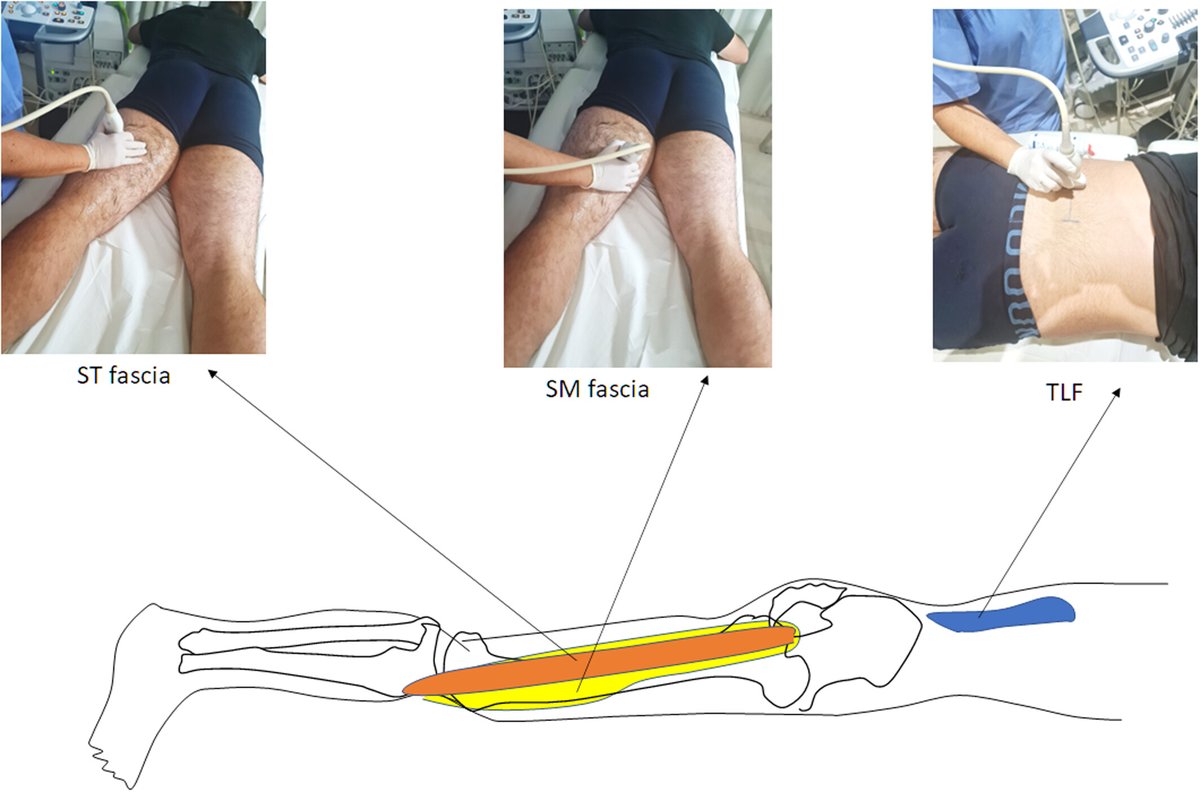
ᴛʜᴏʀᴀᴄᴏʟᴜᴍʙᴀʀ ғᴀsᴄɪᴀ sʜᴇᴀʀ-ᴡᴀᴠᴇ
Exercising the hamstring muscles can remotely influence the stiffness of the fascia which surrounds the lumbar area
FREE PDF
onlinelibrary.wiley.com/doi/epdf/10.11…


English
Omar Marín がリツイート

Biceps femoris T junction - one of the most common areas for recurrent muscle injuries in the body. Want to know more about assessment, grading and return to play?
Join us for our upcoming webinar.
mskaustralia.com.au/hamstring-webi…
MSK Australia@MSK_Australia
Biceps Femoris T Junction tear involving long head component only. Patient was trying to chase down a drop shot in tennis (patient is me 🙄). An excellent article on the topic ncbi.nlm.nih.gov/pmc/articles/P…
English
Omar Marín がリツイート
Omar Marín がリツイート

My Anti-To-Do List:
(the things I want to avoid on a daily basis)
1. Do not complain about anything.
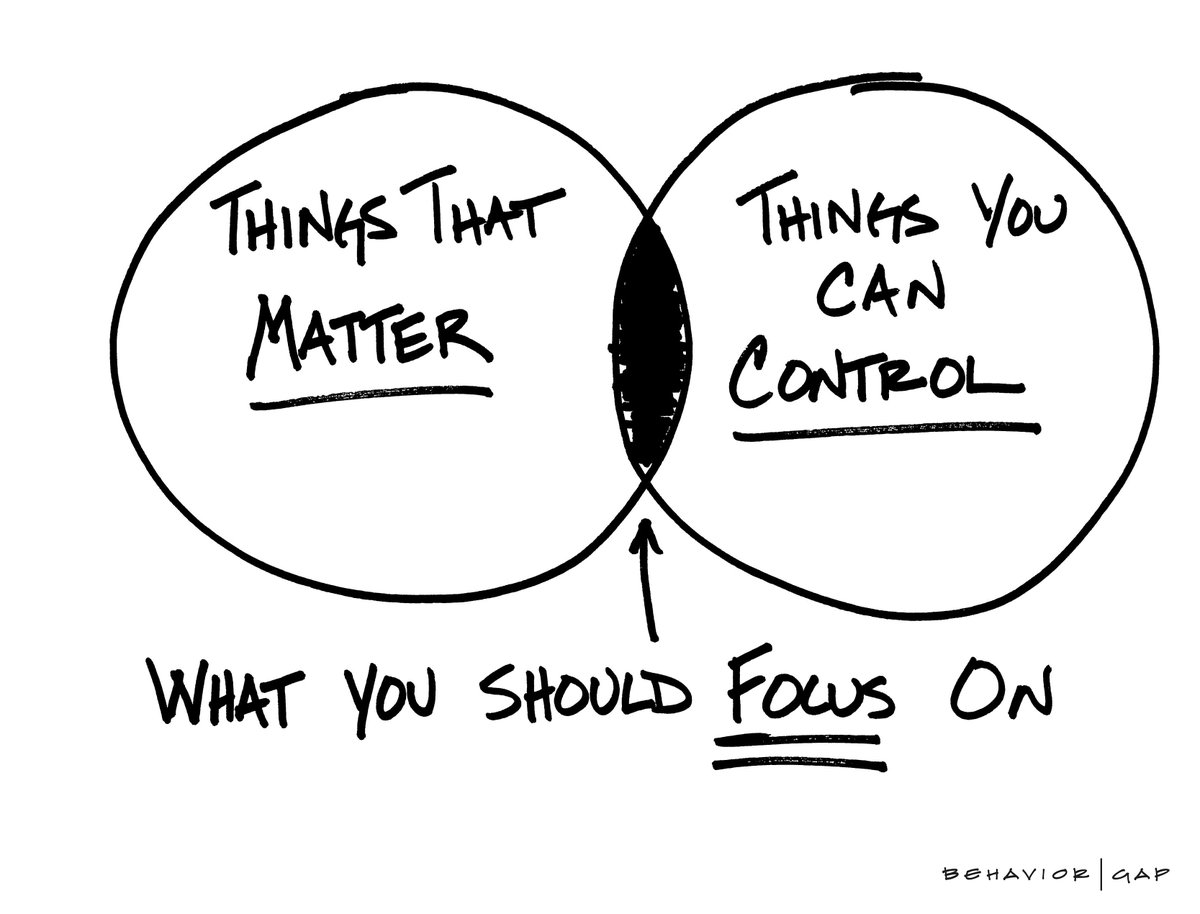
If the thing is within your control, then go do something about it. If the thing is out of your control, then it's just a waste of energy to complain about it.
2. Do not allow negative people to steal your energy.
Stop avoiding difficult conversations. Growth requires discomfort. Maintain a growth mindset in all of your relationships and embrace the need to remove toxicity from your life.
3. Do not allow more than 2 hours of inactivity.
Get up and go for a walk. Do a few pushups or lunges. Move your body and feel the rush of new energy and creativity.
4. Do not "graze" on low-value tasks.
Parkinson's Law says that work expands to fill the time allotted for its completion. When you don't set fixed windows for managing low-value tasks (like email), you end up "grazing" on them (spending all day doing them slowly and inefficiently). Create short, discrete windows for processing low importance tasks.
5. Do not become an ostrich.
An ostrich will bury its head in the sand to avoid danger. A lot of humans behave the same way when they encounter new information that challenges their existing beliefs or views. They care more about being right than finding the truth. Embrace new information that forces you to change your mind.
6. Do not have your phone out when your kid is trying to play with you.
When you are working, work hard. When you are playing, play hard. Strive to bring present, focused energy in all areas of life. Never let your phone come between you and your kid.
Note to Self: Focus on this, as it's the one you struggle with the most!
7. Do not hit the snooze button.
It's not about sleep, it's about stacking evidence that you are the captain of your ship.
8. Do not say yes to things under the assumption of having more time for them in the future.
You won't have more time in the future. If you wouldn't want to do the thing tomorrow, don't say yes to doing it a month from now.
9. Do not take calls or video meetings without a clear purpose.
Calls or video meetings without any clear agenda or purpose are where your joy and energy go to die. If it can be an email, it should be an email.
Note to Self: Embrace in-person meetings without a clear purpose, as these end up being some of the most interesting discussions.
10. Do not check your phone within the first 15 minutes of waking up (or the last 15 minutes before going to bed).
We have enough technology addiction in our lives. Create space—give yourself a few fixed windows of intentional tech avoidance to breathe.
11. Do not allow comparison, envy, or jealousy to enter your headspace.
When you feel it creeping in, default to curiosity instead: Ask what that person is doing that you can learn from.
12. Do not fall victim to the algorithm vortex.
The algorithm will encourage you to create content exclusively for its pleasure, but if you lose the soul in the work along the way, you'll never be able to stay in the game long enough to win. Create things you would want to consume and avoid checking metrics for 24 hours.
13. Do not text or check social media throughout the course of the day.
Establish fixed windows when you will read and reply to messages. Put your phone on Do Not Disturb mode. Turn on Grayscale Mode to make the icons and notifications less appealing for the "just a quick check" during the course of the day.
***
To create your Anti-To-Do list, sit down and write down the things you are struggling with personally and professionally.
Use my list as a spark to get the ideas flowing, but make changes, additions, or subtractions as necessary.
The list is intended to be dynamic, so don't worry too much about the starting point. It can be as few as 3-5 high-priority items.
Just as you have your To-Do List in front of you during the course of the day, I would recommend having your Anti-To-Do List in front of you as well.
As you avoid the daily actions on the list, check them off.
There will be good days and bad days, that's just part of the game. Every day you achieve 100% compliance with your Anti-To-Do List, give yourself a moment to appreciate the win.
Remember: Each day is an opportunity to stack new evidence in favor of the person you want to become.


English
Omar Marín がリツイート

Understanding tendons and how to train them
A thread 🧵
Info c/o @Seth0Neill
sportsmith.co/articles/under…
English
Omar Marín がリツイート

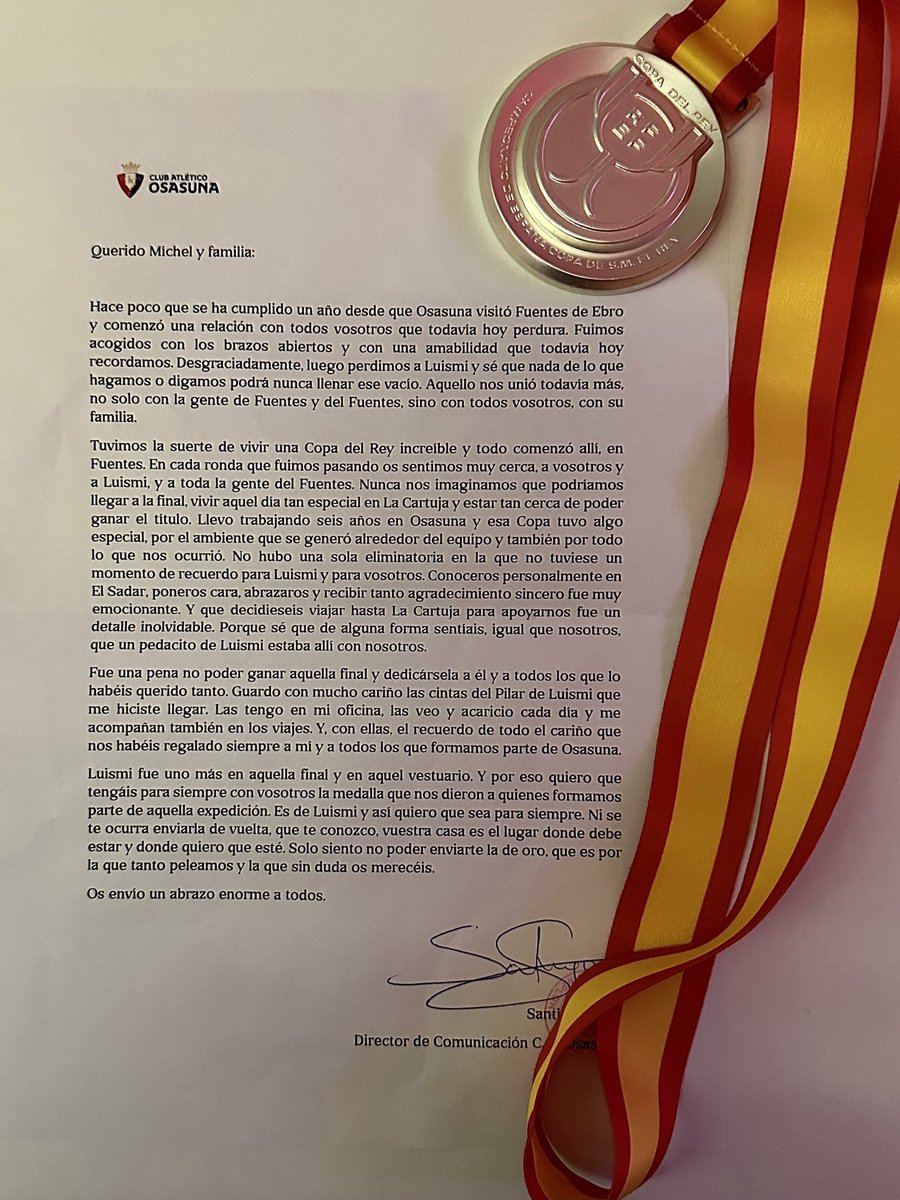
Una parte de mi corazón permanecerá para siempre en este maravilloso club. No tengo palabras para describir lo que hemos sentido al recibir este detalle que muestra, una vez más, lo enormes que sois. Nunca nos cansaremos de daros las gracias, nos vemos pronto! ❤️ @Osasuna

Español
Omar Marín がリツイート

Get Your Free Copy!📂 📩
Aspetar Clinical Practice Guideline on Rehabilitation after ACLR.
This Clinical Practice Guideline document describes the evidence of effectiveness for the components of rehabilitation after anterior cruciate ligament reconstruction (ACLR). This information can then be used to inform ACLR rehabilitation protocols.
🔗Get Your Copy 👉 aspetar.com/en/download-as…

English
Omar Marín がリツイート

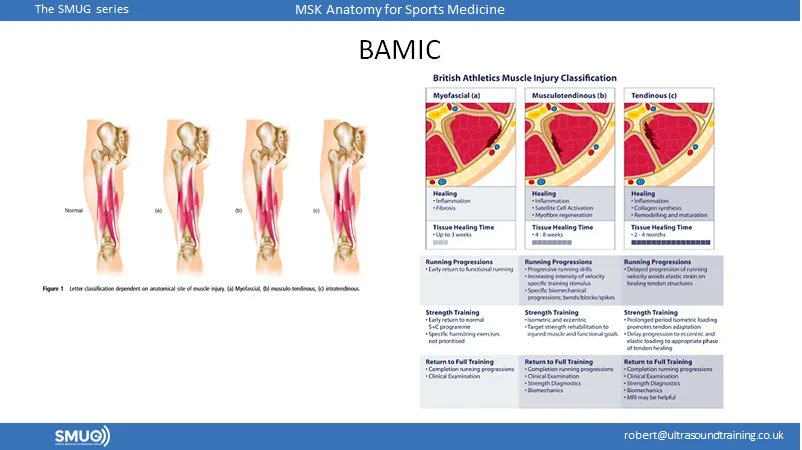
Muscle classification.
US classification medial gastrocnemious
buff.ly/3Z1QjDC
buff.ly/2U67bcl
BAMIC Classification, hamstring
buff.ly/3Zhb126
Distal mtj T Junction
buff.ly/3xQGqN1
The MLG-R classification hamstrings
buff.ly/3Sr7L1S


English
Omar Marín がリツイート

🚨NEW ARTICLE - RCT🚨
Effect of a single 15-min intrinsic foot muscles’ NMES session ⚡️
➡️ Forefoot strength
➡️ Single leg navicular drop (ND)
➡️ Dynamic postural balance (SEBT)
meridian.allenpress.com/jat/article/58…
Key findings 👇
English
Omar Marín がリツイート

Estimado Adam Silver:
Debí escribirle hace tiempo, pero me faltó valor. No quise pecar de impulsivo y hoy me arrepiento, porque veo, apenado, como este tema creció a límites insospechados.
Producto de mi falta de coraje, de mi letargo en continuado, dejé que se arruine el deporte que más amo en el mundo: el básquetbol.

Español
Omar Marín がリツイート

Respiratory muscles
Inspiratory muscles
▶️diaphragm
▶️external intercostal
▶️sternocleidmastoid
▶️scalene
▶️serratus anterior
▶️pectoralis
Expiratory muscles
▶️internal intercostal
▶️rectus abdominis
▶️external/internal obliques
▶️transversus abdominis
elsevier.com/connect/the-mu…

Català