
Lilia Castillo 🥑 がリツイート
Lilia Castillo 🥑
35.2K posts

Lilia Castillo 🥑
@pecazules
Twitter es mi departamento de quejas y elogios.
Aquí 参加日 Ekim 2009
1.8K フォロー中474 フォロワー


Lilia Castillo 🥑 がリツイート

¿Me estás diciendo que las pesas de marca LB de 5, no pesan lo mismo que las pesas de la marca KG de 5?
Español
Lilia Castillo 🥑 がリツイート

Un país no se vuelve más soberano hablando de y pontificando sobre la soberanía. Se vuelve más soberano fortaleciendo su Estado de derecho, su transparencia y su sistema de justicia, de rendición de cuentas y de seguridad pública e interna; combatiendo la corrupción, la impunidad y la delincuencia; promoviendo la democracia liberal de contrapesos y a los derechos humanos; fortaleciendo a la sociedad civil y las libertades de prensa y de expresión; robusteciendo su economía y las oportunidades económicas y a su sector productivo; abonando a su equidad y a su sustentabilidad; reduciendo sus vulnerabilidades frente al exterior; jugando un papel activo y responsable en el mundo y diversificando sus nexos diplomáticos y su comercio internacional. Es decir, todo lo que se ha dejado de hacer en México desde 2018.
Español
Lilia Castillo 🥑 がリツイート

Vemos una cápsula robótica que se traga como una pastilla y permite revisar el estómago sin sedación ni tubos por la garganta. Mientras avanza, envía imágenes en alta definición y ofrece una alternativa menos invasiva para detectar problemas digestivos.
Español
@AntonioTrejoH @JoseMarioMX @CIDH @AccionNacional Señor, ya está grande para andar creyendo en esas tarugadas. 😒
Español

@JoseMarioMX @CIDH Lloran que @AccionNacional ya no ponga jueces y ustedes los corrompan.
Ya no van a regresar: dejen de llorar y por desgracia como no son honestos ya han de estar corrompiendo a los nuevos y a los que se quedaron. No somos por desgracia los abogados del S. XIX ahora somos viles.
Español
Lilia Castillo 🥑 がリツイート

🚨 LA REFORMA JUDICIAL YA ESTÁ EN EL BANQUILLO INTERNACIONAL. El 19 de marzo de 2026 la @CIDH emplazó formalmente al Estado mexicano a responder, en un plazo máximo de 4 meses, la petición de 65 juzgadoras y juzgadores federales (20 mujeres, 45 hombres, con un promedio de 26.5 años de carrera judicial) que denuncian violaciones a la Convención Americana por el despido masivo, la destrucción de la carrera judicial y la pérdida de inamovilidad. La Comisión incluso analiza resolver admisibilidad y fondo en un mismo informe, un tratamiento reservado a casos de gravedad y urgencia, lo que convierte a este expediente en el primer examen interamericano serio a la reforma.
📌 LOS DATOS QUE NADIE QUIERE QUE VEAS. El 1 de junio de 2025 México se convirtió en el único país del mundo que eligió por voto popular a 881 cargos del Poder Judicial de la Federación, entre ellos los ministros de la @SCJN, aunado a 3,423 candidatos en un proceso que @hrw calificó como un golpe a la independencia judicial. La reforma eliminó la inamovilidad, creó un Tribunal de Disciplina Judicial con facultades amplísimas de sanción, y contempla renovar el resto de cargos en 2027. La vía interamericana se activó porque en el derecho interno la SCJN desechó las impugnaciones y quedó cerrada cualquier revisión doméstica.
⚖️ POR QUÉ ESTO NOS IMPORTA A TODOS. La petición no pide privilegios para jueces: exige que México respete los estándares interamericanos que firmó en 1981 sobre independencia judicial, debido proceso y estabilidad en el cargo. Si la CIDH concluye que hay violaciones, el caso puede escalar a la Corte IDH, cuyas sentencias son vinculantes para el Estado mexicano, abriendo la puerta a reparaciones y ajustes estructurales a la reforma. Traducido: cuando un juez depende del voto y del poder político para conservar su cargo, quien pierde no es el juez, pierde el ciudadano que necesita defenderse frente al Estado. Esta es la batalla por la última frontera entre tú y el abuso de poder. 🇲🇽
aristeguinoticias.com/2303/mexico/ci…

Español
Lilia Castillo 🥑 がリツイート
México no sólo tiene una crisis de desapariciones. Tiene algo todavía más hondo: una crisis de cuerpos sin nombre, de familias sin respuesta y de instituciones que aprendieron a convivir con el horror. Más de 72 mil cuerpos sin identificar no son una cifra: son 72 mil historias detenidas en una morgue, una fosa o un expediente que nadie termina de abrir.
Lo más brutal es que el colapso forense no está aislado. Es el reflejo de fiscalías rebasadas, investigaciones mal hechas, bases de datos rotas, servicios periciales abandonados y una impunidad que se volvió costumbre. De nada sirve encontrar restos si no se investiga quién los desapareció, quién los mató, quién los encubrió y por qué el Estado llegó tarde otra vez.
En México, las familias buscan porque las instituciones no buscan como deberían. Las madres excavan, documentan, presionan, nombran y sostienen la memoria de un país que parece haber normalizado lo innombrable. Un cuerpo sin identificar no es sólo una falla técnica: es una deuda moral, jurídica y humana. Es la prueba de que la justicia también puede desaparecer.

Español
Lilia Castillo 🥑 がリツイート

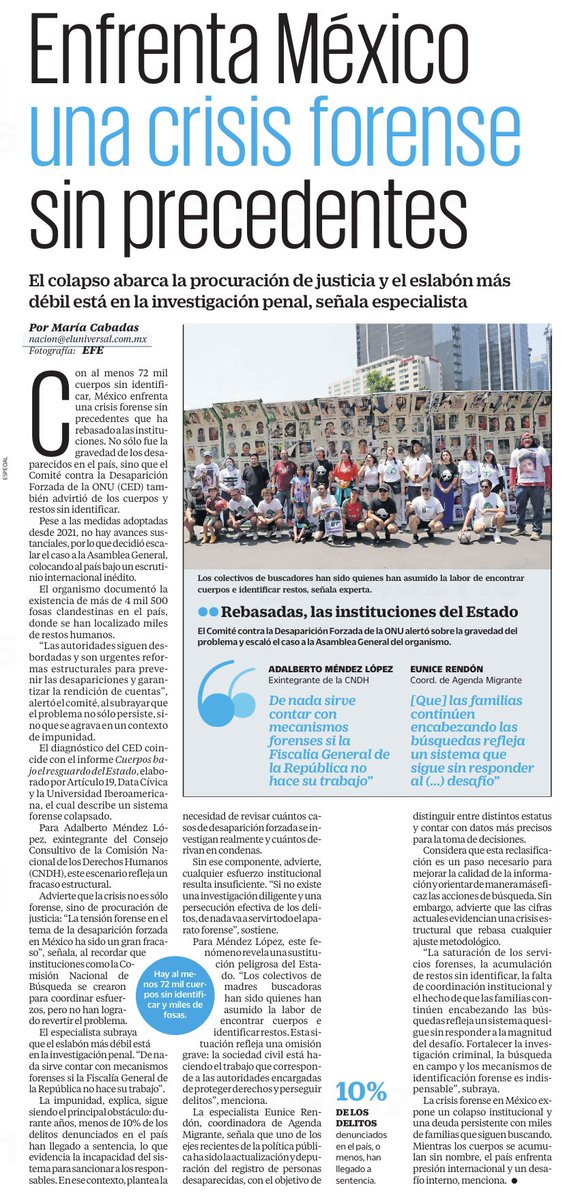
🚨 MÉXICO ENFRENTA CRISIS FORENSE SIN PRECEDENTES
Con más de 72 mil cuerpos sin identificar y miles de fosas, especialistas advierten colapso institucional en la procuración de justicia. Señalan rezagos graves en investigación y atención a desapariciones.
@El_Universal_Mx
Español
Lilia Castillo 🥑 がリツイート

En España, la hija de 13 años de una madre fue secuestrada y violada por un vecino. El agresor fue condenado a nueve años de prisión.
Aproximadamente seis años después de cumplir su condena, el agresor fue puesto en libertad condicional y regresó a la ciudad. Se encontró con la madre en un bar cerca de una parada de autobús.
El agresor le preguntó burlonamente: "¿Cómo está tu hija?". Enfurecida, ella compró gasolina, regresó al bar, roció al hombre con ella y le prendió fuego.
El hombre sufrió quemaduras graves y murió pocos días después.
Aunque estaba presa del pánico, no huyó, sino que confesó lo sucedido a quienes la rodeaban y esperó a que llegara la policía.
Fue condenada a cinco años y seis meses de prisión, pero gracias a una campaña de indulto y por motivos de salud, fue puesta en libertad tras cumplir parte de su condena.
Español
Lilia Castillo 🥑 がリツイート

Lilia Castillo 🥑 がリツイート

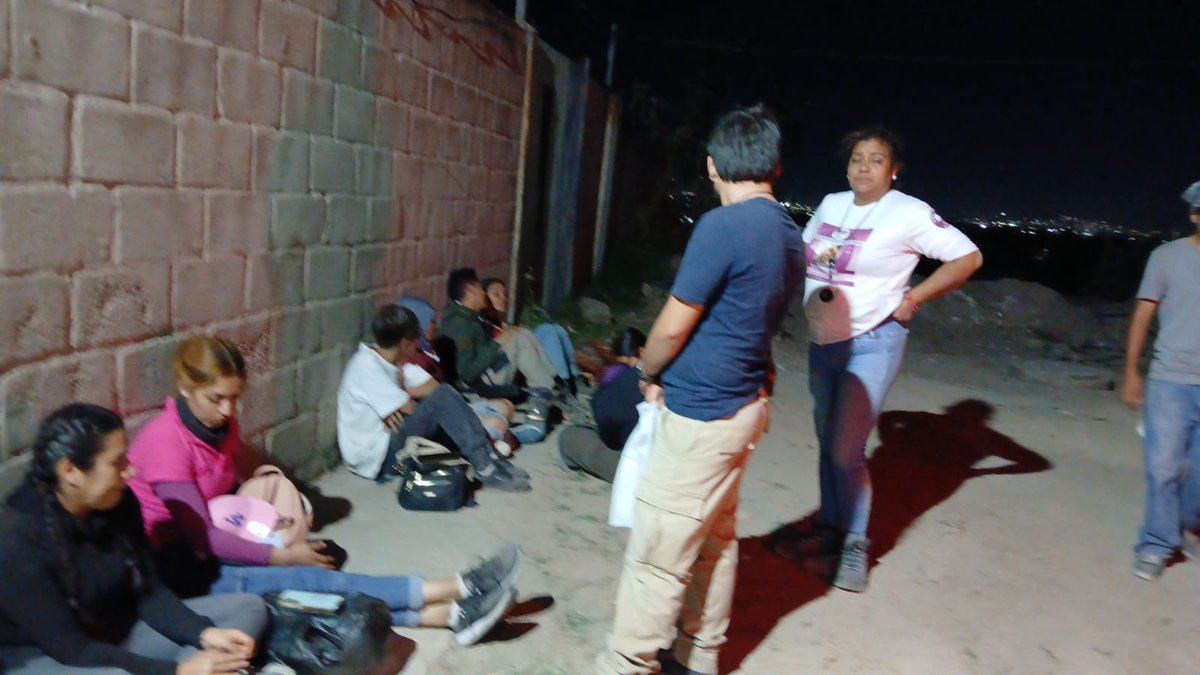
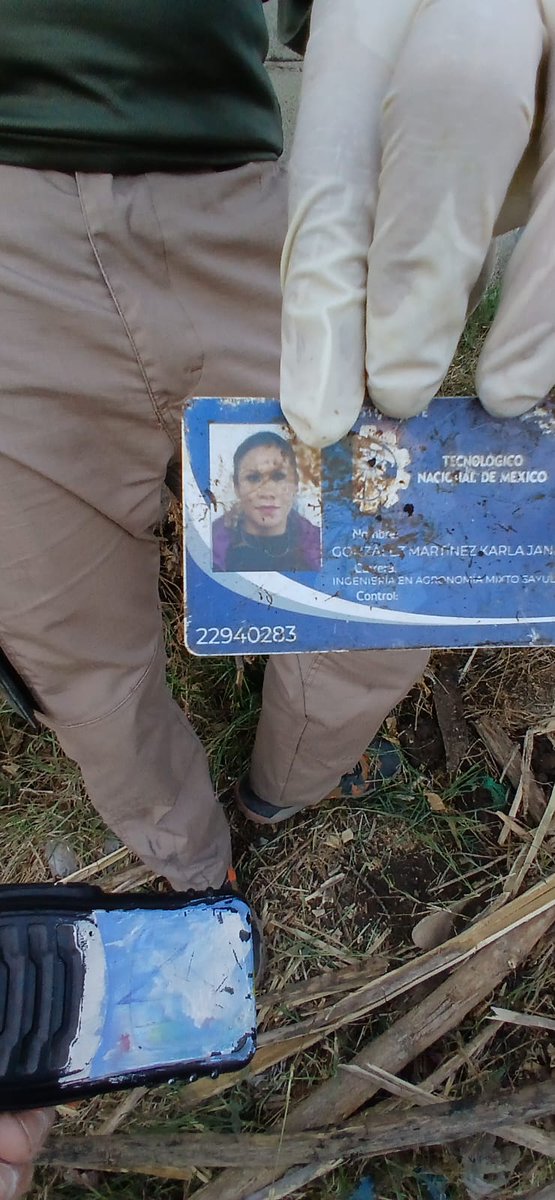
Las madres buscadoras de Jalisco localizan un panteón clandestino en el Salto Jalisco solas sin el apoyo de ninguna autoridad arriesgando su vida su integridad por amor a quien hoy falta en casa han localizando credenciales en el lugar del hallazgo casi medianoche y ninguna autoridad arribaba al lugar y no podían dejar los restos expuestos a que se los llevaron los animales hacemos el llamado a las autoridades que no están cumpliendo con los protocolos de la búsqueda inmediata


Español
Lilia Castillo 🥑 がリツイート

¿Qué dependencia se ocupa de parques y jardines? Es pregunta seria.
La Silla Rota@lasillarota
¿Qué está pasando con los parques de la #CDMX? 🌳🐀🤢 Parques emblemáticos de la capital, como la Alameda Central, enfrentan deterioro: basura acumulada, roedores, áreas verdes descuidadas y mobiliario vandalizado. Lee la nota: 🔗 lasillarota.com/metropoli/2026…
Español
Lilia Castillo 🥑 がリツイート

"El voto sigue siendo el principal antídoto frente a la tentación autoritaria... La oposición está obligada a presentar un frente común para salvar a México de tanta indolencia, incompetencia y oscuridad. Mi artículo en @El_Universal_Mx
eluniversal.com.mx/opinion/rosari…
Español
Lilia Castillo 🥑 がリツイート

Estos no son “nuevos ricos”… son de nuevo ricos.
Del periódico más endeudado de Veracruz a una boda de lujo en Sevilla: preguntas que siguen sin respuesta
Gracias, Nahle. 😂
Mira nada más la boda de lujo de Berta Ahued (propietaria de El Dictamen y cercana a CrimiNahle) en Sevilla.
Más de 250 invitados, caseta en la Feria de Abril, vestido de ensueño y fiesta por todo lo alto.
Español
Lilia Castillo 🥑 がリツイート

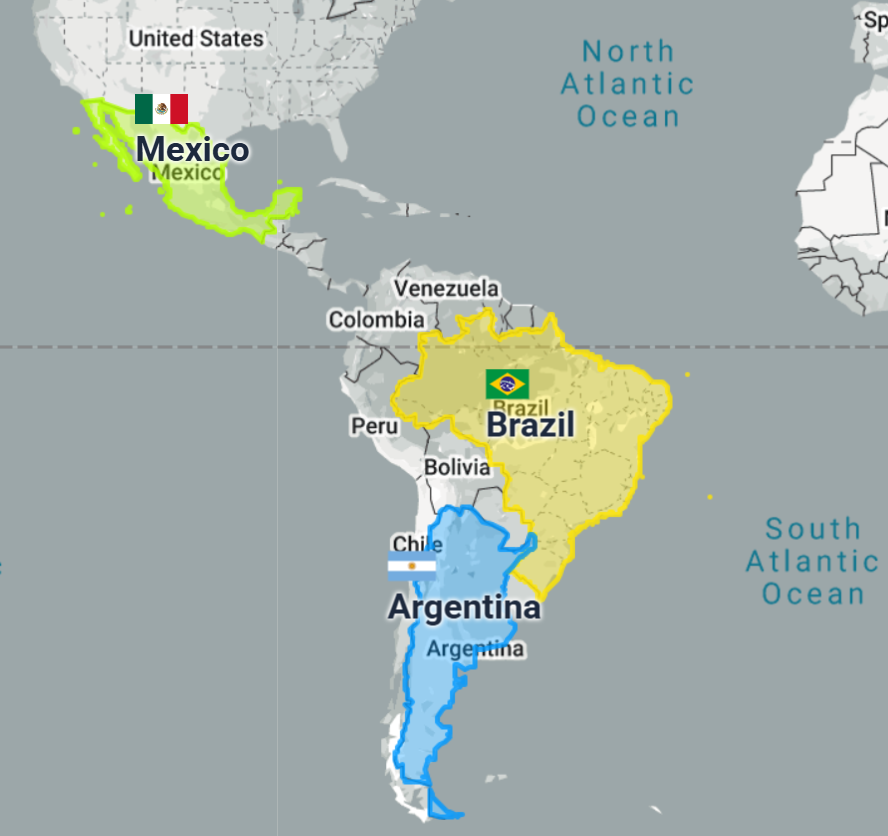
We need to understand these three powerhouses better:
Argentina, Brazil, and Mexico
In the post I quoted, the focus was on the agricultural strengths of Argentina and Brazil.
In this post, I will focus on the most compelling aspects of three of the largest economies in the Americas: Argentina, Brazil, and Mexico.
Argentina
1) Scale & land advantage
Area: ~2.78 million km²
Population: ~46 million
Density: ~17 people/km² (one of the lowest among major economies)
Renewable freshwater: ~800 km³/year
Arable land: ~12–14% (among the highest globally)
If Argentina had EU density (~109/km²):
≈ 303 million people
If Argentina had China density (~150/km²):
≈ 417 million people
2) Energy & shale (Vaca Muerta)
Shale gas: ~308 Tcf (technically recoverable)
Shale oil: ~16 billion barrels
Comparison:
United States: ~1,000+ Tcf gas, ~70–80 bn barrels oil.
Not US-scale, but one of the largest shale opportunities outside The United States
3) Agriculture power
#1 globally in soybean meal & soybean oil exports
Agricultural exports: ~$60–70 billion/year- export-oriented agribusiness
4) Critical minerals & metals
Lithium reserves: ~3 Mt (LCE) (Global rank, top 3)
Copper reserves: ~17 Mt (Global rank, ~top 10)
Gold: Production ~55–65 tons/year, reserves: ~30–40 Moz (Global rank, top 20 producer)
Silver reserves: ~400–500 Moz (Global rank, top 5-10)
Rare combination:
Energy transition metals like lithium + copper
Precious metals like gold + silver
-*-*-*-*-*-*-
Brazil
1) Scale and land advantage
Area: ~8.51 million km²
Population (2024): ~215 million
Density: ~24 people/km²
If Brazil had Germany’s density (~233/km²): ≈ 2.0 billion people
If Brazil had India’s density (~470/km²): ≈ 4.0 billion people
Renewable freshwater: ~8,200 km³/year (≈ 12–13% of global total, #1 globally)
Agricultural land (agricultural area): ~2.7–2.8 million km² (~32–33%)- larger than many countries
Forests: ~58–60% of land
Extreme land + water abundance means structurally low resource pressure
2) Amazon advantage (Critical global asset)
Amazon rainforest covers ~60% of Brazil
Represents ~40-50% of the world’s tropical forests
Stores ~150–200 billion tons of carbon
Holds ~20% of global freshwater river flow
Brazil is a global environmental and climate anchor
3) Coastline and maritime potential
Coastline: ~7,400-7,500 km , massive
Access to major Atlantic trade routes
Large Exclusive Economic Zone (EEZ)
Strong offshore energy + shipping potential + fisheries
4) Energy and natural resources
Proven oil reserves: ~12–13 billion barrels (comparison: United States ~44 billion barrels)
Oil production: ~3.4 million barrels/day (top 10 globally) Pre-salt offshore fields: among the most productive deepwater assets globally
Iron ore production: ~380–400 million tons/year (top 2 globally)
Hydropower: ~60%+ of electricity generation
Brazil is not the largest in reserves, but high productivity + low-cost offshore extraction + renewable base creates a strong export-oriented energy model
5) Agriculture power
#1 soybean exporter globally
Top exporter in beef, poultry, sugar, coffee
One of the largest agricultural exporters globally
Brazil combines:
Massive land + the world’s largest freshwater endowment + a dominant agricultural base
*-*-*-*-*
Mexico
1) Scale and land advantage
Area: ~1.96 million km²
Population: ~129 million
Density: ~66 people/km²
If Mexico had Germany’s density (~233/km²):
≈ 457 million people
If Mexico had India’s density (~470/km²):
≈ 920 million people
Renewable freshwater: ~450 km³/year (more constrained vs Brazil)
Agricultural land: ~50% of land is classified as agricultural, largely pasture-based-arable land is about 11-12% (large but less productive per hectare vs Argentina)
Balanced scale, not resource-abundant like Brazil, but not constrained either
2) Geography and strategic location
Direct border with United States (world’s largest consumer market)
Access to both Pacific and Atlantic (Gulf of Mexico)
Coastline: ~9,300 km
Key logistics hubs for global trade flows
Geography = economic advantage, proximity to demand matters more than resources
3) Industrial power (Core strength)
Auto production: ~3.5–4 million vehicles/year (top 10 globally)
Exports: ~$600+ billion/year, ~80% goes to the US
Major hub for: Automotive, Electronics, Machinery, Appliances
Mexico is deeply embedded in global supply chains (especially North America)
4) Energy and natural resources
Oil reserves: ~6 billion barrels
Oil production: ~1.8–2.0 million barrels/day (declining trend)
Silver production: ~6,000–6,300 tons/year, #1 globally
Strong mining base: Silver, Gold, Copper
5) Nearshoring advantage (Key trend)
Manufacturing shifting from Asia to Mexico
Lower labor cost vs US
Trade agreements (USMCA) reduce friction
Supply chain security becoming critical
Mexico is one of the biggest beneficiaries of global supply chain reconfiguration
Mexico combines:
Strategic location next to the US
Strong industrial base
Deep integration into global trade
Selective resource strength (silver)
So...
Brazil extracts
Argentina holds
Mexico manufactures
Sources: @IMFNews , @WorldBankGroup , @USGS @EIAgov @thetruesize
World Data Analysis@World_Data_A
Argentina vs Brazil Same crop, two countries, two different policy paths: Perfect policy outcomes As highlighted in our previous posts, Argentina applies export taxes on raw soybeans, while Brazil does not maintain a broad, permanent nationwide export tax on soybeans. Argentina’s current soybean export tax architecture effectively dates back to 2002, when duties were reintroduced after the financial crisis, and was later reinforced in 2008 This policy created several important market outcomes. First, in raw soybeans, Argentine farmers effectively absorb a meaningful part of the tax burden. Since global commodity prices are externally set, exporters cannot fully pass the tax to buyers. As a result, domestic farm-gate prices in Argentina tend to trade below world benchmarks. This indirectly strengthens Brazil’s position. As the dominant global exporter, Brazil can benefit from demand diversion and wider export premiums, giving it greater pricing influence in the international soybean market. In tight supply periods, this can also contribute to higher benchmark prices. What makes this even more striking is that this happens despite Brazil also enjoying higher agricultural productivity. Recent yield comparisons: Brazil: ~3.57 tons/ha Argentina: ~2.83 tons/ha So Brazil combines: higher yields larger acreage stronger logistics scale dominance stronger pricing leverage Yet the most fascinating result may be an unintended industrial consequence of Argentina’s tax policy. Argentina’s export tax did not build the soybean processing industry from scratch; rather, it amplified an already rising comparative advantage in crushing, oil, and meal exports. Over time, the export tax on raw beans helped push the country toward large-scale soybean crushing, soy oil refining, and meal production clusters, especially around Rosario. In other words, instead of relying only on discounted raw soybean exports, Argentina gradually shifted toward transforming the bean into higher value-added downstream products. The tax may have reduced raw-bean competitiveness, but it also likely accelerated industrial depth. Now let’s look at what the data says. 1) Raw soybeans The first chart shows the most obvious result. Brazil has massively outscaled Argentina in raw soybean export value, rising from roughly $5bn in 2004 to above $40bn in recent years, while Argentina remains largely range-bound. This confirms that: This strongly suggests that Brazil dominates the volume side of the raw bean market, while Argentina’s export tax likely reinforced this divergence by lowering domestic producer incentives (If there is any error, please let me know)
English
Lilia Castillo 🥑 がリツイート

Dan contratos por más de 2 mil mdp a empresa señalada de imprimir los acordeones para la elección judicial
Así las recompensas en la 4T...
📷 @Reforma

Español
Lilia Castillo 🥑 がリツイート

“Noroña, ¿qué se siente ser traidor a la patria?”
Así encararon al morenista en Sinaloa.
Un ciudadano lo grabó de frente, le soltó lo que muchos piensan… y Noroña reaccionó como siempre: intentando arrebatarle el teléfono.
La respuesta fue brutal:
“¿Me lo quieres quitar? Si no es un voto.”
Ahí se le cayó el discurso.
Porque una cosa es gritar desde la tribuna…
y otra muy distinta aguantar la calle.
@CarlosTorresF_
Español
Lilia Castillo 🥑 がリツイート

🗳️📌 LE RECLAMAN A SHEINBAUM FALTA DE MÉDICOS Y MEDICINAS EN GIRA
Claudia Sheinbaum fue a Tenango, Hidalgo, a supervisar apoyo a damnificados por lluvias.
Pero en el propio evento, pobladores le reclamaron el desabasto de medicinas.
Y también falta personal médico.
La Presidenta de México se defendió diciendo que existen las "Rutas de la Salud".
Después cuestionó a los asistentes: ¿quienes ya fueron recién a un centro de salud? ¿Y hay medicinas?
Le respondieron con un "¡no!" rotundo.
Luego tomó la palabra una adulta mayor.
Le dijo que hay doctor, pero que no hay medicamento.
Finalmente tomó el micrófono otro adulto mayor, con una gorra que decía "Morena".
Le reclamó que los fines de semana solo hay un doctor.
Sheinbaum reconoció que eso sí pasa, pero le cuestionó: ¿pero entre semana?
La respuesta fue inmediata: también hay un doctor, lo que es insuficiente.
Finalmente se comprometió a visitar una clínica del municipio.
Ahí se reconoció que había 80% de abasto.
Y el faltante de medicinas era culpa de un proveedor.
Español
Lilia Castillo 🥑 がリツイート

Publicamos este reportaje largo sobre lo que es Morena en los tiempos de Sheinbaum y sin la potente figura de AMLO. Meses de trabajo para documentar las pugnas y los intereses de los líderes del partido, desde sus dirigentes a los gobernadores y los coordinadores parlamentarios.
Un perfil sobre el nuevo partido hegemónico de México. Háganse un café y dense tiempo para leer este texto largo, trabajo de un servidor, @Ely_choc, @chamanesco y @_elesj para EL PAÍS.
elpais.com/mexico/2026-04…
Español
Lilia Castillo 🥑 がリツイート

MEXICO | United States cuts steel and aluminum tariffs for Mexican producers from 50% to 25% for companies that commit to expanding industrial capacity within U.S. territory.
(Expansión)
English