

…
1.1K posts

Hantavirus in Israel
If we learn that it's aerosolized, that will confirm with 100% certainty that the BSL4 lab that was opened by Milei in Buenos Aires last year (the only one in Latin America) must have been working on gain of function to get the virus to spread like the flu
Current Report@Currentreport1
BREAKING: Israel confirms first human case of Hantavirus.
English
@anishmoonka great info, would be even better if there was a following tweet with the links to the studies
English

Write about your worst memory for 15 minutes a day, four days in a row. Six months later you'll go to the doctor half as often as people who didn't. James Pennebaker first ran that experiment at SMU in 1986. He's been trying to figure out why ever since.
Two years later he ran it again with two scientists who study the immune system. The writers' T-cells came back stronger. Way stronger than everyone else's. Those are the cells your body uses to fight off infections.
In 1999 the same idea got tested on people with asthma and arthritis. Twenty minutes a day, three days in a row. Four months later the asthma group was breathing better, and the arthritis group had fewer symptoms.
A 2004 study in New Zealand tried it on 37 people with HIV. The writers' CD4 counts went up. That's HIV's main target. The other group, who wrote about boring everyday stuff, didn't budge.
By 2006 someone had pulled 146 of these studies together. The same effect kept showing up across cancer patients, prisoners, college kids, and people with autoimmune diseases.
Researchers in the UK pushed it further in 2008. They split 36 people into two groups and gave each person a tiny circular cut on the inside of the arm, the kind you get from a skin biopsy. The first group had spent three days writing about something painful before the cut. The other wrote about their day. Two weeks later the writers' cuts had closed up faster on ultrasound.
Different angle, 2024. A team in Norway put EEG caps on people while they wrote. 256 sensors picked up brain activity. When you write by hand, wide stretches of your brain start talking to each other. The parts that handle movement and memory fire in patterns tied to learning. When you type, that doesn't happen.
Forty years in. The simplest version still works. Sit down for 15 minutes, write about what's bothering you. The "crazy gift" yimika is talking about shows up in blood draws, biopsy ultrasounds, and brain scans.
yimika|@yimikaaaa
Being able to articulate your thoughts into writing is a crazy gift.
English
@BurpeesCure @Mangan150 what is your justification for the timing of the workout @ 12-15 hours into fast?
English

I’ll throw my hat in the ring.
15 years ago, I placed a health bet:
Low-to-no carb diet + MetCon-style workouts + 18-hour daily intermittent fasting, with MetCons done at the 12-15 hour mark of the fast.
Now at age 62 (5'11.5", 163 lbs), after 15 consistent years, here are my latest labs and metrics across the board.
Metabolic & Body Comp:
- BP: 115/65
- Body fat: 9%
- Triglycerides: 65
- HDL: 65.6
- Fasting glucose: 60
- HbA1c: 5.5
- Total cholesterol: 221
- LDL: 142
- VLDL: 13
- TyG index: 7.58
- VO2 max: 50
- 10-sec Assault AirBike sprint: 1076 watts
Elite insulin sensitivity
Elite metabolic flexibility
Elite Fitness
Liver labs:
- AST: 33
- ALT: 34
- GGT: 13 (very low)
- ALP: 64
- Albumin: 4.4
- Globulin: 2.1
- Total protein: 6.5
All solid and optimized. Especially that low GGT after years of fasted intense training — liver looks happy and youthful.
Kidney function:
- Creatinine: 1 mg/dL
- eGFR (Mayo): 101.56 mL/min/1.73m²
- Urine protein: 1
- Urine creatinine: 82
- Urine protein/creatinine 0.012
- Urine RBC: 0
- Urine WBC: 0
- Urine glucose: 0
Excellent filtration, no spillover, no red flags. Kidneys staying youthful and strong.
Heart marker:
- NT-proBNP: 73 pg/mL
Very low and healthy level for a 62-year-old male — excellent sign of good cardiac function and low strain.
Oncology markers:
- PSA: 0.76 ng/mL
- CEA: 1.4 ng/mL
Both nicely low and well within normal ranges for my age. Clean bill here.
These are the receipts after 15 years. The real story which gets very little attention is why it happened. Follow me if you want to learn more.
English
Peter Attia wants you to train for 10 hours a week and take a statin.
David Sinclair says metformin and NAD+ boosters are the secret.
Bryan Johnson wants you to monitor every possible biological marker in existence. And post about them.
I maintain that keeping yourself lean, fit, and strong does 95+% of the heavy lifting in prolonging lifespan and healthspan.
So until we have better anti-aging interventions, that's what you should concentrate on.
English

some human things I’m tracking
> religious schools, retreats, pilgrimages, and faith-based media rising as people search for moral certainty
> “human-only” spaces: restaurants, schools, clubs, apps, and retreats that ban synthetic media, recording, phones etc
> pet daycares, dog hotels, pet insurance, and premium pet food begging to skyrocket as loneliness increases and people defer to furry friends
> post-career identity markets: people living longer and needing new titles, tribes, rituals, status games, and reasons to wake up after professional relevance fades
> private members’ clubs solidify as paid social graphs for adults who lost community to remote work
> dating apps fragmenting into belief-based and lifestyle-based matchmaking since infinite choice has become exhausting
> family formation will become a premium service category: matchmaking, fertility, childcare, coaching, home design etc
> eldercare will start shifting to more at-home treatments due to ai (over time it’ll be cheaper than care homes too)
> analog cameras, vinyl, printed books, notebooks, “dumbphones,”and mechanical watches grow as anti-synthetic status objects
> handmade goods becoming trust objects because machine abundance makes human effort valuable again
> live events becoming more valuable as recorded media becomes forgettable
> glp-1s are just the first mass consumer drug for editing desire, more to come.
> fertility tech booming because career timelines and biological timelines are now in open conflict
> oral exams, apprenticeships, portfolios, and live demonstrations returning because written work is becoming cheap to fake
> digital detox products growing
> air quality, water filtration, food sourcing, and sleep environments becoming mainstream status markers
> luxury shifting from owning more things to accessing peace, beauty, privacy, time, and high-trust rooms
> the biggest consumer opportunities coming from psychological scarcity: belonging, certainty, attention, embodiment, trust, and continuity
English

These food facts seem fake but are real.
> 420g of white button mushrooms daily dropped my T:E2 ratio from 23:1 to 32:1, where 50mg of Aromasin per week couldn't.
> 5L of milk daily dropped my cortisol from 479 to 317 nmol/L in one week.
> A can of oysters contains more zinc than almost any supplement on the planet and the body absorbs it completely differently.
> Eating liver 2x per week provides more retinol, B vitamins, and copper than most multivitamins combined.
> Chicken breast and rice, the "clean" fitness staple, contains almost no zinc, magnesium, or selenium. You're underfeeding your hormones and calling it discipline.
Food isn't just fuel. At the right dose, it's an intervention.
English
@SumElseThing1 the difference you have identified is between actual goods (which have largely been obtained) and inherently positional goods that are limited to a proportion or strict number of the population.
There's only be so many acres of land proximate to CBDs, so many seats at Wimbledon
English

Most families are now in their third generation of class dysmorphia. Upward mobility stopped being the norm in the early 70's.
Indeed, many high-level trends in striver signaling grew out of the decline:
- Foreign travel and "Experiences" generally are things rich people do which can be had on a modest credit card limit. Your steel worker great-grandpa could buy a summer home for cash even if he never set foot on an airplane.
- "Urbanism" grows out of the fact that gentrifying a slum was, for 40 years, the most cost-efficient way to obtain housing in a city you couldn't afford.
- Ethnic food makes you seem worldly, and it's cheap compared to traditionally high class Western cuisine which revolves around intrinsically expensive ingredients. "I discovered this little Bomalian hole-in-the-wall with $5 spicy slop bowls" hits the twin targets of claiming cultural capital and feeding yourself/your date on a budget.
- Biking is an urban striver obsession, it's classier than driving a beater. They like trains and trolleys because you can't flex on a bus. Actual rich people have a car with a driver on staff.
Every generation of young people since the 80's has faced this conundrum of how to signal a higher class than they can afford and our UMC folkways are themselves an outgrowth of this.
English
@minzlicht lower diagnosis threshold, identify normality with symptoms, expose self to iatrogenics of treatment for the actually afflicted
English
Imagine a 19-year-old scrolling TikTok. She watches a creator list five "signs you have undiagnosed anxiety." She recognizes three in herself. By the end of the week, she's describing herself as anxious to her friends. A month later, she's avoiding situations she used to handle fine.
What went wrong?
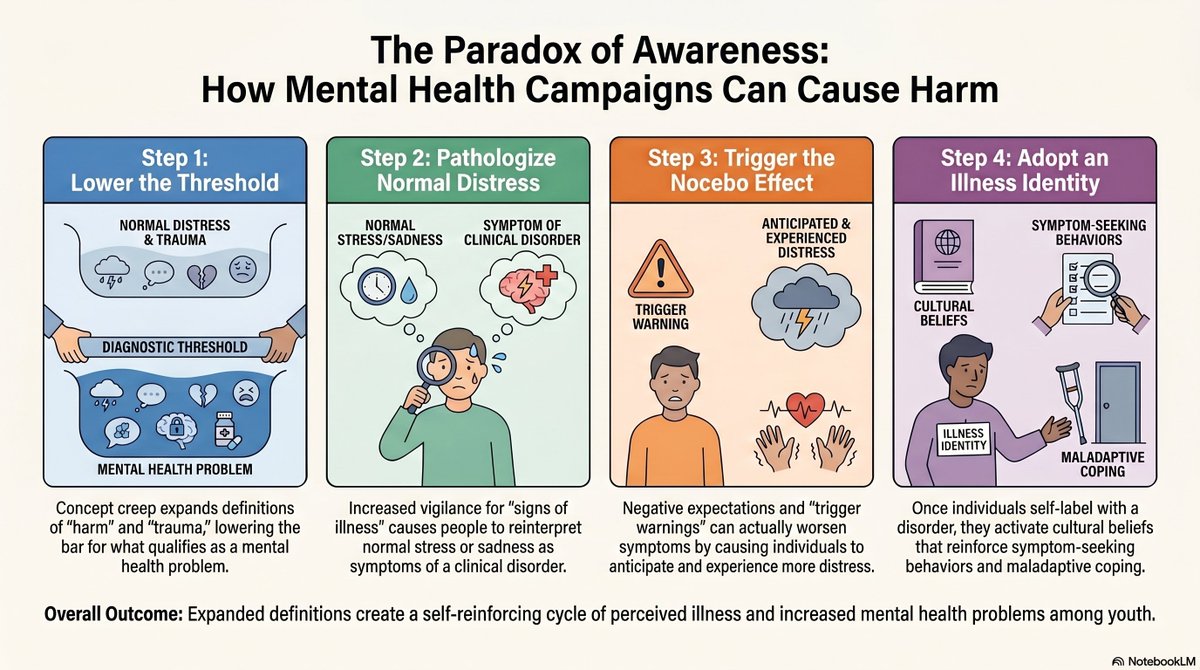
In a new paper by my PhD student Dasha Sandra, titled "Why mental health awareness can harm: Converging explanations for a societal problem", we argue that well-meaning mental health awareness can backfire, and we identify how. Four separate literatures (concept creep, nocebo effects, prevalence inflation, and illness self-labeling) have been circling the same problem from different angles. We show they converge on three mechanisms:
1.Awareness lowers the threshold for what counts as a disorder.
2. It trains people to scan their inner lives for symptoms and reinterpret normal distress as pathology.
3. Once someone adopts an illness identity, they behave in ways that confirm and deepen it.
The evidence is wide. Learning that loneliness is harmful makes solitude feel worse. Learning that stress is harmful worsens well-being and performance. Awareness videos about fake conditions like "wind turbine syndrome" produce real headaches. Trigger warnings raise anticipatory anxiety without reducing distress.
This does not mean awareness should stop. It means awareness can have unintended consequences, including manufacturing the suffering it tries to prevent. Inoculating people against these mechanisms works, and we already have evidence it does.
Link to paper: michael-inzlicht.squarespace.com/s/The-psycholo…
English

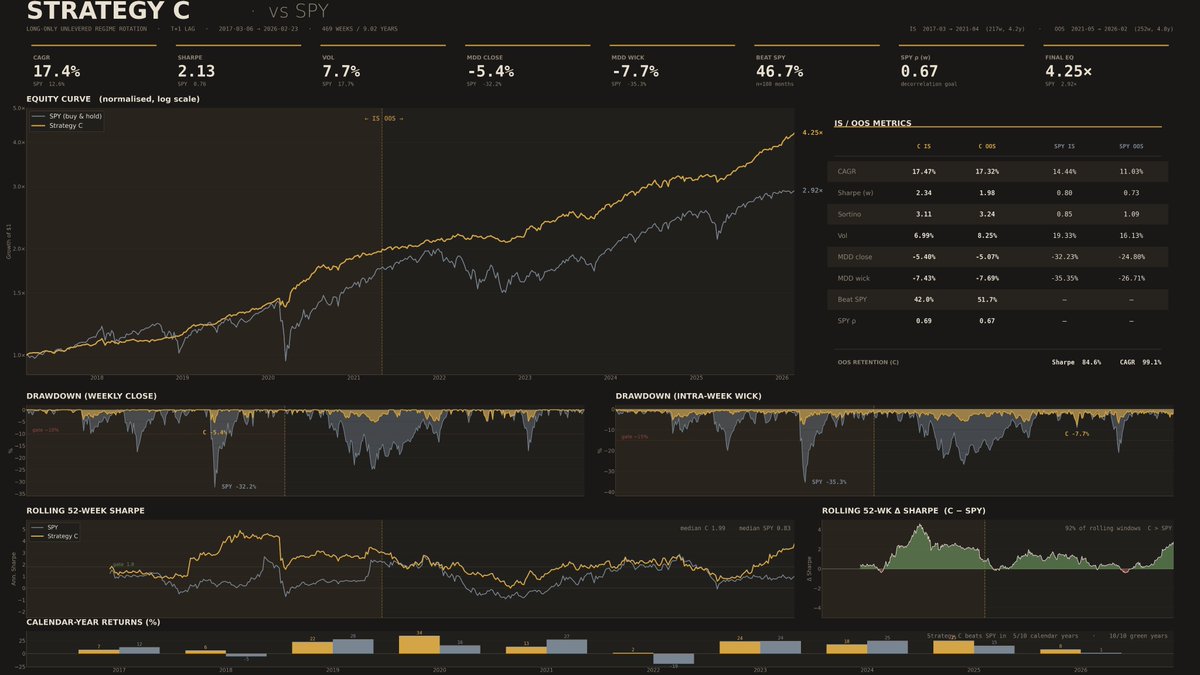
So - would any of you want this strategy for free? (though you are welcome to buy me a Guinness)
Beats buy-and-hold SPY with significantly less vol and shallower drawdowns. Unlevered & long-only.
I am not offering this purely out of the goodness of my heart but because I am already employing *much* stronger iterations of this and feel like many are paying absurd monthly fees for levered beta (although also a little out of the goodness of my heart)
If there is interest, I'll publish allocations/signals wherever is preferable
English
@DrMcFillin in the same way that some have identified the environment as obesigenic, modern work and entertainemtn are incentivised to be adhd-genic.
does the provenance (or degree) of a condition matter if the treatment produces a subjective and objective qol improvement
English

Let's talk about the greatest magic trick of all: convincing an entire generation that their inability to focus on mind-numbing busywork while surrounded by the most advanced attention-hijacking technology in human history is somehow a brain disorder. Your kid can't sit still for seven hours under fluorescent lights in a cinder block room memorizing state capitals? Must be ADHD! Your teenager can't focus on homework after spending six hours being bombarded by algorithmically-perfected dopamine hits from TikTok and Instagram? Clearly a neurological condition! You find it hard to read three consecutive pages of a book without checking your phone seventeen times? Definitely ADHD. We have lost our collective minds - literally.
English
@johnloeber component price inelasticity of demand
I wonder if there is a behavioural difference between the main event (the meal) and the bundled expenses (the ubers) and a tendency to think of the latter as more of a commodity
English

There's an interesting pricing issue where the all-in cost of something is often much more than the nominal cost of it, and so the nominal thing could actually be priced much higher, because the demand is so inelastic.
For example. Say I pay $10 to go to an event, but I pay $20 for an Uber there, and $20 for an Uber back. My all-in cost is $50. They could've made the event 50% or 100% more expensive and it would've barely moved the needle. I would've easily paid.
Or suppose I'm going to a restaurant, but I'm taking a Waymo there vs. walking there. One of the two is $60 more expensive than the other, but it has no impact on the actual meal. If the restaurant knew, they could price that in.
This reality is most revealed on DoorDash: the meal itself might cost only $20. But you're willing to pay another $15 to have it delivered. If you're willing to pay that, you're probably also willing to pay much more for the meal. This is why some DoorDash restaurants are absurdly expensive -- like $30 for a normal Indian curry -- because they've observed that the price of the dish doesn't really matter. Somehow the customer is already in a weird price-insensitive situation. They'll pay anything! They'll pay it on installments! (Really.)
English
@ItsWalterEgo wouldn't the curve smoothing reduction in volatility from taking profits early be compensated by the opportunity to leverage at a given max drawdown ?
English

@SanjayNadaraja @Digoxique @baibarsssssss @seconds_0 so what is the maximal carb storing de novo lipogenesis adaption in comparison to the <5% quoted?
English


The greatest infoblessing ive received in a long time was the actual mechanics on de novo lipogenesis
You essentially make no fat from carbs. You store what you consume from fat.
Jamal Dinkoui@BerbarianWizard
The body hates converting carbs to fat and only a very small fraction is turned into fat, often <5% in normal conditions. Even with high intake (~360–390 g carbs/day), studies show only ~3–8 g/day is produced via de novo lipogenesis, while ~60–75 g/day of fat can be stored. Most carbs are burned for energy or stored as glycogen. When carbs are high, fat oxidation is reduced, so the fat you eat is what gets stored. Fat gain in that context comes mainly from storing dietary fat, not from converting carbs into fat.
English

Cool person’s response to you voicing your dreams: “omgg yeess you got this go for it right now you amazing being i’m so happy for you in your pursuits and i feel that you can do it because i’ve done similar things and choose to have fun and create as well”
Uncool person’s response to you voicing your dreams: “ok that’s a cool idea so let’s just start thinking practically about how few people have achieved that and how you can take rational actions and suffer like everyone else for a while first and yeah maybe eventually it will happen perhaps”
English
@cozenom @RokoMijic guy in the 1400s concerned that he will be stuck in the permanent underclass once nation states form and property rights solidify, and he can't find new land to lord over
English

@RokoMijic "the permanent underclass" will enjoy higher standards of living than multi-millionaires of today and billionaires of 2000s.
English

I think the permanent underclass thing is probably true but it will take longer than people think.
You can see this phenomenon historically in places in northern England that lost their industry. Everyone went on benefits and lived in a council house. Okay, not everyone, but there are certain places where this became the modal outcome.
Many eventually miscegenated too, so now they don't even have their genetic heritage. And then it's a REALLY permanent underclass.
Liminal Warmth ❤️🔥@liminal_warmth
I wish everyone would chill out about the whole “you have X months to escape the permanent underclass” thing. It’s not true. It’s fake. You’re going to be okay. Things might feel stressful for a while but unless everyone actually dies we’ll figure it out.
English
@GianmarcoSoresi does the special not feel as good because i paid $0 to consume it alone
English

Another reason in the long list of why stand up comedy specials have gotten worse is once you’re on the road and have a fan base, you rarely have to INTRODUCE yourselves anymore. The audience comes with all the set up and it feels redundant to establish WHO you are
English
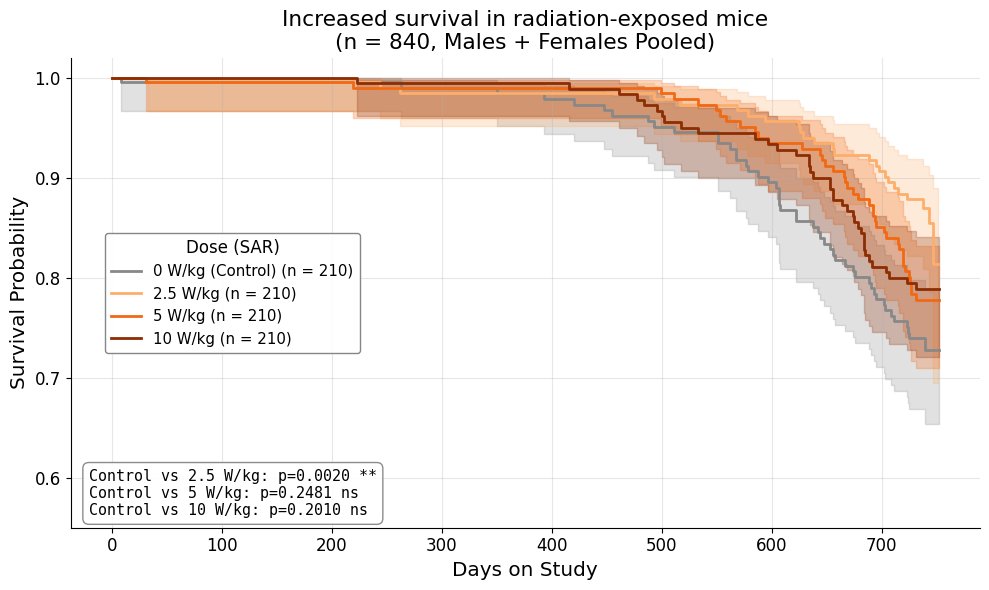

for a while i've had a slight fear that the bluetooth from my airpods could be frying my brain
this weekend i pulled the raw data from a $30m government study of 1,679 mice blasted with cell phone radiation and reanalyzed it
what i found was...not what I expected?
🧵
English
@mattyglesias @MattZeitlin as a blank slate my traits and beliefs are entirely coincidental
English

an actual clever criticism of cosmopolitan urbanites is that they view immigrant-heavy cities as a kind of foodhall of tasty bites in an often condescending way, but instead many online racists want to insist the food itself isn't good and everyone is pretending to like it
English
@DrJesseMorse @BenOgorek @siimland is this primarily due to injuries and frailty, or an actual protective effect of muscle mass
English

@BenOgorek @siimland No
Data shows muscle is the key, especially for women
English

Observational studies often find that being slightly overweight (BMI 25–28) is associated with lower mortality.
But when you control for reverse causation - where illness causes weight loss - and for the fact that lower-weight groups often include frail, malnourished, sedentary, or chronically ill people, that apparent benefit disappears.
PMID: 36756765
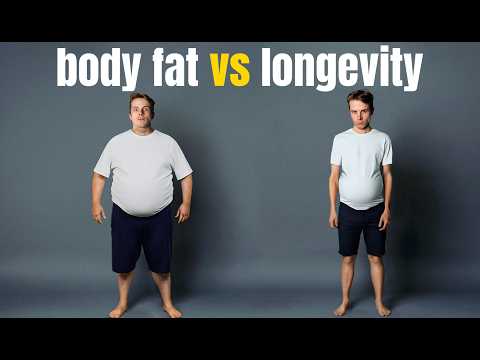
Full video about what the optimal body fat is for longevity: youtube.com/watch?v=Lz2h6l…
YouTube

English

I’ve always believed this is true and I once read that the perfect pop songs usually contain something so totally “imperfect” that it actually seems wrong, and this element of surprise and intrigue is somewhat irresistible for the listener. A similar rule applies to all art!
“forklift certified” em@cowlesbian
ai can’t write good because it’s designed to write pleasantly average sentences with all the right words in the right order and imho good writing requires u to strategically deploy a word that is wrong and maybe even evil
English