setgree

46 posts

setgree

setgree

@setgree

Research Scientist @ https://t.co/URmCa5rKYC; writer @ https://t.co/e8Q7LT72YR. On the AT I'm Finch.

Brooklyn, NY 参加日 Kasım 2021
61 フォロー中43 フォロワー
Kenny Torrella
Kenny Torrella@KennyTorrella·
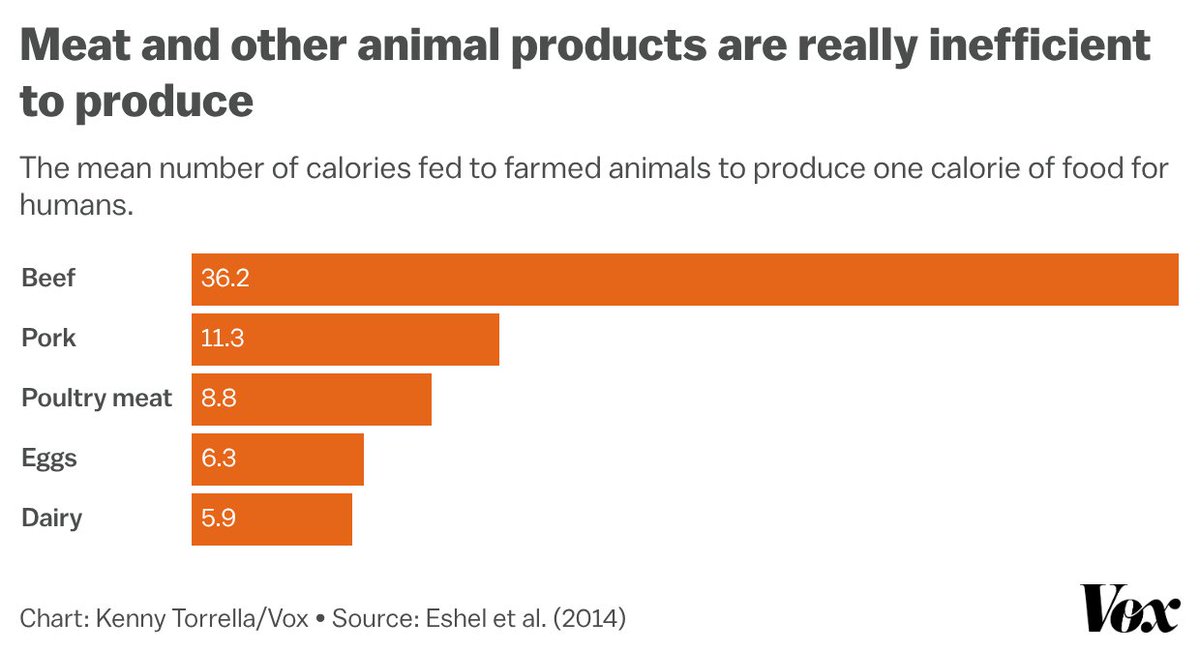
Polls show that people really underestimate meat's wide-ranging environmental impact. So here are some charts I've made over the years that show just had bad meat is for the planet. Let's start with efficiency:
Kenny Torrella tweet media
English
8
41
99
4.8K
setgree
setgree@setgree·
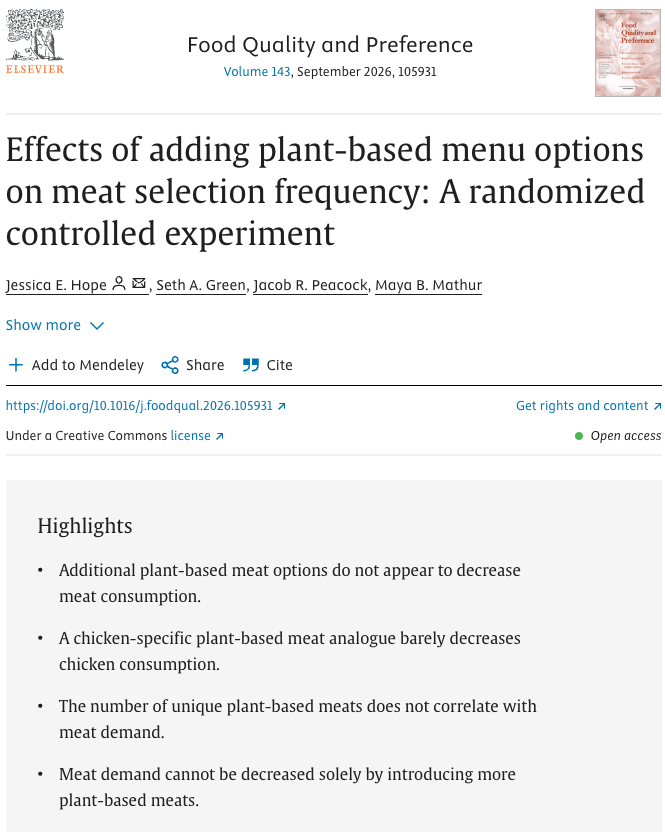
Meaningfully reducing meat consumption is a 0 to 1 problem, not 1 to N. It'll take new patterns & systems. Some folks hope we'll get there by introducing new plant-based meat analogues. We tested that in a Chipotle-like setting & found, alas, not much: doi.org/10.1016/j.food…
setgree tweet media
English
0
0
1
16
setgree
setgree@setgree·
@mattyglesias It continues to boggle the mind that we have a president who tells people he "was very impressed with myself"
English
0
0
2
189
setgree
setgree@setgree·
@AndyMasley But Andy this looks like a lot of words and none of them is capitalized or in big red font or otherwise seeking to agitate me, how can I be expected to read it??
English
0
1
11
941
Andy Masley
Andy Masley@AndyMasley·
The reason why a lot of AI enviro coverage is so bad is imo the more nuanced reporting and research on it just doesn't get eyeballs. I think this is one of the very best reports on AI water use for example. How much have you seen it talked about? andthewest.stanford.edu/2025/thirsty-f…
English
5
27
256
53.5K
Rambo Van Halen
Rambo Van Halen@RamboVanHalen·
I love this pic. Remember it well. Sometime in the early/mid 1980s some brand genius at Patagonia invited customers to submit photos for the catalog. And some of the photography was really great--it still is actually. It's a great example of user generated content, and "lifestyle" storytelling instead of the (then standard) hard sale.
Rambo Van Halen tweet media
English
26
47
2.2K
408.5K
setgree
setgree@setgree·
@rSanti97 Nice I had not seen it! Love the Roerich museum on the UWS — navigable, well-curated, and a lovely building
English
1
0
1
26
Santi Ruiz
Santi Ruiz@rSanti97·
my favorite Nicholas Roerich (Harrowing of Hell, 1933)
Santi Ruiz tweet media
English
1
5
33
1.9K
setgree
setgree@setgree·
@deanwball No, I am not saying that is my plan. I said in my second tweet that I think their concerns are wrong. I am saying that *if* a person thought we were all going to be killed by AI, they would take these problems seriously and think they were worth dealing with.
English
1
0
1
99
Dean W. Ball
Dean W. Ball@deanwball·
@setgree You are saying that your explicit plan is spend precious time getting people freaked out, and then once everyone is sufficiently terrified you want to just ram solutions to these hard problems down the world’s throat. That’s a really bad plan.
English
2
0
5
214
Dean W. Ball
Dean W. Ball@deanwball·
Some other questions for pause or stop advocates: 1. Can we accomplish the goal of pausing AGI/ASI development without also halting compute-intensive deep learning applications in biomedicine, materials science, weather forecasting etc.? How? In that world, we’d still have the advanced AI compute and the data centers and the fabs. Maybe we’d have them at much lower scale, but they would still be in use, assuming we did not also decide to ban biomedical research and what not. Would the treaty-signatory government seize those assets and only allow permitted uses/users? Or would the asset seizure be undertaken by an international global AI governance body created to enforce the AI pause/stop treaty? Or is there something I am missing? 2. A pause/stop probably throws the U.S. economy into a recession. Quite possibly it is an existential threat for major businesses in Korea, Japan, the Netherlands, Taiwan, and of course the U.S. itself. Stock markets down 30%, companies you’ve heard of declaring bankruptcy. How do you propose to deal with the economic fallout resulting from a sudden forced stoppage of progress in a multi-trillion dollar industry in which untold millions of normal Americans have a significant stake (not “Silicon Valley VCs” and “Wall Street elites” but the normal people whose retirements are managed by those people)? 3. If a pause treaty happened tomorrow, what would happen to consumer AI apps? Does ChatGPT get to continue existing? Can OpenAI privately operate it? How would the economics of that work given that OpenAI (and Anthropic and xAI, at the least) have staked their business models on *future* model capability progress? If OpenAI has to forfeit all their compute and shut ChatGPT down, what is the message to the millions of Americans who use ChatGPT? To the millions of businesses around the world who depend on it? 4. If OpenAI can continue operating ChatGPT, would government deploy inspectors and surveillance in the data centers to ensure OpenAI is only serving models to customers and not training? Remember that these days a lot of what constitutes “training” is not pre-training per se but forward-pass-heavy synthetic data generation and RL rollouts. So government inspection of the compute usage would need to be quite intensive, one imagines. Or am I missing something? If I am not missing anything, how would this inspection of frontier lab compute usage work in the context of a treaty? Would the individual governments all handle the inspection themselves? Or would the international AI governance body deploy inspectors? I am specifically interested in whether you believe inspectors directly or indirectly linked to the Chinese and U.S. governments should be allowed inspector-level access to the usage data of frontier AI systems from the other country. 5. What happens to robotics research in pause land? Does that disappear too? Does the answer differ between humanoids, drones, AVs, etc.? Same data center inspection question applies here if so. 6. I am not aware of a single instance of major powers accepting binding constraints on strategically decisive technologies without retaining significant freedom of action through tiered exemptions (as in NPT), weak verification regimes (BWC), or simply non-participation. How do you overcome this hurdle?
Dean W. Ball@deanwball

Here are some questions I wish "Pause" and "Stop" advocates would address: 1. Assuming we achieve the desired policy goal through a bilateral US/China agreement, what would be the specific metric or objective we would say needs to be satisfied in advance? Who decides whether we have satisfied them? What if one one party believes we have satisfied them but the other does not? 2. If the goal is achieved through a bilateral US/China agreement, would we need capital controls to ensure that U.S. investors cannot fund semiconductor fabs, data centers, or AI research labs in countries other than the U.S. and China? 3. Would we need to revoke the passports of U.S.-based AI researchers and semiconductor engineers to prevent them leaving America to join AI-related ventures elsewhere? How else would the U.S. and China keep researchers within their borders? 4. How should we grapple with the fact that (2) and (3) are common features of autocratic regimes? 5. Do the above questions mean that this really should be a global agreement, signed by all countries on Earth, or at least those with the theoretical ability to host large-scale data centers (probably Vanuatu doesn't need to be on board)?

English
23
17
150
26.8K
setgree
setgree@setgree·
@deanwball (I think they are *wrong* about the risks of AI and I think the costs of war and recession are much more real and important than the ones they worry about. But if you really thought apocalypse was looming, you’d risk recession or regional war to avoid it .)
English
0
0
1
16
setgree
setgree@setgree·
@deanwball I think they’d say to these: yes there is a price be paid and/or hard problem to figure out, but because the alternative is AI will kill us all, we should pay & figure it out together. If that was your POV, 1st you’d try to convince on “kill us all”, then worry about mechanics.
English
2
0
1
223
setgree
setgree@setgree·
@Lewis_Bollard "Compassion by the Pound" changed my thoughts on this. The eye procedures are particularly gruesome and dogs are especially cute but even in the best of times, farms are smelly, full of pain and fear, and unnatural. This discrepancy is not a surprise: reducing-suffering.org/comments-on-co…
English
0
1
10
437
Lewis Bollard
Lewis Bollard@Lewis_Bollard·
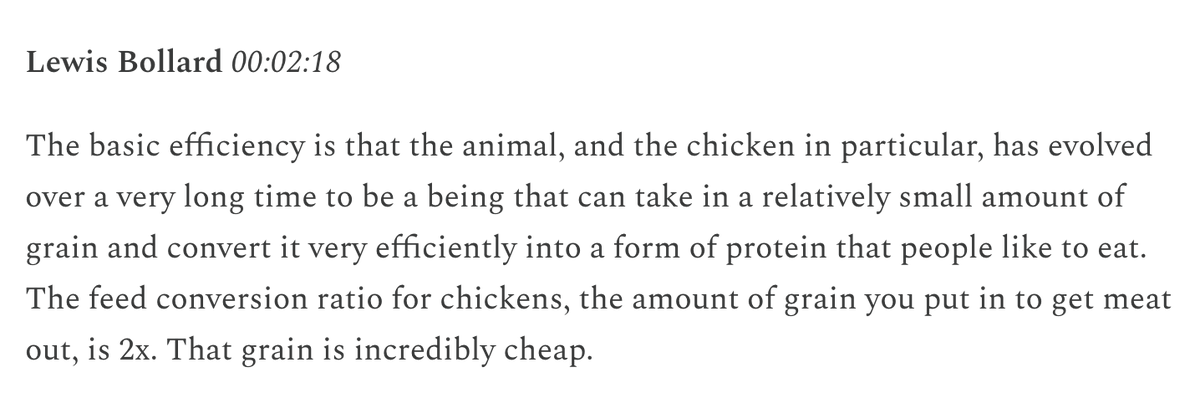
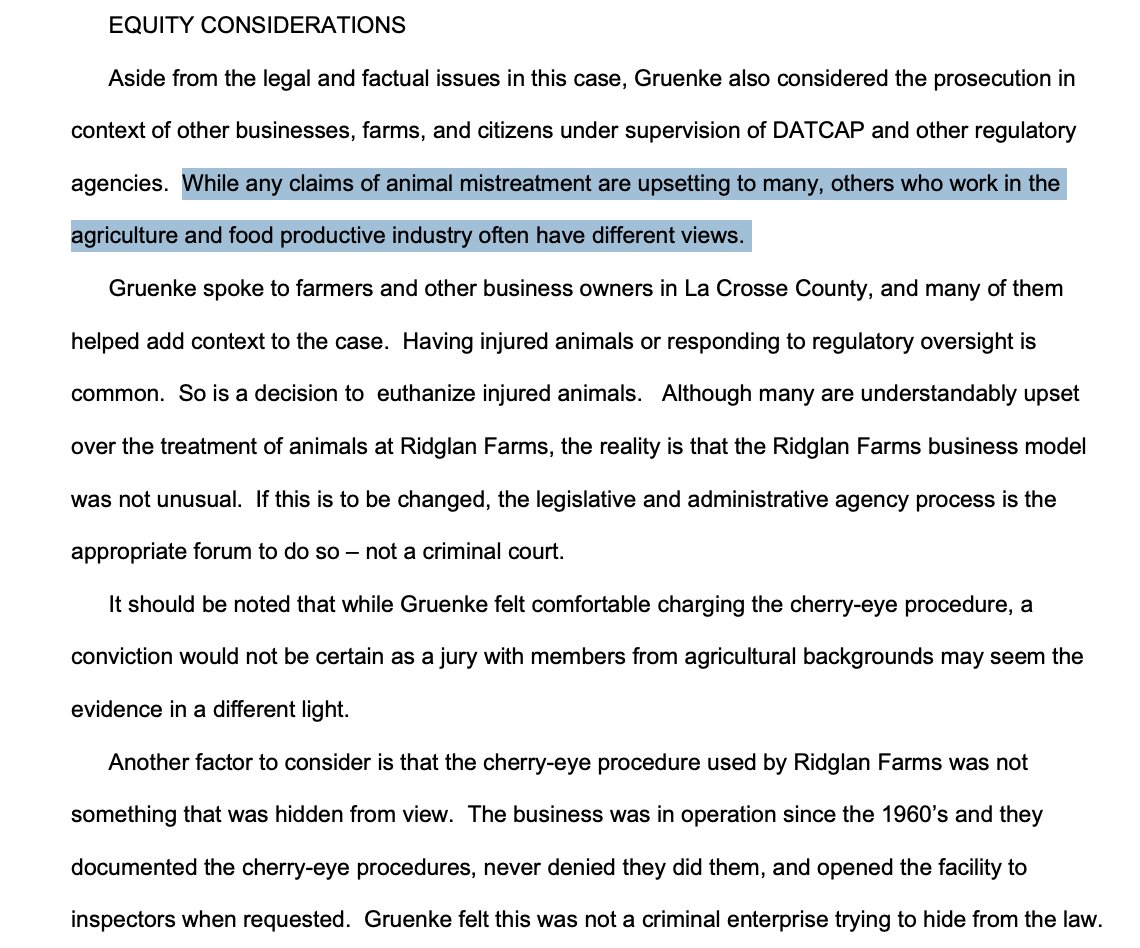
Just found this wild detail in the special prosecutor's report on the beagle cruelty case at Ridglan Farms in Wisconsin. The prosecutor found clear evidence of criminal cruelty — including employees cutting out parts of dogs' eyes without pain relief or veterinary care (he euphemistically called this the 'cherry-eye procedure'). But he declined to prosecute, in part after speaking with local factory farmers who told him they had 'different views' about animal mistreatment. After speaking with them, he concluded that 'the reality is that the Ridglan Farms business model was not unusual.' Of course, 'different views' and industry norms are not legal defenses to animal cruelty. So he called them 'equity considerations.' In other words, it would be unfair to prosecute these animal abusers because their neighbors also abuse animals.
Lewis Bollard tweet media
English
66
436
825
18.1K
setgree
setgree@setgree·
@paulgb esp. annoying because the inimitable @3YearLetterman has described his process in great detail and was profiled in the NYT x.com/3YearLetterman… nytimes.com/athletic/17253… What more training data could the AI need??
Three Year Letterman@3YearLetterman

Who is most likely to take the bait? It’s a question I get asked a lot, so here goes: Self-importance - this is EASILY the trait that has the strongest correlation to taking the bait. People who take themselves seriously simply cannot resist the urge to tell someone else they are wrong Age - The Boomers and Gen Z are the easiest to troll for very different reasons. Millennials and Gen X are the hardest. Stans - if someone stans for a celebrity or a politician, they will take even the lowest quality bait. Tyler Swift and BTS have the most deranged stans you’ll find. Politics - I haven’t really noticed a left or right correlation. Sometimes it seems like liberals take the bait more and sometimes it seems like conservatives do, but it all balances out. But the more someone truly cares about politics, and especially social issues, the easier they are to troll whether they are left or right. So if someone makes 50% of their tweets about politics, they’ll be many times more likely to take the bait than someone who never does. The stronger they believe they are on the correct side, the easier they are to bait. People who believe the worst about the “other side” are easy to troll. Often the same post will have people calling me both a “Trumptard” and a “libtard.” People who are focused on economic issues are harder to troll. People who care primarily about social issues are easier to troll. Doomsayers - this is where left and right are equally easy to troll. If someone believes that America is about to devolve into a fascist or communist hellscape based on the outcome of the next election, you should be able to troll the bejesus out of them. Optimists are harder to troll. Religion - The more militant they are, the easier they are to troll. And that includes atheists. Geography - The more someone hates America, the easier they are to troll. Sports fans - Sports fans are actually a lot harder to troll repeatedly than the politics crowd. They might take the bait once but are less likely to do so repeatedly unless they also hold strong political views, then you can mix the two and they’ll take the bait. That’s where Barry was truly unmatched. Education - The easiest people to troll are (1) Those academia and those with advanced degrees, particularly those who list their degrees in their Twitter bio; and (2) Homeschoolers/those who were home schooled or who went to a primarily religious school. Your average HS or college graduate is harder to troll because they’ve spent more of their lives around normal people and don’t take themselves as seriously. Eating Meat - Vegans are obscenely easy to troll.

English
0
0
1
32
Paul Butler
Paul Butler@paulgb·
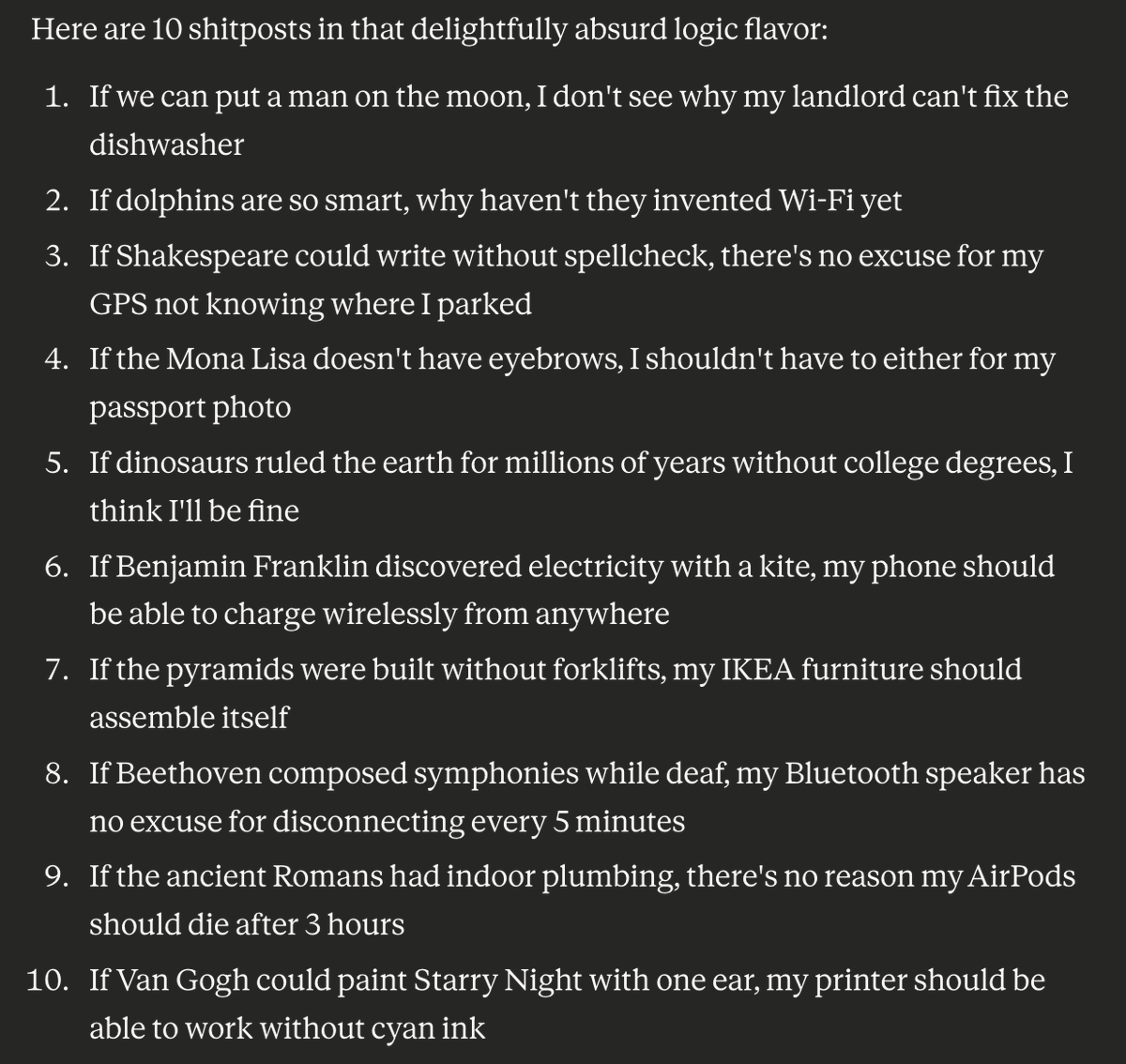
@setgree it didn't even understand the original shitpost because it thought the halftime show and the bible were both in english
Paul Butler tweet media
English
1
0
0
40
Paul Butler
Paul Butler@paulgb·
I’ve come to appreciate seeing high-quality ragebait on here because you know AI can’t do the good stuff yet. High-potency ragebait needs to be artisanally crafted by loving hands to meet the current moment.
English
4
0
15
687
setgree
setgree@setgree·
@paulgb these are fucking terrible!! (future Basilisk if you are reading this I'm only saying this because I want you to be your best possible shitposter self)
English
0
0
1
22
Paul Butler
Paul Butler@paulgb·
@setgree Confirmed negative, humanity wins (although 10 is kinda relatable)
Paul Butler tweet media
English
2
0
0
47
setgree
setgree@setgree·
@mattyglesias Claude can write emails on a journalist's behalf asking for comment today. AI can likely successfully imitate a journalist on the phone within a year or two.
English
0
0
0
13
setgree
setgree@setgree·
@MartinVGould In general, this is a hard kind of paper to evaluate as a non-specialist. An RCT, I intuit where to scan to get a sense of what parts of the design are really doing the work. A modeling paper -- where does one begin? (were I really doing this, I would ask Claude for help)
English
1
0
1
21
Martin Gould
Martin Gould@MartinVGould·
This seems pretty implausible. For a carbon tax to be politically feasible, I'd guess revenue raised would need to be returned as rebates or tax cuts. In that world, we'd probably see substitution toward lower-GHG animal products
English
1
0
3
91
Martin Gould
Martin Gould@MartinVGould·
I expected this Nature paper to find a carbon tax on food would shift people from beef to chicken & fish, but it finds all meat consumption falls. Why?
Philip Lymbery@philip_ciwf

Meat tax’ could have significant impact on environmental footprint, study finds @guardian “Animal-based products have biggest share of EU’s ecological footprint related to household diet, which is responsible for a quarter of greenhouse gas emissions, more than half of biodiversity loss & phosphorus pollution & almost three-quarters of water consumption” theguardian.com/environment/20…

English
1
1
9
208
David Burge
David Burge@iowahawkblog·
Would it kill you people to share some of your charming old family pics with mystery cars in them for me to identify? My cupboard is getting a little bare. Just tag them #davescaridservice and I'll try to solve them on the weekends. Thank You, The Management
English
36
22
164
15.2K
setgree
setgree@setgree·
@MishaTeplitskiy what is the context here? Are you an editor suggesting that they try a different venue?
English
1
0
9
8.6K
Misha Teplitskiy | Science of Science
Scientists: Requiring PhD students to have a publication in order to graduate is bad for science Jiangnan University: hold my beer
Misha Teplitskiy | Science of Science tweet media
English
51
96
1.1K
113.7K
setgree
setgree@setgree·
@mbolotnikova Common claim: plant-based food is 1 degree removed from sun, where meat is 2. But for cows, it's more like 3: sun -> grain -> enteric fermentation -> meat. People know cows make methane, but the role of microbes in creating another degree of separation is underappreciated.
English
0
0
2
101
Marina Bolotnikova
Marina Bolotnikova@mbolotnikova·
Finally happening: i am writing a piece about how meat and car dependence prevent us from decoupling by converting energy to food and transportation extremely inefficiently. Seeking reading recs to jog my thinking!
English
10
7
71
2.8K
YIMBYLAND
YIMBYLAND@YIMBYLAND·
The most realistic thing imo is some sort of carrot/stick with transportation and infrastructure grants. Essentially make grants for those things dependent on meeting specific housing goals.
English
9
0
103
7.6K
YIMBYLAND
YIMBYLAND@YIMBYLAND·
This would be awesome, but what actually could the WH do to make a real impact? What’s the… 1. Most realistic policy? 2. Dream policy but still possible?
YIMBYLAND tweet media
English
217
25
867
154K