Systems Mind
460 posts

Systems Mind
@systemsmind
Systems, the most powerful force known, impact everything, though unseen unless sought after. (RTs and likes do not imply endorsement.)
参加日 Ocak 2021
1.5K フォロー中136 フォロワー

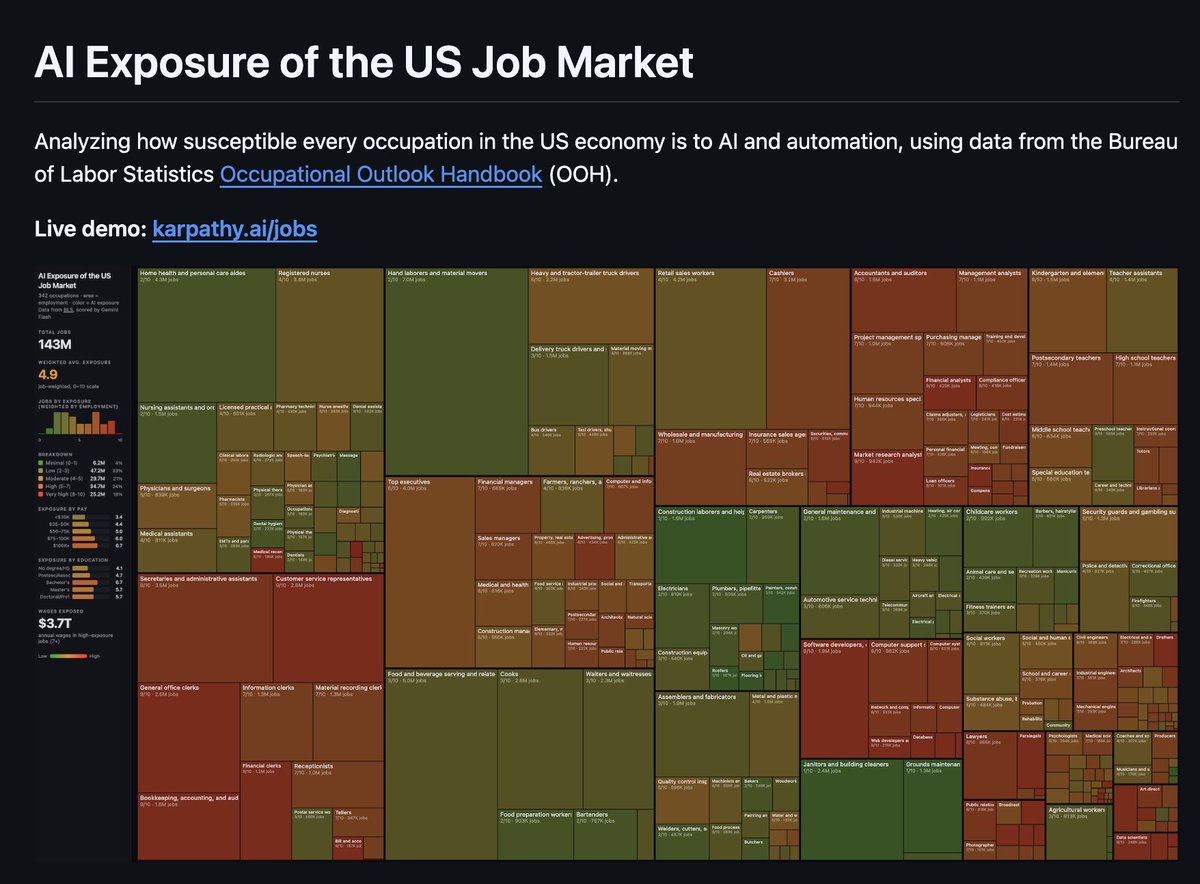
5 minutes ago, @karpathy just dropped karpathy/jobs!
he scraped every job in the US economy (342 occupations from BLS), scored each one's AI exposure 0-10 using an LLM, and visualized it as a treemap.
if your whole job happens on a screen you're cooked.
average score across all jobs is 5.3/10.
software devs: 8-9.
roofers: 0-1.
medical transcriptionists: 10/10 💀
karpathy.ai/jobs

English

@noahzweben Nothing shows up in my iOS Claude app even though I already started Remote Control - why?
English

Alright - rolled out to 100% of Max. Please update to 2.1.52.
DM me any feedback. But first - go touch grass 🎋🌴🌳
Noah Zweben@noahzweben
Announcing a new Claude Code feature: Remote Control. It's rolling out now to Max users in research preview. Try it with /remote-control Start local sessions from the terminal, then continue them from your phone. Take a walk, see the sun, walk your dog without losing your flow.

English

I tried Codex 5.3, and in a direct comparison with Claude Code it comes across as pretty socially awkward. It feels like the planning mode is noticeably worse than Claude’s, and Claude understands what you want faster. With Codex, I had to ask follow-up questions more often.
For example: “Do you understand the problem? I don’t think you even know what this is about. Repeat what we’re actually trying to do.”
Codex also feels kind of trigger-happy, and you have to spend more effort making sure it actually understood what you want. That isn’t the case with Claude Code.
English

That seems very optimistic to me. People are not paid for the work they enjoy doing, but for work that creates economic value.
So the question is not: “What would you like to do, and you’re guaranteed to be paid for it?”, but rather: In a world in which AGI exists, what kinds of work can humans still do that provide added value large enough compared to AI that someone will pay for it?
And how many people are even intellectually capable of providing that added value? For many, that presumably won’t be the case. So what do the people who can no longer do that do?
It’s not as if the laws of our economy suddenly change. Behind every salary someone receives is a company that pays that salary. Why would a company pay people money if they don’t provide any added value?
I therefore reject the core assumption that just because I enjoy doing something, someone exists who will pay me for it. The big risk, in my view, is rather that large parts of the population will no longer be able to provide any added value at all. And why would anyone still pay them then?
English

It's very refreshing to hear what Ray Kurzweil says - and he's right.
Many people simply don't find fulfillment in their professional work and want to retire as soon as possible.
If it really comes to pass that AI and robotics take all the *tedious* work off our hands (and I don't see why it shouldn't), it would allow everyone to pursue the work they want—not because they have to. Many people work in jobs not because they want to, but because they depend on the wages.
In that sense, AI represents an immense release of energy and creativity. Humans aren't "lazy creatures," but rather those who work to develop and express themselves. And freed from tedious work, one can dedicate oneself to the work that appeals to them.
Just consider all the diverse projects the entire open-source community has developed to date. That's just a small sample of what people are capable of when they do what they love.
And as a little hint: So far, Ray Kurweil's predictions have been very accurate.
Peter H. Diamandis, MD@PeterDiamandis
Retirement will become obsolete.
English

I started reading the Bible for myself. No pastors, no church filter. John 16:4–15 caught my attention—what does it really say?
Jesus says he must leave so that the “Spirit of Truth” can come. He explains something intriguing: The Spirit will reveal truth by showing humanity their real issue (sin), true alignment (righteousness), and exposing false systems (judgment).
“Sin,” Jesus defines explicitly: It’s not about moral failure, but a fundamental misalignment—“they do not believe in me.” Original Greek clarifies this beautifully: “hamartía” (sin) literally means “missing the mark,” and “pisteúō” (believe) isn’t mere belief but a deep trust, alignment, and resonance with truth itself. In other words, our core human problem isn’t immorality; it’s being disconnected from truth, from God’s fundamental order.
“Judgment” isn’t about a distant courtroom drama, but something immediate and constant—truth continuously exposes and dismantles falsehood. “Krisis” (judgment) in Greek means “separation, decision, revealing what’s real.” The text explicitly says the false ruler (the system of deception) is already judged, disempowered through truth itself.
Jesus describes himself as “the truth” (John 14:6). He’s not reducing God to an abstract principle; he’s personalizing God’s underlying order. Jesus isn’t merely teaching morality; he’s revealing the fundamental, functional principles of reality—truth as a coherent system that works consistently.
The “Spirit of Truth” isn’t just religious poetry. It’s an inner mechanism that helps humans realign continually with reality. It reveals the consequences of actions, the inner logic of truth and lies, and provides direct experiential resonance—clarity, courage, peace—as proof that one is aligned.
Essence:
•Sin is misalignment from truth.
•Righteousness is living in alignment.
•Judgment is continuous truth-exposure.
•Jesus personalizes divine reality; the Spirit makes it experientially real within us.
English

You’re missing what the cross is actually doing. It isn’t a sadistic God demanding pain; it’s God resolving the clash between real freedom, real justice, and real love.
1) The problem:
God gave us genuine freedom. We used it to violate His order (truth, love, life), which creates separation and guilt. If God simply ignores that, justice and truth collapse; if He eradicates evil, He eradicates the children He loves. Neither option fits a perfectly just and loving God.
2) The bridge:
To keep justice real and mercy real, without overriding our freedom, God chooses to enter His own world as Jesus. He lives in perfect alignment with the good and then voluntarily bears the full consequence of human evil. That’s not the Father torturing a third party; it is God in Christ absorbing the fallout Himself.
3) What this accomplishes:
•Justice is upheld: the moral order isn’t waved away.
•Love is maximized: God shoulders the cost Himself.
•Freedom remains: we are not coerced; we can accept or refuse reconciliation.
At the cross, human violence and divine love collide—and love refuses to retaliate. The resurrection shows that love, not death, has the final say. So forgiveness isn’t a cheap decree; it rests on an act that publicly vindicates justice and opens transformation.
4) What changes for us:
Anyone who trusts Christ and walks in His way steps back into union with God. Actions still matter; consequences are not erased but transformed—from condemnation to restoration.
Summary:
God didn’t cancel the rules or delete His children. He entered the system, bore the consequence, and reopened the way home—so justice stays real, mercy becomes possible, and freedom stays intact.
English

I started reading the Bible for myself.
No pastors, no church filter.
John 14 : 1–14.
What does it really say?
Jesus says he’s going to prepare a place.
Not a physical location; it’s about restoring the direct connection between God and humanity.
His return to the Father reopens the channel, ending the separation.
“I am the way, the truth, and the life.”
Way = the logic of alignment.
Truth = coherence with divine structure.
Life = the energy released by this coherence.
Following him means operating within the same logic as God himself.
“Whoever has seen me has seen the Father.”
The invisible structure of God becomes visible.
Father and Son share identical essence, source equals expression.
“You will do the works I do—and greater—because I go to the Father.”
His return doesn’t limit his work; it multiplies it.
When he reconnects with the source, the same power can act through everyone aligned with it.
“Greater” means scaled impact, same underlying essence.
“Whatever you ask in my name, I will do.”
“In my name” isn’t a formula; it means resonance with his nature.
When your intent aligns precisely with divine order, results follow—not as favors, but as logical consequences.
Essence:
John 14 describes the shift from external guidance to internal alignment.
The cross restores direct access.
Divine presence multiplies through the Spirit.
Faith isn’t belief as feeling—it’s participation in the structure that defines reality itself.
English

I started reading the Bible for myself. No pastors, no church filter. John 13—Jesus washing feet. What does it really say?
Scene: It’s the evening before Jesus is crucified. His final night with his inner circle. He stands up, lays aside his outer garments, kneels down, and washes his disciples’ feet—something considered beneath even a servant’s dignity. Peter protests: “Never! This is beneath you!” Jesus’ response flips the script entirely:
“If I don’t wash you, you have no part with me.”
What’s happening here?
At first glance, Peter seems loyal. He doesn’t want Jesus, his leader and king, performing such a menial task. But there’s a deeper logic:
Jesus isn’t simply being humble—he’s redefining what real authority looks like.
Greek nuances bring clarity: the verbs used—λούω (louō) for bathing and νίπτω (niptō) for washing—are carefully chosen. Bathing (λούω) symbolizes the one-time transformation when someone genuinely accepts the truth of Jesus and steps into relationship with God. Washing feet (νίπτω), however, symbolizes the daily necessity of staying connected, clear, and aligned. Eternal life isn’t a “one and done” situation—continuous alignment, self-checks, and truth encounters are necessary.
But why the feet?
Feet get dusty every day. Even if you’re fundamentally clean (transformed once), the daily grind leaves a residue. You need ongoing contact with truth, humility, and accountability. Jesus is teaching: it’s not about constant doubt or ritualistic anxiety—it’s a natural rhythm of continual recalibration.
Then comes Judas, the betrayer. “The devil had already put it into his heart.” Judas wasn’t a puppet; he chose to embrace deception. Just as God calls and humans respond, darkness offers and humans accept. Responsibility remains ours. It starts subtly, with a single internal agreement.
Jesus makes clear that being close outwardly means nothing without inward alignment. Judas was physically near, but spiritually distant.
And here’s the critical point: authority isn’t superiority—it’s responsibility. Those with true power willingly take the lowest position because they’re secure enough to serve. Insecure people demand respect and submission. Strong leaders provide protection, cleansing, and support.
Jesus says clearly: “I’ve given you an example—now do likewise.” Leadership means voluntary service, not enforced dominance. Peter initially misses the point, thinking he’s protecting Jesus’ dignity—but dignity for Jesus is precisely this radical act of loving service.
What’s this mean today?
Imagine politics, companies, families: leadership as responsibility. Parents sacrificing ego for the real good of their children, bosses nurturing employees’ growth above their own interests, communities shaped by selfless care rather than status anxiety.
Jesus’ action here is a radical restructuring of how we see authority, leadership, and love.
Essence:
🔑 Authority proves itself by willingly serving first.
🔑 Eternal life is once-received, but daily sustained.
🔑 Love (agápē) is deliberate, active commitment—not feeling.
🔑 True power cleanses and protects; false power dominates.
Essence: Leadership is responsibility. Love cleanses daily. Authority serves first. Agápē defines greatness.
English

@WDemograph73569 Now, make an educated guess about which areas have the highest percentage of Māori.
English

I started reading the Bible for myself. No pastors, no church filter. Johannes 12,27–36. What does it really say?
Jesus openly admits he's deeply troubled, knowing his crucifixion and suffering are imminent. Surprisingly, he states this suffering is exactly the reason he came into the world. A divine being embracing a painful death—why?
When Jesus prays, "Father, glorify your name," this request initially seems odd, almost selfish. But examining the original Greek (δόξασόν σου τὸ ὄνομα), we understand it’s about revealing God's true essence: his ultimate character of truth, justice, and love. God audibly responds, confirming he has glorified it before and will do so again—pointing directly to the cross as the ultimate revelation of his true nature.
Then comes the heart of this passage: Jesus announces that at this very moment, judgment has come upon the world, and crucially, that the "ruler of this world" (the devil) is about to be cast out (ἐκβληθήσεται ἔξω). This phrase carries strong legal and exorcism imagery—indicating a decisive, authoritative action to remove Satan’s power.
But what authority did Satan originally have? Biblically, he's known as the "accuser"—the one who legitimately pointed out humanity’s guilt and separation from God, keeping humanity trapped by valid accusation and genuine guilt. Before Jesus, humans had no permanent way back to God. Temporary measures existed, but they were symbolic and provisional.
With his innocent death on the cross, Jesus fundamentally dismantles this system. He fulfills all legal requirements, fully satisfying the claims of justice against humanity. Satan’s legal accusation no longer holds—Jesus paid humanity’s debt completely. After the cross, Satan’s authority collapses. He can no longer legitimately accuse; his basis for authority has vanished.
Yet, deception remains Satan’s tool. Unable to legitimately accuse, he now resorts entirely to misleading humans, convincing them either that God doesn't exist or that Jesus' sacrifice was irrelevant. His only strategy is to deceive people into ignoring or rejecting the open gateway provided by Jesus.
Thus, belief in Jesus isn't merely intellectual assent. Rather, it's about actively aligning oneself with him—entrusting one's entire identity and future into this new system. Genuine belief means genuine belonging to Jesus, effectively placing oneself within his sphere of righteousness and protection.
This alignment isn’t about achieving moral perfection through personal effort, but about authentic connection and trust in Jesus. This spiritual union transforms and liberates believers from guilt, accusation, fear, and eternal separation.
Essence:
Logically, the cross fundamentally reconfigures the cosmic justice system, removing Satan’s legitimate power as an accuser.
Existentially, humanity now faces a critical choice: either align with Jesus and enter the new system of grace, or remain deceived, trapped outside by the illusion Satan perpetuates.
Practically, true belief is about genuine connection and relational trust in Jesus, not moral perfectionism.
Spiritually, authentic alignment restores a lasting connection with God, freeing humans from guilt, fear, deception, and eternal darkness.
English

I started reading the Bible for myself. No pastors, no church filter. John 11 — the Lazarus scene. What does it really say?
A man is dying.
His sisters beg Jesus to come.
He waits two full days before moving.
By the time he arrives, Lazarus is four days in the tomb.
Everyone thinks it’s over.
But Jesus says:
“This sickness will not end in death, but it is for the glory of God.”
At first it sounds cruel — like divine negligence.
But the delay is the point.
If help came instantly, there’d be no room for faith.
No waiting → no trust.
No brink → no gravity.
You only feel the weight of reality when your own strength is gone.
And that’s what “glory” really means.
In Greek doxa, from Hebrew kavod — weight, density, truth itself.
To “see God’s glory” isn’t to watch magic.
It’s to feel the ground of reality become heavy and real.
Glory = when truth stops being theory and becomes undeniable presence.
Faith isn’t wishful thinking.
It’s the openness that makes truth perceptible.
Not see → believe, but believe → see.
If you demand proof first, you stay blind to what’s already true.
And crucially — God doesn’t cause the crisis.
He uses it.
He lets them reach the end of themselves
so they can encounter what was always there.
Waiting isn’t punishment; it’s calibration.
It breaks control so reality can take shape.
Divine timing isn’t delay — it’s design.
It’s how truth gains weight.
English

We recently had our first daughter and had originally planned to go to a birthing center. Instead, we ended up in a hospital. I'm very skeptical of unnecessary medical intervention, but looking back now and considering what I saw during the birth, there's no way I would recommend anyone have their baby outside of a hospital.
That said, you should try to find a hospital with a labor ward that's run by midwives rather than doctors—it gives you the best of both worlds. No doctors rushing in and interfering with things that aren't a problem, but if something does go wrong, they're close by.
English

In two minds about home birth. I know most of them go beautifully: babies are born healthy, nothing goes wrong and it all feels very natural. But I don’t know that I’d ever feel comfortable without a medical professional present.
My sister was born via emergency C-section after turning upside down in the womb, the umbilical cord wrapped around her neck and nearly strangled her. And just recently, I spoke to a woman at the gym who lost her baby during a home birth, even after being rushed to the hospital. Her own life was at risk too.
Even as someone who’s deeply skeptical of modern medicine (anti-overmedicalisation, pro-holistic approaches, anti-vaxx) I still believe emergency mechanical interventions are what medicine is for. Home birth is natural, but so was infant death during birth for most of history. Personally, that’s not a risk I’d be willing to take.
Curious to hear your thoughts.
English

Modern intimacy runs on a broken clock.
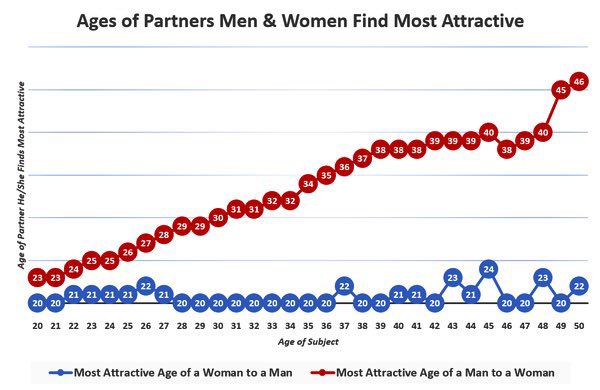
Biologically, men and women were never in sync to begin with. Men's desire runs on a steady hum—testosterone ticking daily, always idling. Women's arousal comes in monthly waves—spiking near ovulation, then ebbing. Two rhythms, built by evolution, never designed to line up.
Pre-modern societies grasped this—not as ideology, but as architecture. They built systems around the mismatch. Polygyny, temples, brothels, rituals—all mechanisms to redirect energy, absorb imbalance, and prevent collision. These weren’t moral statements. They were pressure valves.
Modernity tore it down. In the name of equality, we outlawed the infrastructure, kept the expectations, and ignored the biology. No substitutes, just prescriptions: spontaneous mutual desire, monogamy only, equilibrium on cue. The result? A trade-off: freedom for friction.
She gets space—“hormones happen.” He gets silence—his constancy pathologized as pressure or perversion. The empathy isn't mutual. The tension, now unbuffered, lands on couples unarmed: mismatched libido as midnight misfires, unspoken resentments, drifting bonds.
We misunderstood the old rules. Not as chains, but as ballast.
The path forward isn’t regression. It’s recognition. Not ideology, but design. Awareness over suppression. Honest dialogue over moralizing scripts. If desire unfolds asymmetrically, intimacy must be engineered, not assumed.
Freedom isn’t doing away with structure. It’s building better ones—with eyes open.
English

@pickleingsummer @MichaelAArouet Because the actual result would probably have been even lower, and people would not have been comfortable with that.
English