Dr. Tali Režun

707 posts

Dr. Tali Režun banner
Dr. Tali Režun

Dr. Tali Režun

@talirezun

Web3 & AI Scientist, Vice Dean at @COTRUGLI & Co-founder; @BlockLabsLux | @4thtechProject | @immu3_io | @PollinationX_io | @RecordedPodcast

Luxembourg 参加日 Mart 2009
688 フォロー中1.7K フォロワー
固定されたツイート
Dr. Tali Režun
Dr. Tali Režun@talirezun·
New Article from the From Lab to Life collection: Are We Becoming Obsolete, or Finally Free? "After 30 years in tech and research, I've reached a profound conclusion about our AI future. 'The future belongs to those who can effectively collaborate with artificial intelligence, not those who fear or ignore it.' But here's what most people miss: this isn't about becoming obsolete. It's about becoming more human. In my latest article from the 'From Lab to Life' collection, I break down complex AI developments into language everyone can understand. Because the future of AI shouldn't be decided by tech experts alone - it affects all of us. The transformation ahead offers an unexpected gift: the possibility of returning to what makes us most human. Meaningful conversations, empathy, community support - what I call the 'human touch' - this remains irreplaceable. AI may process information faster than any human, but it cannot offer the warmth of genuine human connection or the deep satisfaction that comes from meaningful relationships. I believe we're heading toward a world where humans become curators of experience, facilitators of connection, and guardians of meaning in an increasingly automated world. This is part of my #FromLabToLife series - simplifying complex technology so everyone can understand what's coming and how to prepare. Are we becoming obsolete or finally free? Read my full article: @talirezun/are-we-becoming-obsolete-or-finally-free-ed66a2ddc9a4" target="_blank" rel="nofollow noopener">medium.com/@talirezun/are… #AI #FromLabToLife #FutureOfHumanity #Technology #HumanPotential"
English

0
2
11
665
Dr. Tali Režun
Dr. Tali Režun@talirezun·
𝗚𝗼𝗼𝗴𝗹𝗲 𝗷𝘂𝘀𝘁 𝗿𝗲𝗱𝗿𝗲𝘄 𝘁𝗵𝗲 𝗺𝗮𝗽 𝗳𝗼𝗿 𝗔𝗜-𝗮𝘀𝘀𝗶𝘀𝘁𝗲𝗱 𝗱𝗲𝘃𝗲𝗹𝗼𝗽𝗺𝗲𝗻𝘁. 𝗧𝗵𝗶𝘀 𝘄𝗲𝗲𝗸. On March 19, 2026, Google made two announcements simultaneously — and most people only noticed one of them. The headline: @Firebase Studio is being sunset. Shut down by March 2027. 💡 The real story: @GoogleAIStudio is no longer a playground. Let me put this in context for my Chasing Jarvis students and the @COTRUGLI Vanguard community. Until now, Google's AI coding landscape was fragmented: → Google AI Studio = prompt testing, API experimentation, prototyping sandbox → Firebase Studio = full-stack browser-based development environment → Google @antigravity = the new agentic IDE, launched Q4 2025 Three overlapping tools. Confusing signals. Unsustainable. 𝗔𝘀 𝗼𝗳 𝘁𝗵𝗶𝘀 𝗺𝗼𝗻𝘁𝗵, 𝗶𝘁 𝗰𝗼𝗻𝘀𝗼𝗹𝗶𝗱𝗮𝘁𝗲𝘀 𝗶𝗻𝘁𝗼 𝘁𝘄𝗼 𝗰𝗹𝗲𝗮𝗿 𝗽𝗮𝘁𝗵𝘀: 👉 𝗣𝗮𝘁𝗵 𝟭 — 𝗚𝗼𝗼𝗴𝗹𝗲 𝗔𝗜 𝗦𝘁𝘂𝗱𝗶𝗼 (𝗿𝗮𝗽𝗶𝗱, 𝗯𝗿𝗼𝘄𝘀𝗲𝗿-𝗯𝗮𝘀𝗲𝗱) No longer just a playground. It now runs the Antigravity coding engine, integrates Cloud Firestore and Firebase Authentication natively, and deploys directly to Cloud Run or Firebase App Hosting. You describe an app in plain language. Gemini 3.1 Pro builds it — backend included — in your browser. Prototype to production, without leaving the interface. 👉 𝗣𝗮𝘁𝗵 𝟮 — 𝗚𝗼𝗼𝗴𝗹𝗲 𝗔𝗻𝘁𝗶𝗴𝗿𝗮𝘃𝗶𝘁𝘆 (𝗽𝗿𝗼𝗳𝗲𝘀𝘀𝗶𝗼𝗻𝗮𝗹, 𝗮𝗴𝗲𝗻𝘁𝗶𝗰) Launched alongside Gemini 3 in November 2025, built on technology from the Windsurf acquisition. This is Google's answer to Cursor and Claude Code — agent-orchestrated, local, code-first. Full control over your codebase, multi-model support (including Claude and open-source models), designed for high-velocity autonomous workflows. When AI Studio becomes too limiting, Antigravity is the migration path. Firebase Studio? Its lessons live on inside both tools. The environment itself retires. 𝗪𝗵𝘆 𝘁𝗵𝗶𝘀 𝗺𝗮𝘁𝘁𝗲𝗿𝘀 𝗯𝗲𝘆𝗼𝗻𝗱 𝘁𝗵𝗲 𝘁𝗼𝗼𝗹𝗶𝗻𝗴 𝗻𝗲𝘄𝘀: This consolidation reflects a broader pattern I have been tracking across the "From Lab to Life" article series. The "vibe coding" era — where non-technical builders could describe ideas and get working apps — is no longer an experiment. It is now a first-class Google product. At the same time, the agentic layer (Antigravity) is becoming serious infrastructure. Not autocomplete. Not a chatbot. Agents that plan, execute, debug, and deploy — with the human as orchestrator, not typist. For those of us who build without traditional development backgrounds: the gap between idea and deployed product has never been smaller. But the skill that matters — knowing what to build, how to frame it, how to direct the agent — that is context engineering. That is Phase 1. The tools are converging. The orchestration skill is yours to develop. If you are currently using Firebase Studio: migration tools are live now. Your databases, auth, and hosted apps are unaffected. The IDE is what changes. Which path fits your work — AI Studio or Antigravity? #FromLabToLife #AIAgents #GoogleAntigravity #ChingJarvis #VanguardMBA #AI #ContextEngineering
Dr. Tali Režun tweet media
English
0
0
0
29
Dr. Tali Režun
Dr. Tali Režun@talirezun·
Full article "Two Worlds of Code: The Gap Between AI Agent Orchestration and Legacy Development" link: @talirezun/two-worlds-of-code-the-gap-between-ai-agent-orchestration-and-legacy-development-936e2624266e" target="_blank" rel="nofollow noopener">medium.com/@talirezun/two…
English
0
0
4
23
Dr. Tali Režun
Dr. Tali Režun@talirezun·
𝗜 𝘂𝘀𝗲𝗱 𝘁𝗼 𝘄𝗼𝗿𝗸 𝘄𝗶𝘁𝗵 𝗼𝗻𝗲 𝗰𝗼𝗱𝗶𝗻𝗴 𝗮𝗴𝗲𝗻𝘁 𝗮𝘁 𝗮 𝘁𝗶𝗺𝗲. 👉 𝗢𝗻𝗲 𝗮𝗴𝗲𝗻𝘁. 𝗢𝗻𝗲 𝗰𝗼𝗻𝘁𝗲𝘅𝘁 𝘄𝗶𝗻𝗱𝗼𝘄. 𝗢𝗻𝗲 𝘀𝗲𝘀𝘀𝗶𝗼𝗻. Feed it the spec, give it a task, review the output, start the next session. It was revolutionary. I want to be clear about that. It changed everything for me as a non-developer building real products. Thousands of hours of work. Real applications shipped. But there was a ceiling. And when you hit it, you felt it immediately. Around the 70-80% mark of any serious build, things would start breaking down. The codebase had grown larger than any single agent could hold in its context window. Fix something in one module, break something in another. The agent had no memory of what the previous session had decided. Every new session started from a cold state — and no matter how carefully I engineered the handoff documents, something was always lost in translation. That was the 𝗦𝗼𝗹𝗼 𝗲𝗿𝗮. Revolutionary for small and medium stacs, but exhausting for bigger stacks. 👉 For the past two months, I have been living in something different. @augmentcode #Intent platform introduced me to a way of working I can only describe as a 𝘀𝘆𝗺𝗽𝗵𝗼𝗻𝘆. You no longer talk to a single coding agent. You talk to an orchestrator — an agent that holds the complete project specification in its context window (we now have models with 1M+ token windows) and uses it to direct a team of parallel worker agents. 𝗢𝗻𝗲 𝗼𝗿𝗰𝗵𝗲𝘀𝘁𝗿𝗮𝘁𝗼𝗿. 𝗙𝗼𝘂𝗿, 𝗳𝗶𝘃𝗲, 𝘀𝗶𝘅 𝘄𝗼𝗿𝗸𝗲𝗿 𝗮𝗴𝗲𝗻𝘁𝘀 𝗿𝘂𝗻𝗻𝗶𝗻𝗴 𝘀𝗶𝗺𝘂𝗹𝘁𝗮𝗻𝗲𝗼𝘂𝘀𝗹𝘆. Each with a laser-focused task scoped precisely enough that it cannot stray. When the workers finish, a review agent checks the code. A smoke test agent validates the output. The orchestrator synthesises the results and updates the specification in real time. No cold starts. No lost context. No 70% wall. The metaphor is not accidental. A solo instrument is powerful. But it has limits of range, tempo, and simultaneity that no amount of skill can overcome. An orchestra does not just play louder — it plays things that are structurally impossible for a single player. That is the difference between the two eras. What made the transition possible was not just better tools. It was the three-phase methodology I had already developed — Phase One being intensive research and context engineering before a single line of code is written. The orchestrator is only as good as the specification it is given. Give it a vague instruction and you get a vague result. Give it a structured, complete, well-researched specification, and you get something that genuinely resembles a professional development team in output quality and speed. The symphony needs a score. Writing that score is still the hardest and most important part of the work. 🔗 𝗙𝘂𝗹𝗹 𝗮𝗿𝘁𝗶𝗰𝗹𝗲 𝗶𝗻 𝘁𝗵𝗲 𝗰𝗼𝗺𝗺𝗲𝗻𝘁𝘀 — including the live case study, the code quality question, and the open question nobody has answered yet 👇 #FromLabToLife #AIAgents #AgentOrchestration #CodingAgents #FutureOfDevelopment #AI
Dr. Tali Režun tweet media
English
1
0
4
24
Dr. Tali Režun
Dr. Tali Režun@talirezun·
🔗 Full article "Two Worlds of Code: The Gap Between AI Agent Orchestration and Legacy Development": @talirezun/two-worlds-of-code-the-gap-between-ai-agent-orchestration-and-legacy-development-936e2624266e" target="_blank" rel="nofollow noopener">medium.com/@talirezun/two…
English
0
0
6
21
Dr. Tali Režun
Dr. Tali Režun@talirezun·
𝗢𝘃𝗲𝗿 𝘁𝗵𝗲 𝗽𝗮𝘀𝘁 𝗺𝗼𝗻𝘁𝗵, 𝗮𝗹𝗺𝗼𝘀𝘁 𝗲𝘃𝗲𝗿𝘆 𝗺𝗲𝗲𝘁𝗶𝗻𝗴 𝗜 𝘁𝗼𝗼𝗸 𝗳𝗼𝗹𝗹𝗼𝘄𝗲𝗱 𝘁𝗵𝗲 𝘀𝗮𝗺𝗲 𝗽𝗮𝘁𝘁𝗲𝗿𝗻. An entrepreneur. A founder. A client. All of them aware that something profound is happening in software development. All of them stuck at the same wall: they've seen the magic on social media, but they have no idea where to actually start. This vacuum of understanding is the gap I've been living inside — and my new article "𝗧𝘄𝗼 𝗪𝗼𝗿𝗹𝗱𝘀 𝗼𝗳 𝗖𝗼𝗱𝗲: 𝗧𝗵𝗲 𝗚𝗮𝗽 𝗕𝗲𝘁𝘄𝗲𝗲𝗻 𝗔𝗜 𝗔𝗴𝗲𝗻𝘁 𝗢𝗿𝗰𝗵𝗲𝘀𝘁𝗿𝗮𝘁𝗶𝗼𝗻 𝗮𝗻𝗱 𝗟𝗲𝗴𝗮𝗰𝘆 𝗗𝗲𝘃𝗲𝗹𝗼𝗽𝗺𝗲𝗻𝘁" is my attempt to map it. For the past two months, I've been deep in multi-agent orchestration: @augmentcode #Intent platform, where you don't talk to a single coding agent — you talk to an orchestrator that spins up parallel worker agents, review agents, smoke test agents. All running simultaneously. All aligned to a shared 𝐬𝐩𝐞𝐜 that lives in the orchestrator's context window. 💡 The metaphor I keep returning to: 𝘁𝗵𝗲 𝘀𝗵𝗶𝗳𝘁 𝗳𝗿𝗼𝗺 𝗮 𝘀𝗼𝗹𝗼 𝗶𝗻𝘀𝘁𝗿𝘂𝗺𝗲𝗻𝘁 𝘁𝗼 𝗮 𝘀𝘆𝗺𝗽𝗵𝗼𝗻𝘆. → The first era of coding agents was revolutionary. One agent at a time, inside an #IDE. It changed everything for non-developers like me. But it had a ceiling — context collapse at the 70-80% mark, where the codebase outgrew what any single agent could hold. Exhausting. → The second era is something qualitatively different. 𝗧𝗼 𝗺𝗮𝗸𝗲 𝗶𝘁 𝗰𝗼𝗻𝗰𝗿𝗲𝘁𝗲: Last month, I built a fully functional AI avatar deployment platform — live facial expressions, custom personas, real-time voice conversation, API injection layer — in a domain I had zero prior knowledge of. One week of research and context engineering. Three weeks of build. Not a headline. That's a data point about what the methodology now makes possible. But here's the part of the article I've been thinking about the most. This same project put me in direct contact with a traditional development team on the client side. Good developers. Professional. Technically capable. They had not held their first meeting to discuss the API spec by the time my side was ready to receive it. No blame. It's a structural difference. My orchestrator is the project lead — it has read the entire specification, knows all dependencies, runs standup asynchronously in real time, and updates the spec when something changes. These two worlds are not compatible. Not at a process level, not at a rhythm level, not at a documentation level. The gap is real. And it is widening faster than anyone is currently managing for. 𝗧𝗵𝗲 𝗮𝗿𝘁𝗶𝗰𝗹𝗲 𝗰𝗼𝘃𝗲𝗿𝘀: → Why the vacuum of understanding exists — and what it actually looks like → The two eras of coding agent work, and why the transition matters → The collision between orchestration-based development and a traditional team → The code quality question, answered honestly → How do these two worlds eventually merge? 𝗟𝗶𝗻𝗸 𝘁𝗼 𝘁𝗵𝗲 𝗳𝘂𝗹𝗹 𝗮𝗿𝘁𝗶𝗰𝗹𝗲 𝗶𝗻 𝘁𝗵𝗲 𝗰𝗼𝗺𝗺𝗲𝗻𝘁𝘀 👇
Dr. Tali Režun tweet media
English
1
1
8
39
Dr. Tali Režun
Dr. Tali Režun@talirezun·
💬 COMMENT #5 — STEP 5: The Marketing Layer 📌 STEP 5 — Build It. Then Reach People. "How I Built an AI Marketing Team That Actually Works: From Memes to Technical Content in Minutes" Building is only half the equation. Distribution is the other half — and most technical founders get it wrong. This article documents how I assembled a complete AI marketing system: visual content, social posts, technical articles, community engagement. Multiple AI tools working as a coordinated team, producing output at a scale no small team could achieve manually. The key insight: you design the system once, then direct it — the same mental model as the coding agents in Step 4, applied to marketing. If you've followed Steps 1–4, this is the layer that makes everything you've built visible. 🔗 @talirezun/how-i-built-an-ai-marketing-team-that-actually-works-from-memes-to-technical-content-in-minutes-87f646608c60" target="_blank" rel="nofollow noopener">medium.com/@talirezun/how…
English
0
0
7
32
Dr. Tali Režun
Dr. Tali Režun@talirezun·
💬 COMMENT #4 — STEP 4: The Orchestration Leap 📌 STEP 4 — From Developer to Intelligence Director "From Writing Code to Directing Intelligence: Five Days Inside @augmentcode #Intent" Most people ask: "How do I get AI to write better code?" That's the wrong question. The right question is: "How do I orchestrate multiple AI agents working in parallel toward a shared goal — and stay in control of the outcome?" This article documents five days inside Augment Code's Intent multi-agent platform. What I found, what surprised me, what broke, and why I now think of myself as an orchestrator of intelligence rather than a writer of code. This is the mental model shift that separates people who experiment with AI from people who build with it seriously. 🔗 @talirezun/from-writing-code-to-directing-intelligence-five-days-inside-augment-codes-intent-7b04863808bf" target="_blank" rel="nofollow noopener">medium.com/@talirezun/fro…
English
1
0
7
54
Dr. Tali Režun
Dr. Tali Režun@talirezun·
𝗧𝗵𝗲 𝗡𝗼𝗻-𝗗𝗲𝘃𝗲𝗹𝗼𝗽𝗲𝗿'𝘀 𝗣𝗹𝗮𝘆𝗯𝗼𝗼𝗸 𝗳𝗼𝗿 𝗕𝘂𝗶𝗹𝗱𝗶𝗻𝗴 𝘄𝗶𝘁𝗵 𝗔𝗜 𝗔𝗴𝗲𝗻𝘁𝘀 𝘍𝘪𝘷𝘦 𝘢𝘳𝘵𝘪𝘤𝘭𝘦𝘴. 𝘖𝘯𝘦 𝘤𝘰𝘮𝘱𝘭𝘦𝘵𝘦 𝘴𝘺𝘴𝘵𝘦𝘮. 𝘕𝘰 𝘤𝘰𝘮𝘱𝘶𝘵𝘦𝘳 𝘴𝘤𝘪𝘦𝘯𝘤𝘦 𝘥𝘦𝙜𝘳𝘦𝘦 𝘳𝘦𝘲𝘶𝘪𝘳𝘦𝘥. I've spent two years building real AI products — a conversational AI platform, a legal AI assistant, a booking engine — as a non-developer founder. The learning curve was steep. The failures were expensive. The breakthroughs were unexpected. I've distilled everything into five articles that form a complete, sequential learning path. Whether you're a @COTRUGLI Business School MBA student, a founder, or a professional who wants to understand how AI products actually get built, follow this path in order. ━━━━━━━━━━━━━━━ 👉 𝗦𝗧𝗘𝗣 𝟭 — 𝗟𝗲𝗮𝗿𝗻 𝘁𝗵𝗲 𝗠𝗲𝘁𝗵𝗼𝗱𝗼𝗹𝗼𝗴𝘆 𝗙𝗶𝗿𝘀𝘁 Every AI build I do follows a three-phase process refined over two years. Start here before anything else. → See Comment #1 👉 𝗦𝗧𝗘𝗣 𝟮 — 𝗪𝗮𝘁𝗰𝗵 𝘁𝗵𝗲 𝗣𝗿𝗼𝗰𝗲𝘀𝘀 𝗔𝗽𝗽𝗹𝗶𝗲𝗱 𝘁𝗼 𝗮 𝗥𝗲𝗮𝗹 𝗣𝗿𝗼𝗱𝘂𝗰𝘁 Zero to production in 30 days. A real platform, real decisions, real failures, real results. → See Comment #2 👉 𝗦𝗧𝗘𝗣 𝟯 — 𝗠𝗮𝘀𝘁𝗲𝗿 𝘁𝗵𝗲 𝗞𝗲𝘆 𝗧𝗲𝗰𝗵𝗻𝗶𝗰𝗮𝗹 𝗜𝗻𝘀𝗶𝗴𝗵𝘁 Why I abandoned hashtag#RAG pipelines entirely and what replaced them — the breakthrough that changed document-heavy AI applications. → See Comment #3 👉 𝗦𝗧𝗘𝗣 𝟰 — 𝗘𝗻𝘁𝗲𝗿 𝘁𝗵𝗲 𝗢𝗿𝗰𝗵𝗲𝘀𝘁𝗿𝗮𝘁𝗶𝗼𝗻 𝗘𝗿𝗮 Where coding with AI becomes directing intelligence. Five days inside an @augmentcode #Intent multi-agent platform — and the moment I stopped thinking like a developer. → See Comment #4 👉 𝗦𝗧𝗘𝗣 𝟱 — 𝗕𝘂𝗶𝗹𝗱 𝗬𝗼𝘂𝗿 𝗔𝗜 𝗠𝗮𝗿𝗸𝗲𝘁𝗶𝗻𝗴 𝗘𝗻𝗴𝗶𝗻𝗲 Once you can build, you need to reach people. Here's how I assembled a full AI marketing team that produces content at scale. → See Comment #5 ━━━━━━━━━━━━━━━ 💎 𝗪𝗵𝗮𝘁 𝘆𝗼𝘂'𝗹𝗹 𝘄𝗮𝗹𝗸 𝗮𝘄𝗮𝘆 𝘄𝗶𝘁𝗵: ✦ A proven three-phase build methodology ✦ A real 30-day case study, decisions and failures included ✦ Context engineering vs RAG — when and why to choose each ✦ How multi-agent orchestration changes your role as a builder ✦ A replicable AI marketing system This is not a theory. Every insight comes from building real products and documenting what actually happened. Save this. Share it with someone learning to build with AI. 👉 All five articles are in the comments below — one per step. 👇 Let's also open the forum in the comments 🔥 “What's your AHA moment experienced while following my playbook?” hashtag#FromLabToLife hashtag#AI hashtag#AIAgents hashtag#ContextEngineering hashtag#BuildWithAI hashtag#NonDeveloperFounder hashtag#MBA
Dr. Tali Režun tweet media
English
2
0
11
58
Dr. Tali Režun
Dr. Tali Režun@talirezun·
Most people pick their AI tool the wrong way. 🤔 They go with whatever's trending — and end up overpaying, underperforming, or (worse) leaking sensitive data. In Module 2 of Chasing Jarvis — our AI Agents course inside the @COTRUGLI Vanguard MBA — we teach 100+ students one of the most underrated skills in AI adoption: 𝗛𝗼𝘄 𝘁𝗼 𝗰𝗵𝗼𝗼𝘀𝗲 𝘁𝗵𝗲 𝗿𝗶𝗴𝗵𝘁 𝘁𝗼𝗼𝗹 𝗳𝗼𝗿 𝘁𝗵𝗲 𝗿𝗶𝗴𝗵𝘁 𝗷𝗼𝗯. The framework is simpler than you think. Three questions: 🔐 𝗣𝗿𝗶𝘃𝗮𝗰𝘆 𝗻𝗲𝗲𝗱𝗲𝗱? → Go LOCAL (@ollama, @lmstudio + open models like @MistralAI , @deepseek_ai, @Alibaba_Qwen). Your data never leaves your machine. 💰 𝗕𝘂𝗱𝗴𝗲𝘁 𝗰𝗼𝗻𝘀𝘁𝗿𝗮𝗶𝗻𝗲𝗱? → Start FREE. Almost every major tool — @claudeai, @GeminiApp, ChatGPT — has a free tier powerful enough to experiment and prototype. 🎯 𝗦𝗽𝗲𝗰𝗶𝗳𝗶𝗰 𝘂𝘀𝗲 𝗰𝗮𝘀𝗲? → Look SPECIALIZED. General models (Claude, GPT, Gemini) are Swiss-Army knives. But for voice? @ElevenLabs. Music? @suno. Avatars? @HeyGen. Purpose-built tools win in their domain. The key insight I share with every cohort: 💡 There is no "best" AI tool. There is only the right tool for your context. Master the framework — not the tools. In Module 2, we'll get hands-on with: → Qwen & LM Studio (run LLMs locally) → @huggingface (open-source model hub) → @github & @GitBookIO (code + docs + AI integrations) → @Cloudflare (AI on the edge) → @NanoBanana Pro, Veo → @claudeai Desktop Agent → VSCode + @augmentcode@augmentcode #Intent → Google @antigravity@Claude Code 🎓 To my #ChasingJarvis students: This module is where theory meets your actual workflow. Come ready to explore, break things, and decide what goes into YOUR personal AI stack. 🌍 To the broader community — I'm curious: 👇 𝗪𝗵𝗮𝘁'𝘀 𝘆𝗼𝘂𝗿 𝗻𝘂𝗺𝗯𝗲𝗿 𝟭 𝗰𝗿𝗶𝘁𝗲𝗿𝗶𝗮 𝘄𝗵𝗲𝗻 𝗰𝗵𝗼𝗼𝘀𝗶𝗻𝗴 𝗮𝗻 𝗔𝗜 𝘁𝗼𝗼𝗹? A) Privacy/data sovereignty B) Cost C) Best output quality D) Ease of use E) Integration with my existing stack Drop your answer + what tool you're currently using. Let's map the community's stack. 👇 #ChasingJarvis #AIEducation #COTRUGLI #VanguardMBA #ContextEngineering #AITools #LLM #LocalAI #FutureOfWork
Dr. Tali Režun tweet media
English
0
0
8
66
Dr. Tali Režun
Dr. Tali Režun@talirezun·
🔗 Full Article " Behind the Curtain: The Three-Phase Process I Use to Build Every AI-Coded Product" link: @talirezun/behind-the-curtain-the-three-phase-process-i-use-to-build-every-ai-coded-product-bf4671f2c4b4" target="_blank" rel="nofollow noopener">medium.com/@talirezun/beh…
English
0
0
6
38
Dr. Tali Režun
Dr. Tali Režun@talirezun·
𝗟𝗮𝘀𝘁 𝘄𝗲𝗲𝗸, 𝗜 𝗯𝘂𝗶𝗹𝘁 𝘀𝗼𝗺𝗲𝘁𝗵𝗶𝗻𝗴 𝗜 𝗵𝗮𝗱 𝗻𝗲𝘃𝗲𝗿 𝗯𝘂𝗶𝗹𝘁 𝗯𝗲𝗳𝗼𝗿𝗲. 𝗜𝗻 𝗮 𝗳𝗶𝗲𝗹𝗱 𝗜 𝗸𝗻𝗲𝘄 𝗻𝗼𝘁𝗵𝗶𝗻𝗴 𝗮𝗯𝗼𝘂𝘁. A client needed an AI avatar platform. Not a chatbot. A real-time audio and video avatar companion — one that listens, speaks, syncs lip movement, receives live API data, and can autonomously engage users without being prompted. Think less sci-fi, more quietly inevitable. I had never touched this space. No prior experience with Simli, HeyGen, or ElevenLabs integrations. No existing codebase to build from. Zero. So I followed my three-phase process to the letter. 👉 𝗣𝗵𝗮𝘀𝗲 𝟭 — 5 days of deep context engineering. I researched every available AI avatar service and framework. I mapped the architecture: how audio, video, and API data streams connect and sync in real time. I documented voice cloning options, face generation services, latency requirements, compliance considerations. By the end, I had a complete knowledge base — four technical documents — ready for my agent team. 👉 𝗣𝗵𝗮𝘀𝗲 𝟮 — 30 hours of building across 2 days. @augmentcode #Intent. Two coordinator agents. The first delegated work to 80 worker agents and delivered a working MVP dashboard. The second, now running, has already spun up 31 agents to refine and extend it. Because Phase 1 was thorough, Phase 2 was not chaos. It was construction. 👉 𝗣𝗵𝗮𝘀𝗲 𝟯 — Testing, debugging, and new feature discovery running in parallel. When you enter a new domain, you only fully understand what is possible once you start using what you built. The onion peels in production. I am still peeling. The platform now lets you build custom avatars — choose a face, clone a voice, fine-tune a personality to a specific subject. The avatars speak and listen in real time. They receive live data from external services and react to it. And when the heartbeat feature is enabled, they initiate conversations autonomously. Agent companions, not chatbots. One week. A domain I had never touched. A working MVP. The process works. Every time. 🔗 Full breakdown of the three phases in my latest article "𝗕𝗲𝗵𝗶𝗻𝗱 𝘁𝗵𝗲 𝗖𝘂𝗿𝘁𝗮𝗶𝗻: 𝗧𝗵𝗲 𝗧𝗵𝗿𝗲𝗲-𝗣𝗵𝗮𝘀𝗲 𝗣𝗿𝗼𝗰𝗲𝘀𝘀 𝗜 𝗨𝘀𝗲 𝘁𝗼 𝗕𝘂𝗶𝗹𝗱 𝗘𝘃𝗲𝗿𝘆 𝗔𝗜-𝗖𝗼𝗱𝗲𝗱 𝗣𝗿𝗼𝗱𝘂𝗰𝘁" — link in the comments. Have you tried building in a completely new domain with AI agents? What was your experience? #FromLabToLife #AI #AIAgents #AvatarAI #AugmentCode #ContextEngineering #ProductDevelopment #Builders
Dr. Tali Režun tweet media
English
1
1
7
62
Dr. Tali Režun
Dr. Tali Režun@talirezun·
Full article "Behind the Curtain: The Three-Phase Process I Use to Build Every AI-Coded Product" link: @talirezun/behind-the-curtain-the-three-phase-process-i-use-to-build-every-ai-coded-product-bf4671f2c4b4" target="_blank" rel="nofollow noopener">medium.com/@talirezun/beh…
English
0
0
6
28
Dr. Tali Režun
Dr. Tali Režun@talirezun·
𝗘𝘃𝗲𝗿𝘆 𝗱𝗲𝘃𝗲𝗹𝗼𝗽𝗲𝗿 𝗸𝗻𝗼𝘄𝘀 𝘁𝗵𝗲 𝗰𝗹𝗮𝘀𝘀𝗶𝗰 𝘀𝗼𝗳𝘁𝘄𝗮𝗿𝗲 𝗱𝗲𝘃𝗲𝗹𝗼𝗽𝗺𝗲𝗻𝘁 𝗹𝗶𝗳𝗲𝗰𝘆𝗰𝗹𝗲: Requirements gathering → Development → Testing and deployment Three phases. Decades of practice. The foundation of how the entire industry was built. AI coding agents did not replace this process. They transformed it. Here is what changed — and what stayed the same. 🔹 𝗣𝗵𝗮𝘀𝗲 𝟭: Requirements Gathering → Context Engineering 👉 𝗟𝗲𝗴𝗮𝗰𝘆: A business analyst interviews stakeholders. Requirements are written into a spec document. Handed to developers. Weeks pass. 👉 𝗡𝗼𝘄: You are your own analyst, architect, and researcher simultaneously. A research agent helps you build a foundational document covering market, technology stack, integrations, compliance, and architecture — in hours, not weeks. The output is not a requirements doc. It is a living knowledge base your entire agent team will reason from. 👉 𝗪𝗵𝗮𝘁 𝗰𝗵𝗮𝗻𝗴𝗲𝗱: speed and depth. What stayed: garbage in, garbage out. Weak context produces weak software, with or without agents. 🔹 𝗣𝗵𝗮𝘀𝗲 𝟮: Development → Build + Orchestration 👉 𝗟𝗲𝗴𝗮𝗰𝘆: Developers write code. Senior devs review. Junior devs implement. Tickets move across a board. Weeks to months. 👉 𝗡𝗼𝘄: You describe what you want to an orchestrator agent (e.g. @augmentcode, @antigravity ...). It writes a living spec, decomposes the work, and deploys a team of worker agents in parallel. You review, redirect, and maintain architectural judgment. The implementation burden shifts. The thinking burden stays with you. 👉 𝗪𝗵𝗮𝘁 𝗰𝗵𝗮𝗻𝗴𝗲𝗱: who writes the code. What stayed: architecture still requires human judgment. Always. 🔹 𝗣𝗵𝗮𝘀𝗲 𝟯: Testing & Deployment → Debugging + Security + Production 👉 𝗟𝗲𝗴𝗮𝗰𝘆: QA team tests. Bugs logged. Fixed. Deployed by DevOps. Security audit, if you were lucky. 👉 𝗡𝗼𝘄: Debugging is still the most exhausting part — half-manual, half-agent, fully necessary. But the security audit is no longer optional or outsourced. I run three audits with three different AI models before anything goes live. Each one finds something the others miss. 👉 𝗪𝗵𝗮𝘁 𝗰𝗵𝗮𝗻𝗴𝗲𝗱: security is now built into the process, not bolted on. What stayed: you cannot skip testing. The environment just got faster and more capable. — The phases did not disappear. They evolved. The developers who understand both the legacy process and its AI transformation will build things the rest of the world cannot yet imagine. Full breakdown in my latest From Lab to Life article — link in the comments. Which phase do you find most different from how you worked before AI? 👇 #FromLabToLife #AI #SoftwareDevelopment #CodingAgents #ContextEngineering #SDLC #ProductDevelopment #Developers
Dr. Tali Režun tweet media
English
1
2
6
57
Dr. Tali Režun
Dr. Tali Režun@talirezun·
Full article link "Behind the Curtain: The Three-Phase Process I Use to Build Every AI-Coded Product": @talirezun/behind-the-curtain-the-three-phase-process-i-use-to-build-every-ai-coded-product-bf4671f2c4b4" target="_blank" rel="nofollow noopener">medium.com/@talirezun/beh…
English
0
0
6
34
Dr. Tali Režun
Dr. Tali Režun@talirezun·
𝗧𝗼 𝗲𝘃𝗲𝗿𝘆 𝗱𝗲𝘃𝗲𝗹𝗼𝗽𝗲𝗿, 𝘃𝗶𝗯𝗲 𝗰𝗼𝗱𝗲𝗿, 𝗮𝗻𝗱 𝗽𝗿𝗼𝗱𝘂𝗰𝘁 𝗯𝘂𝗶𝗹𝗱𝗲𝗿 𝗲𝘅𝗽𝗲𝗿𝗶𝗺𝗲𝗻𝘁𝗶𝗻𝗴 𝘄𝗶𝘁𝗵 𝗔𝗜 𝗰𝗼𝗱𝗶𝗻𝗴 𝗮𝗴𝗲𝗻𝘁𝘀 𝗿𝗶𝗴𝗵𝘁 𝗻𝗼𝘄 — 𝘁𝗵𝗶𝘀 𝗼𝗻𝗲 𝗶𝘀 𝗳𝗼𝗿 𝘆𝗼𝘂👇 After two years and thousands of hours building with AI agents, I've distilled everything into one article. My exact process. Three phases. No theory — pure practice. Here's the short version: 🔹 𝗣𝗵𝗮𝘀𝗲 𝟭 — 𝗖𝗼𝗻𝘁𝗲𝘅𝘁 𝗘𝗻𝗴𝗶𝗻𝗲𝗲𝗿𝗶𝗻𝗴 Before a single agent runs, you need a foundational research document and four technical files: Architecture, Blueprint, UI/UX, and Security. This is what separates professional agent-assisted development from expensive chaos. Every hour here saves five in debugging. 🔹 𝗣𝗵𝗮𝘀𝗲 𝟮 — 𝗧𝗵𝗲 𝗕𝘂𝗶𝗹𝗱 𝗣𝗵𝗮𝘀𝗲 Your agent (e.g. @claudeai Code) or agent army (e.g. @augmentcode #Intent) needs three things before it starts: a dedicated project folder, a connected GitHub repository, and a local .env file with all API keys. Then you build. And then — nobody talks about this enough — you debug. Half-manual, half-agent, fully exhausting. I share exactly how I handle it. 🔹 𝗣𝗵𝗮𝘀𝗲 𝟯 — 𝗣𝗿𝗼𝗱𝘂𝗰𝘁𝗶𝗼𝗻 𝗮𝗻𝗱 𝗗𝗲𝗽𝗹𝗼𝘆𝗺𝗲𝗻𝘁 Scoped infrastructure access, GitHub as your deployment backbone, and three security audits with three different models before anything goes live. This is where real applications are born — and where shortcuts become expensive. The honest truth I've learned: the difference between a professional using AI coding agents and a vibe coder is not the tools. It's everything that happens before the first agent runs. Two years. Three phases. One system. Full article in the comments 👇 What's the phase you find most challenging when building with AI agents? #FromLabToLife #AI #CodingAgents #ProductDevelopment #ContextEngineering #AIAgents #Developers
Dr. Tali Režun tweet media
English
2
0
7
63
Dr. Tali Režun
Dr. Tali Režun@talirezun·
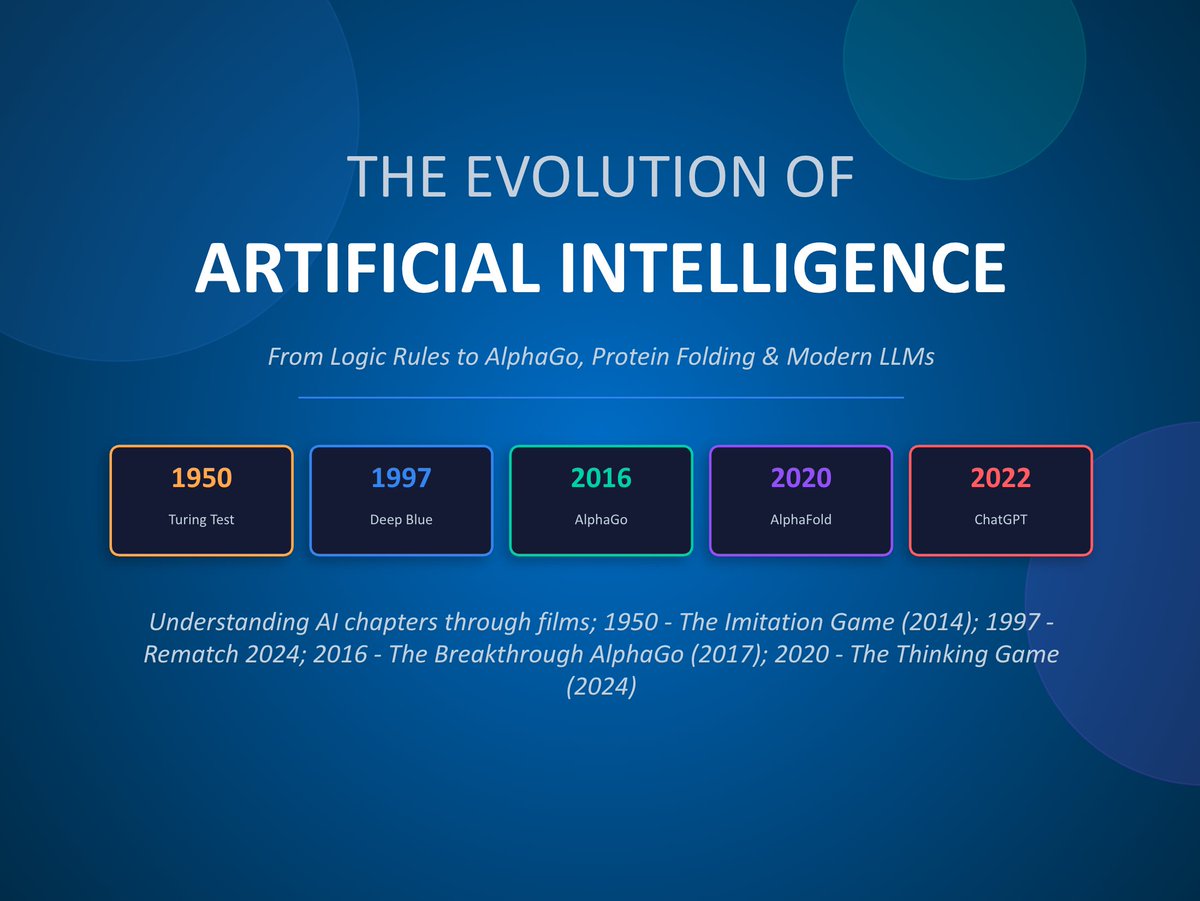
🧠 𝗧𝗵𝗶𝘀 𝗦𝘂𝗻𝗱𝗮𝘆: 𝟱 𝗠𝗶𝗻𝘂𝘁𝗲𝘀 𝗼𝗻 𝟳𝟬 𝗬𝗲𝗮𝗿𝘀 𝗼𝗳 𝗔𝗜 The Chasing Jarvis course at @COTRUGLI Business School is in full progress. I'm sharing a slice of what we cover in Module 1. The history of artificial intelligence is not a straight line. It's a story of audacious dreams, brutal winters, and then — suddenly — breakthroughs that changed everything. Let me walk you through five moments that shaped the world we're now trying to navigate as business leaders: 𝟭𝟵𝟱𝟬 — 𝗧𝗵𝗲 𝗧𝘂𝗿𝗶𝗻𝗴 𝗧𝗲𝘀𝘁: Alan Turing asks a deceptively simple question: Can machines think? The question itself launches a field. We've been chasing the answer ever since. 𝟭𝟵𝟵𝟳 — 𝗗𝗲𝗲𝗽 𝗕𝗹𝘂𝗲: IBM's chess computer defeats world champion, Garry Kasparov. The world panics briefly, then forgets. But the engineers don't forget. 𝟮𝟬𝟭𝟲 — 𝗔𝗹𝗽𝗵𝗮𝗚𝗼: DeepMind defeats the world's best Go player — a game considered too intuitive, too human for machines. The AI community doesn't forget either. 𝟮𝟬𝟮𝟬 — 𝗔𝗹𝗽𝗵𝗮𝗙𝗼𝗹𝗱: AI solves a 50-year-old biology problem: predicting protein structure. Not incremental progress. A complete leap. Science will never be the same. 𝟮𝟬𝟮𝟮 — 𝗖𝗵𝗮𝘁𝗚𝗣𝗧: 100 million users in 2 months. The fastest product adoption in history. And suddenly, AI is no longer a research lab story. It's yours and mine. Three things this timeline teaches me as an educator: 🔹 𝗣𝗿𝗼𝗴𝗿𝗲𝘀𝘀 𝗮𝗰𝗰𝗲𝗹𝗲𝗿𝗮𝘁𝗲𝘀. 60 years from symbolic AI to deep learning. Then 5 years to transformers. Then 5 more to ChatGPT. The gaps are shrinking fast. 🔹 𝗧𝗵𝗲 𝘄𝗶𝗻𝘁𝗲𝗿𝘀 𝘄𝗲𝗿𝗲𝗻'𝘁 𝘄𝗮𝘀𝘁𝗲𝗱. Every "AI is dead" moment funded the next breakthrough. Patience and persistence compound. 🔹 𝗪𝗲 𝗮𝗿𝗲 𝘀𝘁𝗶𝗹𝗹 𝗮𝘁 𝘁𝗵𝗲 𝗯𝗲𝗴𝗶𝗻𝗻𝗶𝗻𝗴. ChatGPT is 3 years old. What comes next will make today look like dial-up internet. Next Saturday, 100+ MBA students and I will dig into all of this — and then start building real AI agents together. If you want to understand where AI is going, you first need to understand where it's been. Have a great Sunday. 🚀 #ChasingJarvis #AIEducation #COTRUGLI #VanguardMBA #ArtificialIntelligence #ContextEngineering #FuturOfWork
Dr. Tali Režun tweet media
English
0
0
6
50
Dr. Tali Režun
Dr. Tali Režun@talirezun·
𝗘𝘃𝗲𝗿𝘆 𝗰𝗼𝗺𝗽𝗮𝗻𝘆 𝗻𝗲𝗲𝗱𝗲𝗱 𝗮 𝘄𝗲𝗯𝘀𝗶𝘁𝗲. 𝗦𝗼𝗼𝗻, 𝗲𝘃𝗲𝗿𝘆 𝗰𝗼𝗺𝗽𝗮𝗻𝘆 𝘄𝗶𝗹𝗹 𝗻𝗲𝗲𝗱 𝗮𝗻 𝗔𝗜 𝗮𝗴𝗲𝗻𝘁. We've seen this shift before. There was a moment — not so long ago — when having a website went from "interesting experiment" to "basic requirement for doing business." Companies that moved early gained a competitive edge. Those that waited played catch-up for years. We are at that moment again. Right now. AI is no longer a novelty. It's already proven its value for businesses of all sizes. With @luminawidget, we've watched small and medium businesses transform their client support — reducing response times, cutting costs, and delivering better experiences than they ever could with human agents alone. Enterprises are watching. And they want in. But there's a problem. 𝗧𝗵𝗲 𝗯𝗮𝗿𝗿𝗶𝗲𝗿𝘀 𝘁𝗼 𝗲𝗻𝘁𝗲𝗿𝗽𝗿𝗶𝘀𝗲 𝗔𝗜 𝗮𝗱𝗼𝗽𝘁𝗶𝗼𝗻 𝗮𝗿𝗲𝗻'𝘁 𝘁𝗲𝗰𝗵𝗻𝗶𝗰𝗮𝗹. 𝗧𝗵𝗲𝘆'𝗿𝗲 𝘁𝗿𝘂𝘀𝘁. Data privacy. Regulatory compliance. GDPR. The EU AI Act. DORA. The fear of hallucinations in client-facing systems. The fear of losing control. These are legitimate concerns — and they've kept most enterprises on the sidelines. That's exactly what I'm building in Lumina Pro. 𝗟𝘂𝗺𝗶𝗻𝗮 𝗣𝗿𝗼 𝗶𝘀 𝗮 𝗽𝗿𝗶𝘃𝗮𝗰𝘆-𝗳𝗶𝗿𝘀𝘁, 𝗿𝗲𝗴𝘂𝗹𝗮𝘁𝗶𝗼𝗻-𝗿𝗲𝗮𝗱𝘆 𝗔𝗜 𝗽𝗹𝗮𝘁𝗳𝗼𝗿𝗺 𝗯𝘂𝗶𝗹𝘁 𝗳𝗼𝗿 𝗘𝘂𝗿𝗼𝗽𝗲𝗮𝗻 𝗲𝗻𝘁𝗲𝗿𝗽𝗿𝗶𝘀𝗲𝘀 𝗮𝗻𝗱 𝗺𝗲𝗱𝗶𝘂𝗺-𝘁𝗼-𝗹𝗮𝗿𝗴𝗲 𝗯𝘂𝘀𝗶𝗻𝗲𝘀𝘀𝗲𝘀 𝘁𝗵𝗮𝘁 𝗰𝗮𝗻 𝗻𝗼 𝗹𝗼𝗻𝗴𝗲𝗿 𝗮𝗳𝗳𝗼𝗿𝗱 𝘁𝗼 𝘄𝗮𝗶𝘁. It's powered by our no-RAG architecture — documents injected directly into the AI's context window, not chunked and approximated. The result is near-100% accuracy. No hallucinations. No guesswork. And it goes far beyond a chatbot: → 𝗠𝘂𝗹𝘁𝗶-𝗰𝗵𝗮𝗻𝗻𝗲𝗹 𝗔𝗜 𝗮𝗴𝗲𝗻𝘁𝘀 — deploy to your website, Slack, WhatsApp, Telegram, Discord and more → 𝗔𝗣𝗜 𝗚𝗮𝘁𝗲𝘄𝗮𝘆 — plug directly into your existing chat infrastructure → Frontier Inbox — monitor conversations live and take over from AI at any moment → 𝗙𝗿𝗼𝗻𝘁𝗶𝗲𝗿 𝗔𝗻𝗮𝗹𝘆𝘁𝗶𝗰𝘀 — understand exactly how your AI performs → 𝗟𝘂𝗺𝗶𝗻𝗮 𝗖𝗼𝗿𝘁𝗲𝘅 𝗘𝗻𝗴𝗶𝗻𝗲 — sources knowledge from internal documents, external APIs, MCP servers, and live web search simultaneously GDPR, EU AI Act, and DORA compliance built in from day one. Your data stays yours. Your AI stays auditable. The companies that deploy AI-powered client support in the next 12–24 months will define the new standard in their industries. The ones that wait will spend years catching up. Lumina Pro is in active development. If you're ready to explore what responsible enterprise AI looks like in practice — let's talk. The website era shaped modern business. The AI agent era will transform it. #LuminaPro #EnterpriseAI #AIAdoption #GDPR #EUAIAct #DigitalTransformation #AICompliance #FutureOfWork #BusinessAI #Innovation
Dr. Tali Režun tweet media
English
0
0
6
44