Nirupama Menon Rao 🇮🇳@NMenonRao
The women of India and Pakistan need to deploy our ingrained common sense and suggest ways forward in our relationship. We need a women’s caucus. Not to throw accusations against each other but to think calmly and sensibly about the future ahead. For the sake of our children.
We need to bring in the counterpoint: without naming it, without sounding defensive, but making it impossible to dismiss.
For decades, India–Pakistan engagement has been trapped in a single script: territory, terror, recrimination. We repeat it with ritual precision, but it yields diminishing returns.
What if we widened the frame?
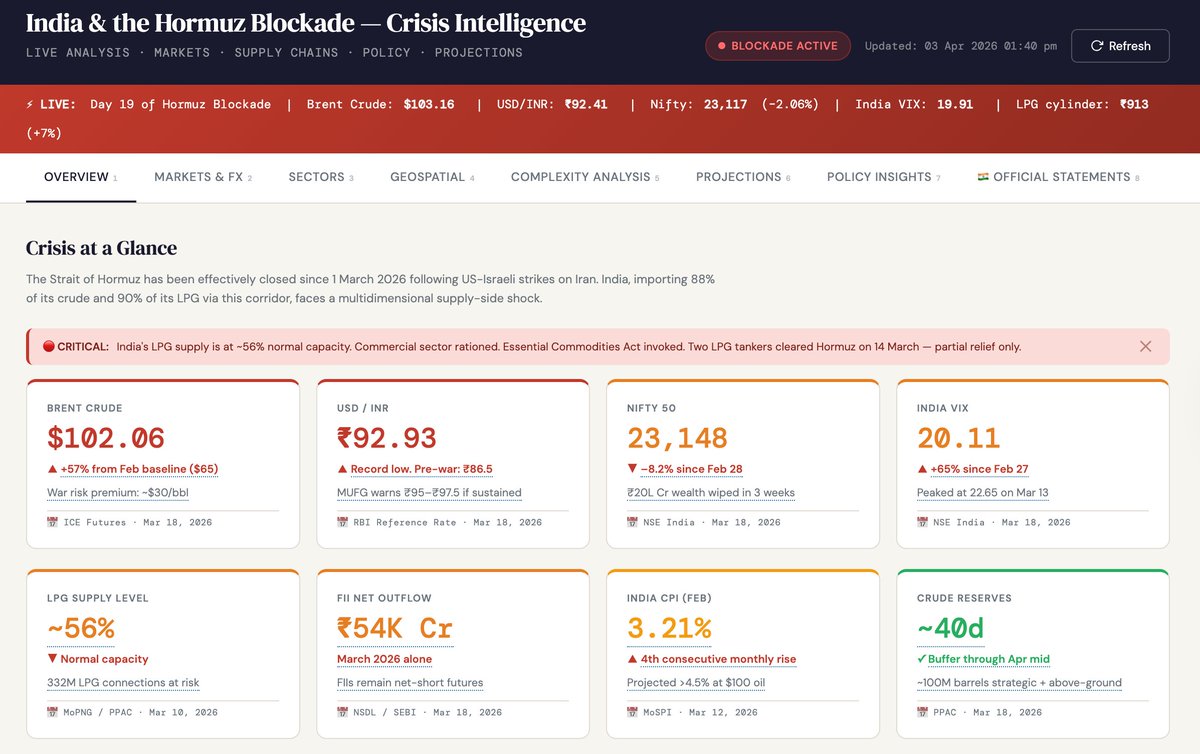
In West Asia, especially the Gulf, our interests often run in parallel: energy security, diaspora welfare, maritime stability, crisis response. These are not abstractions since they affect millions of lives and the resilience of both economies.
Engaging here need not dilute our positions, create false parity, or reopen familiar disputes. It can remain tightly bounded, issue-specific, and without prejudice to core differences.
Skeptics will argue that Pakistan cannot compartmentalise, that any engagement risks being instrumentalised, and that peripheral cooperation has never altered core hostility.
But the purpose here is not transformation, it is insulation.
Not to resolve the conflict by other means, but to prevent it from defining all means.
Some may also say Pakistan has found a “role” in the Iran crisis and India should not be seen as seeking one. But this is not about visibility or mediation. Our interests are structural not transitory.
If anything, the moment underscores a larger truth: even adversarial states operate beyond their disputes when interests demand it.
When the central track is blocked, responsible statecraft does not stand still. It explores parallel ones, carefully, deliberately, and on its own terms.
Sometimes, widening the field is not weakness. It is strategy.
The women must speak.